Uncategorized

Why Stress Steals Memory

(Explained Like I’m Four Because Its My Current Mental Capacity)

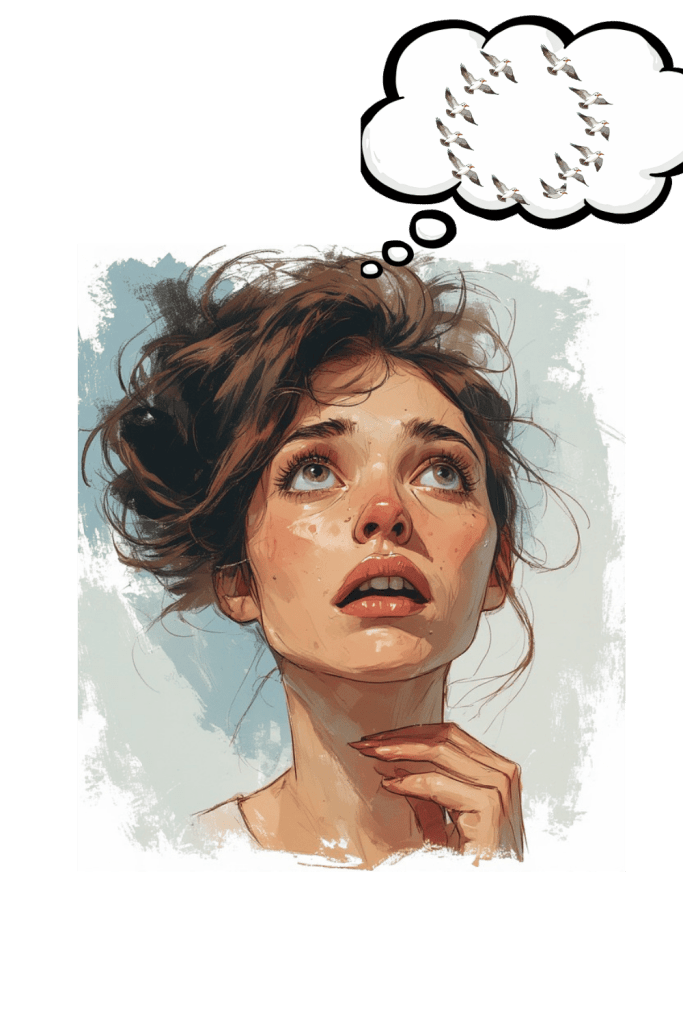
Imagine your brain is a house.

Inside that house are different rooms. One room is for thinking — remembering things, planning, finishing sentences, and holding onto a thought long enough to actually say it out loud. Another room is for danger. That room has alarms, flashing lights, and a big red button labeled OH NO.

Most of the time, the thinking room is in charge.

Then stress shows up.

Stress doesn’t knock. It barges in yelling things like “PROBLEM,” “URGENT,” or “SOMETHING BAD IS HAPPENING.” Your brain doesn’t stop to check whether the threat is real or just an email, a memory, or the general vibes of winter. It just flips the switch.

The danger room takes over.

When that happens, your brain makes a very practical decision: remembering things is no longer the priority. Surviving is.

So it starts redirecting energy away from memory, focus, and word-finding. Not because those things aren’t important — but because they aren’t useful if you’re about to be eaten by a bear. (Your brain is old-fashioned like that.)

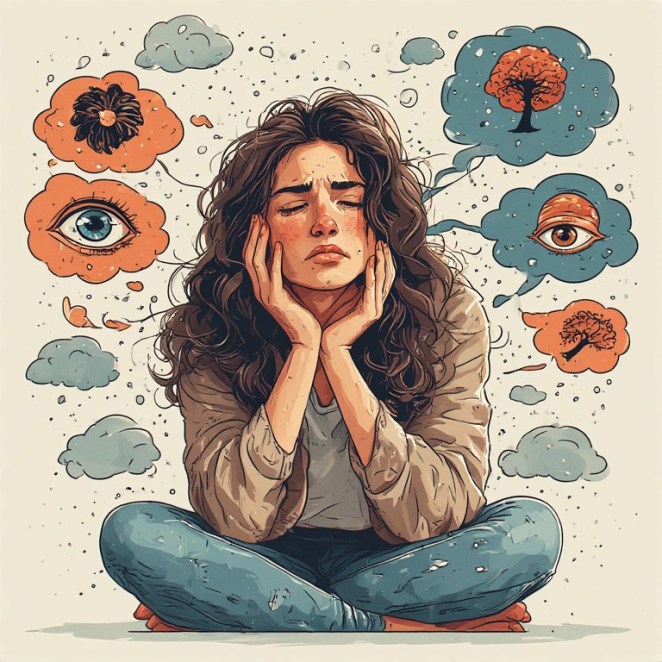
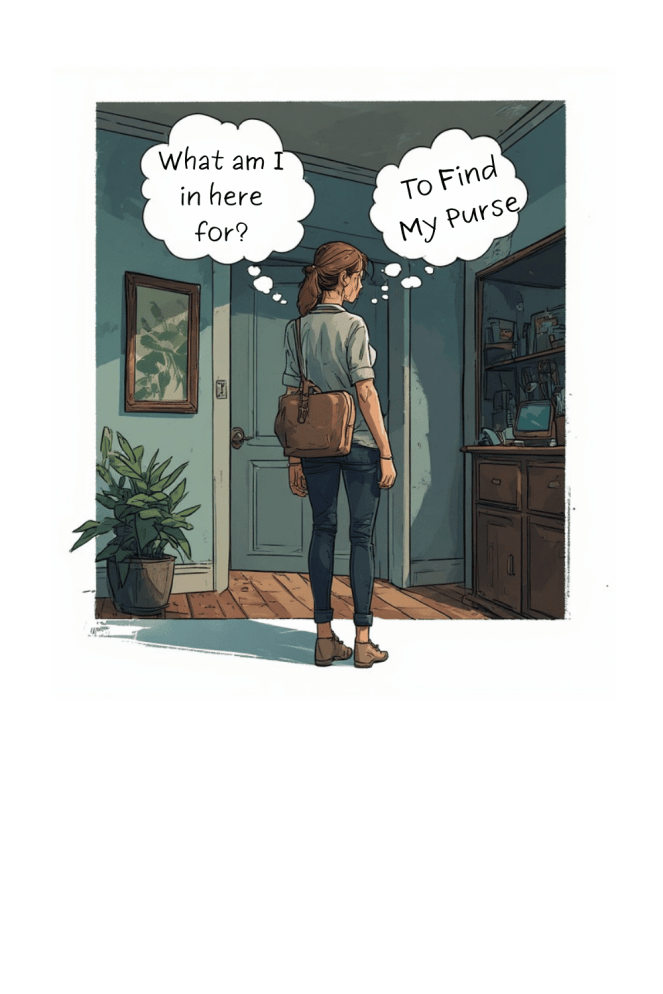
This is why, under stress, you might forget what you were saying mid-sentence, lose track of why you walked into a room, or feel like your thoughts evaporate the moment you reach for them. Your brain isn’t failing. It’s triaging.

There’s also a chemical reason this happens.

When you’re stressed, your body releases cortisol. Cortisol’s job is to help you respond to danger. It speeds things up, tightens muscles, sharpens attention toward threats, like bear attacks, and keeps you alert. But it also tells the memory-forming parts of your brain to quiet down.

In simple terms: cortisol says, “We don’t need to remember things right now. We need to stay alive.”

So memory takes a back seat.

This is especially noticeable when stress isn’t a one-time event, but something ongoing. Chronic stress — from pain, trauma, long-term anxiety, caregiving, or just living in a body that never fully relaxes — can keep your nervous system stuck in high-alert mode. Over time, your brain starts acting like danger is the default setting.

That’s why memory problems can show up even when you’re not actively upset. Conversations feel harder to track. Words go missing. Thoughts disappear halfway through forming. The system never fully stands down.

And this part matters: this isn’t laziness, lack of intelligence, or a personal failing.

It’s not that your brain forgot how to work. It’s that it learned how to protect you — and protection came first.

Memory didn’t disappear. It just got temporarily demoted.

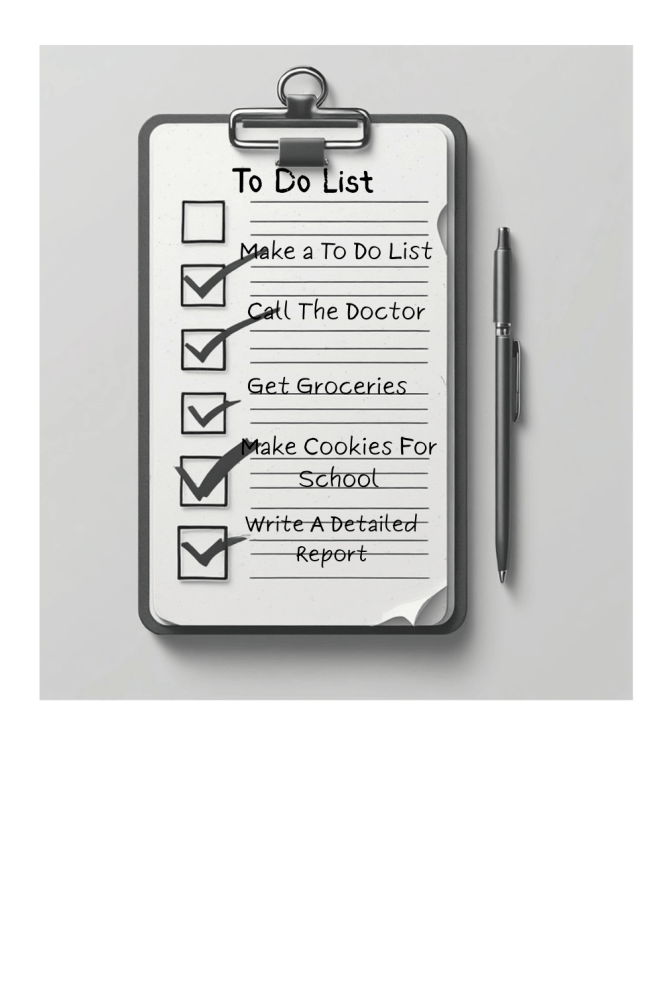
That’s also why external supports help so much. Writing things down, setting reminders, repeating information out loud — these tools reduce the load on a system that’s already busy. Sometimes just writing something is enough for it to stick, even if you never look at it again. Your brain trusts that it doesn’t have to carry everything alone.

The takeaway is simple, even if the experience isn’t.

If your memory struggles when you’re stressed, it doesn’t mean you’re broken. It means your brain is doing exactly what it was designed to do — keeping you safe, even when the threat isn’t obvious.

And sometimes, safety comes at the cost of remembering where you put the thought you were just holding. Til next time gang, take care of yourselves, and each other!

Uncategorized

Your Body Thinks You’re Being Chased by a Bear (Spoiler: You’re Not)

So here’s a fun thing that’s been happening: my body has apparently decided that normal life is a constant threat and has responded by keeping me in a perpetual state of “OH GOD OH GOD WE’RE ALL GONNA DIE” even though I’m literally just sitting at my desk trying to answer emails.

Welcome to chronic sympathetic nervous system activation, or as I like to call it, “why I can’t relax even when I’ve been scheduling rest and also why am I clenching my jaw right now?”

If you’re reading this and thinking “wait, is that why my shoulders are permanently attached to my ears?” – yeah, probably. Let’s talk about it.

What Fresh Hell Is This?

Your nervous system has two settings: “EVERYTHING IS FINE” (parasympathetic) and “NOTHING IS FINE PREPARE FOR BATTLE” (sympathetic). The sympathetic system is supposed to kick in when you’re actually in danger – like if a bear shows up or you’re about to miss a deadline or someone says “we need to talk.”

It’s supposed to turn on, help you deal with the thing, then turn OFF.

Except sometimes it just… doesn’t turn off. It’s like that friend who came over for dinner three months ago and is still on your couch. Your nervous system has overstayed its welcome in fight-or-flight mode, and now you’re stuck with elevated heart rate, tense muscles, and the general vibe of someone who’s been drinking espresso for 72 hours straight even though you haven’t.

The Fancy Medical Terms (In Case You Want to Sound Smart)

Doctors and wellness people might call this:

  • Sympathetic dominance (sounds like a kink, isn’t)
  • Hyperarousal (also sounds like a kink, still isn’t)
  • Autonomic dysregulation (absolutely does not sound like a kink)
  • Chronic stress response (boring but accurate)
  • Low vagal tone (your vagus nerve has given up)
  • High allostatic load (fancy way of saying “you’re worn the hell out”)

Pick your favorite. I personally enjoy “sympathetic dominance” because it makes it sound like my nervous system is being bossy, which honestly tracks.

What This Nightmare Actually Looks Like

Physical symptoms (aka your body’s way of saying “I hate it here”):

  • Heart doing gymnastics for no reason
  • Muscles so tight you could bounce a quarter off them
  • Digestive system on strike (nausea, IBS, the works)
  • Sleep? Don’t know her
  • Exhausted but also weirdly wired (tired and wired, the worst combo)
  • Headaches that won’t quit
  • Getting every cold that walks by
  • Hands shaking like you’ve had six cups of coffee (you’ve had zero)

Mental/emotional symptoms (aka your brain being a jerk):

  • On edge like you’re waiting for bad news that never comes
  • Brain fog thicker than London on a bad day
  • Irritable about literally everything (yes, even that)
  • Cannot. Sit. Still.
  • Hypervigilance (constantly scanning for threats like a meerkat)
  • Feeling nothing and everything at the same time
  • Anxiety that laughs at your attempts to meditate

Why Your Body Has Betrayed You Like This

Short answer: sustained stress that your nervous system couldn’t process properly.

Long answer: Maybe it was work stress, or caregiving, or financial pressure, or relationship drama, or past trauma, or chronic illness, or just living through the general dumpster fire that is modern existence. Your nervous system was like “okay, we need to be alert right now” and then just never got the memo that the crisis ended.

It’s not your fault. Your nervous system was trying to protect you. It’s just really bad at knowing when to clock out.

How to Convince Your Body That the Bear Has Left

Alright, here’s the part where I actually try to be helpful instead of just complaining (revolutionary, I know).

Vagus Nerve Stimulation (or: Push the “Calm Down” Button)

Your vagus nerve is basically the brake pedal for your sympathetic system. Here’s how to use it:

  • Breathe like you mean it – Longer exhales than inhales. Your body can’t panic and breathe slowly at the same time, so you’re basically hacking the system
  • Cold water to the face – Splash it, shower in it, or just hold ice. Your body goes “oh we’re doing survival mode differently now”
  • Hum, sing, or gargle – Yes, really. Yes, you’ll look weird. Do it anyway
  • Gentle yoga – Not the “let’s pretzel ourselves into oblivion” kind, the “we’re just stretching and breathing” kind

Daily “Please Chill” Practices

  • Sleep schedule – I know, I know. But your nervous system needs the routine like a toddler needs naptime
  • Move your body – But maybe don’t go run a marathon if you’re already exhausted? Shocking concept, I know
  • Go outside – Nature is basically free therapy and your nervous system knows it
  • Reduce caffeine – I’m sorry. I know. But coffee might be part of the problem
  • Eat actual food – Omega-3s, magnesium, B vitamins. Your nervous system needs fuel that isn’t anxiety and spite

The Woo-Woo Stuff (That Actually Works, Dammit)

  • Progressive muscle relaxation – Tense and release muscle groups. It’s boring but effective
  • Meditation – Even 5 minutes. No, you don’t have to empty your mind. That’s not how it works
  • Somatic practices – Basically any movement that helps you actually feel your body instead of just inhabiting it like a haunted house
  • Heart rate variability training – Apps exist for this and they’re legitimately helpful
  • Massage/bodywork – Yes, you deserve it. No, it’s not frivolous

The Practical Stuff Nobody Wants to Hear

  • Set boundaries – Saying no is self-care, actually
  • Reduce stressors – I know this is easier said than done, but where you can, do
  • Get professional help – Therapy is great. Medication is sometimes necessary. Both are fine
  • Actually rest – Not “scroll on your phone” rest. Actual, doing-nothing rest
  • Connect with humans – Safe relationships help regulate your nervous system (unfortunately we do need other people)

Real Talk

This doesn’t get fixed overnight. Your nervous system didn’t get stuck in panic mode in a day, and it won’t unstick in a day either. Some days you’ll feel better. Some days you’ll feel like garbage. Both are normal.

You’re not broken. You’re not weak. You’re having a completely normal response to stress that lasted too long. Your nervous system is just trying to keep you safe – it’s just really, really bad at its job right now.

Also, if this is seriously impacting your life, please talk to actual medical professionals. I’m just some person on the internet who’s been through this. Doctors and therapists have actual training and sometimes you need the real help.

The Point

You deserve to feel safe in your own body. You deserve to not feel like you’re perpetually being chased by something you can’t see. You deserve to actually rest without your nervous system screaming “BUT WHAT IF—” at you.

Start small. Pick one thing. Give it time. Be patient with yourself (I know, gross). And know that it does get better.

Your nervous system will eventually get the memo that the bear is gone. It’s just taking the long way around. Til next time gang, take care of yourselves, and each other.

Uncategorized

The Quiet Depression No One Warns You About After the Holidays

The holidays end, and everyone else seems to bounce back into life like it was all just a brief inconvenience. Decorations come down. Resolutions go up. People start talking about productivity and “fresh starts.”

There’s a strange sadness that settles in after the holidays — not dramatic, not loud, just heavy. The excitement is gone, the lights are packed away, and spring feels like a rumor someone made up to be polite.

Meanwhile, I’m standing in my kitchen staring out the window at gray trees, wondering how many months it is until I can touch dirt again. The holidays were made for family so when you are missing part of your family, you begin to question ever feeling anything other than this ever. Some days the hardest part isn’t missing them — it’s wondering if the version of me who was their mom actually existed.

This stretch of time — from after the holidays until the world thaws out — hits a lot of people harder than we admit. Shorter days mean less sunlight, which affects serotonin and melatonin levels in the brain. That shift alone can mess with mood, energy, and sleep. It’s one of the reasons Seasonal Affective Disorder (SAD) tends to peak in late winter, not December when everyone expects it.

But even without a formal diagnosis, this season can still feel emotionally brutal.

It’s the letdown after months of buildup.
The loss of structure.
The quiet after forced togetherness.
The waiting.

Everyone talks about January as a reset, but for some of us it’s more like limbo. Not moving forward. Not moving back. Just stuck — watching other people carry on while we tread emotional water.

I’m not drifting, I’m not drowning — I’m stuck treading water, burning energy just to stay here.

What makes this season especially isolating is that it doesn’t look like depression the way people expect. You’re still functioning. Still showing up. Still doing what needs to be done. You just feel… dulled. Unmotivated. Sad without a clean reason.

And because nothing is technically wrong, it’s easy to tell yourself you should be fine.

But this isn’t a personal failure. It’s a seasonal one.

Human beings aren’t designed to thrive in months of darkness, cold, and waiting. We’re meant to move, to grow things, to be outside doing something that feels alive. When that gets taken away, it leaves a very real emotional gap.

So if you’re struggling right now, you’re not weak.
You’re not ungrateful.
You’re not broken.

You’re just in the long, quiet middle — the part no one puts on a calendar.

And sometimes the only goal isn’t happiness. It’s getting through this season gently enough to meet yourself again when the light comes back. This is the year I stop treading water, I will start swimming again. Til next time gang, take care of yourselves, and each other

Uncategorized

When My Brain Picks a Fight, My Body Throws the Punches

Sometimes I wake up already in pain, which feels rude considering I was unconscious and minding my business.

My jaw aches like I spent the night grinding concrete. My shoulders are locked halfway to my ears. My hands hurt like I’ve been stress-clenching imaginary problems in my sleep (which, honestly, tracks). I didn’t overdo it yesterday. I didn’t injure anything. I just… existed.

This kind of flare doesn’t start in my body — it lands there.

My nervous system wakes up feral.
Heart racing. Muscles braced. Skin overly dramatic.
Brain fog so thick I could lose a thought mid-thought.

It’s like my body heard a rumor that something bad might happen and decided to prepare for war before confirming the details.

When the nervous system is under prolonged stress, it can amplify pain signals even without new injury — a process called central sensitization. It’s common in fibromyalgia and chronic pain conditions, and it means the pain is real, measurable, and neurological — not imagined or exaggerated.

Here’s the annoying science part: emotional stress doesn’t stay politely in the “feelings” department. It rewires pain pathways, cranks up inflammation, and lowers the threshold for flares. My body doesn’t care if the threat is physical or psychological — it reacts with the same unhinged enthusiasm either way.

So when I say I’m in pain, I’m not being metaphorical.
I mean my body is cashing a check my nervous system wrote.

There’s research behind this, by the way. Emotional distress activates the same pain-processing pathways in the brain as physical injury. For people with fibromyalgia or trauma histories, the nervous system can stay stuck in high-alert mode — turning stress into very real, very physical pain.

It looks like moving slower. Canceling plans without guilt (or with guilt, but canceling anyway). It looks like heat packs, silence, and a deep distrust of anyone who suggests I “push through it.” It looks like exhaustion that sleep laughs at and pain that refuses to justify itself with visible damage.

This isn’t weakness.
This is a system that’s been on high alert for too long and forgot how to stand down.

Some days the goal isn’t fixing anything — it’s lowering the volume. Fewer demands. Softer expectations. Treating my body like it’s been through something instead of asking it to perform like it hasn’t.

Pain doesn’t always come from injury.
Sometimes it comes from carrying too much, for too long, with no off switch. Til next time gang, take gentle care of yourselves, and each other!

Uncategorized

When the Holidays Are Loud Everywhere Except Your House

The holidays are noisy.
Not just with music and parties and people — but with proof. Proof that everyone else seems to be gathering, hosting, laughing, overflowing.

And then there’s your house.
Quiet. Still. Too still.

You can be grateful and lonely at the same time. Those aren’t opposites — they’re roommates who don’t speak to each other.

You can know you’re lucky, blessed, resourced, safe…
and still feel like something essential is missing. Like the volume of the world has been turned up everywhere else and muted where you are.

That disconnect messes with your head.

Because the messaging is relentless:

  • Be thankful.
  • Cherish this season.
  • Soak it all in.

But what if there isn’t much to soak in?
What if you’re not ungrateful — you’re just alone?

There’s a particular kind of loneliness that shows up during the holidays.
Not the dramatic kind.
The quiet, creeping kind that makes you feel unworthy of love, like if you were easier, better, less broken, someone would be here.

And that’s the lie.

The truth is:
Holidays magnify absence. They don’t create it.

Estrangement, distance, grief, illness, burnout — all the things you’ve been surviving all year don’t suddenly take December off. They just get wrapped in twinkle lights and judged harder.

If your house is quiet this season, it doesn’t mean you failed.
It doesn’t mean you’re unlovable.
It doesn’t mean you did something wrong.

It just means this season is asking something different of you.

Maybe survival instead of celebration.
Gentleness instead of gratitude lists.
Presence instead of performance.

You don’t have to force joy to prove you’re okay.
You don’t have to fake cheer to earn rest.
And you don’t have to minimize your pain just because someone else has it worse.

If the holidays are loud everywhere except your house —
your quiet is still allowed.
Your sadness still counts.
And you are still worthy of love, even when no one shows up with cookies and matching pajamas.

Sometimes getting through is enough.
Sometimes staying soft in a loud world is the bravest thing you’ll do all season. Til next time gang, take care of yourselves, and each other!

Uncategorized

Signs You’re Pacing Your Energy Correctly (Even If It Feels Like You’re Doing Nothing)

If you live with chronic illness, neurodivergence, or both, pacing your energy can feel suspiciously like… failing. We’ve been conditioned to believe that productivity equals worth, and rest is something you earn after pushing yourself to the brink. Spoiler alert: that mindset is garbage — and it actively works against bodies and brains like ours.

Energy pacing isn’t about doing less because you’re “giving up.” It’s about doing what keeps you functioning tomorrow. And sometimes that looks like absolutely nothing from the outside.

Here are signs you’re actually pacing correctly — even if it doesn’t feel impressive.


1. You Stop Before You Crash

If you’re resting while you still technically could keep going, congratulations — you’re doing it right. Pacing means stopping at the “I should probably rest soon” stage, not the “I have made a terrible mistake” stage.

Ending an activity while you still have a sliver of energy left isn’t weakness. It’s strategy.


2. You Plan Rest on Purpose

Rest isn’t something that “just happens” anymore. It’s scheduled. Protected. Sometimes defended like a feral raccoon.

If your calendar includes intentional downtime — especially after appointments, errands, or social interaction — that’s not laziness. That’s advanced-level self-management.


3. Your Week Looks Boring but Survivable

A paced week doesn’t look exciting. It looks quiet. Repetitive. Underwhelming.

And that’s the point.

If you’re no longer stacking five demanding things in one day and calling it “normal,” you’re learning how to live within your limits instead of constantly bulldozing them.


4. You Say No Without a Full PowerPoint Presentation

You don’t owe anyone your medical history, trauma background, or a five-paragraph explanation for why you can’t do something.

If you’re starting to say “I can’t” or “That won’t work for me” without spiraling into guilt — that’s growth. Messy, uncomfortable, necessary growth.


5. You Recover Faster Than You Used To

Maybe you still flare. Maybe you still crash. But if the recovery time is shorter than it used to be — that’s pacing working.

Progress with chronic illness is often measured in less severe consequences, not total avoidance.


6. You’re Choosing the Easier Option Without Shame

Delivery instead of cooking. Grocery pickup instead of the store. Frozen food instead of scratch meals. Sitting instead of standing.

If you’re choosing accessibility over aesthetics, you’re not “giving up.” You’re adapting. And adaptation is how people survive long-term.


7. You Feel “Unproductive” but Less Destroyed

This one messes with people the most.

If you feel like you didn’t do much, but you also didn’t completely wreck yourself — that’s a win. A quiet one. An invisible one. But a real one.


8. You’re Thinking About Tomorrow, Not Just Today

Pacing means asking, “How will this affect me later?” instead of “Can I force myself through this right now?”

If future-you is part of your decision-making process, you’re playing the long game — and that matters.


Final Thought

Pacing doesn’t look heroic. It doesn’t get applause. It doesn’t fit hustle culture or toxic positivity.

But it keeps you alive, functional, and able to show up again.

You are not doing nothing.
You are managing a body and nervous system that require intention, restraint, and care.

And honestly? That’s not weakness.
That’s skill. Til next time gang, take care of yourselves, and each other!

Uncategorized

Fibromyalgia Isn’t Just Pain: Why the Fatigue Hits So Hard

When people hear “fibromyalgia,” they usually think of pain — aching joints, sore muscles, that constant feeling like you overdid it yesterday even when you didn’t.
Pain is part of it, yes. But for many people with fibromyalgia, fatigue is the symptom that quietly dismantles daily life.

This isn’t the kind of tired that goes away with a good night’s sleep or a strong cup of coffee. Fibromyalgia fatigue is persistent, physical, and rooted in how the nervous system functions.


Common Fibromyalgia Symptoms (Beyond Pain)

Fibromyalgia is a multisystem condition, not a single-symptom diagnosis. Common symptoms include:

  • Chronic widespread musculoskeletal pain
  • Ongoing fatigue
  • Non-restorative sleep (waking up unrefreshed)
  • Cognitive difficulties (“fibro fog”)
  • Sensitivity to light, sound, temperature, or touch
  • Headaches or migraines
  • Gastrointestinal issues (often overlapping with IBS)
  • Muscle stiffness, especially in the morning
  • Mood changes linked to nervous system stress

Not everyone experiences every symptom, and severity can fluctuate — sometimes daily, sometimes hourly.


What Makes Fibromyalgia Fatigue Different?

Fibromyalgia fatigue isn’t simply being tired from doing too much. It’s tied to central sensitization, a process in which the brain and spinal cord become overly reactive.

In simple terms:

  • The nervous system stays partially “on alert”
  • Pain signals are amplified
  • The body burns energy just maintaining baseline function

Even rest can require effort when the system responsible for regulating stress, pain, and recovery isn’t working efficiently.

Think of it like running multiple background apps you can’t close. The battery drains faster — even on low activity.

Mayo Clinic explains that people with fibromyalgia commonly experience fatigue and disrupted sleep, noting that individuals often wake up tired even after sleeping for a long time, as pain and related sleep disorders can interfere with rest. Mayo Clinic


Why Sleep Doesn’t Fix Fibromyalgia Fatigue

One of the most frustrating aspects of fibromyalgia is that sleep doesn’t reliably restore energy.

Research shows that people with fibromyalgia often experience:

  • Disrupted sleep architecture
  • Reduced time in deep, restorative sleep stages
  • Alpha-wave intrusion during sleep, keeping the brain partially alert
  • Frequent micro-arousals caused by pain or nervous system activity

This means someone can be unconscious for eight hours and still wake up feeling unrefreshed, stiff, and exhausted.

Sleep happens — but rest doesn’t fully occur.

Sleep research indicates that people with fibromyalgia often experience abnormal sleep patterns, such as reduced deep sleep and brain activity resembling wakefulness during sleep stages, which helps explain why rest does not always feel restorative. Sleep Foundation


The Role of the Nervous System

Fibromyalgia is increasingly understood as a disorder of nervous system regulation, not muscle damage or inflammation alone.

When the nervous system struggles to downshift:

  • Muscles remain tense
  • Pain signals remain elevated
  • Stress hormones like cortisol can become dysregulated
  • Energy recovery is impaired

This is why fatigue in fibromyalgia often feels disproportionate to activity levels — and why pushing through it usually backfires.


Why “Just Rest More” Misses the Point

Well-meaning advice like “get more sleep” or “listen to your body” often falls short because it assumes the system responsible for rest is functioning normally.

In fibromyalgia:

  • Rest helps, but it’s not a cure
  • Sleep matters, but it’s not always restorative
  • Energy management requires strategy, not willpower

Understanding this difference matters — medically, socially, and personally.


The Bottom Line

Fibromyalgia fatigue is not laziness, lack of motivation, or deconditioning.
It’s a nervous system issue that affects how the body processes pain, stress, sleep, and recovery.

Recognizing fatigue as a core symptom — not a side effect — is essential to understanding what living with fibromyalgia actually looks like.

Because when the system itself is misfiring, exhaustion isn’t a failure.
It’s feedback.
Til next time gang, take care of yourselves, and each other!


Uncategorized

7 Small Wins That Totally Count as Achievements in The Holiday Season

Listen… December is basically the season finale of the year, and my brain is running on whatever scraps of battery life it can find between the couch cushions. So instead of pretending I’m a fully optimized human being, I’m embracing the tiny victories — the ones that actually count.

Because if December can be dramatic?
I can be delusional in a way that helps my self-esteem.

We all know (and we’ve talked about) December is an energy zapper so here are 7 small wins that absolutely deserve applause, confetti, or at least a slow clap from someone who isn’t judging your life choices:


1. Getting dressed in something that isn’t your “I Give Up” sweatpants

Bonus points if the outfit has textures like velvet and lace, because then you’re basically cosplaying as an enchanted woodland witch who is absolutely doing her best. I’m a cross between Stevie Nicks and a victorian ghost as far as style goes. I want people to see me and feel the energy shift because I am all about delivering the good vibes.


2. Remembering one (1) single appointment

In December? That’s Nobel Prize-level discipline. Congratulations on defeating the Calendar Boss. The other appointments are jealous but hey, you crushed that lunch date.


3. Feeding yourself something other than peppermint bark

Double win if it was an actual meal. Triple win if you didn’t eat it standing in the kitchen like a tired Victorian ghost. I want people to know I am absolutely not going to be a quiet ghost. No slipping in or out of places unnoticed. I’m going to be LOUD, think of my entrances and exits to resemble Kramer’s from Seinfeld.


4. Wrapping at least one gift without crying

Or using a gift bag instead of trying to precision-fold paper like Martha Stewart with a migraine. Embrace the bag. The bag is your friend. I havent wrapped a gift in forever, the muscle memory is gone.


5. Making it through a school concert, holiday party, or work event

Even if your soul left your body three minutes in, you showed up. Gold star. I make disassociating an Olympics level sport. If you see me at an event, think of that as a premeeting and I’ll be asking all my follow up questions when I see you next and might lag on a convo or two while my brain is processing.


6. Saying “no” to something your body and brain didn’t have the spoons for

This is Advanced Seasonal Adulting™. Look at you, protecting your peace like a tiny holiday dragon guarding its hoard. I will protect my peace, because I have to listen to me when everything is quiet.


7. Remembering joy is allowed to be small right now

A quiet night. A cup of cocoa. A silly ornament. Five minutes under a blanket with the lights off. Its unreal how long I could sit and watch the tree change color while memories play like a slideshow in my head.
Tiny joy counts — especially when December tries to steamroll you.


If you’ve done even one of these things?
You’re winning. Seriously. December doesn’t want us to succeed, and yet here we are — thriving at a very reasonable, spoon-conscious pace. Til next time gang, take care of yourselves, and each other. Holiday greetings from George!)

Uncategorized

A Message To My Friends

Hi friends! If your reading this, you are a friend. As all of you know, I do have a chronic illness, in fact a number of them lol, but you all know this season zaps even the best of us. As I have detailed here, December tends to hit my body and brain like they’re part of an obstacle course on a game show I never signed up for. And when you’re running full throttle and still falling short, something’s gotta give.

I don’t want to fall short here, especially because none of you are demanding anything from me. I can practically hear you saying, “We know all this,” with a dramatic eye roll (mostly my teen doing the heavy eye-rolling, let’s be honest — the rest of you are far too polite)

So here’s the deal: while I’ll absolutely keep sharing my random stories, chaotic life lessons, and general nonsense you didn’t ask for but still graciously read, I’m hitting pause on the menu/recipe posts until the week after Christmas. The holidays take a lot out of me, and if I don’t give myself extra gentleness, I end up wobbling like a Jenga tower in a windstorm.

That said, don’t be shocked if a cookie recipe sneaks its way in — December is long, and sometimes sugar is a coping mechanism. And for those of you navigating estrangement or heavy emotions this time of year, you get it. This season gets to the best of us… and I am very much not the best of us, so it does a number on me.

Thanks for sticking around, for reading, for being here. I appreciate you more than you know.
There will be a George update soon as there is a family of them outside my window. Til next time gang, take care of yourselves, for real be extra kind to yourselves, and each other!

Uncategorized

My December Brain Thinks It’s Being Chased by a Tiger

A spoonie’s guide to understanding why this month feels like a boss battle

December arrives every year like it’s auditioning for a “Most Dramatic Month” award. Lights! Deadlines! Events! Family! Weather that makes my joints feel like they were installed backwards! I swear this month shows up wearing a sequined gown and holding a megaphone screaming, “SURPRISE, IT’S ME! LET’S CHAOS.”

And listen… I’m doing my best.
But my brain?
My brain is over in the corner rubbing two neurons together trying to make a spark like a Boy Scout with wet matches.

And that’s the thing: December is uniquely designed to absolutely obliterate neurodivergent and chronically ill people.

Let me explain — with actual science.
(But don’t worry, it’s me. I’ll keep it spicy.)


1. December is basically sensory overload in a trench coat.

Think about it: blinking lights, crowds, loud music, bells, scents, glitter everywhere like it escaped a containment lab… it’s a full assault on the senses.

For ADHD and autistic brains, the sensory load of ONE Target trip in December is equivalent to running a psychological marathon while someone throws cinnamon pinecones at your face.

When you see people calmly strolling through a decorated mall, please understand they are operating at a level of sensory privilege I can only dream of.


2. Our executive function gets hit with a holiday piñata stick.

Executive function — the part of the brain responsible for planning, organizing, remembering, transitioning, and not screaming into the void — already runs on 2% battery for a lot of us.

Then December rolls in and demands:

  • Coordination
  • Decision-making
  • Gift lists
  • Cooking
  • Routines changing
  • Socializing
  • Budgeting
  • TIME MANAGEMENT (okay calm down, this is a safe space)

It’s too much.
Neuroscience basically says: if your brain already struggles with dopamine, working memory, or task sequencing, December is like trying to juggle flaming swords with oven mitts on.


3. Chronic illness + cold weather = my body filing hostile complaints with HR.

Fibromyalgia loves the cold the way cats love knocking stuff off counters: it finds an opportunity and goes for it.

Scientific fun fact: colder temperatures can increase muscle tension and pain sensitivity, and reduced sunlight messes with serotonin levels, which can intensify fatigue and mood dips.

Scientific non-fun fact: my body reacts to December like someone unplugged it mid-update.


4. The holidays trigger “performance mode” whether we want it or not.

If you grew up in chaos, survived medical trauma, or just exist as a human with trauma baggage (hi, welcome, there are snacks), your nervous system may automatically shift into high-alert this time of year.

The brain hates unpredictability.
December is 90% unpredictability.

So your amygdala goes, “Heyyyy remember when things went bad before? Let’s be ready. Just in case.”

Which is cute.
Except it’s not.
Because suddenly everything feels urgent.


5. And then there’s the emotional landmines.

Family stuff. Estrangement. Loss. Loneliness. Pressure to be joyful on command.
This season brings things to the surface like the ghosts of holidays past showed up for a group project.

So if you’re exhausted?
Forgetful?
Behind on everything?
Crying at commercials about soup?
Shoving wrapping paper under the bed and pretending it’s not your problem?

Yeah. Same.
You’re not broken — you’re overloaded.


So what do we DO about it?

(You know… besides giving up and becoming a winter hermit.)

1. Drop the “holiday expectations” bar until it’s at ankle height.

You’re allowed to celebrate at your energy level, not Hallmark’s.

2. Use “do it the lazy way” as your December mantra.

If there’s an easier version of something? Do that.
Frozen food? Yes.
Gift bags instead of wrapping? Absolutely.
Paper plates? You’re doing amazing.

3. Build in tiny pockets of sensory calm.

Dark room + blanket + phone on silent = a spiritual experience.

4. If your brain is spiraling, label it.

“My nervous system is overwhelmed. This isn’t a failure; it’s a signal.”
Boom. Power move.

5. Accept that December brain is a special, limited-edition seasonal disorder.

It’s not you.
It’s the month.


And here’s the part I want you to hear the loudest:

You do not owe December a performance.
You don’t owe tradition your body.
You don’t owe the holiday season a curated, Pinterest-perfect experience.
You owe your life — your REAL life — kindness, rest, and honesty.

If you make it through the month fed, semi-warm, and not buried under gift wrap, congratulations: you won December.

Even if your brain thinks it’s running from a tiger. Til next time gang, take care of yourselves, and each other!