Ok gang, let’s get real about something that doesn’t get nearly enough attention: medical PTSD. If you’ve ever left a doctor’s office feeling dismissed, doubted, or downright defeated, you’re not alone. For those of us with chronic illnesses and invisible conditions like fibromyalgia, bipolar disorder, autism, or ADHD, the healthcare system can feel less like a safety net and more like a minefield.
What Is Medical PTSD?
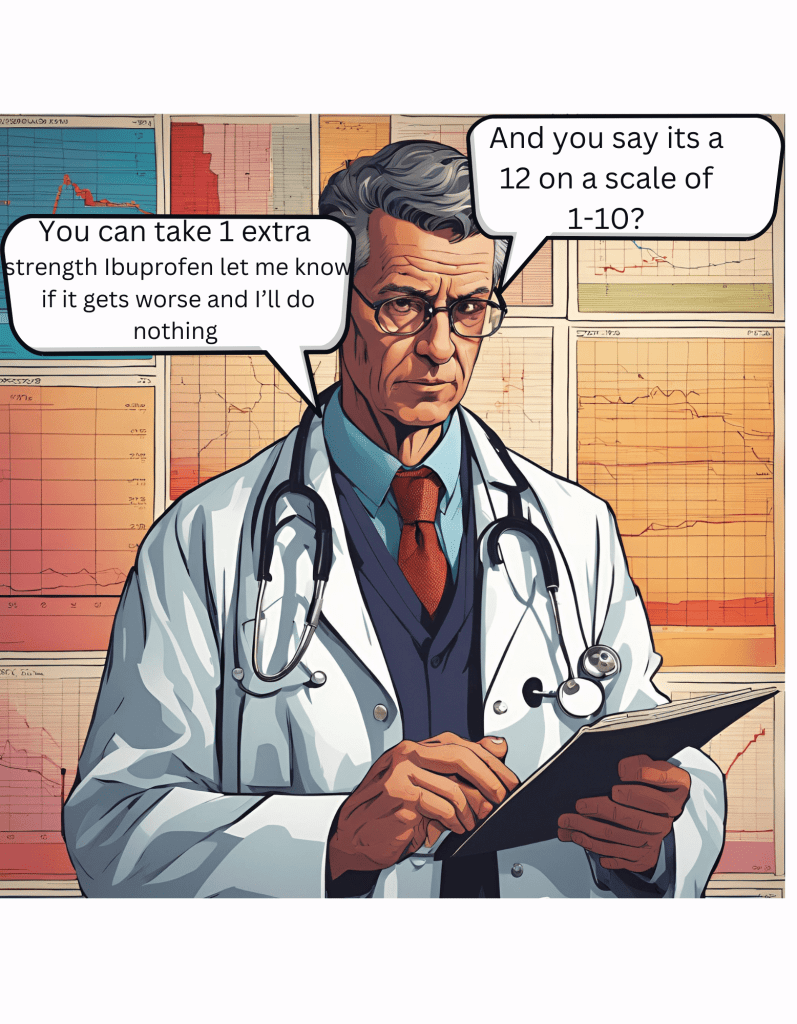
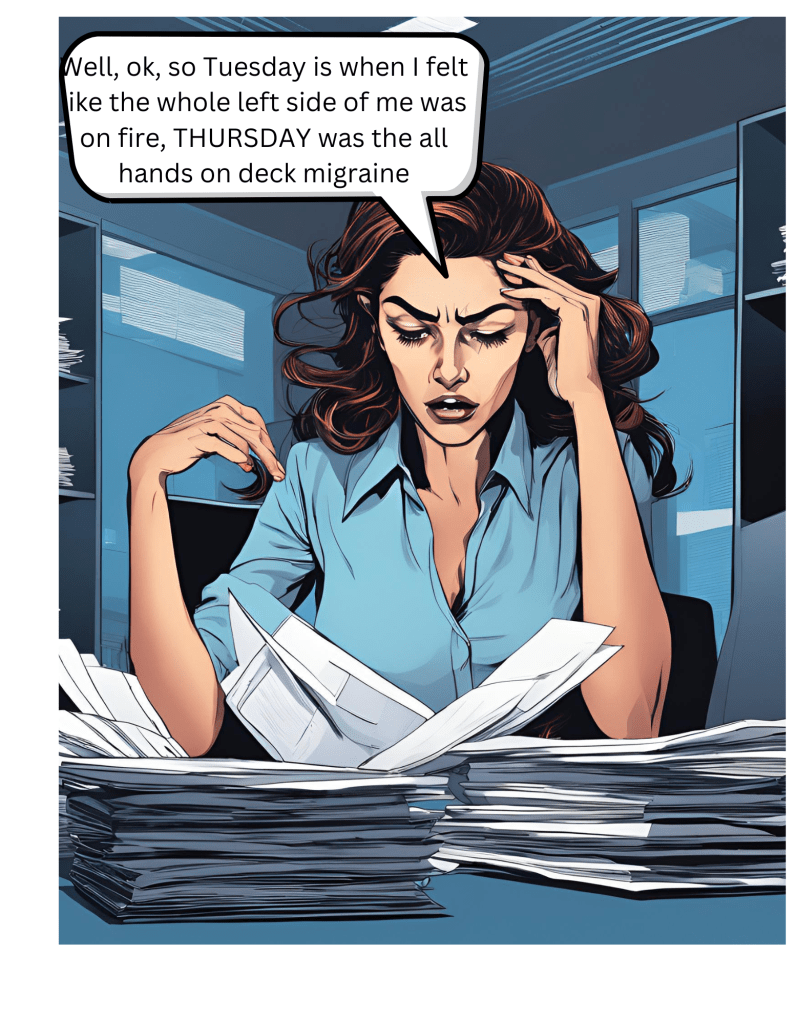
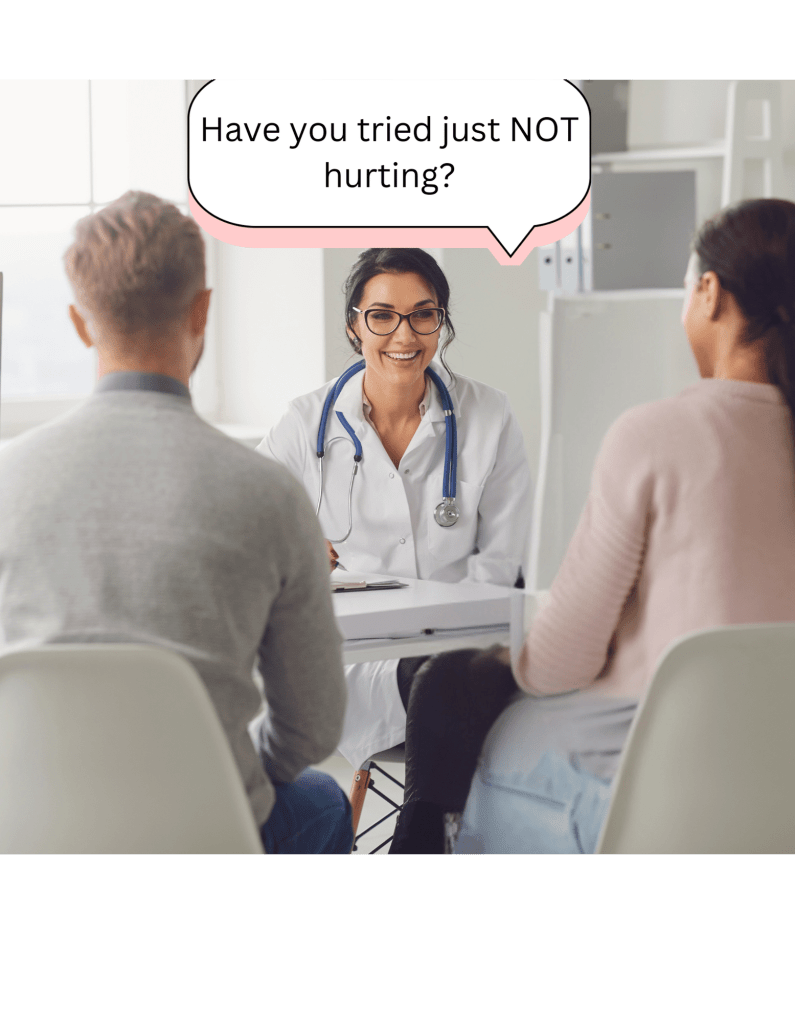
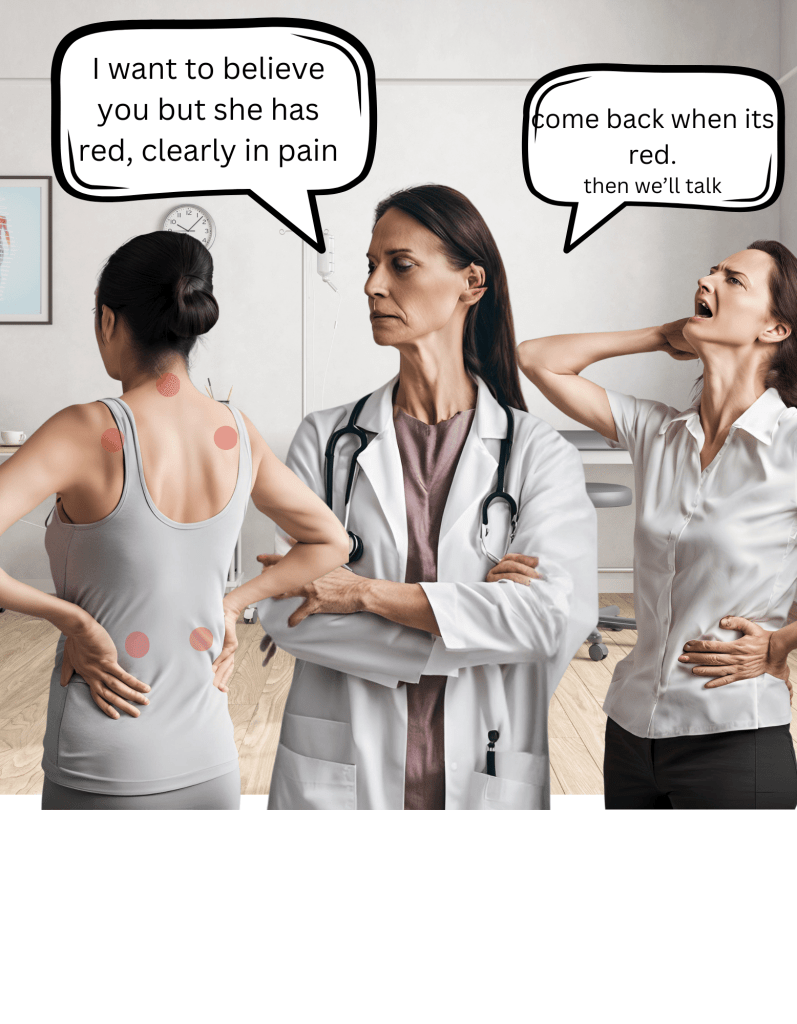
Medical PTSD is what happens when repeated negative experiences with healthcare providers leave you emotionally scarred. It’s not just about a bad appointment here or there—it’s about the trauma that builds up over time when your pain or symptoms are brushed off as “nothing” or “all in your head.” Spoiler alert: it’s not in your head. For many of us with invisible illnesses, this is an all-too-familiar story. Bloodwork comes back fine? Must be nothing. Physical exam looks normal? You’re probably exaggerating. And suddenly, you’re left questioning your own reality because someone with a stethoscope couldn’t see what you’re feeling every single day. The number of times I’ve left a doctors appointment shaking my head saying ‘well, I mean if it WAS something wouldn’t they see it?’ No, thats not true, some stuff is tricky and it hides behind stuff. Some times you have to poke around at stuff until you figure it out, that doesnt mean things arent there to find.
Truth Bomb: Invisible Doesn’t Mean Imaginary
Here’s the thing: just because something doesn’t show up on a test doesn’t mean it isn’t real. Fibromyalgia doesn’t light up on an X-ray. Bipolar disorder doesn’t leave a trail in your bloodwork. Autism and ADHD don’t come with flashing neon signs saying, “Hey, I’m here!” But that doesn’t make them any less valid—or any less debilitating. I can’t tell you how many times I’ve walked into an appointment armed with symptom logs, research, and sheer determination, only to be met with raised eyebrows and the dreaded “It’s probably just stress.” Or, ‘well you DO have Fibro’ Oh really? Because last time I checked, Fibromyalgia didn’t cause my hip to stage a full-blown mutiny (looking at you, early retirement hip).
The Emotional Toll of Being Dismissed
Let me paint you a picture: You’re already dealing with chronic pain, fatigue, mood swings—basically the greatest hits of invisible illness. Then you muster up the courage to seek help (because let’s be honest, even making the appointment feels like climbing Everest). You sit there, vulnerable and hopeful, only to be told your symptoms don’t add up or aren’t serious enough to warrant concern.
That kind of dismissal doesn’t just sting—it leaves scars. Over time, it can make you hesitant to seek care at all. Why bother if no one’s going to listen? But here’s the kicker: avoiding care can lead to worsening symptoms and even more complex health issues down the line. It’s a vicious cycle that needs to stop.
Breaking the Cycle: Advocacy and Awareness
So how do we fix this mess? For starters:
Trust Your Gut: If something feels wrong in your body, it probably is. Don’t let anyone convince you otherwise.
Document Everything: Keep a symptom diary so you have concrete evidence to back up your concerns.
Bring Backup: Take a trusted friend or family member to appointments—they can help advocate for you when you’re feeling overwhelmed.
Seek Second Opinions: If one doctor dismisses you, find another who will listen. Your health is worth fighting for. Though check with your doctors office or hospital system on policies, my doctor of 7 years dropped me because I got one.
And let’s not forget the role of healthcare providers in this equation. Doctors need better training on invisible illnesses—period. They need to understand that just because they can’t see it doesn’t mean it isn’t there. A little empathy goes a long way.
My Own Battle Scars
I’ve got plenty of stories I could share about being dismissed by doctors (and believe me, I will). Like the time I was told my fibro pain was just “overexertion” when I hadn’t done more than shuffle from my bed to the couch all week. Or when my bipolar symptoms were brushed off as “just moodiness” because I happened to be having a good day during my appointment. Yes its about highs and lows but there is so much nuance and theres no way to catalogue each patient’s symptoms into a graph saying which predominant symptom is worse from day to given day, I don’t even know a metric you could rate them on, its just too much. But perhaps the most frustrating moment was when my hip—yes, my actual joint—was screaming for help, and I was told ‘Well, fibro is painful.’ said sincerely with a hand on my shoulder (do not touch a fibro sufferer there and expect to be conveying sympathy or empathy, its like my BIGGEST tender point, which I never mentioned SPECIFICALLY so I let it go, but you wouldnt do that) Spoiler alert: it wasn’t just fibro; it was my hip waving its white flag and demanding replacement parts.
The Bottom Line
Medical PTSD is real, and it’s time we start talking about it. For those of us living with chronic conditions and invisible illnesses, advocating for ourselves isn’t just an option—it’s a necessity. So keep pushing for answers, keep telling your story, and never let anyone make you feel like your pain isn’t valid.Because at the end of the day? We know our bodies better than anyone else ever could. And who can tell your story and explain your pain better than you? Til next time gang, take care of yourselves, and each other!
Gather ’round fellow sufferers, for a tale of bodily betrayal that’ll make you laugh, cry, or maybe both – because let’s face it, sometimes that’s all we can do when our parts start throwing in the towel! Welcome to your 40s, folks – that magical decade when your body parts start sending out retirement notices faster than you can say “midlife crisis.” It’s like they all got together for a secret meeting (probably while I was napping – thanks, fibro!) and decided, “Hey, we’ve been busting our butts for decades. Time to clock out and let the young’uns take over.” Now, I’m no stranger to the ol’ body part eviction notice. My colorful past has led to more parts being removed than I care to count. I’m basically a walking “Lost and Found” box at this point. But just when I thought I was done playing Operation with my own body, my hip decides to join the exodus.
There I am, minding my own business (okay, probably complaining about something else hurting, cuz fibro), when BAM! My hip sends in its resignation letter. It’s done. Finito. Sayonara. My hip’s basically like, “Listen, lady, I’ve put in my hours. I’ve carried your sorry ass around for 40+ years. It’s time for me to hang up my hat and enjoy some R&R. Maybe take up golfing or start a hip-hop career. Get it? Hip-hop?”
This trusty joint of mine has been putting in some serious overtime, and let me tell you, it’s been doing it without so much as a coffee break or a “Hip of the Month” plaque. For years, it’s been the unsung hero of my body’s workforce, carrying me through my fibro flare-ups, cat-chasing adventures, and those days when getting out of bed felt like scaling Mount Everest.But somewhere between the thousandth grocery bag lift and the millionth “I swear I’m not limping, I’m just walking with style” stride, my hip started getting a bit… well, hip-ster. It began demanding things like “rest” and “proper alignment” – the nerve! It’s like it suddenly remembered it had rights or something
When it started troubling me I faced the obstacles that are sadly all too familiar to my fellow warriors, I take this new concern to the doctor, it was initially just brushed off with ‘yes fibro is chronic pain’. Then two years after that, with me consistently saying it hurt DIFFERENT than the fibro, she ordered an x-ray since it was such a weird but steadily getting worse pain and the scan showed moderate osteoarthritis. Not curable and one of those ‘just gonna hurt’ pains. Fast forward three years, finaly got another x-ray that reclassified my OA status is severe and severe enough to put me on the hip replacement list. Color me terrified.
Not every pain we have is fibro related. I understand how easy it can be to dismiss our symptoms as ‘just fibro’ or ‘just stress.’ But we know our bodies, and sometimes what feels like one condition is actually something more. Don’t let anyone invalidate your experience. If you feel something isn’t right, advocate for yourself and push for the care you deserve. Our voices matter, and we deserve to be heard when it comes to our health.
So here I am, facing down a hip replacement way too young thanks to fibro, and thanks to the car hitting me when I was walking. Because apparently, I’m an overachiever even when it comes to falling apart. But hey, look on the bright side – at least I’ll have a shiny new bionic part to add to my collection. Maybe I’ll even get a punch card: “10 surgeries and the next one’s free!” I’m probably up to that by now LOL.
The Moment of Truth: Cysts and No Hope for Fixing It
So, what happened next? Oh, just a little something called “The Moment of Truth: Cysts and No Hope for Fixing It
So, what happened next? Oh, just a little something called “subchondral cysts otherwise known as bone cysts.” Because apparently, my body wasn’t just aging gracefully—it decided to throw in some uninvited guests to make things extra fun. The cysts basically sealed the deal. My hip wasn’t just aging out; it was actively failing on me. After an x-ray, my ortho looked at me and said, “Oh honey, this is severe. There’s no saving this one.”
That was it. No shots, (and I had been putting off getting shots for the pain actually, was finally strong enough in my belief that I could do it and I had no more options since I won’t take narcotics) no pills, no more easy fixes. It was time for major surgery—a hip replacement. And honestly? It felt like a bit of a gut punch, but also a relief. I mean, I’d been working with a hip that was basically clocking out without telling me, so now it was time to send it into official retirement.”
Retirement Offer: The Hip Replacement Option
This is where things got real. I thought I could push through, maybe try some shots or other treatments, but nope, that wasn’t going to be enough. The hip sent a strong message that no amount of cortisone was going to keep it in the game any longer. And after consulting with my ortho, we discovered that my old hip wasn’t just tired—it was severe. So, we started the paperwork. A hip replacement is on the horizon.
I look forward to the end of March, that will be near the official day that my hip clocks out for good, and a shiny new joint will step in to take its place. So, What’s Next?
Aging might be inevitable, but a hip replacement can be a total game-changer. And while I’m not thrilled about the process (did I mention I almost passed out twice during the initial consult?), I’m ready to get that shiny new hip and hopefully say goodbye to some of this pain.
Here’s the thing: The body’s not like it used to be in your 20s and 30s when you could run full speed and wake up feeling like you just slept in a cloud. Nope, my body is now sending in its retirement applications early, and I’m here for it—with a little humor and a lot of prep work, of course.
In the upcoming posts, I’ll share more details about what the process actually looks like: from the pre-op checkups to the (probably highly entertaining) recovery phase. So, if you’re someone who’s looking down the barrel of your own hip replacement, or you just want to see how this unfolds (because who doesn’t love a good recovery journey?), stick around! Maybe my hip will send me a post card lol. Til next time gang, take care of yourselves. And each other.
1. Misconception: Fibromyalgia is just “in your head” or not real. Truth: Fibromyalgia is a real, chronic medical condition that affects the central nervous system. It’s characterized by widespread pain, fatigue, and other symptoms that are definitely not imagined. It’s scientifically recognized and impacts both physical and emotional well-being. Science backs us up on this one, folks.
I can sometimes understand why people might not get it—if I’m having a good day and I’m active, I probably look like your average Midwestern mom. I mean, maybe I should just get an “F” tatted on my forehead? I’ve thought about it. The number of doctors who’ve been dismissive of my very real condition is almost as high as the number of people who are shocked when they hear about my bipolar diagnosis. Clearly, they haven’t seen the rapid mood swings or heard me say, “But you’re sad?” to which I’ll reply, “Yes, amazingly, I can be both sad and manic at the same time, and trust me, it’s a million times worse.”
But I digress. Let’s keep up here—it’s 2025, and fibromyalgia has been a diagnosable illness since 1976. Before that, it was known as fibrositis in 1904, and even earlier, it was referred to as rheumatism. I mention this because, although no one knows exactly what causes it, I’ve been diving into my genealogy—yes, I’m a bit of a nerd—and checking birth and death records to compare what I know versus what I think I know. In the process, I’ve noticed that at least six of my direct ancestors had some form of fibro or rheumatism.
Do I think fibromyalgia will kill me? No—honestly, I have more pressing health concerns to worry about—but it’s been around for a long time. If you come across a medical professional who doesn’t think fibro is real, get a second opinion. And just to clarify: I’m talking about someone who doesn’t believe fibro even exists—not someone who doubts it’s what you’re suffering from. I’ll say it again: a second opinion never hurts… though, in my case, I had my doctor of 7 years drop me for getting one. So stay informed, don’t get discouraged, and keep pushing until you get the answers you deserve.
2. Misconception: Fibromyalgia is the same for everyone.
Truth : Fibromyalgia is like a box of chocolates, you never know what you’re gonna get. Sure, we’ve all got the greatest hits – pain that feels like we’ve gone ten rounds with a heavyweight champ and fatigue that makes sloths look energetic. But beyond that? It’s a grab bag of fun surprises. Some of us are walking zombies thanks to sleep issues, while others are living in a fog so thick you’d think we’re extras in a horror movie. And don’t even get me started on the triggers. What sets off my fibro might not even tickle yours. This is why docs often treat fibro like the ‘rule it out’ illness. They run every test under the sun, and when everything comes back squeaky clean, they throw up their hands and say, “Must be fibro!” I wonder how many times that phrase was said by a doctor to a person who died from something that should have been caught. Wouldn’t it be peachy if we could all agree on what fibro looks like? Maybe then we’d have a magic pill or a cure. Hell, I’d settle for a flashing neon sign that says, “Fibro flare incoming!” But nope, that’s not how this beast rolls.
3. Misconception: People with fibromyalgia are just “lazy.”
Truth: People with fibromyalgia often experience extreme fatigue that is not relieved by rest. This can make daily activities feel overwhelming and exhausting, but it’s not a matter of laziness—it’s a physical condition that affects the body’s ability to generate energy and recover. Picture this: you’ve just “slept” for 10 hours, but you feel like you’ve been awake for days, You drag yourself out of bed, feeling like you’re moving through molasses, and even the simple act of making a cup of coffee feels like you’re scaling Mount Everest. That’s fibro fatigue, folks.
This isn’t about being lazy or needing an extra cup of coffee. It’s your body throwing a full-on rebellion, refusing to generate the energy you need to function like a normal person. And let me tell you, it’s beyond frustrating.
The kicker? This fatigue doesn’t play fair. It doesn’t care if you’ve rested, slept for 12 hours, or spent the day binge-watching your favorite show. It’s always lurking, ready to sucker-punch you when you least expect it. And no matter how mad I get at myself, once I’m in a funk its necessities only and they tend to relate to immediate family, so the things I don’t get done pile up until they become daunting to the point that I don’t know where to start so I just DON’T start. Executive dysfunction at its best folks.
So next time you see someone with fibro canceling plans or looking like they’ve been hit by a truck, remember: we’re not being flaky or dramatic. We’re just trying to navigate life with a body that’s forgotten how to recharge its batteries. It’s not laziness—it’s our reality, and we’re doing our best to push through it every single day.
4. Misconception: Fibromyalgia only affects older people. Fibromyalgia is also not limited to adulthood—children and adolescents can be diagnosed with it, though this is relatively rare. According to the American College of Rheumatology, fibromyalgia in children and teens often presents differently than it does in adults, with symptoms like widespread pain, fatigue, headaches, and difficulty concentrating (often referred to as “fibro fog”). The challenges with diagnosing fibro in younger individuals are compounded by the fact that many of these symptoms overlap with those of other conditions, making it harder to pinpoint fibromyalgia as the cause.
In younger patients, symptoms may be mistaken for growing pains or other childhood illnesses, which can delay a correct diagnosis. The National Fibromyalgia Association states that fibromyalgia in children may be underdiagnosed, partly because doctors may attribute symptoms like tiredness or pain to more common, non-chronic conditions. Additionally, children may struggle to articulate how they’re feeling, which can make diagnosis even more difficult.
Fibromyalgia can occur at any stage of life, and its symptoms vary widely. While some people may have mild discomfort, others experience debilitating pain and fatigue that severely impacts their daily lives. As the condition often fluctuates in severity, it can be hard to predict its long-term course.
It’s important to note that the cause of fibromyalgia is still not fully understood, though genetics, infections, physical trauma, and emotional stress are thought to contribute to its development.
5. Misconception: There’s no treatment for fibromyalgia.
You’ve probably heard there’s no treatment for this beast, right? Well, hold onto your hats, because that’s about as true as saying chocolate isn’t a food group. Sure, we don’t have a magic wand to make fibro disappear (believe me, I’ve looked). But we’ve got a whole arsenal of tricks to keep this monster at bay. It’s like playing whack-a-mole with your symptoms, but hey, at least we’re not sitting ducks! First up, we’ve got meds. From your garden variety pain killers to fancy-pants antidepressants and anti-seizure meds, there’s a buffet of options. These bad boys can help tame the pain and maybe even let you catch some Z’s without feeling like you’ve been hit by a truck. Then there’s physical therapy and exercise. I know, I know, the thought of moving when everything hurts is about as appealing as a root canal. But trust me, a little moderate exercise can work wonders. It’s like giving your body a tune-up.
And let’s not forget about the mind game. Cognitive-behavioral therapy isn’t just for when you’re feeling blue. It’s like a personal trainer for your brain, helping you outsmart the pain and stress. Now, for the lifestyle changes. Getting enough rest, eating right, and practicing good sleep hygiene might sound like advice your grandma would give, but don’t knock it ’til you’ve tried it. It’s amazing what a difference these can make. For those feeling a bit adventurous, there’s always acupuncture and massage. It’s like a spa day, but with actual health benefits. Who knew getting poked with needles could feel so good? The key here, my fellow fibro warriors, is to mix and match. It’s like creating your own personal fibro-fighting cocktail. What works for me might not work for you, and that’s okay. We’re all unique snowflakes in this blizzard of pain.So don’t let anyone tell you there’s no hope. We might not have a cure (yet), but we’ve got options. And in this fibro fight, options are our secret weapon. Now, go forth and conquer my friends, Until next time take care of yourselves, and each other.
A Patient’s Perspective on Medication Refills and Advocacy
As someone living with chronic conditions, I’ve learned that managing medications can be as challenging as managing the illnesses themselves. We trust healthcare providers and pharmacies to support us in maintaining our health and well-being, but when systems break down, the consequences can be painful, frustrating, and even dangerous. Recently, I experienced a frustrating series of events that highlight the need for better patient advocacy and streamlined processes in our healthcare system.
It started with a simple refill request for a medication I’ve been taking for years. What should have been routine turned into a week-long ordeal of pharmacy stock issues, doctor unavailability, and communication breakdowns. I found myself caught between pharmacies and medical offices, desperately trying to avoid withdrawal symptoms while also dealing with an unrelated infection.
I ordered a necessary medication refill on a Tuesday, as part of my routine care plan. I do it regularly every month. By Friday, (note they’d had it 3-4 days at this point, I didnt run out of meds UNTIL Friday) I went to pick it up, only to find that the pharmacy was out of stock. I was told to speak to the pharmacist if the medication was urgent, so I did. However, I was then told that in order to fill the prescription at another pharmacy, I would need a new script from my doctor. But my doctor historically wasn’t available on Fridays.
That weekend, I became unwell. I went to urgent care, where I was diagnosed with an unrelated infection. But alongside my infection, I experienced symptoms of withdrawal—symptoms caused by the missing medication. I immediately sent my doctor a message explaining what had happened and the withdrawal symptoms I was experiencing. I have been under her care since 2017, and she had approved my prescription months ago. There was nothing new or unusual about this situation—this was the same medication I had been prescribed and that I had ordered on Tuesday.
Despite this, my doctor’s office was silent. I continued to feel the effects of withdrawal, unable to eat properly or function without pain. It wasn’t until Tuesday that I finally reached out to the office, explained the situation, and asked for guidance. After some persistence, the office confirmed that they would cancel the Walgreens order and send the prescription to Walmart instead.
But still, nothing happened. By Wednesday afternoon, I received a vague message that gave me the sense that my situation was not urgent or important. (A professional way of saying, your situation is not a priority, she’ll get to it when she gets to it, and believe me, I’m not saying I’m a priority or better than anyone, I am saying MY SITUATION merited a closer than fleeting glance) I had been without my medication for almost a week, and I was truly suffering. Yet, when Walgreens finally called to let me know they had restocked the medication, I immediately called and told the doctor’s office and asked what do I do? She told me not to pick it up from them. They implied that doing so might make me look like I was trying to “beat the system.”
I was simply trying to manage my chronic illness with the medication that had been prescribed to me, a treatment I’ve been using for years. The lack of communication from my doctor’s office made the situation even more exasperating. My health was deteriorating, and yet, I was met with suspicion and delay.
Then, as it was a Friday and I thought the doctors office wasn’t going to respond because it was a Friday I made the decision to pick up the medication from Walgreens anyway, I received an unexpected message from the doctor’s office: they had approved my prescription and were sending it to Walmart. By then, I had already gotten the medication from Walgreens, I of course immediately called the office felt compelled to make it clear that I picked it up. That morning in fact. Then I said I wanted everything handled through Walmart from that point on. This wasn’t an issue of seeking special treatment; it was a matter of ensuring I had access to the medication I needed, which I had been prescribed and ordered in advance.
This experience has shed light on the urgent need for better patient advocacy, both from healthcare providers and pharmacies. Policies and protocols need to be in place to handle situations like this—where patients are at risk of going without crucial medications and the healthcare system fails to support them. When withdrawal symptoms are involved, or when a patient’s medical condition is chronic and requires ongoing treatment, a system should exist that ensures no patient is left in limbo or subjected to unnecessary delays. Communication should be clear, swift, and consistent. When a patient is suffering, there should be a concrete backup plan for emergencies, so that healthcare providers and pharmacies can act quickly to prevent harm.
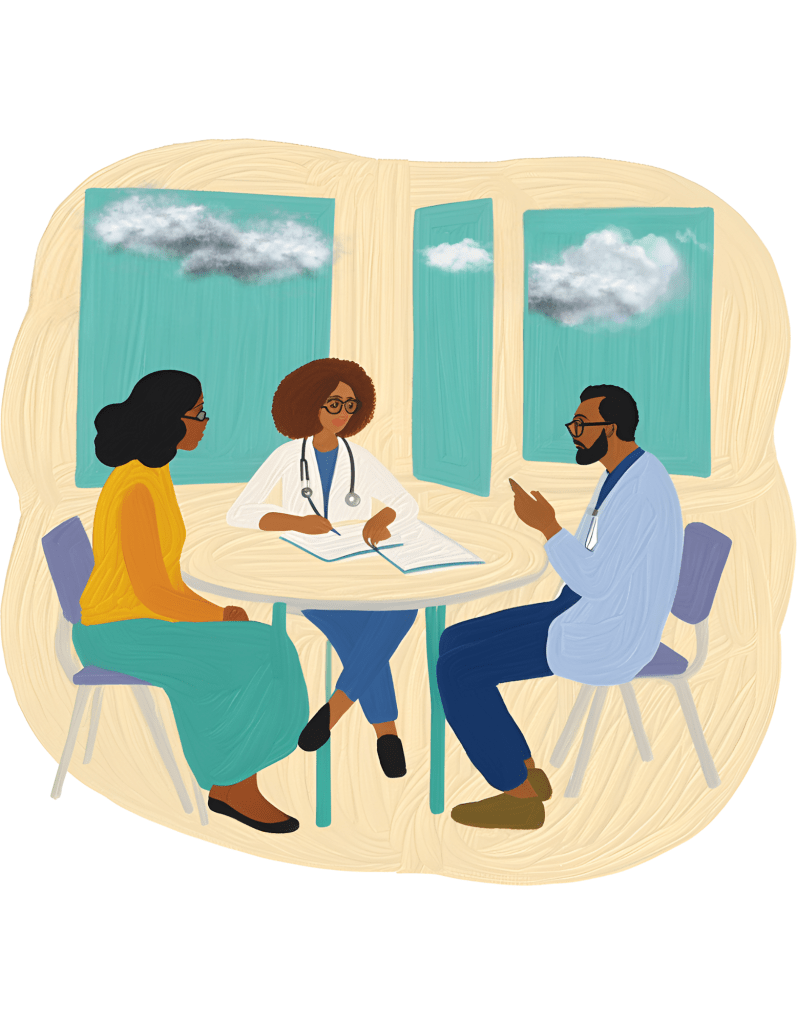
Unfortunately, my experience with the healthcare system didn’t end there. After seeing how badly I was struggling, my husband urged me to see his doctor, hoping they could offer more support. His doctor is part of the same hospital network, so we made an appointment and explained the situation, he did not think changing to his doctor would make anything worse, he just felt that I deserved better treatment. To his surprise (but sadly not mine), the doctor, without even fully understanding my medical history, immediately dismissed my need for pain medications. She suggested I visit a pain clinic, something I had done years ago, only to be treated like a criminal.
The doctor seemed unconcerned with the fact that I’ve been managing chronic pain from fibromyalgia, a condition with no cure, for years. I explained that I avoid narcotics—especially opioids—due to my previous history. I have not taken opioids since my heart stopped in 2017. Yet, this doctor treated my use of a non-narcotic medication like (L) as if it were just another attempt to get high.
So, how do we move forward? What needs to change to ensure that no patient is left without the care they need?
First, healthcare systems must implement clear protocols for handling medication issues and withdrawal symptoms. Providers and pharmacies alike should be trained to recognize the urgency of these situations and act swiftly.
Second, patients need better access to advocacy resources and should never feel like they’re fighting an uphill battle to receive their prescribed treatments.
And lastly, healthcare providers should understand the real, lived experiences of their patients, especially those dealing with chronic illness.
I’m ready to get started on making these changes happen. There are many moving parts, but with enough support and awareness, we can begin to create a more compassionate, responsive healthcare system for everyone. This is about more than just medication—it’s about treating patients with dignity and respect. This fight isnt only chronic pain, its anyone who takes a prescription they will have withdrawal from. I’m hoping to start/join a community and make a difference. Until next time gang. take care of yourselves, and each other.
Ah, New Year’s Eve. That magical time when the clock strikes midnight, and we make a series of promises to ourselves. You know, those lofty promises we make to ourselves after one too many glasses of champagne on New Year’s Eve… (Well not for me I’d take a gummie, talk about LOFTY lmao, and some of THOSE promises are just insane lol)Promises that, let’s be honest, may or may not survive past January 3rd. Let’s get real for a second – are these resolutions actually helpful, or are we just setting ourselves up for a spectacular face-plant into the pool of disappointment? I approach New Year’s resolutions with the same enthusiasm I have for trying to put on real pants before noon: skeptical, exhausted, and overwhelmed. But hey, a girl can dream, right?
So, let’s dive in with a practical (and hopefully hilarious) look at New Year’s resolutions from my slightly chaotic, slightly messy perspective. Spoiler alert: This is all about striking a balance between healthy goals and embracing the reality of our squirrel-brained existence.
1. “I’m going to organize the entire house!”
You see it all the time—resolutions that are essentially a mental checklist of Pinterest boards gone wrong. “This year, I will Marie Kondo my entire house. I will have matching bins for everything, and the laundry will fold itself!” Sounds great in theory, right?
But as someone with ADHD, I can confidently say that my home often looks like a Lego set that exploded, then a hurricane hit, and then a random toddler decided to ‘help’ clean. I’ve got big dreams, but my focus flits from task to task like a squirrel on caffeine. A study in Psychiatry Research found that people with ADHD are more likely to underestimate the time it takes to complete tasks and feel overwhelmed by big goals. So, unless I plan on starting with a single drawer, then celebrating my small victory, I’ll be doing some serious mental gymnastics just to avoid crying over the sheer amount of clutter.
I finally found last weeks CVS receipt!
My personal experience: I once started cooking myself some lunch, simple enough but when I went in there and there were too many things on the counter so I try and put a few things away, damn it, everything is jumbled but not MY jumbled so of course I stop and ‘fix’ everything. So later after I found places for things I didnt know I had, I started to gather my ingredients, I don’t see the tomatoes. After running to all the spots I have my canned goods squirreled away, I can’t find them anywhere. I’m spending far too much time looking for them, I go sit down at the computer to try and see my receipt for that week because I just KNOW I bought them. When I prove myself right I’ll go back and RE check everywhere before I finally go ask hubby to see if he knows where they are. He comes out and finds them in seconds, where I JUST looked like some amateur magician, I mean around here people would say if I were any closer it would have bit me lol, However once I start to open it and its a bad hand day and I am too shakey so I take the can and can opener over to hubby’s desk only to realize he’s not there, hunting him down doesnt take too long the house is small but now I hear the shower running. Oh well I can wait, and I take the can and the opener to my desk and see I have a message to respond to.. Needless to say two hours later I end up ordering pizza because I forgot what I was doing and I’m starving. I’m hyper focused on things, some are super dumb to focus. Three hours later, I realized I forgot about the laundry, the dishes, and the food I need to live lol…oops.
2. “I’ll get my life together by being ‘healthier’.”
Ah, the classic resolution: get healthy. Maybe you’re aiming to drink more water, eat cleaner, or even start a workout routine. On paper, it’s the perfect plan. But for someone with fibromyalgia, bipolar disorder, ADHD, and a life full of sensory overload, “being healthy” can quickly feel like the equivalent of climbing Mount Everest in flip-flops.
Fibromyalgia makes me feel like a walking body ache, and some days I’m lucky to get out of bed, let alone hit the gym. I might be in the mood to work out (at 2 a.m. when the house is finally quiet), but then the next day I’ll be in a pain fog and realize that I can’t even lift my coffee cup without wincing.
The research: According to a study published in Frontiers in Psychology, self-compassion is a healthier approach to mental and physical wellness, especially for those with chronic conditions. Instead of stressing over being “perfectly healthy,” the goal should be about taking small, manageable steps and giving yourself grace when it doesn’t work out as planned.
My personal experience: I’ve set a goal to eat better, the NEXT DAY we went to an all you can eat buffet! Shortest diet I’ve ever done lol. I’ve yo-yoed my whole life I’d like to get myself right in the middle, a healthy weight, but I can’t get out of my head enough once I decide I want to lose weight, its a target goal and I will skip eating then get in the pattern of not eating, then start forgetting to eat, this is the progression of this damn cycle. Its a ride I’m trying to get off of.
3. “I will have a better morning routine.”
Let’s be real—mornings are chaos, especially when you have a neurodiverse kiddo in the house. I’ve tried every variation of a “better morning routine” that the internet offers. Wake up, drink water, stretch, make a smoothie, meditate… but when you have a child with autism who struggles with transitions, any routine can be in peril the second they decide that, today, the shirt you picked out is the worst one in the history of shirts. Also, you just got up at 4 a.m. to the sound of a small human announcing that they’ve had a bad dream and that all of your plans for personal growth are now irrelevant.
But guess what? A study from The Journal of Autism and Developmental Disorders shows that predictability and structure in the morning are helpful for neurodiverse children. So, maybe my dream of getting a Zen-like morning isn’t as hopeless as it feels. (That’s not to say I won’t collapse into a heap of tears when my kid insists on eating a frozen waffle for breakfast, even though there’s a hot meal sitting in front of them.)
My personal experience: This one I’ve done a bit better at. I get up and do my morning stuff, a little duolingo, maybe watch youtube videos. Track your circadian rhythm, a fitbit or something that tracks your sleep, and experiment. I have found that I get the most done and be the most productive when I wake up before everyone else. The problem is that by 5 I am DONE lol. I’m usually ready to chill and watch tv until 8 or 9 when I give up the fight lol but everyone is different and you don’t know what works and fits into your life best until you experiment.
4. “I will learn to love myself.”
Self-love. The golden nugget of every resolution list. The heartwarming message that we should all aspire to love ourselves unconditionally. Except for the part where bipolar disorder hijacks my self-worth on a random Tuesday, and the fibro fog leaves me questioning whether I’m even a real person or just a walking pile of laundry. This kind of resolution, though well-intentioned, can feel like a setup for failure when your brain chemistry or chronic pain says, “Nope, not today.”
But here’s the thing: self-love isn’t about achieving perfection. It’s about being kind to yourself, even when you’re exhausted, your house looks like a crime scene, and your child just spilled cereal on the dog. Research shows that self-compassion is tied to better mental health, better coping skills, and a reduction in anxiety and depression, especially for those with chronic conditions. So, maybe this year I’ll resolve to be less harsh on myself when I’m not able to check off everything on my to-do list.
My personal experience: I spent an hour yesterday trying to learn how to cook sausage and peppers like my mom used to make. I googled it and I’ve stuck to the exact recipe, three different exact recipes actually (I’m kind of known for not sticking to recipes because I am incredibly picky) and yesterdays attempt was so far beyond yuck it made me feel like I failed and then I was hungry and mad at myself and in an emotional state because of the mental energy required to not scream.
5. “I’ll be more present.”
This one is popular among all parents, but especially those of us who feel like we’re constantly in survival mode. Being present with my child (and in my life) sounds lovely, but it’s easier said than done when you’re hyper-focused on a million other things, like that email from school, that phone call you need to make, and oh, your brain is just running through a checklist of everything you didn’t get done today.
But there’s hope. A 2020 study in Frontiers in Psychology found that mindfulness—just focusing on one thing at a time—can have a positive effect on both children and parents, especially in neurodiverse families. So, maybe I won’t master mindfulness right away, but I can certainly try to be “present” while making sure my kid doesn’t eat the cat food.
My personal experience: This was actually a goal from last year that I didnt really accomplish, I’m ready tonow I think. I spent 20 minutes watching football with my daughter with us chatting back and forth but I couldnt tell you what she even said because I was busy troubleshooting problems and planning next week’s dinners. Maybe tomorrow?
In Conclusion: The Real Resolution
So, here’s the deal: New Year’s resolutions can be tricky when you’re managing a swirl of mental and physical health conditions, plus trying to be the best version of yourself for your family. And yes, I can get overwhelmed by the pressure of trying to “fix” everything at once. But it’s important to remember that any resolution—no matter how big or small—is about progress, not perfection.
So, what’s a chronically fabulous person to do? Well, I’m a fan of what I like to call “micro-resolutions” or “goals with training wheels.” Instead of vowing to run a marathon (unless that’s your jam, in which case, do you! But I’ll tell you now, you ever see me running you should run fast because I don’t run unless something terrifying is chasing me), how about committing to stretching for five minutes a day? Or instead of promising to overhaul your entire diet, maybe just aim to add one extra veggie to your plate each week. The key is to make your goals flexible and forgiving. Life with chronic illness is unpredictable, and our resolutions should reflect that. It’s okay to have bad days, weeks, or even months. The important thing is to keep moving forward, even if it’s at a snail’s pace.
Instead of aiming for flawless execution of some arbitrary goal, I’m going to focus on one thing: being kind to myself. And if that means taking a nap in the middle of the day, or not organizing my whole house, so be it. The New Year’s resolution I’m setting this year is simple: give myself grace. And hey, if I can learn to drink more water and finally clean out my fridge? Bonus.
Your worth isn’t measured by how many resolutions you keep or how many goals you crush. It’s measured by the strength it takes to keep going, even when your body feels like it’s staging a mutiny. Here’s to a new year filled with gentle progress, self-compassion, and maybe a few less doctor’s appointments (a girl can dream, right?). Happy New Year, fellow chaotic warriors! May this year be filled with fewer expectations and more moments of peace…and maybe fewer meltdowns along the way. Til next time gang, take care of yourselves, and each other.
Stress management, we ALL at some point undergo stress, its an essential yet shitty byproduct of a joyful human experience. While your brain feels like it’s running a marathon while simultaneously trying to solve a Rubik’s cube, sometimes you need something more than deep breathing to keep from losing your mind. Maybe its because I grew up in the era of Saturday morning cartoons and reruns of Tom and Jerry, but I very much picture and visualize stress as making me red and steam coming out of my ears, so I look at stress relief as a valve that releases AAAALLLLLL the bad (I used to teach yoga, exhale the bad to give you room to inhale the good.). From work pressures to personal challenges, it can feel like the weight of the world is on your shoulders. But did you know that one of the best ways to manage stress might just be to create, express, and explore? Engaging in creative activities like art, writing, and music not only offers a fun escape, but can also provide therapeutic benefits to calm the mind and rejuvenate the spirit. Here are some creative outlets that can help alleviate stress, all while having a blast.
Art: When Words Fail, Colors Speak
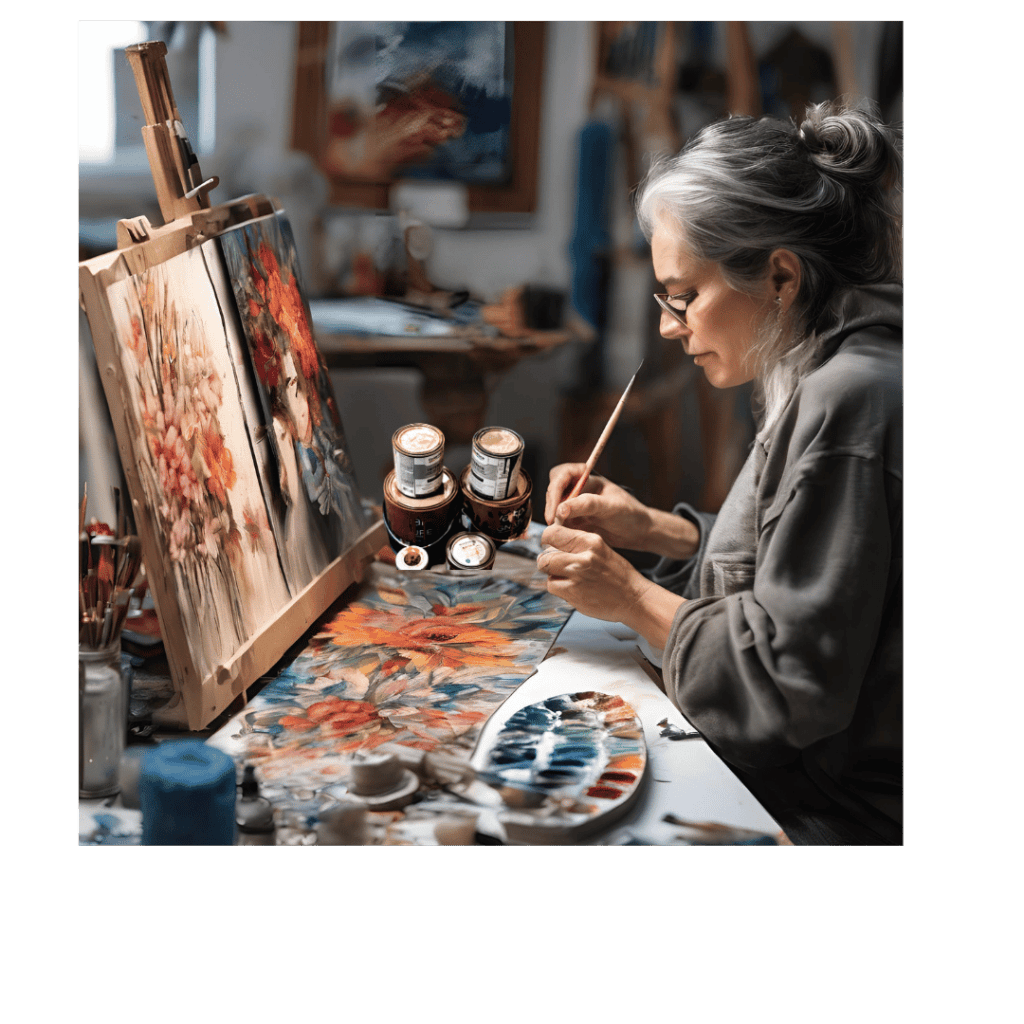
Forget being the next Picasso. This isn’t about creating museum-worthy masterpieces. It’s about splashing color around and telling your brain to shut up for a minute. Mixing colors and mediums have been proven to raise cortisol levels in repeated studies. Pro tip: Those adult coloring books? Total game-changers. Especially the ones with the naughty words, those help and who didnt color in bubble letters on stuff in school. I love those or the really pretty Mandalas! Last year I even got hubby one, the Mandalas were all boobs lol he loved it.
Writing: Your Brain’s Emotional Dumpster
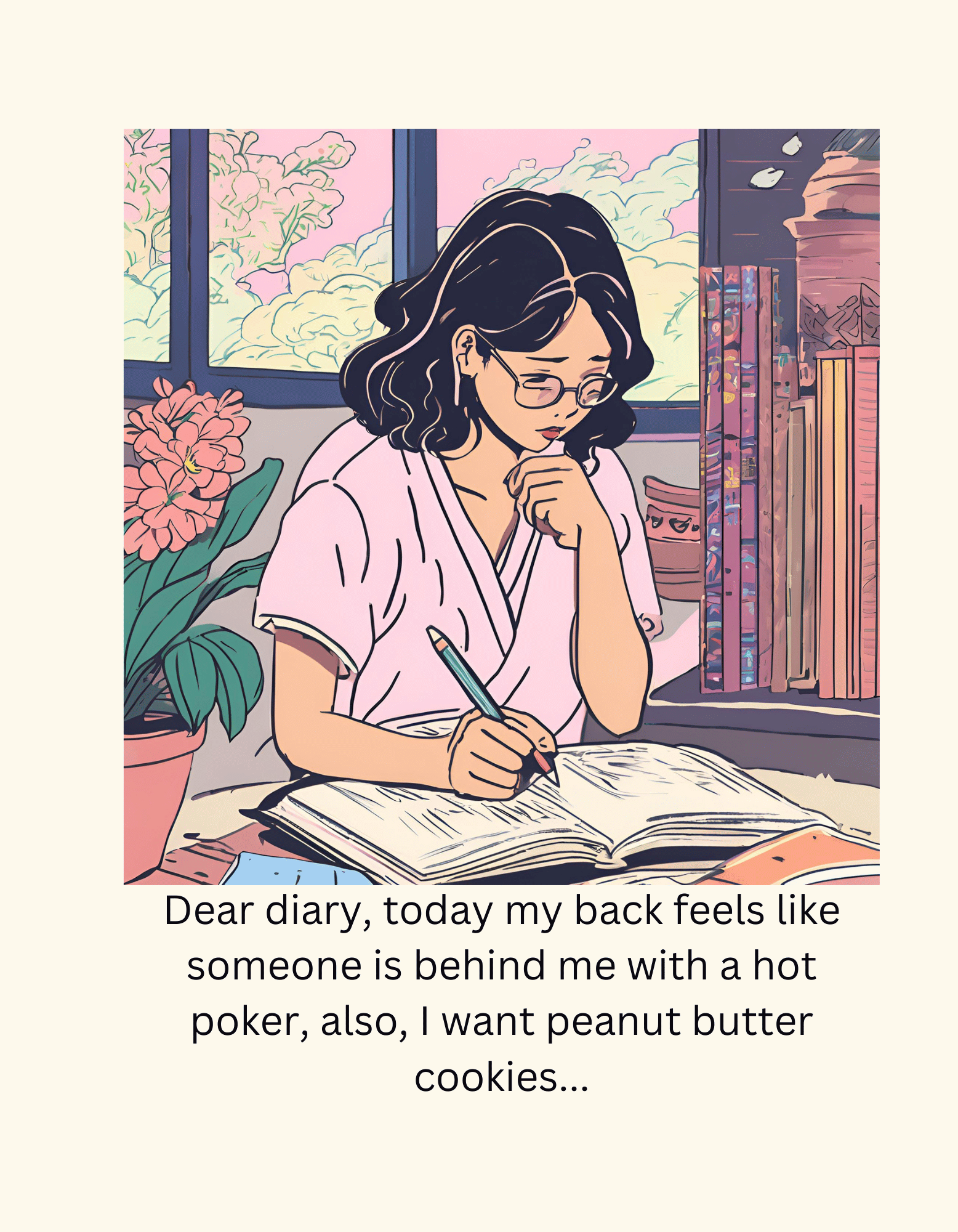
Journaling isn’t just for angsty teenagers. It’s like having a conversation with yourself where you don’t have to apologize for your wild thoughts. Often offering both clarity and release, fiction, poetry, stream of consciousness – whatever helps you dump those mental gremlins onto paper. Stream of consciousness writings are my favorite. When something is bothering me I like to sit down and just start writing and just see where it takes me. Whether you’re writing a letter to yourself, crafting poetry, or telling a short story, the act of writing helps organize your thoughts and reduce emotional overload. Sometimes its funny sometimes its revealing in that sometimes I will be writing about whatever is bothering me and whatever the answer is it jumps onto the paper after I’ve worked it out in my head and put it to paper. Other times I will write about a problem and put it away for a set amount of time NOT thinking about it and go back to it after a day or so and when I look at it again it doesnt matter as much or I immediately come up with a solution I couldnt think of when I was laser focused on it. Any way you look at it, getting the words out (to your own eyes anyway) can’t make it worse.
Music: Turning Emotional Chaos into Sound
You don’t need to be a rock star. Singing in the shower, drumming on kitchen counters, or creating the world’s most chaotic Spotify playlist counts as therapy. Music has the incredible ability to transport you to another place. Research has shown that playing music, or even just singing along to your favorite tunes, can reduce cortisol levels (the stress hormone) and boost your mood. My personal recommendation? Find that one song that makes you forget everything else exists. Put on kitchen concerts for the animals. Blast the music while you are cooking and embarrass your teenager by singing along to all the songs at full volume with the confidence that said teenager used to sing the wrong lyrics with. LOL I hate saying ‘kids these days’ but its true, they didnt have radio before lyrics were freely available, remember when you were young singing along to songs with your friends only to realize you’ve been singing the wrong words so you missed the meaning in the song entirely lol. Music has hit me HARD in the last few years, and I have such eclectic taste, I love songs with that emotional breath catch, not like the fake movie ones but like just pure angst they just can’t contain the little noise that goes with it. Thats my favorite. I dont drive anymore but that used to be my go to, getting in the car and driving, windows down (well usually smoking back then too) and blasting the music loudly singing along. I do miss that, being a passenger doesnt work, it just hits different I dont know why.
Crafting: Hands Busy, Brain Quiet
Whether it’s knitting, building model trains, or creating the world’s most elaborate paperclip sculpture, sometimes keeping your hands busy is the best way to quiet your mind. Its for the same reason some people have to do lists, crossing those little things off the list give you a sense of accomplishment and a craft project, especially something tangible you can see and feel. Repetitive motions can be calming too. I generally read a book but when I’m going through things in my head I can’t sit still so I make things. Not good things, I made a coat hanger Christmas tree for my room because I love the lights. I’m tempted to become like a teenager and line my room with LED light strips I love the soft glow. I did a number of crafty gifts this year too. My little monkey (well not so little but my youngest will always be my little monkey) likes four different NFL teams and wanted merch for each for Christmas. We all know how expensive that would have been so I made her ornaments for each team. Little things like that.
Dance Like Nobody’s Watching (Seriously, Nobody’s Watching)
No choreography required. Just you, some music, and zero judgment. Moving your body releases endorphins and reduces stress. Dance also helps to reconnect with your body in a positive way, making it an excellent tool for both physical and mental wellness Pro move: Close the curtains and go absolutely wild. Ever since I was a teenager when I got upset I’d be in my room singing and dancing to the music I was blaring. It warns my family I’m going through some shit in my head and now might not be the best time to ask me for more since I’m already super overwhelmed. And in the kitchen while I am fixing dinner, it used to be a routine, me and monkey dancing around in the kitchen lol.
Cooking and Baking: Whisk Your Worries Away
Now we should also be talking about turning your kitchen into a stress-free zone. Cooking isn’t just about not starving – it’s like therapy, but with tastier results. Chopping veggies can be weirdly zen, and don’t even get me started on the magic of kneading dough. It’s like punching your problems, but in a socially acceptable way.Here’s the deal: whipping up a meal gives you control when everything else feels chaotic. Plus, experimenting with flavors is way more fun than spiraling into anxiety. And let’s be real, comfort food is called that for a reason. Bonus points if you share your creations – nothing beats the warm fuzzies of feeding your people.
Photography: Capturing Calm in the Chaos
Ever notice how looking through a camera lens can make the world seem less… overwhelming? It’s like putting on anxiety-canceling glasses. Suddenly, you’re not worrying about your to-do list; you’re hunting for that perfect shot of a flower or your friend’s goofy smile. Photography is sneaky mindfulness. You have to slow down, breathe, and really look at what’s around you. It doesn’t matter if you’re using a fancy camera or just your phone – the point is to capture those little moments of “oh, hey, the world isn’t so bad after all.”
Gardening: Nature’s Therapy
Let’s get our hands dirty, folks. Gardening isn’t just for retirees with too much time on their hands. It’s like playing in the dirt, but as an adult, and with purpose. There’s something stupidly satisfying about watching a seed you planted turn into an actual plant. It’s like, “Look, I made life happen!” – which is pretty cool when you’re feeling powerless. Even if you don’t have a green thumb (hello, plant murderers anonymous), just being around plants can chill you out. It’s nature’s way of saying, “Relax, dude. If I can grow through concrete, you can handle your day.”
Embrace Your Inner Weirdo Creator
Here’s the thing about all these stress-busting activities: there’s no right way to do them. Can’t cook without burning water? Who cares! Your photos all blurry? Big deal! Plants keep dying? Join the club! (seriously I swear they see me coming and unalive themselves LOL) The point isn’t to be good at these things. It’s about finding something that makes your brain shut up for a bit. Whether you’re painting stick figures, writing terrible poetry, or growing the world’s saddest basil plant, you’re giving your stress the middle finger. You can combine a lot of these creative pursuits, take a picture of the food you made all pretty, hell take pics of your ugly creations too, all the abominations, so if you decide to stick with whatever the creative pursuit you can keep track of how far you’ve made it. So next time you’re feeling like the world’s out to get you, try picking up a spatula, a camera, or a watering can. Your stressed-out brain will thank you – and hey, you might even have some fun along the way.Remember, gang: creativity isn’t about being perfect. It’s about telling stress to fuck all the way off. Til next time gang, take care of yourselves, and each other!
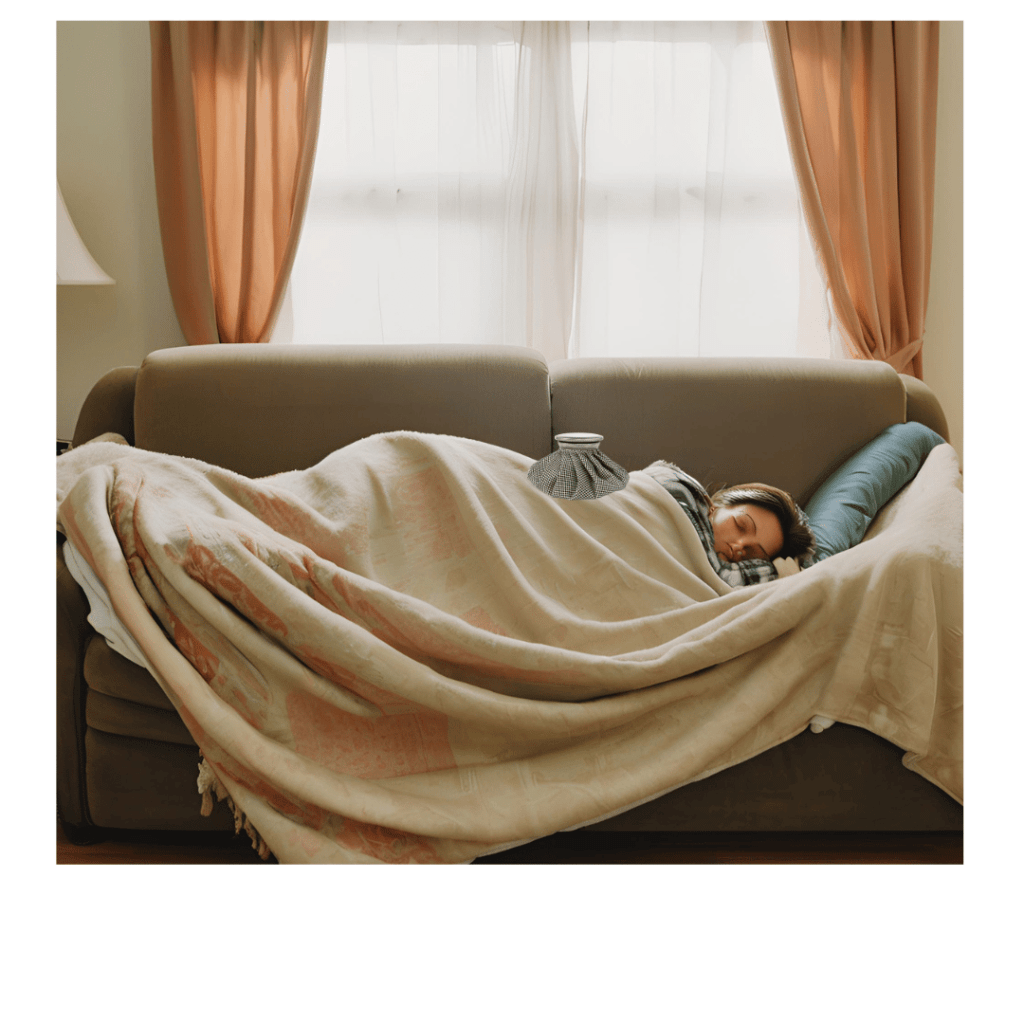
So I thought about what to share here (besides all the love in my heart lol) and from the reading I’ve done, proper rest is the best best BEST but if you can’t, theres always a GOOD power nap. I wanted to share my secrets but its not a secret, if I need a nap I try and wait til afternoon to take one, I am aided by a bit of the indica, and most of the time my sugar tanks and I go take a nap with just enough time for me to tell hubby that I’m gonna crash for a bit. If I’m sick, not feeling well, high pain low spoon kind of day these are the things I’ve found after researching it (just poked around google because I’m always curious) that might help or at least give you some guardrails to start with or from because napping isnt a luxury for people like us, its a necessity – it’s a survival strategy.
The Napping Commandments
First things first, let’s talk nap science. The perfect nap is like a precision-engineered weapon against fatigue:
Timing is Everything: Aim for that sweet spot between 2-3 PM. This is your body’s natural “low energy” zone. Think of it as your daily reset button.
Size Matters: Keep it short and sweet – 15-30 minutes is the magic window. Any longer, and you’ll wake up feeling like you’ve been hit by a truck of grogginess. There are the really bad days though that I end up down for longer but if we go past the hour-ish sweet spot that my body seems to respond to, I’ll wake up and not know the date and time and all that lol. Listen to your body’s cues, most people only do that when their body starts to loudly protest. Train yourself to hear it before middle age and you’re future you will thank you.
Creating Your Nap Sanctuary
Pro tip: Your napping environment is more important than your dating profile. Here’s how to create the ultimate nap zone:
Minimal light (but not complete darkness)
Quiet space
Turn off those darn screens
Comfortable temperature
Optional: Cozy blanket that feels like a hug from the universe
Nap Justification 101
For those judgmental friends and family who don’t understand the sacred art of napping, here are some scientifically-backed comebacks:
“I’m not napping, I’m managing my chronic condition”
“This is medical self-care, not laziness”
“Studies show napping can help manage inflammation and pain”
A Serious Note (But Still Funny)
If you’re finding yourself needing excessive naps, it might be worth chatting with your healthcare provider. Sometimes constant fatigue can be a sign of underlying issues. But also, sometimes it’s just your body saying, “Girl, we need a break!”Pro Chronic Illness Warrior Tip: Napping is not a sign of weakness. It’s a strategic recovery mission. You’re not avoiding life; you’re recharging your batteries so you can kick ass later. Remember, in the Olympics of Chronic Illness Survival, napping is your gold medal event. Embrace it, own it, and maybe invest in some really cute pajamas (I’m queen of comfy pjs) while you’re at it! Nap on, warriors. Nap on. Til next time gang, take care of yourselves, and each other.
Can I tell you guys something just between us? I hate my brain. Like so much sometimes. When its not sending out signals that make me move all awkward and weird, its trying to convince me all coincidences or times when I may not get the clearest signals that everyone hates me and they all want me to drop dead. theres no middle ground. Convincing my mind and heart that I’m not as sad and lonely as they often believe feels like a daily negotiation. I remind myself that emotions can be deceptive, twisting reality into a shadowy landscape that weaves through the tapestry of my dreams, where I feel isolated and overwhelmed. In those moments, when I recognize the feelings creeping in, I consciously shift my focus to the small joys around me—the warmth of sunlight streaming through the window, the comforting purr of my cat (our old man cat has the cutest purr, I swear if I need surgery just give me him and I’m out like a light.), or the laughter of friends, even if it’s just through a screen. I practice gratitude, acknowledging the connections I do have, however distant they may seem. By challenging the narratives of sadness and loneliness with evidence of love and support in my life, I slowly but surely create a more balanced perspective. It’s a journey of self-compassion, where I learn to embrace my feelings without letting them define me, reminding myself that even in solitude, I am never truly alone. In my research, I learned that of chronic pain patients, 30%-50% also have anxiety. I won’t pretend to understand the science of it but the studies link chronic pain and anxiety and some show some heightened activity in the central nervous system, you know, where it all goes down lol. Chronic pain also has been shown to lead to altered brain chemistry. Of course that has a negative impact our ability to get shit done when 75% of our brain is trying to calm the anxiety that comes and knock us on our ass leaving us unable to handle MORE shit… its the endless cycle I’ve discussed but I know if your reading this you are already quite familiar. Here are some, not all but some of the tricks I use to try and get a handle on all the negative self talk.
Practice self-compassion: Treat yourself with the same kindness you’d offer a friend. Acknowledge that living with chronic illness is challenging, and it’s okay to have difficult days. When the spoons are in abundance sit down with a friend or loved one and talk about what you do when your anxiety gnaws at you, often times just verbalizing our worries helps us come up with solutions.
Challenge negative self-talk: When you hear those “not good enough” thoughts, question their validity. Replace them with more balanced, realistic statements about your worth and abilities. Be honest, we all have strengths and weaknesses, always play to your strengths, and commit to working on the areas that arent so solid and strong.
Seek support from understanding individuals: Surround yourself with people who validate your experiences. Consider joining support groups for those with chronic illnesses to connect with others who truly get it. My journey started in an online support group, and I don’t know if I’d have made it through everything that has tested me without that support.
Engage in mindfulness techniques: Use meditation, deep breathing, or journaling to stay grounded in the present moment. This can help manage anxiety and negative thought patterns. I use journalling for meds and diet and all that fun stuff so I can spot pattern disruptors.
Prioritize self-care activities: Make time for activities that bring you joy and relaxation, even if they’re small. This could be reading, taking a bath, or listening to music – whatever helps you unwind and recharge
Remember, your worth isn’t determined by others’ opinions or your illness. Focus on what you can control and celebrate your resilience in facing daily challenges. Til next time gang, you’re not alone, reach out, take care of yourselves, and each other
Let’s talk about something as tough as politics at a holiday dinner: dealing with questions about your estranged child at festive gatherings. It’s like navigating an emotional minefield while balancing sugar cookies and a glass of eggnog. Here’s the deal, people are going to ask. They’ll ask because they care, or because they’re nosy, or because they forgot that small talk can sometimes be big talk. When they do, it’s like someone blasting “All I Want for Christmas Is You” right in your face – jarring and overwhelming.
But here’s the thing: you don’t owe anyone your full story. You’re allowed to protect your heart, even if Aunt Mildred thinks she’s entitled to the details. So, for the sake of your sanity (and to avoid ugly-crying into the punch bowl), it’s a good idea to have a few responses ready. Think of them as emotional armor or your invisibility cloak at the holiday party of life. These responses aren’t deflections; they’re self-care. They allow you to acknowledge the situation without turning the evening into a therapy session. Because, let’s be real, the only professional help we need during the holidays is from a chef or bartender.
Here are 10 responses that google thinks are easier to digest than dinner and won’t give you emotional indigestion, along with my opinion of each They are not lies or anything negative, just a subtle change of direction to avoid awkwardness and not be sitting there talking trash or anything but make you feel more prepared.:
“It’s been a year of changes. I’m learning to embrace the present moment. How are you handling the holiday bustle?
” This is fairly broad and could even be mundane, I like this for a more formal affairs.
“They’re on their own journey right now. How about you? How’s your family doing?”
I like this one for my extended family I think, it sounds more hippie live and let live man vibe that I try and live my life by
“We’re giving each other some space at the moment. I’d rather focus on the festivities today.”
Great to talk about whatever thing you are currently thinging lol either a celebration or something like other parents at other kids plays, concerts, choir whatever your children are a part of (also does anyone besides me get a little annoyed that choir is not spelled like it sounds ‘io, oi is different, I-OR? Just me?)’
“It’s a complicated situation, but I’m working on finding joy in other aspects of life. How are you enjoying the party?”
This is really cold I think, definitely suitable for a work gathering or something
“They couldn’t make it this year. I’m grateful for the loved ones who are here. Have you tried the appetizers?”
This is definitely for a family and its a good diversion, who doesnt love food lol, the only hesitation I would have is its kind of a lie, so not my favorite
“We’re navigating some challenges. I appreciate your concern, but I’d prefer not to discuss it today.”
Abrupt and kind of rude, so use this on someone who is persistent dogged in their pursuit of tea to spill
“They’re taking time for themselves this holiday. Speaking of which, do you have any exciting plans for the season?”
I don’t really like this one as it could be true or not but its not why they arent there and will probably just make more questions.
“It’s a sensitive topic for me right now. I hope you understand if I’d rather talk about something else.”
Most will take this subtle hint (more like knock on the head with a hammer) but the convo might sputter out quick because of the awkwardness, the other person probably reaching in their brain for a question that WOULDN’T involve , so use this if you want the person to become disinterested and walk away.
“We’re in a period of transition. But enough about that – how have you been?”
Just saying enough about that may lead them to think you are being modest or something and try and dig deeper. Best to avoid this one
“They’re finding their own way this year. I’m focusing on creating new traditions. What’s your favorite holiday tradition?”
I mean, finding their own way sounds like you were just mean and said find it yourself, or it sounds that way to me anyway
Using these doesn’t mean you’re in denial or don’t care—it means you’re choosing self-preservation. And if someone pushes for more info, feel free to disappear to the bathroom or suddenly become fascinated by the nearest houseplant. You’ve got this, holiday warriors. May your responses be smooth, your boundaries strong, and may there always be a distraction when you need one. Until next time guys, take care of yourselves, and each other
So you are here. If you are here, logic dictates you share similar issues as mine, and while I’ve got a ton to say about all of the things I struggle with daily, and make no mistake, I struggle, but if I had to pick ONE thing that creeps in the longest strongest and loudest to my everyday, its hands down (then up cuz ew?) ANXIETY! And folks I know the WHY of why I struggle with every minute of every hour of everyday, I think there’s never a second of my life that isnt in some way shape or form exhibiting one of these things. Sometimes we don’t know how to solve the problem that we already have the answer for tucked up in the corner of our brains, out of the way just like memories of our favorite trip on the boat when we were kids, or our very first phone numbers. And THAT my friends, reminds me of the time that my mother changed our phone number and didnt tell me, OR THE SCHOOL what that number was, initially refusing to do so. Ah, fun times. Most of us just don’t suck at giving life the answers and a compassionate ear. But we’ve not been given us the tools one needs to complete a task successfully or one ounce of ability to convey what we learned. We do learn lessons even in failure and defeat. anyway that was unrelated but you’d be surprised at all the systems impacted by our anxiety, both justified and not (I am queen of worrying about shit I can’t do anything about) or at least I was surprised, so let me lay out what I learned:
Let’s face it, folks – when anxiety decides to set up shop in your brain long-term, it’s not just messing with your mind. This unwelcome guest can wreak havoc on your whole body. Here’s the lowdown on what chronic anxiety can do to you:
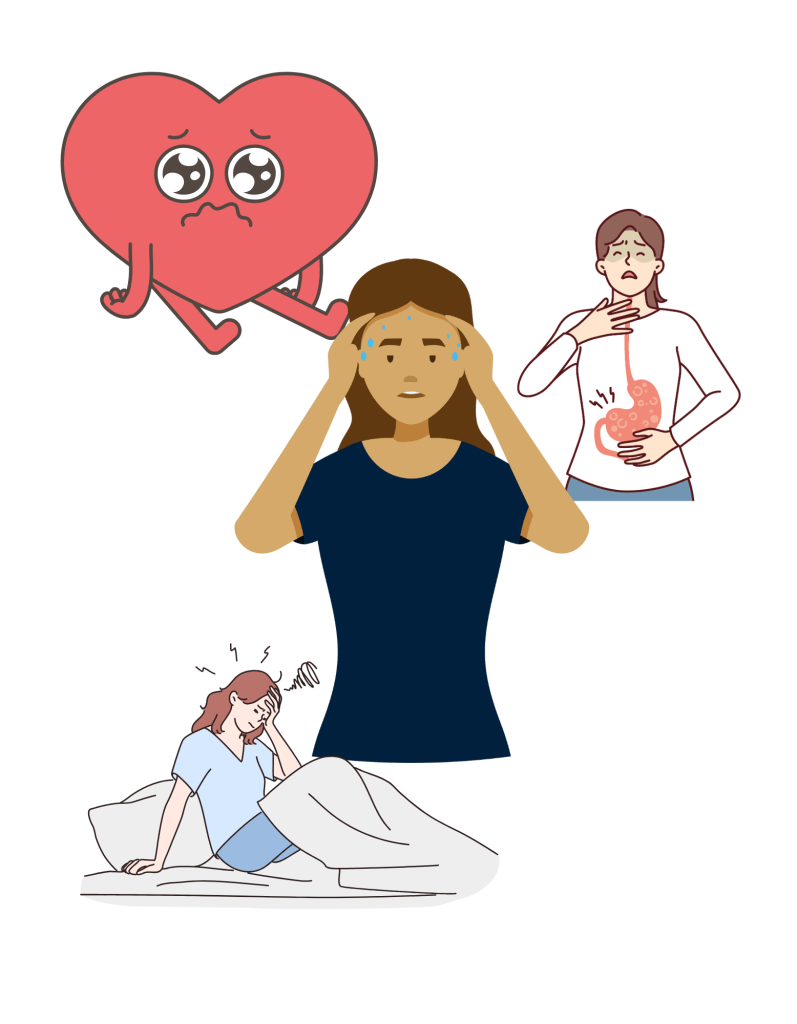
Physical Toll:
Your immune system takes a nosedive, leaving you open to every bug out there. Chronic anxiety can weaken your immune system, making it less effective at defending your body against infections and illnesses. This leaves you more vulnerable to catching colds, viruses, and other health issues, so even though anxiety itself doesnt exhibit symptoms, your immune system always in flight mode isnt doing you any favors, wearing you down physically.
Your ticker might start acting up (hello, heart problems!) – like you know, it stopping or something, I might know a little about that lol Anxiety triggers the “fight or flight” response, increasing heart rate and blood pressure, which can strain the heart and blood vessels, contributing to heart disease over time.
Muscle tension, especially in the neck, shoulders, and back, can lead to chronic pain, headaches, and jaw clenching or teeth grinding. Even if you don’t mean to, words thoughts or actions have a polarizing effect on your body and without adequate self care those affects could become permanent
Say goodbye to peaceful digestion (stomach issues, anyone?) I mean, IBS is ugly to talk about but we all suffer from it from time to time, but anxiety makes it a permanent addition to your alphabet of issues
Constant tension headaches become your new normal – Migraines CAN be caused by tension, or maybe you are tense BECAUSE you have a migraine. They can be caused by something else and made WORSE by a migraine but its never a question vice versa because migraines are never ever a good time..
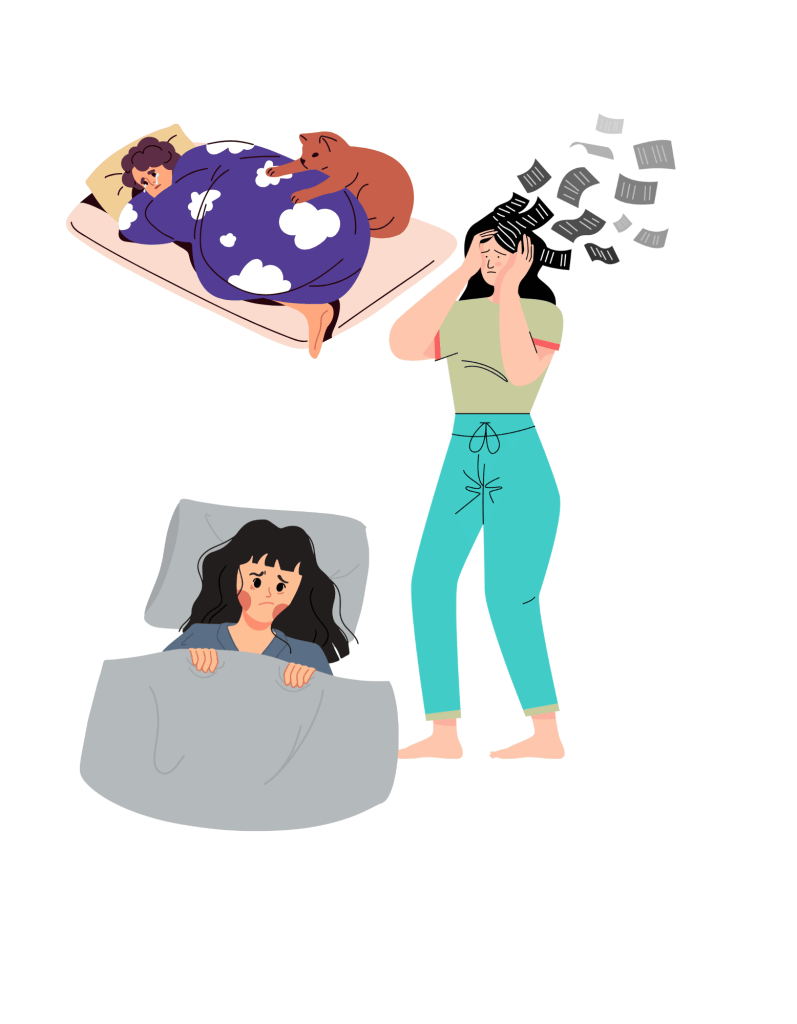
Mental Mayhem:
Depression might join the party (as if anxiety wasn’t enough) I love it when I get depressed BECAUSE I’m anxious, then somewhere I flip the script and get anxious about always being depressed.
Your memory starts playing hide and seek – I’ve also been told menopause can cause you to forget things, and also menopause can make you for- wait, what was my point? Yes, a joke? but memory loss is one of the worst things and I get so anxious about my memory because I know I KNOW I’ll forget stuff then I wind up trying so hard to not forget something that I forget something else, it’s a self fulfilling prophecy, never ends.
Concentrating becomes as hard as nailing jelly to a wall. Concentrate? LOL I can’t keep something on my brain long enough to concentrate on it lol
Sleep? What’s that? Insomnia becomes your midnight companion. This has affected me in the past but I’ll tell you I honestly fall asleep at the drop of a hat these days. I’m in a legal weed state, draw your own conclusions
Bottom line: Chronic anxiety isn’t just about feeling worried all the time. It’s a whole-body experience that can seriously mess with your health if left unchecked. So if you’re battling this beast, don’t tough it out alone – reaching out for help is the smartest move you can make. We truly are all ‘in it’ together and it would be great if we could work with each other and not against each other. Always remember, kindness is free and highly contagious. Not going to promise because if I’m up to it we’ll be putting the tree up but next week we’ll dig in to what can be done about anxiety (without throwing copious amounts of drugs at it. Til next time gang, take care of yourselves and each other.





























 WannaBeNormal