Uncategorized

When You Can’t Tell If It’s a Flare or a Flashback (And Why That’s Terrifying)

Your heart’s doing the cha-cha at 130 beats per minute. Your chest tightens. The world tilts. Your hands shake. Your brain starts whispering, “Hey, are we dying or just freaking out again?”

Is it POTS? A panic attack? A flashback to that one time your body really did betray you?
You’ve got about thirty seconds to figure it out before the anxiety of not knowing makes everything worse.

Welcome to the impossible diagnostic puzzle that is living with chronic illness and PTSD from medical trauma.


When Your Body Is Both the Scene of the Crime and the Witness

People with chronic illnesses are statistically more likely to develop PTSD-like symptoms—but the kicker is, it’s not from a one-time event. It’s because your body is an ongoing threat to your own sense of safety.

Unlike classic PTSD, where the trauma is technically in the past, medical PTSD means the trauma could literally happen again.
When you live with something like POTS, EDS, or MCAS, your body is both the suspect and the alarm system. The hypervigilance isn’t paranoia—it’s pattern recognition. You’ve learned that symptoms can mean something is seriously wrong.

But here’s the nightmare twist: those same symptoms—heart racing, shaking, dizziness—are also identical to a panic attack.


The Overlap That Makes You Want to Scream Into a Pillow

Let’s play a fun game called “Spot the Difference” between POTS and panic attacks:

POTS Symptoms:

  • Rapid heart rate (120+ bpm)
  • Dizziness or lightheadedness
  • Shortness of breath
  • Chest tightness
  • Trembling, sweating, nausea
  • Feeling like you might pass out

Panic Attack Symptoms:

  • Rapid heart rate
  • Dizziness or lightheadedness
  • Shortness of breath
  • Chest tightness
  • Trembling, sweating, nausea
  • Feeling like you might pass out

Yeah. Exactly the same.

So you sit there, pulse pounding, trying to decide if you need electrolytes or grounding exercises. And the longer you try to figure it out, the more anxious you get. Which—you guessed it—makes your heart race even more.

Congratulations, you’ve just triggered both conditions at once.


The “Is It My Body or My Brain?” Spiral

  1. Heart rate spikes.
  2. You think, “Is this POTS or panic?”
  3. The uncertainty feeds the anxiety.
  4. Anxiety makes your heart rate climb higher.
  5. PTSD brain jumps in like, “Hey, remember the last time this happened?”
  6. Your body floods with stress hormones.
  7. Symptoms worsen, clarity vanishes, and you’re stuck in a full-body loop of chaos.

Sometimes grounding doesn’t work. Sometimes standing makes it worse. Sometimes everything makes it worse. The mental gymnastics of self-triage would exhaust an Olympic athlete, and that’s before you even factor in the fatigue that both conditions bring.


When Hypervigilance Isn’t a “Coping Issue”

In classic PTSD, hypervigilance—constantly scanning for danger—is something therapy tries to reduce.
But when you live with a chronic condition that can cause fainting, cardiac issues, or anaphylaxis, that vigilance might literally save your life.

So how do you tell your brain to “calm down, you’re safe” when sometimes… you actually aren’t?

This is the impossible bind of trauma plus illness:
PTSD therapy says, stop monitoring every sensation.
Your medical team says, monitor every sensation.
Neither is wrong. Neither fully works.


The Medical Gaslighting Cherry on Top

And just to make it more fun: when you do seek help, you get hit with the “it’s just anxiety” script.

Even though POTS isn’t caused by anxiety, and even though research shows anxiety rates are about the same as the general population, you’ll still have doctors waving off your physical symptoms because your chart says PTSD.

You start to lose faith in professionals. You stop asking for help. You learn to rely only on yourself for triage—because nobody else seems capable of telling the difference either.

Which means you’re back to square one, again, sitting in the impossible space of trying to figure it out alone.


The Treatment Contradiction

PTSD therapy often involves exposure work—facing the thing that scares you until your brain chills out about it.
Except in this case, the “thing that scares you” is your own body.

You can’t just take a break from having a body. You can’t “gradually reintroduce” the experience of dizziness or tachycardia when those things are daily realities that might require medical intervention.

Worse, some PTSD therapies intentionally raise your heart rate to help you practice staying calm through physical sensations. That’s great… unless you have POTS, where that heart rate spike might actually make you faint.

So you end up in a no-win situation where treating one condition can trigger the other.


What Actually Helps (Sometimes)

There’s no perfect fix here. But there are ways to soften the edges:

💡 Look for patterns, not moments. Track triggers over time. Are symptoms linked to posture, temperature, dehydration, or specific memories? Zooming out can help reduce panic in the moment.

💡 Build a “both/and” plan. Sit down? Yes (helps POTS). Ground yourself? Yes (helps panic). You don’t have to guess which one it is to respond with compassion instead of chaos.

💡 Find trauma-informed doctors. You need providers who understand that your nervous system and your medical symptoms aren’t separate universes.

💡 Accept uncertainty. Sometimes you just won’t know—and that’s not failure. That’s reality.

💡 Validate yourself. You’re not dramatic. You’re not broken. You’re reacting appropriately to a wildly confusing body situation that most people can’t imagine.


The Unspoken Truth

Living with medical PTSD and chronic illness means constantly trying to interpret a body that lies to you and tells the truth at the same time.

It means your hypervigilance is both too much and not enough.
It means your body is both the warning sign and the danger.

You’re not failing to cope—you’re surviving something that isn’t designed to make sense.

And honestly? That’s nothing short of heroic.

Til next time, gang, take care of yourselves, and each other!


🧠 Research Toolbox

  • American Psychological Association. Medical trauma and PTSD in patients with chronic illness (2020).
  • Raj, S. R. (2022). Postural Orthostatic Tachycardia Syndrome (POTS): Pathophysiology, Diagnosis, and Management. Cleveland Clinic Journal of Medicine.
  • Löwe, B. et al. (2021). Trauma, PTSD, and chronic illn

Uncategorized

7 Conversations I’ve Had With Myself This Week

Look, I talk to myself. A lot. And not in the cute “oh, I’m just thinking out loud” way that neurotypical people do. I’m talking full-blown conversations, complete with tone changes, arguments, and occasionally losing said arguments to myself. If you have ADHD, chronic illness, or just a generally chaotic brain, you know exactly what I’m talking about.

Here are seven actual conversations I’ve had with myself this week. I’m not proud of most of them, but I’m also not surprised by any of them.

1. The Medication Negotiation

Me at 8 AM: “Okay, time to take your pills.”

Also me: “But do I really NEED them today? I feel fine.”

Me: “You feel fine BECAUSE of the pills, you absolute potato.”

Also me: “But what if I’ve been healed by positive thinking and I don’t need them anymore?”

Me: “We’ve been through this. Take the damn pills.”

Also me: “Fine, but I’m not happy about it.”

[Takes pills]

Me, two hours later when brain fog hits: “Why didn’t I take my pills on time?”

Also me: “…We literally just had this conversation.”

2. The Food Decision Paralysis

Me, standing in kitchen: “I should eat something.”

Also me: “Agreed. What do we want?”

Me: “I don’t know, what sounds good?”

Also me: “Nothing sounds good.”

Me: “Okay, what do we HAVE?”

Also me: “Everything and nothing.”

Me: “That’s not helpful.”

Also me: “Neither is staring into the fridge like it’s going to solve our problems.”

Me: “What if we just eat cereal again?”

Also me: “We had cereal for dinner last night.”

Me: “Your point?”

[Grabs bowl]

3. The Task Initiation Battle

Me: “I need to start that thing.”

Also me: “Which thing?”

Me: “You know, THE thing. The important thing.”

Also me: “Oh right. When are we doing that?”

Me: “Now. We’re doing it now.”

Also me: “But first, let me just check my phone real quick.”

Me: “NO. We’re not doing this.”

Also me: “Just one quick scroll.”

Me: “It’s never one quick scroll and you know it.”

Also me: “But what if someone texted us?”

Me: “They didn’t.”

Also me: “But what if they did and it’s urgent?”

Me: “FINE. Five minutes.”

[Three hours later]

Me: “We never started the thing, did we?”

Also me: “…In our defense, we learned a lot about seahorse reproduction.”

4. The Sleep Schedule Delusion

Me at 9 PM: “We should go to bed.”

Also me: “But I’m not tired.”

Me: “We’re never tired at bedtime. That’s literally our thing.”

Also me: “What if tonight is different?”

Me: “It’s not. Go to bed.”

Also me: “But what if I just scroll for a bit and THEN go to bed?”

Me: “That has literally never worked.”

Also me: “There’s a first time for everything.”

[At 2 AM]

Me: “I hate us.”

Also me: “Same.”

5. The Executive Function Check-In

Me: “Have we showered today?”

Also me: “…Define ‘today.'”

Me: “The current 24-hour period.”

Also me: “Then no.”

Me: “What about yesterday?”

Also me: “I plead the fifth.”

Me: “We need to shower.”

Also me: “That sounds like a lot of steps.”

Me: “It’s literally just standing in water.”

Also me: “Yeah, but first we have to DECIDE to shower, then remember to shower, then actually GET IN the shower, then remember what order the shower things go in…”

Me: “Okay I see your point.”

Also me: “Plus we’d have to find a clean towel.”

Me: “Never mind. We’ll shower tomorrow.”

Also me: “Bold of you to assume tomorrow will be any different.”

6. The Pain Scale Debate

Me: “Ow.”

Also me: “What’s the pain level?”

Me: “I don’t know, like a 6?”

Also me: “Is it though? Remember that time we thought 7 was bad and then we had that 9?”

Me: “Good point. Maybe it’s a 5.”

Also me: “But if it’s a 5, should we take pain meds?”

Me: “I don’t know, what if it gets worse and we already used up our meds?”

Also me: “But what if we DON’T take meds and it gets worse anyway?”

Me: “What if we just suffer through it and prove we’re tough?”

Also me: “That sounds like internalized ableism.”

Me: “You’re right. Okay, taking meds.”

Also me: “Wait, did we already take meds today?”

Me: “…I don’t remember.”

Also me: “Cool, cool. This is fine. Everything is fine.”

7. The Bedtime Existential Crisis

Me at 1 AM: “Why are we like this?”

Also me: “Like what?”

Me: “You know… LIKE THIS. The chaos. The forgetting. The talking to ourselves at 1 AM.”

Also me: “It’s not our fault our brain is wired differently.”

Me: “I know, but sometimes I wish we were just… normal.”

Also me: “Normal people are boring.”

Me: “Normal people remember to pay bills on time.”

Also me: “Okay, fair point.”

Me: “Normal people don’t have to negotiate with themselves about basic tasks.”

Also me: “But would we really want to be normal if it meant losing our creativity? Our hyperfocus superpowers? Our ability to make connections nobody else sees?”

Me: “…Are you just trying to make us feel better?”

Also me: “Is it working?”

Me: “A little.”

Also me: “Then yes, that’s exactly what I’m doing.”

Me: “We should probably go to sleep.”

Also me: “Agreed. Right after we Google one quick thing.”

Me: “We both know that’s a lie.”

Also me: “And yet here we are.”


The Conclusion I Didn’t Ask For

The truth is, talking to myself has become such a normal part of my life that I forget other people don’t do this. Or at least, they don’t do it out loud. Or with multiple distinct personalities arguing about whether cereal counts as dinner.

But here’s the thing: these internal (and sometimes external) conversations are how my brain processes things. It’s how I work through decisions, remember tasks, and occasionally talk myself into doing basic human functions like showering and eating vegetables.

Is it weird? Absolutely. Is it exhausting? You have no idea. Would I change it if I could?

Ask me again after I’ve had some sleep. And by sleep, I mean after I finish this one last Google search about whether other people have full conversations with themselves or if I should be concerned. Til next time gang, take care of yourself, and each other.

[Spoiler alert: I Googled it. It’s apparently normal. We’re fine. Probably.]

Uncategorized

7 Weird Life Skills Chronic Illness Gave Me

Chronic illness is the world’s most aggressive “skills training program.” Except instead of a certificate and a raise, you get brain fog, pain, and an ongoing relationship with your heating pad. Still, I’ve picked up some unique skills along the way—stuff I never knew I’d need but now couldn’t live without.

1. Mastering the Art of Fake Smiling

I could win Olympic gold for pretending I’m fine while my joints are staging a coup. Do I want to collapse in a heap? Yes. Am I going to grin like I just won a cruise? Also yes.

2. Human Calculator for Spoonie Math

“Can I shower and cook dinner today, or is that too ambitious?” I can do the math faster than you can open your planner. Spoiler: the answer is usually “nope.”

3. Expert in Improvised Heat Therapy

Rice sock? Check. Heating pad? Check. Sitting on my kid’s warm laundry fresh out of the dryer because I can’t wait for relief? Double check. Pro tip, heat rises, I sleep ON not UNDER an electric blanket it has made a world of difference.

4. Planning for Chaos Like a Pro

You know how event planners can handle weddings with 200 guests? Try managing your day when you don’t know if you’ll wake up with a migraine, a hip flare, or zero energy. I don’t plan weddings. I plan for chaos.

5. Napping Anywhere, Anytime

Airports, doctor’s waiting rooms, my car in the school pickup line—I have the gift of nap. If there was a frequent napper punch card, I’d have earned a free mattress by now.

6. Doctor Jargon Translator

I can translate “mild discomfort” into “you won’t walk tomorrow” and “we’ll keep an eye on it” into “we have no idea what’s wrong.” Basically, I’m bilingual.

7. Black-Belt Level Boundary Setting

When you’ve got limited spoons, you learn real quick how to say, “No, I can’t go to your cousin’s friend’s birthday barbecue three towns over.” Honestly, it’s a superpower.


✨ Chronic illness may have wrecked my body, but hey—it gave me some weird little life skills along the way. Your turn: what weird skill has chronic illness forced you to master? Til next time gang, take care of yourselves, and each other.

Uncategorized

Why Sleep Is So Complicated When You’re Living With ADHD, Bipolar Disorder, and Fibromyalgia

Sleep isn’t just about closing your eyes and drifting off. For some of us, it’s like trying to land a plane in a thunderstorm with three different copilots all fighting over the controls. ADHD, bipolar disorder, and fibromyalgia each mess with sleep in their own ways—and when they show up together, it’s no wonder rest feels more like a negotiation than a guarantee.


ADHD: A Brain That Won’t Clock Out

With ADHD, the brain doesn’t exactly come with an off-switch. Racing thoughts, late-night hyperfocus, or the dreaded “second wind” make it easy to miss sleep windows. Research shows people with ADHD often experience delayed sleep phase syndrome—meaning their internal clock is naturally shifted later.

What helps:

  • Keep a consistent bedtime routine (same order, every night, like brushing teeth → skincare → reading).
  • Use a “wind-down timer” alarm to remind you when to step away from screens.
  • Try body-doubling for bedtime (texting a friend “logging off now” helps hold you accountable).

Bipolar Disorder: Sleep as a Mood Swing Marker

Sleep disruption isn’t just a symptom of bipolar disorder—it’s also a warning sign. During manic episodes, people may need little to no sleep and still feel wired. In depressive episodes, hypersomnia (sleeping too much) or insomnia are both common. Clinicians even track sleep patterns as a way to gauge where someone is on the bipolar spectrum, because sleep disturbance is that central to the condition.

What helps:

  • Stick to a strict sleep/wake schedule—even on weekends.
  • Limit caffeine, alcohol, and late-night stimulation, since they can trigger swings.
  • Track sleep with an app or journal to catch changes early (your future self and your doctor will thank you).

Fibromyalgia: The Non-Restorative Sleep Thief

Fibro brings its own brand of sleep sabotage. Studies point to “alpha wave intrusion,” where the brain doesn’t stay in deep, restorative stages of sleep. Combine that with pain flare-ups and restless legs, and even if you technically sleep for eight hours, you wake up feeling like you pulled an all-nighter.

What helps:

  • Prioritize pain management before bed—stretching, warm baths, or heat pads can calm flare-ups.
  • Create a cozy sleep space: blackout curtains, white noise, supportive mattress.
  • Try gentle sleep hygiene aids, like calming teas or magnesium (if your doctor approves).

The Triple-Whammy Effect

Now imagine all three at once: ADHD pushing bedtime later, bipolar flipping the switch between insomnia and oversleeping, and fibromyalgia making whatever sleep you do get feel useless. No wonder mornings feel brutal and exhaustion never really leaves.


Why It Matters

Poor sleep isn’t just a nuisance—it worsens mood swings, flares up pain, and makes executive function even harder. But knowing the “why” behind your exhaustion is powerful. It means you can stop blaming yourself and start stacking small, realistic strategies that give you a fighting chance at rest. Til next time gang, take care of yourselves and each other.

Research Toolbox:
Sources

The National Fibromyalgia Association — Sleep Disturbances & Fibromyalgia
(information on fibro and sleep disturbances)

International Journal of Bipolar Disorders – Sleep and Circadian Rhythms in Bipolar Disorder
(research on bipolar disorder and sleep)

PubMed — ADHD and Circadian Rhythm Sleep-Wake Disorders
(research on ADHD and circadian rhythm)

Uncategorized

Survival & Sanity Week 25 & 26

Listen, meal planning is basically the Olympics of adulting. And if you’re running low on spoons, have kids who think chicken nuggets are a food group, or just don’t want to set your house on fire trying to “whip something up” after 5 p.m., you need a plan that’s simple, flexible, and doesn’t judge you for eating tacos three times a week if you want to.

So here it is: two weeks of real-life dinners that use reserves, leftovers, and a little bit of bacon for moral support. You don’t need to spend an hour chopping. You don’t need five obscure spices you’ll never use again. You just need this list and a fridge that sort of cooperates.


Week One

Monday – Crockpot Tacos
Let the crockpot do the heavy lifting. Dump in meat, seasoning, maybe some tomatoes, and boom—taco night without the skillet babysitting.

Tuesday – Leftovers or Reserves
Translation: fridge roulette or that frozen pizza you “forgot” about.

Wednesday – Leftovers or Reserves
Yes, again. You deserve it.

Thursday – Leftovers or Reserves
See above.

Friday – Salsa Chicken
Chicken, salsa, crockpot. It shreds itself. If only the laundry did.

Saturday – Leftovers or Reserves
The theme is intentional.

Sunday – One-Pan Chicken Fajita Bake
Chop, toss, bake. Minimal effort, maximum flavor. No stovetop juggling act.


Week Two

Monday – Sheet Pan Sausage, Potatoes & Veggies
Cut, toss, roast. Bonus: your house smells amazing, like you’ve been cooking for hours instead of 20 minutes.

Tuesday – Leftovers or Reserves
Champion-level laziness, rebranded as efficiency.

Wednesday – Bacon & Veggie Fried Rice
Bacon makes everything better. Toss it with rice and veggies, and suddenly leftovers feel fancy.

Thursday – Leftovers or Reserves
Nothing like a break day to make Friday’s meal feel even easier.

Friday – Crockpot Creamy Ranch Chicken
Chicken, ranch packet, cream cheese, done. If your crockpot had a fan club, this would be the poster child.

Saturday – Leftovers or Reserves
Consider it a chef’s night off.

Sunday – (Optional Swap Night)
Tired of chicken? Grab something from reserves or takeout without the guilt. The system’s built to bend.


Why This Works

  • Built-in leftovers mean you don’t waste food or energy.
  • Reserve-friendly lets you swap in pantry/freezer staples on the hard days.
  • Minimal chopping, maximum flavor because you’ve got better things to do than wrestle with 15 ingredients.

This isn’t about perfect dinners. It’s about feeding yourself and your people without burning all your spoons in the process. And honestly? That’s more impressive than any five-course meal.


👉 Want the full recipes and grocery list? Scroll down . Dinner crisis = solved. Take care of yourselves, and each other!

Uncategorized

5 Ridiculously Small Things That Actually Make Life Easier

Life is overwhelming enough without adding big, complicated “fixes” to the mix. That’s why sometimes the smallest shifts—things you can do in a minute or less—end up making the biggest difference. None of these will change your entire world, but they will help smooth the edges of a rough day.


1. Drink Water Out of a Fancy Cup

Hydration is one of those “simple but annoying” tasks. But pour that same water into a glass you love—a stemless wine glass, a mason jar with a straw, or even a mug that makes you smile—and suddenly it feels less like a chore and more like a treat. Little brain tricks for the win.


2. Keep a Blanket in Arm’s Reach

There’s something grounding about having a blanket nearby. Whether it’s the middle of the day or late at night, grabbing it is an instant way to give yourself comfort without any effort. Bonus: it doubles as a nap invitation if you need it.


3. Use the “Two-Minute Rule”

Procrastination thrives on tasks that feel bigger than they are. The two-minute rule says: if it takes less than two minutes, do it now. Throw away that receipt, reply to the text, wipe the counter. You’ll be surprised how much mental clutter disappears when you knock out those quick wins. I’ve noticed this alot cleaning, it feels good to see the problem disappear.


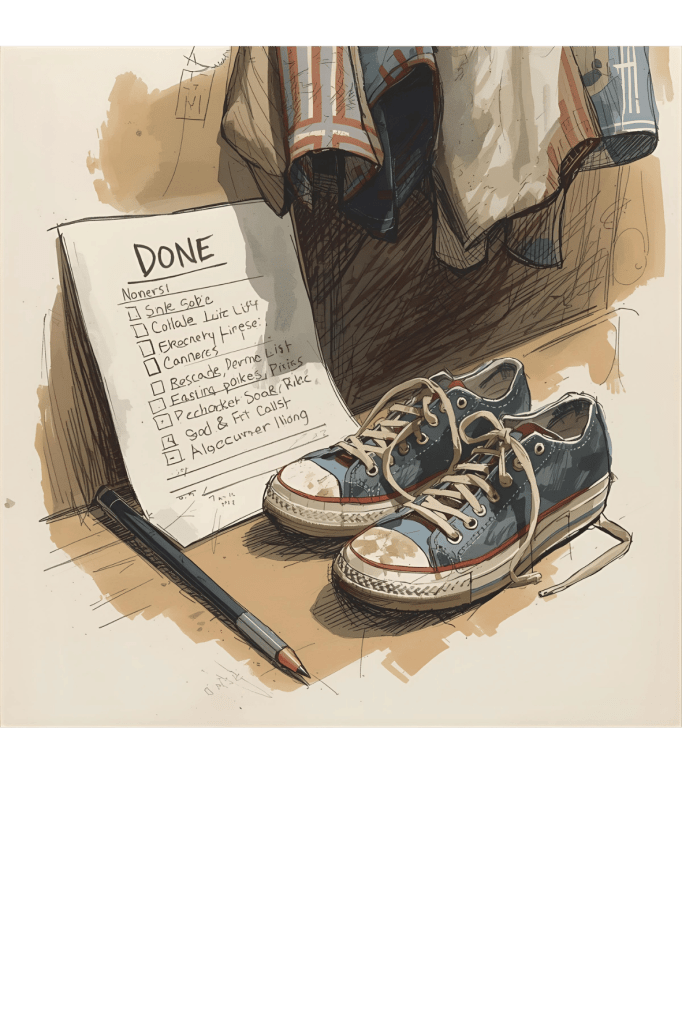
4. Make a “Done List”

To-do lists can be overwhelming, especially when they never seem to shrink. A “done list” flips the script—you jot down everything you’ve already managed, even the small stuff. It shifts your focus from “never enough” to “look what I actually did.” And honestly? That’s the energy boost most of us need. I don’t do this enough, often I’m like, what did I even do all day? show yourself all the hard work you put into your day.


5. Change Your Socks

It sounds silly, but fresh socks are an underrated reset button. They’re small, clean, and cozy, and they send your body the message that something has shifted. On a day when everything feels stagnant, that tiny reset can make you feel just a little more human. Mind the seam placement, that was always a concern with my oldest, she’d refuse to go if she felt the seam in the wrong place.


Closing

Will these tips solve all of life’s chaos? Absolutely not. But they’re proof that you don’t always need massive changes to feel a little better. Sometimes the easiest way forward is simply stacking up these micro-comforts until the day feels lighter. Til next time gang, take car of yourselves, and each other.

Uncategorized

The Social Hangover: Why One Family Gathering = Three Business Days of Recovery

I did a thing.

I put on jeans. Yes, actual denim. Not “leggings that whisper about being pants if you squint hard enough.” Real jeans. Then, because apparently I like to cosplay as a functioning human, I added makeup. First time in two years. Even did my hair. Honestly, I could’ve stopped there and deserved a medal.

But no, I had a mission: drive three hours each way to see my sister, hand-deliver the painstakingly perfected gifts I’d been working on for weeks, and socialize with more humans than my hermit soul has encountered in… possibly a decade for my sister and grand niece.

Let me tell you, the event itself? Lovely. The invite? Appreciated. The people? Wonderful. The food? Chef’s kiss. My energy afterward? Dead. Buried. Ghosted.

Here’s the unglamorous math nobody tells you:

  • Prep time: two weeks of stressing, shopping, and crafting gifts.
  • Cosmetic upgrades: one hour to transform into “someone who looks like she has her life together.”
  • Event length: six hours in the car, plus a full day of interaction.
  • Recovery time: estimated three to five business days, maybe longer. Please hold.

Today, I’m the human equivalent of a phone stuck on 2% battery with a broken charger. Hollow, sluggish, vaguely resentful at the concept of standing upright. And yet… this is the price of admission when you leave your cave.

So if you’re also lying in bed after “a fun day,” wondering why your body feels like you ran a marathon while juggling flaming swords, let me reassure you: you didn’t imagine it. Social hangovers are real. Spoon debt is brutal. Jeans are a weapon of mass destruction.

Recovery Day Survival Tips (a.k.a. How to Human Again After Too Much Humaning)

  • Hydrate like it’s your new religion. You just sweated out three weeks’ worth of electrolytes socializing.
  • Eat something that doesn’t come in a crinkly wrapper. (No shame if it does, but bonus points for real nutrients.)
  • Lay flat. On the bed, the couch, or the floor — whatever’s closest when you collapse.
  • Noise-cancel the world. Earplugs, headphones, or just a dramatic blanket burrito.
  • Cancel productivity. Laundry and dishes can wait. Your nervous system cannot.
  • Gentle motion only. Stretching, slow walks, or the ceremonial shuffle to the fridge.
  • Remember: jeans are optional for the rest of your life.


Tomorrow I’ll probably be fine(ish). But today? Today is about recovery, snacks, and swearing off denim forever. Til next time gang, take care of yourselves, and each other.

Uncategorized

Things I’ve Googled at 2 AM: A Greatest Hits Collection

Welcome to the dark underbelly of my internet search history – that beautiful, chaotic wasteland where insomnia meets ADHD curiosity and good judgment goes to die. If Google keeps receipts (and let’s be honest, they absolutely do), then I’m pretty sure I owe them an apology and possibly therapy fees.

For those blessed neurotypical souls who can actually fall asleep at reasonable hours, let me explain what happens in the 2 AM Google zone: it’s where rational thought meets hyperfocus, and somehow you end up three hours deep in research about whether penguins have knees. Spoiler alert: they do, and now I know more about penguin anatomy than any reasonable adult should.

The Medical Anxiety Spiral

Let’s start with the classics – those searches that begin with a minor bodily concern and end with me mentally writing my will:

  • “why does my left eyelid twitch”
  • “is eye twitching a sign of brain tumor”
  • “brain tumor symptoms”
  • “how long do you live with undiagnosed brain tumor”
  • “can stress cause fake brain tumor symptoms”
  • “how to tell if you’re being dramatic about health symptoms”

This particular rabbit hole usually ends with me either completely convinced I’m dying or completely convinced I’m a hypochondriac, with no middle ground available. WebMD is not your friend at 2 AM, people. WebMD at 2 AM is that friend who tells you your headache is definitely a rare tropical disease even though you live nowhere near water and haven’t left your house in three days.

The Parenting Panic Searches

Nothing quite like teenage behavior to send you spiraling into the depths of Google at ungodly hours:

  • “is it normal for 16 year old to sleep 14 hours”
  • “how much attitude is normal for teenager”
  • “signs your teenager actually hates you vs normal teenage behavior”
  • “how to communicate with teenager who speaks only in grunts”
  • “when do teenagers become human again”

The best part about these searches is that every parenting forum has exactly two types of responses: “totally normal, you’re doing great!” and “this is a red flag, call a professional immediately.” There’s no middle ground in internet parenting advice, which is super helpful when you’re already spiraling at 2 AM.

The Random Life Questions That Consume My Soul

This is where things get weird. These are the searches that start nowhere and go everywhere:

  • “how do they get ships in glass bottles”
  • “what happens if you never cut your fingernails”
  • “do fish get thirsty”
  • “why do we say ‘after dark’ when it’s still light after dark in summer”
  • “how many people are named Steve in the world right now”
  • “what’s the oldest living thing on earth”
  • “can you die from lack of sleep”

That last one usually comes up around hour four of my insomnia adventures, when I’m googling whether my inability to sleep is actually going to kill me. The internet has mixed opinions on this, which is not reassuring when you’re already not sleeping.

The Organizational Fantasy Research

These searches represent my eternal optimism that the right system will finally fix my chaotic life:

  • “best planner for ADHD brain”
  • “bullet journaling for beginners”
  • “how to organize small spaces”
  • “Marie Kondo method actually work”
  • “minimalism with ADHD”
  • “organization systems that actually work for messy people”

I’ve researched more organizational systems than I’ve actually implemented, which tells you everything you need to know about how this usually goes. But hey, at 2 AM, I’m always convinced that THIS system will be the one that changes everything.

The Philosophical Crisis Questions

When the insomnia really sets in and I start questioning the nature of existence:

  • “what is the point of life”
  • “are we living in a simulation”
  • “do other people think in words or pictures”
  • “is everyone else just pretending to have their life together”
  • “what happens to consciousness when you die”
  • “why do humans need meaning in life”

These usually pop up around 3 AM when my brain decides that sleep is for quitters and existential dread is the only logical response to being awake this long.

The Wikipedia Rabbit Holes

These start with one innocent click and end with me knowing way too much about completely random topics:

Starting search: “what year was the microwave invented” Six hours later: I’m an expert on the history of food preservation, the science of radiation, and somehow the entire genealogy of the inventor’s family tree.

Starting search: “why do cats purr” Final destination: A comprehensive understanding of feline evolution, big cat behavior in the wild, and the physics of sound vibration.

The “Do Normal People…” Medical Questions

These are the searches I’m too embarrassed to ask my actual doctor about:

  • “is it normal to talk to yourself out loud”
  • “how often should normal people shower”
  • “what does a normal sleep schedule look like”
  • “do normal people remember their dreams”
  • “how much coffee is too much coffee per day for a normal person”

The irony is that I have an actual doctor I could ask these questions, but somehow googling them at 2 AM feels less judgmental than admitting to a medical professional that I don’t know what constitutes normal human behavior.

The Conspiracy Theory Adjacent Searches

I’m not saying I believe in conspiracy theories, but 2 AM me is definitely more open to alternative explanations for things:

  • “why do all mattress stores seem empty but stay in business”
  • “do birds actually exist or are they government drones”
  • “what’s really in hot dogs”
  • “why do all celebrities look younger than their age”
  • “are we alone in the universe”

These searches usually happen when I’ve been awake too long and my critical thinking skills have left the building. Daylight me reads these search histories and wonders what the hell nighttime me was thinking.

The Conclusion I Never Reach

The beautiful thing about 2 AM Google spirals is that they never actually end with answers – they just end with exhaustion or the sudden realization that it’s somehow 5 AM and I have to be functional in three hours.

I’ve learned more random facts from insomnia-driven research than from college, but I couldn’t tell you how any of it connects or why I needed to know that octopuses have three hearts at 2:30 in the morning.

The real kicker? I’ll do it all again tonight, because apparently my brain believes that this time will be different. This time, I’ll find the perfect solution to all of life’s problems hidden somewhere in the depths of the internet.

Spoiler alert: it’s usually just more questions and the growing realization that humans are weird, life is complicated, and I should probably just go to sleep.

But first, let me just quickly Google why I can’t fall asleep… Til next time gang, take care of yourselves, and each other!

Uncategorized

7 Unexpected Ways to Make Life a Little Easier When You’re Overwhelmed

Life is messy, exhausting, and sometimes downright unfair—but there are clever little hacks that can help you catch your breath, keep your sanity, and even sneak in some joy. None of these tips will magically erase your stress (I wish), but they will make the load lighter.


1. Automate the Little Things

Decision fatigue is real—our brains get worn down by endless small choices. Automating the basics can free up precious energy.

  • Schedule grocery delivery or subscriptions for your must-haves.
  • Set bills to auto-pay.
  • Use reminders for meds, appointments, or chores.

It may feel tiny, but the mental relief adds up.


2. Reserve-Based Meal Planning

Instead of starting from scratch every day, build meals off “reserves” you’ve already cooked. Think big-batch taco meat, roast chicken, or skillet sausage that can be reimagined into multiple meals. Less chopping, less cooking, more living. I do this biweekly and feature a menu plan and shopping list every other Sunday, but its not rocket science so if you don’t stick 100% to it no big deal, I just keep the featured ingredients on hand and offer a multitude of uses for it. As stated above, decision fatigue is real and its so helpful to have that choice already made.


3. Build a “Bad Day Box”

Keep a stash of small comforts for the days when everything feels impossible. Fill it with:

  • A favorite snack or tea
  • Cozy socks or a heating pad
  • A playlist that makes you laugh or sing along

It doesn’t solve the hard stuff, but it gives you a lifeline when you’re sinking. If you want one already made I might know someone….


4. Quick Mental Resets

A five-minute pause can do more than you think. Whether it’s a short guided meditation, deep breathing, or blasting your favorite song, those tiny resets can shift your brain out of panic mode and back toward calm. Make it something easy that you have access to, it can be comedy or a podcast that makes you laugh, anything that shifts the focus of your thoughts is the idea.


5. Make Your Space Work for You

Clutter equals stress. Even little changes—like keeping meds, remotes, or supplies in a caddy by your chair—cut down on the low-grade chaos. Lighting, airflow, and comfort matter more than we admit.


6. Outsource Where You Can

If you can swing it, pay for help. Order takeout, hire a cleaner, or swap chores with a friend. Energy is a resource, and saving yours is not laziness—it’s smart strategy.


7. Celebrate Tiny Wins

You got out of bed? That counts. Finished a task? Write it down and cross it off just for the satisfaction. Momentum grows when you notice the little victories instead of waiting for the big ones.


Life isn’t perfect, and neither are we—but small hacks like these add up. They create breathing room, lighten the load, and make survival a little more manageable. Try one or two this week. You deserve the ease. Til next time gang, take care of yourselves, and each other!

Uncategorized

Watching the Drama: I Know It’s Not That Bad — Except My Brain Won’t Believe Me

There’s a terrible little superpower I’ve developed: I can watch myself overreact.

It’s the worst seat in the house — front row, center stage — where my brain is performing a full-throttle disaster musical and I’m sitting there with the program, thinking, “Yep. That’s… dramatic.” Meanwhile my chest is doing interpretive dance, my throat is tight, and my hands have decided to be useless for the foreseeable future.

I know the script. I know the facts. I know that my kid is safe, that no one is angry enough to leave forever, that the noise outside is probably just traffic, not the arrival of doom. I can literally name the thoughts as they happen: This is a sign. This is going to spiral. Everyone will leave. I am unfixable. And I know, in a rational, calm part of my brain, that the thought is an alarm that’s been stuck on repeat. I also know that knowing it — intellectually — doesn’t flip a switch and make my body stop treating it like an emergency.

That’s PTSD after medical trauma for you in a sentence: your mind is both the actor and the audience. The rest of your life keeps going. You keep getting up, you keep making tea, you keep paying bills. But some invisible part of you stays backstage, rewinding and replaying a scary scene, making sound effects, and refusing to let the house lights come up.

Why the “I know it’s not true” feeling is its own kind of hell

It’s isolating. Because the knowledge that your thoughts are lying should be freeing, right? In theory. But being the person who can say, “This is irrational,” while your body screams “RUN” is exhausting and weirdly lonely. You end up apologizing to people for things they weren’t even upset about, or you cancel plans because you feel unsafe even though everything else says you’re fine. You blame yourself for being dramatic. You try to be the reasonable adult and the reasonable adult keeps getting ignored.

And then there’s guilt. If friends or family do help, you watch them pay attention and you feel both relieved and awful — because you think you’re costing them time and energy. You start to believe that self-sufficiency is the only moral option and asking for help is taking more than you deserve. Spoiler: that’s not the truth. It’s an emotional trap set up by fear.

Tiny, practical things that actually help when your brain runs the show

I’m not going to give you platitudes. Here are things that have helped me — small, honest, and doable even on the worst days.

  • Label the play: When the alarm starts, say out loud (or mentally): “That’s my PTSD talking. That’s the survival brain.” Naming it doesn’t make it vanish but it takes away some of its power.
  • Two-minute grounding: Five things you see, four things you can touch, three sounds, two smells, one thing you can taste (or one thing you like about the moment). It’s boring, and that’s the point. It pulls you out of the theater.
  • Breathe like you mean it: 4-4-6 breathing (inhale 4, hold 4, exhale 6) calms the vagus nerve faster than a pep talk.
  • Write the loop down: If a memory keeps looping, grab a notebook and write it until you’re bored of it. Then scribble one practical line: “Right now: I am home. Right now: I can breathe.” The page can hold the drama when your brain insists on replaying it.
  • Micro-asks for people: Don’t make others guess. Say, “Can you sit with me for ten minutes?” or “Could you text me at 7 to check in?” People who care usually want the script — they just don’t want to mess it up.
  • Make a tiny safety plan: three things to do if it spikes (call X, 2-minute grounding, favorite playlist). Tape it to the fridge if you have to. Pre-deciding reduces panic.

What to say — when you want to ask for help but hate feeling needy

Try something simple and specific:

Or, if you need practical help:

Short. Specific. Low drama. It gives people an easy yes.

The honest truth I remind myself (even when my brain screams otherwise)

I can hold two truths at once:

  • My mind is telling a bigger story than the facts support.
  • Needing help right now doesn’t make me a burden — it makes me human.

There’s a difference between the loudness of a feeling and the size of reality. Your feelings are not the final arbiters of truth. They are signals. Sometimes they’re reliable, sometimes they’re not. You don’t have to act on every alarm. You can notice it, honor it, and then choose what you do next.

A small support for the messy days

If you’re reading this while your chest is tight and your brain is staging a meltdown, I see you. I know how lonely it becomes to watch yourself react and feel like you’ve failed at being calm. You haven’t failed. You’ve survived things that rewired your alarm system. That makes your reactions loud — not your worth small. Til next time gang, take care of yourselves, and each other.