Uncategorized

My December Brain Thinks It’s Being Chased by a Tiger

A spoonie’s guide to understanding why this month feels like a boss battle

December arrives every year like it’s auditioning for a “Most Dramatic Month” award. Lights! Deadlines! Events! Family! Weather that makes my joints feel like they were installed backwards! I swear this month shows up wearing a sequined gown and holding a megaphone screaming, “SURPRISE, IT’S ME! LET’S CHAOS.”

And listen… I’m doing my best.
But my brain?
My brain is over in the corner rubbing two neurons together trying to make a spark like a Boy Scout with wet matches.

And that’s the thing: December is uniquely designed to absolutely obliterate neurodivergent and chronically ill people.

Let me explain — with actual science.
(But don’t worry, it’s me. I’ll keep it spicy.)


1. December is basically sensory overload in a trench coat.

Think about it: blinking lights, crowds, loud music, bells, scents, glitter everywhere like it escaped a containment lab… it’s a full assault on the senses.

For ADHD and autistic brains, the sensory load of ONE Target trip in December is equivalent to running a psychological marathon while someone throws cinnamon pinecones at your face.

When you see people calmly strolling through a decorated mall, please understand they are operating at a level of sensory privilege I can only dream of.


2. Our executive function gets hit with a holiday piñata stick.

Executive function — the part of the brain responsible for planning, organizing, remembering, transitioning, and not screaming into the void — already runs on 2% battery for a lot of us.

Then December rolls in and demands:

  • Coordination
  • Decision-making
  • Gift lists
  • Cooking
  • Routines changing
  • Socializing
  • Budgeting
  • TIME MANAGEMENT (okay calm down, this is a safe space)

It’s too much.
Neuroscience basically says: if your brain already struggles with dopamine, working memory, or task sequencing, December is like trying to juggle flaming swords with oven mitts on.


3. Chronic illness + cold weather = my body filing hostile complaints with HR.

Fibromyalgia loves the cold the way cats love knocking stuff off counters: it finds an opportunity and goes for it.

Scientific fun fact: colder temperatures can increase muscle tension and pain sensitivity, and reduced sunlight messes with serotonin levels, which can intensify fatigue and mood dips.

Scientific non-fun fact: my body reacts to December like someone unplugged it mid-update.


4. The holidays trigger “performance mode” whether we want it or not.

If you grew up in chaos, survived medical trauma, or just exist as a human with trauma baggage (hi, welcome, there are snacks), your nervous system may automatically shift into high-alert this time of year.

The brain hates unpredictability.
December is 90% unpredictability.

So your amygdala goes, “Heyyyy remember when things went bad before? Let’s be ready. Just in case.”

Which is cute.
Except it’s not.
Because suddenly everything feels urgent.


5. And then there’s the emotional landmines.

Family stuff. Estrangement. Loss. Loneliness. Pressure to be joyful on command.
This season brings things to the surface like the ghosts of holidays past showed up for a group project.

So if you’re exhausted?
Forgetful?
Behind on everything?
Crying at commercials about soup?
Shoving wrapping paper under the bed and pretending it’s not your problem?

Yeah. Same.
You’re not broken — you’re overloaded.


So what do we DO about it?

(You know… besides giving up and becoming a winter hermit.)

1. Drop the “holiday expectations” bar until it’s at ankle height.

You’re allowed to celebrate at your energy level, not Hallmark’s.

2. Use “do it the lazy way” as your December mantra.

If there’s an easier version of something? Do that.
Frozen food? Yes.
Gift bags instead of wrapping? Absolutely.
Paper plates? You’re doing amazing.

3. Build in tiny pockets of sensory calm.

Dark room + blanket + phone on silent = a spiritual experience.

4. If your brain is spiraling, label it.

“My nervous system is overwhelmed. This isn’t a failure; it’s a signal.”
Boom. Power move.

5. Accept that December brain is a special, limited-edition seasonal disorder.

It’s not you.
It’s the month.


And here’s the part I want you to hear the loudest:

You do not owe December a performance.
You don’t owe tradition your body.
You don’t owe the holiday season a curated, Pinterest-perfect experience.
You owe your life — your REAL life — kindness, rest, and honesty.

If you make it through the month fed, semi-warm, and not buried under gift wrap, congratulations: you won December.

Even if your brain thinks it’s running from a tiger. Til next time gang, take care of yourselves, and each other!
Uncategorized

Things My Brain Treats Like Optional DLC

Living with Chronic Illness is basically like living with a brain that’s trying its best… but also doing parkour off the furniture. Some days I’m thriving, some days I’m forgetting what I’m doing mid-sentence, and honestly? Most days I’m just negotiating with my own executive function like it’s a hostile coworker. So here’s a little peek behind the curtain: the things my brain treats like optional DLC.

1. Object permanence… most of the time.
If I put it down and walk away, it may as well have been launched into another dimension. Keys, water bottles, important documents — all living their best lives in the ADHD void. Tell me its important, its the surefire way to get me to lose it.

2. Starting tasks? Easy. Finishing them? Bold of you to assume.
I will begin a project with Olympic enthusiasm and then abandon it halfway like a Victorian ghost girl drifting out of a scene. Don’t believe me? My craft desk is currently auditioning for a documentary called ‘When Hobbies Attack.’ Pearls would be clutched. Fainting couches would be used.

3. Time? A concept. A myth. A prank.
Ten minutes feels like an hour, an hour feels like twelve seconds, and deadlines feel like cosmic jokes written specifically for me. I need to get up, says my brain, the laundry should be done. Sure, its done, as is the day, the entire day slipped through my grasp like time itself saw me trying and said, ‘Aw, cute,’ before sprinting off.

4. Noise? Too much. Silence? Also too much.
I am either overstimulated by the faint hum of the fridge or suddenly panicking because the quiet feels suspicious. There is no chill setting. I generally leave the tv on and use the mute button, sometimes I even remember to unmute or unpause (go me)

5. Hyperfocus that appears only for hobbies, never chores.
Ask me to reorganize a shelf for fun? Instant productivity demon. Ask me to fold laundry? My brain blue screens. Meanwhile the laundry is over there quietly becoming part of the home’s structural integrity.

6. Forgetting why I opened a new tab mid-click.
My fingers click “new tab” with confidence. My brain immediately abandons the mission. We will never know what the goal was. This is the thing I hate the most. Yesterday I was at hubby’s desk and he was saying something and I said ‘I’ll go look that up’ and I turned and FELT myself forgetting it, I hadnt made it to the door when I had to turn back around and apologized and asked him to repeat himself.

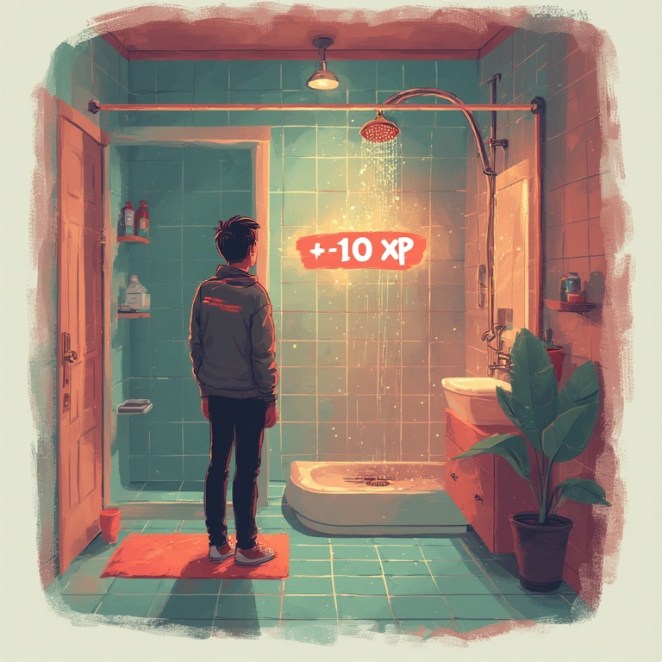
7. Needing a reward just to take a shower like it’s a game quest.
“+10 XP for personal hygiene. New achievement unlocked: You Finally Did It.”
Honestly, adulting would be easier if life came with a loot box. Honestly, the only thing getting me in that shower is the promise of pajamas immediately after. The shower helps most days its just the act of doing all the things is exhausting.

8. “I’ll do it in a minute” — famous last words.
Because that “minute” might be five hours later… or three to five business days, depending on vibes and moon phases. And if a kid interrupts me? Congratulations, that task has now been postponed indefinitely.

Sure, my brain is a gremlin on roller skates, but honestly? I’m still waking up and doing my best every day. Til next time gang, take care of yourselves, and each other.

Uncategorized

Things I’ve Googled at 2 AM: A Greatest Hits Collection

Welcome to the dark underbelly of my internet search history – that beautiful, chaotic wasteland where insomnia meets ADHD curiosity and good judgment goes to die. If Google keeps receipts (and let’s be honest, they absolutely do), then I’m pretty sure I owe them an apology and possibly therapy fees.

For those blessed neurotypical souls who can actually fall asleep at reasonable hours, let me explain what happens in the 2 AM Google zone: it’s where rational thought meets hyperfocus, and somehow you end up three hours deep in research about whether penguins have knees. Spoiler alert: they do, and now I know more about penguin anatomy than any reasonable adult should.

The Medical Anxiety Spiral

Let’s start with the classics – those searches that begin with a minor bodily concern and end with me mentally writing my will:

  • “why does my left eyelid twitch”
  • “is eye twitching a sign of brain tumor”
  • “brain tumor symptoms”
  • “how long do you live with undiagnosed brain tumor”
  • “can stress cause fake brain tumor symptoms”
  • “how to tell if you’re being dramatic about health symptoms”

This particular rabbit hole usually ends with me either completely convinced I’m dying or completely convinced I’m a hypochondriac, with no middle ground available. WebMD is not your friend at 2 AM, people. WebMD at 2 AM is that friend who tells you your headache is definitely a rare tropical disease even though you live nowhere near water and haven’t left your house in three days.

The Parenting Panic Searches

Nothing quite like teenage behavior to send you spiraling into the depths of Google at ungodly hours:

  • “is it normal for 16 year old to sleep 14 hours”
  • “how much attitude is normal for teenager”
  • “signs your teenager actually hates you vs normal teenage behavior”
  • “how to communicate with teenager who speaks only in grunts”
  • “when do teenagers become human again”

The best part about these searches is that every parenting forum has exactly two types of responses: “totally normal, you’re doing great!” and “this is a red flag, call a professional immediately.” There’s no middle ground in internet parenting advice, which is super helpful when you’re already spiraling at 2 AM.

The Random Life Questions That Consume My Soul

This is where things get weird. These are the searches that start nowhere and go everywhere:

  • “how do they get ships in glass bottles”
  • “what happens if you never cut your fingernails”
  • “do fish get thirsty”
  • “why do we say ‘after dark’ when it’s still light after dark in summer”
  • “how many people are named Steve in the world right now”
  • “what’s the oldest living thing on earth”
  • “can you die from lack of sleep”

That last one usually comes up around hour four of my insomnia adventures, when I’m googling whether my inability to sleep is actually going to kill me. The internet has mixed opinions on this, which is not reassuring when you’re already not sleeping.

The Organizational Fantasy Research

These searches represent my eternal optimism that the right system will finally fix my chaotic life:

  • “best planner for ADHD brain”
  • “bullet journaling for beginners”
  • “how to organize small spaces”
  • “Marie Kondo method actually work”
  • “minimalism with ADHD”
  • “organization systems that actually work for messy people”

I’ve researched more organizational systems than I’ve actually implemented, which tells you everything you need to know about how this usually goes. But hey, at 2 AM, I’m always convinced that THIS system will be the one that changes everything.

The Philosophical Crisis Questions

When the insomnia really sets in and I start questioning the nature of existence:

  • “what is the point of life”
  • “are we living in a simulation”
  • “do other people think in words or pictures”
  • “is everyone else just pretending to have their life together”
  • “what happens to consciousness when you die”
  • “why do humans need meaning in life”

These usually pop up around 3 AM when my brain decides that sleep is for quitters and existential dread is the only logical response to being awake this long.

The Wikipedia Rabbit Holes

These start with one innocent click and end with me knowing way too much about completely random topics:

Starting search: “what year was the microwave invented” Six hours later: I’m an expert on the history of food preservation, the science of radiation, and somehow the entire genealogy of the inventor’s family tree.

Starting search: “why do cats purr” Final destination: A comprehensive understanding of feline evolution, big cat behavior in the wild, and the physics of sound vibration.

The “Do Normal People…” Medical Questions

These are the searches I’m too embarrassed to ask my actual doctor about:

  • “is it normal to talk to yourself out loud”
  • “how often should normal people shower”
  • “what does a normal sleep schedule look like”
  • “do normal people remember their dreams”
  • “how much coffee is too much coffee per day for a normal person”

The irony is that I have an actual doctor I could ask these questions, but somehow googling them at 2 AM feels less judgmental than admitting to a medical professional that I don’t know what constitutes normal human behavior.

The Conspiracy Theory Adjacent Searches

I’m not saying I believe in conspiracy theories, but 2 AM me is definitely more open to alternative explanations for things:

  • “why do all mattress stores seem empty but stay in business”
  • “do birds actually exist or are they government drones”
  • “what’s really in hot dogs”
  • “why do all celebrities look younger than their age”
  • “are we alone in the universe”

These searches usually happen when I’ve been awake too long and my critical thinking skills have left the building. Daylight me reads these search histories and wonders what the hell nighttime me was thinking.

The Conclusion I Never Reach

The beautiful thing about 2 AM Google spirals is that they never actually end with answers – they just end with exhaustion or the sudden realization that it’s somehow 5 AM and I have to be functional in three hours.

I’ve learned more random facts from insomnia-driven research than from college, but I couldn’t tell you how any of it connects or why I needed to know that octopuses have three hearts at 2:30 in the morning.

The real kicker? I’ll do it all again tonight, because apparently my brain believes that this time will be different. This time, I’ll find the perfect solution to all of life’s problems hidden somewhere in the depths of the internet.

Spoiler alert: it’s usually just more questions and the growing realization that humans are weird, life is complicated, and I should probably just go to sleep.

But first, let me just quickly Google why I can’t fall asleep… Til next time gang, take care of yourselves, and each other!

Uncategorized

Notifications from My Chronic Illness Squad

Sometimes living with multiple diagnoses feels like I’m stuck moderating the world’s most chaotic group chat. None of my conditions text in complete sentences, everyone interrupts, and nobody ever seems to be on the same page. Honestly, if you peeked at the notifications going off in my brain, this is pretty much what you’d see…

Good Morning!

ADHD: “GUYS I just had the BEST idea! Let’s reorganize the closet at 2 a.m. while blasting music!”

Fibromyalgia: “Cool, but you’re going to need a heating pad, three naps, and a chiropractor after.”

Bipolar: “YES. Let’s do it! Let’s paint the closet rainbow colors and start a whole new side hustle around it!!”

Anxiety: “Wait. What if the paint is toxic? What if you mess it up? What if everyone laughs at you? Also, did you lock the door?”

Depression: “lol. what’s the point of even having a closet.”

PTSD: [randomly sends 17 fire emojis]

After Lunch:


ADHD: “Oops, forgot the drawers. Now I’m starting a craft project.”

Fibromyalgia: “Oh, awesome. Guess who’s going to need three days in bed because of hot glue injuries?”

Bipolar: “WE CAN SELL IT ON ETSY! MILLIONS!!”

Anxiety: “What if nobody buys it? What if they all leave one-star reviews? What if we end up bankrupt??”

Depression: “same.”

PTSD: [sends an old photo no one wanted to see]

Mid – Afternoon

ADHD: “Oops! Forgot the craft, but I DID deep clean the fridge!”


Fibromyalgia: “Congrats. I’ll just be over here, inflamed like a balloon.”

Motivation (rare cameo): “Guys… maybe we… clean the kitchen?”

ADHD: Ignore Motivation, he’s on vacation most days


Bipolar: “OMG let’s turn this into a cleaning business! Million-dollar idea!!”


Anxiety: “What if someone hires us and we miss a spot and they never forgive us?”


Depression: “We wouldn’t go anyway.”


PTSD: [sends a soft focus picture of nothing in particular]

2 A.M. Chaos 🌙

ADHD: “GUYS! Big idea! We should make a podcast!”

Fibromyalgia: “We can’t even make it through a shower without a recovery period.”


Bipolar: “No, no — THIS is the idea that’ll change everything!!”

Anxiety: “What if no one listens? What if EVERYONE listens?!”

Depression: “lol. either way, pointless.”

PTSD: [sends a GIF of an explosion]

And that’s just one day in the group chat. Tomorrow they’ll be arguing about whether to try a new hobby, cry about laundry, or plan an entire business venture at 3 a.m. Living with ADHD, bipolar disorder, fibromyalgia (and the rest of the crew) isn’t neat or predictable—it’s messy, noisy, and sometimes ridiculous. But at least if I can laugh at the chaos, I get to feel like the one running the chat instead of just stuck in it Till next time gang, take care of yourselves, and each other!

Uncategorized

Things I’ve Googled at 2 AM That Made Perfect Sense at the Time

A journey through my search history and the untamed wilderness of my insomniac brain

You know that moment when you’re lying in bed, brain absolutely feral with thoughts that feel like life-or-death urgent? When sleep is for the weak and your mind is a caffeinated hamster running full speed on a wheel made of pure chaos? When every random thought feels like the key to unlocking the mysteries of existence?

Welcome to my 2 AM Google searches – where logic goes to die and curiosity runs completely unhinged.


The “This Will Definitely Keep Me Awake Until Dawn” Category

“Do fish get thirsty and if so how do they drink underwater without drowning” This question possessed my soul for THREE HOURS. I went from fish biology to marine ecosystems to somehow reading about the Mariana Trench. My brain decided fish hydration was the hill I would die on. At 2 AM, this was the most important scientific inquiry of our time.

“What happens if you never cut your toenails ever in your entire life” Started innocent. Ended with me learning about 19th century burial practices and somehow getting emotionally invested in the story of a man who grew his fingernails for 66 years. I have regrets.


The Health Anxiety Rabbit Hole of Doom

“Left eyelid twitching morse code am I receiving messages from beyond” Started as concern about eye twitching. Escalated to wondering if my eyelid was trying to communicate. Googled morse code translations. My eyelid was apparently saying “SOS” which felt about right.

“Why does my knee sound like Rice Krispies when I stand up” I’m in my 40s. Things crack. But at 2 AM, my knee clicking was obviously the first domino in my body’s systematic shutdown. WebMD told me I had seventeen different terminal conditions. I had coffee and mysteriously felt better.


The “Important Research” That Consumed My Soul

“Difference between cemetery and graveyard and why this matters at 3 AM” Apparently it’s about church affiliation. This felt like CRITICAL information at the time. I was prepared to debate burial ground terminology with anyone who challenged me.

“Do cows have best friends and if so do they get lonely and is this why I’m sad” Cows DO have best friends! They form complex social bonds and experience grief when separated! This made me cry actual tears about cow friendship and question my own social connections. Spent an hour reading about bovine emotional intelligence.

“Can cats sense when you’re lying to them?”
Because obviously I need my judgmental feline to approve every life choice.


The Food Safety Investigation Unit

“Pizza left out overnight: food poisoning timeline and acceptable risk calculation” Had to mathematically determine if leftover pizza was worth potential gastrointestinal consequences. Created mental risk/benefit analysis charts. Pizza won. Always wins.


The Philosophical Crisis at Dawn

“What color is Wednesday and why does this feel urgent” Don’t have synesthesia but was absolutely convinced Wednesday has a specific color that I NEEDED to identify. Found entire forums debating weekday colors. People are passionate about this. Wednesday is apparently yellow. Crisis averted. Guys ALL days have colors! Why has no one ever mentioned this?


The Career Change Research Phase

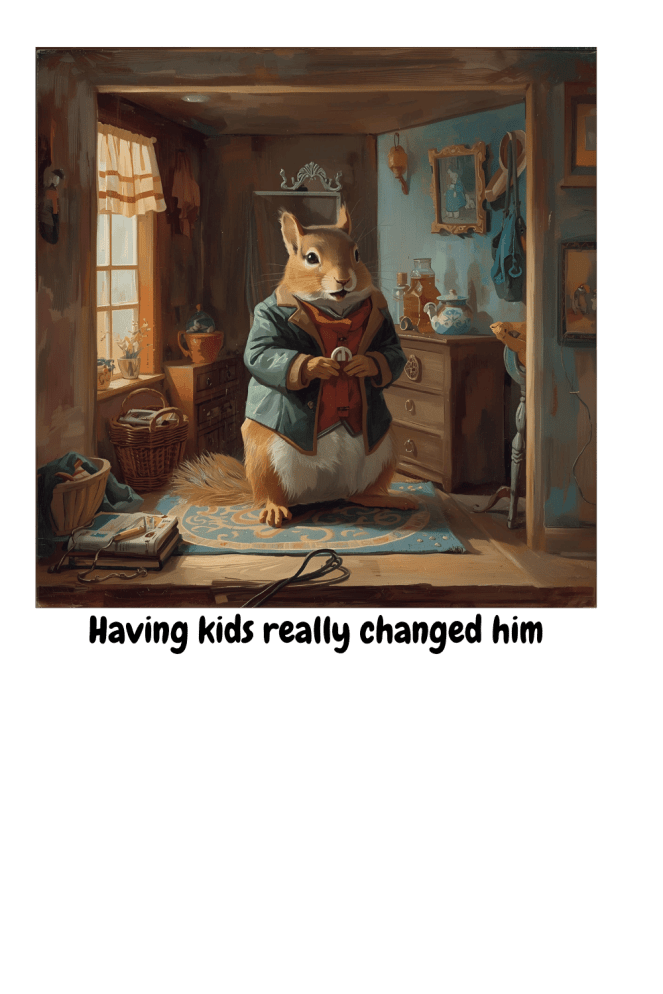
“Can you train squirrels as personal assistants legal implications” There was a particularly intelligent-looking squirrel outside my window. My brain saw potential. Googled squirrel intelligence, training methods, and workplace discrimination laws regarding rodent employees. then once I looked that up “Do squirrels have existential dread?” Probably. And they’re judging my parenting choices. George has a family of his own now so I feel his judging eyes.


The Current Situation

Right now, as I write this at (checks clock) 2:47 AM, I have seventeen browser tabs open including:

  • “Do penguins have knees” (they do!)
  • “Why does my brain do this to me sleep deprivation psychology”
  • “Can you train your circadian rhythm through sheer force of will”
  • “Is 3 AM the witching hour or am I just dramatic”

My search history reads like the diary of someone slowly losing their grip on reality while simultaneously becoming the world’s leading expert on random trivia that absolutely no one asked for.

But here’s the thing – my 3 AM brain might be absolutely unhinged, but it’s also endlessly curious, wildly creative, and never boring. Sure, I could use this time to sleep like a normal person, but then I wouldn’t know that cows have feelings, fish don’t get thirsty (probably), and there are people who have mathematically calculated rubber duck bathtub capacity.

My insomniac research spirals might be chaotic, but they’re MY chaotic research spirals, and honestly? The world is a more interesting place when you know completely useless information about everything.

Tonight’s 3 AM search prediction: “Why do I keep doing this to myself” immediately followed by “Do octopi dream and if so what about”

Please tell me your 3 AM Google searches are equally unhinged. I need to know I’m not the only one whose brain treats bedtime as research time. What’s the weirdest rabbit hole you’ve fallen down in the middle of the night?

Uncategorized

The ADHD Shopping Experience: How I Went for Milk and Came Home with a Succulent, Three Notebooks, and No Milk

A play-by-play of my brain vs. reality, or: Why simple errands are never simple

Setting the Scene: Just need milk. One item. Simple mission. What could possibly go wrong?


In the Parking Lot

ADHD Brain: “Okay, milk. Just milk. Wait, should I make a list? No, it’s just ONE thing. But what if I see something else we need while I’m there? Maybe I should text hubby and ask… no, that’s ridiculous. It’s MILK. But what kind of milk? 2% or whole? Did we discuss this? Should I check the fridge from here? Can’t do that. Focus. MILK. M-I-L-K. Got it.”

Fibromyalgia Body: “Why does every parking space require a trek equivalent to hiking the Appalachian Trail? And why is it windy? Wind makes everything hurt more.”

What Actually Happened: Sat in my car for 5 minutes trying to remember if we needed 2% or whole milk, googled “difference between 2% and whole milk nutritionally” fell down a rabbit hole about dairy farming, got distracted by a text from my mom, completely forgot why I had googled dairy farming, and finally got out of the car having made zero progress on the milk question.


Entering the Store

ADHD Brain: “Straight to dairy section. Do not pass Go. Do not collect impulse purchases. Laser focus. I am a milk-seeking missile.”

Fibromyalgia Body: “Of course I grabbed the cart with the wobbliest wheel in existence. Every step is sending shock waves through my joints. This cart sounds like a dying pterodactyl.”

Bipolar Brain: “Actually, this is kind of fun! Look at all the possibilities! So many choices! I love having choices!”

What Actually Happened: Grabbed the first cart without testing it (rookie mistake), immediately got distracted by the seasonal display of Halloween decorations prominently displayed in August, spent three minutes judging the capitalist machine that pushes holidays earlier each year, then realized I was still standing at the front of the store holding a cart that sounded like it was powered by wounded animals.


Stop #1: The Pharmacy Section

ADHD Brain: “Wait, didn’t I need to pick up that prescription? When was that due? Was it today or tomorrow? Better check while I’m here. Multitasking!”

Fibromyalgia Body: “Standing in lines is torture. Why does every person in front of me have the most complicated prescription issue in pharmacy history?”

What Actually Happened: Joined the pharmacy line without checking if I actually had a prescription ready, discovered I didn’t, but got into a fascinating conversation with the pharmacist about medication timing, learned three new things about drug interactions, forgot why I came to the store entirely, then remembered MILk when I saw the refrigerated section behind the pharmacy counter.


The Succulent Section (How Is This Even a Section?)

ADHD Brain: “Ooh, plants! I could be a plant person! Look at this tiny perfect one – it probably needs rescuing from this fluorescent wasteland. I would give it a good home. I’d name it Gerald. Gerald deserves better than this. I’ll just—NO. MILK. FOCUS. But Gerald is so small and perfect…”

Bipolar Brain (manic whispering): “Plants are scientifically proven to improve mental health! This could be your new hobby! You deserve nice things! Gerald could be the first of many! Think of the Instagram potential!”

Fibromyalgia Body: “Bending over to look at these tiny plants is making my back scream, but Gerald IS pretty cute…”

What Actually Happened: Bought four succulents (Gerald, Susan, Peter,and one I didn’t name because I was trying to show restraint), plus a decorative pot that cost more than the plants, and mentally planned their placement in every room of my house despite historically being a plant serial killer.


Stop #2: The Drive-Through Coffee (Because Obviously)

ADHD Brain: “I should get coffee for this epic grocery mission. Caffeine will help me focus on the milk objective. This is strategic, not procrastination.”

Fibromyalgia Body: “My head is starting to hurt. Coffee will help. Coffee fixes everything.”

Bipolar Brain: “Treat yourself! You’re doing great! You deserve a fancy drink!”

What Actually Happened: Ordered a complicated seasonal latte, paid for it, thanked the barista, drove off immediately, got three blocks away before realizing I never actually received my coffee, circled back through the drive-through again to explain my ADHD brain to a confused teenager, got my coffee and a pitying look, then sat in the parking lot for 10 minutes mentally writing this exact blog post.


The Notebook Aisle (My Natural Habitat)

ADHD Brain: “These are on SALE! I always need notebooks! What if I run out of places to write my brilliant thoughts? What if this specific type gets discontinued forever and I never find another notebook that feels this perfect in my hands? This is an INVESTMENT.”

Bipolar Brain: “Look at all these possibilities! You could start journaling again! Or write that novel! Or organize your life! Each notebook could be a fresh start!”

What Actually Happened: Bought notebooks in three different sizes for “different purposes” – one for grocery lists (ironic, considering), one for “important thoughts,” and one for daily planning that I’ll definitely use this time, unlike the other twelve identical notebooks at home. Spent fifteen minutes arranging them in my cart by color.


At Checkout

ADHD Brain: “Mission accomplished! Wait… what was my mission? Milk! Did I get milk? I feel like I’m forgetting something important. Why do I have plants? OH RIGHT, Gerald!”

Fibromyalgia Body: “Why is this checkout line moving so slowly? My feet are killing me. Should have gotten a scooter cart.”

Cashier: “Did you find everything you needed today?”

Me: “Everything except what I came for!”

What Actually Happened: Paid $47 for succulents, notebooks, Halloween candy (forgot to mention grabbing that), fancy soap that “smelled like my childhood,” and a magazine about organizing your life. No milk. Not even close to milk.


Back Home

Family: “Did you get milk?”

Me: “I got… life lessons? And Gerald.”

Family: “Who’s Gerald?”

Me: “My new succulent son. Also, we still need milk.”

ADHD Brain: “But look how happy Gerald looks on the windowsill! This was basically a success!”


The Moral of the Story: Sometimes the journey is more important than the destination. Sometimes that journey involves adopting plant children and buying notebooks you don’t need. And sometimes you just have to go back to the store tomorrow for milk, but with Gerald watching over you from his new pot. Til next time gang, take care of yourselves, and each other.

Uncategorized

Your Brain’s Clock is Lying to You: A Field Guide to Weird Time Perception

Neurodivergent time is like dog years — it moves differently, feels different, and somehow makes perfect sense only to the person experiencing it.
If you’ve ever been both unfashionably early and catastrophically late in the same week, welcome to the club.


1. The Classic: Time Blindness

You look at the clock, it’s 3:05.
You blink, check again, and suddenly it’s 3:58, you’re still in pajamas, and the event was across town at 4.
This isn’t laziness — research suggests ADHD brains have differences in time estimation and temporal processing (Barkley, 2010), meaning we actually perceive time passing less accurately.
Translation: the clock is real, but our internal one is a knockoff from Wish.


2. The Paradox: Hyper-Punctuality

On the flip side, some of us are so terrified of being late that we swing too far the other way.
Now we’re sitting in the parking lot 25 minutes early, scrolling memes and contemplating our life choices.
Our brain’s solution to not trusting time is apparently to overcompensate until it’s awkward.


3. The “Just One More Thing” Trap

We swear we have time for one tiny task before we leave — toss in the laundry, answer that email, maybe make baked salsa chicken from scratch — and suddenly we’re in full panic mode.
The ADHD brain struggles with prospective memory (remembering to do something in the future) and transitions, so starting “one more thing” is basically time gambling with terrible odds.


4. The Black Hole Effect

You start reorganizing the spice rack. Next thing you know, it’s 2am, you’re alphabetizing oregano, and you have no idea how you got here.
Hyperfocus is great for productivity… until you remember you were supposed to eat dinner four hours ago.


Tips for Outsmarting Your Brain’s Broken Clock

  • Timers are your friend – Set alarms for when to start getting ready, not just when to leave.
  • The “fake leave time” trick – Tell yourself you have to be there 15 minutes earlier than you do.
  • Visible time cues – Use analog clocks or visual timers where you can see time moving.
  • Build a buffer – If you’re early, bring a book or podcast so you don’t feel like you’re wasting time.

📚 Fact Source: Barkley, R. A., Murphy, K. R., & Fischer, M. (2010). ADHD in Adults: What the Science Says. Guilford Press.
Yes, that’s an actual book. No, I didn’t make it up. It’s basically the ADHD brain user manual.
Til next time gang, take care of yourselves, and each other!
Uncategorized

ADHD and the Never-Ending Quest for the Right System

Or: How I Own More Planners Than Pairs of Jeans, and Still Can’t Find That Dentist Appointment Card

We’ve all been there. You buy the pretty planner with the gold coil, convinced that this will be the one to change your life. Then you try the bullet journal method because minimalism is supposed to cure chaos. Then you download six productivity apps, each promising to be the magic solution to your scattered existence. For one glorious week, you are an organizational deity, color-coding tasks (I have bought colored pens and every pen has the same color notebook and folder and yeah I am a giant nerd lol) and checking boxes like a productivity influencer. Then — poof — the planner’s under the couch collecting dust, the apps are unopened with little red notification badges mocking you, and you’re frantically scribbling your grocery list on the back of a Target receipt while standing in the cereal aisle.

Sound familiar? Welcome to the ADHD productivity paradox: we desperately need systems to function, but we’re spectacularly bad at sticking to them.

Why This Happens (Yes, Science Says So)

ADHD brains are novelty seekers. According to research published in Brain journal by Sethi et al. (2018), our dopamine reward system runs differently than neurotypical brains, with studies showing that people with ADHD have dysfunction in the dopamine reward pathway (Volkow et al., 2010). This means we thrive on new and interesting stimuli — like that gorgeous new planner layout with the perfect font — but struggle to maintain interest once the novelty wears off. That dopamine hit from “new system day” is real, but it’s also temporary.

Executive function is a fickle beast. Studies consistently show that people with ADHD have weaker function and structure of prefrontal cortex (PFC) circuits, the brain regions responsible for planning, prioritizing, and task-switching (Arnsten, 2009). Neuroimaging research has found reduced activity in certain parts of the PFC during tasks requiring sustained attention and complex decision-making (AGCO Health, 2024). It’s not laziness or lack of willpower — it’s literally how our brains are wired.. Thats why I cycle through hobbies so fast and its something I’m actively working on.

One size does not fit all. Most productivity systems are designed by and for neurotypical brains that can handle routine, sequential thinking, and sustained attention. Trying to wedge ourselves into these systems is like trying to wear jeans two sizes too small — you can do it, but it’s uncomfortable, restrictive, and not pretty.

Perfectionism is the enemy of progress. Many of us fall into the trap of thinking that if we can’t do a system “perfectly,” we shouldn’t do it at all. Miss one day of journaling? Throw out the whole journal. Forget to update the app for a week? Delete it in shame. This all-or-nothing thinking sabotages any chance of finding what actually works.

How to Work With Your Brain, Not Against It

1. Think Modular, Not Monumental. Instead of searching for one perfect “forever system,” embrace using multiple small, interchangeable tools that can work independently. Sticky notes for quick reminders that need immediate action, a large wall calendar for big-picture dates and deadlines, your phone’s alarm function for time-sensitive appointments, and maybe a simple notebook for brain dumps when your thoughts are spinning. Mix and match based on what your current life phase demands.

2. Use Dopamine to Your Advantage. Instead of fighting your brain’s need for novelty, make it part of the plan. Intentionally change colors, formats, or methods every few weeks to refresh your interest and re-engage that dopamine reward system. Buy different colored pens seasonally, switch between digital and paper tools, or reorganize your workspace regularly. Make variety a feature, not a bug.

3. Embrace “Good Enough” Productivity. You don’t need to track every habit, meal, mood, water intake, and bowel movement to be a functioning adult. Choose three key areas that truly impact your daily life and focus on keeping just those consistent. Let everything else flex and flow as needed. Progress, not perfection, is the goal.

4. Automate & Delegate Where Possible. Set recurring phone reminders for regular tasks, use grocery delivery or curbside pickup to eliminate list-making stress, automate bill payments, or recruit a family member to be your “appointment buddy” for remembering important dates. Your brain doesn’t have to carry every single piece of information if technology and other people can help.

5. Plan for Disruption. Build buffer days into your schedule, expect that your tools will need periodic rebooting, and never expect sustained perfection. Create “reset rituals” for when systems inevitably break down — maybe Sunday nights for clearing your workspace or the first of each month for reassessing what’s working. The point is to support your life, not win an imaginary “most organized person alive” award.

6. Start Ridiculously Small. Instead of overhauling your entire organizational approach, pick one tiny thing and make it automatic first. Maybe it’s putting your keys in the same spot every day, or writing tomorrow’s most important task on a sticky note before bed. Once that feels natural, add something else small. Baby steps prevent the overwhelm that kills motivation.

The Big Takeaway

You’re not broken because you can’t stick to one pristine system for years on end. Your brain is wired for variety, stimulation, and flexibility — so make those traits part of your organizational plan instead of fighting against them. You’re not failing the system. The system is failing you if it can’t adapt and flex with your very real, very human reality.

The goal isn’t to become neurotypical. It’s to find tools and approaches that work with your unique brain, even if they look messy or unconventional to outside observers. Some days that might mean a color-coded digital calendar. Other days it might mean a crumpled napkin with three things scrawled on it. Both are valid if they help you function.

Your worth isn’t measured by how perfectly you maintain a bullet journal or how consistently you use the latest productivity app. It’s measured by how well you’re living your life, taking care of what matters, and being kind to yourself in the process. Til next time gang, take care of yourselves, and each other!

Uncategorized

Hyperfixation Cuisine: A Love Story

When food is your ride-or-die for two weeks… until it ghosts you.

I don’t fall in love often—but when I do, it’s usually with a snack. A drink. A cereal. A very specific sandwich from one very specific place that I will eat exclusively for 14 days straight like it holds the secrets of the universe and contains all the nutrients my body will ever need. During these passionate food affairs, I become a creature of pure obsession—calculating how many times per day I can reasonably consume my chosen item without judgment, researching the optimal preparation methods, and feeling genuinely excited about meal times in a way that probably isn’t normal for a grown adult. I’ll stock up like I’m preparing for the apocalypse, filling my cart with multiples of the same item while cashiers give me curious looks that I interpret as admiration for my decisive shopping skills. And then? I ghost. Cold turkey. No warning, no closure, no gradual tapering off—just me and my shame in aisle 5, pretending I never knew that Creamsicle shake, avoiding eye contact with the 47 cans of soup I can no longer stomach, and wondering why my brain treats food like a series of intense but doomed romantic relationships.

What Is Hyperfixation Cuisine?

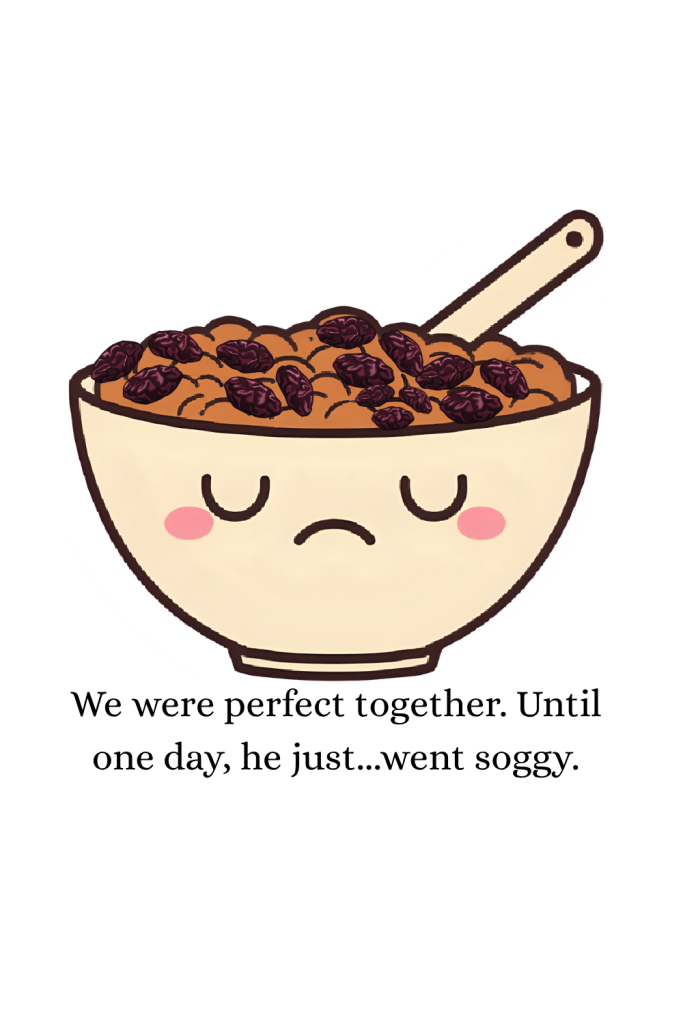
It’s the culinary equivalent of a summer fling. You’re obsessed. You plan your day around it. You talk about it to anyone who will listen (and a few who won’t). You buy in bulk. And then one morning, like a cursed love spell wearing off, it’s done. You’re left with a pantry full of raisin bran and the haunting echoes of a snack you no longer want to eat.

Neurodivergent folks—those of us with ADHD, autism, or both—know this dance well. It’s not a food phase; it’s a full-blown romantic arc.

And science backs us up!

Let’s sneak in some facts while we laugh about it:

Nutritionists would say variety is key. But also? Survival. Joy. Convenience. These are not small things. And if eating the same 3 things on rotation keeps your body going through a rough patch? That’s not failure—that’s strategy.

Plus, it always changes eventually. Usually when you least expect it. Often mid-bite.

Honestly? Laugh. Embrace it. Maybe write a heartfelt goodbye letter to your former food flame. (“Dear Bagel Bites, we had some good times. I’m sorry I abandoned you half-eaten in the freezer door.”)

You don’t have to force variety or shame yourself for what your brain finds comforting. Just make sure you stay fed, hydrated, and somewhat functional. And if one day you find yourself suddenly obsessed with cucumbers in vinegar, just know: you’re not alone.


What was your last food fling? Let me know so I don’t feel like the only one who once ate eleven bowls of raisin bran in one week.

And to all the forgotten snacks still lurking in my pantry…
I loved you once. I swear I did, lol. Til next time gang, take care of yourselves

Uncategorized

Neurospicy Squared: Parenting a Teen With Extra Seasoning When You’re Also the Family’s Walking Firecracker

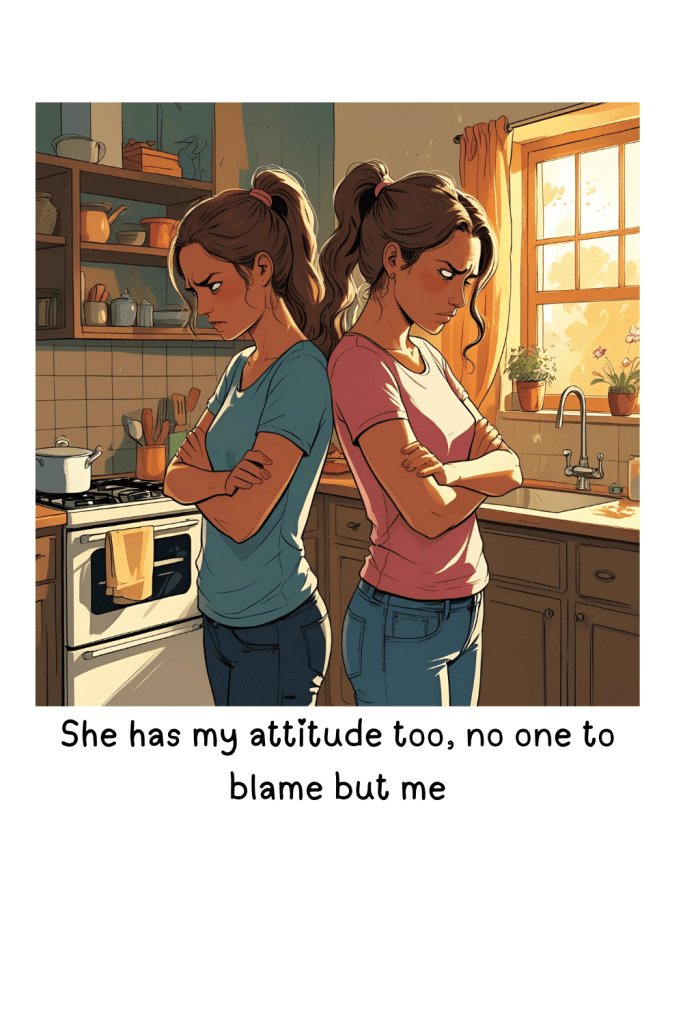
Let me paint you a picture: One neurodivergent parent with executive dysfunction, sensory issues, a flair for hyperfocus (at the worst times), and a caffeine addiction… raising a neurodivergent teen who also has executive dysfunction, sensory issues, and a flair for hyperfocus (also at the worst times). Poor non neurodivirgent Dad lol. (Lucky he’s a little spicy in his own way so he gets it)

What we’ve got here, folks, is not a traditional household.
It’s a feedback loop with matching eye rolls and snack wrappers. With attitude.


“I’m Not Yelling, I’m Just Expressing Loudly With My Whole Body”

I used to think parenting would be about teaching my child how to be a functioning adult. Now I realize it’s about co-regulating while we both spiral in different directions over things like why the peanut butter is wrong. Not gone. Just wrong.

We’ve had conversations like:

  • “I can’t handle this right now.”
  • “Same.”
  • “So what do you want to do about it?”
  • “I don’t know”
  • “Cool me either. Want to avoid it together?”

When You’re the Grown-Up and Still Don’t Have the Manual

Let’s be real: parenting any teen is a mix of love, worry, and mystery smells.

Sometimes I’m the wise mentor. Sometimes I’m the raccoon in the laundry room making emotionally impulsive decisions because my hair hurts and I need a snack.

We forget things together.
We hyperfixate on the same random topic (shoutout to that two-week deep dive into plane crash documentaries, but our fallback is cat videos lol).
We both get overstimulated in stores and end up leaving without whatever we went in for.

But at least we do it as a team.


What Actually Helps Us (Spoiler: Not Just Schedules)

People say neurodivergent kids need structure. Sure.
But have you ever tried creating that structure while your brain is doing circus tricks and crying at the same time?

So we’ve learned to build little systems that don’t require too many spoons:

  • Timers with fun alarms. (Because “Gentle bells” don’t work on either of us. We need “aggressive robot beep.”)
  • Codewords for meltdowns. (We’ve used “just “NOPE.” but I think we’re good at picking up on each others tells by now no words needed)
  • Parallel processing. (We do our own things side by side while exchanging exactly 4.5 words. Always. We watch Wheel together, we’re not watching it together so much as competing between each other but the sentiment is there)
  • And when all else fails: snacks, memes, and leaving the room before anyone says something regrettable.

The Pick Your Battles™ Scale

Let me introduce you to my secret weapon: the Pick Your Battles™ Scale. It’s how I decide whether to engage or let it go with my spicy teen (and honestly, with myself).

SituationRatingTranslation
They wore pajama pants to the store.1/10Not a fight worth my last nerve, so long as all the bits are covered I’m not stressin.
They forgot their homework again.4/10Gently nudge, don’t die on this hill.
They said I ruined their life because I made pasta instead of rice.2/10Sounds like a feelings day. Feed them, don’t fight them.
They screamed into a pillow instead of at me.0/10That’s emotional maturity, baby. Celebrate it. Hubby gets mad if she walks away mumbling under her breath. I’m like really thats NORMAL teen behavior, I’ve done it, so long as the words are to herself I see no harm in letting her cuss me out. Its when she screams at me thats the problem.
They were mean to the cat.10/10Pause the world. This one needs addressing.

This little internal rubric helps me reserve energy for what actually matters. (Spoiler: it’s not always the socks on the floor.)


The Secret Sauce: Radical Compassion + Shared Eye Rolls

My kid gets it. I get it.
We’re both doing our best with the wonky wiring we’ve got.

Some days that means deep talks about emotions and neurobiology.
Other days that means forgetting it’s trash day for the third week in a row and bonding over mutual shame while taking it out in pajamas at 3 p.m.

There’s beauty in the chaos.
There’s humor in the mess.
There’s love in the way we see each other clearly, even when the world doesn’t.


So If You’re Out There, Fellow Neurospicy Parent…

You’re not failing.
You’re not alone.
You’re just raising a tiny mirror who also loses their phone in their own hand and argues like a well-informed gremlin.

And that? That’s something worth celebrating.

Preferably with matching fidgets and a mutually agreed-upon “silent hour.” Til next time gang. Take care of yourselves, and each other.