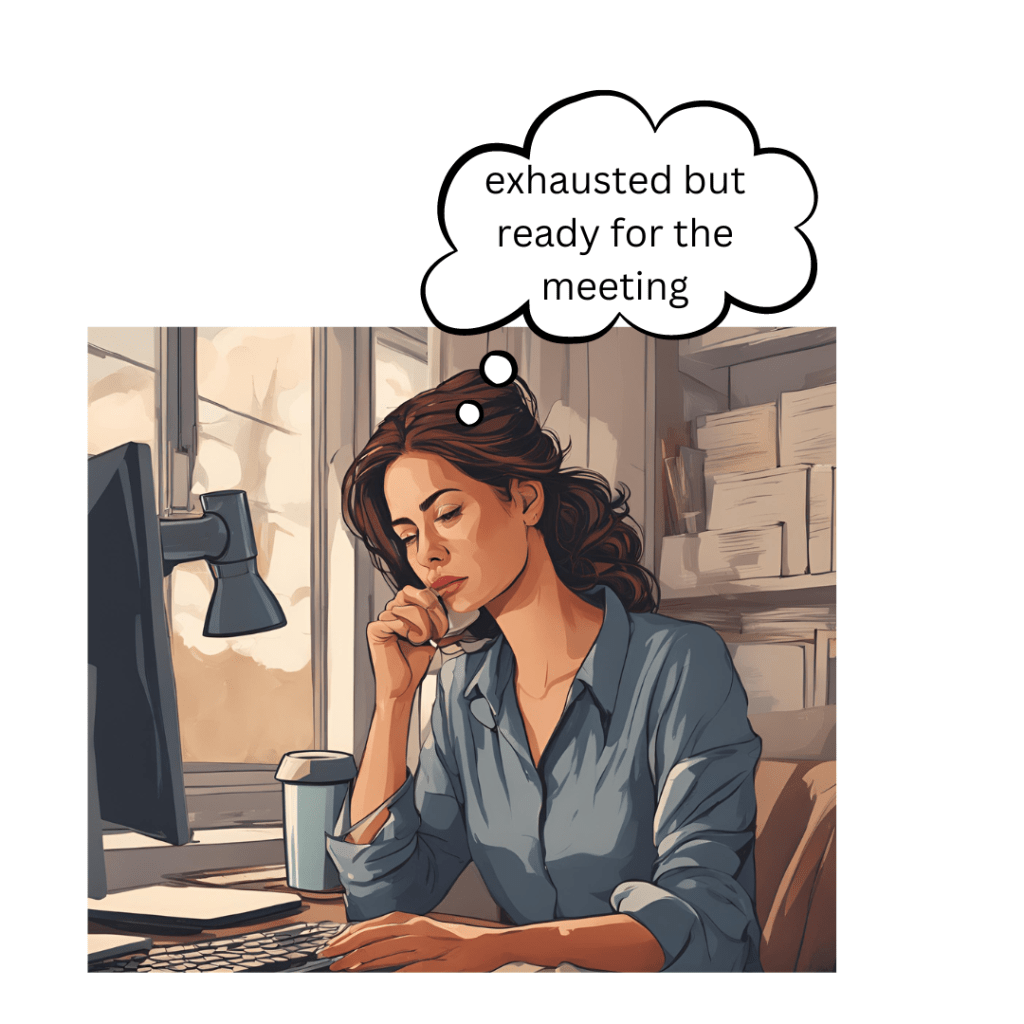
Listen… December is basically the season finale of the year, and my brain is running on whatever scraps of battery life it can find between the couch cushions. So instead of pretending I’m a fully optimized human being, I’m embracing the tiny victories — the ones that actually count.
Because if December can be dramatic? I can be delusional in a way that helps my self-esteem.
We all know (and we’ve talked about) December is an energy zapper so here are 7 small wins that absolutely deserve applause, confetti, or at least a slow clap from someone who isn’t judging your life choices:
1. Getting dressed in something that isn’t your “I Give Up” sweatpants
Bonus points if the outfit has textures like velvet and lace, because then you’re basically cosplaying as an enchanted woodland witch who is absolutely doing her best. I’m a cross between Stevie Nicks and a victorian ghost as far as style goes. I want people to see me and feel the energy shift because I am all about delivering the good vibes.
2. Remembering one (1) single appointment
In December? That’s Nobel Prize-level discipline. Congratulations on defeating the Calendar Boss. The other appointments are jealous but hey, you crushed that lunch date.
3. Feeding yourself something other than peppermint bark
Double win if it was an actual meal. Triple win if you didn’t eat it standing in the kitchen like a tired Victorian ghost. I want people to know I am absolutely not going to be a quiet ghost. No slipping in or out of places unnoticed. I’m going to be LOUD, think of my entrances and exits to resemble Kramer’s from Seinfeld.
4. Wrapping at least one gift without crying
Or using a gift bag instead of trying to precision-fold paper like Martha Stewart with a migraine. Embrace the bag. The bag is your friend. I havent wrapped a gift in forever, the muscle memory is gone.
5. Making it through a school concert, holiday party, or work event
Even if your soul left your body three minutes in, you showed up. Gold star. I make disassociating an Olympics level sport. If you see me at an event, think of that as a premeeting and I’ll be asking all my follow up questions when I see you next and might lag on a convo or two while my brain is processing.
6. Saying “no” to something your body and brain didn’t have the spoons for
This is Advanced Seasonal Adulting™. Look at you, protecting your peace like a tiny holiday dragon guarding its hoard. I will protect my peace, because I have to listen to me when everything is quiet.
7. Remembering joy is allowed to be small right now
A quiet night. A cup of cocoa. A silly ornament. Five minutes under a blanket with the lights off. Its unreal how long I could sit and watch the tree change color while memories play like a slideshow in my head. Tiny joy counts — especially when December tries to steamroll you.
If you’ve done even one of these things? You’re winning. Seriously. December doesn’t want us to succeed, and yet here we are — thriving at a very reasonable, spoon-conscious pace. Til next time gang, take care of yourselves, and each other. Holiday greetings from George!)
You know how some people lose themselves in books or meditation? Yeah, not me. I lose myself in a daily game of hide & seek with my household items. Keys, phones, socks, remotes, pens — all apparently sentient and united in their mission to make me look ridiculous.
What makes it worse? The conversations I have with myself while I’m searching. Spoiler: I’m both the villain and the detective, and I’m never kind to myself in either role.
Here’s a peek into the thrilling mysteries that unfold in my home:
🧦 The Missing Socks Saga
One sock left in the dryer, the other AWOL.
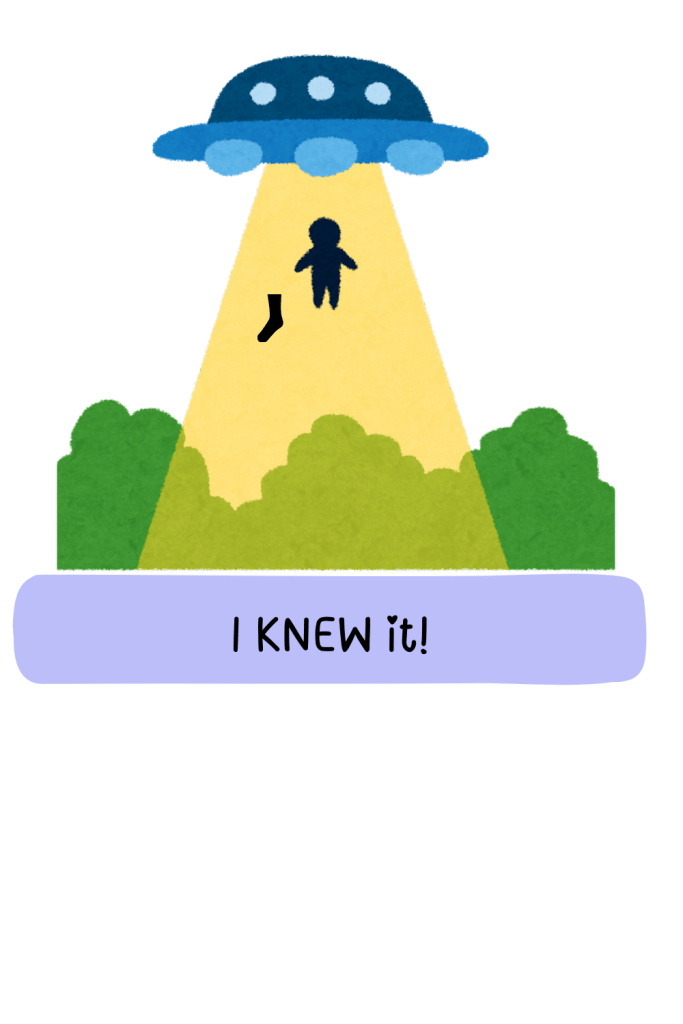
Me: “Did I put this in the laundry?” Also me: “Nope, it was definitely in the drawer.” Me: “So… abducted by aliens?” Also me: “Or maybe it’s sipping espresso in Paris while you walk around like a mismatched peasant.”
Result: I usually find it way too late — after my daughter has cut it into an art project, or the cat has been subjected to a “custom sweater” that was three sizes too small.
📱 The Vanishing Phone Mystery
My phone disappears precisely when I’m already late.
Me: “I know I set it down… somewhere.” Also me: “Maybe in the fridge? You’ve done worse.” Me: “I don’t know! I don’t know anything anymore! This is how the chaos wins.” Also me: “Honestly, you’d be late even if it was taped to your forehead.”
📺 The Remote’s Secret Life
The remote hides in plain sight: under cushions, in laundry baskets, behind the cat.
Me: “This remote is plotting against me.” Also me: “Yep, it’s basically Loki in plastic form.” Me: “It knows I want to binge my show. This is betrayal on a molecular level.” Also me: “Face it, the remote has stronger boundaries than you do.”
✨ Bonus Round – The Usual Suspects
Pens that vanish. Hair ties that escape. Phone chargers that ghost me like a bad date.
Me: “Is it under the bed, on the counter, or did it grow legs?” Also me: “Nah, it packed a bag and joined the circus.” Me: “Fine. I’ll just survive off raw anxiety.” Also me: “Cool, that’s basically your whole lifestyle brand anyway.”
The Takeaway
Somewhere between yelling at invisible forces and negotiating with the cat, I’ve realized: maybe this is just normal. Maybe everyone’s household is secretly playing hide & seek with their sanity. Also me is a comedy genius lol.
Or maybe I’m just cursed.
Either way, I’m declaring a truce. But first… coffee. Definitely coffee.
Neurodivergent time is like dog years — it moves differently, feels different, and somehow makes perfect sense only to the person experiencing it. If you’ve ever been both unfashionably early and catastrophically late in the same week, welcome to the club.
1. The Classic: Time Blindness
You look at the clock, it’s 3:05. You blink, check again, and suddenly it’s 3:58, you’re still in pajamas, and the event was across town at 4. This isn’t laziness — research suggests ADHD brains have differences in time estimation and temporal processing (Barkley, 2010), meaning we actually perceive time passing less accurately. Translation: the clock is real, but our internal one is a knockoff from Wish.
2. The Paradox: Hyper-Punctuality
On the flip side, some of us are so terrified of being late that we swing too far the other way. Now we’re sitting in the parking lot 25 minutes early, scrolling memes and contemplating our life choices. Our brain’s solution to not trusting time is apparently to overcompensate until it’s awkward.
3. The “Just One More Thing” Trap
We swear we have time for one tiny task before we leave — toss in the laundry, answer that email, maybe make baked salsa chicken from scratch — and suddenly we’re in full panic mode. The ADHD brain struggles with prospective memory (remembering to do something in the future) and transitions, so starting “one more thing” is basically time gambling with terrible odds.
4. The Black Hole Effect
You start reorganizing the spice rack. Next thing you know, it’s 2am, you’re alphabetizing oregano, and you have no idea how you got here. Hyperfocus is great for productivity… until you remember you were supposed to eat dinner four hours ago.
Tips for Outsmarting Your Brain’s Broken Clock
Timers are your friend – Set alarms for when to start getting ready, not just when to leave.
The “fake leave time” trick – Tell yourself you have to be there 15 minutes earlier than you do.
Visible time cues – Use analog clocks or visual timers where you can see time moving.
Build a buffer – If you’re early, bring a book or podcast so you don’t feel like you’re wasting time.
📚 Fact Source: Barkley, R. A., Murphy, K. R., & Fischer, M. (2010). ADHD in Adults: What the Science Says. Guilford Press. Yes, that’s an actual book. No, I didn’t make it up. It’s basically the ADHD brain user manual. Til next time gang, take care of yourselves, and each other!
Or: How I Own More Planners Than Pairs of Jeans, and Still Can’t Find That Dentist Appointment Card
We’ve all been there. You buy the pretty planner with the gold coil, convinced that this will be the one to change your life. Then you try the bullet journal method because minimalism is supposed to cure chaos. Then you download six productivity apps, each promising to be the magic solution to your scattered existence. For one glorious week, you are an organizational deity, color-coding tasks (I have bought colored pens and every pen has the same color notebook and folder and yeah I am a giant nerd lol) and checking boxes like a productivity influencer. Then — poof — the planner’s under the couch collecting dust, the apps are unopened with little red notification badges mocking you, and you’re frantically scribbling your grocery list on the back of a Target receipt while standing in the cereal aisle.
Sound familiar? Welcome to the ADHD productivity paradox: we desperately need systems to function, but we’re spectacularly bad at sticking to them.
Why This Happens (Yes, Science Says So)
ADHD brains are novelty seekers. According to research published in Brain journal by Sethi et al. (2018), our dopamine reward system runs differently than neurotypical brains, with studies showing that people with ADHD have dysfunction in the dopamine reward pathway (Volkow et al., 2010). This means we thrive on new and interesting stimuli — like that gorgeous new planner layout with the perfect font — but struggle to maintain interest once the novelty wears off. That dopamine hit from “new system day” is real, but it’s also temporary.
Executive function is a fickle beast. Studies consistently show that people with ADHD have weaker function and structure of prefrontal cortex (PFC) circuits, the brain regions responsible for planning, prioritizing, and task-switching (Arnsten, 2009). Neuroimaging research has found reduced activity in certain parts of the PFC during tasks requiring sustained attention and complex decision-making (AGCO Health, 2024). It’s not laziness or lack of willpower — it’s literally how our brains are wired.. Thats why I cycle through hobbies so fast and its something I’m actively working on.
One size does not fit all. Most productivity systems are designed by and for neurotypical brains that can handle routine, sequential thinking, and sustained attention. Trying to wedge ourselves into these systems is like trying to wear jeans two sizes too small — you can do it, but it’s uncomfortable, restrictive, and not pretty.
Perfectionism is the enemy of progress. Many of us fall into the trap of thinking that if we can’t do a system “perfectly,” we shouldn’t do it at all. Miss one day of journaling? Throw out the whole journal. Forget to update the app for a week? Delete it in shame. This all-or-nothing thinking sabotages any chance of finding what actually works.
How to Work With Your Brain, Not Against It
1. Think Modular, Not Monumental. Instead of searching for one perfect “forever system,” embrace using multiple small, interchangeable tools that can work independently. Sticky notes for quick reminders that need immediate action, a large wall calendar for big-picture dates and deadlines, your phone’s alarm function for time-sensitive appointments, and maybe a simple notebook for brain dumps when your thoughts are spinning. Mix and match based on what your current life phase demands.
2. Use Dopamine to Your Advantage. Instead of fighting your brain’s need for novelty, make it part of the plan. Intentionally change colors, formats, or methods every few weeks to refresh your interest and re-engage that dopamine reward system. Buy different colored pens seasonally, switch between digital and paper tools, or reorganize your workspace regularly. Make variety a feature, not a bug.
3. Embrace “Good Enough” Productivity. You don’t need to track every habit, meal, mood, water intake, and bowel movement to be a functioning adult. Choose three key areas that truly impact your daily life and focus on keeping just those consistent. Let everything else flex and flow as needed. Progress, not perfection, is the goal.
4. Automate & Delegate Where Possible. Set recurring phone reminders for regular tasks, use grocery delivery or curbside pickup to eliminate list-making stress, automate bill payments, or recruit a family member to be your “appointment buddy” for remembering important dates. Your brain doesn’t have to carry every single piece of information if technology and other people can help.
5. Plan for Disruption. Build buffer days into your schedule, expect that your tools will need periodic rebooting, and never expect sustained perfection. Create “reset rituals” for when systems inevitably break down — maybe Sunday nights for clearing your workspace or the first of each month for reassessing what’s working. The point is to support your life, not win an imaginary “most organized person alive” award.
6. Start Ridiculously Small. Instead of overhauling your entire organizational approach, pick one tiny thing and make it automatic first. Maybe it’s putting your keys in the same spot every day, or writing tomorrow’s most important task on a sticky note before bed. Once that feels natural, add something else small. Baby steps prevent the overwhelm that kills motivation.
The Big Takeaway
You’re not broken because you can’t stick to one pristine system for years on end. Your brain is wired for variety, stimulation, and flexibility — so make those traits part of your organizational plan instead of fighting against them. You’re not failing the system. The system is failing you if it can’t adapt and flex with your very real, very human reality.
The goal isn’t to become neurotypical. It’s to find tools and approaches that work with your unique brain, even if they look messy or unconventional to outside observers. Some days that might mean a color-coded digital calendar. Other days it might mean a crumpled napkin with three things scrawled on it. Both are valid if they help you function.
Your worth isn’t measured by how perfectly you maintain a bullet journal or how consistently you use the latest productivity app. It’s measured by how well you’re living your life, taking care of what matters, and being kind to yourself in the process. Til next time gang, take care of yourselves, and each other!
(Or: Things I’ve Learned the Hard Way and Now Pass Off as Wisdom)
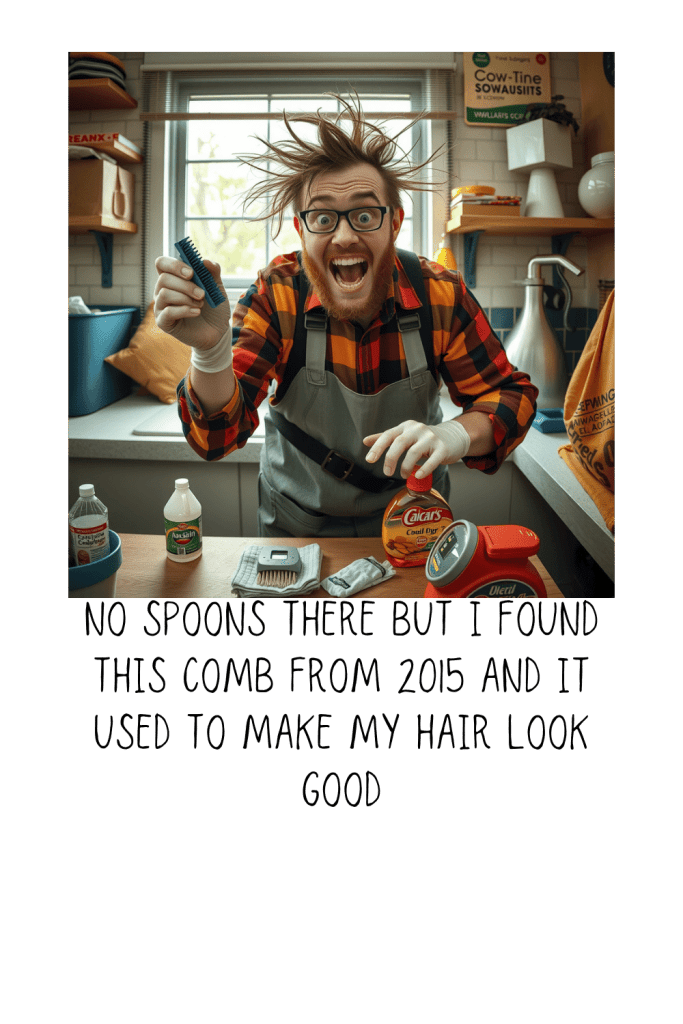
1️⃣ If you open the dishwasher to “just add one thing,” congratulations. You now live here. Ownership transfers upon entry. If you can’t fill it, go check your room. I know you dont eat in there as a general rule but go look and see if the random missing spoon is hanging out with the stray socks in their hideout.
2️⃣ “We’ll deal with it later” is a valid strategy until further notice. No one said when later is. Legally, you’re covered. Until 5 pm when all the things you were going to do catch up and your teenager is asking why something isnt done to their exacting standards.
3️⃣ Matching socks are a social construct. As are bedtimes, sanity, and tidy junk drawers. For socks, maybe track some other missing stuff (like the spoon from before), I swear theres a Narnia or hiding dimension.
4️⃣ No one has ever truly recovered from stepping on a rogue Lego. We carry these wounds in silence. And orthopedic inserts. My kitty in the sky Bonkers used to sleep on them, a full bucket without the lid, weirdo. Miss you little dude but thanks for sending me Fryday who amuses me endlessly, but I still miss you!
5️⃣ If you set something down ‘just for a second,’ it’s gone forever. Gone to the shadow realm. Gone where keys and pens go to die. See narnia, also with socks and spoons. And the tupperware lids vs tupperware ratio is always uneven so I blame them too.
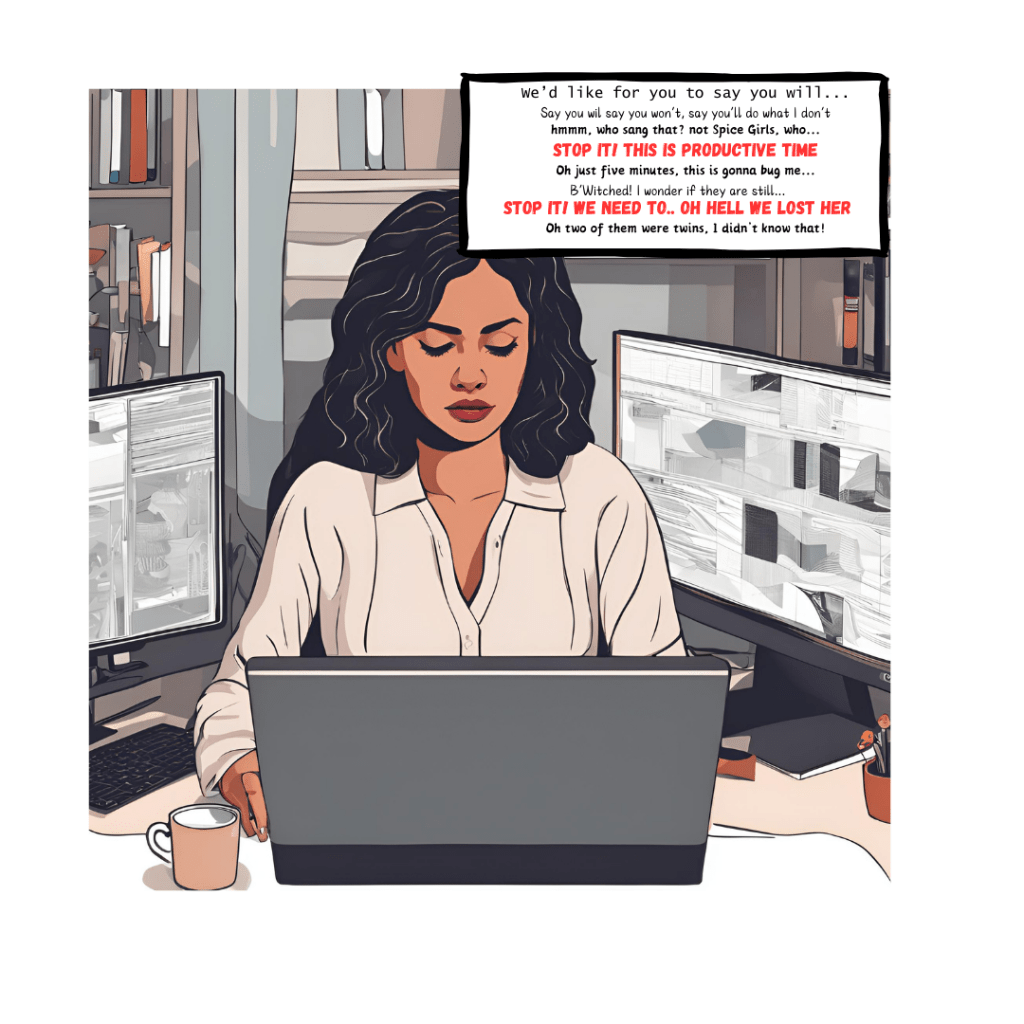
6️⃣ Your brain will retain the lyrics to a 1997 boy band hit but not why you walked into the room. Priorities. We don’t make the rules. Its tearing up my heart that you don’t ‘remember the time’ you walked into a room and left with exactly what you walked in there for but honestly ‘bye bye bye’ to that dream because honestly we’re ‘never gonna get it no never gonna get it’
7️⃣ Snacks are sacred. Do not touch another’s designated snack without first drafting a formal agreement and receiving notarized consent. I think it sucks so much worse when you crave a texture and have no food with that texture available. Like I hate it when I bring home fresh baked goods because I can only eat one every few days or I forget its there. I MIGHT get one. Vultures.
8️⃣ If the ADHD person in your house starts cleaning, DO NOT INTERRUPT. You’re witnessing a natural phenomenon rarer than a solar eclipse. Often whats good is pulling up a rag and joining them, not that you need to do any of the cleaning, they’ll do it but they will do it alot faster if you join them.
9️⃣ We don’t do ‘normal’ here. We tried. It was exhausting. Weird is cheaper and fits better. I have discussed this at length, I know the name is deceiving because I love being weird and don’t want any part of me normal lol. There was a time I did strive to an impossibly high level too. That me burned herself out a decade ago.
🔟 The motto remains: Lower the bar, keep the vibe. Survival with style. That’s the goal. Often its just survival.
Closing Thought:
Some houses run on routine, others run on vibes and caffeine. Guess which one we are. Til next time gang, take care of yourselves, and each other!
Let’s dive into the wild world of hyperfocus and hyperfixation – the ADHD brain’s way of saying “Go big or go home” when it comes to attention. Hyperfocus: The ADHD Superpower (With a Side of “Oops, I Forgot to Eat”)Picture this: you’re so deep into a task that the apocalypse could start, and you’d be like, “Just five more minutes!” That’s hyperfocus, baby. It’s like your brain suddenly decides to cosplay as a laser beam, zoning in on one thing with the intensity of a thousand suns. Great for productivity, not so great for remembering trivial things like, oh I don’t know, sleeping or going to the bathroom.
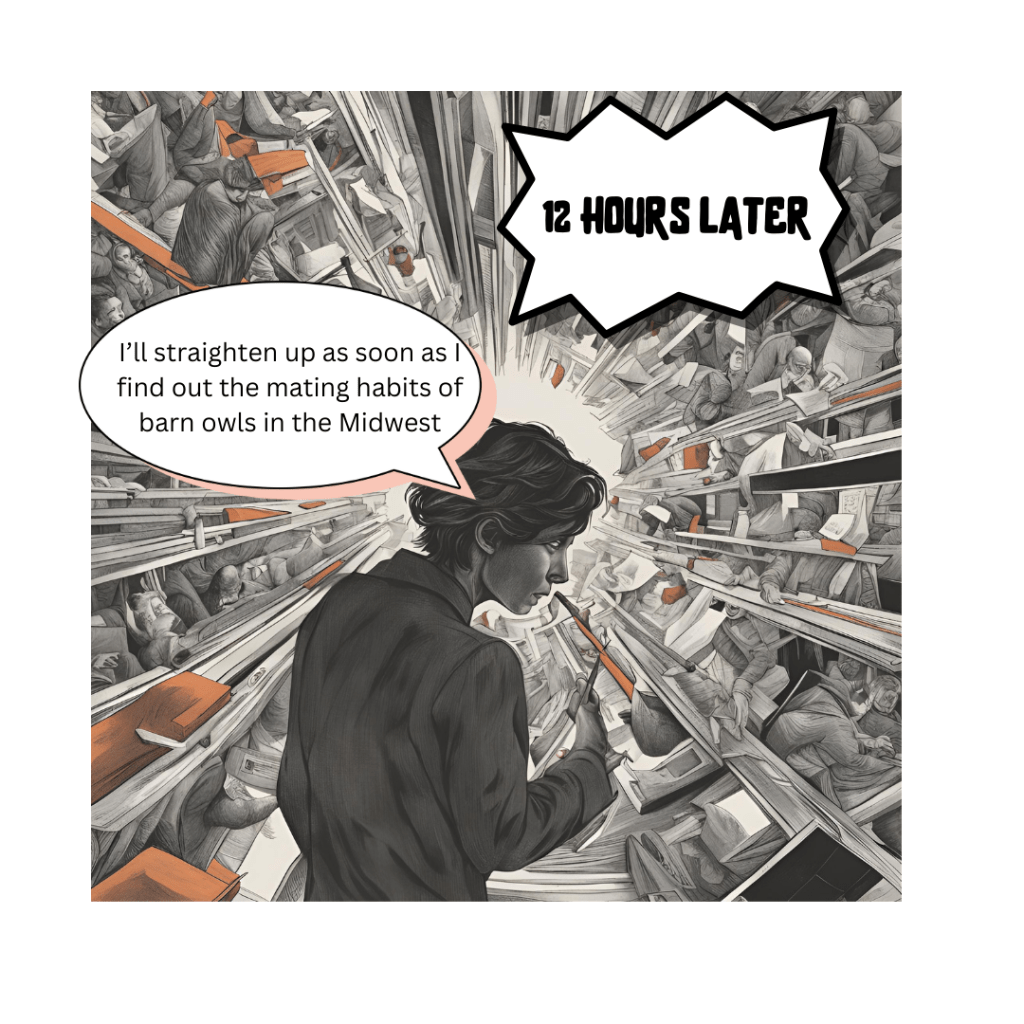
Hyperfixation: When Your Brain Decides to Become a Walking Wikipedia on Random Topics Ever found yourself suddenly obsessed with 18th-century French poetry or the mating habits of sea slugs? Congratulations, you’ve been hit by the hyperfixation train! It’s like your brain picked a topic out of a hat and decided, “This. This is what we’re going to think about 24/7 for the next week… or until we find something shinier.”
How These Differ from “Normal” Focus (Whatever That Is)
Intensity: While normies might be satisfied with a casual interest, we go from 0 to “I’m writing a dissertation on this” in 2.5 seconds flat.
Duration: Regular focus is like a sprint. Our focus? It’s an ultra-marathon… through quicksand… while being chased by bees.
Flexibility: Normal people can switch tasks like changing TV channels. Us? We’re more like old TVs stuck on one channel until someone physically comes to change it.
Awareness: Regular focus allows for multitasking. Hyperfocus? The house could be on fire, and we’d be like, “Just let me finish this paragraph.”
In conclusion, hyperfocus and hyperfixation are like the ADHD brain’s way of compensating for all those times it couldn’t focus on boring stuff. It’s our superpower, our kryptonite, and our entertainment all rolled into one. So next time you find yourself three hours deep into researching the history of spoons at 2 AM, just remember: you’re not procrastinating, you’re embracing your neurodivergent superpowers! Take care of yourself, and each other!











 WannaBeNormal