Uncategorized

Things My Brain Treats Like Optional DLC

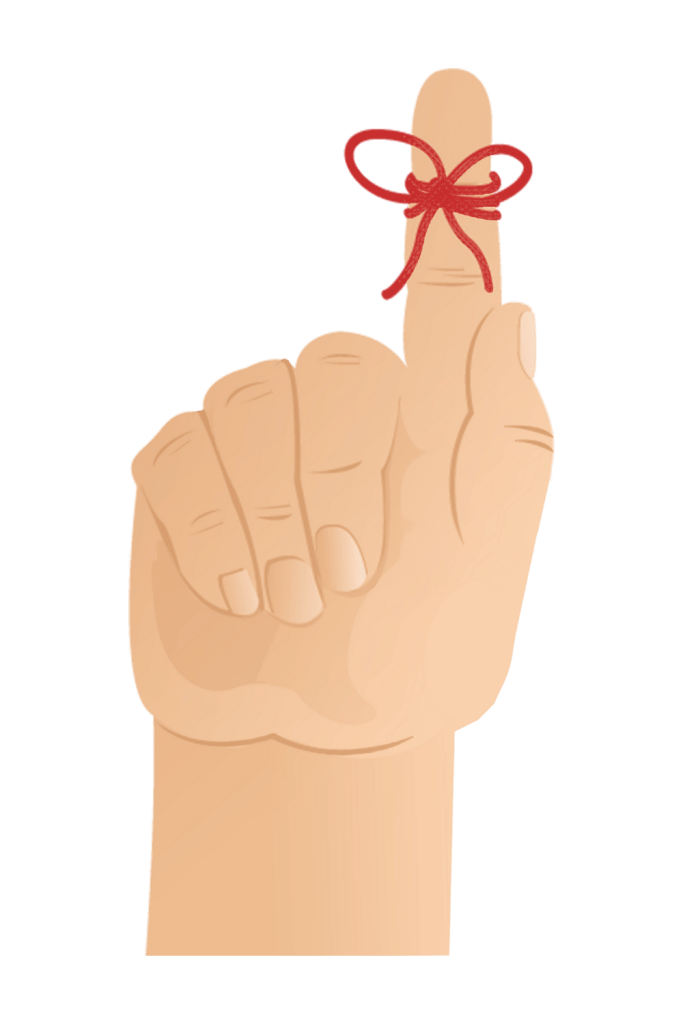
Living with Chronic Illness is basically like living with a brain that’s trying its best… but also doing parkour off the furniture. Some days I’m thriving, some days I’m forgetting what I’m doing mid-sentence, and honestly? Most days I’m just negotiating with my own executive function like it’s a hostile coworker. So here’s a little peek behind the curtain: the things my brain treats like optional DLC.

1. Object permanence… most of the time.
If I put it down and walk away, it may as well have been launched into another dimension. Keys, water bottles, important documents — all living their best lives in the ADHD void. Tell me its important, its the surefire way to get me to lose it.

2. Starting tasks? Easy. Finishing them? Bold of you to assume.
I will begin a project with Olympic enthusiasm and then abandon it halfway like a Victorian ghost girl drifting out of a scene. Don’t believe me? My craft desk is currently auditioning for a documentary called ‘When Hobbies Attack.’ Pearls would be clutched. Fainting couches would be used.

3. Time? A concept. A myth. A prank.
Ten minutes feels like an hour, an hour feels like twelve seconds, and deadlines feel like cosmic jokes written specifically for me. I need to get up, says my brain, the laundry should be done. Sure, its done, as is the day, the entire day slipped through my grasp like time itself saw me trying and said, ‘Aw, cute,’ before sprinting off.

4. Noise? Too much. Silence? Also too much.
I am either overstimulated by the faint hum of the fridge or suddenly panicking because the quiet feels suspicious. There is no chill setting. I generally leave the tv on and use the mute button, sometimes I even remember to unmute or unpause (go me)

5. Hyperfocus that appears only for hobbies, never chores.
Ask me to reorganize a shelf for fun? Instant productivity demon. Ask me to fold laundry? My brain blue screens. Meanwhile the laundry is over there quietly becoming part of the home’s structural integrity.

6. Forgetting why I opened a new tab mid-click.
My fingers click “new tab” with confidence. My brain immediately abandons the mission. We will never know what the goal was. This is the thing I hate the most. Yesterday I was at hubby’s desk and he was saying something and I said ‘I’ll go look that up’ and I turned and FELT myself forgetting it, I hadnt made it to the door when I had to turn back around and apologized and asked him to repeat himself.

7. Needing a reward just to take a shower like it’s a game quest.
“+10 XP for personal hygiene. New achievement unlocked: You Finally Did It.”
Honestly, adulting would be easier if life came with a loot box. Honestly, the only thing getting me in that shower is the promise of pajamas immediately after. The shower helps most days its just the act of doing all the things is exhausting.

8. “I’ll do it in a minute” — famous last words.
Because that “minute” might be five hours later… or three to five business days, depending on vibes and moon phases. And if a kid interrupts me? Congratulations, that task has now been postponed indefinitely.

Sure, my brain is a gremlin on roller skates, but honestly? I’m still waking up and doing my best every day. Til next time gang, take care of yourselves, and each other.

Uncategorized

The Unofficial Chronic Illness Starter Pack: 13 Things We All Somehow End Up Owning

There’s no “welcome packet” when you join the chronic illness club. No orientation video, no handbook, not even a “sorry your body betrayed you” cupcake. But give it a year or two, and like clockwork, you’ll somehow accumulate the exact same stuff as every other chronically ill human alive.

It doesn’t matter what your diagnosis is — autoimmune, neurological, connective tissue chaos, or “we still don’t know but it’s definitely something.” You’ll still end up with this exact lineup. Consider it the unofficial starter pack for a life you didn’t sign up for.


1. The Heating Pad That’s Basically a Limb Now

Not a heating pad. The heating pad. The emotional-support heating device that never leaves your side. The one that smells a little… “well-loved.” The one that goes on vacation with you, because without it, you might as well just stay home and cry.

Bonus points if you own more than one: couch pad, bed pad, travel pad. If there’s an outlet nearby, there’s probably a heating pad plugged into it.


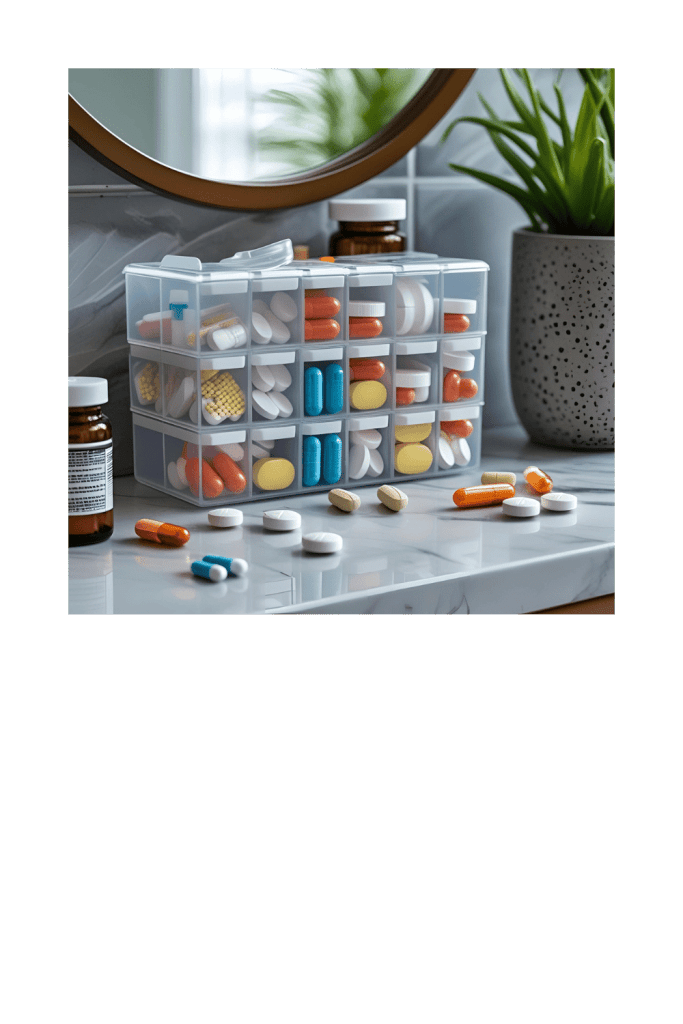
2. The Pill Organizer That Screams “Elder Millennial in Crisis”

Remember when you thought pill organizers were for your grandma? That’s adorable. Now you’ve got the jumbo one with four compartments per day and color-coded sections that could rival a NASA launch sequence.

You’ve upgraded at least twice. You’ve probably dropped it at least once and watched your entire week scatter across the floor like medical confetti.


3. The Hydration Graveyard

“You need to drink more water!” they said. So you bought every water bottle known to humankind. The motivational one with time stamps. The $40 one that promised to change your life. The one with a straw that always smells faintly weird.

And yet… you’re still dehydrated. But at least your shelf looks like an REI display.


4. Compression Socks That Deserve Their Own Fashion Line

When you first bought them, you swore they were temporary. Now you’ve got rainbow stripes, polka dots, and ones that match your pajamas.

Nothing like someone complimenting your “cute socks” while you’re over here preventing blood from pooling in your legs like a human Capri Sun.


5. Meds You’re 70% Sure You Still Need

Your medicine cabinet looks like a CVS threw up. Some prescriptions you take daily, some “just in case,” and others that you can’t remember why you still have but you’re too scared to stop taking.

At least once a week you’re googling, “can I take this one with food or nah?”


6. The Sacred Comfort Outfit

Elastic waistband. Zero zippers. Fabric so soft it might disintegrate soon but you’ll die before you part with it.

You own duplicates because when you find something that doesn’t make your body angry, you commit.


7. The Ice Pack Army

The freezer is 80% ice packs and 20% actual food. There are gel ones, flexible ones, and the infamous bag of peas that’s been there since the Obama administration.

Visitors open your freezer and immediately regret asking questions.


8. Pillows. So Many Pillows.

You’ve got regular pillows, wedge pillows, knee pillows, body pillows, and that expensive orthopedic one you swear doesn’t help but you’re too stubborn to admit it.

Your bed looks like a cloud exploded. Your couch looks like a pillow fort designed by an overachiever.


9. Your Personal Medical Archive

You could open a small clinic with your paperwork. Test results, specialist notes, insurance denials, and that one referral you might need someday.

Because if you don’t keep copies, you’ll end up explaining your entire medical history from scratch at every appointment anyway.


10. The Blanket Multiverse

Weighted blanket. Heated blanket. Soft blanket. “Don’t touch me” blanket. “Only this texture doesn’t make me rage” blanket.

You’ve reached a point where you can’t sit anywhere without instinctively grabbing one. It’s fine. It’s cozy. You’ve accepted it.


11. Snacks on Standby

Every bag, drawer, and vehicle has a snack stash. Protein bars, nuts, crackers, and that one emergency granola bar that’s probably older than your pet but still good in a pinch.

Low blood sugar waits for no one.


12. The Endless Notebook Collection

Symptom logs, med trackers, food diaries, mood charts, appointment notes. Every notebook started with good intentions and ended three pages in.

You’ve also tried every app known to mankind, but somehow keep coming back to paper and pen.


13. A Dark, Sparkly Sense of Humor

You can’t buy this one, but it’s essential. If you can’t laugh at your heating pad dependency and your pharmacy-sized pill case, you’ll lose your mind.

Because crying hurts your head, and honestly, we’re low on spoons for that today.


The Unspoken Truth

If you’re reading this while sitting on your heating pad, wrapped in a blanket, surrounded by snacks and water bottles you forgot to refill — congrats, you’re one of us now.

The chronic illness starter pack isn’t sold anywhere. You build it piece by piece, fueled by trial, error, and desperate 2 a.m. Amazon searches.

We didn’t choose this starter pack. But we’re making it work — one heating pad session, one sarcastic laugh, one survival day at a time. Til next time gang, take care of yourselves, and each other!

Uncategorized

Things I’ve Googled at 2 AM: A Greatest Hits Collection

Welcome to the dark underbelly of my internet search history – that beautiful, chaotic wasteland where insomnia meets ADHD curiosity and good judgment goes to die. If Google keeps receipts (and let’s be honest, they absolutely do), then I’m pretty sure I owe them an apology and possibly therapy fees.

For those blessed neurotypical souls who can actually fall asleep at reasonable hours, let me explain what happens in the 2 AM Google zone: it’s where rational thought meets hyperfocus, and somehow you end up three hours deep in research about whether penguins have knees. Spoiler alert: they do, and now I know more about penguin anatomy than any reasonable adult should.

The Medical Anxiety Spiral

Let’s start with the classics – those searches that begin with a minor bodily concern and end with me mentally writing my will:

  • “why does my left eyelid twitch”
  • “is eye twitching a sign of brain tumor”
  • “brain tumor symptoms”
  • “how long do you live with undiagnosed brain tumor”
  • “can stress cause fake brain tumor symptoms”
  • “how to tell if you’re being dramatic about health symptoms”

This particular rabbit hole usually ends with me either completely convinced I’m dying or completely convinced I’m a hypochondriac, with no middle ground available. WebMD is not your friend at 2 AM, people. WebMD at 2 AM is that friend who tells you your headache is definitely a rare tropical disease even though you live nowhere near water and haven’t left your house in three days.

The Parenting Panic Searches

Nothing quite like teenage behavior to send you spiraling into the depths of Google at ungodly hours:

  • “is it normal for 16 year old to sleep 14 hours”
  • “how much attitude is normal for teenager”
  • “signs your teenager actually hates you vs normal teenage behavior”
  • “how to communicate with teenager who speaks only in grunts”
  • “when do teenagers become human again”

The best part about these searches is that every parenting forum has exactly two types of responses: “totally normal, you’re doing great!” and “this is a red flag, call a professional immediately.” There’s no middle ground in internet parenting advice, which is super helpful when you’re already spiraling at 2 AM.

The Random Life Questions That Consume My Soul

This is where things get weird. These are the searches that start nowhere and go everywhere:

  • “how do they get ships in glass bottles”
  • “what happens if you never cut your fingernails”
  • “do fish get thirsty”
  • “why do we say ‘after dark’ when it’s still light after dark in summer”
  • “how many people are named Steve in the world right now”
  • “what’s the oldest living thing on earth”
  • “can you die from lack of sleep”

That last one usually comes up around hour four of my insomnia adventures, when I’m googling whether my inability to sleep is actually going to kill me. The internet has mixed opinions on this, which is not reassuring when you’re already not sleeping.

The Organizational Fantasy Research

These searches represent my eternal optimism that the right system will finally fix my chaotic life:

  • “best planner for ADHD brain”
  • “bullet journaling for beginners”
  • “how to organize small spaces”
  • “Marie Kondo method actually work”
  • “minimalism with ADHD”
  • “organization systems that actually work for messy people”

I’ve researched more organizational systems than I’ve actually implemented, which tells you everything you need to know about how this usually goes. But hey, at 2 AM, I’m always convinced that THIS system will be the one that changes everything.

The Philosophical Crisis Questions

When the insomnia really sets in and I start questioning the nature of existence:

  • “what is the point of life”
  • “are we living in a simulation”
  • “do other people think in words or pictures”
  • “is everyone else just pretending to have their life together”
  • “what happens to consciousness when you die”
  • “why do humans need meaning in life”

These usually pop up around 3 AM when my brain decides that sleep is for quitters and existential dread is the only logical response to being awake this long.

The Wikipedia Rabbit Holes

These start with one innocent click and end with me knowing way too much about completely random topics:

Starting search: “what year was the microwave invented” Six hours later: I’m an expert on the history of food preservation, the science of radiation, and somehow the entire genealogy of the inventor’s family tree.

Starting search: “why do cats purr” Final destination: A comprehensive understanding of feline evolution, big cat behavior in the wild, and the physics of sound vibration.

The “Do Normal People…” Medical Questions

These are the searches I’m too embarrassed to ask my actual doctor about:

  • “is it normal to talk to yourself out loud”
  • “how often should normal people shower”
  • “what does a normal sleep schedule look like”
  • “do normal people remember their dreams”
  • “how much coffee is too much coffee per day for a normal person”

The irony is that I have an actual doctor I could ask these questions, but somehow googling them at 2 AM feels less judgmental than admitting to a medical professional that I don’t know what constitutes normal human behavior.

The Conspiracy Theory Adjacent Searches

I’m not saying I believe in conspiracy theories, but 2 AM me is definitely more open to alternative explanations for things:

  • “why do all mattress stores seem empty but stay in business”
  • “do birds actually exist or are they government drones”
  • “what’s really in hot dogs”
  • “why do all celebrities look younger than their age”
  • “are we alone in the universe”

These searches usually happen when I’ve been awake too long and my critical thinking skills have left the building. Daylight me reads these search histories and wonders what the hell nighttime me was thinking.

The Conclusion I Never Reach

The beautiful thing about 2 AM Google spirals is that they never actually end with answers – they just end with exhaustion or the sudden realization that it’s somehow 5 AM and I have to be functional in three hours.

I’ve learned more random facts from insomnia-driven research than from college, but I couldn’t tell you how any of it connects or why I needed to know that octopuses have three hearts at 2:30 in the morning.

The real kicker? I’ll do it all again tonight, because apparently my brain believes that this time will be different. This time, I’ll find the perfect solution to all of life’s problems hidden somewhere in the depths of the internet.

Spoiler alert: it’s usually just more questions and the growing realization that humans are weird, life is complicated, and I should probably just go to sleep.

But first, let me just quickly Google why I can’t fall asleep… Til next time gang, take care of yourselves, and each other!

Uncategorized

Medication Management When You Have More Than One Diagnosis

Navigating medication when you live with multiple diagnoses—like ADHD, bipolar disorder, and fibromyalgia—feels less like healthcare and more like trying to solve a Rubik’s cube in the dark. Upside down. While juggling. There’s always a new prescription, a dosage change, or a side effect surprise. Add in the fact that I’m a mom, recently had hip surgery, and sometimes just plain forget things (hello, ADHD brain), and it’s a wonder I manage at all.


1. Keeping Track Is Basically a Full-Time Job

I’ve tried everything: pill organizers, phone alarms, sticky notes, calendar reminders. Some weeks, I’m a medication goddess. Other weeks, I realize at 3 p.m. that my morning meds are still sitting on the counter untouched. According to the CDC, about 50% of people with chronic illnesses don’t take their meds exactly as prescribed—so apparently I’m in good (if frustrated) company. I employ a triple check system, because I have a problem with short term memory, so I had a few times gotten confused and taken morning pills twice. Now I have an organizer, take them at designated time, and old school write it down on the really bad days.

And ADHD doesn’t help. Sometimes I forget to refill my prescription entirely, which means pharmacy texts have become my unofficial accountability partner.


2. Doctors Don’t Always See the Whole Picture

Every specialist has their own tunnel vision. My psychiatrist cares about mood stability, my rheumatologist about pain, and my primary care about blood pressure and labs. Rarely do they connect the dots between all of them. That’s on me.

I keep an updated list of every med, dose, and timing on my phone ON TOP OF the primary care doc who is supposed to monitor my meds. It’s not foolproof, but it’s saved me more than once when someone said, “Wait, you’re taking that too?” I sometimes wish my doctors had a group chat—but since that’s not happening, I play coordinator.


3. Side Effects and Interactions: The Uninvited Guests

Adding a new med always feels like a game of roulette. Will this one help? Will it mess up something else? Once, I started a pain medication that made my bipolar symptoms spiral. (Fun surprise. 0/10, do not recommend.) Recently I was talking to a new psych doc and SHE told me that I shouldnt take a med that I guess has an affect on people with CKD and my numbers put me right at the beginning of that. And yet neither the doc that prescribed the med nor any doc I have talked to ever said anything about it and I’ve been on it well over a year.

Fact check: studies show up to 30% of adults on multiple medications experience interactions or side effects significant enough to affect daily life. No wonder I sometimes feel like I’m trading one problem for another.


4. Forgiving Myself for the Fumbles


(I am SO excited football is back on, my Sundays have purpose now so excuse my metaphors lol)

Missed doses happen. Taking the night meds in the morning happens. Once I even double-dosed my muscle relaxer and took the best nap of my life (not ideal, but at least memorable).

I used to beat myself up for every mistake. Now I remind myself: this is hard, and I’m doing the best I can. Systems help, but expecting perfection is just setting myself up for failure. Its important to be dilligent and well informed and trying your best where meds are concerned but you will make mistakes, we all make mistakes so just be gentle with yourself.


5. Advocacy and Asking for Help

I’ve learned to speak up more at appointments, to say, “This isn’t working” without guilt. Being able to leave a message in the portal helps the minor hiccups I’ve had, but be honest with yourself and your doctor, because if you can’t take a med they might be able to give you another med that works just as good. I’ve asked my pharmacist about interactions that my doctors overlooked. And yes, sometimes I ask my teen to double-check if I actually swallowed my pills. Around here, med management is a team sport.


Final Thoughts

Managing meds with multiple diagnoses isn’t simple—it’s messy, frustrating, and often overwhelming. But with humor, alarms, sticky notes, family backup, and a good dose of self-compassion, I somehow keep moving forward. If you’re in the same boat, you’re not alone. We’re all just out here trying to make the chaos work. Til next time gang, take care of yourselves, and each other.

Uncategorized

Reasons I Walked Into This Room (Spoiler: I Still Don’t Know)

An ADHD mystery in real time

Here I am, standing in my bedroom, looking around like I’ve never seen this place before in my life. I definitely had a purpose when I left the kitchen. I was very determined. I had INTENT.

Now? I got nothing.

What I Tell Myself It Might Have Been:

  1. To get my phone charger
    (Nope my phone is at 97%)
  2. To grab that important document I need
    (what document? for what? the mystery deepens)
  3. To put away that thing I left in here yesterday
    (what thing? which yesterday? time is a construct)
  4. To check if I left my coffee cup in here
    (I’m not even drinking coffee today)
  5. To get something for my kid who asked for… something
    (they’re at school. it’s Tuesday. I think.)
  6. To turn off a light that was bothering me
    (all the lights are off. it’s 2 PM. I’m questioning reality)
  7. To find my glasses
    (they’re on my head. they’ve been on my head this entire time)
  8. To get that book I was reading
    (I haven’t touched a book in three weeks, what am I even talking about)
  9. To look for my keys so I don’t lose them later
    (they’re in my pocket. jingling. mocking me)

The Actual Reason:

I followed the cat.

The cat had no destination either.

We’re both just standing here now, equally confused, staring at each other and wondering what we’re doing with our lives. At least the cat has an excuse – he’s a cat. His life goals include knocking things off counters, judging my life choices, and staring at invisible things on the wall.

I’m a grown adult who apparently takes navigation cues from a creature whose biggest daily decision is which sunny spot to nap in.

Current Status:

Still in the room. Still don’t know why. The cat has moved on to more important cat business (aggressive grooming of one specific paw). I’m considering asking him for directions back to whatever I was originally doing, but he’s giving me that look that says, “Figure it out yourself, human. I’m not your GPS.”

Maybe I’ll just stay here forever. Set up camp. Make this room my new home base. At least then when people ask “Why are you in here?” I can say “I live here now. This is my life. The cat is my roommate. We don’t ask questions.”

Anyone else take mystery tours of their own house, or is it just me and my feline guide to nowhere?

Uncategorized

The Great Medication Shuffle: Morning Pills, Evening Pills, and the Ones I Forgot Existed

Or: How My Medicine Cabinet Became a Small Pharmacy and I Still Can’t Remember What I’m Supposed to Take When

Looking at my bathroom counter right now, I count fourteen different pill bottles, three liquid medications, two inhalers, and a partridge in a pear tree. Okay, maybe not the partridge, but at this point I wouldn’t be surprised if my doctor prescribed one for “mood support.”

For those of you managing multiple chronic conditions, you know the drill. What started as “just take this once a day” has evolved into a complex choreographed dance that would make Broadway jealous. And like any good performance, timing is everything—except I have ADHD and the memory of a goldfish with anxiety.

Meet the Cast of Characters

The Morning Crew: These are the heavy hitters that transform me from zombie to semi-functional human. They’re the ones that make it possible for me to remember my own name and possibly locate the coffee maker.

I have to take 16 pills in the morning, and it’s as gross and exhausting as it sounds. While I’m supposed to take all that in the morning, I split it up to make it easier to manage, so my pills are morning, later morning, dinner/bed. Frequently when I sit down to do my meds I have missed a few from the “later morning” category. Because nothing says “good morning” like swallowing what feels like a handful of gravel.

The Evening Squad: The night shift workers whose job is to help me actually sleep instead of lying awake cataloging every embarrassing thing I’ve done since 1987.

At night I feel like I do a lot of prep work. I take 5 at dinner. One of those is half a dose of sleep/anti-anxiety. I take another 3 when I sit down for the night. Once I have done my chores I pop the other half and soon am out cold. If any one of those is off by an inch I won’t sleep or will pass out mid-chore. It’s like a tightrope balance really, but I fall far more often lol. Nothing quite like waking up on the couch with a half-folded load of laundry as your blanket.

The Wildcards: These are the divas of the medication world. Take with food. Don’t take with food. Take two hours before this other medication but not within four hours of dairy products. Take while standing on your head during a full moon. (Okay, I made that last one up, but honestly, would you be surprised?)

I take one that’s ‘take with 600 calories.’ Ok, as in, how close to eating? Before? After? What will happen if I’m not a nutritionist and therefore have NO IDEA how many calories will be enough? Do I need to whip out a food scale? Should I be doing math at breakfast? Is a bagel with cream cheese 600 calories or am I supposed to add a side of existential dread?

The Forgotten: Every medicine cabinet has them—the bottles in the back that you rediscover like archaeological artifacts. “Oh hey, I was supposed to be taking this for anxiety… six months ago. That explains a lot.”

I have a tough time with my late morning meds, so they often get forgotten until later in the day, then it’s the ‘would it be better to double up/take them closer to the night time ones? When do we no longer consider it because it’s too close to the others?’ Such fickle little things they are. It’s like playing medication Jenga—one wrong move and the whole system comes tumbling down.

The Systems I’ve Tried (And How They’ve Failed Me)

The Pill Organizer Approach: Seemed foolproof, right? Wrong. First, I had to figure out which size. The tiny ones where I can barely fit my horse-sized vitamins? The weekly ones that don’t account for my twice-daily medications? The monthly system that takes up half my kitchen counter?

I started out resisting these HARD, then went to the daily ones. They didn’t work—I’d forget to fill it, so one day at a time, I was not responsible enough for that. I lived, I learned, I got a weekly with the days broke into 4 sections, and it works. And if I forget, I always skip just because that’s easier to fix than the opposite way—it’s better to err on the side of caution. Nothing like turning medication management into a weekly game of Tetris.

The Phone Alarm Method: Set seventeen different alarms with helpful names like “ADHD Med” and “Don’t Forget Thyroid Pill.” Works great until you’re in an important meeting and your phone starts screaming “TAKE YOUR CRAZY PILLS NOW” at full volume.

Or, like me, you manage to dismiss them all subconsciously or your brain chooses to ignore them lol. It’s like my ADHD brain has developed selective hearing specifically for the alarms that are supposed to help me function. I can hear a bag of chips opening from three rooms away, but medication reminders? Nope, not registering.

The Medication Apps: Downloaded four different apps that promised to change my life. They all judged me harder than my mother when I inevitably forgot to log my doses. Nothing like a guilt trip from your phone to start the day.

The apps that would change my life all involved either purchases through the app, or require so much of my time I spent more energy journaling and entering the same responses than actually taking the medications. Or I’d not remember to enter them at all after week two. Apparently, I need an app to remind me to use the app that reminds me to take my medication. It’s apps all the way down.

The “I’ll Just Remember” Method: The most delusional approach of all. My ADHD brain that can’t remember where I put my keys five minutes ago was somehow going to remember a complex medication schedule. Spoiler alert: it didn’t work.

I will have my bottle in my hand wondering if I JUST took one, or if my brain is showing me past me taking them as I’d done countless times before. It’s like my brain is running a highlight reel of every time I’ve ever taken that medication, making it impossible to distinguish between “five minutes ago” and “Tuesday three weeks ago.”

The Real Struggles Nobody Talks About

The “Did I or Didn’t I?” Game: Standing in your bathroom at 2 PM, staring at a pill bottle, trying to remember if you took your morning medication or just thought really hard about taking it. It’s like the worst guessing game ever, with side effects as consequences.

So I stand there, debating my next move like it’s a choose-your-own-adventure novel: Option A: Take the pills and risk double-dosing myself into a nap I didn’t plan. Option B: Skip them and spend the rest of the day vibrating at the wrong frequency. Spoiler alert: I picked Option C — called my teen into the room and asked, “Hey, did you see me take these earlier?” They just stared at me like, “You realize I don’t follow your every move, right?” Thanks, kid. Very helpful.

The Pharmacy Mystery Calls: “Hi, your prescription for [medication you’ve never heard of] is ready for pickup!” Wait, what? When did I get prescribed that? Have I been supposed to be taking something this whole time?

Frequently I will go in for my appointment and bloodwork and she’ll call something in but forget to send the email until I contact them. So I’m left wondering if this mystery medication is something crucial I’ve been missing, or if it’s the pharmaceutical equivalent of a pocket dial. Either way, I’m driving to the pharmacy feeling like I’m solving a medical mystery.

The Coordination Nightmare: Doctor A wants to change medication X, but you have to check with Doctor B because it interacts with medication Y, and Doctor C doesn’t know about either of them because the medical records system is apparently held together with duct tape and prayers.

I once spent three weeks playing telephone between my psychiatrist, primary care doctor, and endocrinologist because nobody could agree on whether my new thyroid medication would interfere with my ADHD meds. Meanwhile, I’m sitting in the middle like a very tired, very caffeinated UN mediator, taking notes and trying to remember who said what about which pill. Spoiler alert: they all had different opinions, and I ended up being my own case study.

The Instruction Manual: That one medication that comes with a novel’s worth of instructions. Take with food, but not dairy. Don’t lie down for 30 minutes after taking. Avoid sunlight. May cause drowsiness or insomnia (thanks for being specific).

My personal favorite is the medication that says “may cause dizziness” and “do not operate heavy machinery,” but then also warns “may cause restlessness and inability to sit still.” So… I can’t drive, but I also can’t stop moving? Should I just pace around my house indefinitely? And don’t get me started on “take on an empty stomach” versus “take with food to avoid nausea.” Pick a lane, pharmaceutical industry!

What Actually Works (Sort Of)

After years of trial and error (emphasis on error), I’ve cobbled together a system that works approximately 73% of the time, which in my world counts as a rousing success.

My current system is that weekly pill organizer with four compartments per day, plus a backup system of keeping the bottles nearby for those “did I or didn’t I” moments and I actually write an x. I’ve learned to embrace the “when in doubt, skip it” philosophy because it’s easier to catch up on a missed dose than to undo a double dose. And yes, I still sometimes ask my family members if they’ve seen me take my pills, because apparently it takes a village to medicate one ADHD brain.

The key insight I’ve learned is this: there is no perfect system. There’s only the system that fails less catastrophically than the others. Some days I nail the medication schedule like a responsible adult. Other days I take my evening pills at 2 PM and wonder why I’m sleepy.

Just last week, I confidently took my morning pills, felt very proud of myself, and then found the same pills sitting in my pill organizer an hour later. Turns out I had taken yesterday’s forgotten dose. Mystery solved, but also… how did I not notice I was taking pills from the wrong day? ADHD brain strikes again.

The Bottom Line

If you’re struggling with medication management, know that you’re not alone in this pharmaceutical juggling act. We’re all just doing our best with brains that sometimes work against us and bodies that require more maintenance than a vintage car.

Your worth isn’t measured by how perfectly you follow your medication schedule. It’s measured by the fact that you keep trying, keep adapting, and keep finding ways to take care of yourself even when it feels impossibly complicated. Some days “good enough” really is good enough, and that’s perfectly okay.

Managing multiple chronic conditions isn’t just about remembering to take pills—it’s about being patient with yourself when your brain doesn’t cooperate, forgiving yourself when systems fail, and celebrating the small victories like remembering your evening meds before midnight.

Now if you’ll excuse me, I need to go stare at my pill bottles and try to remember if 2 PM counts as “evening” for my twice-daily medication.


Uncategorized

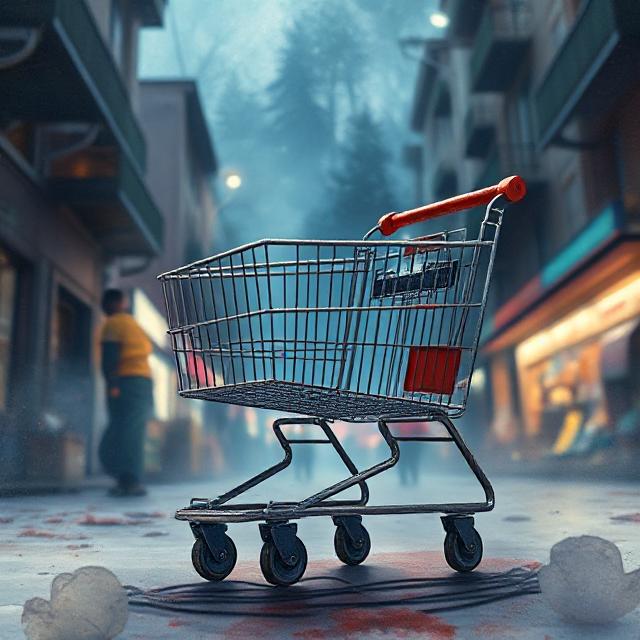
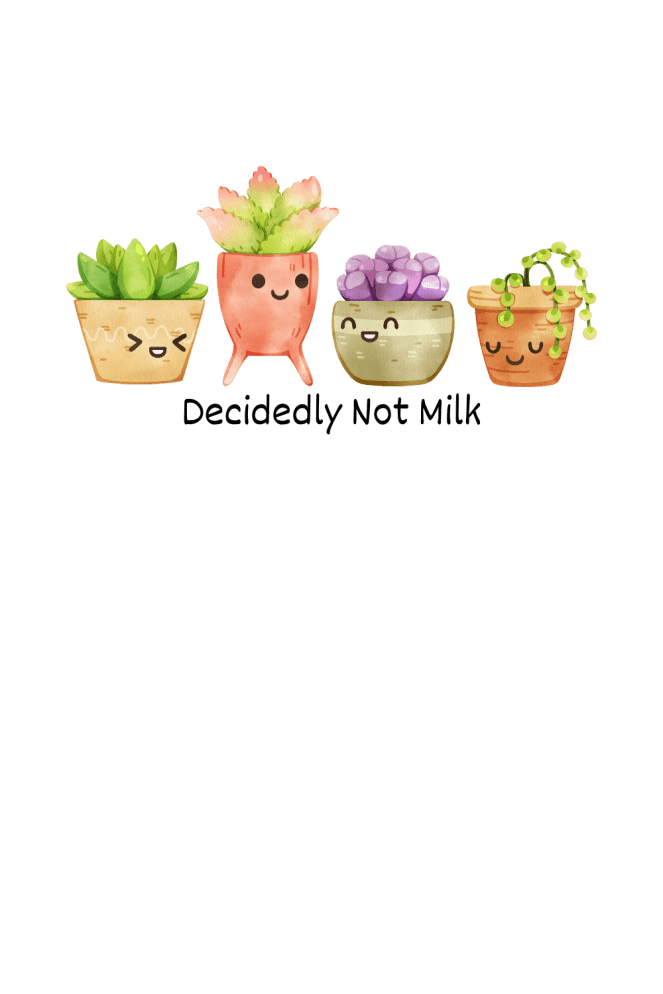
The ADHD Shopping Experience: How I Went for Milk and Came Home with a Succulent, Three Notebooks, and No Milk

A play-by-play of my brain vs. reality, or: Why simple errands are never simple

Setting the Scene: Just need milk. One item. Simple mission. What could possibly go wrong?


In the Parking Lot

ADHD Brain: “Okay, milk. Just milk. Wait, should I make a list? No, it’s just ONE thing. But what if I see something else we need while I’m there? Maybe I should text hubby and ask… no, that’s ridiculous. It’s MILK. But what kind of milk? 2% or whole? Did we discuss this? Should I check the fridge from here? Can’t do that. Focus. MILK. M-I-L-K. Got it.”

Fibromyalgia Body: “Why does every parking space require a trek equivalent to hiking the Appalachian Trail? And why is it windy? Wind makes everything hurt more.”

What Actually Happened: Sat in my car for 5 minutes trying to remember if we needed 2% or whole milk, googled “difference between 2% and whole milk nutritionally” fell down a rabbit hole about dairy farming, got distracted by a text from my mom, completely forgot why I had googled dairy farming, and finally got out of the car having made zero progress on the milk question.


Entering the Store

ADHD Brain: “Straight to dairy section. Do not pass Go. Do not collect impulse purchases. Laser focus. I am a milk-seeking missile.”

Fibromyalgia Body: “Of course I grabbed the cart with the wobbliest wheel in existence. Every step is sending shock waves through my joints. This cart sounds like a dying pterodactyl.”

Bipolar Brain: “Actually, this is kind of fun! Look at all the possibilities! So many choices! I love having choices!”

What Actually Happened: Grabbed the first cart without testing it (rookie mistake), immediately got distracted by the seasonal display of Halloween decorations prominently displayed in August, spent three minutes judging the capitalist machine that pushes holidays earlier each year, then realized I was still standing at the front of the store holding a cart that sounded like it was powered by wounded animals.


Stop #1: The Pharmacy Section

ADHD Brain: “Wait, didn’t I need to pick up that prescription? When was that due? Was it today or tomorrow? Better check while I’m here. Multitasking!”

Fibromyalgia Body: “Standing in lines is torture. Why does every person in front of me have the most complicated prescription issue in pharmacy history?”

What Actually Happened: Joined the pharmacy line without checking if I actually had a prescription ready, discovered I didn’t, but got into a fascinating conversation with the pharmacist about medication timing, learned three new things about drug interactions, forgot why I came to the store entirely, then remembered MILk when I saw the refrigerated section behind the pharmacy counter.


The Succulent Section (How Is This Even a Section?)

ADHD Brain: “Ooh, plants! I could be a plant person! Look at this tiny perfect one – it probably needs rescuing from this fluorescent wasteland. I would give it a good home. I’d name it Gerald. Gerald deserves better than this. I’ll just—NO. MILK. FOCUS. But Gerald is so small and perfect…”

Bipolar Brain (manic whispering): “Plants are scientifically proven to improve mental health! This could be your new hobby! You deserve nice things! Gerald could be the first of many! Think of the Instagram potential!”

Fibromyalgia Body: “Bending over to look at these tiny plants is making my back scream, but Gerald IS pretty cute…”

What Actually Happened: Bought four succulents (Gerald, Susan, Peter,and one I didn’t name because I was trying to show restraint), plus a decorative pot that cost more than the plants, and mentally planned their placement in every room of my house despite historically being a plant serial killer.


Stop #2: The Drive-Through Coffee (Because Obviously)

ADHD Brain: “I should get coffee for this epic grocery mission. Caffeine will help me focus on the milk objective. This is strategic, not procrastination.”

Fibromyalgia Body: “My head is starting to hurt. Coffee will help. Coffee fixes everything.”

Bipolar Brain: “Treat yourself! You’re doing great! You deserve a fancy drink!”

What Actually Happened: Ordered a complicated seasonal latte, paid for it, thanked the barista, drove off immediately, got three blocks away before realizing I never actually received my coffee, circled back through the drive-through again to explain my ADHD brain to a confused teenager, got my coffee and a pitying look, then sat in the parking lot for 10 minutes mentally writing this exact blog post.


The Notebook Aisle (My Natural Habitat)

ADHD Brain: “These are on SALE! I always need notebooks! What if I run out of places to write my brilliant thoughts? What if this specific type gets discontinued forever and I never find another notebook that feels this perfect in my hands? This is an INVESTMENT.”

Bipolar Brain: “Look at all these possibilities! You could start journaling again! Or write that novel! Or organize your life! Each notebook could be a fresh start!”

What Actually Happened: Bought notebooks in three different sizes for “different purposes” – one for grocery lists (ironic, considering), one for “important thoughts,” and one for daily planning that I’ll definitely use this time, unlike the other twelve identical notebooks at home. Spent fifteen minutes arranging them in my cart by color.


At Checkout

ADHD Brain: “Mission accomplished! Wait… what was my mission? Milk! Did I get milk? I feel like I’m forgetting something important. Why do I have plants? OH RIGHT, Gerald!”

Fibromyalgia Body: “Why is this checkout line moving so slowly? My feet are killing me. Should have gotten a scooter cart.”

Cashier: “Did you find everything you needed today?”

Me: “Everything except what I came for!”

What Actually Happened: Paid $47 for succulents, notebooks, Halloween candy (forgot to mention grabbing that), fancy soap that “smelled like my childhood,” and a magazine about organizing your life. No milk. Not even close to milk.


Back Home

Family: “Did you get milk?”

Me: “I got… life lessons? And Gerald.”

Family: “Who’s Gerald?”

Me: “My new succulent son. Also, we still need milk.”

ADHD Brain: “But look how happy Gerald looks on the windowsill! This was basically a success!”


The Moral of the Story: Sometimes the journey is more important than the destination. Sometimes that journey involves adopting plant children and buying notebooks you don’t need. And sometimes you just have to go back to the store tomorrow for milk, but with Gerald watching over you from his new pot. Til next time gang, take care of yourselves, and each other.
Uncategorized

Hyperfixation Cuisine: A Love Story

When food is your ride-or-die for two weeks… until it ghosts you.

I don’t fall in love often—but when I do, it’s usually with a snack. A drink. A cereal. A very specific sandwich from one very specific place that I will eat exclusively for 14 days straight like it holds the secrets of the universe and contains all the nutrients my body will ever need. During these passionate food affairs, I become a creature of pure obsession—calculating how many times per day I can reasonably consume my chosen item without judgment, researching the optimal preparation methods, and feeling genuinely excited about meal times in a way that probably isn’t normal for a grown adult. I’ll stock up like I’m preparing for the apocalypse, filling my cart with multiples of the same item while cashiers give me curious looks that I interpret as admiration for my decisive shopping skills. And then? I ghost. Cold turkey. No warning, no closure, no gradual tapering off—just me and my shame in aisle 5, pretending I never knew that Creamsicle shake, avoiding eye contact with the 47 cans of soup I can no longer stomach, and wondering why my brain treats food like a series of intense but doomed romantic relationships.

What Is Hyperfixation Cuisine?

It’s the culinary equivalent of a summer fling. You’re obsessed. You plan your day around it. You talk about it to anyone who will listen (and a few who won’t). You buy in bulk. And then one morning, like a cursed love spell wearing off, it’s done. You’re left with a pantry full of raisin bran and the haunting echoes of a snack you no longer want to eat.

Neurodivergent folks—those of us with ADHD, autism, or both—know this dance well. It’s not a food phase; it’s a full-blown romantic arc.

And science backs us up!

Let’s sneak in some facts while we laugh about it:

Nutritionists would say variety is key. But also? Survival. Joy. Convenience. These are not small things. And if eating the same 3 things on rotation keeps your body going through a rough patch? That’s not failure—that’s strategy.

Plus, it always changes eventually. Usually when you least expect it. Often mid-bite.

Honestly? Laugh. Embrace it. Maybe write a heartfelt goodbye letter to your former food flame. (“Dear Bagel Bites, we had some good times. I’m sorry I abandoned you half-eaten in the freezer door.”)

You don’t have to force variety or shame yourself for what your brain finds comforting. Just make sure you stay fed, hydrated, and somewhat functional. And if one day you find yourself suddenly obsessed with cucumbers in vinegar, just know: you’re not alone.


What was your last food fling? Let me know so I don’t feel like the only one who once ate eleven bowls of raisin bran in one week.

And to all the forgotten snacks still lurking in my pantry…
I loved you once. I swear I did, lol. Til next time gang, take care of yourselves

Uncategorized

Neurospicy Squared: Parenting a Teen With Extra Seasoning When You’re Also the Family’s Walking Firecracker

Let me paint you a picture: One neurodivergent parent with executive dysfunction, sensory issues, a flair for hyperfocus (at the worst times), and a caffeine addiction… raising a neurodivergent teen who also has executive dysfunction, sensory issues, and a flair for hyperfocus (also at the worst times). Poor non neurodivirgent Dad lol. (Lucky he’s a little spicy in his own way so he gets it)

What we’ve got here, folks, is not a traditional household.
It’s a feedback loop with matching eye rolls and snack wrappers. With attitude.


“I’m Not Yelling, I’m Just Expressing Loudly With My Whole Body”

I used to think parenting would be about teaching my child how to be a functioning adult. Now I realize it’s about co-regulating while we both spiral in different directions over things like why the peanut butter is wrong. Not gone. Just wrong.

We’ve had conversations like:

  • “I can’t handle this right now.”
  • “Same.”
  • “So what do you want to do about it?”
  • “I don’t know”
  • “Cool me either. Want to avoid it together?”

When You’re the Grown-Up and Still Don’t Have the Manual

Let’s be real: parenting any teen is a mix of love, worry, and mystery smells.

Sometimes I’m the wise mentor. Sometimes I’m the raccoon in the laundry room making emotionally impulsive decisions because my hair hurts and I need a snack.

We forget things together.
We hyperfixate on the same random topic (shoutout to that two-week deep dive into plane crash documentaries, but our fallback is cat videos lol).
We both get overstimulated in stores and end up leaving without whatever we went in for.

But at least we do it as a team.


What Actually Helps Us (Spoiler: Not Just Schedules)

People say neurodivergent kids need structure. Sure.
But have you ever tried creating that structure while your brain is doing circus tricks and crying at the same time?

So we’ve learned to build little systems that don’t require too many spoons:

  • Timers with fun alarms. (Because “Gentle bells” don’t work on either of us. We need “aggressive robot beep.”)
  • Codewords for meltdowns. (We’ve used “just “NOPE.” but I think we’re good at picking up on each others tells by now no words needed)
  • Parallel processing. (We do our own things side by side while exchanging exactly 4.5 words. Always. We watch Wheel together, we’re not watching it together so much as competing between each other but the sentiment is there)
  • And when all else fails: snacks, memes, and leaving the room before anyone says something regrettable.

The Pick Your Battles™ Scale

Let me introduce you to my secret weapon: the Pick Your Battles™ Scale. It’s how I decide whether to engage or let it go with my spicy teen (and honestly, with myself).

SituationRatingTranslation
They wore pajama pants to the store.1/10Not a fight worth my last nerve, so long as all the bits are covered I’m not stressin.
They forgot their homework again.4/10Gently nudge, don’t die on this hill.
They said I ruined their life because I made pasta instead of rice.2/10Sounds like a feelings day. Feed them, don’t fight them.
They screamed into a pillow instead of at me.0/10That’s emotional maturity, baby. Celebrate it. Hubby gets mad if she walks away mumbling under her breath. I’m like really thats NORMAL teen behavior, I’ve done it, so long as the words are to herself I see no harm in letting her cuss me out. Its when she screams at me thats the problem.
They were mean to the cat.10/10Pause the world. This one needs addressing.

This little internal rubric helps me reserve energy for what actually matters. (Spoiler: it’s not always the socks on the floor.)


The Secret Sauce: Radical Compassion + Shared Eye Rolls

My kid gets it. I get it.
We’re both doing our best with the wonky wiring we’ve got.

Some days that means deep talks about emotions and neurobiology.
Other days that means forgetting it’s trash day for the third week in a row and bonding over mutual shame while taking it out in pajamas at 3 p.m.

There’s beauty in the chaos.
There’s humor in the mess.
There’s love in the way we see each other clearly, even when the world doesn’t.


So If You’re Out There, Fellow Neurospicy Parent…

You’re not failing.
You’re not alone.
You’re just raising a tiny mirror who also loses their phone in their own hand and argues like a well-informed gremlin.

And that? That’s something worth celebrating.

Preferably with matching fidgets and a mutually agreed-upon “silent hour.” Til next time gang. Take care of yourselves, and each other.

Uncategorized

My Brain Buffering: A Love Letter to the Thoughts I Forgot Mid-Sentence

Let’s be honest: if forgetting what you were saying mid-thought was an Olympic sport, I’d have gold medals in every category. Freestyle Rambling. Synchronized Brain Fog. And my personal favorite: Disappearing Train of Thought With a Triple Mental Backflip.

People say “don’t be so hard on yourself,” and I’m like—buddy, I’m not. I’m just trying to remember what I came into this room for. And repeatedly. I’m not being ‘so hard’ on myself, I’d say I’m at least the appropriate level of hardness if not under lol

Somewhere between ADHD, fibromyalgia fog, bipolar whiplash, and a few hundred browser tabs in my brain, my inner monologue starts to sound like a dial-up modem trying to load a YouTube video. In 2003. On satellite internet. In a thunderstorm. A mile and a half down a country dirt road where theres NOTHING for miles

🧠 Exhibit A: “What Was I Saying?”

It’s not even a joke anymore. I’ll be mid-conversation, completely coherent, and suddenly—boom. Blank screen. I can literally see the words running off a cliff like cartoon lemmings.

“Wait—what was I saying?”

No really. What was I saying? I know its annoying to you, do you know how annoying it is and how much I absolutely hate the part of my brain thats supposed to remember things? Me and my brain are in an absolute love/hate relationship and we are definitely in our Hate each other era.

🤯 Fibro Fog: Not Just a Myth, Unfortunately

If you’ve never tried to function while your entire nervous system is on delay like it’s waiting for subtitles, congratulations—you’re not me. Fibro fog isn’t just forgetfulness. It’s walking into a room and standing there like you’re the main character in a slow-motion scene… except no one yelled “Action,” and you definitely missed your cue.

My body hurts, my thoughts hurt, my hair hurts, and occasionally my elbow forgets how to be an elbow. But hey, at least I still remember none of my passwords!

🎢 Bipolar Bonus: Now With Extra Whiplash!

Imagine being hyperfocused on color-coding your sock drawer one minute, then sobbing because your spoon fell on the floor the next. Now toss in some guilt about not replying to texts from 2017, and you’ve got the Bipolar Expansion Pack.

Highs that make you reorganize your pantry at 2 a.m., lows that make brushing your hair feel like a heroic feat. All while your memory plays musical chairs.

💁‍♀️ So What’s the Point?

The point is: if you’re out here trying your best with a glitchy brain, a misfiring mood system, and a body that acts like it was coded in beta—you’re not alone. You’re in deeply relatable, exhausted, beautifully chaotic company.

Some days I cry over spilled plans. Some days I laugh at my own internal commentary. And most days, I absolutely forget what I was saying.

But I’m still here. Still making stuff. Still showing up. Even if it’s ten minutes late and I forgot to put on pants. Til next time guys, take care of yourselves, and each other.