Uncategorized

10 Mental Health Truths I Wish I Could Return for Store Credit

Look, I’ve learned a lot on this magical, chaotic, sometimes-on-fire journey called mental health. Some of it has been helpful. Some of it has been… character-building. And some of it? Honestly? I’d like to return. No receipt. No questions asked.

So here they are: the Extremely Official, Totally Relatable truths I’ve collected while navigating ADHD, bipolar disorder, fibromyalgia, and the delightful rollercoaster of chronic illness and healing. May they make you laugh, cry-laugh, or at least feel seen.


1. Hyperfocus Is Basically Time Travel, but for Grown-Ups with Deadlines

You sit down to answer one email and suddenly it’s 3:47 AM, you’ve organized your entire digital photo archive by vibe, and your actual to-do list is untouched.
Ask me how I ended up rearranging pintrest pins instead of posting this post I’d already written lol.


2. Fibro Fog Is Just Nature’s Way of Saying ‘You Didn’t Need That Thought Anyway’

What was I saying?
Seriously though — memory glitches, word loss, and that feeling of trying to think through molasses? Welcome to chronic illness.
The word loss alone is going to end up hospitalizing me lol I swear nothing aggravates me as much as forgetting a work I can SEE in my head!


3. Manic Cleaning Sprees Are Not the Same as Stability

Sure, the baseboards are spotless, but also I haven’t eaten in 14 hours and I’m crying because I accidentally broke a plastic fork. Balanced, right?


4. My Thermostat Is Broken and So Am I

One minute I’m freezing, the next I’m sweating like I ran a marathon in a snowsuit. Is it ADHD? Bipolar? Perimenopause? Chronic illness roulette? Who knows.
All I know is that my house is 70 degrees and I am 100% not okay.


5. “Self-Care” Can Feel Like a Full-Time Job I’m Bad At

Some days self-care is a bubble bath and deep breathing.
Other days it’s canceling everything, laying facedown, and rage-scrolling memes until I feel slightly less like a soggy tissue.


6. Rest Guilt Is Real

If I lie down, I feel guilty.
If I don’t lie down, my body throws a full tantrum.
Either way, I lose — and my couch wins.


7. “You Seem Fine” Is the Greatest Lie Ever Told

I’ve smiled through panic attacks. I’ve small-talked while dissociating. I’ve joked my way through days that felt like molasses dipped in dread.
Trust me — looking fine is a survival tactic, not a wellness update.


8. Executive Dysfunction Is Not Laziness. I’d LOVE to Do the Thing. I Just… Can’t.

Making a phone call, doing the dishes, starting a task — sometimes it feels like standing at the bottom of a mountain with no ropes, no snacks, and brain fog rolling in fast.


9. Chronic Illness and Mental Health Issues Rarely RSVP — They Just Show Up and Rearrange the Furniture

Plans? Canceled. Energy? Randomized.
And trying to explain why today’s “bad” looks totally different than yesterday’s? Exhausting.


10. Humor Isn’t a Coping Mechanism. It’s a Survival Skill.

If you can’t laugh at this mess, you’ll drown in it.
So yes, I make sarcastic jokes, weird art, and trays that say things like “mentally chill” or “still here, still weird.”
Because some days, that little spark of laughter is what gets me through — and maybe it’ll help someone else, too.


🎁 P.S. Wanna Carry This Energy Home?

If you made it this far, you’re clearly my people. I make handmade trays, keychains, and small gifts designed for overwhelmed brains, messy moods, and healing hearts.
https://www.etsy.com/shop/JoknowsCreations
Come browse the chaos collection — snark included at no extra cost. Til next time gang, take care of yourselves, and each other.

Uncategorized

“Wait, Why Did I Walk in Here Again?” — The Silent Rage of Forgetting Everything and Blaming Yourself for It

I walked into the kitchen and immediately forgot why. So I stood there. Just… stood there. Like maybe the answer would jump out and bite me in the ass. Sometimes it does. Other times I start spinning like a loading screen stuck at 3%, muttering to myself, “No. I came in here for a reason. We are not leaving until we figure it out.”

And then I see the dishes. Maybe that’s why I came in? No… but might as well do them, right? But the water jug needs filling first. So I fill that. If I’m going to do the dishes I should grab my cup. So I go to grab my cup — and by the time I get to my room, the real reason I went into the kitchen finally slaps me in the face. I spin around and race back in before I forget again… but it’s too late. Whatever it was is gone. I sigh. I fill my water. I forget the dishes. And the next time I look up, it’s lunchtime and I have nothing to show for my entire morning but frustration, a full water jug, and a brain that feels like it’s made of mashed potatoes.

You already know I’ve written about executive dysfunction — and this, my friends, is a prime example. Forgetting what you were doing in the middle of doing it? Classic brain chaos.

But the part that really gets me? The rage at myself afterward.

It’s not just forgetfulness. It’s that instant gut-punch of anger when I realize I’ve wasted another 30 minutes chasing my own tail around the kitchen like a confused Sims character. It’s looking up at the clock and realizing that despite all my effort, I have nothing to show for it. Again.

And I know — I know — this isn’t a moral failure. I’ve read the books. I’ve written the posts. But logic doesn’t stop that voice in my head from whisper-screaming:
“Why can’t you just remember one simple thing?”


📚 You’re Not Broken. You’re Wired Differently.

Here’s the thing: this is common for people living with ADHD, bipolar disorder, and fibromyalgia — especially when you’ve got more than one working against you. We’re out here trying to be productive while our brains are basically running Windows 95 during a thunderstorm.

Let me throw you some validation, science-style:

  • A study in Psychiatry Research (2017) found that adults with ADHD often report intense frustration and self-directed anger after forgetful moments — especially when they’re trying to keep up with everyday tasks.
  • Another study in Bipolar Disorders Journal (2020) confirmed that even between episodes, people with bipolar disorder experience ongoing memory lapses and cognitive fog, which can trigger shame and feelings of incompetence.
  • Oh, and let’s not forget fibro fog, which isn’t just a cute nickname — it’s real cognitive dysfunction tied to chronic pain and fatigue. Researchers at the University of Michigan linked fibromyalgia with slower information processing, memory issues, and impaired attention — aka, the holy trifecta of “why am I like this?”

🧠 It’s Not a Lack of Effort — It’s a Lack of Mental Gas

We aren’t failing because we’re lazy or not trying hard enough. We’re just running on fumes while carrying twenty invisible backpacks full of mental weight.

Sometimes we remember. Sometimes we don’t. Sometimes we get furious with ourselves for not being able to hold all the tabs open, even though the mental browser has clearly crashed and is asking us to send an error report.

And the worst part? We carry that anger all day. It builds. It compounds. It turns into guilt, then into a shutdown. That’s the cost no one sees — and too many of us pay it in silence.


When the Tabs Crash – How to Forgive Yourself for Having a Human Brain

So what do you do when your brain throws a blue screen of death during your breakfast routine?

You don’t white-knuckle it through the guilt spiral, that’s for damn sure. Here’s what I’ve learned (sometimes the hard way) that might actually help when your brain taps out mid-task:


🔁 1. Reboot, Don’t Rage

When you realize you’ve just lost 20 minutes chasing nothing, pause. Literally. Sit down. Sip your coffee. Give your brain a hot minute to defragment.


📝 2. Use External Memory — Sticky Notes Are Your Friends, Not an Admission of Failure

Put a dry erase board in the kitchen. Use a Sharpie on your hand. Talk to yourself out loud like you’re your own helpful assistant.


🧍‍♀️ 3. Anchor the Space

If you forget why you walked into the room, try narrating the space to yourself.


🧠 4. Remember: Brains Use Energy. Yours Just Uses More.

You wouldn’t blame your phone for dying if you’d been using GPS, streaming music, and checking Instagram at the same time, right? You’d say, “Yeah, that makes sense.” Your brain is the same. ADHD, bipolar, fibro — they all eat cognitive battery life like candy.


💬 5. Talk Back to the Inner Bully

When that voice says “You’re useless,” respond with your voice:


💗 Final Words: You’re Not Alone. And You’re Not the Only One Forgetting Why You Opened the Fridge.

If you’ve ever felt like you’re the only person yelling at yourself in the middle of the day for forgetting why you walked into a room — you’re absolutely, 100% not.

And if you’ve been carrying that anger, thinking it means you’re weak or broken or lazy?

Let me tell you something:

Let the damn dishes wait. You’ve got enough on your plate. Til Next time guys, take care of yourselves, and each other.

Uncategorized

It’s Not Laziness, It’s Executive Dysfunction (And It Sucks)

Let me just say this plainly: if I could get everything done that I want to get done, I’d be running the world, not Googling “how to un-shame clean your kitchen” for the fifth time this week. But thanks to my brain, I’m lucky if I remember why I walked into a room before I forget what day it is. Again.

ADHD Isn’t About Laziness. Period.

We’ve all heard it: “You just need to try harder,” or “If it mattered to you, you’d do it.”

But research—you know, those pesky facts—says otherwise. ADHD is a neurodevelopmental disorder that impairs the brain’s executive functioning system. That’s the part of your brain in charge of motivation, planning, prioritizing, and following through. Imagine if the project manager in your head was replaced by a hyperactive squirrel on espresso (GEORGE! George is fine by the way, he has a whole family now, hardly ever has time to say hello). That’s what we’re dealing with.

According to clinical psychologist Dr. Russell Barkley, one of the top researchers on ADHD, people with ADHD have impairments in “executive function” that make self-regulation incredibly difficult. It’s not about willpower; it’s about the wiring. Our dopamine systems are under-responsive to reward cues, which means motivation isn’t just low—it’s missing the GPS coordinates’. I’m not one to give myself excuses, because I don’t like it when others use them and I hate being a hypocrite, but its still true that we are wired differently going in a direction we dont know and are constantly getting redirected. I often liken it to a pinball in a machine.

Unreliable Doesn’t Mean Uncaring

One of the most brutal side effects of ADHD isn’t the mess or the missed appointments. It’s the shame that comes from being “that friend” or “that mom” who can’t follow through the way they want to. You know, the one with a big heart and the flakiest calendar. Do you know how much I’d do for others

People think you’re careless, selfish, or just plain rude. What they don’t see is the internal warfare: the notes, reminders, alarms, sticky tabs, pep talks, self-hatred, guilt spirals, and emotional crashes. You don’t skip coffee with a friend because you don’t care. You skip because your brain misfired three times trying to remember to get dressed and now you’re late and frozen in a shame spiral. Again.

Rejection Sensitivity and the Spiral of Doom

Ever heard of Rejection Sensitive Dysphoria (RSD)? It’s a common experience for people with ADHD and it means that even a hint of disappointment or criticism can hit like a sucker punch to the gut. So now you’re not just late, you’re convinced your friend hates you, you’re the worst human ever, and hey—why not just never make plans again?

This is where ADHD becomes more than a memory issue. It becomes a self-worth issue. You start doubting your ability to be dependable, to show up, to be enough. And when the world keeps reflecting that back at you, the damage compounds.

So What Helps?

  • Compassion (especially from yourself): You’re not lazy. Your brain has different settings. Start there.
  • External supports: Use them all. Alarms, timers, whiteboards, apps, body doubles. Build scaffolding around your brain. I write everything down. I have shit everywhere that I do not remember why I wrote it or sometimes come across the thing I wrote it down for. When I started breaking up every chore into little baby chores I was a lot more real with myself. Like setting the meals as I do. Less chance of me deviating and going into decision paralysis. Though I did mess up this week but it can’t be helped, I forgot and planned a meal on my birthday AND we had a prolonged power outage causing us to throw away a lot of things.
  • Micro-goals: Instead of “clean the house,” try “clear the table.” Progress feels good, if it feels good your brain will do more of it. I do one side of the sink then give myself a free break to write or just veg out for half an hour or whatever. YOU make the rules, there ARE rules though and when you give yourself little dopamine snacks through the day it will make you more even keel.
  • Community: ADHDers need each other. Not for advice—though that helps—but for validation. To always compare yourself against what YOU perceive to be a perfect normal person (though I PROMISE you everyone you meet has stuff bringing them down, some just have the advantage of a prettier package, inside its still the same shit) is pointless.

Here’s the Truth

You can be inconsistent and still be valuable. You can forget the thing and still be deeply caring. You can be unreliable sometimes and still be a good mom, friend, partner, person.

I don’t write this post as a PSA. I write it as someone who has been eaten alive by guilt more times than I can count. I want the world to stop equating productivity with worth. But until it does, I hope this helps someone—even just one person—feel a little less broken. Because I promise, you’re not. Til next time guys. Take care of yourselves and each other

Uncategorized

The ADHD Diet Dilemma: How to Eat Healthy When Your Brain’s on a Constant Sugar High

Ah, ADHD. That delightful sprinkle of chaos that makes you forget where you put your keys, lose track of time, and somehow turn a grocery store trip into an epic saga. But perhaps the most endearing (read: infuriating) aspect of ADHD is how it makes dietary decisions feel like navigating a minefield with a blindfold on. If you’ve ever felt like your stomach is a rebellious teenager and your meal plans are as stable as a Jenga tower on a trampoline, welcome to the club. Let’s dive into the most common dietary dilemmas we ADHD folks face and offer some helpful, solutions to keep our lives (and our bellies) in check.

1. The “I’m Too Distracted to Eat” Syndrome

You’ve got a fridge full of kale and quinoa, but by the time you remember to eat, it’s too late and you’re face-first in a bag of chips. The solution? Embrace preemptive snacking. Keep healthy snacks at arm’s reach. Put nuts in your desk drawer, fruits on your bedside table, and protein bars in your car.
Quick Fix: Stock up on single-serving snack packs. Alternatively, block off a Sunday a week (or month depending on your needs) and make your own single use packs. I’ve been getting into couponing again and you if you can plan ahead (like with a handy dandy planner I’m selling in my shop, just saying)
You can’t forget to eat them if they’re practically begging you to.
Bonus: They’re perfect for your snack-on-the-go lifestyle.

2. The “What’s Cooking? Oh Look, a New Cat Video” Problem

Planning and cooking meals can be as exciting as watching paint dry—unless that paint is a viral cat video. To combat this, try meal prepping like a boss. Channel your inner Food Network star and prepare meals in bulk. You’ll thank yourself later when you’ve got a week’s worth of meals ready to go.
Quick Fix: Find a meal prep buddy. If cooking isn’t your thing, delegate it to someone who loves it. Your job? Show up for the free food and the occasional, “I’m here to eat, not to cook.”

3. The “Healthy Food Is Too Complicated” Conundrum

We get it; kale is basically the poster child for ‘health food,’ but who has time to figure out what the heck a spiralizer is? Instead of getting bogged down by the latest food fads, stick to simple, nutritious foods. Go for things you can recognize as food without needing a Ph.D. to understand.
Quick Fix: Buy pre-chopped veggies and pre-cooked grains. Less fuss, fewer excuses. If you can’t mess up a pre-made salad, then it’s probably foolproof enough for you.

4. The “Too Many Choices, So I’ll Have Pizza” Dilemma

Decision fatigue is real. When faced with too many options, you might just end up ordering pizza because it’s the path of least resistance. Combat this by creating a weekly meal plan that you can stick to. Simplify your choices to a few go-to meals.
Quick Fix: Create a rotating meal schedule (and maybe invest in a planner… I might know where to find A good one 😉 ) . Think of it as a menu for your life. “Monday is stir-fry night; Tuesday is taco night.” Easy decisions, fewer meltdowns.

5. The “Grocery Store is an Overwhelming Gauntlet” Issue

Shopping for groceries can feel like you’re running an obstacle course designed by someone who hates you. To make it easier, stick to a shopping list and try to avoid the aisles that scream “Impulse Buy!”
Quick Fix: Use a grocery delivery service or curbside pick up. It’s like magic, but without the wand. Order online, and have everything you need delivered right to your doorstep. Just remember to actually check the box for “healthy options.”

6. The “Forget to Drink Water Until You’re a Raisin” Problem

ADHD minds are like sieve-like sponges—absorbing everything but retaining nothing. You may forget to drink water until you’re dehydrated. Set up water reminders on your phone or use an app specifically designed to nag you about hydration.
Quick Fix: Get a water bottle with built-in reminders or a cute design that makes you actually want to drink from it. If it’s adorable, it’s harder to ignore.

So there you have it—an ADHD-friendly guide to managing your diet without losing your sanity. Remember, the key is to keep things simple and set yourself up for success. If you can’t make eating healthy a habit, at least make it easy enough that even your easily distracted brain can handle it. Make a game of it in your head, fixate on researching food and calories, turn your stubborn fixation into a strength, research the hell out of it and come up with a meal plan thats flexible yet still nutritious and doable. Now go forth, snack responsibly, and may your grocery trips be ever short and your meals ever delicious! Take care of yourself, and each other!

Uncategorized

Super power, or super weakness?

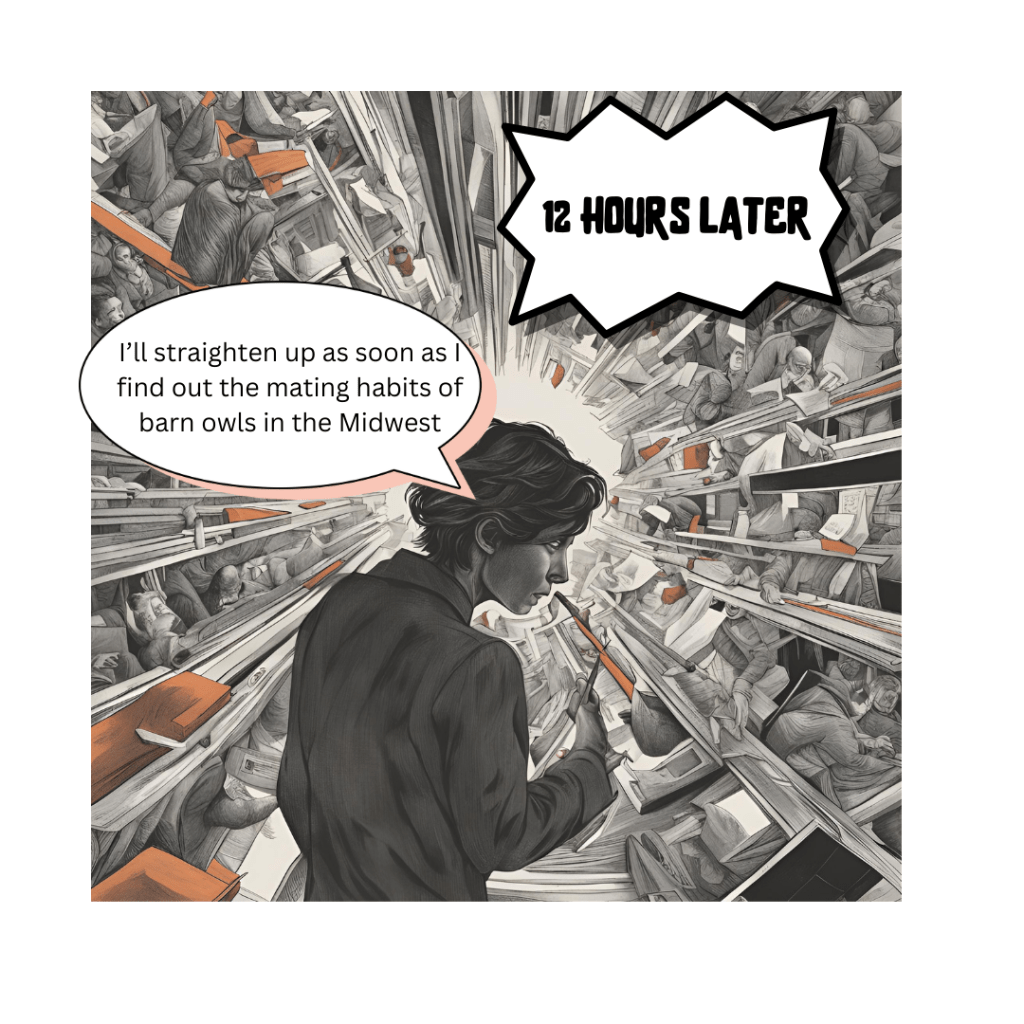
Let’s dive into the wild world of hyperfocus and hyperfixation – the ADHD brain’s way of saying “Go big or go home” when it comes to attention. Hyperfocus: The ADHD Superpower (With a Side of “Oops, I Forgot to Eat”)Picture this: you’re so deep into a task that the apocalypse could start, and you’d be like, “Just five more minutes!” That’s hyperfocus, baby. It’s like your brain suddenly decides to cosplay as a laser beam, zoning in on one thing with the intensity of a thousand suns. Great for productivity, not so great for remembering trivial things like, oh I don’t know, sleeping or going to the bathroom.

Hyperfixation: When Your Brain Decides to Become a Walking Wikipedia on Random Topics
Ever found yourself suddenly obsessed with 18th-century French poetry or the mating habits of sea slugs? Congratulations, you’ve been hit by the hyperfixation train! It’s like your brain picked a topic out of a hat and decided, “This. This is what we’re going to think about 24/7 for the next week… or until we find something shinier.”

How These Differ from “Normal” Focus (Whatever That Is)

  1. Intensity: While normies might be satisfied with a casual interest, we go from 0 to “I’m writing a dissertation on this” in 2.5 seconds flat.
  2. Duration: Regular focus is like a sprint. Our focus? It’s an ultra-marathon… through quicksand… while being chased by bees.
  3. Flexibility: Normal people can switch tasks like changing TV channels. Us? We’re more like old TVs stuck on one channel until someone physically comes to change it.
  4. Awareness: Regular focus allows for multitasking. Hyperfocus? The house could be on fire, and we’d be like, “Just let me finish this paragraph.”

In conclusion, hyperfocus and hyperfixation are like the ADHD brain’s way of compensating for all those times it couldn’t focus on boring stuff. It’s our superpower, our kryptonite, and our entertainment all rolled into one. So next time you find yourself three hours deep into researching the history of spoons at 2 AM, just remember: you’re not procrastinating, you’re embracing your neurodivergent superpowers! Take care of yourself, and each other!