Listen, meal planning is basically the Olympics of adulting. And if you’re running low on spoons, have kids who think chicken nuggets are a food group, or just don’t want to set your house on fire trying to “whip something up” after 5 p.m., you need a plan that’s simple, flexible, and doesn’t judge you for eating tacos three times a week if you want to.
So here it is: two weeks of real-life dinners that use reserves, leftovers, and a little bit of bacon for moral support. You don’t need to spend an hour chopping. You don’t need five obscure spices you’ll never use again. You just need this list and a fridge that sort of cooperates.
Week One
Monday – Crockpot Tacos Let the crockpot do the heavy lifting. Dump in meat, seasoning, maybe some tomatoes, and boom—taco night without the skillet babysitting.
Tuesday – Leftovers or Reserves Translation: fridge roulette or that frozen pizza you “forgot” about.
Wednesday – Leftovers or Reserves Yes, again. You deserve it.
Thursday – Leftovers or Reserves See above.
Friday – Salsa Chicken Chicken, salsa, crockpot. It shreds itself. If only the laundry did.
Saturday – Leftovers or Reserves The theme is intentional.
Sunday – One-Pan Chicken Fajita Bake Chop, toss, bake. Minimal effort, maximum flavor. No stovetop juggling act.
Week Two
Monday – Sheet Pan Sausage, Potatoes & Veggies Cut, toss, roast. Bonus: your house smells amazing, like you’ve been cooking for hours instead of 20 minutes.
Tuesday – Leftovers or Reserves Champion-level laziness, rebranded as efficiency.
Wednesday – Bacon & Veggie Fried Rice Bacon makes everything better. Toss it with rice and veggies, and suddenly leftovers feel fancy.
Thursday – Leftovers or Reserves Nothing like a break day to make Friday’s meal feel even easier.
Friday – Crockpot Creamy Ranch Chicken Chicken, ranch packet, cream cheese, done. If your crockpot had a fan club, this would be the poster child.
Saturday – Leftovers or Reserves Consider it a chef’s night off.
Sunday – (Optional Swap Night) Tired of chicken? Grab something from reserves or takeout without the guilt. The system’s built to bend.
Why This Works
Built-in leftovers mean you don’t waste food or energy.
Reserve-friendly lets you swap in pantry/freezer staples on the hard days.
Minimal chopping, maximum flavor because you’ve got better things to do than wrestle with 15 ingredients.
This isn’t about perfect dinners. It’s about feeding yourself and your people without burning all your spoons in the process. And honestly? That’s more impressive than any five-course meal.
👉 Want the full recipes and grocery list? Scroll down . Dinner crisis = solved. Take care of yourselves, and each other!
Life is overwhelming enough without adding big, complicated “fixes” to the mix. That’s why sometimes the smallest shifts—things you can do in a minute or less—end up making the biggest difference. None of these will change your entire world, but they will help smooth the edges of a rough day.
1. Drink Water Out of a Fancy Cup
Hydration is one of those “simple but annoying” tasks. But pour that same water into a glass you love—a stemless wine glass, a mason jar with a straw, or even a mug that makes you smile—and suddenly it feels less like a chore and more like a treat. Little brain tricks for the win.
2. Keep a Blanket in Arm’s Reach
There’s something grounding about having a blanket nearby. Whether it’s the middle of the day or late at night, grabbing it is an instant way to give yourself comfort without any effort. Bonus: it doubles as a nap invitation if you need it.
3. Use the “Two-Minute Rule”
Procrastination thrives on tasks that feel bigger than they are. The two-minute rule says: if it takes less than two minutes, do it now. Throw away that receipt, reply to the text, wipe the counter. You’ll be surprised how much mental clutter disappears when you knock out those quick wins. I’ve noticed this alot cleaning, it feels good to see the problem disappear.
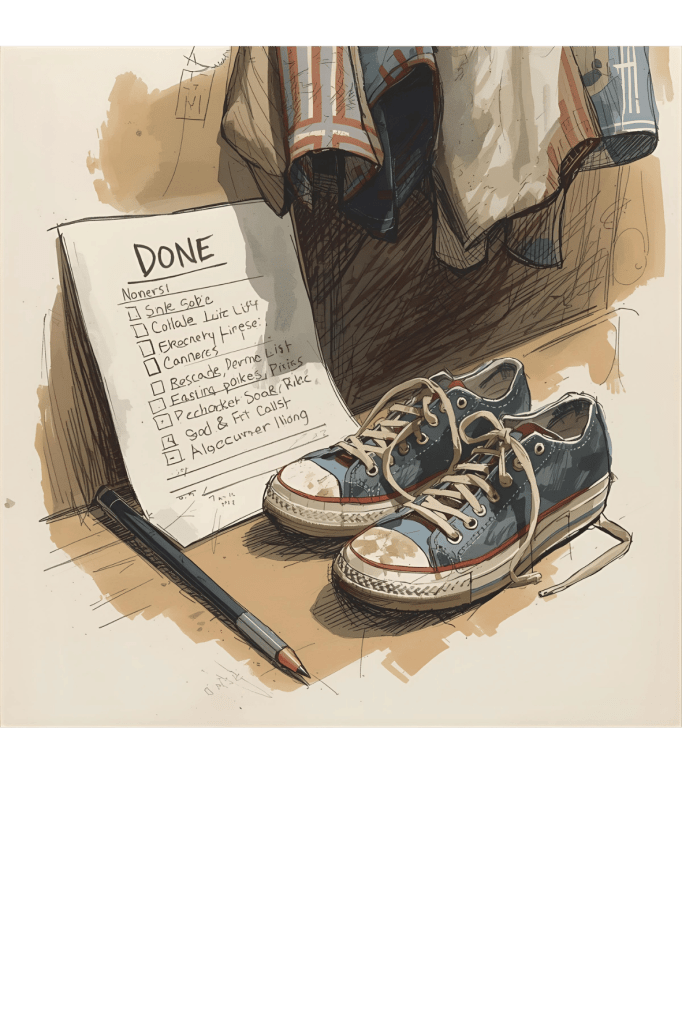
4. Make a “Done List”
To-do lists can be overwhelming, especially when they never seem to shrink. A “done list” flips the script—you jot down everything you’ve already managed, even the small stuff. It shifts your focus from “never enough” to “look what I actually did.” And honestly? That’s the energy boost most of us need. I don’t do this enough, often I’m like, what did I even do all day? show yourself all the hard work you put into your day.
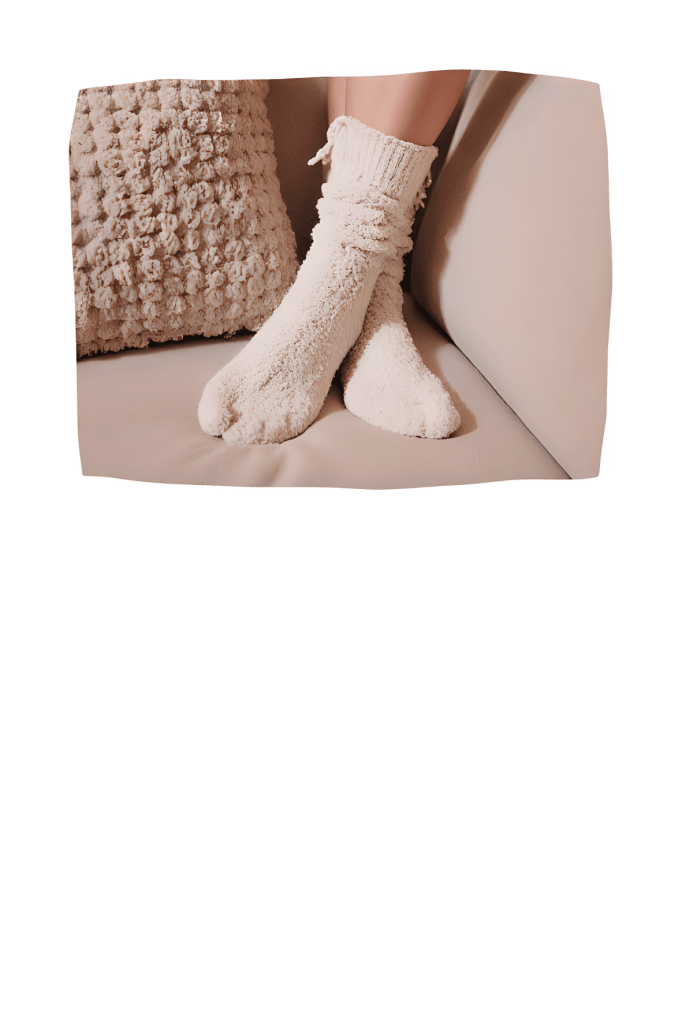
5. Change Your Socks
It sounds silly, but fresh socks are an underrated reset button. They’re small, clean, and cozy, and they send your body the message that something has shifted. On a day when everything feels stagnant, that tiny reset can make you feel just a little more human. Mind the seam placement, that was always a concern with my oldest, she’d refuse to go if she felt the seam in the wrong place.
Closing
Will these tips solve all of life’s chaos? Absolutely not. But they’re proof that you don’t always need massive changes to feel a little better. Sometimes the easiest way forward is simply stacking up these micro-comforts until the day feels lighter. Til next time gang, take car of yourselves, and each other.
Or: How I Own More Planners Than Pairs of Jeans, and Still Can’t Find That Dentist Appointment Card
We’ve all been there. You buy the pretty planner with the gold coil, convinced that this will be the one to change your life. Then you try the bullet journal method because minimalism is supposed to cure chaos. Then you download six productivity apps, each promising to be the magic solution to your scattered existence. For one glorious week, you are an organizational deity, color-coding tasks (I have bought colored pens and every pen has the same color notebook and folder and yeah I am a giant nerd lol) and checking boxes like a productivity influencer. Then — poof — the planner’s under the couch collecting dust, the apps are unopened with little red notification badges mocking you, and you’re frantically scribbling your grocery list on the back of a Target receipt while standing in the cereal aisle.
Sound familiar? Welcome to the ADHD productivity paradox: we desperately need systems to function, but we’re spectacularly bad at sticking to them.
Why This Happens (Yes, Science Says So)
ADHD brains are novelty seekers. According to research published in Brain journal by Sethi et al. (2018), our dopamine reward system runs differently than neurotypical brains, with studies showing that people with ADHD have dysfunction in the dopamine reward pathway (Volkow et al., 2010). This means we thrive on new and interesting stimuli — like that gorgeous new planner layout with the perfect font — but struggle to maintain interest once the novelty wears off. That dopamine hit from “new system day” is real, but it’s also temporary.
Executive function is a fickle beast. Studies consistently show that people with ADHD have weaker function and structure of prefrontal cortex (PFC) circuits, the brain regions responsible for planning, prioritizing, and task-switching (Arnsten, 2009). Neuroimaging research has found reduced activity in certain parts of the PFC during tasks requiring sustained attention and complex decision-making (AGCO Health, 2024). It’s not laziness or lack of willpower — it’s literally how our brains are wired.. Thats why I cycle through hobbies so fast and its something I’m actively working on.
One size does not fit all. Most productivity systems are designed by and for neurotypical brains that can handle routine, sequential thinking, and sustained attention. Trying to wedge ourselves into these systems is like trying to wear jeans two sizes too small — you can do it, but it’s uncomfortable, restrictive, and not pretty.
Perfectionism is the enemy of progress. Many of us fall into the trap of thinking that if we can’t do a system “perfectly,” we shouldn’t do it at all. Miss one day of journaling? Throw out the whole journal. Forget to update the app for a week? Delete it in shame. This all-or-nothing thinking sabotages any chance of finding what actually works.
How to Work With Your Brain, Not Against It
1. Think Modular, Not Monumental. Instead of searching for one perfect “forever system,” embrace using multiple small, interchangeable tools that can work independently. Sticky notes for quick reminders that need immediate action, a large wall calendar for big-picture dates and deadlines, your phone’s alarm function for time-sensitive appointments, and maybe a simple notebook for brain dumps when your thoughts are spinning. Mix and match based on what your current life phase demands.
2. Use Dopamine to Your Advantage. Instead of fighting your brain’s need for novelty, make it part of the plan. Intentionally change colors, formats, or methods every few weeks to refresh your interest and re-engage that dopamine reward system. Buy different colored pens seasonally, switch between digital and paper tools, or reorganize your workspace regularly. Make variety a feature, not a bug.
3. Embrace “Good Enough” Productivity. You don’t need to track every habit, meal, mood, water intake, and bowel movement to be a functioning adult. Choose three key areas that truly impact your daily life and focus on keeping just those consistent. Let everything else flex and flow as needed. Progress, not perfection, is the goal.
4. Automate & Delegate Where Possible. Set recurring phone reminders for regular tasks, use grocery delivery or curbside pickup to eliminate list-making stress, automate bill payments, or recruit a family member to be your “appointment buddy” for remembering important dates. Your brain doesn’t have to carry every single piece of information if technology and other people can help.
5. Plan for Disruption. Build buffer days into your schedule, expect that your tools will need periodic rebooting, and never expect sustained perfection. Create “reset rituals” for when systems inevitably break down — maybe Sunday nights for clearing your workspace or the first of each month for reassessing what’s working. The point is to support your life, not win an imaginary “most organized person alive” award.
6. Start Ridiculously Small. Instead of overhauling your entire organizational approach, pick one tiny thing and make it automatic first. Maybe it’s putting your keys in the same spot every day, or writing tomorrow’s most important task on a sticky note before bed. Once that feels natural, add something else small. Baby steps prevent the overwhelm that kills motivation.
The Big Takeaway
You’re not broken because you can’t stick to one pristine system for years on end. Your brain is wired for variety, stimulation, and flexibility — so make those traits part of your organizational plan instead of fighting against them. You’re not failing the system. The system is failing you if it can’t adapt and flex with your very real, very human reality.
The goal isn’t to become neurotypical. It’s to find tools and approaches that work with your unique brain, even if they look messy or unconventional to outside observers. Some days that might mean a color-coded digital calendar. Other days it might mean a crumpled napkin with three things scrawled on it. Both are valid if they help you function.
Your worth isn’t measured by how perfectly you maintain a bullet journal or how consistently you use the latest productivity app. It’s measured by how well you’re living your life, taking care of what matters, and being kind to yourself in the process. Til next time gang, take care of yourselves, and each other!










 WannaBeNormal