Uncategorized

Things I’ve Googled at 2 AM: A Greatest Hits Collection

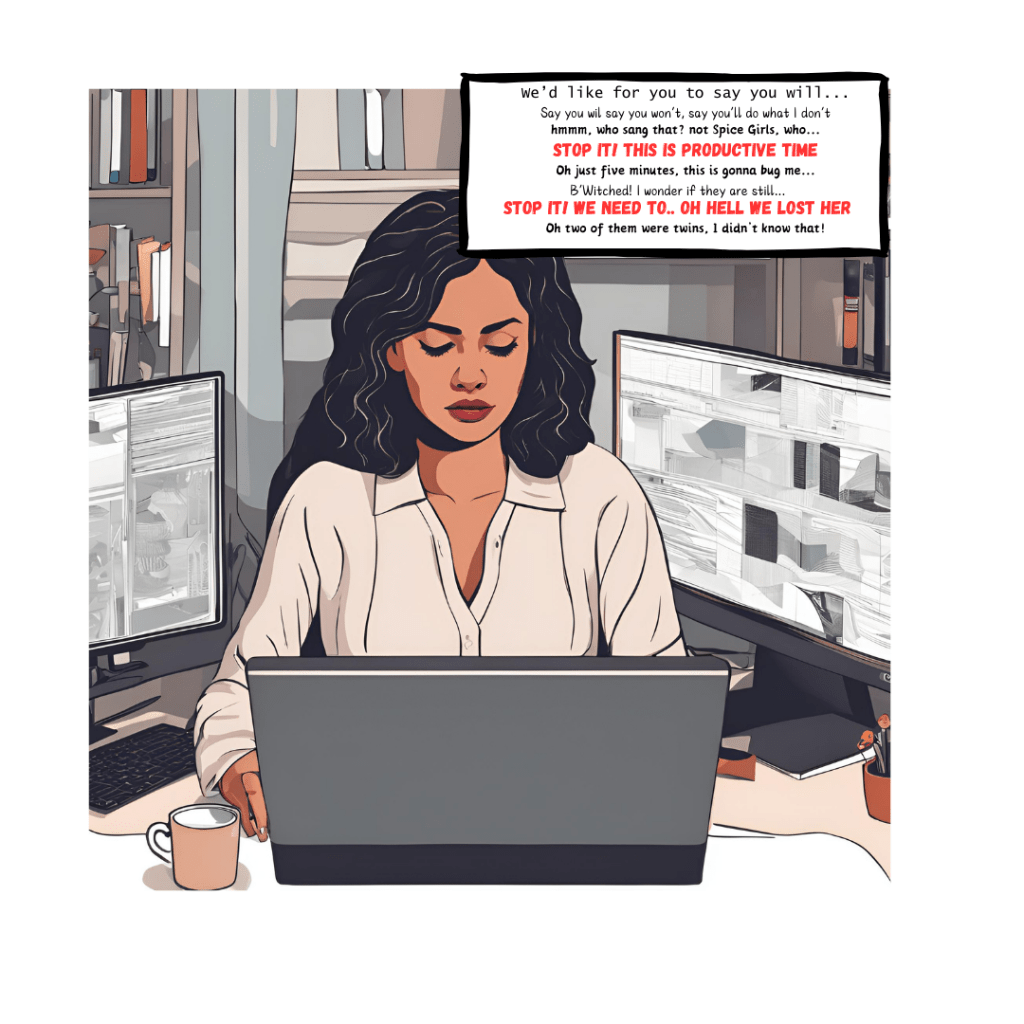
Welcome to the dark underbelly of my internet search history – that beautiful, chaotic wasteland where insomnia meets ADHD curiosity and good judgment goes to die. If Google keeps receipts (and let’s be honest, they absolutely do), then I’m pretty sure I owe them an apology and possibly therapy fees.

For those blessed neurotypical souls who can actually fall asleep at reasonable hours, let me explain what happens in the 2 AM Google zone: it’s where rational thought meets hyperfocus, and somehow you end up three hours deep in research about whether penguins have knees. Spoiler alert: they do, and now I know more about penguin anatomy than any reasonable adult should.

The Medical Anxiety Spiral

Let’s start with the classics – those searches that begin with a minor bodily concern and end with me mentally writing my will:

  • “why does my left eyelid twitch”
  • “is eye twitching a sign of brain tumor”
  • “brain tumor symptoms”
  • “how long do you live with undiagnosed brain tumor”
  • “can stress cause fake brain tumor symptoms”
  • “how to tell if you’re being dramatic about health symptoms”

This particular rabbit hole usually ends with me either completely convinced I’m dying or completely convinced I’m a hypochondriac, with no middle ground available. WebMD is not your friend at 2 AM, people. WebMD at 2 AM is that friend who tells you your headache is definitely a rare tropical disease even though you live nowhere near water and haven’t left your house in three days.

The Parenting Panic Searches

Nothing quite like teenage behavior to send you spiraling into the depths of Google at ungodly hours:
  • “is it normal for 16 year old to sleep 14 hours”
  • “how much attitude is normal for teenager”
  • “signs your teenager actually hates you vs normal teenage behavior”
  • “how to communicate with teenager who speaks only in grunts”
  • “when do teenagers become human again”

The best part about these searches is that every parenting forum has exactly two types of responses: “totally normal, you’re doing great!” and “this is a red flag, call a professional immediately.” There’s no middle ground in internet parenting advice, which is super helpful when you’re already spiraling at 2 AM.

The Random Life Questions That Consume My Soul

This is where things get weird. These are the searches that start nowhere and go everywhere:

  • “how do they get ships in glass bottles”
  • “what happens if you never cut your fingernails”
  • “do fish get thirsty”
  • “why do we say ‘after dark’ when it’s still light after dark in summer”
  • “how many people are named Steve in the world right now”
  • “what’s the oldest living thing on earth”
  • “can you die from lack of sleep”

That last one usually comes up around hour four of my insomnia adventures, when I’m googling whether my inability to sleep is actually going to kill me. The internet has mixed opinions on this, which is not reassuring when you’re already not sleeping.

The Organizational Fantasy Research

These searches represent my eternal optimism that the right system will finally fix my chaotic life:

  • “best planner for ADHD brain”
  • “bullet journaling for beginners”
  • “how to organize small spaces”
  • “Marie Kondo method actually work”
  • “minimalism with ADHD”
  • “organization systems that actually work for messy people”

I’ve researched more organizational systems than I’ve actually implemented, which tells you everything you need to know about how this usually goes. But hey, at 2 AM, I’m always convinced that THIS system will be the one that changes everything.

The Philosophical Crisis Questions

When the insomnia really sets in and I start questioning the nature of existence:

  • “what is the point of life”
  • “are we living in a simulation”
  • “do other people think in words or pictures”
  • “is everyone else just pretending to have their life together”
  • “what happens to consciousness when you die”
  • “why do humans need meaning in life”

These usually pop up around 3 AM when my brain decides that sleep is for quitters and existential dread is the only logical response to being awake this long.

The Wikipedia Rabbit Holes

These start with one innocent click and end with me knowing way too much about completely random topics:

Starting search: “what year was the microwave invented” Six hours later: I’m an expert on the history of food preservation, the science of radiation, and somehow the entire genealogy of the inventor’s family tree.

Starting search: “why do cats purr” Final destination: A comprehensive understanding of feline evolution, big cat behavior in the wild, and the physics of sound vibration.

The “Do Normal People…” Medical Questions

These are the searches I’m too embarrassed to ask my actual doctor about:

  • “is it normal to talk to yourself out loud”
  • “how often should normal people shower”
  • “what does a normal sleep schedule look like”
  • “do normal people remember their dreams”
  • “how much coffee is too much coffee per day for a normal person”

The irony is that I have an actual doctor I could ask these questions, but somehow googling them at 2 AM feels less judgmental than admitting to a medical professional that I don’t know what constitutes normal human behavior.

The Conspiracy Theory Adjacent Searches

I’m not saying I believe in conspiracy theories, but 2 AM me is definitely more open to alternative explanations for things:

  • “why do all mattress stores seem empty but stay in business”
  • “do birds actually exist or are they government drones”
  • “what’s really in hot dogs”
  • “why do all celebrities look younger than their age”
  • “are we alone in the universe”

These searches usually happen when I’ve been awake too long and my critical thinking skills have left the building. Daylight me reads these search histories and wonders what the hell nighttime me was thinking.

The Conclusion I Never Reach

The beautiful thing about 2 AM Google spirals is that they never actually end with answers – they just end with exhaustion or the sudden realization that it’s somehow 5 AM and I have to be functional in three hours.

I’ve learned more random facts from insomnia-driven research than from college, but I couldn’t tell you how any of it connects or why I needed to know that octopuses have three hearts at 2:30 in the morning.

The real kicker? I’ll do it all again tonight, because apparently my brain believes that this time will be different. This time, I’ll find the perfect solution to all of life’s problems hidden somewhere in the depths of the internet.

Spoiler alert: it’s usually just more questions and the growing realization that humans are weird, life is complicated, and I should probably just go to sleep.

But first, let me just quickly Google why I can’t fall asleep… Til next time gang, take care of yourselves, and each other!


Uncategorized

ADHD and the Never-Ending Quest for the Right System

Or: How I Own More Planners Than Pairs of Jeans, and Still Can’t Find That Dentist Appointment Card

We’ve all been there. You buy the pretty planner with the gold coil, convinced that this will be the one to change your life. Then you try the bullet journal method because minimalism is supposed to cure chaos. Then you download six productivity apps, each promising to be the magic solution to your scattered existence. For one glorious week, you are an organizational deity, color-coding tasks (I have bought colored pens and every pen has the same color notebook and folder and yeah I am a giant nerd lol) and checking boxes like a productivity influencer. Then — poof — the planner’s under the couch collecting dust, the apps are unopened with little red notification badges mocking you, and you’re frantically scribbling your grocery list on the back of a Target receipt while standing in the cereal aisle.

Sound familiar? Welcome to the ADHD productivity paradox: we desperately need systems to function, but we’re spectacularly bad at sticking to them.

Why This Happens (Yes, Science Says So)

ADHD brains are novelty seekers. According to research published in Brain journal by Sethi et al. (2018), our dopamine reward system runs differently than neurotypical brains, with studies showing that people with ADHD have dysfunction in the dopamine reward pathway (Volkow et al., 2010). This means we thrive on new and interesting stimuli — like that gorgeous new planner layout with the perfect font — but struggle to maintain interest once the novelty wears off. That dopamine hit from “new system day” is real, but it’s also temporary.

Executive function is a fickle beast. Studies consistently show that people with ADHD have weaker function and structure of prefrontal cortex (PFC) circuits, the brain regions responsible for planning, prioritizing, and task-switching (Arnsten, 2009). Neuroimaging research has found reduced activity in certain parts of the PFC during tasks requiring sustained attention and complex decision-making (AGCO Health, 2024). It’s not laziness or lack of willpower — it’s literally how our brains are wired.. Thats why I cycle through hobbies so fast and its something I’m actively working on.

One size does not fit all. Most productivity systems are designed by and for neurotypical brains that can handle routine, sequential thinking, and sustained attention. Trying to wedge ourselves into these systems is like trying to wear jeans two sizes too small — you can do it, but it’s uncomfortable, restrictive, and not pretty.

Perfectionism is the enemy of progress. Many of us fall into the trap of thinking that if we can’t do a system “perfectly,” we shouldn’t do it at all. Miss one day of journaling? Throw out the whole journal. Forget to update the app for a week? Delete it in shame. This all-or-nothing thinking sabotages any chance of finding what actually works.

How to Work With Your Brain, Not Against It

1. Think Modular, Not Monumental. Instead of searching for one perfect “forever system,” embrace using multiple small, interchangeable tools that can work independently. Sticky notes for quick reminders that need immediate action, a large wall calendar for big-picture dates and deadlines, your phone’s alarm function for time-sensitive appointments, and maybe a simple notebook for brain dumps when your thoughts are spinning. Mix and match based on what your current life phase demands.

2. Use Dopamine to Your Advantage. Instead of fighting your brain’s need for novelty, make it part of the plan. Intentionally change colors, formats, or methods every few weeks to refresh your interest and re-engage that dopamine reward system. Buy different colored pens seasonally, switch between digital and paper tools, or reorganize your workspace regularly. Make variety a feature, not a bug.

3. Embrace “Good Enough” Productivity. You don’t need to track every habit, meal, mood, water intake, and bowel movement to be a functioning adult. Choose three key areas that truly impact your daily life and focus on keeping just those consistent. Let everything else flex and flow as needed. Progress, not perfection, is the goal.

4. Automate & Delegate Where Possible. Set recurring phone reminders for regular tasks, use grocery delivery or curbside pickup to eliminate list-making stress, automate bill payments, or recruit a family member to be your “appointment buddy” for remembering important dates. Your brain doesn’t have to carry every single piece of information if technology and other people can help.

5. Plan for Disruption. Build buffer days into your schedule, expect that your tools will need periodic rebooting, and never expect sustained perfection. Create “reset rituals” for when systems inevitably break down — maybe Sunday nights for clearing your workspace or the first of each month for reassessing what’s working. The point is to support your life, not win an imaginary “most organized person alive” award.

6. Start Ridiculously Small. Instead of overhauling your entire organizational approach, pick one tiny thing and make it automatic first. Maybe it’s putting your keys in the same spot every day, or writing tomorrow’s most important task on a sticky note before bed. Once that feels natural, add something else small. Baby steps prevent the overwhelm that kills motivation.

The Big Takeaway

You’re not broken because you can’t stick to one pristine system for years on end. Your brain is wired for variety, stimulation, and flexibility — so make those traits part of your organizational plan instead of fighting against them. You’re not failing the system. The system is failing you if it can’t adapt and flex with your very real, very human reality.

The goal isn’t to become neurotypical. It’s to find tools and approaches that work with your unique brain, even if they look messy or unconventional to outside observers. Some days that might mean a color-coded digital calendar. Other days it might mean a crumpled napkin with three things scrawled on it. Both are valid if they help you function.

Your worth isn’t measured by how perfectly you maintain a bullet journal or how consistently you use the latest productivity app. It’s measured by how well you’re living your life, taking care of what matters, and being kind to yourself in the process. Til next time gang, take care of yourselves, and each other!

Uncategorized

It’s Not Laziness, It’s Executive Dysfunction (And It Sucks)

Let me just say this plainly: if I could get everything done that I want to get done, I’d be running the world, not Googling “how to un-shame clean your kitchen” for the fifth time this week. But thanks to my brain, I’m lucky if I remember why I walked into a room before I forget what day it is. Again.

ADHD Isn’t About Laziness. Period.

We’ve all heard it: “You just need to try harder,” or “If it mattered to you, you’d do it.”

But research—you know, those pesky facts—says otherwise. ADHD is a neurodevelopmental disorder that impairs the brain’s executive functioning system. That’s the part of your brain in charge of motivation, planning, prioritizing, and following through. Imagine if the project manager in your head was replaced by a hyperactive squirrel on espresso (GEORGE! George is fine by the way, he has a whole family now, hardly ever has time to say hello). That’s what we’re dealing with.

According to clinical psychologist Dr. Russell Barkley, one of the top researchers on ADHD, people with ADHD have impairments in “executive function” that make self-regulation incredibly difficult. It’s not about willpower; it’s about the wiring. Our dopamine systems are under-responsive to reward cues, which means motivation isn’t just low—it’s missing the GPS coordinates’. I’m not one to give myself excuses, because I don’t like it when others use them and I hate being a hypocrite, but its still true that we are wired differently going in a direction we dont know and are constantly getting redirected. I often liken it to a pinball in a machine.

Unreliable Doesn’t Mean Uncaring

One of the most brutal side effects of ADHD isn’t the mess or the missed appointments. It’s the shame that comes from being “that friend” or “that mom” who can’t follow through the way they want to. You know, the one with a big heart and the flakiest calendar. Do you know how much I’d do for others

People think you’re careless, selfish, or just plain rude. What they don’t see is the internal warfare: the notes, reminders, alarms, sticky tabs, pep talks, self-hatred, guilt spirals, and emotional crashes. You don’t skip coffee with a friend because you don’t care. You skip because your brain misfired three times trying to remember to get dressed and now you’re late and frozen in a shame spiral. Again.

Rejection Sensitivity and the Spiral of Doom

Ever heard of Rejection Sensitive Dysphoria (RSD)? It’s a common experience for people with ADHD and it means that even a hint of disappointment or criticism can hit like a sucker punch to the gut. So now you’re not just late, you’re convinced your friend hates you, you’re the worst human ever, and hey—why not just never make plans again?

This is where ADHD becomes more than a memory issue. It becomes a self-worth issue. You start doubting your ability to be dependable, to show up, to be enough. And when the world keeps reflecting that back at you, the damage compounds.

So What Helps?

  • Compassion (especially from yourself): You’re not lazy. Your brain has different settings. Start there.
  • External supports: Use them all. Alarms, timers, whiteboards, apps, body doubles. Build scaffolding around your brain. I write everything down. I have shit everywhere that I do not remember why I wrote it or sometimes come across the thing I wrote it down for. When I started breaking up every chore into little baby chores I was a lot more real with myself. Like setting the meals as I do. Less chance of me deviating and going into decision paralysis. Though I did mess up this week but it can’t be helped, I forgot and planned a meal on my birthday AND we had a prolonged power outage causing us to throw away a lot of things.
  • Micro-goals: Instead of “clean the house,” try “clear the table.” Progress feels good, if it feels good your brain will do more of it. I do one side of the sink then give myself a free break to write or just veg out for half an hour or whatever. YOU make the rules, there ARE rules though and when you give yourself little dopamine snacks through the day it will make you more even keel.
  • Community: ADHDers need each other. Not for advice—though that helps—but for validation. To always compare yourself against what YOU perceive to be a perfect normal person (though I PROMISE you everyone you meet has stuff bringing them down, some just have the advantage of a prettier package, inside its still the same shit) is pointless.

Here’s the Truth

You can be inconsistent and still be valuable. You can forget the thing and still be deeply caring. You can be unreliable sometimes and still be a good mom, friend, partner, person.

I don’t write this post as a PSA. I write it as someone who has been eaten alive by guilt more times than I can count. I want the world to stop equating productivity with worth. But until it does, I hope this helps someone—even just one person—feel a little less broken. Because I promise, you’re not. Til next time guys. Take care of yourselves and each other

Uncategorized

When Words Go Whoosh:

The Hilarious Hiccups of Auditory Processing

Hey, fellow brain-glitch aficionados! Ever find yourself nodding along in a conversation, when—BAM!—your brain decides to take an impromptu vacation? Welcome to the wild world of auditory processing mishaps!

What’s Happening Up There?
Picture your brain as a super-slick computer. It normally takes in sound, converts it to signals, and serves up meaning faster than you can say “What?” But sometimes, it’s like trying to untangle last year’s Christmas lights: messy and confusing.

The Science-y Bit (Don’t Worry, It’s Fun)
This little brain hiccup is known as Auditory Processing Disorder (APD). It’s when your brain’s sound system decides to prank you. One minute you’re fine, and the next, you’re wondering if everyone around you started speaking Klingon. This little brain hiccup is known as Auditory Processing Disorder (APD). When you have APD, your brain struggles to process the sounds it hears correctly. It’s like if you were listening to music and the song kept skipping, leaving you wondering what just happened.

The brain processes sound in a specific order: first, the ear detects sound waves, then sends electrical signals to the brain. The auditory cortex takes those signals and decodes them into speech and meaning. Simple, right? But when there’s a glitch in that system, you might hear everything perfectly fine, but your brain just can’t put it together the way it’s supposed to. I know for me, it just takes my brain a little extra time to make the words known to my brain. Like my husband can talk, and I swear to you it sounds like Charlie Brown’s adults ‘wha whaaa wha waa wha’ lol, so I will ask for repeats or clarifications, then as he is talking, I understand what they said a minute ago and I have a comment about it. I have a bad habit of interrupting people, I am trying to stop, but I KNOW if I keep my comment to myself theres a 95% chance I will forget (and if I do I’m sorry and that will make me even MORE mad at my misfiring brain, its a perpetual state of loathing)

Fun Fact: Studies suggest that around 5% of children have some form of APD, and it often goes undiagnosed, leaving kids (and adults) in a perpetual state of “Huh?”

Signs You’re Having an Auditory Adventure:

  • Words suddenly sound like gibberish. (Is this what babies feel like all the time?)
  • You catch yourself saying “Huh?” more than a confused owl.
  • You’re nodding and smiling, hoping no one realizes you’re lost in auditory space.

The Plot Twist: When You’re the One Speaking
Irony strikes! Sometimes, your own words decide to play hide and seek in your brain. It’s like your thoughts are sprinting while your mouth is stuck in quicksand. So embarrassing and happens at least once per conversation

Why Does This Happen?


Fatigue: When you’re running low on energy, your brain can’t work at full capacity. Studies have shown that fatigue can slow down the brain’s ability to process auditory information. It can slow down the brains ability to process any information actually. Essentially, your brain starts skipping steps in its usual routine—like a tired computer processing instructions slower than usual. According to research, lack of sleep (or chronic sleep deprivation) can decrease the brain’s ability to filter out irrelevant sounds, leading to auditory processing issues.


Stress: Ever notice how hard it is to concentrate when you’re stressed? Well, turns out your brain is sort of like a nervous multitasker. When you’re under stress, your brain’s focus shifts to dealing with the stressor (like an impending deadline or an important meeting) and less on the conversation happening around you. Research from the American Psychological Association has found that chronic stress can affect how the brain processes auditory stimuli by overloading the prefrontal cortex, which is responsible for attention and processing language.


Sensory Overload: Your brain is constantly bombarded with sensory information—sounds, sights, smells, you name it. When too much sensory input floods in at once, your brain can have a “processing jam.” Think of it like trying to run too many apps at once on your phone. Research has shown that sensory overload, especially in noisy environments, can make it harder for your brain to filter and focus on the important sounds (like someone speaking to you), causing a breakdown in auditory processing. Studies also show that people with APD are more sensitive to background noise, which exacerbates this issue.

Coping Strategies (or “How to Pretend You’re Still on Earth”)

  • The classic “Could you repeat that?” (Works 60% of the time.)
  • Blame it on a sudden case of daydreaming (who doesn’t love a good daydreamer?)
  • Master the art of the vague response: “Wow, that’s really something!” Practice the smile and nod.

Remember, you’re not alone in this auditory obstacle course. So next time your brain takes an unscheduled break, just smile and laugh—it’s too short not to!

Take care, stay quirky, and make sure to be good to each other! Don’t forget to spread the kindness and love, to yourselves and each other! (George is around btw he says hi. I was going to post a picture of George and Georgina they are always playing with their kids in my yard, I’ll get one soon!)

Uncategorized

Super power, or super weakness?

Let’s dive into the wild world of hyperfocus and hyperfixation – the ADHD brain’s way of saying “Go big or go home” when it comes to attention. Hyperfocus: The ADHD Superpower (With a Side of “Oops, I Forgot to Eat”)Picture this: you’re so deep into a task that the apocalypse could start, and you’d be like, “Just five more minutes!” That’s hyperfocus, baby. It’s like your brain suddenly decides to cosplay as a laser beam, zoning in on one thing with the intensity of a thousand suns. Great for productivity, not so great for remembering trivial things like, oh I don’t know, sleeping or going to the bathroom.

Hyperfixation: When Your Brain Decides to Become a Walking Wikipedia on Random Topics
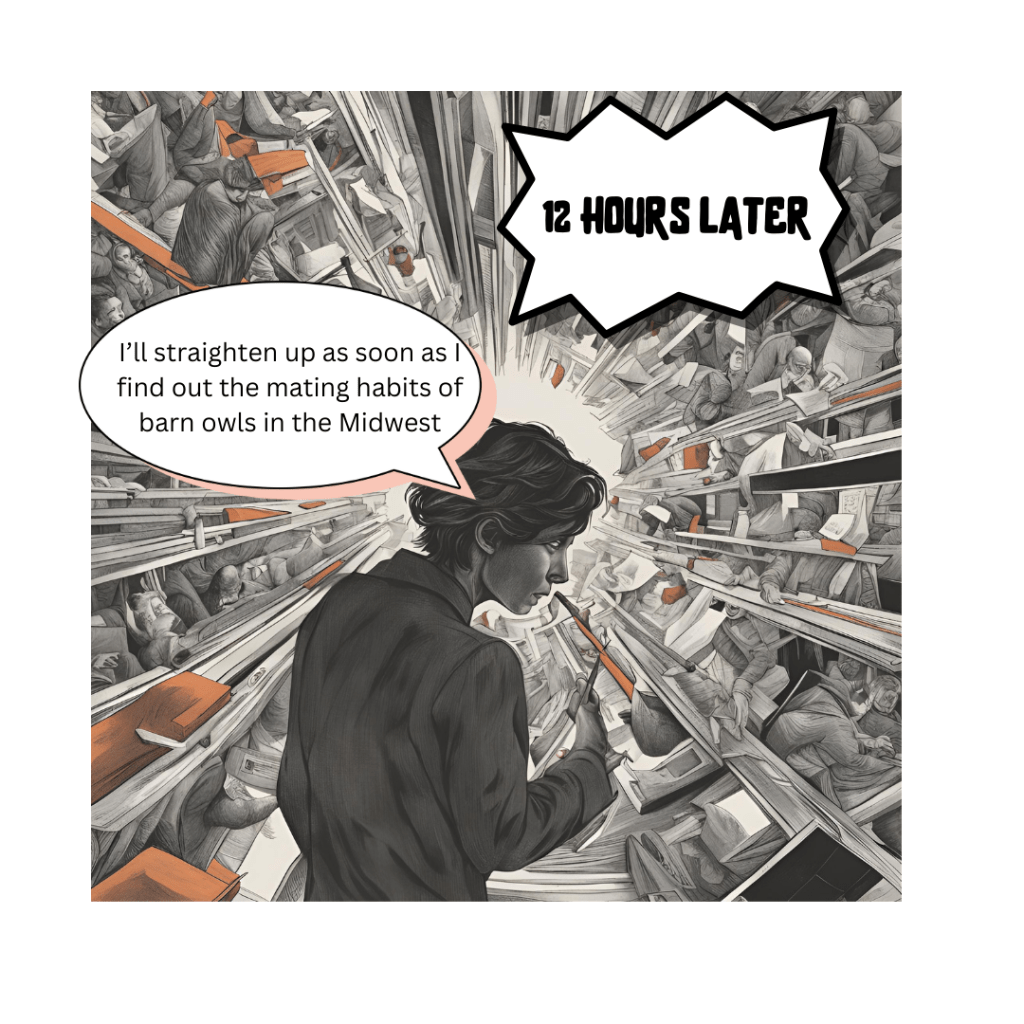
Ever found yourself suddenly obsessed with 18th-century French poetry or the mating habits of sea slugs? Congratulations, you’ve been hit by the hyperfixation train! It’s like your brain picked a topic out of a hat and decided, “This. This is what we’re going to think about 24/7 for the next week… or until we find something shinier.”

How These Differ from “Normal” Focus (Whatever That Is)

  1. Intensity: While normies might be satisfied with a casual interest, we go from 0 to “I’m writing a dissertation on this” in 2.5 seconds flat.
  2. Duration: Regular focus is like a sprint. Our focus? It’s an ultra-marathon… through quicksand… while being chased by bees.
  3. Flexibility: Normal people can switch tasks like changing TV channels. Us? We’re more like old TVs stuck on one channel until someone physically comes to change it.
  4. Awareness: Regular focus allows for multitasking. Hyperfocus? The house could be on fire, and we’d be like, “Just let me finish this paragraph.”

In conclusion, hyperfocus and hyperfixation are like the ADHD brain’s way of compensating for all those times it couldn’t focus on boring stuff. It’s our superpower, our kryptonite, and our entertainment all rolled into one. So next time you find yourself three hours deep into researching the history of spoons at 2 AM, just remember: you’re not procrastinating, you’re embracing your neurodivergent superpowers! Take care of yourself, and each other!