Uncategorized

My December Brain Thinks It’s Being Chased by a Tiger

A spoonie’s guide to understanding why this month feels like a boss battle

December arrives every year like it’s auditioning for a “Most Dramatic Month” award. Lights! Deadlines! Events! Family! Weather that makes my joints feel like they were installed backwards! I swear this month shows up wearing a sequined gown and holding a megaphone screaming, “SURPRISE, IT’S ME! LET’S CHAOS.”

And listen… I’m doing my best.
But my brain?
My brain is over in the corner rubbing two neurons together trying to make a spark like a Boy Scout with wet matches.

And that’s the thing: December is uniquely designed to absolutely obliterate neurodivergent and chronically ill people.

Let me explain — with actual science.
(But don’t worry, it’s me. I’ll keep it spicy.)


1. December is basically sensory overload in a trench coat.

Think about it: blinking lights, crowds, loud music, bells, scents, glitter everywhere like it escaped a containment lab… it’s a full assault on the senses.

For ADHD and autistic brains, the sensory load of ONE Target trip in December is equivalent to running a psychological marathon while someone throws cinnamon pinecones at your face.

When you see people calmly strolling through a decorated mall, please understand they are operating at a level of sensory privilege I can only dream of.


2. Our executive function gets hit with a holiday piñata stick.

Executive function — the part of the brain responsible for planning, organizing, remembering, transitioning, and not screaming into the void — already runs on 2% battery for a lot of us.

Then December rolls in and demands:

  • Coordination
  • Decision-making
  • Gift lists
  • Cooking
  • Routines changing
  • Socializing
  • Budgeting
  • TIME MANAGEMENT (okay calm down, this is a safe space)

It’s too much.
Neuroscience basically says: if your brain already struggles with dopamine, working memory, or task sequencing, December is like trying to juggle flaming swords with oven mitts on.


3. Chronic illness + cold weather = my body filing hostile complaints with HR.

Fibromyalgia loves the cold the way cats love knocking stuff off counters: it finds an opportunity and goes for it.

Scientific fun fact: colder temperatures can increase muscle tension and pain sensitivity, and reduced sunlight messes with serotonin levels, which can intensify fatigue and mood dips.

Scientific non-fun fact: my body reacts to December like someone unplugged it mid-update.


4. The holidays trigger “performance mode” whether we want it or not.

If you grew up in chaos, survived medical trauma, or just exist as a human with trauma baggage (hi, welcome, there are snacks), your nervous system may automatically shift into high-alert this time of year.

The brain hates unpredictability.
December is 90% unpredictability.

So your amygdala goes, “Heyyyy remember when things went bad before? Let’s be ready. Just in case.”

Which is cute.
Except it’s not.
Because suddenly everything feels urgent.


5. And then there’s the emotional landmines.

Family stuff. Estrangement. Loss. Loneliness. Pressure to be joyful on command.
This season brings things to the surface like the ghosts of holidays past showed up for a group project.

So if you’re exhausted?
Forgetful?
Behind on everything?
Crying at commercials about soup?
Shoving wrapping paper under the bed and pretending it’s not your problem?

Yeah. Same.
You’re not broken — you’re overloaded.


So what do we DO about it?

(You know… besides giving up and becoming a winter hermit.)

1. Drop the “holiday expectations” bar until it’s at ankle height.

You’re allowed to celebrate at your energy level, not Hallmark’s.

2. Use “do it the lazy way” as your December mantra.

If there’s an easier version of something? Do that.
Frozen food? Yes.
Gift bags instead of wrapping? Absolutely.
Paper plates? You’re doing amazing.

3. Build in tiny pockets of sensory calm.

Dark room + blanket + phone on silent = a spiritual experience.

4. If your brain is spiraling, label it.

“My nervous system is overwhelmed. This isn’t a failure; it’s a signal.”
Boom. Power move.

5. Accept that December brain is a special, limited-edition seasonal disorder.

It’s not you.
It’s the month.


And here’s the part I want you to hear the loudest:

You do not owe December a performance.
You don’t owe tradition your body.
You don’t owe the holiday season a curated, Pinterest-perfect experience.
You owe your life — your REAL life — kindness, rest, and honesty.

If you make it through the month fed, semi-warm, and not buried under gift wrap, congratulations: you won December.

Even if your brain thinks it’s running from a tiger. Til next time gang, take care of yourselves, and each other!

Uncategorized

IEPs, Insurance, and Insanity: How the System Sets Disabled Kids Up to Fail

Or: How They Tried to Give My 16-Year-Old Bad Credit Before She Even Gets Good Credit

I’m writing this while I’m still seeing red, because sometimes rage is the only appropriate response to systematic incompetence that targets our most vulnerable children.

My teenage daughter, just received TWO medical bills addressed directly to her. Not even to her, to her NICKNAME. Not to me, her parent and legal guardian. To HER. A minor who cannot legally enter into contracts, cannot vote, cannot even get a credit card, but apparently CAN be held financially responsible for psychiatric appointments that she never consented to pay for.

I’m beyond livid, and here’s why that’s food for thought…

The Legal Facts (Because Rage Needs Receipts)

Let me be crystal clear about what’s happening here, because the healthcare system is banking on parents not knowing their rights:

FACT: In the United States, minors (individuals under 18) are not legally responsible for debts incurred, including medical bills. The responsibility typically falls on parents or legal guardians.

FACT: Requiring a person to pay medical bills accumulated when they were a child is unethical and legally unsound because that child never entered into the contract – their parents did.

FACT: Minors are not authorized by law to enter into financial responsibility agreements with medical care providers.

Yet here we are, with a healthcare billing department that apparently thinks legal precedent is more of a “suggestion” than actual law.

The Double Whammy: IEP Violations Too

But wait, there’s more dysfunction! Not only did they bill my minor child directly, but the school also changed her IEP – removing over 200 minutes of support – WITHOUT any explanation to us as parents.

FACT: Schools must send prior written notice even if a teacher notified you verbally about a change. If the school fails to send you prior written notice, it’s violating the law.
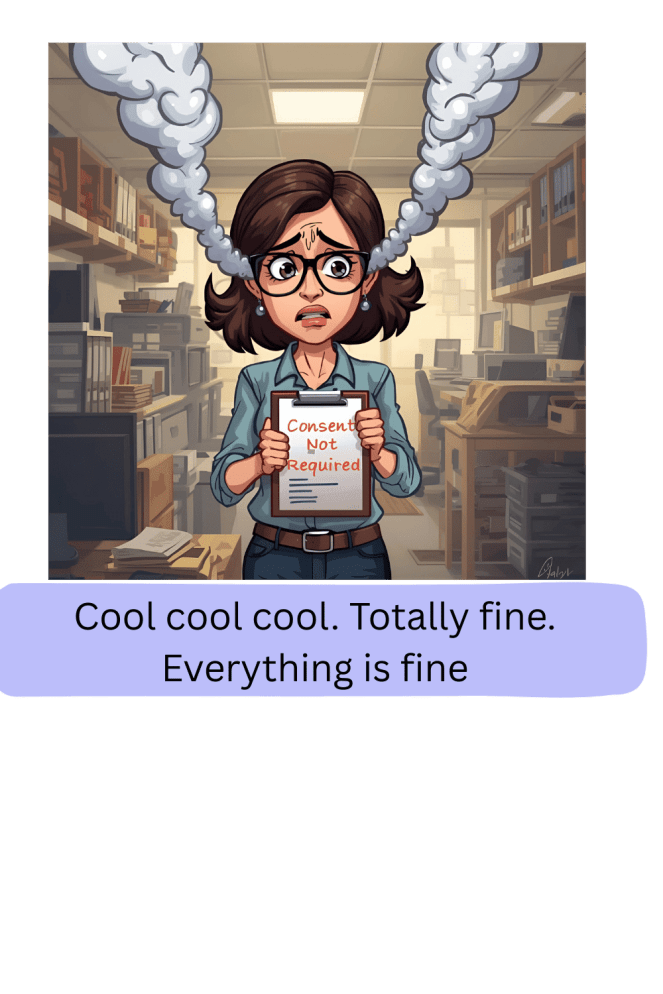
Technically they did this actually to a degree, They dropped the change in my inbox without a single explanation or a shred of guidance if we didn’t agree. Right there at the top, in bold: “We don’t need your consent we’re just letting you know.” (or words to that effect) So I refused to sign it. Or send it.

So in the span of one week, TWO different systems designed to support my disabled child have completely failed her – and apparently think the law is optional.

The Real-World Impact: Setting Kids Up to Fail

Here’s what makes this so insidious: delinquent accounts can harm credit scores, and this will impact them on their 18th birthday and thereafter.

Think about that for a moment. The system is literally trying to saddle my child with bad credit for bills she cannot legally be responsible for, for services she didn’t consent to receive, related to disabilities she didn’t choose to have.

They’re setting her up for financial failure before she even gets a chance to build credit legitimately. Before she can vote. Before she can legally sign a lease or apply for college loans.

The Insurance Shuffle Shell Game

Here’s what started this rolling: My husband got a new job with new insurance. Somewhere in that transition – without any notification to us – some of her services were deemed “not covered” under the new plan. Instead of notifying THE ADULTS who are responsible for these decisions, they:

This is not incompetence. This is systematic targeting of vulnerable families who may not know their rights.

Where Do We Go From Here? A Call to Action

If you’re facing similar situations, here’s what you need to know:

Resources That Actually Help:

The Bigger Picture: Systemic Targeting of Vulnerable Families

This isn’t just about my daughter. This is about a healthcare system that routinely targets families of disabled children, knowing that:

It’s predatory, it’s illegal, and it needs to stop.

To the Healthcare Industrial Complex Reading This:

My daughter is not your cash cow. She’s a human being with rights, and those rights don’t disappear because she has disabilities. Sending bills to minors is not just morally bankrupt – it’s legally indefensible.

You picked the wrong family to mess with. I’m a mother with ADHD hyperfocus, unlimited internet access, and righteous fury. I will make this everyone’s problem until it’s fixed.

To Other Parents: You’re Not Alone

If this happened to your family, you’re not imagining it. You’re not overreacting. This IS wrong, it IS illegal, and you DO have options.

Don’t let them intimidate you with official-looking bills and threatening letters. Know your rights. Research them! Use your voice. Protect your kids.

And if you need someone in your corner who understands exactly how infuriating and overwhelming this is, I’m here. We’re all here. The parent warrior network is real, and we’ve got each other’s backs.

UPDATE: I’ll be following up with exactly how I handle this situation, including any responses I get and resources that prove helpful. Because other parents need to know their options when the system fails their kids.

Til next time gang, take care of yourselves, and each other!

Have you dealt with similar billing issues or IEP violations? Drop your experiences in the comments. Knowledge is power, and we’re stronger when we share information.

Uncategorized

Hyperfixation Cuisine: A Love Story

When food is your ride-or-die for two weeks… until it ghosts you.

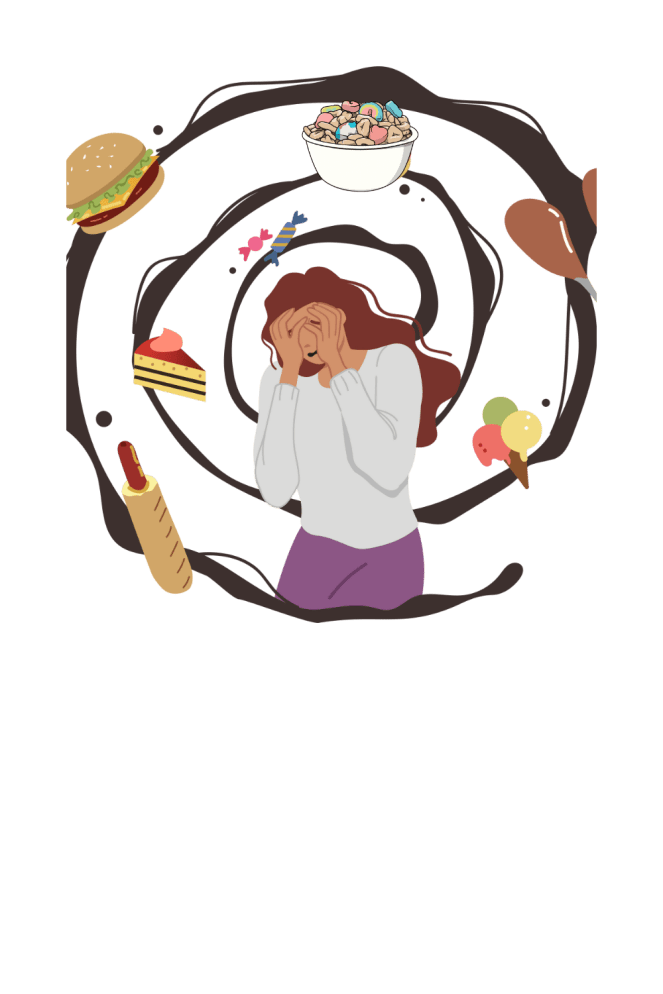
I don’t fall in love often—but when I do, it’s usually with a snack. A drink. A cereal. A very specific sandwich from one very specific place that I will eat exclusively for 14 days straight like it holds the secrets of the universe and contains all the nutrients my body will ever need. During these passionate food affairs, I become a creature of pure obsession—calculating how many times per day I can reasonably consume my chosen item without judgment, researching the optimal preparation methods, and feeling genuinely excited about meal times in a way that probably isn’t normal for a grown adult. I’ll stock up like I’m preparing for the apocalypse, filling my cart with multiples of the same item while cashiers give me curious looks that I interpret as admiration for my decisive shopping skills. And then? I ghost. Cold turkey. No warning, no closure, no gradual tapering off—just me and my shame in aisle 5, pretending I never knew that Creamsicle shake, avoiding eye contact with the 47 cans of soup I can no longer stomach, and wondering why my brain treats food like a series of intense but doomed romantic relationships.

What Is Hyperfixation Cuisine?

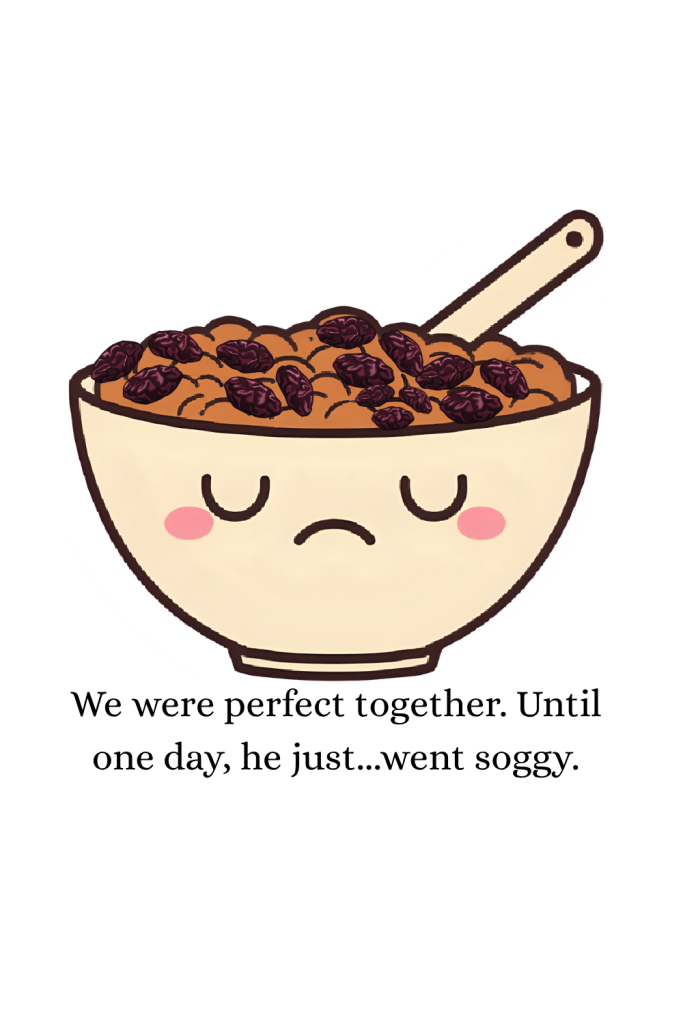
It’s the culinary equivalent of a summer fling. You’re obsessed. You plan your day around it. You talk about it to anyone who will listen (and a few who won’t). You buy in bulk. And then one morning, like a cursed love spell wearing off, it’s done. You’re left with a pantry full of raisin bran and the haunting echoes of a snack you no longer want to eat.

Neurodivergent folks—those of us with ADHD, autism, or both—know this dance well. It’s not a food phase; it’s a full-blown romantic arc.

And science backs us up!

Let’s sneak in some facts while we laugh about it:

Nutritionists would say variety is key. But also? Survival. Joy. Convenience. These are not small things. And if eating the same 3 things on rotation keeps your body going through a rough patch? That’s not failure—that’s strategy.

Plus, it always changes eventually. Usually when you least expect it. Often mid-bite.

Honestly? Laugh. Embrace it. Maybe write a heartfelt goodbye letter to your former food flame. (“Dear Bagel Bites, we had some good times. I’m sorry I abandoned you half-eaten in the freezer door.”)

You don’t have to force variety or shame yourself for what your brain finds comforting. Just make sure you stay fed, hydrated, and somewhat functional. And if one day you find yourself suddenly obsessed with cucumbers in vinegar, just know: you’re not alone.


What was your last food fling? Let me know so I don’t feel like the only one who once ate eleven bowls of raisin bran in one week.

And to all the forgotten snacks still lurking in my pantry…
I loved you once. I swear I did, lol. Til next time gang, take care of yourselves

Uncategorized

The Autistic Teen Whisperer: A Nature Documentary of My Life

INT. KITCHEN – EARLY MORNING
Cue dramatic voiceover, à la David Attenborough:
“If we are quiet… very quiet… we may catch a glimpse of the elusive Autistic Teen in her natural habitat. There! A flash of movement, a hoodie, mismatched socks. Blink and she’s gone. Out the door before the sun can fully rise, leaving behind toast crumbs and an emotional riddle.”

Welcome to the wild world of neurodivergent parenting. I’m your guide, an exhausted mom attempting to decode the rituals, migrations, and sensory triggers of my favorite wild animal: my teenager.


The Habitat

The Autistic Teen typically roams the house after 10 PM, nesting primarily in her bedroom—curated with LED lights, noise-canceling headphones, and Very Specific Textures. Her room is both her sanctuary and her command center, and entering without knocking is a rookie mistake you only make once.

Adaptations observed:

  • Can detect the faintest flicker of a light bulb in another room.
  • Has strong opinions about the temperature and humidity level of her socks.
  • Stores snacks in unexpected places. Foraging is an art.

The Communication Rituals

Communication with the Autistic Teen requires finesse, timing, and a willingness to interpret non-verbal cues like you’re deciphering ancient cave drawings.

Sometimes we exchange whole conversations in Minecraft metaphors or sarcastic cat videos. Sometimes, the best thing I can do is sit quietly nearby and let her stim in peace.


Feeding Habits

She has strong food aversions and sacred favorites. I’ve learned the hard way not to mess with the shape of the nuggets or the brand of the mac and cheese. When in doubt: beige, crunchy, and emotionally comforting.

As her caregiver and personal short-order chef, I’ve adjusted. I stock the sensory-safe foods, experiment with new ones slowly, and always, always have backup pop tarts.


Daily Migration Patterns

Between school, stimming breaks, and doomscrolling, her internal compass doesn’t follow a standard map. There is no “typical” day. But I’ve learned to track her rhythms:

  • Mornings: silent, hoodie up, minimal communication.
  • Afternoons: decompressing with art or YouTube rabbit holes.
  • Evenings: bursts of creativity, hyperfocus, or emotional monsoons.

Every day is an expedition. Sometimes I’m chasing her needs through sensory jungles. Other times, I just try to not mess up her flow.


Challenges in the Wild

Sometimes we clash. My ADHD brain is loud, scattered, and constantly shifting. Her autistic brain is methodical, specific, and easily overwhelmed by chaos. We are two storms learning to move together without wrecking each other.

I talk too much. She gets overwhelmed by too many words. I need novelty. She needs routine. It’s not always elegant, but it’s always ours.


The Mutual Bonding Ritual

The bond between Whisperer and Teen is strong, even if it doesn’t always look that way from the outside. We’ve developed our own language—half memes, half silence, all love. She knows I see her. She knows I’m trying. And I know that even when she disappears into her own world, she leaves the door open a crack.

Sometimes I catch her watching me with a mix of exasperation and affection.
Sometimes she randomly tells me a fact about spiders or space or mental health that makes me cry with pride.
Sometimes she texts me from her room to say, “thanks for not being annoying today.”

I count that as a win.


Closing Narration

This isn’t about having it all figured out. It’s about showing up anyway, even when the jungle is loud, the routines are broken, and the brain fog is real.

Because love, it turns out, is the greatest adaptation of all. Til next time gang, take care of yourselves, and each other.

Uncategorized

Neurospicy Squared: Parenting a Teen With Extra Seasoning When You’re Also the Family’s Walking Firecracker

Let me paint you a picture: One neurodivergent parent with executive dysfunction, sensory issues, a flair for hyperfocus (at the worst times), and a caffeine addiction… raising a neurodivergent teen who also has executive dysfunction, sensory issues, and a flair for hyperfocus (also at the worst times). Poor non neurodivirgent Dad lol. (Lucky he’s a little spicy in his own way so he gets it)

What we’ve got here, folks, is not a traditional household.
It’s a feedback loop with matching eye rolls and snack wrappers. With attitude.


“I’m Not Yelling, I’m Just Expressing Loudly With My Whole Body”

I used to think parenting would be about teaching my child how to be a functioning adult. Now I realize it’s about co-regulating while we both spiral in different directions over things like why the peanut butter is wrong. Not gone. Just wrong.

We’ve had conversations like:

  • “I can’t handle this right now.”
  • “Same.”
  • “So what do you want to do about it?”
  • “I don’t know”
  • “Cool me either. Want to avoid it together?”

When You’re the Grown-Up and Still Don’t Have the Manual

Let’s be real: parenting any teen is a mix of love, worry, and mystery smells.

Sometimes I’m the wise mentor. Sometimes I’m the raccoon in the laundry room making emotionally impulsive decisions because my hair hurts and I need a snack.

We forget things together.
We hyperfixate on the same random topic (shoutout to that two-week deep dive into plane crash documentaries, but our fallback is cat videos lol).
We both get overstimulated in stores and end up leaving without whatever we went in for.

But at least we do it as a team.


What Actually Helps Us (Spoiler: Not Just Schedules)

People say neurodivergent kids need structure. Sure.
But have you ever tried creating that structure while your brain is doing circus tricks and crying at the same time?

So we’ve learned to build little systems that don’t require too many spoons:

  • Timers with fun alarms. (Because “Gentle bells” don’t work on either of us. We need “aggressive robot beep.”)
  • Codewords for meltdowns. (We’ve used “just “NOPE.” but I think we’re good at picking up on each others tells by now no words needed)
  • Parallel processing. (We do our own things side by side while exchanging exactly 4.5 words. Always. We watch Wheel together, we’re not watching it together so much as competing between each other but the sentiment is there)
  • And when all else fails: snacks, memes, and leaving the room before anyone says something regrettable.

The Pick Your Battles™ Scale

Let me introduce you to my secret weapon: the Pick Your Battles™ Scale. It’s how I decide whether to engage or let it go with my spicy teen (and honestly, with myself).

SituationRatingTranslation
They wore pajama pants to the store.1/10Not a fight worth my last nerve, so long as all the bits are covered I’m not stressin.
They forgot their homework again.4/10Gently nudge, don’t die on this hill.
They said I ruined their life because I made pasta instead of rice.2/10Sounds like a feelings day. Feed them, don’t fight them.
They screamed into a pillow instead of at me.0/10That’s emotional maturity, baby. Celebrate it. Hubby gets mad if she walks away mumbling under her breath. I’m like really thats NORMAL teen behavior, I’ve done it, so long as the words are to herself I see no harm in letting her cuss me out. Its when she screams at me thats the problem.
They were mean to the cat.10/10Pause the world. This one needs addressing.

This little internal rubric helps me reserve energy for what actually matters. (Spoiler: it’s not always the socks on the floor.)


The Secret Sauce: Radical Compassion + Shared Eye Rolls

My kid gets it. I get it.
We’re both doing our best with the wonky wiring we’ve got.

Some days that means deep talks about emotions and neurobiology.
Other days that means forgetting it’s trash day for the third week in a row and bonding over mutual shame while taking it out in pajamas at 3 p.m.

There’s beauty in the chaos.
There’s humor in the mess.
There’s love in the way we see each other clearly, even when the world doesn’t.


So If You’re Out There, Fellow Neurospicy Parent…

You’re not failing.
You’re not alone.
You’re just raising a tiny mirror who also loses their phone in their own hand and argues like a well-informed gremlin.

And that? That’s something worth celebrating.

Preferably with matching fidgets and a mutually agreed-upon “silent hour.” Til next time gang. Take care of yourselves, and each other.

Uncategorized

When Words Go Whoosh:

The Hilarious Hiccups of Auditory Processing

Hey, fellow brain-glitch aficionados! Ever find yourself nodding along in a conversation, when—BAM!—your brain decides to take an impromptu vacation? Welcome to the wild world of auditory processing mishaps!

What’s Happening Up There?
Picture your brain as a super-slick computer. It normally takes in sound, converts it to signals, and serves up meaning faster than you can say “What?” But sometimes, it’s like trying to untangle last year’s Christmas lights: messy and confusing.

The Science-y Bit (Don’t Worry, It’s Fun)
This little brain hiccup is known as Auditory Processing Disorder (APD). It’s when your brain’s sound system decides to prank you. One minute you’re fine, and the next, you’re wondering if everyone around you started speaking Klingon. This little brain hiccup is known as Auditory Processing Disorder (APD). When you have APD, your brain struggles to process the sounds it hears correctly. It’s like if you were listening to music and the song kept skipping, leaving you wondering what just happened.

The brain processes sound in a specific order: first, the ear detects sound waves, then sends electrical signals to the brain. The auditory cortex takes those signals and decodes them into speech and meaning. Simple, right? But when there’s a glitch in that system, you might hear everything perfectly fine, but your brain just can’t put it together the way it’s supposed to. I know for me, it just takes my brain a little extra time to make the words known to my brain. Like my husband can talk, and I swear to you it sounds like Charlie Brown’s adults ‘wha whaaa wha waa wha’ lol, so I will ask for repeats or clarifications, then as he is talking, I understand what they said a minute ago and I have a comment about it. I have a bad habit of interrupting people, I am trying to stop, but I KNOW if I keep my comment to myself theres a 95% chance I will forget (and if I do I’m sorry and that will make me even MORE mad at my misfiring brain, its a perpetual state of loathing)

Fun Fact: Studies suggest that around 5% of children have some form of APD, and it often goes undiagnosed, leaving kids (and adults) in a perpetual state of “Huh?”

Signs You’re Having an Auditory Adventure:

  • Words suddenly sound like gibberish. (Is this what babies feel like all the time?)
  • You catch yourself saying “Huh?” more than a confused owl.
  • You’re nodding and smiling, hoping no one realizes you’re lost in auditory space.

The Plot Twist: When You’re the One Speaking
Irony strikes! Sometimes, your own words decide to play hide and seek in your brain. It’s like your thoughts are sprinting while your mouth is stuck in quicksand. So embarrassing and happens at least once per conversation

Why Does This Happen?


Fatigue: When you’re running low on energy, your brain can’t work at full capacity. Studies have shown that fatigue can slow down the brain’s ability to process auditory information. It can slow down the brains ability to process any information actually. Essentially, your brain starts skipping steps in its usual routine—like a tired computer processing instructions slower than usual. According to research, lack of sleep (or chronic sleep deprivation) can decrease the brain’s ability to filter out irrelevant sounds, leading to auditory processing issues.


Stress: Ever notice how hard it is to concentrate when you’re stressed? Well, turns out your brain is sort of like a nervous multitasker. When you’re under stress, your brain’s focus shifts to dealing with the stressor (like an impending deadline or an important meeting) and less on the conversation happening around you. Research from the American Psychological Association has found that chronic stress can affect how the brain processes auditory stimuli by overloading the prefrontal cortex, which is responsible for attention and processing language.


Sensory Overload: Your brain is constantly bombarded with sensory information—sounds, sights, smells, you name it. When too much sensory input floods in at once, your brain can have a “processing jam.” Think of it like trying to run too many apps at once on your phone. Research has shown that sensory overload, especially in noisy environments, can make it harder for your brain to filter and focus on the important sounds (like someone speaking to you), causing a breakdown in auditory processing. Studies also show that people with APD are more sensitive to background noise, which exacerbates this issue.

Coping Strategies (or “How to Pretend You’re Still on Earth”)

  • The classic “Could you repeat that?” (Works 60% of the time.)
  • Blame it on a sudden case of daydreaming (who doesn’t love a good daydreamer?)
  • Master the art of the vague response: “Wow, that’s really something!” Practice the smile and nod.

Remember, you’re not alone in this auditory obstacle course. So next time your brain takes an unscheduled break, just smile and laugh—it’s too short not to!

Take care, stay quirky, and make sure to be good to each other! Don’t forget to spread the kindness and love, to yourselves and each other! (George is around btw he says hi. I was going to post a picture of George and Georgina they are always playing with their kids in my yard, I’ll get one soon!)

Uncategorized

Why Telling Someone with Anxiety to ‘Just Relax’ Doesn’t Help—and What Actually Works

In today’s fast-paced world, we’re constantly flooded with news from every direction—social media, TV, podcasts, and more. It can feel impossible to escape the nonstop flow of information, and for many, this leads to increased anxiety. As someone navigating a neurodivergent mind, I often struggle with how to handle this overwhelming surge of news. I always have. I remember my first existential crisis thought. I asked my Mom what happens when you die and while I don’t remember her reply the feeling of ice down my spine is burned into my soul. I was eight.

When anxiety levels rise due to the relentless news cycle, well-meaning friends and family often offer the same advice: “Just relax” or “Take a break from the news.” While this may sound simple and straightforward, it can feel dismissive to those of us who experience anxiety or ADHD. The implication is that we can simply switch off our feelings and concerns with a flick of a switch. I get the impulse to say it, it comes to mind for us too. Do you think I am not SCREAMING at myself on the inside to just relax? Did you think thats not a thought that has occurred to me in multiple scenarios in my life, NOTHING coming from my rational adult mind is saying lay on the floor in the fetal position and remember every single thing that could go wrong in life, and then here we are.

For many neurotypical individuals, taking a break from the news or engaging in self-care activities can be effective strategies for managing stress. They might find that stepping away from their screens allows them to recharge and regain perspective. This approach can help them feel more grounded and less affected by external chaos. I’ve seen the methods everyone has suggested work, a lot worked well with people I knew to have heightened anxiety, I have SEEN the benefits.

However, for those of us who are neurodivergent, the situation is often more complex. The advice to “just relax” can feel like a foreign language when our brains are wired differently. Anxiety can manifest as racing thoughts or an inability to focus on anything other than the distressing information we consume. This makes it challenging to simply “turn it off.”

For many neurodivergent individuals, there’s a compulsion to stay informed about current events—often driven by anxiety about missing crucial information. This need can lead to excessive news consumption, where checking updates becomes a ritual rather than a choice. Ironically, this behavior can exacerbate feelings of distress rather than alleviate them. Like I GET that the room is on fire, I can feel the heat of it, and you are RIGHT that the room will be on fire whether I’m looking at it or not, HOWEVER if I’m not looking at it how do I know if a spark will land on me. (That metaphor works on multiple levels, my high brain is giving itself a high five lol)

Hyperfixation is another common experience for those with ADHD or anxiety. When something captures our attention—like a troubling news story—we may find ourselves fixated on it for hours or even days. This rumination can lead us down a rabbit hole of worry and fear, making it difficult to engage in other activities or enjoy moments of peace. It follows you whether you want it to or not any the second you relax that control just a little in your mind the bad thoughts have the clearance they need to invade.

The sensory overload created by constant notifications and alerts can further complicate our ability to cope with anxiety. The barrage of sounds and visuals can feel overwhelming, leading to heightened stress levels and an increased sense of panic. It’s as if our brains are on high alert all the time, making relaxation nearly impossible.

Interestingly, the advice to avoid news altogether can create its own set of challenges. For some neurodivergent individuals (myself included) , avoiding distressing information doesn’t eliminate anxiety; instead, it may lead to increased worry about what we might be missing out on or how we might be unprepared for future events. If I don’t know whats coming at me how can I prepare for the inevitable pop up derailments that follow me around like a rain cloud.

The phrase “just relax” often comes from a place of care but can feel frustrating and invalidating for those dealing with anxiety or ADHD. It minimizes the complexity of our experiences and implies that we lack control over our emotions when, in reality, we’re navigating a much more intricate landscape. On top of that it makes me want to look at them and say ‘REALLY? OMG YOU’RE RIGHT THATS THE ANSWER! Thank you SO much now I am cured’

Ultimately, it’s essential for friends, family members, and healthcare providers to recognize that everyone experiences anxiety differently. Acknowledging these differences can foster better communication and support systems that allow neurodivergent individuals to express their needs without feeling judged or misunderstood.

Strategies to Help:

  1. Mindful Media Consumption: Set specific times during the day when you check the news instead of allowing it to infiltrate every moment.
  2. Curate Your Information Sources: Choose reliable sources that provide balanced reporting without sensationalism.
  3. Practice Grounding Techniques: Techniques like the 5-4-3-2-1 method (identifying five things you see, four things you hear, etc.) can help anchor you in the present.
  4. Engage in Absorbing Activities: Pursue hobbies that require focus—like painting or reading—to provide a healthy distraction from distressing thoughts.
  5. Seek Support: Talk openly with understanding friends or mental health professionals who respect your experiences and offer guidance tailored to your needs.

There’s little we can do for much of life beside hang on for the ride but distraction can work wonders. I throw myself into finding the best deals. My mind hasnt quieted enough to help me read which is my favorite down time activity, thoughts are too loud for the book words to penetrate the frustrating shell over my brain. Hang in there guys, lets build a community of people who listen and support rather than rush to judge. I’m always happy to hear what helps for you guys, lets share strategies! Til next time gang. Take care of yourselves, and each other.

Uncategorized

Super power, or super weakness?

Let’s dive into the wild world of hyperfocus and hyperfixation – the ADHD brain’s way of saying “Go big or go home” when it comes to attention. Hyperfocus: The ADHD Superpower (With a Side of “Oops, I Forgot to Eat”)Picture this: you’re so deep into a task that the apocalypse could start, and you’d be like, “Just five more minutes!” That’s hyperfocus, baby. It’s like your brain suddenly decides to cosplay as a laser beam, zoning in on one thing with the intensity of a thousand suns. Great for productivity, not so great for remembering trivial things like, oh I don’t know, sleeping or going to the bathroom.

Hyperfixation: When Your Brain Decides to Become a Walking Wikipedia on Random Topics
Ever found yourself suddenly obsessed with 18th-century French poetry or the mating habits of sea slugs? Congratulations, you’ve been hit by the hyperfixation train! It’s like your brain picked a topic out of a hat and decided, “This. This is what we’re going to think about 24/7 for the next week… or until we find something shinier.”

How These Differ from “Normal” Focus (Whatever That Is)

  1. Intensity: While normies might be satisfied with a casual interest, we go from 0 to “I’m writing a dissertation on this” in 2.5 seconds flat.
  2. Duration: Regular focus is like a sprint. Our focus? It’s an ultra-marathon… through quicksand… while being chased by bees.
  3. Flexibility: Normal people can switch tasks like changing TV channels. Us? We’re more like old TVs stuck on one channel until someone physically comes to change it.
  4. Awareness: Regular focus allows for multitasking. Hyperfocus? The house could be on fire, and we’d be like, “Just let me finish this paragraph.”

In conclusion, hyperfocus and hyperfixation are like the ADHD brain’s way of compensating for all those times it couldn’t focus on boring stuff. It’s our superpower, our kryptonite, and our entertainment all rolled into one. So next time you find yourself three hours deep into researching the history of spoons at 2 AM, just remember: you’re not procrastinating, you’re embracing your neurodivergent superpowers! Take care of yourself, and each other!

Uncategorized

The Power of Structure

Alright, you beautiful chaos machines, let’s talk about the magical world of structure – because nothing says “I’ve got my shit together” quite like a color-coded schedule and a to-do list longer than your last therapy session. The Power of Structure: How It Benefits Us Neurodivergent Disasters
Living with a brain that’s wired differently is like trying to navigate a maze blindfolded while riding a unicycle. But fear not, my fellow hot messes, because structure is here to save our collective asses. Let’s dive into why slapping some order onto our chaotic lives might just be the secret sauce we’ve been missing.

  • Predictability: Because Surprises Are Overrated
    For those of us who treat unexpected changes like a cat treats a bath, having a structured routine is like a warm, cozy blanket for our anxiety-riddled souls. Knowing what’s coming next means fewer chances for our brains to play the “What If?” game at 3 AM.
  • Time Management: Or, “How to Adult Without Losing Your Mind”
    Let’s face it, time management for us is like herding cats – theoretically possible, but usually a disaster. A structured schedule helps us pretend we’re responsible adults who don’t lose track of time scrolling through memes for three hours.
  • Focus: Squirrel! …Wait, What Was I Saying?
    Maintaining focus when your brain treats every thought like a new, shiny toy is a challenge. Structure gives us guardrails to keep our minds on track, or at least in the general vicinity of where they should be

  • Emotional Regulation: Because Feelings Are Hard
    For those of us who experience emotions like we’re on an endless roller coaster, having a structured routine that includes “Don’t Have a Meltdown” time can be a lifesaver. It’s like giving your emotions a nice, predictable map to follow.
  • .Independence: Fake It Till You Make It
    Structure helps us pretend we’re functioning members of society who can adult with the best of them. It’s like training wheels for life, but with less scraped knees and more “Holy shit, I actually remembered to pay my bills!”

Implementing Structure Without Losing Your Mind:
Now, before you run off to color-code your entire life, remember that structure doesn’t mean turning into a robot. It’s about finding a balance that works for your unique brand of chaos. Start small – maybe try setting a consistent wake-up time (and by consistent, I mean within a two-hour window). Schedule regular meals, because apparently, we’re supposed to eat more than just coffee and anxiety.
Remember, flexibility is key. Your structured routine should be more like yoga pants than a straitjacket – stretchy enough to accommodate life’s curveballs and the occasional “fuck it” day.

Final Thoughts
Structure might not cure our neurodivergence (and let’s be honest, would we want it to?), but it can make navigating this neurotypical world a bit less like trying to fit a square peg into a round hole while blindfolded and on fire. So embrace the power of structure, you beautiful disasters. Create a routine that works for you, even if that routine includes scheduled time for staring blankly at the wall. Because hey, at least you’re staring at the wall at the designated time, right?
Now go forth and structure the hell out of your life. And remember, if all else fails, there’s always coffee and sarcasm to get you through the day. Hope you beautiful people are all happy and had an awesome weekend, take care of yourself and each other!

Uncategorized

Memory… All Alone In The MOONLIGHT

Our memories are not just static recordings of events; they are deeply intertwined with our emotions, perceptions, and personal histories. This intricate relationship often leads to a fascinating phenomenon: two people can experience the same event and yet remember it in vastly different ways. This divergence is rooted in the complex interplay of psychology, neuroscience, and personal interpretation. People think of memory like a computer, and you can pull up exactly what happened, exactly how you felt as you felt it, but it’s not, and our brains are weird, which is why the Mandela Effect is a well-known phenomenon where a large group of people remember an event or detail differently from how it actually occurred. This collective misremembering often leads people to believe in alternative memories that contradict factual evidence.

Psychologists and researchers attribute the Mandela Effect to a variety of factors, including false memories influenced by social reinforcement, misinformation, suggestion, and the brain’s reconstructive nature when recalling memories. It’s a fascinating example of how collective memory can be influenced and distorted over time.

I can personally attest to memories being unreliable. I have the most vivid memory; it was a recurring dream that I still have sometimes. My Dad, who died when I was 15, would get up EARLY for work. I have always been an early riser, but I had the bedroom off the kitchen, and I would sometimes hear him in the morning as he got ready for work and chat with him – nothing life-altering, just mundane stuff. I remember hearing him boil water for tea, get the milk out to put in it, hear the spoon clink the mug as he stirred it, then he’d slide it across the counter, silent as he drained his cup. Then I’d hear him push his stool back under the counter and put his mug in the sink, and I’d hear his chain of keys slide across the counter. Then, downstairs, I’d hear the door shut, the truck start, all of it. Still, sometimes I hear it in my dreams and wake up excited to talk to him, 30 years later. One problem: no one else remembers this. In fact, I’ve been told I have remembered nearly every part of it wrong. Apparently, we had a coffee maker, and Dad didn’t drink tea but drank coffee black. So, there is a significant discrepancy in my memory, and I’m clearly mistaken, but to me, it is incredibly real. But it’s not – I’m remembering something that is very loosely based in reality (I did have a bedroom off the kitchen and I DO FOR SURE remember going out in the morning and talking to him; he did for sure have a long chain his keys were on, etc).

You know how sometimes you and your friend remember the same event totally differently? Well, there’s a pretty cool reason for that. Our emotions act like filters for our memories, shaping our experiences. When we’re in a great mood, even ordinary things seem awesome because our happy emotions influence our perception. Conversely, feeling anxious or distracted can make us miss out on the good things around us. For example, at a party, a great time will result in fond memories, while feeling out of place may lead to recalling mostly awkward moments or forgetting most of it. It’s not about one person’s memory being right and the other’s wrong; it’s about how our emotions at the time affect the way we process and store memories. Our brains essentially create personalized highlight reels based on our emotions in the moment.

Now, throw in your personal baggage (we’ve all got it, don’t pretend). Our upbringing, cultural background, past traumas, and even current circumstances all contribute to our cognitive frameworks. Maybe you grew up in a house where yelling meant “I love you,” while your friend’s family communicated exclusively through passive-aggressive Post-it notes. Fast forward to adulthood, and suddenly you’re wondering why they’re freaking out over what you consider a “spirited debate” about pineapple on pizza.

Our brains are as unique as snowflakes, if snowflakes were really into overthinking and occasional existential crises. Neuroscientists have discovered that individuals can have varying levels of activation in brain regions responsible for memory formation and emotional processing. This variability can influence the vividness, detail, and emotional tone of memories, contributing further to differences in recollection between individuals who experience the same event. Some of us have memory centers that work overtime, while others… well, let’s just say they’re more “big picture” thinkers.

And here’s the kicker: every time you remember something, your brain basically plays a game of telephone with itself. Memories are not snapshots but rather dynamic constructs that are reconstructed each time we recall them. During this process, our brains may fill in gaps, emphasize certain details, or alter the emotional tone based on our current mindset and understanding. This phenomenon, known as memory reconsolidation, means that memories can evolve over time, becoming increasingly shaped by subsequent experiences and interpretations. By the time you’re recounting that hilarious story for the hundredth time, it’s probably evolved more than a Pokémon.

So, what’s the takeaway from this neurological circus? First, cut yourself some slack. Your memories are about as reliable as a weather forecast, but that’s okay. Second, maybe ease up on insisting your version of events is the gospel truth. Recognizing that someone’s memory of an event may differ from our own does not invalidate their experience; rather, it underscores the richness and subjectivity of human perception. Empathy, therefore, becomes essential in bridging these differences, allowing us to appreciate diverse perspectives and deepen our connections with others. And finally, next time your friend swears that karaoke night was a smashing success while you’re still trying to forget your off-key rendition of “Total Eclipse of the Heart,” remember: you’re both right, in your own beautifully flawed, human way.

Why do I have this sudden urge to bombard you with a bunch of random facts? Fibromyalgia, bipolar disorder, ADHD—yeah, these guys can really mess with your memory, and not in a fun way. Understanding how these troublemakers affect memory can give us some hilarious insights into the chaos they cause in our daily lives.

In the end, our differing memories aren’t just fodder for heated debates; they’re a reminder of how wonderfully weird and complex we all are. So embrace the chaos, laugh at the inconsistencies, and maybe, just maybe, listen to your friend’s version of events with an open mind. Who knows? Their rose-colored recollection might just brighten up your day. Maybe they have a spare pair of pretty glasses to share, maybe looking at the memory from their perspective would open your mind.
And remember, if all else fails, there’s always security camera footage.
Just kidding.
Maybe.
Take care of yourself, and each other (and happy Heavenly Birthday Daddy, love and miss you always)