Uncategorized

Apparently I’m “Pre-Diabetic” Now. Love That For Me.

So.

It turns out my body has opinions about carbohydrates.

Strong ones.

Not “you can’t have carbs” opinions.
More like, “Oh, you wanted toast? That’s cute. I’m going to overreact for sport.”

Some people eat a cinnamon roll and go about their day.

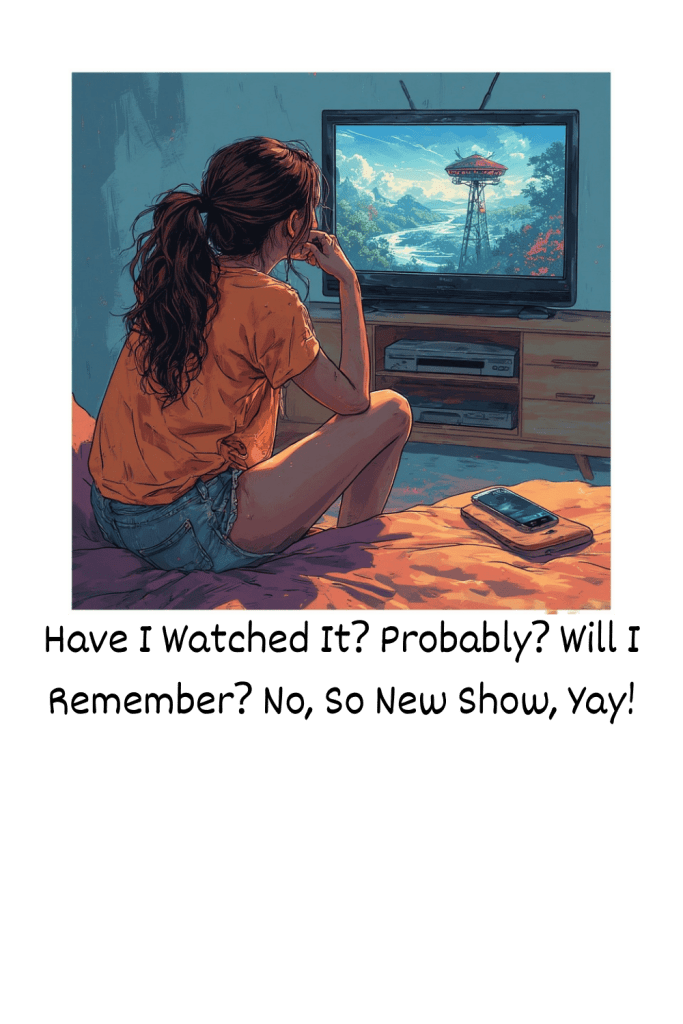
I eat one hash brown and my internal operating system goes:

And honestly? Rude.


What Even Is Pre-Diabetes?

From what I can tell, it means:

My blood sugar doesn’t go fully off the rails…
It just gets a little theatrical.

Like:

  • “We’re fine.”
  • “We’re fine.”
  • “Why am I suddenly exhausted and questioning my life choices?”

It’s not diabetes.
It’s not chaos.
It’s just my body saying, “Maybe don’t raw-dog 40 grams of carbs alone.”

Which feels excessive.


The Betrayal of “Healthy” Carbs

Multigrain toast? Suspicious.
Hash browns? Questionable.
Cereal? Criminal.

I used to believe that if it said “whole grain” it meant “emotionally safe.”

Turns out it means, “Less bad. Still a carb.”

I would like to file a complaint.


The Energy Crash That Feels Personal

Here’s how it goes:

  1. Eat something reasonable.
  2. Feel fine.
  3. Suddenly become a Victorian woman who must lie down immediately.

No warning.
No dramatic sugar coma.
Just a sudden power-down like I forgot to plug myself in.

And because I have other health quirks, it’s a fun game of:

  • Is this blood sugar?
  • Is this iron deficiency?
  • Is this fibro?
  • Is this stress?
  • Is this just existing?

The answer is always: “Yes.”


The Annoying Part

The solution isn’t extreme.

It’s not keto.
It’s not fasting.
It’s not eliminating joy.

It’s just… mild responsibility.

And frankly, I was hoping to avoid that.


The “Fine. Whatever.” Modifications

After much dramatic internal negotiation, here’s what I’ve accepted:

1. Protein is the chaperone.

Carbs apparently need supervision.

Eggs. Chicken. Sausage. Greek yogurt.
If carbs show up alone, things get weird.

So now carbs need an adult present.


2. Walking Is Unfairly Effective.

Ten minutes of walking after a carb-heavy meal?

It works.

I hate that it works.
But it works.

Apparently muscles use glucose when you move them.
Who authorized this design.


3. Smaller Portions Hurt No One.
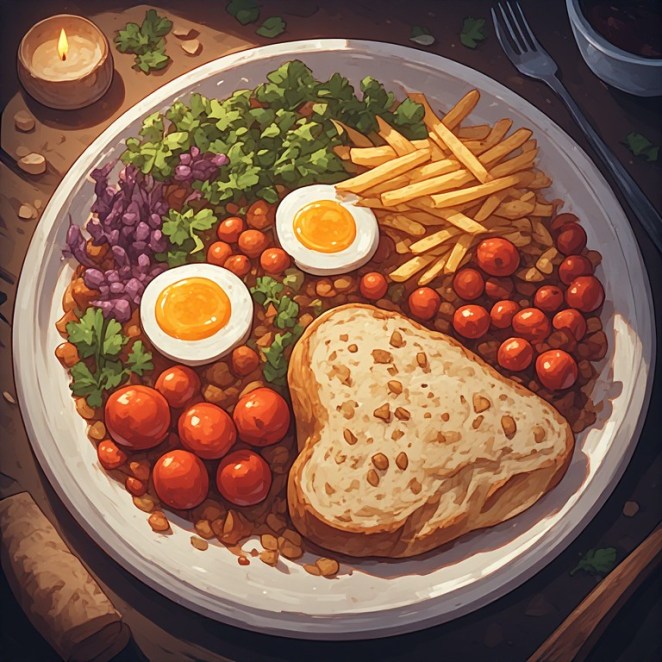
Two corn tortillas?
Fine.

Four?
Now we’re doing interpretive metabolic dance.

Moderation is boring.
But also effective.
Again: rude.


4. Don’t Drink Your Carbs.

This one was the betrayal.

Juice? No.
Regular soda? Absolutely not.
Even “healthy” smoothies? Suspicious.

Liquid sugar is basically a speed run to regret.


5. Stop Panicking Over One Number.

One spike is not destiny.
One crash is not failure.
One weird afternoon is not a diagnosis.

Bodies fluctuate.
Especially bodies juggling stress, hormones, iron deficiency, sleep, and the emotional weight of being human.


The Bigger Realization

Glucose sensitivity isn’t a moral failing.

It’s not laziness.
It’s not punishment.
It’s not my body “going to hell.”

It’s just feedback.
Annoying feedback.
But useful.

My body isn’t broken.
It’s just asking for steadier fuel.

Which is deeply inconvenient for someone who would happily live on bread.


The Part Where I Pretend to Be Mature

So here’s the deal I’ve made:

  • I will not eliminate carbs.
  • I will not spiral over every number.
  • I will pair carbs with protein.
  • I will walk when I can.
  • I will fix the iron deficiency that’s probably amplifying everything.

And I will absolutely still eat tacos.

Just… responsibly.

Which feels unnecessary.
But here we are.


Final Thought

If you’re noticing your energy tanking after certain meals, you’re not dramatic.

You might just be glucose-sensitive for whatever reason.

And that doesn’t mean your life is over.

It just means your toast needs supervision.

Which is annoying.

But manageable. Til next time gang, take care of yourselves, and each other!

Uncategorized

Normal Things That Now Require Project Management

At some point, without your consent, you were promoted to CEO of Existing, Inc.

You did not apply for this role.
You do not remember interviewing.
There is no HR department.
There are no sick days.

But somehow, every basic human task now requires a full-scale operational strategy.

Example: Leaving the House

This is no longer “put on shoes and go.”

This is now a multi-phase initiative involving:

Phase 1: Forecasting

You must analyze projected variables, including but not limited to:

  • Current pain levels
  • Predicted pain levels
  • Weather (your nemesis)
  • Duration of outing
  • Availability of seating
  • Distance from parking to destination
  • Whether the building was designed by someone who hates humanity

Phase 2: Resource Allocation

You assemble supplies like you’re preparing for a polar expedition:

  • Medications
  • Water
  • Backup medications
  • Emotional support snacks
  • Backup emotional support snacks in case the first emotional support snacks fail emotionally
  • Phone charger
  • Backup charger because betrayal is everywhere

Phase 3: Contingency Planning

You must prepare for possible catastrophic scenarios such as:

  • Unexpected stairs
  • No seating
  • Loud environments
  • Temperature extremes
  • Your body suddenly filing a formal complaint

This includes identifying exit strategies and recovery plans.

Phase 4: Risk Assessment

You ask yourself critical executive-level questions such as:

  • Is this worth tomorrow’s consequences?
  • Will Future Me be furious?
  • Am I about to ruin Thursday by attempting Tuesday?

Phase 5: Executive Override

Despite all data suggesting this is a terrible idea, you go anyway because you are a human being who would like to participate in your own life occasionally.

Bold. Visionary. Reckless.

Deliverables

Upon completion of this task, you will receive:

  • Extreme fatigue
  • A flare
  • Zero financial compensation
  • And the overwhelming sense that you just completed something equivalent to summiting Everest, but everyone else calls it “running an errand”

Performance Review

You will be evaluated by:

  • Your nervous system
  • Your immune system
  • Your guilt
  • And society, which will say, “But you don’t look sick.”

Mission Statement of Existing, Inc.:

Uncategorized

Fibromyalgia Time Is a Completely Different Time Zone

I live in a time zone most people don’t know exists.
It doesn’t follow clocks, calendars, or common sense.
It does follow pain levels, fatigue spikes, and whether my nervous system has decided today is a “no thoughts, just vibes” kind of day.

Welcome to Fibromyalgia Time.


1. Five Minutes Can Take an Hour

In Fibromyalgia Time, a “quick task” is a bold lie.

  • Showering
  • Getting dressed
  • Answering one email

Each looks like it should take five minutes. In reality, it includes:

  • A rest break
  • A mental pep talk
  • Forgetting what you were doing
  • Another rest break

Time stretches when pain shows up, and shrinks when energy disappears.


2. “Later” Is a Vague Concept at Best

When I say “I’ll do it later,” I don’t mean today.
I also don’t mean tomorrow.
I mean when my body allows it.

Fibromyalgia doesn’t run on deadlines. It runs on:

  • Pain levels
  • Brain fog density
  • How hard my nervous system is spiraling

Later is not procrastination. It’s symptom-based scheduling.


3. Energy Expires Without Warning

Normal time assumes energy is steady.

Fibromyalgia Time says:

You can wake up feeling okay and hit empty before lunch.
You can plan carefully and still lose the day by 2 p.m.

Energy doesn’t taper. It vanishes.
And when it’s gone, the clock stops mattering.


4. Recovery Time Is Not Predictable

In normal time, rest has a formula:

In Fibromyalgia Time:

Recovery isn’t linear.
Sometimes a nap helps.
Sometimes it does nothing.
Sometimes it makes things worse because now you’re groggy and in pain.


5. Past Me and Present Me Are Not the Same Person

Fibromyalgia Time has no memory continuity.

Past Me:

  • Made plans
  • Overestimated capacity
  • Was wildly optimistic

Present Me:

  • Is negotiating with joints
  • Has three spoons left
  • Is offended by Past Me’s confidence

Canceling plans isn’t flakiness — it’s time travel without consent.


6. The Clock Keeps Moving Even When I Can’t

This is the cruelest part.

The world doesn’t pause when your body does.
Bills are still due.
Appointments still exist.
Expectations don’t magically adjust.

Fibromyalgia Time moves slower inside your body — but faster everywhere else.
That disconnect is exhausting all by itself.


7. Productivity Happens in Weird Bursts

Fibromyalgia doesn’t believe in steady output.

Instead you get:

  • Sudden bursts of “must do everything NOW”
  • Followed by complete shutdown

It’s not a lack of motivation.
It’s a nervous system that dumps all available energy at once and then clocks out.


8. Rest Is Not Wasted Time (Even If It Looks Like It)

In normal time, rest is a reward.

In Fibromyalgia Time, rest is maintenance.

Lying down isn’t laziness.
Doing less isn’t failure.
Pausing is how you stay functional at all.

The clock might say you did “nothing,” but your body knows better.


9. Fibromyalgia Time Requires Translation

“Just five more minutes”
“Can you hurry?”
“It won’t take that long”

These phrases assume a shared timeline.

We’re not on the same clock — and that’s not a moral failing.
It’s a medical reality.


10. Surviving Fibromyalgia Means Redefining Time Entirely

Success isn’t measured in hours worked or tasks completed.

In Fibromyalgia Time, success looks like:

  • Listening to your body
  • Stopping before you crash
  • Adjusting expectations without self-blame

You’re not behind.
You’re just operating in a different time zone — one that requires patience, flexibility, and a whole lot of self-compassion.

Til next time gang, take care of yourselves, and each other.


Uncategorized

Why Cold Wrecks My Body (and What Actually Helps)

Cold doesn’t just make things uncomfortable.
It changes how my body functions.

When temperatures drop, my muscles tighten automatically, my joints stiffen faster, my pain threshold lowers, and my nervous system shifts into protection mode. Even before I move, my body is already bracing — like it’s expecting something bad to happen.

What helps:
I warm my body before I ask anything of it. Heat isn’t a treat, it’s a prerequisite. Heating pads, hot showers, warm drinks — anything that tells my nervous system it’s safe enough to stand down.


Cold also makes my muscles stay clenched — especially my shoulders, neck, hips, and lower back. That constant tension creates soreness that doesn’t feel earned and doesn’t go away with rest alone.

What helps:
Targeted warmth and gentle movement. Not “bundling up,” but keeping the parts that guard the most actively warm. Slow stretching or light movement early prevents stiffness instead of fighting it later.


In winter, everything costs more energy. Getting dressed hurts more. Moving hurts more. Thinking hurts more. By noon, I’m exhausted and I haven’t even done anything impressive.

What helps:
I move earlier and smaller. A little motion before the stiffness sets in keeps my body from locking up. This isn’t exercise — it’s lubrication. Waiting until later usually means paying interest.


Cold doesn’t just affect my body — it stresses my nervous system. That means higher pain, lower tolerance, and less emotional bandwidth, even if nothing “bad” is happening.

What helps:
I treat cold days like high-stress days. Fewer plans. Fewer decisions. More quiet. Less pressure to perform. If my nervous system is already taxed, I don’t pile more on top of it.


Winter also messes with expectations. I want to function the same way I do in warmer months, and my body refuses. That gap between expectation and reality is where frustration lives.

What helps:
I lower the bar before I hit it. Winter isn’t the season for pushing limits — it’s the season for pacing. Needing more support when the environment is harsher isn’t regression. It’s adaptation.


Cold doesn’t mean I’m failing.
It means my body is responding to stress the way it was built to.

Winter raises the difficulty level — and I’m allowed to adjust how I play the game. Til next time guys, take care of yourselves, and each other.

Uncategorized

A Completely Serious List of My Current Coping Skills

In the spirit of honesty, growth, and not pretending I have my life together, here is a completely serious and medically unreviewed list of my current coping skills.

  • Avoiding Mirrors
    Not because of vanity. Because mirrors ask questions I’m not prepared to answer. Like ‘Girl why are you going anywhere dressed like that?’
  • Snacks as Emotional Infrastructure
    Are they nutritional? Sometimes. Sometimes I’d be better off nutrient wise eating the damn box
    Are they morale? Absolutely. Until you spot the mirror and it says ‘maybe the cookies are a bit much’
  • Pretending It’s Fine (Short-Term Use Only)
    Works best in public settings, family functions, and when someone says, “So how have you been?”
    I get bored answering that so I state how I’d like to have been. Mirroring other people gets redundant too.
    Start making up stories or stop talking to people or be boring and say fine are your only options.
  • Talking to Pets Like They’re Union Reps
    They understand. They always understand. You know who you don’t have to pretend to be fine to? A dog. Dogs can get you through shit. I’d like to say the same for cats but a lot of them would be judging you. Its part of their job description.
  • Strategic Dissociation (Light Version)
    Not the scary kind.
    Just enough to get through Target without crying in seasonal décor. Besides it helps the chores go faster when you lose hours at a time.
  • Writing Things Down So My Brain Can Stop Holding Them Hostage
    Once it’s on paper, my mind is like, “Cool, not my problem anymore.” The problem is remembering to write the note and where you put it, because you set it down somewhere didnt you? Writing stuff down helps but if you cant remember where you put it tends to pile onto the existing issues. More baggage, yay
  • Canceling Plans Early So I Don’t Feel Like a Villain Later
    This is called foresight. And self-respect. And exhaustion. Better plan, don’t make concrete plans, then you can’t flake out of them. Now THAT’S foresight.
  • Rewatching Shows I’ve Already Seen
    No surprises. No emotional ambushes. Just vibes. That is the great thing about having a shitty memory, its basically brand new shit.
  • Lowering the Bar and Then Respecting It
    Today’s goal is not productivity.
    Today’s goal is “nothing got worse.” Today I met my goal of not fucking more stuff up. Some does that is deserving of a medal.
  • Letting Things Be Weird Instead of Trying to Fix Them Immediately
    Some days aren’t broken.
    They’re just… a lot. I get lost in the Overwhelm.

These aren’t glamorous coping skills.
They won’t make it into a self-help book.
But they’re keeping the lights on, and honestly? That counts.

If you’re doing what you can with what you have, you’re not failing.
You’re coping. And sometimes that’s the win.

Til next time gang, take care of yourselves, and each other.


Uncategorized

The Quiet Depression No One Warns You About After the Holidays

The holidays end, and everyone else seems to bounce back into life like it was all just a brief inconvenience. Decorations come down. Resolutions go up. People start talking about productivity and “fresh starts.”

There’s a strange sadness that settles in after the holidays — not dramatic, not loud, just heavy. The excitement is gone, the lights are packed away, and spring feels like a rumor someone made up to be polite.

Meanwhile, I’m standing in my kitchen staring out the window at gray trees, wondering how many months it is until I can touch dirt again. The holidays were made for family so when you are missing part of your family, you begin to question ever feeling anything other than this ever. Some days the hardest part isn’t missing them — it’s wondering if the version of me who was their mom actually existed.

This stretch of time — from after the holidays until the world thaws out — hits a lot of people harder than we admit. Shorter days mean less sunlight, which affects serotonin and melatonin levels in the brain. That shift alone can mess with mood, energy, and sleep. It’s one of the reasons Seasonal Affective Disorder (SAD) tends to peak in late winter, not December when everyone expects it.

But even without a formal diagnosis, this season can still feel emotionally brutal.

It’s the letdown after months of buildup.
The loss of structure.
The quiet after forced togetherness.
The waiting.

Everyone talks about January as a reset, but for some of us it’s more like limbo. Not moving forward. Not moving back. Just stuck — watching other people carry on while we tread emotional water.

I’m not drifting, I’m not drowning — I’m stuck treading water, burning energy just to stay here.

What makes this season especially isolating is that it doesn’t look like depression the way people expect. You’re still functioning. Still showing up. Still doing what needs to be done. You just feel… dulled. Unmotivated. Sad without a clean reason.

And because nothing is technically wrong, it’s easy to tell yourself you should be fine.

But this isn’t a personal failure. It’s a seasonal one.

Human beings aren’t designed to thrive in months of darkness, cold, and waiting. We’re meant to move, to grow things, to be outside doing something that feels alive. When that gets taken away, it leaves a very real emotional gap.

So if you’re struggling right now, you’re not weak.
You’re not ungrateful.
You’re not broken.

You’re just in the long, quiet middle — the part no one puts on a calendar.

And sometimes the only goal isn’t happiness. It’s getting through this season gently enough to meet yourself again when the light comes back. This is the year I stop treading water, I will start swimming again. Til next time gang, take care of yourselves, and each other