Uncategorized

Beyond Basic Spoon Theory: Strategic Energy Management for Complex Parenting

When your energy comes with an expiration date, every choice becomes strategic.

We all know spoon theory. But let’s be real—most of the advice assumes you’re managing your energy for your own activities. What happens when you can’t just “rest when you need to” because someone else depends on you for dinner, rides, and emotional regulation? When your autistic teenager needs consistency but your fibromyalgia is flaring? When your ADHD brain forgot to save energy for the evening routine, but bedtime still has to happen?

I’m not trying to be a saint here—I’m trying to survive until bedtime without completely falling apart. And that requires a different kind of energy strategy than the basic spoon theory tutorials assume.


The Complex Reality: When Multiple Conditions Collide

These are my dancin spoons

Here’s what the basic spoon theory explanations miss:
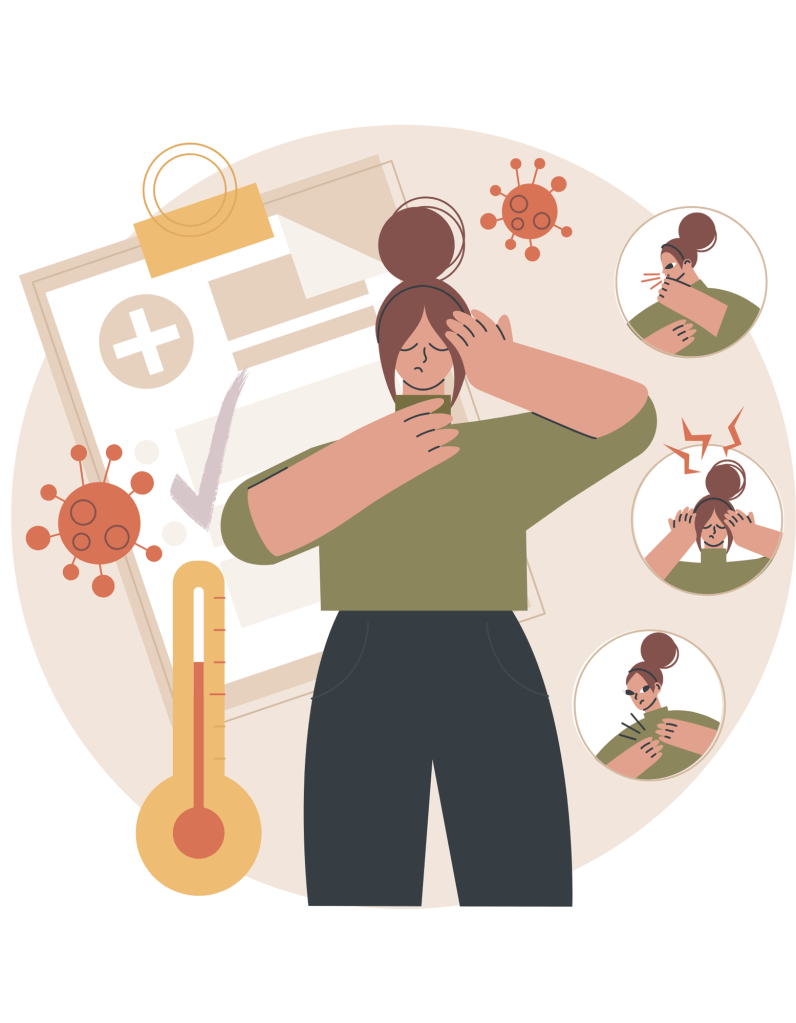
When you’re managing fibromyalgia, ADHD, and bipolar disorder simultaneously, your spoons aren’t just limited—they’re unpredictable.

My ADHD brain might hyperfocus and blow through six spoons organizing one closet. A bipolar mood shift can drain spoons faster than a phone with a cracked screen drains battery. And fibromyalgia? It’s like having a fluctuating baseline that changes without warning.

Add parenting an autistic teenager to the mix, and you’re not just managing your own energy—you’re strategically allocating it so everyone gets what they need, including you still being a functioning human by 8 PM. (Well I never claim to be a functioning human any time after 5 lol)

This isn’t about being selfless. It’s about being smart enough to pace yourself so you don’t crash and burn, leaving everyone (including yourself) worse off.


The Science Behind Why We Run Out of Spoons

Research backs up what we’ve always known: fibromyalgia isn’t just “feeling tired.” Studies show people with fibromyalgia experience disrupted sleep, increased pain sensitivity, and central sensitization—basically, our nervous systems are stuck in overdrive.

Key Research Findings:

  • Fibromyalgia and Central Sensitization: The National Institute of Arthritis and Musculoskeletal Diseases confirms fibromyalgia affects how the brain processes pain signals, leading to widespread pain and fatigue.
  • Sleep Disruption: 75–90% of people with fibromyalgia experience sleep disorders, creating a vicious cycle where pain disrupts sleep and poor sleep worsens pain.
  • ADHD and Executive Function: ADHD impacts energy regulation through executive dysfunction, making pacing activities harder.

But here’s what medical literature doesn’t capture: what happens when you can’t just “listen to your body” and rest whenever you need because someone else is counting on you?


Energy Pacing: The Research-Backed Strategy That Actually Works

The good news? There’s solid research supporting strategies beyond “just rest more.” Activity pacing is designed for people who can’t just stop when they’re tired.

Key Research Findings:
  • Activity Pacing Works: A 2023 systematic review found pacing—regulating activity to avoid post-exertional crashes—is one of the most effective strategies for chronic fatigue conditions.
  • Better Than Boom-Bust: People who learn pacing techniques report significantly improved quality of life compared to those who push through until they crash.
  • The Energy Envelope: Research shows staying within your “energy envelope” prevents the crash-and-burn cycle that leaves you useless for days.

The key insight? It’s not about doing less—it’s about doing things more strategically so you can sustain your energy over time.


My Real-Life Strategic Energy System

The Morning Energy Assessment

Every morning, I do a quick reality check: How’s my pain? Did I sleep? Is my brain foggy? This gives me a realistic count of my available energy for the day. A good day might be 15 units. A flare day? Maybe 8. The key is honesty about what I actually have, not what I wish I had.

The Triage System: Essential vs. Optional

I ruthlessly categorize tasks:

Essential: Medication, meals, safety, school pickup
Important: Homework, emotional check-ins, sensory accommodations
Optional: Fancy meals, deep cleaning, being the “fun mom”

On low-energy days, I focus only on essentials. My teen knows that sometimes we operate in “basic functioning mode,” and that’s just life—not failure. I have learned I am terrible at categorizing though lol.

The 80% Rule

Research shows staying within your “energy envelope” prevents crashes. For me, this means spending no more than 80% of my energy by 3 PM. Kids still need dinner, and I still need to exist as a person after sundown.


Practical Energy-Saving Strategies That Actually Work
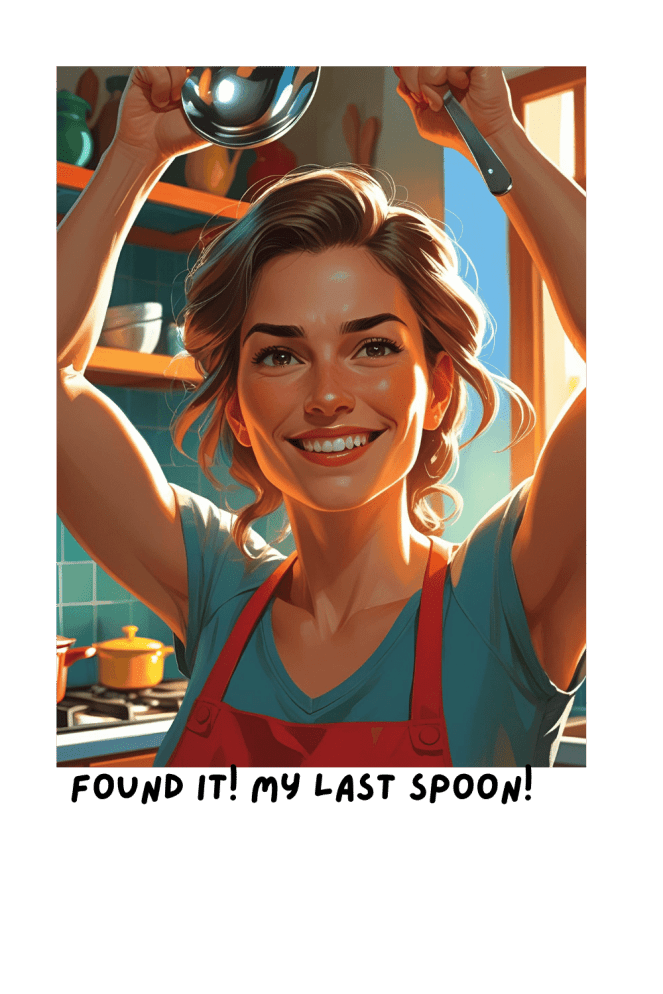
Here’s where theory meets reality. These aren’t pie-in-the-sky ideas—these are battle-tested strategies for functioning for others while managing complex needs.

Batch Processing: Work Smarter, Not Harder

High-energy tasks happen on good days. Maintenance mode on the rest. Strategic, not lazy.

Examples:

  • Book medical appointments together to reduce recovery time
  • Meal prep when you’re energized, not hangry
  • Handle school stuff in batches

Environmental Modifications: Make Your Space Work for You

Our home reduces energy demands on purpose. Essentials are easy to reach, grab bars help, and my teen knows the layout.

Modifications:

  • Keep essentials within easy reach
  • Set up “stations” for meds, homework, decompression
  • Use timers and alarms because our brains aren’t built for mental tabs

The 20-Minute Rule

If it takes longer than 20 minutes, it gets chunked smaller or delegated. This prevents ADHD hyperfocus from burning my whole day’s energy.


When Your Teen Needs to Understand Your Reality
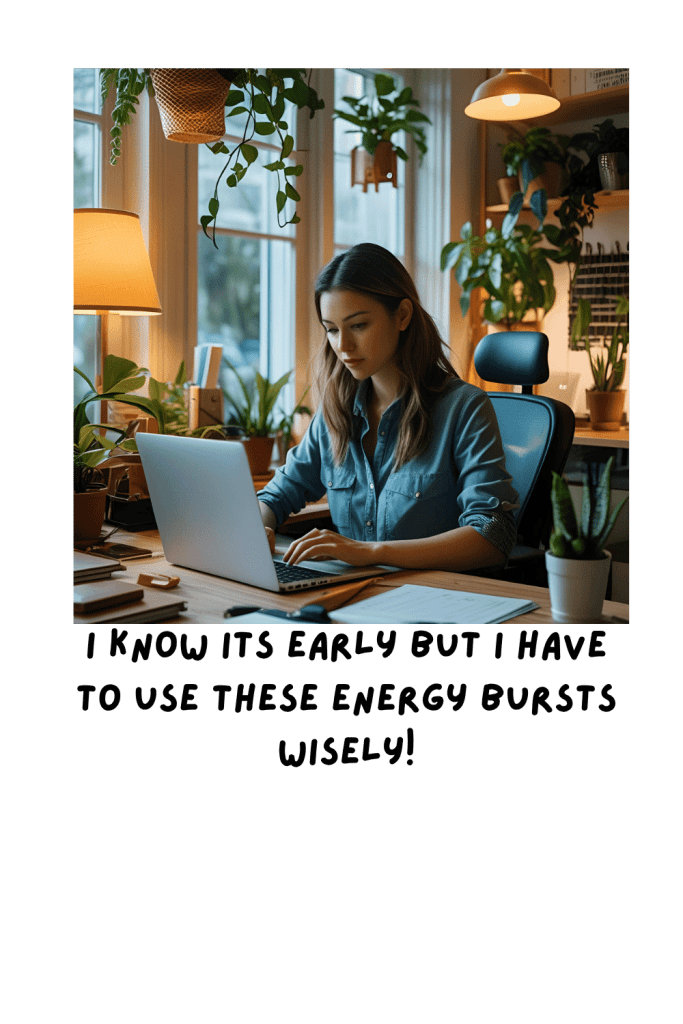
One of the hardest parts? Explaining to my autistic teen why I can’t do something today that I could yesterday. Consistency helps, but clarity wins. She’s gotten better since she goes to school based therapy, I’ve really been proud of her empathy lately.

What works:

  • Concrete language: “I have 3 energy units left. Dinner needs 2.”
  • Offer alternatives: “I can’t drive you, but I can order it.”
  • Honesty: “Energy changes daily. Not your fault or mine.”
  • Involve them: “How can we make this work with what I’ve got left?”

The Guilt Factor: Why Strategic Rest Isn’t Selfish

It took me years to accept this: protecting my energy isn’t lazy—it’s responsible. Proactive rest keeps me showing up tomorrow.

Saying no to extras isn’t shirking responsibility—it’s saving energy for what truly matters. Operating in “basic functioning mode” is how I keep us afloat without sinking out of stubbornness.


Next Week: Building your support network and emergency energy protocols—because even superheroes need backup plans. Til next time gang, take care of yourselves, and each other.

Sources / Further Reading:

Uncategorized

Top 10 Things I’ve Googled This Week as a Chronically Ill, Neurospicy Parent

  • “Why does my hip make that sound?”
    Its not so much a pop as it is a crackle, I feel like the Rice Crispies guys are hiding somewhere.
  • “How to explain sarcasm to a teenager who is now more sarcastic than me
    It took forever for her to ‘get it’ (she’d say, is that sarcasm? every time we laugh at a joke) now she is almost more sarcastic than me. Almost lol.
  • “Can I survive on toaster waffles and spite?”
    No? Coca cola and contempt? Those are my wheelhouse.
  • “What does executive dysfunction look like in adults asking for a friend (it’s me)”
    Pretty sure I dissociated so hard I time-traveled. I came to around dinner like, wait… where did the day go?
  • “Symptoms of burnout vs laziness vs demonic possession”
    Spoiler: It was burnout. But let’s be honest, if a demon was possessing me, they’d at least fold the laundry

  • “How to nicely ask your teen to shower without being emotionally attacked”
    “I tried ‘Would you like a shower now or in 10 minutes?’ and still got hit with the emotional equivalent of a boss battle I didn’t consent to

  • “How long is too long to wait for meds to kick in before giving up on the day?”
    Asking for science. But also for vibes. Because the vibes are off and so is my serotonin.
  • “How to turn rage-cleaning into a workout”
    If slamming laundry baskets and scrubbing with vengeance burned calories, I’d be shredded by now.
  • “Can fidget toys fix my life or is that false advertising?”
    Look, they may not fix it — but they do keep me from sending That Text™ or scream-cleaning my kitchen.
  • “Is it normal to cry over spilled resin?”
    Normal? No clue. But between the cost, the smell, and the emotional spiral? Yeah. Very on brand.


Living with chronic illness, ADHD, and a teenager is like being the main character in a sitcom written by the universe when it was feeling particularly chaotic. But hey — at least I’m not boring.

BRB, googling if emotional support waffles are a thing. Til next time gang, take care of yourselves, and each other.

Uncategorized

How Chronic Illness Turned Me Into a Crafty Witch with a 3D Printer

When pain, boredom, and executive dysfunction unite—you get resin, rage, and a whole lot of accidental glitter.

I didn’t set out to become a craft goblin. I wasn’t summoned under a full moon or handed a glue gun by a mysterious old crone—though honestly, that would’ve been cooler. What actually happened? Chronic illness, ADHD, and mental health issues tag-teamed me into a corner, and I crawled out with glitter in my hair, UV resin on my shirt, and a 3D printer whirring in the background like some kind of mechanical emotional support animal.

🧠 Brain fog + body pain = weird creativity cocktail

Being chronically ill is basically like living in hard mode with no save points. There are days where just getting out of bed feels like climbing Everest. And when your body taps out, but your brain still insists on doing something, you get creative—weirdly creative.

One day I woke up and thought, “What if I poured sparkly goo into molds to feel better?” Then, “What if I started designing stuff to go in the goo?”
Next thing I know, I’m elbows deep in fidget toy sketches and debating the opacity of rose gold filament.

Not because I’m trying to get rich. Not because I want to be Etsy famous.
Because it helps me feel like a person again.

🧙‍♀️ Crafting is my magic—just with more swearing

There’s something weirdly powerful about turning pain into something tangible. Making trays and fidgets and little resin reminders isn’t just “cute” or “fun.” It’s my therapy when therapy isn’t enough. It’s my way of saying “I’m still here” even when my body’s out of spoons and my brain’s rerouting itself through a foggy mess of dopamine starvation.

And yes, sometimes I cry while sanding something or curse at my printer like it personally betrayed me. That’s part of the ritual.

🛠️ My cauldron just happens to be full of UV resin and PLA

There’s a stereotype that chronically ill folks just sit around watching Netflix and napping. (Okay, sometimes we do that too—rest is radical, y’all.) But a lot of us are brimming with creativity, we just needed the right outlet—and in my case, that outlet prints in layers and smells faintly of molten plastic.

Now I blend 3D printing and resin pouring into something like art, something like therapy, something like survival. I make trays that say things like “Grounded Spirit” and “Wildflower” because those are the things I need to remember. I make fidgets that spin and snap and soothe because my nervous system is a feral toddler with no nap schedule.

And when people actually buy those things? When they tell me it helped them feel a little more seen, a little more held? That’s the part that feels like real magic.


🧷 Not an ad, but here’s the cauldron shop if you want to peek

If you’re curious about what resilience looks like in resin, I’ve got a little Etsy shop full of snark, softness, and sensory-friendly goodies. I call them my “Spoonie Shenanigans,” and no two are ever quite alike—kind of like us. https://joknowscreations.etsy.com Til next time gang take care of yourselves, and each other.

Uncategorized

Can You Hear Me Now? Because the System Sure Doesn’t

Let’s just get one thing out of the way: when we say we’re tired, we don’t mean “I could use a nap” tired. We mean, “it feels like my bones are made of lead and I’m dragging them through emotional quicksand” tired. Welcome to chronic illness fatigue — where the real game is not getting things done, but feeling guilty about the things we couldn’t do.


Invisible Illness Fatigue: A Sneaky Beast

When you live with something like fibromyalgia, ADHD, or bipolar disorder (or the full trifecta, if you’re really winning like I am), fatigue doesn’t show up like it does after a long day. It’s not solved with sleep. It’s a permanent roommate that throws a tantrum when you so much as think about productivity.

We don’t just skip tasks. We skip tasks, then feel like a failure for skipping them, then try to explain why, then realize we’re exhausted from the explaining. And even when people say they understand, there’s that unspoken “but everyone’s tired” hanging in the air. Sure, Karen, but not everyone needs to lie down after a shower.


The Gaslight of the Medical Maze

Now let’s sprinkle in a bit of medical neglect for flavor. ​According to the National Council for Mental Wellbeing, it takes an average of 48 days to get an appointment with a behavioral health provider in the U.S. — and that’s after you’ve made contact.​ Because what’s chronic illness without fighting the very system meant to help us? I spent this week trying to schedule a psych appointment for my teenager. I called seventeen times. Seventeen. Not metaphorically. SEVENTEEN. I left messages. I waited. I got bounced from voicemail to nowhere.​ Their voicemail message says ‘someone will get back to you within 24 hrs.’ Never not once called.
📌 Cold, Hard Reality Check:

According to the National Council for Mental Wellbeing, the average wait time for behavioral health services in the U.S. is a staggering 48 days. That’s nearly seven weeks of waiting in limbo—waiting for care that should come sooner.

And when I finally got through — a moment of hard-earned triumph — I did what any burnt-out, panic-caffeinated, mom-on-the-edge might do: I scheduled it ​first available for the one day I absolutely can’t do it. Face palm? No. Face ground. But the idea of calling again, of pushing through the labyrinth of dead-end prompts and receptionist roulette? I physically can’t do it. I’ll move my own mountain that day instead.

This is what they don’t see. The victories that come covered in emotional tax. The way we ​beat ourselves up over accidents because we’re so used to feeling like we’re failing. Even our wins taste like stress.


The Never-Ending Ask for Help (That Goes Nowhere)

Everyone tells you to ask for help. But they don’t tell you what to do when that help turns out to be a ghost. Or a voicemail. Or an email that never gets answered. Or a friend who says, “Let me know if you need anything” but quietly disappears when you say, “Actually, I do.”

When you do speak up, you risk being labeled as dramatic or dependent. When you don’t, you’re “not taking care of yourself.” It’s a rigged game. The buck never stops. It just circles the drain while we’re clinging to the rim.

And yes, it gets to us. All the time. We internalize it. We feel like a burden. Like we have to keep apologizing for being sick. Like if we were just stronger, more organized, less emotional, less needy… we could pull off the impossible. You can gaslight yourself into silence before a single word leaves your mouth.


So Why Share This?

Because I know I’m not the only one. And if you’ve been spiraling, crying in between productivity guilt sessions, or clenching your teeth while listening to elevator hold music for the fifth time this week — you’re not alone.

This isn’t a cry for pity. It’s a call for reality. Let’s be honest about what it really feels like to be chronically ill, overwhelmed, and stuck inside a system that expects perfect performance from broken parts.

Let’s remind each other that doing our best sometimes looks like barely functioning — and that’s still valid. Let’s talk about how asking for help shouldn’t feel like rolling a boulder uphill.

Let’s be soft with ourselves.

You are not failing. You are carrying more than most people even know exists. And you’re still here, still trying. That’s resilience. That’s strength. That’s you. Til next time gang, take care of yourselves, and each other!

Uncategorized

Weather or Not, Fibro Hurts: Barometric Whiplash and Summer Survival Tips

Fibro Doesn’t Care About the Season

You’d think pain would be more predictable. Cold = bad, right? Well yes… and no. Because in summer, when the air pressure plays trampoline, humidity tries to choke you out, and thunderstorms sneak up like mood-swing ninjas, your fibromyalgia goes, “Yay! A chance to be more dramatic!”

Your body doesn’t just hurt — it panics, it protests, and it often completely forgets how to function like a semi-sentient adult human.

Why Weather Screws Us Up (Even in Summer)

  1. Barometric Pressure is a Jerk.
    When pressure drops fast (hello, pre-storm), tissues expand. Nerves already oversensitive in fibro-land get even more irritable. It’s like your whole body got a weather alert and decided to throw a tantrum. The research is mixed—effects vary, and for some folks may be subtle. But that doesn’t make your flare-up any less real.
  2. Humidity and Heat Mess with Everything.
    • Heat dilates blood vessels → more fatigue, dizziness, swelling.
    • Humidity slows evaporation of sweat → overheating faster.
    • Add in pain? You’re basically a melted candle with opinions.
  3. Storms Make the Air Feel Heavy.
    Your head hurts, your joints ache, and standing up feels like moving through soup. The pressure swings during storms are sneaky saboteurs.
  4. Your Nervous System is Already Confused.
    Fibromyalgia is a central sensitization disorder. Your brain and nerves are like over-caffeinated chihuahuas — already jumpy, now add atmospheric chaos? It’s not great, Bob.

What Can You Actually Do About It?

💧1. Hydrate Like It’s Your Job.

Barometric shifts and heat can mess with circulation and fluid retention. Water helps regulate your internal temp and reduces dizziness and fatigue.

❄️2. Cooling Tools Are Your Friends.

  • Cooling towels
  • Ice packs on pulse points
  • Fans in every room
  • Spray bottle with peppermint water (YES, seriously)

🧘‍♀️3. Stretch and Move, Gently.

Movement keeps things from stiffening up worse, but go slow. A few light yoga poses, shoulder rolls, or just pacing your hallway counts. You’re not prepping for the Olympics — you’re surviving a weather system.

🛋️4. Pace Like a Pro.

Your energy is a budget. Don’t overspend it just because the sun’s out. Schedule breaks. Cancel plans. Use that “no” like SPF for your soul.

🌀5. Watch the Weather. Plan Ahead.

There are apps just for barometric pressure (like Migraine Buddy or WeatherX). When you see a dip coming, prep your nest: meds ready, chores done ahead, comfy clothes out.

You Are Not Broken — You Are Barometrically Betrayed

So no, it’s not “just in your head.” The weather does affect your fibro. You are not imagining it. And just because you don’t see storm clouds doesn’t mean your body isn’t screaming “WE’RE UNDER ATTACK!”

But you’re learning, adjusting, and finding ways to soften the crash. That’s strength — not weakness. Til next time guys, take care of yourselves, and each other.

Uncategorized

10 Mental Health Truths I Wish I Could Return for Store Credit

Look, I’ve learned a lot on this magical, chaotic, sometimes-on-fire journey called mental health. Some of it has been helpful. Some of it has been… character-building. And some of it? Honestly? I’d like to return. No receipt. No questions asked.

So here they are: the Extremely Official, Totally Relatable truths I’ve collected while navigating ADHD, bipolar disorder, fibromyalgia, and the delightful rollercoaster of chronic illness and healing. May they make you laugh, cry-laugh, or at least feel seen.


1. Hyperfocus Is Basically Time Travel, but for Grown-Ups with Deadlines

You sit down to answer one email and suddenly it’s 3:47 AM, you’ve organized your entire digital photo archive by vibe, and your actual to-do list is untouched.
Ask me how I ended up rearranging pintrest pins instead of posting this post I’d already written lol.


2. Fibro Fog Is Just Nature’s Way of Saying ‘You Didn’t Need That Thought Anyway’

What was I saying?
Seriously though — memory glitches, word loss, and that feeling of trying to think through molasses? Welcome to chronic illness.
The word loss alone is going to end up hospitalizing me lol I swear nothing aggravates me as much as forgetting a work I can SEE in my head!


3. Manic Cleaning Sprees Are Not the Same as Stability

Sure, the baseboards are spotless, but also I haven’t eaten in 14 hours and I’m crying because I accidentally broke a plastic fork. Balanced, right?


4. My Thermostat Is Broken and So Am I

One minute I’m freezing, the next I’m sweating like I ran a marathon in a snowsuit. Is it ADHD? Bipolar? Perimenopause? Chronic illness roulette? Who knows.
All I know is that my house is 70 degrees and I am 100% not okay.


5. “Self-Care” Can Feel Like a Full-Time Job I’m Bad At

Some days self-care is a bubble bath and deep breathing.
Other days it’s canceling everything, laying facedown, and rage-scrolling memes until I feel slightly less like a soggy tissue.


6. Rest Guilt Is Real

If I lie down, I feel guilty.
If I don’t lie down, my body throws a full tantrum.
Either way, I lose — and my couch wins.


7. “You Seem Fine” Is the Greatest Lie Ever Told

I’ve smiled through panic attacks. I’ve small-talked while dissociating. I’ve joked my way through days that felt like molasses dipped in dread.
Trust me — looking fine is a survival tactic, not a wellness update.


8. Executive Dysfunction Is Not Laziness. I’d LOVE to Do the Thing. I Just… Can’t.

Making a phone call, doing the dishes, starting a task — sometimes it feels like standing at the bottom of a mountain with no ropes, no snacks, and brain fog rolling in fast.


9. Chronic Illness and Mental Health Issues Rarely RSVP — They Just Show Up and Rearrange the Furniture

Plans? Canceled. Energy? Randomized.
And trying to explain why today’s “bad” looks totally different than yesterday’s? Exhausting.


10. Humor Isn’t a Coping Mechanism. It’s a Survival Skill.

If you can’t laugh at this mess, you’ll drown in it.
So yes, I make sarcastic jokes, weird art, and trays that say things like “mentally chill” or “still here, still weird.”
Because some days, that little spark of laughter is what gets me through — and maybe it’ll help someone else, too.


🎁 P.S. Wanna Carry This Energy Home?

If you made it this far, you’re clearly my people. I make handmade trays, keychains, and small gifts designed for overwhelmed brains, messy moods, and healing hearts.
https://www.etsy.com/shop/JoknowsCreations
Come browse the chaos collection — snark included at no extra cost. Til next time gang, take care of yourselves, and each other.

Uncategorized

🧵 The Art of Distracting Myself: Crafting Through Chronic Pain

Living with chronic conditions like fibromyalgia, ADHD, and bipolar disorder means navigating a daily landscape filled with unpredictability and discomfort. Some days, it’s the bone-deep ache that slows me down; other days, it’s the whirlwind of mental fog, impulsivity, or emotional crashes that make the hours feel heavier than they should.

Over time, I’ve discovered something powerful: crafting isn’t just something I enjoy—it’s something I need. Whether I’m swirling pigment into resin or layering textures in a tray mold, I’m not just passing time. I’m reclaiming it.


🎨 Crafting as a Therapeutic Distraction

When my pain flares or my brain decides it wants to spiral, I’ve learned to grab a tool—sometimes a glue gun, sometimes my 3D printer software—and create instead of collapse. Focusing on a tactile task redirects my mind and offers relief, even if temporary. And sometimes that temporary is exactly enough to get me through the day.

Today I mowed. Should I have? Likely not, I was weed eatering (I have no idea what to call it, using the weed eater sounds weird, like use it for what lol, I was using in for its intended purpose LOL) I was around the base of our biggest ‘problem’ tree, I tripped over a root and went tumbling (I was on an incline) but don’t worry, I didnt hurt my hip I landed face first LOL. I got up but knew I was on limited time before the pain made me get down and stay down for the day, so I immediately went in an showered so I could go make art which I did all afternoon. It really didnt feel like I had any pain then after I did some designs I stood up to get something and THERE IT IS! My pain let itself be known. In fact it started screaming at me, my entire body aches.

This isn’t just anecdotal. A study from the University of Colorado found that mental distractions actually inhibit pain at the earliest stages of processing. Basically, when you’re busy crafting or designing something fun or beautiful, your brain says “brb” to the pain (source).


🧠 The Neuroscience of Distracting Pain

Pain is weird. It’s not just in your body—it’s in your brain too. And your brain can be tricked (in the nicest way). Activities that take up cognitive load (like learning a new resin technique or tweaking text in Tinkercad) can literally reduce your brain’s ability to process pain.

There’s even evidence that creative distraction helps people who tend to catastrophize pain—that is, folks whose brains go “this is the worst pain ever and I will never survive this” before breakfast. (Relatable? Same.) (source)


🧺 Turning Pain Into Purpose

I don’t just make things to distract myself—I make things with meaning. Every “Bad Day Basket,” every resin trinket tray, every cheeky 3D-printed phrase like “feel your feelings” or “meds, magic & mindset”—they all come from lived experience.

Helping people has always been a passion of mine, I’ve made up baskets and boxes from coupon shopping, theres nothing like the feeling of doing something of consequence for someone else. Theres an episode of Friends where Phoebe wants to do something selfless, and ever time she does, Joey finds a way it benefited her, concluding that since when you do good for others, you feel happy and proud that you were able to do that, therefore nothing is entirely selfish. Like if you’ve ever vacuumed a new rug, you know the lined pattern you get after for a job well done? Its like that only times a whole bunch more.

These aren’t just products. They’re part of a bigger story—mine, and maybe yours too.


🌟 Creativity as Self-Care (Not Performance)

It’s not about perfection. This isn’t art school. This is about peace. About having something in your hands that makes you feel in control again. About setting your mind gently in another direction for a little while.

Let yourself play.
Let yourself suck at it.
Let yourself create something beautiful—or beautifully messy.


💬 Final Thoughts

Chronic illness will take what it can. Crafting is how I take a little bit back. It’s okay if it’s imperfect. It’s okay if it’s just for you. The act of creating is the win.

If you’re on your own journey through pain or mental health struggles, I hope you’ll try creating something too. And if you don’t know where to start… well, I’ve got some trays and kits with your name on them. Til next time gang, take care of yourselves, and each other!

Uncategorized

Flaky Doesn’t Mean Faithless: Chronic Illness and Friendship Guilt


🧠 The Truth About Being a ‘Flaky’ Friend

People with chronic illness or neurodivergence often carry a ton of guilt about canceling plans, going silent, or not showing up “like we used to.” We’ve internalized the idea that not being physically or emotionally available = not being a good friend.

But here’s the reality:
➡️ According to a 2019 survey by the NIH, over 60% of chronically ill individuals reported losing friendships due to symptoms like fatigue, pain, or mental health swings.
➡️ A 2022 study on social isolation in disability populations found that many people with invisible conditions felt “socially unreliable” — not because they didn’t care, but because their bodies were unpredictable.

I don’t make plans anymore. I can’t remember exact situations where I flaked due to hurting but I do remember the fun others had without me and who wants that?


💬 You’re Not Letting People Down — You’re Living with Limits

Chronic illness isn’t convenient. ADHD isn’t on a timer. Fibro flares don’t RSVP.
Being “flaky” is often just a side effect of surviving something the world wasn’t built to accommodate.

That doesn’t make you unreliable.
That makes you human.

I’ve certainly had others call and cancel for short notice, so intellectually I know I’m not the only one, but shit every time I can’t do something I feel like someone is shining a spotlight on me.


🧷 What Real Friendship Looks Like

True friendship isn’t measured by how often you show up, but how real you are when you do.
Some friends won’t get it—and that hurts. But the right people? The ones who stay? They see your effort, not your absence.

And let’s be honest, sometimes we don’t show up for others because we can’t even show up for ourselves. That’s not selfish. That’s self-preservation.


What You Can Do Instead of Guilt-Looping

  • Send a quick check-in text even if you can’t talk: “Hey, not up for chatting, but I’m thinking of you.”
  • Leave room for honest updates, not excuses: “I wish I had more spoons today. I hate canceling.”
  • Say thank you to the people who stay without making you feel bad.

To the select few who love me regardless and pick up where we left off no matter how much time passed, I appreciate and love you.


❤️ Final Thought

You’re not a bad friend. You’re just living in a body that asks a lot of you. If people mistake that for being faithless, they were never seeing you clearly to begin with.

Give yourself the grace you’d give anyone else struggling.

You don’t owe anyone more than what you’ve got to give. And what you do give—your honesty, your love, your truth—is enough. Til next time gang, take care of yourselves, and each other.

Uncategorized

When the Doctor’s Office Becomes a Battlefield: Understanding Medical PTSD

 Ok gang, let’s get real about something that doesn’t get nearly enough attention: medical PTSD. If you’ve ever left a doctor’s office feeling dismissed, doubted, or downright defeated, you’re not alone. For those of us with chronic illnesses and invisible conditions like fibromyalgia, bipolar disorder, autism, or ADHD, the healthcare system can feel less like a safety net and more like a minefield.

What Is Medical PTSD?

Medical PTSD is what happens when repeated negative experiences with healthcare providers leave you emotionally scarred. It’s not just about a bad appointment here or there—it’s about the trauma that builds up over time when your pain or symptoms are brushed off as “nothing” or “all in your head.” Spoiler alert: it’s not in your head.
For many of us with invisible illnesses, this is an all-too-familiar story. Bloodwork comes back fine? Must be nothing. Physical exam looks normal? You’re probably exaggerating. And suddenly, you’re left questioning your own reality because someone with a stethoscope couldn’t see what you’re feeling every single day. The number of times I’ve left a doctors appointment shaking my head saying ‘well, I mean if it WAS something wouldn’t they see it?’ No, thats not true, some stuff is tricky and it hides behind stuff. Some times you have to poke around at stuff until you figure it out, that doesnt mean things arent there to find.

Truth Bomb: Invisible Doesn’t Mean Imaginary

Here’s the thing: just because something doesn’t show up on a test doesn’t mean it isn’t real. Fibromyalgia doesn’t light up on an X-ray. Bipolar disorder doesn’t leave a trail in your bloodwork. Autism and ADHD don’t come with flashing neon signs saying, “Hey, I’m here!” But that doesn’t make them any less valid—or any less debilitating.
I can’t tell you how many times I’ve walked into an appointment armed with symptom logs, research, and sheer determination, only to be met with raised eyebrows and the dreaded “It’s probably just stress.” Or, ‘well you DO have Fibro’ Oh really? Because last time I checked, Fibromyalgia didn’t cause my hip to stage a full-blown mutiny (looking at you, early retirement hip).

The Emotional Toll of Being Dismissed

Let me paint you a picture: You’re already dealing with chronic pain, fatigue, mood swings—basically the greatest hits of invisible illness. Then you muster up the courage to seek help (because let’s be honest, even making the appointment feels like climbing Everest). You sit there, vulnerable and hopeful, only to be told your symptoms don’t add up or aren’t serious enough to warrant concern.

That kind of dismissal doesn’t just sting—it leaves scars. Over time, it can make you hesitant to seek care at all. Why bother if no one’s going to listen? But here’s the kicker: avoiding care can lead to worsening symptoms and even more complex health issues down the line. It’s a vicious cycle that needs to stop.

Breaking the Cycle: Advocacy and Awareness

So how do we fix this mess? For starters:

Trust Your Gut: If something feels wrong in your body, it probably is. Don’t let anyone convince you otherwise.

Document Everything: Keep a symptom diary so you have concrete evidence to back up your concerns.

Bring Backup: Take a trusted friend or family member to appointments—they can help advocate for you when you’re feeling overwhelmed.

Seek Second Opinions: If one doctor dismisses you, find another who will listen. Your health is worth fighting for. Though check with your doctors office or hospital system on policies, my doctor of 7 years dropped me because I got one.

And let’s not forget the role of healthcare providers in this equation. Doctors need better training on invisible illnesses—period. They need to understand that just because they can’t see it doesn’t mean it isn’t there. A little empathy goes a long way.

My Own Battle Scars

I’ve got plenty of stories I could share about being dismissed by doctors (and believe me, I will). Like the time I was told my fibro pain was just “overexertion” when I hadn’t done more than shuffle from my bed to the couch all week.
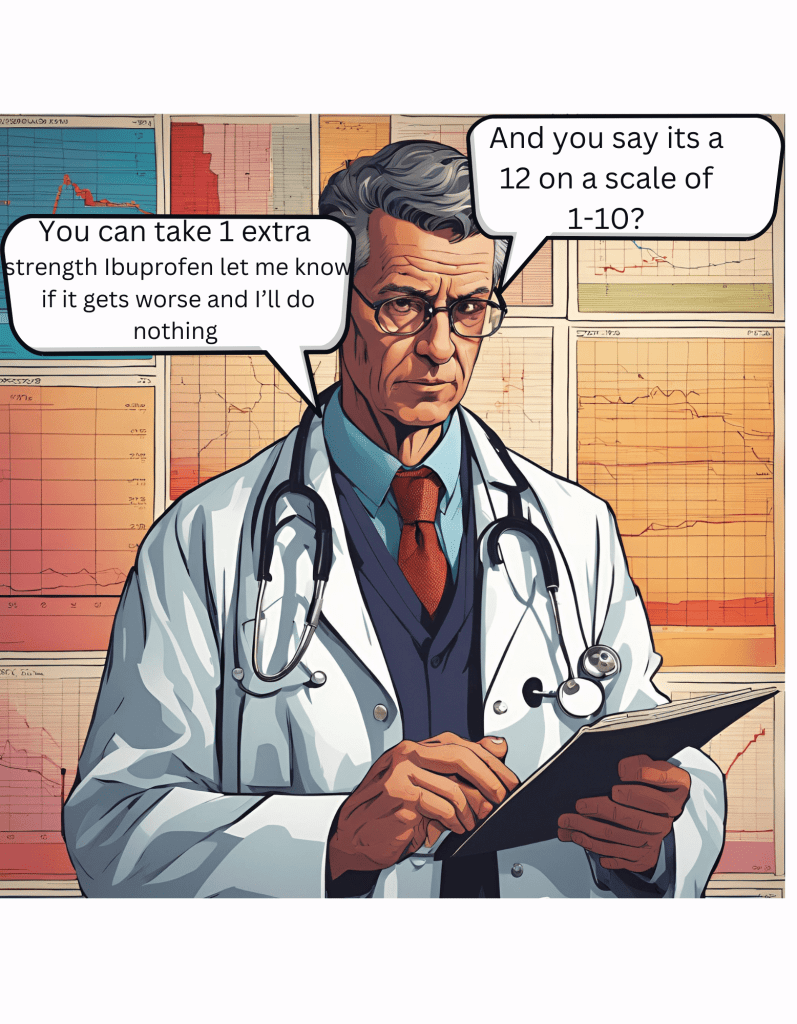
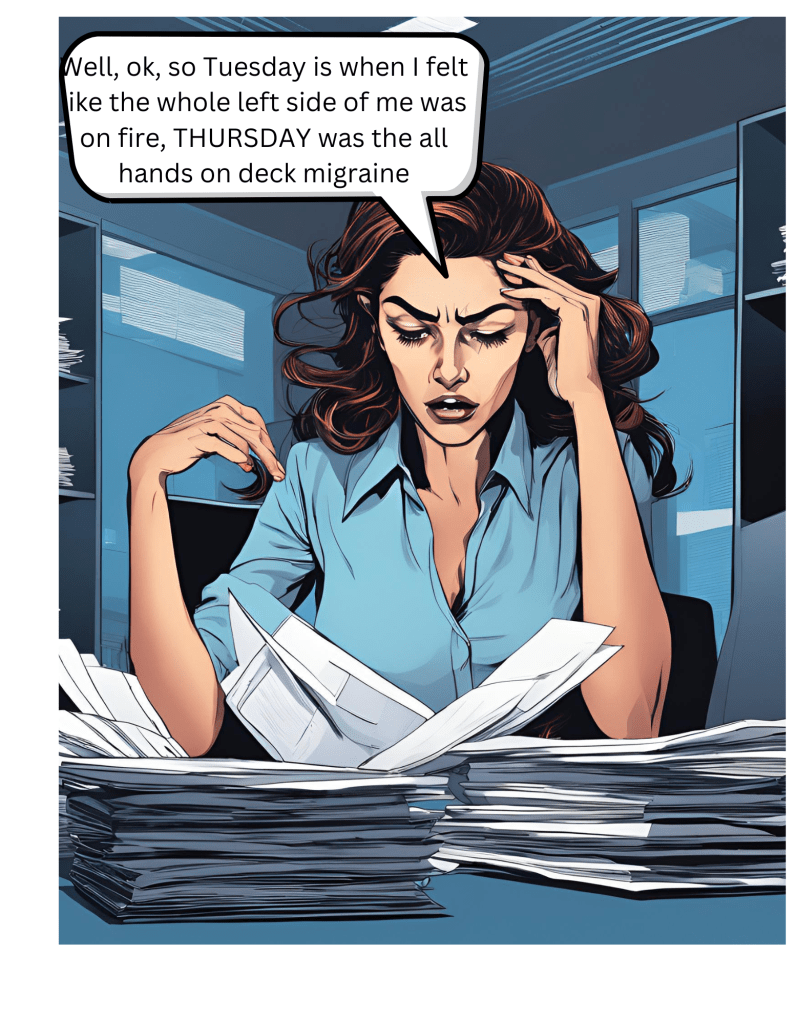
Or when my bipolar symptoms were brushed off as “just moodiness” because I happened to be having a good day during my appointment. Yes its about highs and lows but there is so much nuance and theres no way to catalogue each patient’s symptoms into a graph saying which predominant symptom is worse from day to given day, I don’t even know a metric you could rate them on, its just too much.
But perhaps the most frustrating moment was when my hip—yes, my actual joint—was screaming for help, and I was told ‘Well, fibro is painful.’ said sincerely with a hand on my shoulder (do not touch a fibro sufferer there and expect to be conveying sympathy or empathy, its like my BIGGEST tender point, which I never mentioned SPECIFICALLY so I let it go, but you wouldnt do that)
Spoiler alert: it wasn’t just fibro; it was my hip waving its white flag and demanding replacement parts.

The Bottom Line

Medical PTSD is real, and it’s time we start talking about it. For those of us living with chronic conditions and invisible illnesses, advocating for ourselves isn’t just an option—it’s a necessity. So keep pushing for answers, keep telling your story, and never let anyone make you feel like your pain isn’t valid.Because at the end of the day? We know our bodies better than anyone else ever could. And who can tell your story and explain your pain better than you? Til next time gang, take care of yourselves, and each other!

Uncategorized

In My Broken Era…

Gather ’round fellow sufferers, for a tale of bodily betrayal that’ll make you laugh, cry, or maybe both – because let’s face it, sometimes that’s all we can do when our parts start throwing in the towel! Welcome to your 40s, folks – that magical decade when your body parts start sending out retirement notices faster than you can say “midlife crisis.” It’s like they all got together for a secret meeting (probably while I was napping – thanks, fibro!) and decided, “Hey, we’ve been busting our butts for decades. Time to clock out and let the young’uns take over.”
Now, I’m no stranger to the ol’ body part eviction notice. My colorful past has led to more parts being removed than I care to count. I’m basically a walking “Lost and Found” box at this point. But just when I thought I was done playing Operation with my own body, my hip decides to join the exodus.

There I am, minding my own business (okay, probably complaining about something else hurting, cuz fibro), when BAM! My hip sends in its resignation letter. It’s done. Finito. Sayonara. My hip’s basically like, “Listen, lady, I’ve put in my hours. I’ve carried your sorry ass around for 40+ years. It’s time for me to hang up my hat and enjoy some R&R. Maybe take up golfing or start a hip-hop career. Get it? Hip-hop?”

This trusty joint of mine has been putting in some serious overtime, and let me tell you, it’s been doing it without so much as a coffee break or a “Hip of the Month” plaque. For years, it’s been the unsung hero of my body’s workforce, carrying me through my fibro flare-ups, cat-chasing adventures, and those days when getting out of bed felt like scaling Mount Everest.But somewhere between the thousandth grocery bag lift and the millionth “I swear I’m not limping, I’m just walking with style” stride, my hip started getting a bit… well, hip-ster. It began demanding things like “rest” and “proper alignment” – the nerve! It’s like it suddenly remembered it had rights or something

When it started troubling me I faced the obstacles that are sadly all too familiar to my fellow warriors, I take this new concern to the doctor, it was initially just brushed off with ‘yes fibro is chronic pain’. Then two years after that, with me consistently saying it hurt DIFFERENT than the fibro, she ordered an x-ray since it was such a weird but steadily getting worse pain and the scan showed moderate osteoarthritis. Not curable and one of those ‘just gonna hurt’ pains. Fast forward three years, finaly got another x-ray that reclassified my OA status is severe and severe enough to put me on the hip replacement list. Color me terrified.

Not every pain we have is fibro related. I understand how easy it can be to dismiss our symptoms as ‘just fibro’ or ‘just stress.’ But we know our bodies, and sometimes what feels like one condition is actually something more. Don’t let anyone invalidate your experience. If you feel something isn’t right, advocate for yourself and push for the care you deserve. Our voices matter, and we deserve to be heard when it comes to our health.

So here I am, facing down a hip replacement way too young thanks to fibro, and thanks to the car hitting me when I was walking. Because apparently, I’m an overachiever even when it comes to falling apart. But hey, look on the bright side – at least I’ll have a shiny new bionic part to add to my collection. Maybe I’ll even get a punch card: “10 surgeries and the next one’s free!” I’m probably up to that by now LOL.

The Moment of Truth: Cysts and No Hope for Fixing It

So, what happened next? Oh, just a little something called “The Moment of Truth: Cysts and No Hope for Fixing It

So, what happened next? Oh, just a little something called “subchondral cysts otherwise known as bone cysts.” Because apparently, my body wasn’t just aging gracefully—it decided to throw in some uninvited guests to make things extra fun. The cysts basically sealed the deal. My hip wasn’t just aging out; it was actively failing on me. After an x-ray, my ortho looked at me and said, “Oh honey, this is severe. There’s no saving this one.”

That was it. No shots, (and I had been putting off getting shots for the pain actually, was finally strong enough in my belief that I could do it and I had no more options since I won’t take narcotics) no pills, no more easy fixes. It was time for major surgery—a hip replacement. And honestly? It felt like a bit of a gut punch, but also a relief. I mean, I’d been working with a hip that was basically clocking out without telling me, so now it was time to send it into official retirement.”

Retirement Offer: The Hip Replacement Option

This is where things got real. I thought I could push through, maybe try some shots or other treatments, but nope, that wasn’t going to be enough. The hip sent a strong message that no amount of cortisone was going to keep it in the game any longer. And after consulting with my ortho, we discovered that my old hip wasn’t just tired—it was severe. So, we started the paperwork. A hip replacement is on the horizon.

I look forward to the end of March, that will be near the official day that my hip clocks out for good, and a shiny new joint will step in to take its place.
So, What’s Next?

Aging might be inevitable, but a hip replacement can be a total game-changer. And while I’m not thrilled about the process (did I mention I almost passed out twice during the initial consult?), I’m ready to get that shiny new hip and hopefully say goodbye to some of this pain.

Here’s the thing: The body’s not like it used to be in your 20s and 30s when you could run full speed and wake up feeling like you just slept in a cloud. Nope, my body is now sending in its retirement applications early, and I’m here for it—with a little humor and a lot of prep work, of course.

In the upcoming posts, I’ll share more details about what the process actually looks like: from the pre-op checkups to the (probably highly entertaining) recovery phase. So, if you’re someone who’s looking down the barrel of your own hip replacement, or you just want to see how this unfolds (because who doesn’t love a good recovery journey?), stick around! Maybe my hip will send me a post card lol. Til next time gang, take care of yourselves. And each other.