Uncategorized

Weather or Not, Fibro Hurts: Barometric Whiplash and Summer Survival Tips

Fibro Doesn’t Care About the Season

You’d think pain would be more predictable. Cold = bad, right? Well yes… and no. Because in summer, when the air pressure plays trampoline, humidity tries to choke you out, and thunderstorms sneak up like mood-swing ninjas, your fibromyalgia goes, “Yay! A chance to be more dramatic!”

Your body doesn’t just hurt — it panics, it protests, and it often completely forgets how to function like a semi-sentient adult human.

Why Weather Screws Us Up (Even in Summer)

  1. Barometric Pressure is a Jerk.
    When pressure drops fast (hello, pre-storm), tissues expand. Nerves already oversensitive in fibro-land get even more irritable. It’s like your whole body got a weather alert and decided to throw a tantrum. The research is mixed—effects vary, and for some folks may be subtle. But that doesn’t make your flare-up any less real.
  2. Humidity and Heat Mess with Everything.
    • Heat dilates blood vessels → more fatigue, dizziness, swelling.
    • Humidity slows evaporation of sweat → overheating faster.
    • Add in pain? You’re basically a melted candle with opinions.
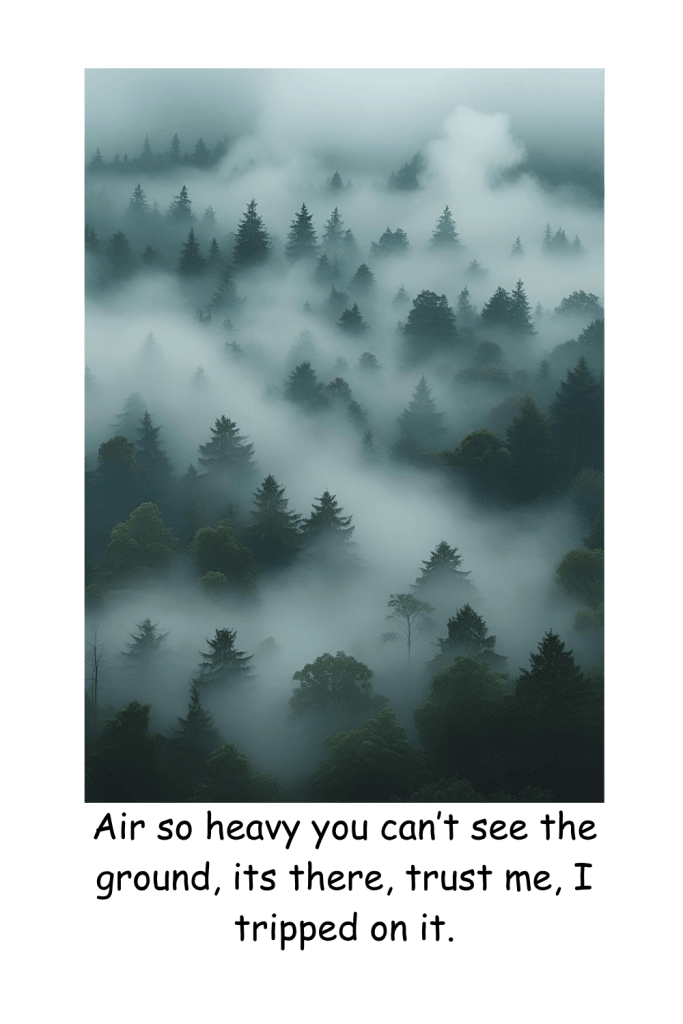
  3. Storms Make the Air Feel Heavy.
    Your head hurts, your joints ache, and standing up feels like moving through soup. The pressure swings during storms are sneaky saboteurs.
  4. Your Nervous System is Already Confused.
    Fibromyalgia is a central sensitization disorder. Your brain and nerves are like over-caffeinated chihuahuas — already jumpy, now add atmospheric chaos? It’s not great, Bob.

What Can You Actually Do About It?

💧1. Hydrate Like It’s Your Job.

Barometric shifts and heat can mess with circulation and fluid retention. Water helps regulate your internal temp and reduces dizziness and fatigue.

❄️2. Cooling Tools Are Your Friends.

  • Cooling towels
  • Ice packs on pulse points
  • Fans in every room
  • Spray bottle with peppermint water (YES, seriously)

🧘‍♀️3. Stretch and Move, Gently.

Movement keeps things from stiffening up worse, but go slow. A few light yoga poses, shoulder rolls, or just pacing your hallway counts. You’re not prepping for the Olympics — you’re surviving a weather system.

🛋️4. Pace Like a Pro.

Your energy is a budget. Don’t overspend it just because the sun’s out. Schedule breaks. Cancel plans. Use that “no” like SPF for your soul.

🌀5. Watch the Weather. Plan Ahead.

There are apps just for barometric pressure (like Migraine Buddy or WeatherX). When you see a dip coming, prep your nest: meds ready, chores done ahead, comfy clothes out.

You Are Not Broken — You Are Barometrically Betrayed

So no, it’s not “just in your head.” The weather does affect your fibro. You are not imagining it. And just because you don’t see storm clouds doesn’t mean your body isn’t screaming “WE’RE UNDER ATTACK!”

But you’re learning, adjusting, and finding ways to soften the crash. That’s strength — not weakness. Til next time guys, take care of yourselves, and each other.

Uncategorized

🧵 The Art of Distracting Myself: Crafting Through Chronic Pain

Living with chronic conditions like fibromyalgia, ADHD, and bipolar disorder means navigating a daily landscape filled with unpredictability and discomfort. Some days, it’s the bone-deep ache that slows me down; other days, it’s the whirlwind of mental fog, impulsivity, or emotional crashes that make the hours feel heavier than they should.

Over time, I’ve discovered something powerful: crafting isn’t just something I enjoy—it’s something I need. Whether I’m swirling pigment into resin or layering textures in a tray mold, I’m not just passing time. I’m reclaiming it.


🎨 Crafting as a Therapeutic Distraction

When my pain flares or my brain decides it wants to spiral, I’ve learned to grab a tool—sometimes a glue gun, sometimes my 3D printer software—and create instead of collapse. Focusing on a tactile task redirects my mind and offers relief, even if temporary. And sometimes that temporary is exactly enough to get me through the day.

Today I mowed. Should I have? Likely not, I was weed eatering (I have no idea what to call it, using the weed eater sounds weird, like use it for what lol, I was using in for its intended purpose LOL) I was around the base of our biggest ‘problem’ tree, I tripped over a root and went tumbling (I was on an incline) but don’t worry, I didnt hurt my hip I landed face first LOL. I got up but knew I was on limited time before the pain made me get down and stay down for the day, so I immediately went in an showered so I could go make art which I did all afternoon. It really didnt feel like I had any pain then after I did some designs I stood up to get something and THERE IT IS! My pain let itself be known. In fact it started screaming at me, my entire body aches.

This isn’t just anecdotal. A study from the University of Colorado found that mental distractions actually inhibit pain at the earliest stages of processing. Basically, when you’re busy crafting or designing something fun or beautiful, your brain says “brb” to the pain (source).


🧠 The Neuroscience of Distracting Pain

Pain is weird. It’s not just in your body—it’s in your brain too. And your brain can be tricked (in the nicest way). Activities that take up cognitive load (like learning a new resin technique or tweaking text in Tinkercad) can literally reduce your brain’s ability to process pain.

There’s even evidence that creative distraction helps people who tend to catastrophize pain—that is, folks whose brains go “this is the worst pain ever and I will never survive this” before breakfast. (Relatable? Same.) (source)


🧺 Turning Pain Into Purpose

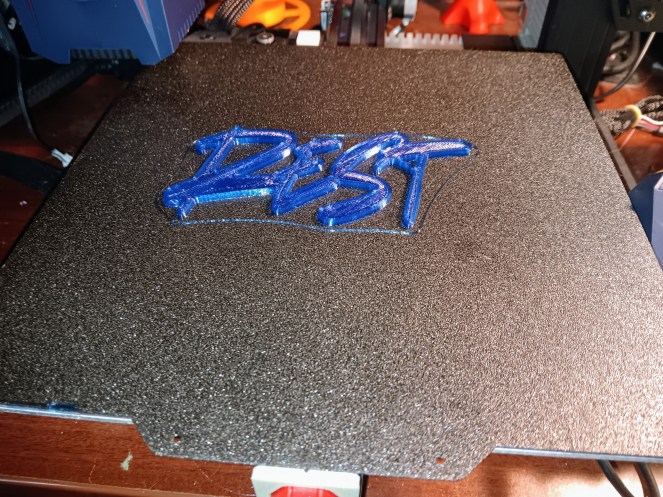
I don’t just make things to distract myself—I make things with meaning. Every “Bad Day Basket,” every resin trinket tray, every cheeky 3D-printed phrase like “feel your feelings” or “meds, magic & mindset”—they all come from lived experience.

Helping people has always been a passion of mine, I’ve made up baskets and boxes from coupon shopping, theres nothing like the feeling of doing something of consequence for someone else. Theres an episode of Friends where Phoebe wants to do something selfless, and ever time she does, Joey finds a way it benefited her, concluding that since when you do good for others, you feel happy and proud that you were able to do that, therefore nothing is entirely selfish. Like if you’ve ever vacuumed a new rug, you know the lined pattern you get after for a job well done? Its like that only times a whole bunch more.

These aren’t just products. They’re part of a bigger story—mine, and maybe yours too.


🌟 Creativity as Self-Care (Not Performance)

It’s not about perfection. This isn’t art school. This is about peace. About having something in your hands that makes you feel in control again. About setting your mind gently in another direction for a little while.

Let yourself play.
Let yourself suck at it.
Let yourself create something beautiful—or beautifully messy.


💬 Final Thoughts

Chronic illness will take what it can. Crafting is how I take a little bit back. It’s okay if it’s imperfect. It’s okay if it’s just for you. The act of creating is the win.

If you’re on your own journey through pain or mental health struggles, I hope you’ll try creating something too. And if you don’t know where to start… well, I’ve got some trays and kits with your name on them. Til next time gang, take care of yourselves, and each other!

Uncategorized

When the Doctor’s Office Becomes a Battlefield: Understanding Medical PTSD

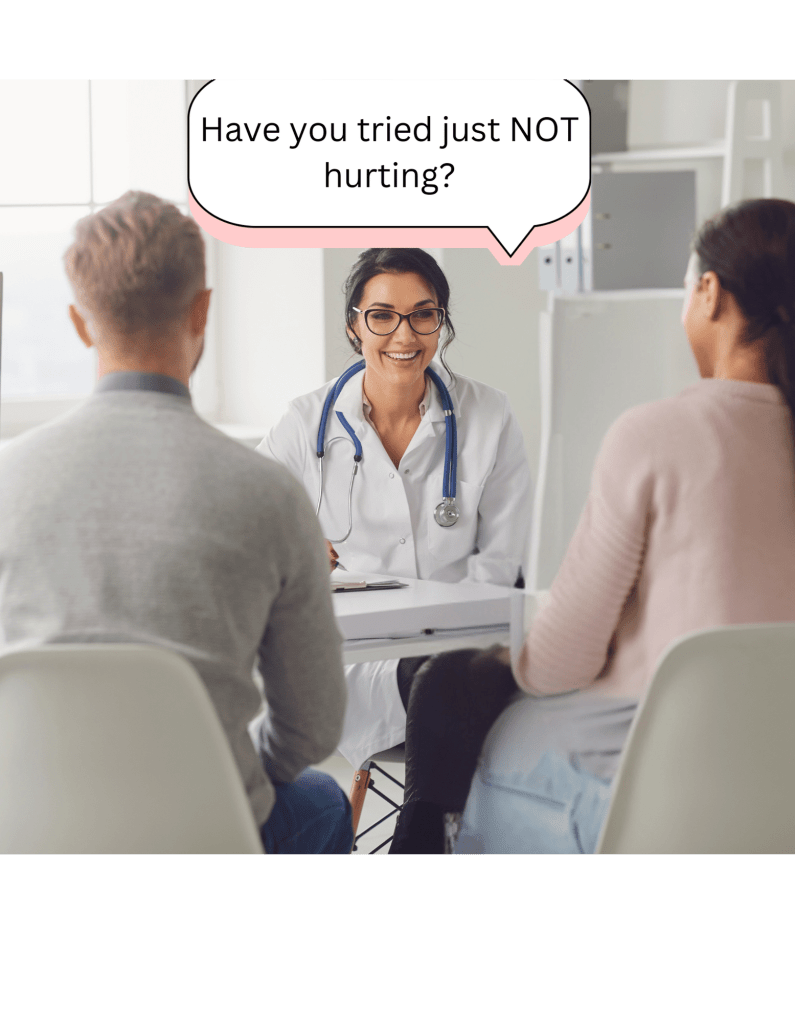
 Ok gang, let’s get real about something that doesn’t get nearly enough attention: medical PTSD. If you’ve ever left a doctor’s office feeling dismissed, doubted, or downright defeated, you’re not alone. For those of us with chronic illnesses and invisible conditions like fibromyalgia, bipolar disorder, autism, or ADHD, the healthcare system can feel less like a safety net and more like a minefield.

What Is Medical PTSD?

Medical PTSD is what happens when repeated negative experiences with healthcare providers leave you emotionally scarred. It’s not just about a bad appointment here or there—it’s about the trauma that builds up over time when your pain or symptoms are brushed off as “nothing” or “all in your head.” Spoiler alert: it’s not in your head.
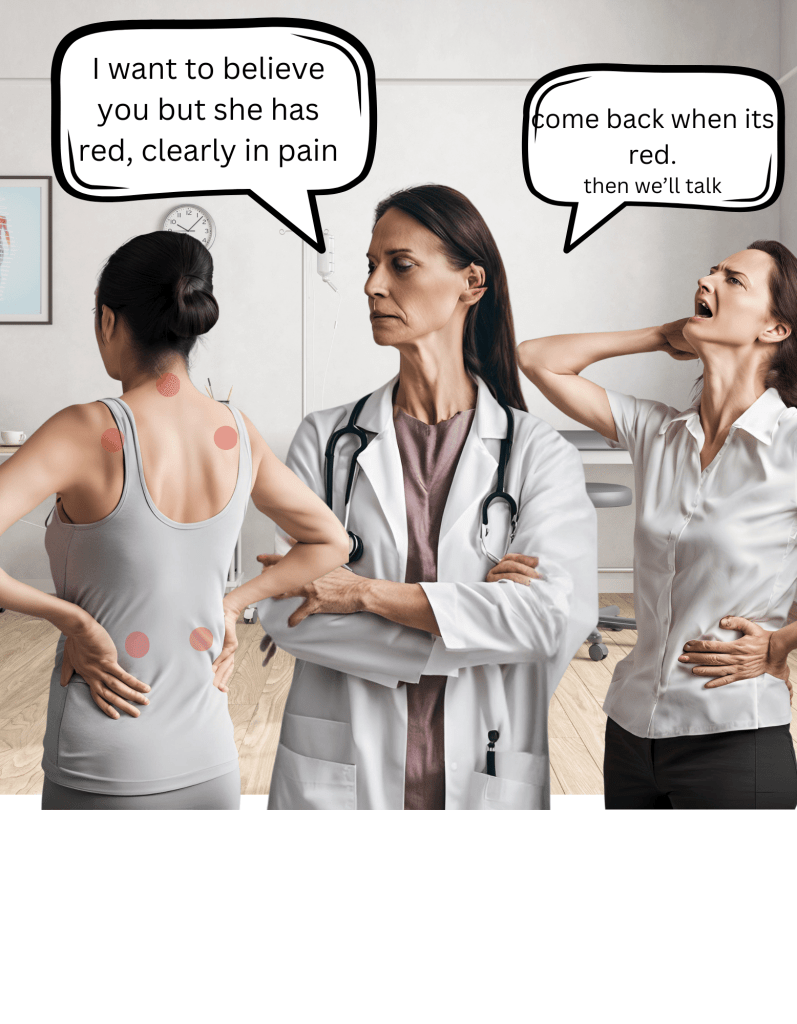
For many of us with invisible illnesses, this is an all-too-familiar story. Bloodwork comes back fine? Must be nothing. Physical exam looks normal? You’re probably exaggerating. And suddenly, you’re left questioning your own reality because someone with a stethoscope couldn’t see what you’re feeling every single day. The number of times I’ve left a doctors appointment shaking my head saying ‘well, I mean if it WAS something wouldn’t they see it?’ No, thats not true, some stuff is tricky and it hides behind stuff. Some times you have to poke around at stuff until you figure it out, that doesnt mean things arent there to find.

Truth Bomb: Invisible Doesn’t Mean Imaginary

Here’s the thing: just because something doesn’t show up on a test doesn’t mean it isn’t real. Fibromyalgia doesn’t light up on an X-ray. Bipolar disorder doesn’t leave a trail in your bloodwork. Autism and ADHD don’t come with flashing neon signs saying, “Hey, I’m here!” But that doesn’t make them any less valid—or any less debilitating.
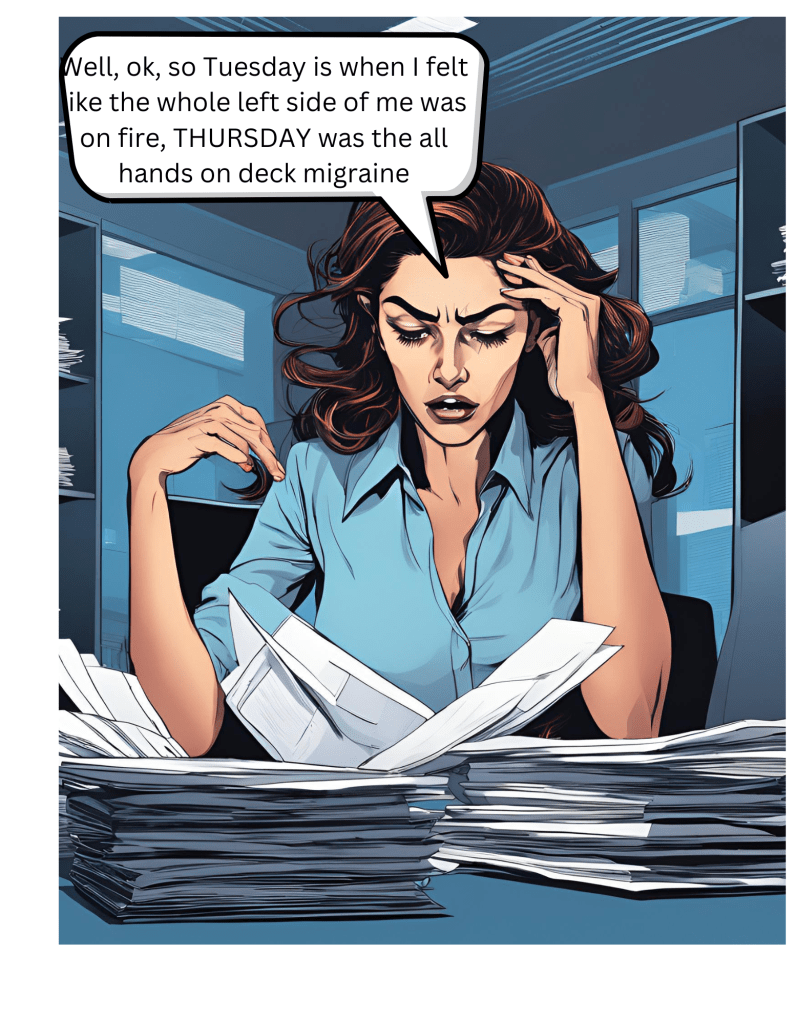
I can’t tell you how many times I’ve walked into an appointment armed with symptom logs, research, and sheer determination, only to be met with raised eyebrows and the dreaded “It’s probably just stress.” Or, ‘well you DO have Fibro’ Oh really? Because last time I checked, Fibromyalgia didn’t cause my hip to stage a full-blown mutiny (looking at you, early retirement hip).

The Emotional Toll of Being Dismissed

Let me paint you a picture: You’re already dealing with chronic pain, fatigue, mood swings—basically the greatest hits of invisible illness. Then you muster up the courage to seek help (because let’s be honest, even making the appointment feels like climbing Everest). You sit there, vulnerable and hopeful, only to be told your symptoms don’t add up or aren’t serious enough to warrant concern.

That kind of dismissal doesn’t just sting—it leaves scars. Over time, it can make you hesitant to seek care at all. Why bother if no one’s going to listen? But here’s the kicker: avoiding care can lead to worsening symptoms and even more complex health issues down the line. It’s a vicious cycle that needs to stop.

Breaking the Cycle: Advocacy and Awareness

So how do we fix this mess? For starters:

Trust Your Gut: If something feels wrong in your body, it probably is. Don’t let anyone convince you otherwise.

Document Everything: Keep a symptom diary so you have concrete evidence to back up your concerns.

Bring Backup: Take a trusted friend or family member to appointments—they can help advocate for you when you’re feeling overwhelmed.

Seek Second Opinions: If one doctor dismisses you, find another who will listen. Your health is worth fighting for. Though check with your doctors office or hospital system on policies, my doctor of 7 years dropped me because I got one.

And let’s not forget the role of healthcare providers in this equation. Doctors need better training on invisible illnesses—period. They need to understand that just because they can’t see it doesn’t mean it isn’t there. A little empathy goes a long way.

My Own Battle Scars

I’ve got plenty of stories I could share about being dismissed by doctors (and believe me, I will). Like the time I was told my fibro pain was just “overexertion” when I hadn’t done more than shuffle from my bed to the couch all week.
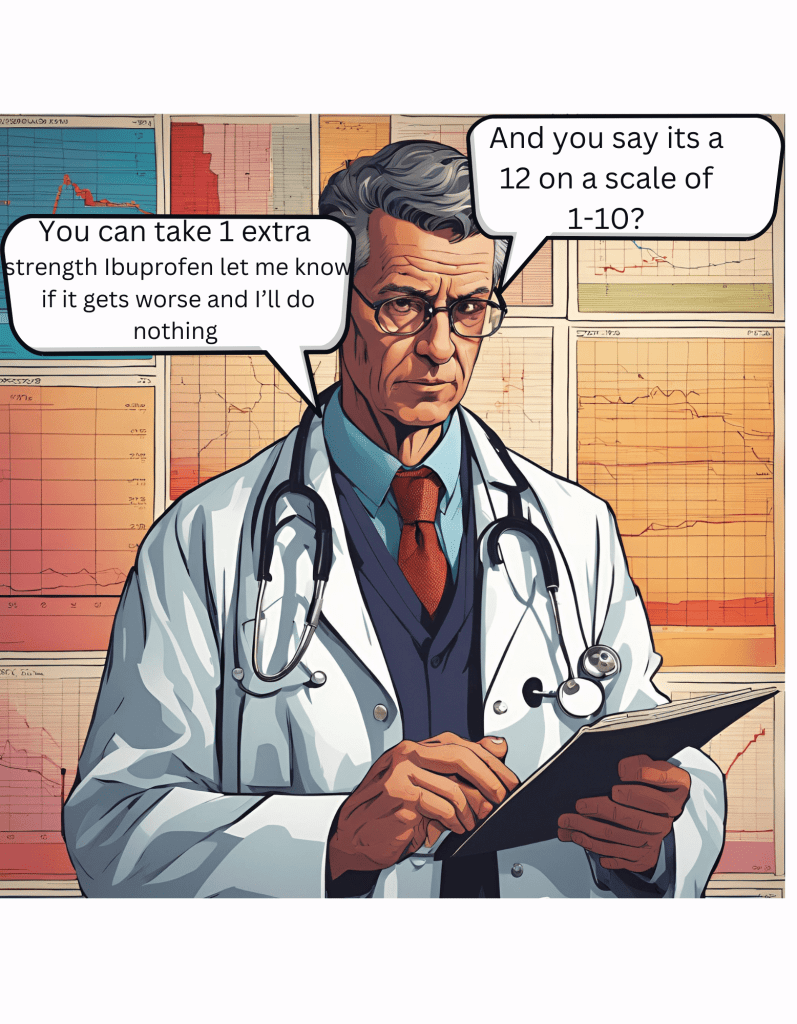
Or when my bipolar symptoms were brushed off as “just moodiness” because I happened to be having a good day during my appointment. Yes its about highs and lows but there is so much nuance and theres no way to catalogue each patient’s symptoms into a graph saying which predominant symptom is worse from day to given day, I don’t even know a metric you could rate them on, its just too much.
But perhaps the most frustrating moment was when my hip—yes, my actual joint—was screaming for help, and I was told ‘Well, fibro is painful.’ said sincerely with a hand on my shoulder (do not touch a fibro sufferer there and expect to be conveying sympathy or empathy, its like my BIGGEST tender point, which I never mentioned SPECIFICALLY so I let it go, but you wouldnt do that)
Spoiler alert: it wasn’t just fibro; it was my hip waving its white flag and demanding replacement parts.

The Bottom Line

Medical PTSD is real, and it’s time we start talking about it. For those of us living with chronic conditions and invisible illnesses, advocating for ourselves isn’t just an option—it’s a necessity. So keep pushing for answers, keep telling your story, and never let anyone make you feel like your pain isn’t valid.Because at the end of the day? We know our bodies better than anyone else ever could. And who can tell your story and explain your pain better than you? Til next time gang, take care of yourselves, and each other!

Uncategorized

In My Broken Era…

Gather ’round fellow sufferers, for a tale of bodily betrayal that’ll make you laugh, cry, or maybe both – because let’s face it, sometimes that’s all we can do when our parts start throwing in the towel! Welcome to your 40s, folks – that magical decade when your body parts start sending out retirement notices faster than you can say “midlife crisis.” It’s like they all got together for a secret meeting (probably while I was napping – thanks, fibro!) and decided, “Hey, we’ve been busting our butts for decades. Time to clock out and let the young’uns take over.”
Now, I’m no stranger to the ol’ body part eviction notice. My colorful past has led to more parts being removed than I care to count. I’m basically a walking “Lost and Found” box at this point. But just when I thought I was done playing Operation with my own body, my hip decides to join the exodus.

There I am, minding my own business (okay, probably complaining about something else hurting, cuz fibro), when BAM! My hip sends in its resignation letter. It’s done. Finito. Sayonara. My hip’s basically like, “Listen, lady, I’ve put in my hours. I’ve carried your sorry ass around for 40+ years. It’s time for me to hang up my hat and enjoy some R&R. Maybe take up golfing or start a hip-hop career. Get it? Hip-hop?”

This trusty joint of mine has been putting in some serious overtime, and let me tell you, it’s been doing it without so much as a coffee break or a “Hip of the Month” plaque. For years, it’s been the unsung hero of my body’s workforce, carrying me through my fibro flare-ups, cat-chasing adventures, and those days when getting out of bed felt like scaling Mount Everest.But somewhere between the thousandth grocery bag lift and the millionth “I swear I’m not limping, I’m just walking with style” stride, my hip started getting a bit… well, hip-ster. It began demanding things like “rest” and “proper alignment” – the nerve! It’s like it suddenly remembered it had rights or something

When it started troubling me I faced the obstacles that are sadly all too familiar to my fellow warriors, I take this new concern to the doctor, it was initially just brushed off with ‘yes fibro is chronic pain’. Then two years after that, with me consistently saying it hurt DIFFERENT than the fibro, she ordered an x-ray since it was such a weird but steadily getting worse pain and the scan showed moderate osteoarthritis. Not curable and one of those ‘just gonna hurt’ pains. Fast forward three years, finaly got another x-ray that reclassified my OA status is severe and severe enough to put me on the hip replacement list. Color me terrified.

Not every pain we have is fibro related. I understand how easy it can be to dismiss our symptoms as ‘just fibro’ or ‘just stress.’ But we know our bodies, and sometimes what feels like one condition is actually something more. Don’t let anyone invalidate your experience. If you feel something isn’t right, advocate for yourself and push for the care you deserve. Our voices matter, and we deserve to be heard when it comes to our health.

So here I am, facing down a hip replacement way too young thanks to fibro, and thanks to the car hitting me when I was walking. Because apparently, I’m an overachiever even when it comes to falling apart. But hey, look on the bright side – at least I’ll have a shiny new bionic part to add to my collection. Maybe I’ll even get a punch card: “10 surgeries and the next one’s free!” I’m probably up to that by now LOL.

The Moment of Truth: Cysts and No Hope for Fixing It

So, what happened next? Oh, just a little something called “The Moment of Truth: Cysts and No Hope for Fixing It

So, what happened next? Oh, just a little something called “subchondral cysts otherwise known as bone cysts.” Because apparently, my body wasn’t just aging gracefully—it decided to throw in some uninvited guests to make things extra fun. The cysts basically sealed the deal. My hip wasn’t just aging out; it was actively failing on me. After an x-ray, my ortho looked at me and said, “Oh honey, this is severe. There’s no saving this one.”

That was it. No shots, (and I had been putting off getting shots for the pain actually, was finally strong enough in my belief that I could do it and I had no more options since I won’t take narcotics) no pills, no more easy fixes. It was time for major surgery—a hip replacement. And honestly? It felt like a bit of a gut punch, but also a relief. I mean, I’d been working with a hip that was basically clocking out without telling me, so now it was time to send it into official retirement.”

Retirement Offer: The Hip Replacement Option

This is where things got real. I thought I could push through, maybe try some shots or other treatments, but nope, that wasn’t going to be enough. The hip sent a strong message that no amount of cortisone was going to keep it in the game any longer. And after consulting with my ortho, we discovered that my old hip wasn’t just tired—it was severe. So, we started the paperwork. A hip replacement is on the horizon.

I look forward to the end of March, that will be near the official day that my hip clocks out for good, and a shiny new joint will step in to take its place.
So, What’s Next?

Aging might be inevitable, but a hip replacement can be a total game-changer. And while I’m not thrilled about the process (did I mention I almost passed out twice during the initial consult?), I’m ready to get that shiny new hip and hopefully say goodbye to some of this pain.

Here’s the thing: The body’s not like it used to be in your 20s and 30s when you could run full speed and wake up feeling like you just slept in a cloud. Nope, my body is now sending in its retirement applications early, and I’m here for it—with a little humor and a lot of prep work, of course.

In the upcoming posts, I’ll share more details about what the process actually looks like: from the pre-op checkups to the (probably highly entertaining) recovery phase. So, if you’re someone who’s looking down the barrel of your own hip replacement, or you just want to see how this unfolds (because who doesn’t love a good recovery journey?), stick around! Maybe my hip will send me a post card lol. Til next time gang, take care of yourselves. And each other.

Uncategorized

Fibromy-thbusters? Mythbusters Fibro Edition

Top Five Most Common Myths about Fibromyalgia

1. Misconception: Fibromyalgia is just “in your head” or not real.
Truth: Fibromyalgia is a real, chronic medical condition that affects the central nervous system. It’s characterized by widespread pain, fatigue, and other symptoms that are definitely not imagined. It’s scientifically recognized and impacts both physical and emotional well-being. Science backs us up on this one, folks.

I can sometimes understand why people might not get it—if I’m having a good day and I’m active, I probably look like your average Midwestern mom. I mean, maybe I should just get an “F” tatted on my forehead? I’ve thought about it. The number of doctors who’ve been dismissive of my very real condition is almost as high as the number of people who are shocked when they hear about my bipolar diagnosis. Clearly, they haven’t seen the rapid mood swings or heard me say, “But you’re sad?” to which I’ll reply, “Yes, amazingly, I can be both sad and manic at the same time, and trust me, it’s a million times worse.”

But I digress. Let’s keep up here—it’s 2025, and fibromyalgia has been a diagnosable illness since 1976. Before that, it was known as fibrositis in 1904, and even earlier, it was referred to as rheumatism. I mention this because, although no one knows exactly what causes it, I’ve been diving into my genealogy—yes, I’m a bit of a nerd—and checking birth and death records to compare what I know versus what I think I know. In the process, I’ve noticed that at least six of my direct ancestors had some form of fibro or rheumatism.

Do I think fibromyalgia will kill me? No—honestly, I have more pressing health concerns to worry about—but it’s been around for a long time. If you come across a medical professional who doesn’t think fibro is real, get a second opinion.
And just to clarify: I’m talking about someone who doesn’t believe fibro even exists—not someone who doubts it’s what you’re suffering from. I’ll say it again: a second opinion never hurts… though, in my case, I had my doctor of 7 years drop me for getting one. So stay informed, don’t get discouraged, and keep pushing until you get the answers you deserve.

2. Misconception: Fibromyalgia is the same for everyone.

Truth : Fibromyalgia is like a box of chocolates, you never know what you’re gonna get. Sure, we’ve all got the greatest hits – pain that feels like we’ve gone ten rounds with a heavyweight champ and fatigue that makes sloths look energetic. But beyond that? It’s a grab bag of fun surprises.
Some of us are walking zombies thanks to sleep issues, while others are living in a fog so thick you’d think we’re extras in a horror movie. And don’t even get me started on the triggers. What sets off my fibro might not even tickle yours.
This is why docs often treat fibro like the ‘rule it out’ illness. They run every test under the sun, and when everything comes back squeaky clean, they throw up their hands and say, “Must be fibro!” I wonder how many times that phrase was said by a doctor to a person who died from something that should have been caught.
Wouldn’t it be peachy if we could all agree on what fibro looks like? Maybe then we’d have a magic pill or a cure. Hell, I’d settle for a flashing neon sign that says, “Fibro flare incoming!” But nope, that’s not how this beast rolls.

3. Misconception: People with fibromyalgia are just “lazy.”

Truth: People with fibromyalgia often experience extreme fatigue that is not relieved by rest. This can make daily activities feel overwhelming and exhausting, but it’s not a matter of laziness—it’s a physical condition that affects the body’s ability to generate energy and recover.
Picture this: you’ve just “slept” for 10 hours, but you feel like you’ve been awake for days, You drag yourself out of bed, feeling like you’re moving through molasses, and even the simple act of making a cup of coffee feels like you’re scaling Mount Everest. That’s fibro fatigue, folks.

This isn’t about being lazy or needing an extra cup of coffee. It’s your body throwing a full-on rebellion, refusing to generate the energy you need to function like a normal person. And let me tell you, it’s beyond frustrating.

The kicker? This fatigue doesn’t play fair. It doesn’t care if you’ve rested, slept for 12 hours, or spent the day binge-watching your favorite show. It’s always lurking, ready to sucker-punch you when you least expect it. And no matter how mad I get at myself, once I’m in a funk its necessities only and they tend to relate to immediate family, so the things I don’t get done pile up until they become daunting to the point that I don’t know where to start so I just DON’T start. Executive dysfunction at its best folks.

So next time you see someone with fibro canceling plans or looking like they’ve been hit by a truck, remember: we’re not being flaky or dramatic. We’re just trying to navigate life with a body that’s forgotten how to recharge its batteries. It’s not laziness—it’s our reality, and we’re doing our best to push through it every single day.

4. Misconception: Fibromyalgia only affects older people.
Fibromyalgia is also not limited to adulthood—children and adolescents can be diagnosed with it, though this is relatively rare. According to the American College of Rheumatology, fibromyalgia in children and teens often presents differently than it does in adults, with symptoms like widespread pain, fatigue, headaches, and difficulty concentrating (often referred to as “fibro fog”). The challenges with diagnosing fibro in younger individuals are compounded by the fact that many of these symptoms overlap with those of other conditions, making it harder to pinpoint fibromyalgia as the cause.

In younger patients, symptoms may be mistaken for growing pains or other childhood illnesses, which can delay a correct diagnosis. The National Fibromyalgia Association states that fibromyalgia in children may be underdiagnosed, partly because doctors may attribute symptoms like tiredness or pain to more common, non-chronic conditions. Additionally, children may struggle to articulate how they’re feeling, which can make diagnosis even more difficult.

Fibromyalgia can occur at any stage of life, and its symptoms vary widely. While some people may have mild discomfort, others experience debilitating pain and fatigue that severely impacts their daily lives. As the condition often fluctuates in severity, it can be hard to predict its long-term course.

It’s important to note that the cause of fibromyalgia is still not fully understood, though genetics, infections, physical trauma, and emotional stress are thought to contribute to its development.

5. Misconception: There’s no treatment for fibromyalgia.

You’ve probably heard there’s no treatment for this beast, right? Well, hold onto your hats, because that’s about as true as saying chocolate isn’t a food group.
Sure, we don’t have a magic wand to make fibro disappear (believe me, I’ve looked). But we’ve got a whole arsenal of tricks to keep this monster at bay. It’s like playing whack-a-mole with your symptoms, but hey, at least we’re not sitting ducks!
First up, we’ve got meds. From your garden variety pain killers to fancy-pants antidepressants and anti-seizure meds, there’s a buffet of options. These bad boys can help tame the pain and maybe even let you catch some Z’s without feeling like you’ve been hit by a truck.
Then there’s physical therapy and exercise. I know, I know, the thought of moving when everything hurts is about as appealing as a root canal. But trust me, a little moderate exercise can work wonders. It’s like giving your body a tune-up.


And let’s not forget about the mind game. Cognitive-behavioral therapy isn’t just for when you’re feeling blue. It’s like a personal trainer for your brain, helping you outsmart the pain and stress.
Now, for the lifestyle changes. Getting enough rest, eating right, and practicing good sleep hygiene might sound like advice your grandma would give, but don’t knock it ’til you’ve tried it. It’s amazing what a difference these can make.
For those feeling a bit adventurous, there’s always acupuncture and massage. It’s like a spa day, but with actual health benefits. Who knew getting poked with needles could feel so good?
The key here, my fellow fibro warriors, is to mix and match. It’s like creating your own personal fibro-fighting cocktail. What works for me might not work for you, and that’s okay. We’re all unique snowflakes in this blizzard of pain.So don’t let anyone tell you there’s no hope. We might not have a cure (yet), but we’ve got options. And in this fibro fight, options are our secret weapon. Now, go forth and conquer my friends, Until next time take care of yourselves, and each other.

Uncategorized

… And Tries To Shake You Lose

Can I tell you guys something just between us? I hate my brain. Like so much sometimes. When its not sending out signals that make me move all awkward and weird, its trying to convince me all coincidences or times when I may not get the clearest signals that everyone hates me and they all want me to drop dead. theres no middle ground. Convincing my mind and heart that I’m not as sad and lonely as they often believe feels like a daily negotiation. I remind myself that emotions can be deceptive, twisting reality into a shadowy landscape that weaves through the tapestry of my dreams, where I feel isolated and overwhelmed. In those moments, when I recognize the feelings creeping in, I consciously shift my focus to the small joys around me—the warmth of sunlight streaming through the window, the comforting purr of my cat (our old man cat has the cutest purr, I swear if I need surgery just give me him and I’m out like a light.), or the laughter of friends, even if it’s just through a screen. I practice gratitude, acknowledging the connections I do have, however distant they may seem. By challenging the narratives of sadness and loneliness with evidence of love and support in my life, I slowly but surely create a more balanced perspective. It’s a journey of self-compassion, where I learn to embrace my feelings without letting them define me, reminding myself that even in solitude, I am never truly alone. In my research, I learned that of chronic pain patients, 30%-50% also have anxiety. I won’t pretend to understand the science of it but the studies link chronic pain and anxiety and some show some heightened activity in the central nervous system, you know, where it all goes down lol. Chronic pain also has been shown to lead to altered brain chemistry. Of course that has a negative impact our ability to get shit done when 75% of our brain is trying to calm the anxiety that comes and knock us on our ass leaving us unable to handle MORE shit… its the endless cycle I’ve discussed but I know if your reading this you are already quite familiar. Here are some, not all but some of the tricks I use to try and get a handle on all the negative self talk.

  1. Practice self-compassion: Treat yourself with the same kindness you’d offer a friend. Acknowledge that living with chronic illness is challenging, and it’s okay to have difficult days. When the spoons are in abundance sit down with a friend or loved one and talk about what you do when your anxiety gnaws at you, often times just verbalizing our worries helps us come up with solutions.
  2. Challenge negative self-talk: When you hear those “not good enough” thoughts, question their validity. Replace them with more balanced, realistic statements about your worth and abilities. Be honest, we all have strengths and weaknesses, always play to your strengths, and commit to working on the areas that arent so solid and strong.

  3. Seek support from understanding individuals: Surround yourself with people who validate your experiences. Consider joining support groups for those with chronic illnesses to connect with others who truly get it. My journey started in an online support group, and I don’t know if I’d have made it through everything that has tested me without that support.
  4. Engage in mindfulness techniques: Use meditation, deep breathing, or journaling to stay grounded in the present moment. This can help manage anxiety and negative thought patterns. I use journalling for meds and diet and all that fun stuff so I can spot pattern disruptors.
  5. Prioritize self-care activities: Make time for activities that bring you joy and relaxation, even if they’re small. This could be reading, taking a bath, or listening to music – whatever helps you unwind and recharge

Remember, your worth isn’t determined by others’ opinions or your illness. Focus on what you can control and celebrate your resilience in facing daily challenges. Til next time gang, you’re not alone, reach out, take care of yourselves, and each other

Uncategorized

The Worst Party I’ve Ever Crashed

Hey guys today lets talk about: When Chronic Pain, Depression, and Anxiety Decide to Have a Fucking Party.” It’s like the worst reunion ever, and guess what? You’re the unwilling host.

Let’s start with the guest of honor: Chronic Pain. This persistent bastard doesn’t know when to leave the party. It’s like that drunk person who keeps telling the same story over and over, except instead of boring you, it’s literally torturing you. Studies show that about 50 million U.S. adults suffer from chronic pain in some form or fashion. That’s a lot of people dealing with this uninvited guest.

Its been said that fibro is like muscle cramps. I don’t even acknowledge that uninformed opinion.There are days that I can mow the yard (I’m the lesser emergent heart concerns in the home) And there are days that I’m in paralyzing pain, the kind of pain that has you locked into one pose for hours on end just because it hurts a tensy bit less and right now you’ll take any relief, what ever strength form or shape it arrives in. I understand how it could appear to others that I’m a normal person with normal persons aches and pains. I am 100% positive that is a good deal of my pain, but I don’t think I begin at the same point as others. Its not that I’m special or different other than being a bit more sensitive, its a condition I have and currently just have to live with as best I can. Thats all any of us can do, even on the days all we do is get up to pee and hydrate.


Enter Depression, the party pooper that turns everything into a black hole of misery. It’s not content with just making you feel like shit; it actually amplifies your pain. Research suggests that people with chronic pain are four times more likely to have depression or anxiety than those who are pain-free


It’s like Depression and Chronic Pain are in cahoots, tag-teaming your ass into oblivion. The cycle just repeats, you hurt so you can’t be active even though you have things you want to do. What happens when we want to do something badly? We tense up, normal human reaction, but that just hurts worse so you don’t get up and you get mad at yourself for not getting up to do ANYTHING, and when you start negative self talking thats when your system shuts down, you go on autopilot eating sleeping and breathing and SOMETIMES when the water isnt too hard you scrape yourself up for a shower. Even if you KNOW once you are out you will feel soft warm and clean.

And just when you think it can’t get any worse, Anxiety crashes the party. This jittery mess of a guest is always convinced the worst is about to happen. It’s like having a paranoid squirrel on cocaine running around in your brain. Anxiety disorders affect about 20% of adults with chronic pain (I’d actually expected much more than that) turning your mind into a non-stop horror movie of “what-ifs” and worst-case scenarios. Usually these leave me feeling fearful of my future and everyone around me honestly. And I HATE IT! If I could change one thing, like after all of the other wishes for my family and friends I’d wish to NOT suffer from everything but if we are talking about the first thing I’d get rid of, its actual the Anxiety, the fearfulness that makes me hate myself and keeps me frozen, or at best on autopilot. I’d sell an organ or answer the trolls riddles three if it meant not actively hating every single thought in my head.

Now, here’s where it gets really fucked up. These three assholes feed off each other like some kind of dysfunctional symbiotic relationship. Chronic pain makes you depressed, depression amplifies your pain, anxiety makes you tense up which – you guessed it – causes more pain. It’s a vicious cycle that would make even the most sadistic carnival ride designer say, “Whoa, that’s a bit much.”

But wait, there’s more! This unholy trinity doesn’t just mess with your head and body; it fucks with your entire life. Work, relationships, sleep – nothing is safe. A study found that people with chronic pain and depression are more likely to have work-related disabilities and unemployment .

I.t’s like these three decided to team up and play a game of “How can we ruin this person’s life today?” I have had the majority of this written four or five days ago, a number of unrelated problems popped up that have me so unbelievably confused and stressed, I have sat here, for large chunks of time, I knew I couldnt do what I wanted, even though it wasnt anything that would prevent me from typing this, so I sat and stared into space. Like for real, the tv was on but I couldnt tell you what I was watching, just completely blank, so I’m pissed as shit at myself, which makes for a lot of negative self talk, so I’ve basically sitting, in my room, alone, with the tv on, sometimes pen in hand, half written notes and ideas scattered everywhere. It makes me so mad, then depressed, then the day would be gone so mad at myself, make up some super ambitious goals that I’m setting myself up for failure, that cycle repeats ALL DAY. For weeks on end. Endless loop.

So, what’s the solution? How do we kick these party crashers to the curb? Well, it’s not easy, but it’s not impossible either. Integrated treatment approaches that address both the physical and mental aspects have shown promise. Cognitive Behavioral Therapy, mindfulness practices, and certain medications can help manage this clusterfuck of symptoms. Speak up, be honest with your doc, 9 out of 10 times you are better off getting a referral. Its manageable guys, and I’m saying that as someone who is currently drowning in the sorrow sea right now lol. Just hang on better than Jack. (Some of you will get that but its not imperative to the weight of my story). I’m of the belief that you have to find your own combo and fine tune it, as I have been since the age of fifteen. Clearly I’ve not found the perfect mix but I’ll try anything and I remain hopeful. Thats why I feel such a need to fill this space with friends and others who can share and grow and learn.


In conclusion, living with chronic pain, depression, and anxiety is like hosting the world’s worst party where you’re both the host and the unwilling guest of honor. It’s a relentless, exhausting experience that millions of people deal with every day. But remember, you’re not alone in this shit show. Reach out, seek help, and don’t let these assholes run the party. It’s your life, and you’ve got the right to enjoy it, even if these uninvited guests refuse to leave. Til next time guys, it won’t be as long, I’m going to beat this. Take care of yourselves, and each other.

Uncategorized

Fibromyalgia Flare-Ups: Because Who Needs a Predictable Schedule?

Ah, fibromyalgia flare-ups—the unpredictable, uninvited guests that crash our daily plans with the grace of a bull in a china shop. One minute, you’re checking off items on your to-do list, and the next, you’re grappling with a tidal wave of pain, fatigue, and brain fog. If you’re living with fibromyalgia, you know all too well how these flare-ups can wreak havoc on your daily routines. But fear not! There are ways to manage the chaos with a mix of practical strategies and a touch of humor.

Understanding Fibromyalgia Flare-Ups (Or: Why Your Body Hates You)

Fibromyalgia is like that annoying friend who shows up uninvited and brings a bunch of rowdy guests – pain, fatigue, and brain fog. A flare-up is when these uninvited guests decide to throw a rager in your body. Triggers? Oh honey, it could be anything from stress to the weather changing its mind faster than a toddler in a candy store.

Key Insights:

  1. Flare-Ups Aren’t Always Predictable: Research published in the Journal of Clinical Rheumatology highlights that fibromyalgia symptoms can vary significantly in intensity and duration, making it challenging to plan activities around them. Will today be a “I can conquer the world” day or a “I can’t even conquer putting on pants” day? Spin the wheel and find out!
  2. Stress Plays a Major Role: According to the Fibromyalgia Syndrome: A Comprehensive Approach study, stress is a significant trigger for flare-ups. Managing stress through relaxation techniques can help mitigate the severity of symptoms. Turns out, stress is like fuel for your fibro fire. So try to relax… which is totally easy when you’re in pain, right?
  3. Weather Sensitivity: The Arthritis & Rheumatology journal notes that some fibromyalgia patients are sensitive to weather changes, which can exacerbate pain. However, the exact relationship between weather and flare-ups remains an area of ongoing research. Some fibro warriors are walking, talking weather predictors. Who needs a meteorologist when your joints can tell you it’s about to rain?

Tips for Surviving the Fibro Fiesta

  1. Embrace the Chaos: Plan A, Plan B, Plan “Fuck It, I’m Staying in Bed.”
  2. Journal Like a Teen with a Crush: Document every twinge, ache, and “why me?” moment. It’s like detective work, but less fun and more painful. Keeping a symptom journal is also advisable because what if its not fibro? The more info you have when trouble hits, the more you can tell the doc maybe its a tweak in meds, maybe its something else entirely.
  3. Self-Care is Not Selfish: Prioritize yourself. Take that nap, do that gentle yoga, or just stare at the wall contemplating the meaning of life. It’s all valid.
    The American College of Rheumatology suggests incorporating mindfulness and stress-reduction techniques into your routine.
  4. Set Realistic Goals: Like “get dressed today” or “remember why I walked into this room.”
    Break tasks into smaller, manageable chunks. This way, you can achieve your goals without overexerting yourself. Celebrate small victories, and don’t be too hard on yourself if you don’t accomplish everything on your list.
  5. Pain Management Roulette: Hot baths, massages, meds – try them all and see what sticks. It’s like a spa day, but with more wincing.
    The National Fibromyalgia Association emphasizes that a combination of treatments often works best.

  6. Find Your Tribe: Connect with other fibro warriors. Misery loves company, especially when that company gets why you’re canceling plans for the fifth time this week.
    Join a support group or online community where you can share experiences and gain advice from those who get it.
  7. Stay Informed: Keep up with fibro research. It’s like following celebrity gossip, but the celebrity is your own body. This knowledge can empower you to make informed decisions about your health and treatment plan.
  8. Communicate: Let people know when you’re having a bad day. Most people are understanding, and if they’re not, well, that’s what voodoo dolls are for. Let your family, friends, and colleagues know when you’re having a tough day. Most people are more understanding than you might expect.

A tale of grocery store glory gone wrong…

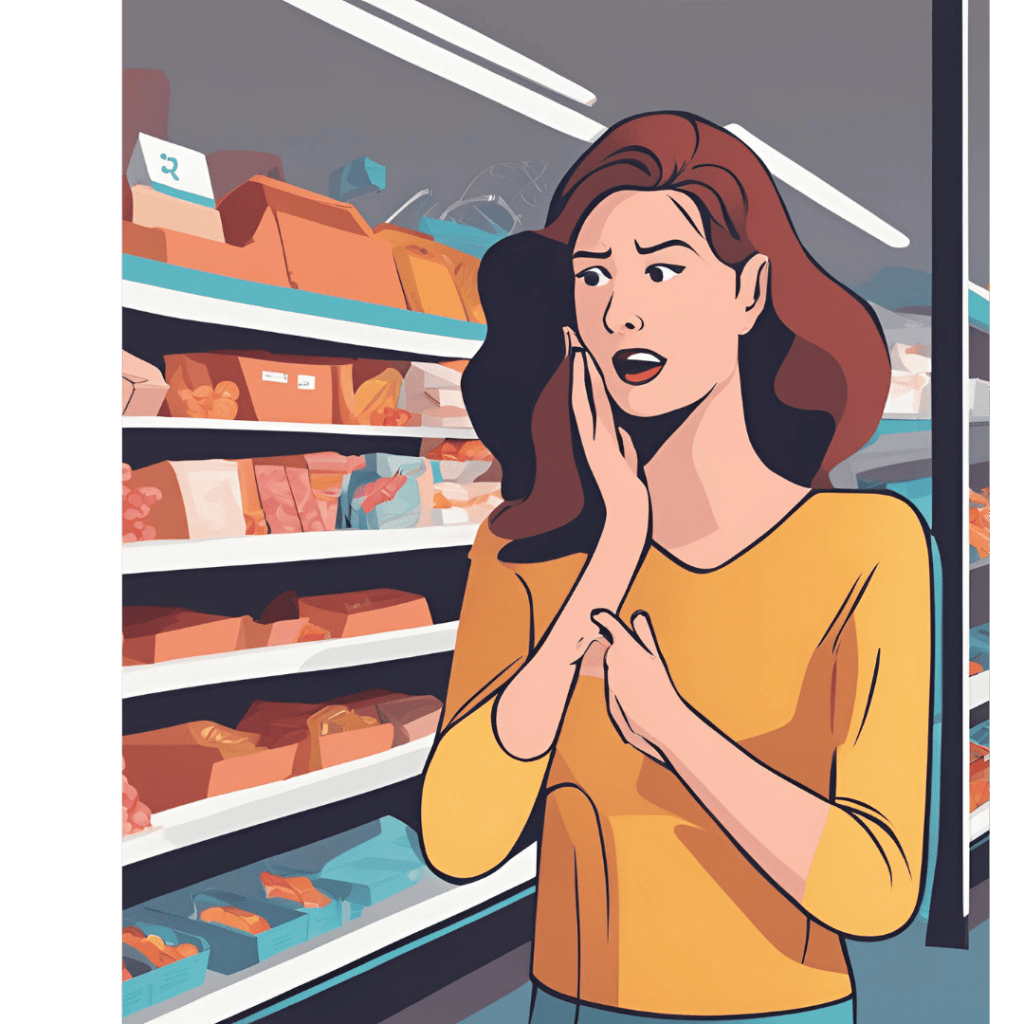
There I was, feeling like a damn superhero, armed with a shopping list and the misguided optimism of someone who’s forgotten they have fibromyalgia.I’m cruising through the aisles, tossing items into my cart like I’m on some twisted version of Supermarket Sweep. I’m on fire, baby! I’ve got a week’s worth of meals planned, and I’m actually remembering to buy vegetables that aren’t just potato chips. Look at me adulting like a boss!

But then, because the universe has a sick sense of humor, my right hip decides it’s the perfect moment to stage a revolt. It was as if my nerve on that side was a live wire that was getting repeatedly squeezed like a cartoon character. Out of fucking nowhere, it feels like a rabid badger has set up shop in my joint and is throwing a rave. One second I’m contemplating the merits of Frosted Flakes versus Froot Loops, and the next I’m clinging to my shopping cart like Rose clung to that door in Titanic.

Every step is like walking on Legos while being stabbed by a thousand tiny ninjas. The fluorescent lights are suddenly brighter than the sun, turning the store into a hellish disco of pain. My carefully crafted plan of “shop and go home to Netflix” is rapidly morphing into “try not to pass out in the cereal aisle.”

As I’m limping towards the checkout, looking like a drunk flamingo pushing a cart, I can’t help but laugh at the absurdity. Here I am, in the middle of Kroger, putting on a show that’s part wounded animal, part determined shopper. But hey, if you can’t laugh at your body’s betrayal in the frozen food section, when can you laugh?

So there you have it, folks. Another day in the life of a fibro warrior, where even a simple shopping trip can turn into an epic battle against your own rebellious body. Now, if you’ll excuse me, I need to go home and ice my hip while eating the comfort snacks I panic-bought during my pain-induced haze. Because nothing says “self-care” quite like ice cream and ibuprofen, am I right? Til next time gang, take care of yourselves, and each other.

Uncategorized

Help From My Friends, yes YOU!

Alright, listen up you badass warriors battling chronic health issues! We’re about to get real about why having a solid support system is crucial for not losing your fucking mind.

First off, let’s be honest – chronic health conditions are a colossal pain in the ass, both physically and emotionally. One minute you’re cruising along, feeling like you’ve got a handle on this whole “life” thing, and the next, your body is pulling some straight-up sabotage moves that leave you feeling like a hot mess express. That’s where your support squad comes in – those ride-or-die homies who get it, empathize with your situation, and offer the kind of emotional support that’s better than any overpriced therapy session.

But it’s not just about the warm fuzzies, folks. Your support system is also a lifeline when it comes to practical shit. Need someone to help with daily tasks that suddenly feel like climbing Mount Everest? Bam, your crew’s got your back. Need a ride to yet another doctor’s appointment where you’ll inevitably be poked and prodded like a human pin-cushion? Your support squad is there to chauffeur your ass and make sure you don’t get lost in the labyrinth of the medical-industrial complex. Not to mention the opportunity for some EPIC road trips!

Speaking of navigating that shitshow, having a support network can be a game-changer when it comes to knowledge and information. Chances are, someone in your crew has been through a similar health struggle or knows someone who has, which means they’ve got insider intel on treatments, therapies, and coping strategies that could make your life a whole lot easier. It’s like having a cheat code for managing your condition without having to spend hours scouring the depths of WebMD and scaring the crap out of yourself.

But wait, there’s more! Being part of a supportive community isn’t just about the practical perks – it’s also a lifeline for your mental health. Chronic health issues can be a lonely, isolating journey, especially when the people around you just don’t get it. Having a crew of fellow warriors who’ve been there, done that, and got the battle scars to prove it? That’s the kind of solidarity and mutual understanding that can make you feel like you’re not alone in this shitshow.

And let’s not forget the most important benefit of all: a support system can be the ultimate confidence booster and source of resilience. Dealing with chronic health issues often means navigating complex healthcare systems, advocating for your needs, and persevering through setbacks that would make even the toughest badass want to throw in the towel. But with your crew in your corner, cheering you on and reminding you of your inner strength, you’ll be unstoppable. It’s like having your own personal hype squad, but instead of cheering you on at a lame sporting event, they’re helping you slay the dragon that is chronic illness.

So, to all you warriors out there battling chronic health issues, remember: building and nurturing a solid support system isn’t just a nice-to-have – it’s a fucking necessity. Surround yourself with people who get it, lift you up, and remind you that you’re a total badass, even on your worst days. Because at the end of the day, having that crew in your corner might just be the secret weapon you need to conquer this shitshow and come out on top. Thats why we need to come together guys, this sick nonsense can be tackled alone but shouldn’t. Reach out. Til next time gang, take care of yourself, and each other!

Uncategorized

Loki of the medical world…

Much like Loki of Asgard (who was burdened with glorious purpose) that prankster fibromyalgia (who, for all we know is just doing this shit for funsies) just loves messing with us, doesn’t it? Its idea of a good time is replacing all the words in our brain with radio static for a rousing game of “What Did I Come Into This Room For?” Talk about a comedic fibro fog party trick!

And let’s not forget fibromyalgia’s classic prank of swapping out our skin for sandpaper while we sleep. Waking up feeling like we got a full-body exfoliation treatment from Edward Scissorhands? Chef’s kiss to that hilarious bit of tomfoolery!

Then there’s the ol’ random full-body ache for no damn reason gag. You’re just going about your day when BAM – it’s like you got hit by a truck carrying a cargo of pain and fatigue. Fibromyalgia’s version of the old “kick me” sign prank, but way less funny.

Sometimes it gets super creative by hiding all our energy reserves like George stashing nuts. Suddenly basic tasks like showering feel as exhausting as running a marathon. Thanks for that delightful prank, fibro – really keeps us on our toes!

But fibromyalgia’s pièce de résistance has to be the sensory overload prank. One minute you’re fine, the next it’s like all your senses got turned up to 11. Lights are blinding, sounds are deafening, and tags on your clothes may as well be made of cacti. Now THAT’S a practical joke that really sticks the landing!

Fibromyalgia really gets a kick out of the old “hide and seek” game with our energy levels. One minute we’ve got enough gas in the tank to run errands, the next it’s disappeared without a trace! Good luck trying to locate those missing spoons to accomplish basic tasks

And let’s not forget fibro’s classic bait-and-switch prank of luring us in with a decent night’s sleep, only to cruelly snatch it away with a morning of feeling more exhausted than if we pulled an all-nighter. Tricking us into thinking we’ve finally beaten insomnia is such a knee-slapper for this prankster condition

Prankster Fibromyalgia is out here giving Loki a run for his money. But we know all this. And knowing is power (knowing is half the battle? I don’t know, insert your own 80s slogan lol) Now if we could just fix these things, well, maybe we DID fix all the things and we forgot where we put the answers. That sounds like something we’d do. You guys go look for that, I gotta go see where George ran off to with that, I might need it. Take care of yourselves, and each other!