
Uncategorized

Why Stress Steals Memory

(Explained Like I’m Four Because Its My Current Mental Capacity)

Imagine your brain is a house.

Inside that house are different rooms. One room is for thinking — remembering things, planning, finishing sentences, and holding onto a thought long enough to actually say it out loud. Another room is for danger. That room has alarms, flashing lights, and a big red button labeled OH NO.

Most of the time, the thinking room is in charge.

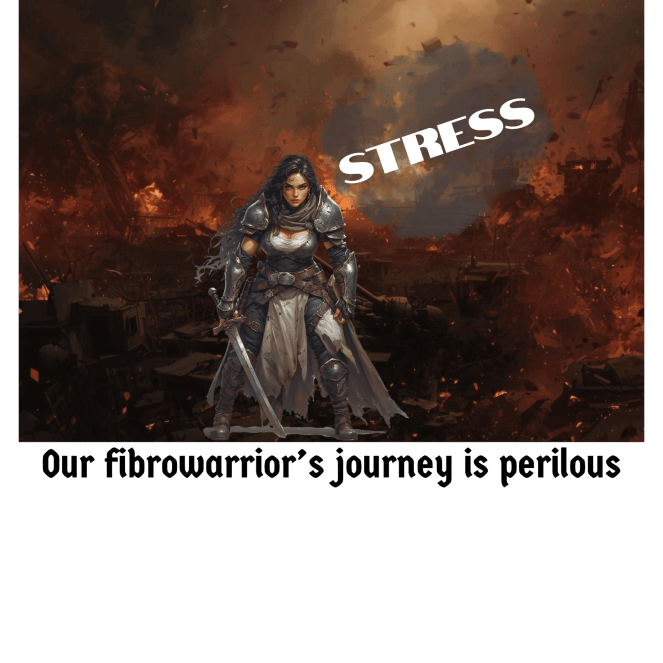
Then stress shows up.

Stress doesn’t knock. It barges in yelling things like “PROBLEM,” “URGENT,” or “SOMETHING BAD IS HAPPENING.” Your brain doesn’t stop to check whether the threat is real or just an email, a memory, or the general vibes of winter. It just flips the switch.

The danger room takes over.

When that happens, your brain makes a very practical decision: remembering things is no longer the priority. Surviving is.

So it starts redirecting energy away from memory, focus, and word-finding. Not because those things aren’t important — but because they aren’t useful if you’re about to be eaten by a bear. (Your brain is old-fashioned like that.)

This is why, under stress, you might forget what you were saying mid-sentence, lose track of why you walked into a room, or feel like your thoughts evaporate the moment you reach for them. Your brain isn’t failing. It’s triaging.

There’s also a chemical reason this happens.

When you’re stressed, your body releases cortisol. Cortisol’s job is to help you respond to danger. It speeds things up, tightens muscles, sharpens attention toward threats, like bear attacks, and keeps you alert. But it also tells the memory-forming parts of your brain to quiet down.

In simple terms: cortisol says, “We don’t need to remember things right now. We need to stay alive.”

So memory takes a back seat.

This is especially noticeable when stress isn’t a one-time event, but something ongoing. Chronic stress — from pain, trauma, long-term anxiety, caregiving, or just living in a body that never fully relaxes — can keep your nervous system stuck in high-alert mode. Over time, your brain starts acting like danger is the default setting.

That’s why memory problems can show up even when you’re not actively upset. Conversations feel harder to track. Words go missing. Thoughts disappear halfway through forming. The system never fully stands down.

And this part matters: this isn’t laziness, lack of intelligence, or a personal failing.

It’s not that your brain forgot how to work. It’s that it learned how to protect you — and protection came first.

Memory didn’t disappear. It just got temporarily demoted.

That’s also why external supports help so much. Writing things down, setting reminders, repeating information out loud — these tools reduce the load on a system that’s already busy. Sometimes just writing something is enough for it to stick, even if you never look at it again. Your brain trusts that it doesn’t have to carry everything alone.

The takeaway is simple, even if the experience isn’t.

If your memory struggles when you’re stressed, it doesn’t mean you’re broken. It means your brain is doing exactly what it was designed to do — keeping you safe, even when the threat isn’t obvious.

And sometimes, safety comes at the cost of remembering where you put the thought you were just holding. Til next time gang, take care of yourselves, and each other!
Uncategorized

Your Body Thinks You’re Being Chased by a Bear (Spoiler: You’re Not)

So here’s a fun thing that’s been happening: my body has apparently decided that normal life is a constant threat and has responded by keeping me in a perpetual state of “OH GOD OH GOD WE’RE ALL GONNA DIE” even though I’m literally just sitting at my desk trying to answer emails.

Welcome to chronic sympathetic nervous system activation, or as I like to call it, “why I can’t relax even when I’ve been scheduling rest and also why am I clenching my jaw right now?”

If you’re reading this and thinking “wait, is that why my shoulders are permanently attached to my ears?” – yeah, probably. Let’s talk about it.

What Fresh Hell Is This?

Your nervous system has two settings: “EVERYTHING IS FINE” (parasympathetic) and “NOTHING IS FINE PREPARE FOR BATTLE” (sympathetic). The sympathetic system is supposed to kick in when you’re actually in danger – like if a bear shows up or you’re about to miss a deadline or someone says “we need to talk.”

It’s supposed to turn on, help you deal with the thing, then turn OFF.

Except sometimes it just… doesn’t turn off. It’s like that friend who came over for dinner three months ago and is still on your couch. Your nervous system has overstayed its welcome in fight-or-flight mode, and now you’re stuck with elevated heart rate, tense muscles, and the general vibe of someone who’s been drinking espresso for 72 hours straight even though you haven’t.

The Fancy Medical Terms (In Case You Want to Sound Smart)

Doctors and wellness people might call this:

  • Sympathetic dominance (sounds like a kink, isn’t)
  • Hyperarousal (also sounds like a kink, still isn’t)
  • Autonomic dysregulation (absolutely does not sound like a kink)
  • Chronic stress response (boring but accurate)
  • Low vagal tone (your vagus nerve has given up)
  • High allostatic load (fancy way of saying “you’re worn the hell out”)

Pick your favorite. I personally enjoy “sympathetic dominance” because it makes it sound like my nervous system is being bossy, which honestly tracks.

What This Nightmare Actually Looks Like

Physical symptoms (aka your body’s way of saying “I hate it here”):

  • Heart doing gymnastics for no reason
  • Muscles so tight you could bounce a quarter off them
  • Digestive system on strike (nausea, IBS, the works)
  • Sleep? Don’t know her
  • Exhausted but also weirdly wired (tired and wired, the worst combo)
  • Headaches that won’t quit
  • Getting every cold that walks by
  • Hands shaking like you’ve had six cups of coffee (you’ve had zero)

Mental/emotional symptoms (aka your brain being a jerk):

  • On edge like you’re waiting for bad news that never comes
  • Brain fog thicker than London on a bad day
  • Irritable about literally everything (yes, even that)
  • Cannot. Sit. Still.
  • Hypervigilance (constantly scanning for threats like a meerkat)
  • Feeling nothing and everything at the same time
  • Anxiety that laughs at your attempts to meditate

Why Your Body Has Betrayed You Like This

Short answer: sustained stress that your nervous system couldn’t process properly.

Long answer: Maybe it was work stress, or caregiving, or financial pressure, or relationship drama, or past trauma, or chronic illness, or just living through the general dumpster fire that is modern existence. Your nervous system was like “okay, we need to be alert right now” and then just never got the memo that the crisis ended.

It’s not your fault. Your nervous system was trying to protect you. It’s just really bad at knowing when to clock out.

How to Convince Your Body That the Bear Has Left

Alright, here’s the part where I actually try to be helpful instead of just complaining (revolutionary, I know).

Vagus Nerve Stimulation (or: Push the “Calm Down” Button)

Your vagus nerve is basically the brake pedal for your sympathetic system. Here’s how to use it:

  • Breathe like you mean it – Longer exhales than inhales. Your body can’t panic and breathe slowly at the same time, so you’re basically hacking the system
  • Cold water to the face – Splash it, shower in it, or just hold ice. Your body goes “oh we’re doing survival mode differently now”
  • Hum, sing, or gargle – Yes, really. Yes, you’ll look weird. Do it anyway
  • Gentle yoga – Not the “let’s pretzel ourselves into oblivion” kind, the “we’re just stretching and breathing” kind

Daily “Please Chill” Practices

  • Sleep schedule – I know, I know. But your nervous system needs the routine like a toddler needs naptime
  • Move your body – But maybe don’t go run a marathon if you’re already exhausted? Shocking concept, I know
  • Go outside – Nature is basically free therapy and your nervous system knows it
  • Reduce caffeine – I’m sorry. I know. But coffee might be part of the problem
  • Eat actual food – Omega-3s, magnesium, B vitamins. Your nervous system needs fuel that isn’t anxiety and spite

The Woo-Woo Stuff (That Actually Works, Dammit)

  • Progressive muscle relaxation – Tense and release muscle groups. It’s boring but effective
  • Meditation – Even 5 minutes. No, you don’t have to empty your mind. That’s not how it works
  • Somatic practices – Basically any movement that helps you actually feel your body instead of just inhabiting it like a haunted house
  • Heart rate variability training – Apps exist for this and they’re legitimately helpful
  • Massage/bodywork – Yes, you deserve it. No, it’s not frivolous

The Practical Stuff Nobody Wants to Hear

  • Set boundaries – Saying no is self-care, actually
  • Reduce stressors – I know this is easier said than done, but where you can, do
  • Get professional help – Therapy is great. Medication is sometimes necessary. Both are fine
  • Actually rest – Not “scroll on your phone” rest. Actual, doing-nothing rest
  • Connect with humans – Safe relationships help regulate your nervous system (unfortunately we do need other people)

Real Talk

This doesn’t get fixed overnight. Your nervous system didn’t get stuck in panic mode in a day, and it won’t unstick in a day either. Some days you’ll feel better. Some days you’ll feel like garbage. Both are normal.

You’re not broken. You’re not weak. You’re having a completely normal response to stress that lasted too long. Your nervous system is just trying to keep you safe – it’s just really, really bad at its job right now.

Also, if this is seriously impacting your life, please talk to actual medical professionals. I’m just some person on the internet who’s been through this. Doctors and therapists have actual training and sometimes you need the real help.

The Point

You deserve to feel safe in your own body. You deserve to not feel like you’re perpetually being chased by something you can’t see. You deserve to actually rest without your nervous system screaming “BUT WHAT IF—” at you.

Start small. Pick one thing. Give it time. Be patient with yourself (I know, gross). And know that it does get better.

Your nervous system will eventually get the memo that the bear is gone. It’s just taking the long way around. Til next time gang, take care of yourselves, and each other.