Uncategorized

Things My Brain Treats Like Optional DLC

Living with Chronic Illness is basically like living with a brain that’s trying its best… but also doing parkour off the furniture. Some days I’m thriving, some days I’m forgetting what I’m doing mid-sentence, and honestly? Most days I’m just negotiating with my own executive function like it’s a hostile coworker. So here’s a little peek behind the curtain: the things my brain treats like optional DLC.

1. Object permanence… most of the time.
If I put it down and walk away, it may as well have been launched into another dimension. Keys, water bottles, important documents — all living their best lives in the ADHD void. Tell me its important, its the surefire way to get me to lose it.

2. Starting tasks? Easy. Finishing them? Bold of you to assume.
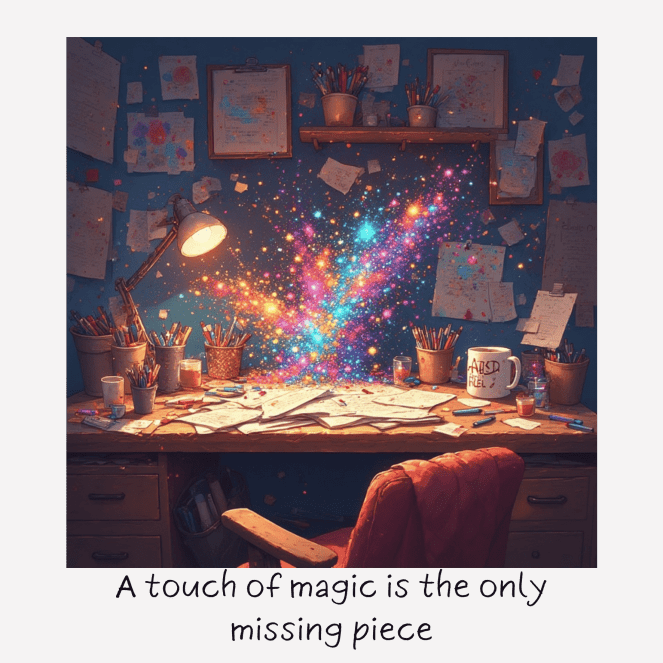
I will begin a project with Olympic enthusiasm and then abandon it halfway like a Victorian ghost girl drifting out of a scene. Don’t believe me? My craft desk is currently auditioning for a documentary called ‘When Hobbies Attack.’ Pearls would be clutched. Fainting couches would be used.

3. Time? A concept. A myth. A prank.
Ten minutes feels like an hour, an hour feels like twelve seconds, and deadlines feel like cosmic jokes written specifically for me. I need to get up, says my brain, the laundry should be done. Sure, its done, as is the day, the entire day slipped through my grasp like time itself saw me trying and said, ‘Aw, cute,’ before sprinting off.

4. Noise? Too much. Silence? Also too much.
I am either overstimulated by the faint hum of the fridge or suddenly panicking because the quiet feels suspicious. There is no chill setting. I generally leave the tv on and use the mute button, sometimes I even remember to unmute or unpause (go me)

5. Hyperfocus that appears only for hobbies, never chores.
Ask me to reorganize a shelf for fun? Instant productivity demon. Ask me to fold laundry? My brain blue screens. Meanwhile the laundry is over there quietly becoming part of the home’s structural integrity.

6. Forgetting why I opened a new tab mid-click.
My fingers click “new tab” with confidence. My brain immediately abandons the mission. We will never know what the goal was. This is the thing I hate the most. Yesterday I was at hubby’s desk and he was saying something and I said ‘I’ll go look that up’ and I turned and FELT myself forgetting it, I hadnt made it to the door when I had to turn back around and apologized and asked him to repeat himself.

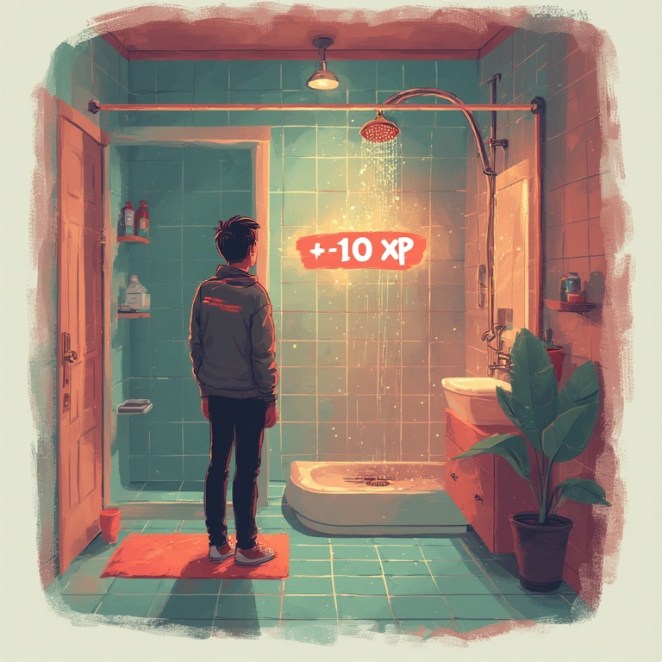
7. Needing a reward just to take a shower like it’s a game quest.
“+10 XP for personal hygiene. New achievement unlocked: You Finally Did It.”
Honestly, adulting would be easier if life came with a loot box. Honestly, the only thing getting me in that shower is the promise of pajamas immediately after. The shower helps most days its just the act of doing all the things is exhausting.

8. “I’ll do it in a minute” — famous last words.
Because that “minute” might be five hours later… or three to five business days, depending on vibes and moon phases. And if a kid interrupts me? Congratulations, that task has now been postponed indefinitely.

Sure, my brain is a gremlin on roller skates, but honestly? I’m still waking up and doing my best every day. Til next time gang, take care of yourselves, and each other.

Uncategorized

The Unofficial Chronic Illness Starter Pack: 13 Things We All Somehow End Up Owning

There’s no “welcome packet” when you join the chronic illness club. No orientation video, no handbook, not even a “sorry your body betrayed you” cupcake. But give it a year or two, and like clockwork, you’ll somehow accumulate the exact same stuff as every other chronically ill human alive.

It doesn’t matter what your diagnosis is — autoimmune, neurological, connective tissue chaos, or “we still don’t know but it’s definitely something.” You’ll still end up with this exact lineup. Consider it the unofficial starter pack for a life you didn’t sign up for.


1. The Heating Pad That’s Basically a Limb Now

Not a heating pad. The heating pad. The emotional-support heating device that never leaves your side. The one that smells a little… “well-loved.” The one that goes on vacation with you, because without it, you might as well just stay home and cry.

Bonus points if you own more than one: couch pad, bed pad, travel pad. If there’s an outlet nearby, there’s probably a heating pad plugged into it.


2. The Pill Organizer That Screams “Elder Millennial in Crisis”

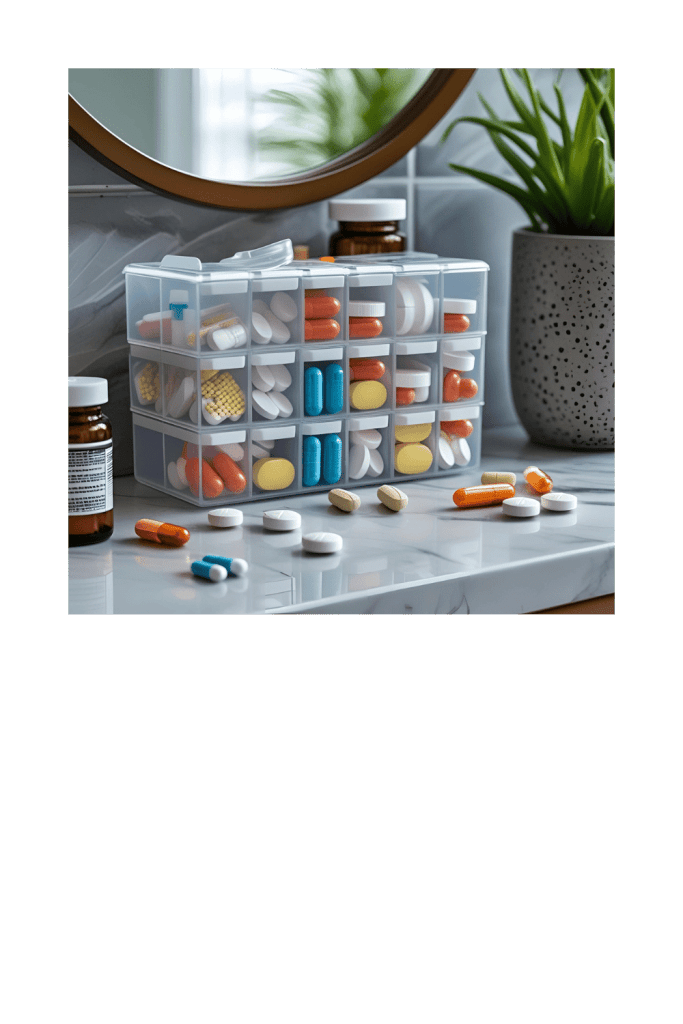
Remember when you thought pill organizers were for your grandma? That’s adorable. Now you’ve got the jumbo one with four compartments per day and color-coded sections that could rival a NASA launch sequence.

You’ve upgraded at least twice. You’ve probably dropped it at least once and watched your entire week scatter across the floor like medical confetti.


3. The Hydration Graveyard

“You need to drink more water!” they said. So you bought every water bottle known to humankind. The motivational one with time stamps. The $40 one that promised to change your life. The one with a straw that always smells faintly weird.

And yet… you’re still dehydrated. But at least your shelf looks like an REI display.


4. Compression Socks That Deserve Their Own Fashion Line

When you first bought them, you swore they were temporary. Now you’ve got rainbow stripes, polka dots, and ones that match your pajamas.

Nothing like someone complimenting your “cute socks” while you’re over here preventing blood from pooling in your legs like a human Capri Sun.


5. Meds You’re 70% Sure You Still Need

Your medicine cabinet looks like a CVS threw up. Some prescriptions you take daily, some “just in case,” and others that you can’t remember why you still have but you’re too scared to stop taking.

At least once a week you’re googling, “can I take this one with food or nah?”


6. The Sacred Comfort Outfit

Elastic waistband. Zero zippers. Fabric so soft it might disintegrate soon but you’ll die before you part with it.

You own duplicates because when you find something that doesn’t make your body angry, you commit.


7. The Ice Pack Army

The freezer is 80% ice packs and 20% actual food. There are gel ones, flexible ones, and the infamous bag of peas that’s been there since the Obama administration.

Visitors open your freezer and immediately regret asking questions.


8. Pillows. So Many Pillows.

You’ve got regular pillows, wedge pillows, knee pillows, body pillows, and that expensive orthopedic one you swear doesn’t help but you’re too stubborn to admit it.

Your bed looks like a cloud exploded. Your couch looks like a pillow fort designed by an overachiever.


9. Your Personal Medical Archive

You could open a small clinic with your paperwork. Test results, specialist notes, insurance denials, and that one referral you might need someday.

Because if you don’t keep copies, you’ll end up explaining your entire medical history from scratch at every appointment anyway.


10. The Blanket Multiverse

Weighted blanket. Heated blanket. Soft blanket. “Don’t touch me” blanket. “Only this texture doesn’t make me rage” blanket.

You’ve reached a point where you can’t sit anywhere without instinctively grabbing one. It’s fine. It’s cozy. You’ve accepted it.


11. Snacks on Standby

Every bag, drawer, and vehicle has a snack stash. Protein bars, nuts, crackers, and that one emergency granola bar that’s probably older than your pet but still good in a pinch.

Low blood sugar waits for no one.


12. The Endless Notebook Collection

Symptom logs, med trackers, food diaries, mood charts, appointment notes. Every notebook started with good intentions and ended three pages in.

You’ve also tried every app known to mankind, but somehow keep coming back to paper and pen.


13. A Dark, Sparkly Sense of Humor

You can’t buy this one, but it’s essential. If you can’t laugh at your heating pad dependency and your pharmacy-sized pill case, you’ll lose your mind.

Because crying hurts your head, and honestly, we’re low on spoons for that today.


The Unspoken Truth

If you’re reading this while sitting on your heating pad, wrapped in a blanket, surrounded by snacks and water bottles you forgot to refill — congrats, you’re one of us now.

The chronic illness starter pack isn’t sold anywhere. You build it piece by piece, fueled by trial, error, and desperate 2 a.m. Amazon searches.

We didn’t choose this starter pack. But we’re making it work — one heating pad session, one sarcastic laugh, one survival day at a time. Til next time gang, take care of yourselves, and each other!

Uncategorized

7 Weird Life Skills Chronic Illness Gave Me

Chronic illness is the world’s most aggressive “skills training program.” Except instead of a certificate and a raise, you get brain fog, pain, and an ongoing relationship with your heating pad. Still, I’ve picked up some unique skills along the way—stuff I never knew I’d need but now couldn’t live without.

1. Mastering the Art of Fake Smiling

I could win Olympic gold for pretending I’m fine while my joints are staging a coup. Do I want to collapse in a heap? Yes. Am I going to grin like I just won a cruise? Also yes.

2. Human Calculator for Spoonie Math

“Can I shower and cook dinner today, or is that too ambitious?” I can do the math faster than you can open your planner. Spoiler: the answer is usually “nope.”

3. Expert in Improvised Heat Therapy

Rice sock? Check. Heating pad? Check. Sitting on my kid’s warm laundry fresh out of the dryer because I can’t wait for relief? Double check. Pro tip, heat rises, I sleep ON not UNDER an electric blanket it has made a world of difference.

4. Planning for Chaos Like a Pro

You know how event planners can handle weddings with 200 guests? Try managing your day when you don’t know if you’ll wake up with a migraine, a hip flare, or zero energy. I don’t plan weddings. I plan for chaos.

5. Napping Anywhere, Anytime

Airports, doctor’s waiting rooms, my car in the school pickup line—I have the gift of nap. If there was a frequent napper punch card, I’d have earned a free mattress by now.

6. Doctor Jargon Translator

I can translate “mild discomfort” into “you won’t walk tomorrow” and “we’ll keep an eye on it” into “we have no idea what’s wrong.” Basically, I’m bilingual.

7. Black-Belt Level Boundary Setting

When you’ve got limited spoons, you learn real quick how to say, “No, I can’t go to your cousin’s friend’s birthday barbecue three towns over.” Honestly, it’s a superpower.


✨ Chronic illness may have wrecked my body, but hey—it gave me some weird little life skills along the way. Your turn: what weird skill has chronic illness forced you to master? Til next time gang, take care of yourselves, and each other.

Uncategorized

The Great Medication Shuffle: Morning Pills, Evening Pills, and the Ones I Forgot Existed

Or: How My Medicine Cabinet Became a Small Pharmacy and I Still Can’t Remember What I’m Supposed to Take When

Looking at my bathroom counter right now, I count fourteen different pill bottles, three liquid medications, two inhalers, and a partridge in a pear tree. Okay, maybe not the partridge, but at this point I wouldn’t be surprised if my doctor prescribed one for “mood support.”

For those of you managing multiple chronic conditions, you know the drill. What started as “just take this once a day” has evolved into a complex choreographed dance that would make Broadway jealous. And like any good performance, timing is everything—except I have ADHD and the memory of a goldfish with anxiety.

Meet the Cast of Characters

The Morning Crew: These are the heavy hitters that transform me from zombie to semi-functional human. They’re the ones that make it possible for me to remember my own name and possibly locate the coffee maker.

I have to take 16 pills in the morning, and it’s as gross and exhausting as it sounds. While I’m supposed to take all that in the morning, I split it up to make it easier to manage, so my pills are morning, later morning, dinner/bed. Frequently when I sit down to do my meds I have missed a few from the “later morning” category. Because nothing says “good morning” like swallowing what feels like a handful of gravel.

The Evening Squad: The night shift workers whose job is to help me actually sleep instead of lying awake cataloging every embarrassing thing I’ve done since 1987.

At night I feel like I do a lot of prep work. I take 5 at dinner. One of those is half a dose of sleep/anti-anxiety. I take another 3 when I sit down for the night. Once I have done my chores I pop the other half and soon am out cold. If any one of those is off by an inch I won’t sleep or will pass out mid-chore. It’s like a tightrope balance really, but I fall far more often lol. Nothing quite like waking up on the couch with a half-folded load of laundry as your blanket.

The Wildcards: These are the divas of the medication world. Take with food. Don’t take with food. Take two hours before this other medication but not within four hours of dairy products. Take while standing on your head during a full moon. (Okay, I made that last one up, but honestly, would you be surprised?)

I take one that’s ‘take with 600 calories.’ Ok, as in, how close to eating? Before? After? What will happen if I’m not a nutritionist and therefore have NO IDEA how many calories will be enough? Do I need to whip out a food scale? Should I be doing math at breakfast? Is a bagel with cream cheese 600 calories or am I supposed to add a side of existential dread?

The Forgotten: Every medicine cabinet has them—the bottles in the back that you rediscover like archaeological artifacts. “Oh hey, I was supposed to be taking this for anxiety… six months ago. That explains a lot.”

I have a tough time with my late morning meds, so they often get forgotten until later in the day, then it’s the ‘would it be better to double up/take them closer to the night time ones? When do we no longer consider it because it’s too close to the others?’ Such fickle little things they are. It’s like playing medication Jenga—one wrong move and the whole system comes tumbling down.

The Systems I’ve Tried (And How They’ve Failed Me)

The Pill Organizer Approach: Seemed foolproof, right? Wrong. First, I had to figure out which size. The tiny ones where I can barely fit my horse-sized vitamins? The weekly ones that don’t account for my twice-daily medications? The monthly system that takes up half my kitchen counter?

I started out resisting these HARD, then went to the daily ones. They didn’t work—I’d forget to fill it, so one day at a time, I was not responsible enough for that. I lived, I learned, I got a weekly with the days broke into 4 sections, and it works. And if I forget, I always skip just because that’s easier to fix than the opposite way—it’s better to err on the side of caution. Nothing like turning medication management into a weekly game of Tetris.

The Phone Alarm Method: Set seventeen different alarms with helpful names like “ADHD Med” and “Don’t Forget Thyroid Pill.” Works great until you’re in an important meeting and your phone starts screaming “TAKE YOUR CRAZY PILLS NOW” at full volume.

Or, like me, you manage to dismiss them all subconsciously or your brain chooses to ignore them lol. It’s like my ADHD brain has developed selective hearing specifically for the alarms that are supposed to help me function. I can hear a bag of chips opening from three rooms away, but medication reminders? Nope, not registering.

The Medication Apps: Downloaded four different apps that promised to change my life. They all judged me harder than my mother when I inevitably forgot to log my doses. Nothing like a guilt trip from your phone to start the day.

The apps that would change my life all involved either purchases through the app, or require so much of my time I spent more energy journaling and entering the same responses than actually taking the medications. Or I’d not remember to enter them at all after week two. Apparently, I need an app to remind me to use the app that reminds me to take my medication. It’s apps all the way down.

The “I’ll Just Remember” Method: The most delusional approach of all. My ADHD brain that can’t remember where I put my keys five minutes ago was somehow going to remember a complex medication schedule. Spoiler alert: it didn’t work.

I will have my bottle in my hand wondering if I JUST took one, or if my brain is showing me past me taking them as I’d done countless times before. It’s like my brain is running a highlight reel of every time I’ve ever taken that medication, making it impossible to distinguish between “five minutes ago” and “Tuesday three weeks ago.”

The Real Struggles Nobody Talks About

The “Did I or Didn’t I?” Game: Standing in your bathroom at 2 PM, staring at a pill bottle, trying to remember if you took your morning medication or just thought really hard about taking it. It’s like the worst guessing game ever, with side effects as consequences.

So I stand there, debating my next move like it’s a choose-your-own-adventure novel: Option A: Take the pills and risk double-dosing myself into a nap I didn’t plan. Option B: Skip them and spend the rest of the day vibrating at the wrong frequency. Spoiler alert: I picked Option C — called my teen into the room and asked, “Hey, did you see me take these earlier?” They just stared at me like, “You realize I don’t follow your every move, right?” Thanks, kid. Very helpful.

The Pharmacy Mystery Calls: “Hi, your prescription for [medication you’ve never heard of] is ready for pickup!” Wait, what? When did I get prescribed that? Have I been supposed to be taking something this whole time?

Frequently I will go in for my appointment and bloodwork and she’ll call something in but forget to send the email until I contact them. So I’m left wondering if this mystery medication is something crucial I’ve been missing, or if it’s the pharmaceutical equivalent of a pocket dial. Either way, I’m driving to the pharmacy feeling like I’m solving a medical mystery.

The Coordination Nightmare: Doctor A wants to change medication X, but you have to check with Doctor B because it interacts with medication Y, and Doctor C doesn’t know about either of them because the medical records system is apparently held together with duct tape and prayers.

I once spent three weeks playing telephone between my psychiatrist, primary care doctor, and endocrinologist because nobody could agree on whether my new thyroid medication would interfere with my ADHD meds. Meanwhile, I’m sitting in the middle like a very tired, very caffeinated UN mediator, taking notes and trying to remember who said what about which pill. Spoiler alert: they all had different opinions, and I ended up being my own case study.

The Instruction Manual: That one medication that comes with a novel’s worth of instructions. Take with food, but not dairy. Don’t lie down for 30 minutes after taking. Avoid sunlight. May cause drowsiness or insomnia (thanks for being specific).

My personal favorite is the medication that says “may cause dizziness” and “do not operate heavy machinery,” but then also warns “may cause restlessness and inability to sit still.” So… I can’t drive, but I also can’t stop moving? Should I just pace around my house indefinitely? And don’t get me started on “take on an empty stomach” versus “take with food to avoid nausea.” Pick a lane, pharmaceutical industry!

What Actually Works (Sort Of)

After years of trial and error (emphasis on error), I’ve cobbled together a system that works approximately 73% of the time, which in my world counts as a rousing success.

My current system is that weekly pill organizer with four compartments per day, plus a backup system of keeping the bottles nearby for those “did I or didn’t I” moments and I actually write an x. I’ve learned to embrace the “when in doubt, skip it” philosophy because it’s easier to catch up on a missed dose than to undo a double dose. And yes, I still sometimes ask my family members if they’ve seen me take my pills, because apparently it takes a village to medicate one ADHD brain.

The key insight I’ve learned is this: there is no perfect system. There’s only the system that fails less catastrophically than the others. Some days I nail the medication schedule like a responsible adult. Other days I take my evening pills at 2 PM and wonder why I’m sleepy.

Just last week, I confidently took my morning pills, felt very proud of myself, and then found the same pills sitting in my pill organizer an hour later. Turns out I had taken yesterday’s forgotten dose. Mystery solved, but also… how did I not notice I was taking pills from the wrong day? ADHD brain strikes again.

The Bottom Line

If you’re struggling with medication management, know that you’re not alone in this pharmaceutical juggling act. We’re all just doing our best with brains that sometimes work against us and bodies that require more maintenance than a vintage car.

Your worth isn’t measured by how perfectly you follow your medication schedule. It’s measured by the fact that you keep trying, keep adapting, and keep finding ways to take care of yourself even when it feels impossibly complicated. Some days “good enough” really is good enough, and that’s perfectly okay.

Managing multiple chronic conditions isn’t just about remembering to take pills—it’s about being patient with yourself when your brain doesn’t cooperate, forgiving yourself when systems fail, and celebrating the small victories like remembering your evening meds before midnight.

Now if you’ll excuse me, I need to go stare at my pill bottles and try to remember if 2 PM counts as “evening” for my twice-daily medication.


Uncategorized

The ADHD Shopping Experience: How I Went for Milk and Came Home with a Succulent, Three Notebooks, and No Milk

A play-by-play of my brain vs. reality, or: Why simple errands are never simple

Setting the Scene: Just need milk. One item. Simple mission. What could possibly go wrong?


In the Parking Lot

ADHD Brain: “Okay, milk. Just milk. Wait, should I make a list? No, it’s just ONE thing. But what if I see something else we need while I’m there? Maybe I should text hubby and ask… no, that’s ridiculous. It’s MILK. But what kind of milk? 2% or whole? Did we discuss this? Should I check the fridge from here? Can’t do that. Focus. MILK. M-I-L-K. Got it.”

Fibromyalgia Body: “Why does every parking space require a trek equivalent to hiking the Appalachian Trail? And why is it windy? Wind makes everything hurt more.”

What Actually Happened: Sat in my car for 5 minutes trying to remember if we needed 2% or whole milk, googled “difference between 2% and whole milk nutritionally” fell down a rabbit hole about dairy farming, got distracted by a text from my mom, completely forgot why I had googled dairy farming, and finally got out of the car having made zero progress on the milk question.


Entering the Store

ADHD Brain: “Straight to dairy section. Do not pass Go. Do not collect impulse purchases. Laser focus. I am a milk-seeking missile.”

Fibromyalgia Body: “Of course I grabbed the cart with the wobbliest wheel in existence. Every step is sending shock waves through my joints. This cart sounds like a dying pterodactyl.”

Bipolar Brain: “Actually, this is kind of fun! Look at all the possibilities! So many choices! I love having choices!”

What Actually Happened: Grabbed the first cart without testing it (rookie mistake), immediately got distracted by the seasonal display of Halloween decorations prominently displayed in August, spent three minutes judging the capitalist machine that pushes holidays earlier each year, then realized I was still standing at the front of the store holding a cart that sounded like it was powered by wounded animals.


Stop #1: The Pharmacy Section

ADHD Brain: “Wait, didn’t I need to pick up that prescription? When was that due? Was it today or tomorrow? Better check while I’m here. Multitasking!”

Fibromyalgia Body: “Standing in lines is torture. Why does every person in front of me have the most complicated prescription issue in pharmacy history?”

What Actually Happened: Joined the pharmacy line without checking if I actually had a prescription ready, discovered I didn’t, but got into a fascinating conversation with the pharmacist about medication timing, learned three new things about drug interactions, forgot why I came to the store entirely, then remembered MILk when I saw the refrigerated section behind the pharmacy counter.


The Succulent Section (How Is This Even a Section?)

ADHD Brain: “Ooh, plants! I could be a plant person! Look at this tiny perfect one – it probably needs rescuing from this fluorescent wasteland. I would give it a good home. I’d name it Gerald. Gerald deserves better than this. I’ll just—NO. MILK. FOCUS. But Gerald is so small and perfect…”

Bipolar Brain (manic whispering): “Plants are scientifically proven to improve mental health! This could be your new hobby! You deserve nice things! Gerald could be the first of many! Think of the Instagram potential!”

Fibromyalgia Body: “Bending over to look at these tiny plants is making my back scream, but Gerald IS pretty cute…”

What Actually Happened: Bought four succulents (Gerald, Susan, Peter,and one I didn’t name because I was trying to show restraint), plus a decorative pot that cost more than the plants, and mentally planned their placement in every room of my house despite historically being a plant serial killer.


Stop #2: The Drive-Through Coffee (Because Obviously)

ADHD Brain: “I should get coffee for this epic grocery mission. Caffeine will help me focus on the milk objective. This is strategic, not procrastination.”

Fibromyalgia Body: “My head is starting to hurt. Coffee will help. Coffee fixes everything.”

Bipolar Brain: “Treat yourself! You’re doing great! You deserve a fancy drink!”

What Actually Happened: Ordered a complicated seasonal latte, paid for it, thanked the barista, drove off immediately, got three blocks away before realizing I never actually received my coffee, circled back through the drive-through again to explain my ADHD brain to a confused teenager, got my coffee and a pitying look, then sat in the parking lot for 10 minutes mentally writing this exact blog post.


The Notebook Aisle (My Natural Habitat)

ADHD Brain: “These are on SALE! I always need notebooks! What if I run out of places to write my brilliant thoughts? What if this specific type gets discontinued forever and I never find another notebook that feels this perfect in my hands? This is an INVESTMENT.”

Bipolar Brain: “Look at all these possibilities! You could start journaling again! Or write that novel! Or organize your life! Each notebook could be a fresh start!”

What Actually Happened: Bought notebooks in three different sizes for “different purposes” – one for grocery lists (ironic, considering), one for “important thoughts,” and one for daily planning that I’ll definitely use this time, unlike the other twelve identical notebooks at home. Spent fifteen minutes arranging them in my cart by color.


At Checkout

ADHD Brain: “Mission accomplished! Wait… what was my mission? Milk! Did I get milk? I feel like I’m forgetting something important. Why do I have plants? OH RIGHT, Gerald!”

Fibromyalgia Body: “Why is this checkout line moving so slowly? My feet are killing me. Should have gotten a scooter cart.”

Cashier: “Did you find everything you needed today?”

Me: “Everything except what I came for!”

What Actually Happened: Paid $47 for succulents, notebooks, Halloween candy (forgot to mention grabbing that), fancy soap that “smelled like my childhood,” and a magazine about organizing your life. No milk. Not even close to milk.


Back Home

Family: “Did you get milk?”

Me: “I got… life lessons? And Gerald.”

Family: “Who’s Gerald?”

Me: “My new succulent son. Also, we still need milk.”

ADHD Brain: “But look how happy Gerald looks on the windowsill! This was basically a success!”


The Moral of the Story: Sometimes the journey is more important than the destination. Sometimes that journey involves adopting plant children and buying notebooks you don’t need. And sometimes you just have to go back to the store tomorrow for milk, but with Gerald watching over you from his new pot. Til next time gang, take care of yourselves, and each other.
Uncategorized

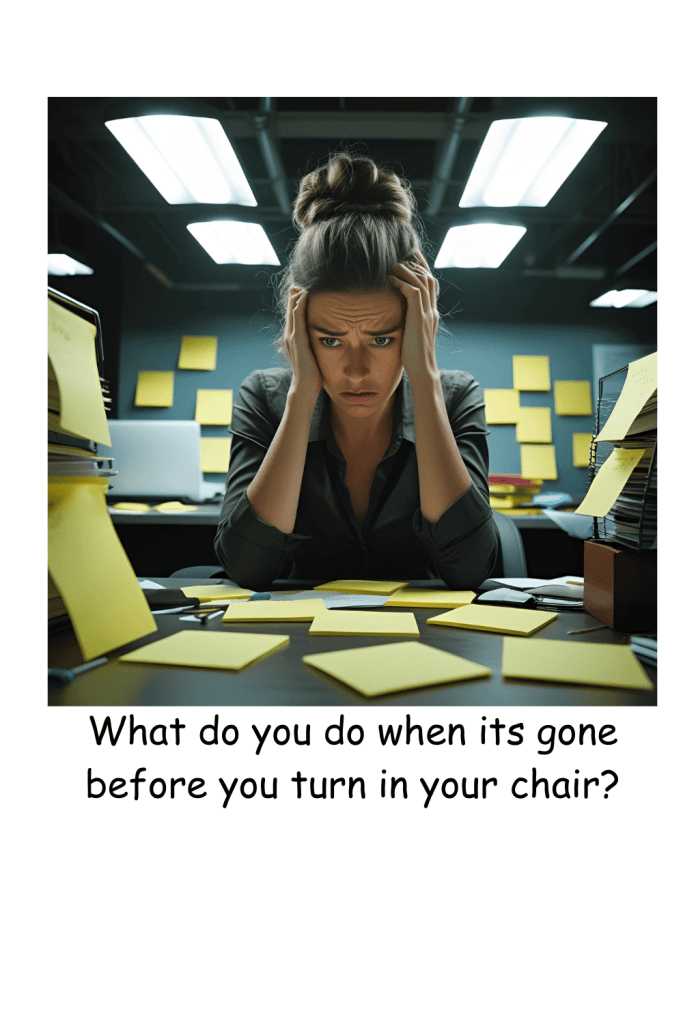
My Brain Buffering: A Love Letter to the Thoughts I Forgot Mid-Sentence

Let’s be honest: if forgetting what you were saying mid-thought was an Olympic sport, I’d have gold medals in every category. Freestyle Rambling. Synchronized Brain Fog. And my personal favorite: Disappearing Train of Thought With a Triple Mental Backflip.

People say “don’t be so hard on yourself,” and I’m like—buddy, I’m not. I’m just trying to remember what I came into this room for. And repeatedly. I’m not being ‘so hard’ on myself, I’d say I’m at least the appropriate level of hardness if not under lol

Somewhere between ADHD, fibromyalgia fog, bipolar whiplash, and a few hundred browser tabs in my brain, my inner monologue starts to sound like a dial-up modem trying to load a YouTube video. In 2003. On satellite internet. In a thunderstorm. A mile and a half down a country dirt road where theres NOTHING for miles

🧠 Exhibit A: “What Was I Saying?”

It’s not even a joke anymore. I’ll be mid-conversation, completely coherent, and suddenly—boom. Blank screen. I can literally see the words running off a cliff like cartoon lemmings.

“Wait—what was I saying?”

No really. What was I saying? I know its annoying to you, do you know how annoying it is and how much I absolutely hate the part of my brain thats supposed to remember things? Me and my brain are in an absolute love/hate relationship and we are definitely in our Hate each other era.

🤯 Fibro Fog: Not Just a Myth, Unfortunately

If you’ve never tried to function while your entire nervous system is on delay like it’s waiting for subtitles, congratulations—you’re not me. Fibro fog isn’t just forgetfulness. It’s walking into a room and standing there like you’re the main character in a slow-motion scene… except no one yelled “Action,” and you definitely missed your cue.

My body hurts, my thoughts hurt, my hair hurts, and occasionally my elbow forgets how to be an elbow. But hey, at least I still remember none of my passwords!

🎢 Bipolar Bonus: Now With Extra Whiplash!

Imagine being hyperfocused on color-coding your sock drawer one minute, then sobbing because your spoon fell on the floor the next. Now toss in some guilt about not replying to texts from 2017, and you’ve got the Bipolar Expansion Pack.

Highs that make you reorganize your pantry at 2 a.m., lows that make brushing your hair feel like a heroic feat. All while your memory plays musical chairs.

💁‍♀️ So What’s the Point?

The point is: if you’re out here trying your best with a glitchy brain, a misfiring mood system, and a body that acts like it was coded in beta—you’re not alone. You’re in deeply relatable, exhausted, beautifully chaotic company.

Some days I cry over spilled plans. Some days I laugh at my own internal commentary. And most days, I absolutely forget what I was saying.

But I’m still here. Still making stuff. Still showing up. Even if it’s ten minutes late and I forgot to put on pants. Til next time guys, take care of yourselves, and each other.

Uncategorized

10 Funny (and Some Serious) Ideas for Things to Do While Recovering from Hip Replacement Surgery

Recovering from hip replacement surgery sounds daunting, so why not make the most of your downtime? I’m a week out and I’m SO bored. I’ll probably knock out at least five of these this week. If you guys have ideas let me know EDITED TO ADD: Mother in law sent me a message letting me know that when her hubby had a hip replacement he built models and thats how she ended up with a curio case full lol. I hadn’t thought of them until she reminded me of Grandpa Greg’s recovery but thats also something tangible so I’d absolutely work on that. Legos too after I thought about it.

1. Binge Watch TV Shows Until You Forget What Day It Is

HBO, Netflix, Hulu… I feel like this one goes without saying… summon the entertainment gods! Start a show so long you’ll still be watching it when you can finally walk without looking like a baby giraffe. I’m planning to re watch this season’s Law and Orders, and Greys, and all the Chicago shows. Then I’ll branch out to see if there are any finished shows, or finished seasons of shows that I have on my to watch list.

2. Perfect the Art of Asking for Everything

This is your time to shine as the supreme monarch of laziness. Channel your inner diva and ask others to fetch you water, snacks, blankets, and everything else. I’ve started calling my husband into the room to do little things once I lay down. I start by justifying it as he’s walking in the room he’s like ‘just tell me, I know you’d do it if you could’. But half the fun is making up the justifying stuff. Make an argument they can’t say no to

3. Assemble a Throne of Pillows

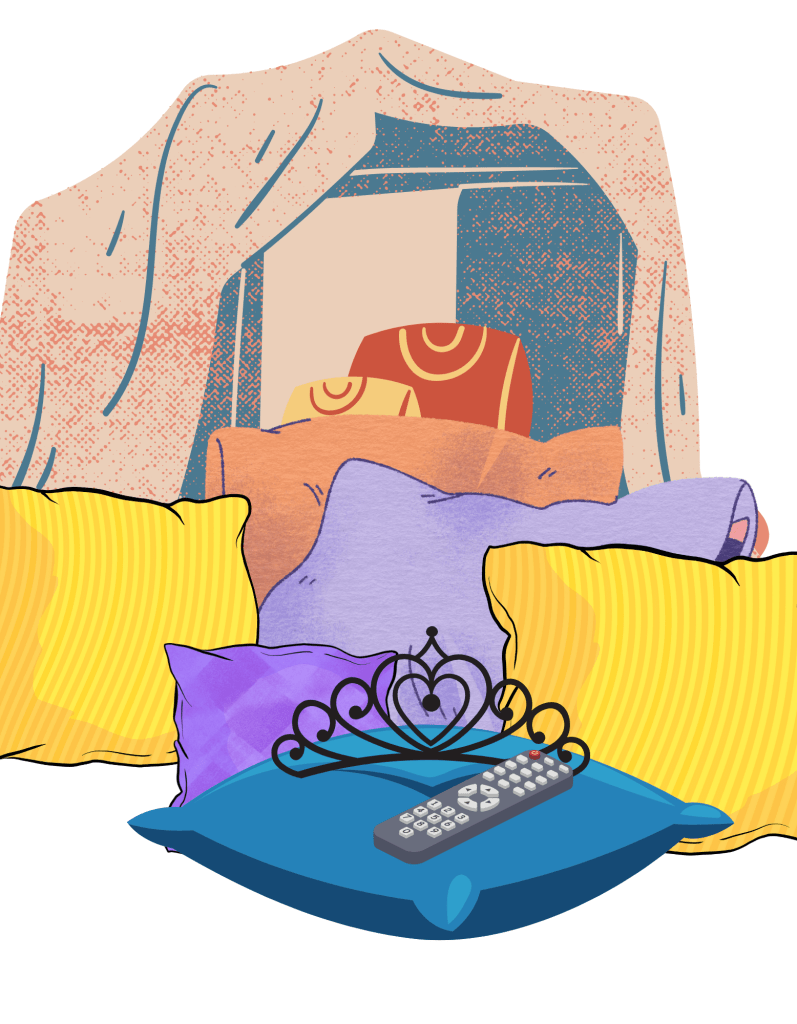
You’re going to be sitting a lot, so why not create the most luxurious pillow fort for your recovery? Bonus points if you make people call you the Pillow Queen. I don’t just want a pillow throne, I want a pillow empire that I may sit atop and be fanned and fed grapes LOL

4. Write a Memoir Called “Titanium and Tantrums”

Chronicle your hip replacement journey in all its glory—include your emotional highs, your many Netflix binges, and the awkward moment you dropped a crutch down the stairs. Kidding, steer clear of stairs for the duration of your recovery. I didnt do crutches, I did a combo of walker and cane but it sucks to drop your cane. I have a grabber that I also drop, so I play pick up sticks with my toes lol. My memoir would be boring, mostly about how I try doing things myself, fail, then wait for someone to *gulp* help.

5. Invent an Alter Ego for Your New Hip

Name your new hip something badass like “T-800” or “Iron Justice.” Refer to it exclusively in the third person. “Iron Justice doesn’t approve of stairs today.” LOL I havent named mine yet, but I did notice I didnt have any bionic powers yet. Super Speed???? Maybe but I wont find that out til its magically activated and I am summoned to my rightful place instead of seated here atop my pillow throne.

6. Train Your Pets to Assist You

Turn your dog into a furry nurse or your cat into a reluctant butler. Teach them to fetch your slippers, deliver snacks, or at least sit next to you and look cute. I’ve been working SO HARD at this one, so far I have gotten two of the four to sit in my vicinity and grace me with their presence, I’ll continue working at it, it will be slow going but I’ve got time.

7. Learn to Swear in Different Languages

You’ll need new words for when physical therapy makes you want to throw something. Imagine shouting “Merde!” or “Scheisse!” to spice up your frustrations. I should look into the swear words, I don’t think they have a section for it in Duolingo lol, but I’ve been doing Duolingo more. Make yourself fluent in a language of your choosing. Thats using your time constructively

8. Create a Playlist Called ‘My Hip Don’t Lie’

LOL You knew a playlist had to be on the list somewhere! Honestly my soundtrack has been senate hearings and stand up comedy, but now that I’m feeling good enough not to sit on my ass today it’s Shakira time. Include other bangers like “Can’t Stop This Feeling” and “Walk This Way.” Dance from the couch (or gently sway if you’re not quite there yet).

9. Become a Professional Napper

If naps were an Olympic sport, you’d be going for gold. Nap at odd hours. Nap mid-conversation. Nap just because you’re bored. Recovery requires rest, after all. I seriously love me a good nap. I havent been sleeping well because I have to elevate my hip and I’m uncomfortable on that side, so if I’m in my chair and the moment calls for it I can be sound asleep in under 3 minutes.

10. Plan Your Post-Recovery Dance Routine

Once your new hip is ready, you’ll obviously want to celebrate with a victory dance. Sketch it out now: a little cha-cha, a hip thrust (carefully), and a triumphant lean. I have actually thought about this a fair amount, I love to dance. I love to move, I hate sitting still so its driving me crazy, but I know I’ll be able to dance soon and feel much better while doing it, so thats what I’m holding on to.

Final Thoughts:

Recovery is hard, but humor makes it bearable. Whether you’re inventing alter egos for your hip or perfecting your dramatic limping skills, the key is to stay entertained and keep smiling (or rolling your eyes). You’ve got this—Iron Justice (or Titanium Tina ooohhh, I like that one) will be back on the dance floor in no time. Til next time gang, take care of yourselves, and each other.

Uncategorized

When Words Go Whoosh:

The Hilarious Hiccups of Auditory Processing

Hey, fellow brain-glitch aficionados! Ever find yourself nodding along in a conversation, when—BAM!—your brain decides to take an impromptu vacation? Welcome to the wild world of auditory processing mishaps!

What’s Happening Up There?
Picture your brain as a super-slick computer. It normally takes in sound, converts it to signals, and serves up meaning faster than you can say “What?” But sometimes, it’s like trying to untangle last year’s Christmas lights: messy and confusing.

The Science-y Bit (Don’t Worry, It’s Fun)
This little brain hiccup is known as Auditory Processing Disorder (APD). It’s when your brain’s sound system decides to prank you. One minute you’re fine, and the next, you’re wondering if everyone around you started speaking Klingon. This little brain hiccup is known as Auditory Processing Disorder (APD). When you have APD, your brain struggles to process the sounds it hears correctly. It’s like if you were listening to music and the song kept skipping, leaving you wondering what just happened.

The brain processes sound in a specific order: first, the ear detects sound waves, then sends electrical signals to the brain. The auditory cortex takes those signals and decodes them into speech and meaning. Simple, right? But when there’s a glitch in that system, you might hear everything perfectly fine, but your brain just can’t put it together the way it’s supposed to. I know for me, it just takes my brain a little extra time to make the words known to my brain. Like my husband can talk, and I swear to you it sounds like Charlie Brown’s adults ‘wha whaaa wha waa wha’ lol, so I will ask for repeats or clarifications, then as he is talking, I understand what they said a minute ago and I have a comment about it. I have a bad habit of interrupting people, I am trying to stop, but I KNOW if I keep my comment to myself theres a 95% chance I will forget (and if I do I’m sorry and that will make me even MORE mad at my misfiring brain, its a perpetual state of loathing)

Fun Fact: Studies suggest that around 5% of children have some form of APD, and it often goes undiagnosed, leaving kids (and adults) in a perpetual state of “Huh?”

Signs You’re Having an Auditory Adventure:

  • Words suddenly sound like gibberish. (Is this what babies feel like all the time?)
  • You catch yourself saying “Huh?” more than a confused owl.
  • You’re nodding and smiling, hoping no one realizes you’re lost in auditory space.

The Plot Twist: When You’re the One Speaking
Irony strikes! Sometimes, your own words decide to play hide and seek in your brain. It’s like your thoughts are sprinting while your mouth is stuck in quicksand. So embarrassing and happens at least once per conversation

Why Does This Happen?


Fatigue: When you’re running low on energy, your brain can’t work at full capacity. Studies have shown that fatigue can slow down the brain’s ability to process auditory information. It can slow down the brains ability to process any information actually. Essentially, your brain starts skipping steps in its usual routine—like a tired computer processing instructions slower than usual. According to research, lack of sleep (or chronic sleep deprivation) can decrease the brain’s ability to filter out irrelevant sounds, leading to auditory processing issues.


Stress: Ever notice how hard it is to concentrate when you’re stressed? Well, turns out your brain is sort of like a nervous multitasker. When you’re under stress, your brain’s focus shifts to dealing with the stressor (like an impending deadline or an important meeting) and less on the conversation happening around you. Research from the American Psychological Association has found that chronic stress can affect how the brain processes auditory stimuli by overloading the prefrontal cortex, which is responsible for attention and processing language.


Sensory Overload: Your brain is constantly bombarded with sensory information—sounds, sights, smells, you name it. When too much sensory input floods in at once, your brain can have a “processing jam.” Think of it like trying to run too many apps at once on your phone. Research has shown that sensory overload, especially in noisy environments, can make it harder for your brain to filter and focus on the important sounds (like someone speaking to you), causing a breakdown in auditory processing. Studies also show that people with APD are more sensitive to background noise, which exacerbates this issue.

Coping Strategies (or “How to Pretend You’re Still on Earth”)

  • The classic “Could you repeat that?” (Works 60% of the time.)
  • Blame it on a sudden case of daydreaming (who doesn’t love a good daydreamer?)
  • Master the art of the vague response: “Wow, that’s really something!” Practice the smile and nod.

Remember, you’re not alone in this auditory obstacle course. So next time your brain takes an unscheduled break, just smile and laugh—it’s too short not to!

Take care, stay quirky, and make sure to be good to each other! Don’t forget to spread the kindness and love, to yourselves and each other! (George is around btw he says hi. I was going to post a picture of George and Georgina they are always playing with their kids in my yard, I’ll get one soon!)