Uncategorized

When the Holidays Are Loud Everywhere Except Your House

The holidays are noisy.
Not just with music and parties and people — but with proof. Proof that everyone else seems to be gathering, hosting, laughing, overflowing.

And then there’s your house.
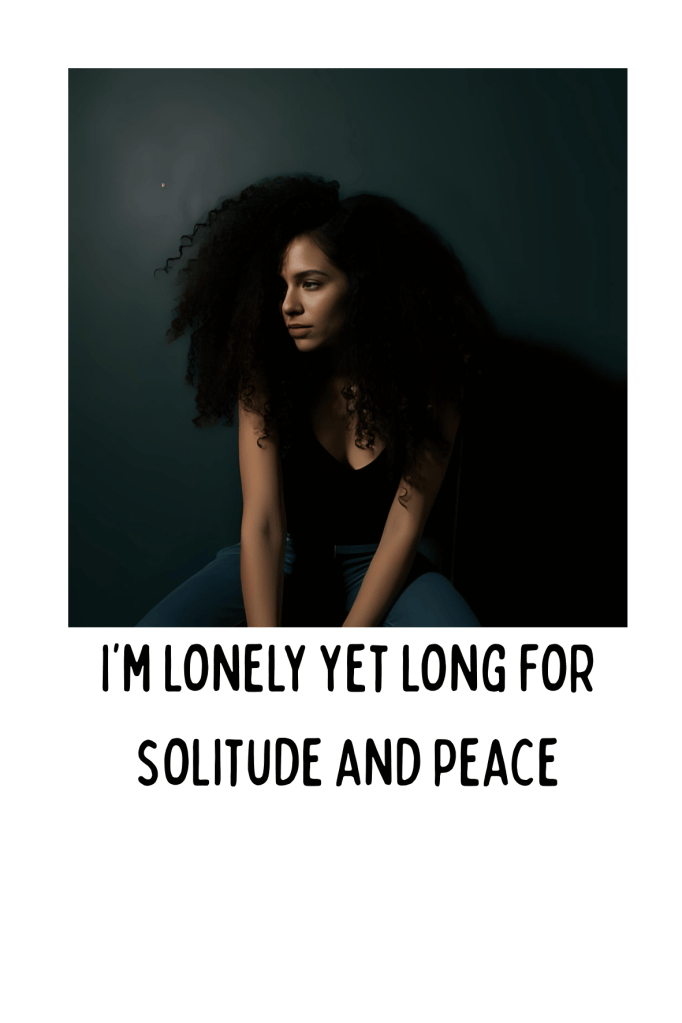
Quiet. Still. Too still.

You can be grateful and lonely at the same time. Those aren’t opposites — they’re roommates who don’t speak to each other.

You can know you’re lucky, blessed, resourced, safe…
and still feel like something essential is missing. Like the volume of the world has been turned up everywhere else and muted where you are.

That disconnect messes with your head.

Because the messaging is relentless:

  • Be thankful.
  • Cherish this season.
  • Soak it all in.

But what if there isn’t much to soak in?
What if you’re not ungrateful — you’re just alone?

There’s a particular kind of loneliness that shows up during the holidays.
Not the dramatic kind.
The quiet, creeping kind that makes you feel unworthy of love, like if you were easier, better, less broken, someone would be here.

And that’s the lie.

The truth is:
Holidays magnify absence. They don’t create it.

Estrangement, distance, grief, illness, burnout — all the things you’ve been surviving all year don’t suddenly take December off. They just get wrapped in twinkle lights and judged harder.

If your house is quiet this season, it doesn’t mean you failed.
It doesn’t mean you’re unlovable.
It doesn’t mean you did something wrong.

It just means this season is asking something different of you.

Maybe survival instead of celebration.
Gentleness instead of gratitude lists.
Presence instead of performance.

You don’t have to force joy to prove you’re okay.
You don’t have to fake cheer to earn rest.
And you don’t have to minimize your pain just because someone else has it worse.

If the holidays are loud everywhere except your house —
your quiet is still allowed.
Your sadness still counts.
And you are still worthy of love, even when no one shows up with cookies and matching pajamas.

Sometimes getting through is enough.
Sometimes staying soft in a loud world is the bravest thing you’ll do all season. Til next time gang, take care of yourselves, and each other!

Uncategorized

Signs You’re Pacing Your Energy Correctly (Even If It Feels Like You’re Doing Nothing)

If you live with chronic illness, neurodivergence, or both, pacing your energy can feel suspiciously like… failing. We’ve been conditioned to believe that productivity equals worth, and rest is something you earn after pushing yourself to the brink. Spoiler alert: that mindset is garbage — and it actively works against bodies and brains like ours.

Energy pacing isn’t about doing less because you’re “giving up.” It’s about doing what keeps you functioning tomorrow. And sometimes that looks like absolutely nothing from the outside.

Here are signs you’re actually pacing correctly — even if it doesn’t feel impressive.


1. You Stop Before You Crash

If you’re resting while you still technically could keep going, congratulations — you’re doing it right. Pacing means stopping at the “I should probably rest soon” stage, not the “I have made a terrible mistake” stage.

Ending an activity while you still have a sliver of energy left isn’t weakness. It’s strategy.


2. You Plan Rest on Purpose

Rest isn’t something that “just happens” anymore. It’s scheduled. Protected. Sometimes defended like a feral raccoon.

If your calendar includes intentional downtime — especially after appointments, errands, or social interaction — that’s not laziness. That’s advanced-level self-management.


3. Your Week Looks Boring but Survivable

A paced week doesn’t look exciting. It looks quiet. Repetitive. Underwhelming.

And that’s the point.

If you’re no longer stacking five demanding things in one day and calling it “normal,” you’re learning how to live within your limits instead of constantly bulldozing them.


4. You Say No Without a Full PowerPoint Presentation

You don’t owe anyone your medical history, trauma background, or a five-paragraph explanation for why you can’t do something.

If you’re starting to say “I can’t” or “That won’t work for me” without spiraling into guilt — that’s growth. Messy, uncomfortable, necessary growth.


5. You Recover Faster Than You Used To

Maybe you still flare. Maybe you still crash. But if the recovery time is shorter than it used to be — that’s pacing working.

Progress with chronic illness is often measured in less severe consequences, not total avoidance.


6. You’re Choosing the Easier Option Without Shame

Delivery instead of cooking. Grocery pickup instead of the store. Frozen food instead of scratch meals. Sitting instead of standing.

If you’re choosing accessibility over aesthetics, you’re not “giving up.” You’re adapting. And adaptation is how people survive long-term.


7. You Feel “Unproductive” but Less Destroyed

This one messes with people the most.

If you feel like you didn’t do much, but you also didn’t completely wreck yourself — that’s a win. A quiet one. An invisible one. But a real one.


8. You’re Thinking About Tomorrow, Not Just Today

Pacing means asking, “How will this affect me later?” instead of “Can I force myself through this right now?”

If future-you is part of your decision-making process, you’re playing the long game — and that matters.


Final Thought

Pacing doesn’t look heroic. It doesn’t get applause. It doesn’t fit hustle culture or toxic positivity.

But it keeps you alive, functional, and able to show up again.

You are not doing nothing.
You are managing a body and nervous system that require intention, restraint, and care.

And honestly? That’s not weakness.
That’s skill. Til next time gang, take care of yourselves, and each other!

Uncategorized

Fibromyalgia Isn’t Just Pain: Why the Fatigue Hits So Hard

When people hear “fibromyalgia,” they usually think of pain — aching joints, sore muscles, that constant feeling like you overdid it yesterday even when you didn’t.
Pain is part of it, yes. But for many people with fibromyalgia, fatigue is the symptom that quietly dismantles daily life.

This isn’t the kind of tired that goes away with a good night’s sleep or a strong cup of coffee. Fibromyalgia fatigue is persistent, physical, and rooted in how the nervous system functions.


Common Fibromyalgia Symptoms (Beyond Pain)

Fibromyalgia is a multisystem condition, not a single-symptom diagnosis. Common symptoms include:

  • Chronic widespread musculoskeletal pain
  • Ongoing fatigue
  • Non-restorative sleep (waking up unrefreshed)
  • Cognitive difficulties (“fibro fog”)
  • Sensitivity to light, sound, temperature, or touch
  • Headaches or migraines
  • Gastrointestinal issues (often overlapping with IBS)
  • Muscle stiffness, especially in the morning
  • Mood changes linked to nervous system stress

Not everyone experiences every symptom, and severity can fluctuate — sometimes daily, sometimes hourly.


What Makes Fibromyalgia Fatigue Different?

Fibromyalgia fatigue isn’t simply being tired from doing too much. It’s tied to central sensitization, a process in which the brain and spinal cord become overly reactive.

In simple terms:

  • The nervous system stays partially “on alert”
  • Pain signals are amplified
  • The body burns energy just maintaining baseline function

Even rest can require effort when the system responsible for regulating stress, pain, and recovery isn’t working efficiently.

Think of it like running multiple background apps you can’t close. The battery drains faster — even on low activity.

Mayo Clinic explains that people with fibromyalgia commonly experience fatigue and disrupted sleep, noting that individuals often wake up tired even after sleeping for a long time, as pain and related sleep disorders can interfere with rest. Mayo Clinic


Why Sleep Doesn’t Fix Fibromyalgia Fatigue

One of the most frustrating aspects of fibromyalgia is that sleep doesn’t reliably restore energy.

Research shows that people with fibromyalgia often experience:

  • Disrupted sleep architecture
  • Reduced time in deep, restorative sleep stages
  • Alpha-wave intrusion during sleep, keeping the brain partially alert
  • Frequent micro-arousals caused by pain or nervous system activity

This means someone can be unconscious for eight hours and still wake up feeling unrefreshed, stiff, and exhausted.

Sleep happens — but rest doesn’t fully occur.

Sleep research indicates that people with fibromyalgia often experience abnormal sleep patterns, such as reduced deep sleep and brain activity resembling wakefulness during sleep stages, which helps explain why rest does not always feel restorative. Sleep Foundation


The Role of the Nervous System

Fibromyalgia is increasingly understood as a disorder of nervous system regulation, not muscle damage or inflammation alone.

When the nervous system struggles to downshift:

  • Muscles remain tense
  • Pain signals remain elevated
  • Stress hormones like cortisol can become dysregulated
  • Energy recovery is impaired

This is why fatigue in fibromyalgia often feels disproportionate to activity levels — and why pushing through it usually backfires.


Why “Just Rest More” Misses the Point

Well-meaning advice like “get more sleep” or “listen to your body” often falls short because it assumes the system responsible for rest is functioning normally.

In fibromyalgia:

  • Rest helps, but it’s not a cure
  • Sleep matters, but it’s not always restorative
  • Energy management requires strategy, not willpower

Understanding this difference matters — medically, socially, and personally.


The Bottom Line

Fibromyalgia fatigue is not laziness, lack of motivation, or deconditioning.
It’s a nervous system issue that affects how the body processes pain, stress, sleep, and recovery.

Recognizing fatigue as a core symptom — not a side effect — is essential to understanding what living with fibromyalgia actually looks like.

Because when the system itself is misfiring, exhaustion isn’t a failure.
It’s feedback.
Til next time gang, take care of yourselves, and each other!


Uncategorized

7 Small Wins That Totally Count as Achievements in The Holiday Season

Listen… December is basically the season finale of the year, and my brain is running on whatever scraps of battery life it can find between the couch cushions. So instead of pretending I’m a fully optimized human being, I’m embracing the tiny victories — the ones that actually count.

Because if December can be dramatic?
I can be delusional in a way that helps my self-esteem.

We all know (and we’ve talked about) December is an energy zapper so here are 7 small wins that absolutely deserve applause, confetti, or at least a slow clap from someone who isn’t judging your life choices:


1. Getting dressed in something that isn’t your “I Give Up” sweatpants

Bonus points if the outfit has textures like velvet and lace, because then you’re basically cosplaying as an enchanted woodland witch who is absolutely doing her best. I’m a cross between Stevie Nicks and a victorian ghost as far as style goes. I want people to see me and feel the energy shift because I am all about delivering the good vibes.


2. Remembering one (1) single appointment

In December? That’s Nobel Prize-level discipline. Congratulations on defeating the Calendar Boss. The other appointments are jealous but hey, you crushed that lunch date.


3. Feeding yourself something other than peppermint bark

Double win if it was an actual meal. Triple win if you didn’t eat it standing in the kitchen like a tired Victorian ghost. I want people to know I am absolutely not going to be a quiet ghost. No slipping in or out of places unnoticed. I’m going to be LOUD, think of my entrances and exits to resemble Kramer’s from Seinfeld.


4. Wrapping at least one gift without crying

Or using a gift bag instead of trying to precision-fold paper like Martha Stewart with a migraine. Embrace the bag. The bag is your friend. I havent wrapped a gift in forever, the muscle memory is gone.


5. Making it through a school concert, holiday party, or work event

Even if your soul left your body three minutes in, you showed up. Gold star. I make disassociating an Olympics level sport. If you see me at an event, think of that as a premeeting and I’ll be asking all my follow up questions when I see you next and might lag on a convo or two while my brain is processing.


6. Saying “no” to something your body and brain didn’t have the spoons for

This is Advanced Seasonal Adulting™. Look at you, protecting your peace like a tiny holiday dragon guarding its hoard. I will protect my peace, because I have to listen to me when everything is quiet.


7. Remembering joy is allowed to be small right now

A quiet night. A cup of cocoa. A silly ornament. Five minutes under a blanket with the lights off. Its unreal how long I could sit and watch the tree change color while memories play like a slideshow in my head.
Tiny joy counts — especially when December tries to steamroll you.


If you’ve done even one of these things?
You’re winning. Seriously. December doesn’t want us to succeed, and yet here we are — thriving at a very reasonable, spoon-conscious pace. Til next time gang, take care of yourselves, and each other. Holiday greetings from George!)

Uncategorized

10 Times I Should’ve Trusted My Gut

Let’s talk about intuition.
That little voice in your head that says, “Maybe don’t send that text,” or “You don’t actually need to reorganize your pantry at 2 a.m.” For people with Bipolar sometimes that voice gives conflicting advice

Mine’s been screaming for years, but I usually answer with, “Shh, I’m busy ignoring you while doing exactly what you told me not to.”

So, here’s a list of ten times I absolutely should’ve listened to my gut — and how my new pendulum board helps me keep my chaos at least moderately guided now.


1. When I Thought “One More Load of Laundry” Was Harmless

My back disagreed. My spoons evaporated. Should’ve trusted the gut that said, “Sit down, you maniac” and not got back up repeatedly.


2. When I Answered That Text From My Ex

Intuition: “Don’t.”
Me: “Maybe he’s changed!”
Spoiler: He had not.


3. When I Said “Sure, I Can Handle That Project”

What I meant was: “I will spiral into a stress coma and regret everything.” Not sure if thats any illness talking I think we all over promise sometimes, even to ourselves lol.


4. When I Ignored the Weird Rattle in My Car


Turns out the “ghost” was a very real, very expensive muffler issue. Of all the times my gut cost me, this was an EXTRA pricey one lol.
Gut: 1. Me: $600.

5. When I Thought I Could Skip My Meds “Just for a Day”

LOL. Never again. My brain chemistry is not DIY-friendly. Most of them arent shy about telling me I forgot them either. Not just for a day, not even just for an afternoon lol.


6. When I Tried To Explain My Chronic Illness to a Facebook Comment Section

Intuition said log off.
Ego said educate.
Result: chaos and regret.


Lately, I’ve been using this pendulum board I made — not as some mystical fortune-teller thing, but as a quick way to ground myself. Watching it swing back and forth slows my thoughts down enough to actually hear what my gut’s saying.

7. When I Said “It’s Just a Little Pain”

…and three days later I’m Googling “can you die from ignoring your body?”


8. When I Thought “I’ll Sleep When I’m Dead” Was a Vibe

SO MANY people say this! Turns out it’s… not great health advice.


9. When I Ordered the Giant Craft Supply Haul “For Business Purposes”

I mean, it was technically business-related. Just… maybe not this month’s business. Maybe I wanted to not be rude, gotta get something for everybody!

10. When I Ignored My Gut About Taking a Break


(aka any time I have been up out of my chair for over 5 minutes)

Every time I push through instead of pausing, my body yells louder next time.
Now I ask my pendulum, and if it swings toward “Sit down,” I listen.
(Okay, fine, I try to listen.)


🌙 Moral of the Story: Trust Yourself, Babe.

Intuition isn’t mystical nonsense—it’s your nervous system whispering what it already knows.
The pendulum just helps quiet the noise long enough for you to actually hear it.

If you want a gentle nudge toward trusting yourself again (or just something gorgeous and witchy for your nightstand), my new 3D-printed Pendulum Board Kit is going to be perfect for you.
It includes:

  • A black + purple board engraved with intuitive answers
  • A matching pendulum
  • A mini guide for using it (with question prompts!) I can make custom ones with special colors.
    Coming to you in the next few days, keep an eye out for it

✨ Perfect for the overthinker who’s spiritually curious but still skeptical (hi, it’s me). Til next time gang, take care of yourselves, and eachother!

Uncategorized

💊 When Your Body Stages a Coup: Surviving Withdrawal from Your Legally Prescribed Meds

So picture this: you’re minding your business, taking your meds like a responsible adult, when suddenly—boom.
Pharmacy delay. Doctor out of town. Prior authorization “pending.” Ah the setback of psych meds.
And your nervous system? It’s like, “Cool cool cool… let’s panic about everything now.”

Let’s be clear right out of the gate:
This isn’t addiction.
This is what happens when your body gets used to something your doctor prescribed, and then it disappears faster than your motivation on a Monday.

For people managing chronic pain, ADHD, bipolar disorder, fibromyalgia, anxiety—basically anything that makes life feel like juggling flaming swords—missing meds can wreck your whole week. Sometimes your whole month. It used to be pain meds were controlled, well I got off all them and then I find out one of my meds for my mental state is controlled too.

So here’s the practical, not-patronizing guide to surviving it.


🧠 1. Know What’s Happening — It’s Not “Just in Your Head”

Your body doesn’t care that you’re being responsible. It just knows chemistry changed.
Withdrawal from meds like antidepressants, or mood stabilizers can cause:

  • Flu-like symptoms (the fever, chills, and “oh God, why” kind)
  • Dizziness or brain zaps
  • Stomach chaos (you know what I mean)
  • Anxiety that feels like being trapped in your own skin
  • Crying at car insurance commercials

You’re not crazy, dramatic, or weak. You’re literally detoxing from a medication your body depended on.


🩺 2. Call the Pharmacy and Doctor — Every. Single. Day.

Yes, it’s annoying. Yes, they hate it. Do it anyway.
Sometimes the squeaky wheel really does get the refill.

Ask for:

  • A partial fill (even a few days’ worth helps)
  • Generic or alternative options
  • If your doctor can bridge it with samples or a similar med

If you can’t get through to your doctor, ask to speak to the nurse or pharmacist directly—they can often light a fire under the process faster than anyone else.


🧘‍♀️ 3. Temporary Coping Tools (That Actually Help)

You can’t cure withdrawal, but you can soften the edges.
Try:

  • Hydration like it’s your job. Electrolytes help your body flush junk out faster.
  • Protein and complex carbs. Blood sugar swings make symptoms worse.
  • Body temp tricks: cool showers for feverish restlessness, warm baths for muscle tension.
  • Magnesium and vitamin B supplements (if cleared by your doc).
  • Ginger tea or mints for nausea.
  • Noise + comfort TV. Distract your brain from itself. (“SVU’ or ‘Chicago’ shows is a favorite here.)

And yes, sleep whenever you can. Withdrawal can feel like a bad breakup between your brain and your body, and you’ll need rest to survive the drama.


🚨 4. Know When It’s Too Much

If your symptoms go beyond “ugh” and start looking like “dangerous,” it’s time to get help.
Go to urgent care or call your doctor if you experience:

  • Suicidal thoughts
  • Chest pain
  • Severe confusion or disorientation
  • Tremors, seizures, or blood pressure spikes

No guilt, no hesitation. This isn’t weakness—it’s biology in meltdown mode.


💬 5. You’re Not a “Druggie.” You’re a Human Being.

Let’s kill that stigma right now.
There’s a difference between dependency and addiction—one means your body adapted to a med, the other means there’s misuse or compulsion.

If you’re following your prescription and life implodes when you miss it, that’s not moral failure. That’s chemistry. And it deserves compassion, not judgment.


🌿 Bonus: What to Do Once You’re Back on Track

  • Ask about tapering. Even a few days’ gap can make restarting rough.
  • Set up refill reminders. Calendar, app, sticky note, carrier pigeon—whatever works.
  • Request overlap fills (some pharmacies will fill a few days early if you ask).
  • Stock an emergency buffer once you can, even if it’s just a few days’ worth.

And most importantly: forgive yourself for the mess that isn’t your fault.
Medication management in modern healthcare is like playing whack-a-mole blindfolded. You’re doing great just by surviving it. Dependency is’nt addiction. Til next time gang, take care of yourselves, and each other!


Uncategorized

7 Conversations I’ve Had With Myself This Week

Look, I talk to myself. A lot. And not in the cute “oh, I’m just thinking out loud” way that neurotypical people do. I’m talking full-blown conversations, complete with tone changes, arguments, and occasionally losing said arguments to myself. If you have ADHD, chronic illness, or just a generally chaotic brain, you know exactly what I’m talking about.

Here are seven actual conversations I’ve had with myself this week. I’m not proud of most of them, but I’m also not surprised by any of them.

1. The Medication Negotiation

Me at 8 AM: “Okay, time to take your pills.”

Also me: “But do I really NEED them today? I feel fine.”

Me: “You feel fine BECAUSE of the pills, you absolute potato.”

Also me: “But what if I’ve been healed by positive thinking and I don’t need them anymore?”

Me: “We’ve been through this. Take the damn pills.”

Also me: “Fine, but I’m not happy about it.”

[Takes pills]

Me, two hours later when brain fog hits: “Why didn’t I take my pills on time?”

Also me: “…We literally just had this conversation.”

2. The Food Decision Paralysis

Me, standing in kitchen: “I should eat something.”

Also me: “Agreed. What do we want?”

Me: “I don’t know, what sounds good?”

Also me: “Nothing sounds good.”

Me: “Okay, what do we HAVE?”

Also me: “Everything and nothing.”

Me: “That’s not helpful.”

Also me: “Neither is staring into the fridge like it’s going to solve our problems.”

Me: “What if we just eat cereal again?”

Also me: “We had cereal for dinner last night.”

Me: “Your point?”

[Grabs bowl]

3. The Task Initiation Battle

Me: “I need to start that thing.”

Also me: “Which thing?”

Me: “You know, THE thing. The important thing.”

Also me: “Oh right. When are we doing that?”

Me: “Now. We’re doing it now.”

Also me: “But first, let me just check my phone real quick.”

Me: “NO. We’re not doing this.”

Also me: “Just one quick scroll.”

Me: “It’s never one quick scroll and you know it.”

Also me: “But what if someone texted us?”

Me: “They didn’t.”

Also me: “But what if they did and it’s urgent?”

Me: “FINE. Five minutes.”

[Three hours later]

Me: “We never started the thing, did we?”

Also me: “…In our defense, we learned a lot about seahorse reproduction.”

4. The Sleep Schedule Delusion

Me at 9 PM: “We should go to bed.”

Also me: “But I’m not tired.”

Me: “We’re never tired at bedtime. That’s literally our thing.”

Also me: “What if tonight is different?”

Me: “It’s not. Go to bed.”

Also me: “But what if I just scroll for a bit and THEN go to bed?”

Me: “That has literally never worked.”

Also me: “There’s a first time for everything.”

[At 2 AM]

Me: “I hate us.”

Also me: “Same.”

5. The Executive Function Check-In

Me: “Have we showered today?”

Also me: “…Define ‘today.'”

Me: “The current 24-hour period.”

Also me: “Then no.”

Me: “What about yesterday?”

Also me: “I plead the fifth.”

Me: “We need to shower.”

Also me: “That sounds like a lot of steps.”

Me: “It’s literally just standing in water.”

Also me: “Yeah, but first we have to DECIDE to shower, then remember to shower, then actually GET IN the shower, then remember what order the shower things go in…”

Me: “Okay I see your point.”

Also me: “Plus we’d have to find a clean towel.”

Me: “Never mind. We’ll shower tomorrow.”

Also me: “Bold of you to assume tomorrow will be any different.”

6. The Pain Scale Debate

Me: “Ow.”

Also me: “What’s the pain level?”

Me: “I don’t know, like a 6?”

Also me: “Is it though? Remember that time we thought 7 was bad and then we had that 9?”

Me: “Good point. Maybe it’s a 5.”

Also me: “But if it’s a 5, should we take pain meds?”

Me: “I don’t know, what if it gets worse and we already used up our meds?”

Also me: “But what if we DON’T take meds and it gets worse anyway?”

Me: “What if we just suffer through it and prove we’re tough?”

Also me: “That sounds like internalized ableism.”

Me: “You’re right. Okay, taking meds.”

Also me: “Wait, did we already take meds today?”

Me: “…I don’t remember.”

Also me: “Cool, cool. This is fine. Everything is fine.”

7. The Bedtime Existential Crisis

Me at 1 AM: “Why are we like this?”

Also me: “Like what?”

Me: “You know… LIKE THIS. The chaos. The forgetting. The talking to ourselves at 1 AM.”

Also me: “It’s not our fault our brain is wired differently.”

Me: “I know, but sometimes I wish we were just… normal.”

Also me: “Normal people are boring.”

Me: “Normal people remember to pay bills on time.”

Also me: “Okay, fair point.”

Me: “Normal people don’t have to negotiate with themselves about basic tasks.”

Also me: “But would we really want to be normal if it meant losing our creativity? Our hyperfocus superpowers? Our ability to make connections nobody else sees?”

Me: “…Are you just trying to make us feel better?”

Also me: “Is it working?”

Me: “A little.”

Also me: “Then yes, that’s exactly what I’m doing.”

Me: “We should probably go to sleep.”

Also me: “Agreed. Right after we Google one quick thing.”

Me: “We both know that’s a lie.”

Also me: “And yet here we are.”


The Conclusion I Didn’t Ask For

The truth is, talking to myself has become such a normal part of my life that I forget other people don’t do this. Or at least, they don’t do it out loud. Or with multiple distinct personalities arguing about whether cereal counts as dinner.

But here’s the thing: these internal (and sometimes external) conversations are how my brain processes things. It’s how I work through decisions, remember tasks, and occasionally talk myself into doing basic human functions like showering and eating vegetables.

Is it weird? Absolutely. Is it exhausting? You have no idea. Would I change it if I could?

Ask me again after I’ve had some sleep. And by sleep, I mean after I finish this one last Google search about whether other people have full conversations with themselves or if I should be concerned. Til next time gang, take care of yourself, and each other.

[Spoiler alert: I Googled it. It’s apparently normal. We’re fine. Probably.]

Uncategorized

7 Weird Life Skills Chronic Illness Gave Me

Chronic illness is the world’s most aggressive “skills training program.” Except instead of a certificate and a raise, you get brain fog, pain, and an ongoing relationship with your heating pad. Still, I’ve picked up some unique skills along the way—stuff I never knew I’d need but now couldn’t live without.

1. Mastering the Art of Fake Smiling

I could win Olympic gold for pretending I’m fine while my joints are staging a coup. Do I want to collapse in a heap? Yes. Am I going to grin like I just won a cruise? Also yes.

2. Human Calculator for Spoonie Math

“Can I shower and cook dinner today, or is that too ambitious?” I can do the math faster than you can open your planner. Spoiler: the answer is usually “nope.”

3. Expert in Improvised Heat Therapy

Rice sock? Check. Heating pad? Check. Sitting on my kid’s warm laundry fresh out of the dryer because I can’t wait for relief? Double check. Pro tip, heat rises, I sleep ON not UNDER an electric blanket it has made a world of difference.

4. Planning for Chaos Like a Pro

You know how event planners can handle weddings with 200 guests? Try managing your day when you don’t know if you’ll wake up with a migraine, a hip flare, or zero energy. I don’t plan weddings. I plan for chaos.

5. Napping Anywhere, Anytime

Airports, doctor’s waiting rooms, my car in the school pickup line—I have the gift of nap. If there was a frequent napper punch card, I’d have earned a free mattress by now.

6. Doctor Jargon Translator

I can translate “mild discomfort” into “you won’t walk tomorrow” and “we’ll keep an eye on it” into “we have no idea what’s wrong.” Basically, I’m bilingual.

7. Black-Belt Level Boundary Setting

When you’ve got limited spoons, you learn real quick how to say, “No, I can’t go to your cousin’s friend’s birthday barbecue three towns over.” Honestly, it’s a superpower.


✨ Chronic illness may have wrecked my body, but hey—it gave me some weird little life skills along the way. Your turn: what weird skill has chronic illness forced you to master? Til next time gang, take care of yourselves, and each other.

Uncategorized

5 Ridiculously Small Things That Actually Make Life Easier

Life is overwhelming enough without adding big, complicated “fixes” to the mix. That’s why sometimes the smallest shifts—things you can do in a minute or less—end up making the biggest difference. None of these will change your entire world, but they will help smooth the edges of a rough day.


1. Drink Water Out of a Fancy Cup

Hydration is one of those “simple but annoying” tasks. But pour that same water into a glass you love—a stemless wine glass, a mason jar with a straw, or even a mug that makes you smile—and suddenly it feels less like a chore and more like a treat. Little brain tricks for the win.


2. Keep a Blanket in Arm’s Reach

There’s something grounding about having a blanket nearby. Whether it’s the middle of the day or late at night, grabbing it is an instant way to give yourself comfort without any effort. Bonus: it doubles as a nap invitation if you need it.


3. Use the “Two-Minute Rule”

Procrastination thrives on tasks that feel bigger than they are. The two-minute rule says: if it takes less than two minutes, do it now. Throw away that receipt, reply to the text, wipe the counter. You’ll be surprised how much mental clutter disappears when you knock out those quick wins. I’ve noticed this alot cleaning, it feels good to see the problem disappear.


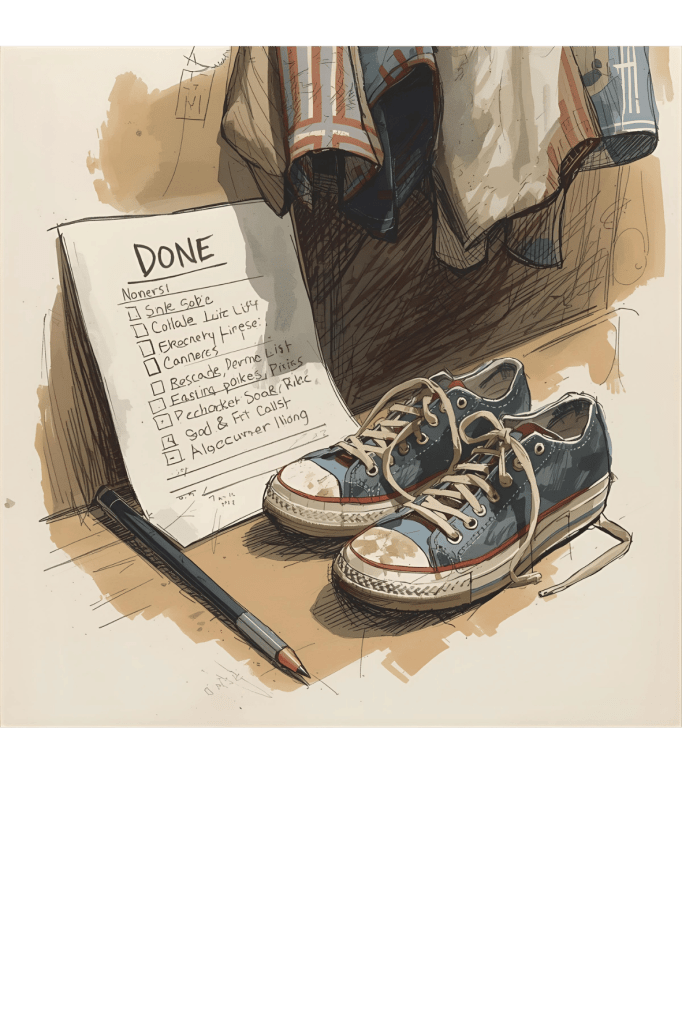
4. Make a “Done List”

To-do lists can be overwhelming, especially when they never seem to shrink. A “done list” flips the script—you jot down everything you’ve already managed, even the small stuff. It shifts your focus from “never enough” to “look what I actually did.” And honestly? That’s the energy boost most of us need. I don’t do this enough, often I’m like, what did I even do all day? show yourself all the hard work you put into your day.


5. Change Your Socks

It sounds silly, but fresh socks are an underrated reset button. They’re small, clean, and cozy, and they send your body the message that something has shifted. On a day when everything feels stagnant, that tiny reset can make you feel just a little more human. Mind the seam placement, that was always a concern with my oldest, she’d refuse to go if she felt the seam in the wrong place.


Closing

Will these tips solve all of life’s chaos? Absolutely not. But they’re proof that you don’t always need massive changes to feel a little better. Sometimes the easiest way forward is simply stacking up these micro-comforts until the day feels lighter. Til next time gang, take car of yourselves, and each other.

Uncategorized

The Social Hangover: Why One Family Gathering = Three Business Days of Recovery

I did a thing.

I put on jeans. Yes, actual denim. Not “leggings that whisper about being pants if you squint hard enough.” Real jeans. Then, because apparently I like to cosplay as a functioning human, I added makeup. First time in two years. Even did my hair. Honestly, I could’ve stopped there and deserved a medal.

But no, I had a mission: drive three hours each way to see my sister, hand-deliver the painstakingly perfected gifts I’d been working on for weeks, and socialize with more humans than my hermit soul has encountered in… possibly a decade for my sister and grand niece.

Let me tell you, the event itself? Lovely. The invite? Appreciated. The people? Wonderful. The food? Chef’s kiss. My energy afterward? Dead. Buried. Ghosted.

Here’s the unglamorous math nobody tells you:

  • Prep time: two weeks of stressing, shopping, and crafting gifts.
  • Cosmetic upgrades: one hour to transform into “someone who looks like she has her life together.”
  • Event length: six hours in the car, plus a full day of interaction.
  • Recovery time: estimated three to five business days, maybe longer. Please hold.

Today, I’m the human equivalent of a phone stuck on 2% battery with a broken charger. Hollow, sluggish, vaguely resentful at the concept of standing upright. And yet… this is the price of admission when you leave your cave.

So if you’re also lying in bed after “a fun day,” wondering why your body feels like you ran a marathon while juggling flaming swords, let me reassure you: you didn’t imagine it. Social hangovers are real. Spoon debt is brutal. Jeans are a weapon of mass destruction.

Recovery Day Survival Tips (a.k.a. How to Human Again After Too Much Humaning)

  • Hydrate like it’s your new religion. You just sweated out three weeks’ worth of electrolytes socializing.
  • Eat something that doesn’t come in a crinkly wrapper. (No shame if it does, but bonus points for real nutrients.)
  • Lay flat. On the bed, the couch, or the floor — whatever’s closest when you collapse.
  • Noise-cancel the world. Earplugs, headphones, or just a dramatic blanket burrito.
  • Cancel productivity. Laundry and dishes can wait. Your nervous system cannot.
  • Gentle motion only. Stretching, slow walks, or the ceremonial shuffle to the fridge.
  • Remember: jeans are optional for the rest of your life.


Tomorrow I’ll probably be fine(ish). But today? Today is about recovery, snacks, and swearing off denim forever. Til next time gang, take care of yourselves, and each other.