Uncategorized

What I Wish People Knew About Parenting With a Body That Doesn’t Cooperate

(AKA: This body is glitchy, but the kids still need lunch.)

Most days, I’m parenting from a horizontal position — on the couch, in the bed, or emotionally face-down in a bowl of cereal. And no, it’s not because I’m lazy. It’s because my body and brain don’t always play nice. Parenting with chronic illness (and some extra mental health sprinkles) isn’t just a different experience — it’s an entirely different reality.

But unless you’re in it, it’s hard to truly understand. So let’s talk about it.


First of all, let’s acknowledge the facts.

  • Parenting is exhausting for anyone, but for people with chronic illnesses like fibromyalgia, arthritis, lupus, or conditions like bipolar disorder and ADHD, it’s a next-level endurance test.
  • A 2019 study published in Health Psychology Open found that parents with chronic pain often experience higher levels of stress, fatigue, and feelings of guilt, especially when they can’t physically engage the way they want to.
  • Many of us deal with “invisible disabilities”, which means the world still expects us to perform like we’re running at 100%… when we’re often at 37% and glitching.

Here’s what chronic parenting really looks like:

  • I’ve prepped lunch while sitting on a stool, with my heating pad strapped to my back and a migraine drilling behind my eyes.
  • I’ve cheered from the car at events because walking across a field was out of the question that day.
  • I’ve been too tired to parent, but parented anyway because these tiny humans don’t come with a pause button.

My kids not only did school things, they did extra curricular things that I’d try and cheer them on for, and maybe the hardest part of that was to remember even in my discomfort my kids are forming memories and I really feel like the most important thing is showing up. The kids see your effort (or they will at some point) and I think its also a good lesson to teach them if its important, you find a way.


🧰 The skill set no one talks about

Sure, I can’t chase my kid around the park like some parents, but I’ve got other skills that are just as powerful:

  • Empathy: I notice when my kid is struggling, even when they don’t say it. That’s the emotional fluency that comes from living in survival mode.
  • Creative problem solving: If you’ve ever turned a laundry basket into a mobile toy bin so you don’t have to get up? You qualify. Incidentally get a grabber. I didnt have one until I had to be creative after my hip replacement, the grabber is a life saver for so simple it was honestly life changing lol.
  • Prioritizing rest over perfection: I’ve learned that being present matters more than doing it all. Show up even if it means napping.
  • Teaching independence: Out of necessity, my kids know how to microwave their snacks and fold their laundry. That’s not failure — it’s life skills.

    I’ve learned even in not being able to do things I’m teaching them to try, when faced with a choice of giving up or maybe altering something just enough to make it the right fit for you.

😞 The guilt is real. So is the resilience.

It hurts when I have to say no because my joints are angry or my brain is on fire. I hate the days when I feel like a spectator instead of a participant. And sometimes I worry about the memories my kids will hold — will they remember the things I couldn’t do?

But then they crawl into bed with me and asking ‘snuggle me in?’ and I realize they don’t see my limits the way I do. They see love, even on the hard days. Or the youngest one does, I don’t speak for the older two. There were days I didnt show up for them and I regret it. That being said, life only goes in one direction. You’ve got to keep walking with it adjusting as you go.


💬 What I want you to know

If you’re not parenting through chronic illness, here’s what helps:

  • Don’t offer unsolicited advice unless you’re also offering childcare or dinner.
  • Don’t assume we’re fine because we look okay for five minutes.
  • Ask how we’re really doing, and mean it.
  • Celebrate the small wins with us — like getting everyone dressed and vaguely fed before noon.

💛 And if you are one of us…

Parenting with a glitchy body, a misfiring brain, or both? You’re not alone. You’re not broken. And your kids don’t need perfect — they need you.

Even if today’s victory is frozen waffles and letting the screen time run wild while you rest? That counts.

You’re doing enough. More than enough.


Want to connect with more parents who get it?
👉 https://www.pinterest.com/wannabenormal/
or visit my etsy shop https://www.etsy.com/shop/JoknowsCreations
📌 Share this post to remind another spoonie mama she’s not alone.
Til next time gang. Take care of yourselves, and each other!!!


Uncategorized

Parenting Through the Fog: ADHD, Fibromyalgia, and Showing Up Anyway

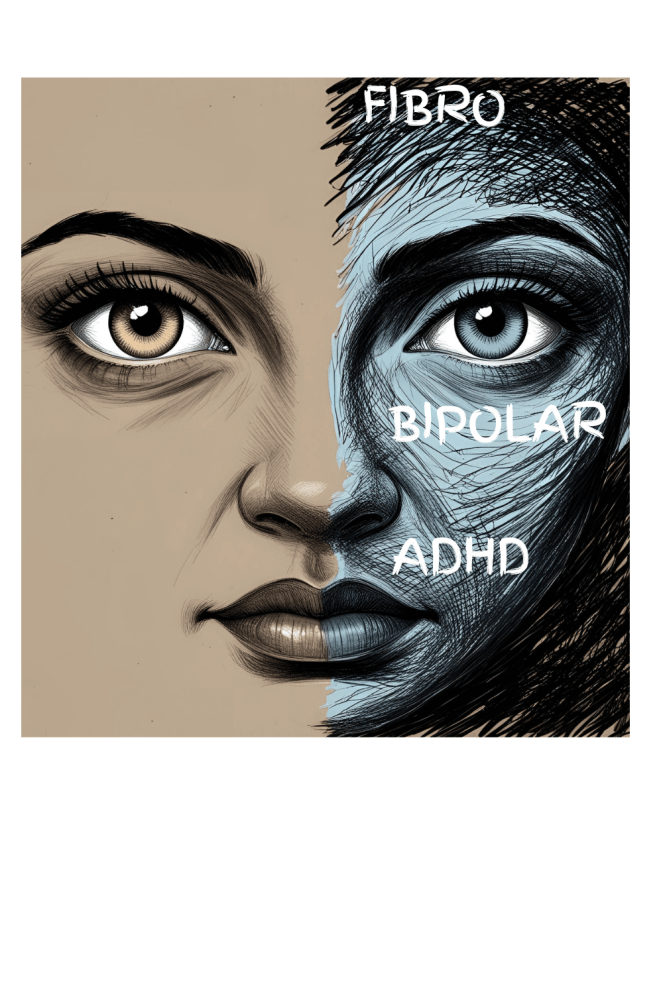
Some mornings, the win is just getting pants on. Other mornings, it’s breakfast made, meds taken, laundry halfway done before noon, and a gold star for basic humaning. But when you live with both Bipolar and fibromyalgia, (with a little ADHD thrown in for good measure) parenting becomes less of a schedule and more of a survival sport.

And the thing no one tells you? Showing up imperfectly still counts.

The Day-to-Day: A Symphony of Chaos and Grit

On paper, it probably looks like we’re flaky. Late to the appointment, forgot the school form (again), still haven’t finished the laundry from last Tuesday. In reality, it’s brain fog, chronic pain, executive dysfunction, and a nervous system that acts like it’s sprinting from a bear… while we’re just trying to make dinner.

It’s the kind of exhaustion you can’t nap your way out of.

Some days you’re the mom who makes Halloween costumes from scratch. Other days you’re the mom who considers goldfish crackers and applesauce a win. You are both and neither — and you are enough.

💡 My Daily Routine (On a Good-ish Day):

I am up at 4. No reason for it, just can’t sleep any later ever since my heart when I was in the hospital, first thing they did was draw blood so I think I started getting up early to psych myself up for it lol/
I do my Duolingo (gotta get to exercising the brain) I ‘watch the news’, I listen to all the late night monologues and any interviews I wanted to catch, or just some music in my headphones when the news isnt interesting.
This is the quiet start to the day..
5:30 First attempt waking hubby
6 First attempt waking up monkey
Usually I watch the news or do my steps in between going room to room rousing people.
6:30 daughters not up start getting irritated.
7:40 I feed and medicate the furry children
8 I start on either post or making something.
10 I have to eat to take my meds
12 the cats get fed and medicated again
12-3 Always cleaning. Folding clothes, vacuuming and dishes usually round out my day.
4 I typically start either project or chat with daughter about her day, dinner
5:30 all my chores are done by now, or as I say to them ‘if it aint done it aint gettin done til tomorrow’
I watch tv til 8 and put myself into bed, usually falling asleep, when I don’t I get up and take a gummie, because I NEED sleep and no matter what time I go to bed I am up at 4, so might as well get some sleep you know?

This might be the hardest for me. Or it WAS, I’m finally letting go.

Spoonie-friendly routines. Simplify where you can. Wash days spaced out. Clothes that don’t need ironing. Outsource or automate what you can.
I have an every other day routine because I am honest with myself and I know I need a day to recover after a productive day LOL

Movement, but gentle. Stretching or chair yoga instead of pretending we’re still in our 20s with full cartilage and a pain-free morning.
Walking, so much walking lol

Let someone help. Even if it’s just asking your kid to throw their trash away. Micro-help still counts.
Stop feeling guilt, other people have hands and feet too!

Digital checklists or ADHD-friendly planners (visual, colorful, forgiving of missed days).
I might know somewhere to get them… LOL Seriously I love mine and feeling halfway organized.

The Numbers Behind the Fog

  • ADHD is underdiagnosed in women by huge margins. One study found girls are 50–75% less likely to be diagnosed than boys, often because they’re more “daydreamy” than disruptive.
  • Fibromyalgia affects 80–90% women, and often takes 5+ years to diagnose. Why? Because women’s pain is historically minimized or chalked up to anxiety.
  • Executive dysfunction isn’t laziness — it’s a brain-based difficulty in initiating, organizing, and following through on tasks. ADHD and fibro both contribute as does the Bipolar.
  • Bipolar disorder is frequently misdiagnosed in women, often as depression or borderline personality disorder. Studies show up to 69% of women with bipolar are initially misdiagnosed, and the average delay before an accurate diagnosis is 6 to 8 years.

So yeah… it’s not in your head. But even if it were, that would still be real.


You’re Not a Failure, You’re a Force

If all you did today was exist in your body and care about your kids, you’ve already done the hard part.

The parenting books didn’t cover flare days or mental fog. But we are writing the new manual: one honest, messy, beautiful chapter at a time.

You’re not alone, you’re not broken — and you don’t have to do this perfectly to be doing it well. Til next time guys, take care of yourselves, and each other


🔍 Sources to Back It All Up


  1. ADHD underdiagnosed in girls/women
  2. Fibromyalgia affects mostly women & takes years to diagnose
  3. Bipolar misdiagnosis in women
  4. Executive dysfunction is real (not laziness!)