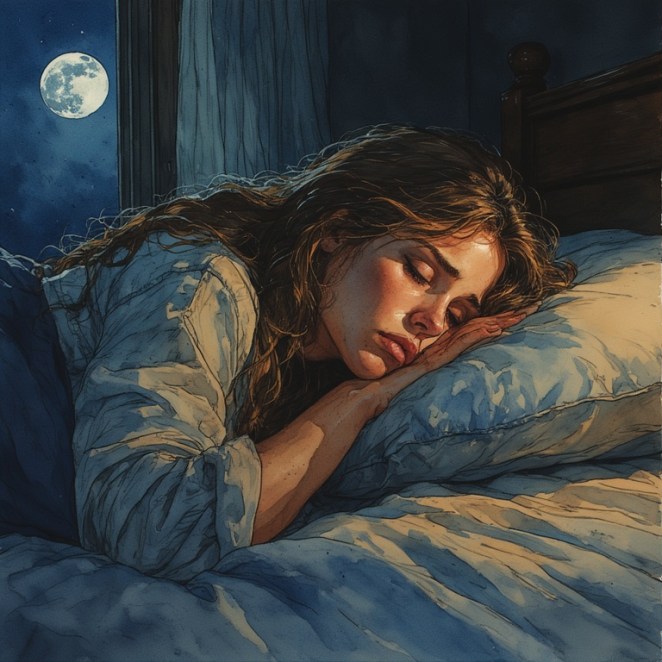
Sometimes I wake up already in pain, which feels rude considering I was unconscious and minding my business.
My jaw aches like I spent the night grinding concrete. My shoulders are locked halfway to my ears. My hands hurt like I’ve been stress-clenching imaginary problems in my sleep (which, honestly, tracks). I didn’t overdo it yesterday. I didn’t injure anything. I just… existed.
This kind of flare doesn’t start in my body — it lands there.
My nervous system wakes up feral. Heart racing. Muscles braced. Skin overly dramatic. Brain fog so thick I could lose a thought mid-thought.
It’s like my body heard a rumor that something bad might happen and decided to prepare for war before confirming the details.
When the nervous system is under prolonged stress, it can amplify pain signals even without new injury — a process called central sensitization. It’s common in fibromyalgia and chronic pain conditions, and it means the pain is real, measurable, and neurological — not imagined or exaggerated.
Here’s the annoying science part: emotional stress doesn’t stay politely in the “feelings” department. It rewires pain pathways, cranks up inflammation, and lowers the threshold for flares. My body doesn’t care if the threat is physical or psychological — it reacts with the same unhinged enthusiasm either way.
So when I say I’m in pain, I’m not being metaphorical. I mean my body is cashing a check my nervous system wrote.
There’s research behind this, by the way. Emotional distress activates the same pain-processing pathways in the brain as physical injury. For people with fibromyalgia or trauma histories, the nervous system can stay stuck in high-alert mode — turning stress into very real, very physical pain.
It looks like moving slower. Canceling plans without guilt (or with guilt, but canceling anyway). It looks like heat packs, silence, and a deep distrust of anyone who suggests I “push through it.” It looks like exhaustion that sleep laughs at and pain that refuses to justify itself with visible damage.
This isn’t weakness. This is a system that’s been on high alert for too long and forgot how to stand down.
Some days the goal isn’t fixing anything — it’s lowering the volume. Fewer demands. Softer expectations. Treating my body like it’s been through something instead of asking it to perform like it hasn’t.
Pain doesn’t always come from injury. Sometimes it comes from carrying too much, for too long, with no off switch. Til next time gang, take gentle care of yourselves, and each other!
Let’s be honest: pain flares deserve their own tier list. Not all suffering is created equal. Some flares are just a polite tap on the shoulder and others feel like they’ve traveled across lifetimes to personally drag you into the void.
So in the spirit of scientific accuracy (and by scientific accuracy, I mean vibes), here’s the ultimate ranking:
1️⃣ The Tiny Gremlin Twinge — A Mild Nuisance
This one pops up like, “Hey girl, just checking in!” It’s annoying, but you can still function… mostly. You limp a little, grab a heating pad just in case, and pretend it’s fine. It’s never fine — but we lie to ourselves anyway.
2️⃣ The Low-Battery Huff — You’ll Feel This Tomorrow
Your body starts sending strongly worded emails. It’s not enough to stop you, but everything feels… heavier. Slow. Foggy. You start rationing spoons like you’re preparing for a winter on the Oregon Trail.
3️⃣ The Surprise Stab — The “Who Threw That?” Pain
Sudden. Sharp. Personal. Like your muscles decided to reenact a crime scene with no warning. You freeze, gasp, and immediately question every life decision that led you here.
4️⃣ The Weather Channel Special — Barometric Betrayal
You wake up and instantly know a storm is coming. Your joints creak like a haunted staircase. Your spine predicts humidity better than any meteorologist. Honestly, you deserve a salary for this accuracy.
5️⃣ The Sensory Riot — Everything Hurts and Also Everything Is Loud
Pain spike + fibro fog + sensory overload = a cursed smoothie. Clothes? Too much. Lights? Too bright. Air molecules? Too aggressive. You consider relocating to a dark, soft cave forever.
6️⃣ The “Cancel All Plans” Episode — Nope. Absolutely Not.
The flare that turns your day into a hostage situation. Suddenly every joint is negotiating its own peace treaty. Even sitting still is exhausting. Being alive? Optional.
7️⃣ The Full-Body Betrayal — Your Skeleton Has Filed for Divorce
It spreads. It radiates. It’s everywhere at once. Nothing helps. No position is comfortable. You do that weird slow shuffle walk that looks like your bones are taped in. Heating pads, meds, and prayers to whoever will listen.
8️⃣ The “Summon the Ancestors” Flare — You Have Exited This Plane
Oh, this one? You can feel your DNA screaming. Pain so intense it becomes almost spiritual. You’re like, “I see the veil… it’s thin… tell MawMaw I’m coming…” You contemplate your will, your life choices, and whether reincarnation offers better warranty coverage.
Final Thought
Pain flares are rude, unpredictable, and truly lack professionalism. But calling them out? Naming them? Ranking them like Pokémon? Sometimes that’s how we cope — with humor, honesty, and a little dramatic flair. Til next time gang, take care of yourselves, and each other.
Sleep isn’t just about closing your eyes and drifting off. For some of us, it’s like trying to land a plane in a thunderstorm with three different copilots all fighting over the controls. ADHD, bipolar disorder, and fibromyalgia each mess with sleep in their own ways—and when they show up together, it’s no wonder rest feels more like a negotiation than a guarantee.
ADHD: A Brain That Won’t Clock Out
With ADHD, the brain doesn’t exactly come with an off-switch. Racing thoughts, late-night hyperfocus, or the dreaded “second wind” make it easy to miss sleep windows. Research shows people with ADHD often experience delayed sleep phase syndrome—meaning their internal clock is naturally shifted later.
What helps:
Keep a consistent bedtime routine (same order, every night, like brushing teeth → skincare → reading).
Use a “wind-down timer” alarm to remind you when to step away from screens.
Try body-doubling for bedtime (texting a friend “logging off now” helps hold you accountable).
Bipolar Disorder: Sleep as a Mood Swing Marker
Sleep disruption isn’t just a symptom of bipolar disorder—it’s also a warning sign. During manic episodes, people may need little to no sleep and still feel wired. In depressive episodes, hypersomnia (sleeping too much) or insomnia are both common. Clinicians even track sleep patterns as a way to gauge where someone is on the bipolar spectrum, because sleep disturbance is that central to the condition.
What helps:
Stick to a strict sleep/wake schedule—even on weekends.
Limit caffeine, alcohol, and late-night stimulation, since they can trigger swings.
Track sleep with an app or journal to catch changes early (your future self and your doctor will thank you).
Fibromyalgia: The Non-Restorative Sleep Thief
Fibro brings its own brand of sleep sabotage. Studies point to “alpha wave intrusion,” where the brain doesn’t stay in deep, restorative stages of sleep. Combine that with pain flare-ups and restless legs, and even if you technically sleep for eight hours, you wake up feeling like you pulled an all-nighter.
What helps:
Prioritize pain management before bed—stretching, warm baths, or heat pads can calm flare-ups.
Create a cozy sleep space: blackout curtains, white noise, supportive mattress.
Try gentle sleep hygiene aids, like calming teas or magnesium (if your doctor approves).
The Triple-Whammy Effect
Now imagine all three at once: ADHD pushing bedtime later, bipolar flipping the switch between insomnia and oversleeping, and fibromyalgia making whatever sleep you do get feel useless. No wonder mornings feel brutal and exhaustion never really leaves.
Why It Matters
Poor sleep isn’t just a nuisance—it worsens mood swings, flares up pain, and makes executive function even harder. But knowing the “why” behind your exhaustion is powerful. It means you can stop blaming yourself and start stacking small, realistic strategies that give you a fighting chance at rest. Til next time gang, take care of yourselves and each other.
A Patient’s Perspective on Medication Refills and Advocacy
As someone living with chronic conditions, I’ve learned that managing medications can be as challenging as managing the illnesses themselves. We trust healthcare providers and pharmacies to support us in maintaining our health and well-being, but when systems break down, the consequences can be painful, frustrating, and even dangerous. Recently, I experienced a frustrating series of events that highlight the need for better patient advocacy and streamlined processes in our healthcare system.
It started with a simple refill request for a medication I’ve been taking for years. What should have been routine turned into a week-long ordeal of pharmacy stock issues, doctor unavailability, and communication breakdowns. I found myself caught between pharmacies and medical offices, desperately trying to avoid withdrawal symptoms while also dealing with an unrelated infection.
I ordered a necessary medication refill on a Tuesday, as part of my routine care plan. I do it regularly every month. By Friday, (note they’d had it 3-4 days at this point, I didnt run out of meds UNTIL Friday) I went to pick it up, only to find that the pharmacy was out of stock. I was told to speak to the pharmacist if the medication was urgent, so I did. However, I was then told that in order to fill the prescription at another pharmacy, I would need a new script from my doctor. But my doctor historically wasn’t available on Fridays.
That weekend, I became unwell. I went to urgent care, where I was diagnosed with an unrelated infection. But alongside my infection, I experienced symptoms of withdrawal—symptoms caused by the missing medication. I immediately sent my doctor a message explaining what had happened and the withdrawal symptoms I was experiencing. I have been under her care since 2017, and she had approved my prescription months ago. There was nothing new or unusual about this situation—this was the same medication I had been prescribed and that I had ordered on Tuesday.
Despite this, my doctor’s office was silent. I continued to feel the effects of withdrawal, unable to eat properly or function without pain. It wasn’t until Tuesday that I finally reached out to the office, explained the situation, and asked for guidance. After some persistence, the office confirmed that they would cancel the Walgreens order and send the prescription to Walmart instead.
But still, nothing happened. By Wednesday afternoon, I received a vague message that gave me the sense that my situation was not urgent or important. (A professional way of saying, your situation is not a priority, she’ll get to it when she gets to it, and believe me, I’m not saying I’m a priority or better than anyone, I am saying MY SITUATION merited a closer than fleeting glance) I had been without my medication for almost a week, and I was truly suffering. Yet, when Walgreens finally called to let me know they had restocked the medication, I immediately called and told the doctor’s office and asked what do I do? She told me not to pick it up from them. They implied that doing so might make me look like I was trying to “beat the system.”
I was simply trying to manage my chronic illness with the medication that had been prescribed to me, a treatment I’ve been using for years. The lack of communication from my doctor’s office made the situation even more exasperating. My health was deteriorating, and yet, I was met with suspicion and delay.
Then, as it was a Friday and I thought the doctors office wasn’t going to respond because it was a Friday I made the decision to pick up the medication from Walgreens anyway, I received an unexpected message from the doctor’s office: they had approved my prescription and were sending it to Walmart. By then, I had already gotten the medication from Walgreens, I of course immediately called the office felt compelled to make it clear that I picked it up. That morning in fact. Then I said I wanted everything handled through Walmart from that point on. This wasn’t an issue of seeking special treatment; it was a matter of ensuring I had access to the medication I needed, which I had been prescribed and ordered in advance.
This experience has shed light on the urgent need for better patient advocacy, both from healthcare providers and pharmacies. Policies and protocols need to be in place to handle situations like this—where patients are at risk of going without crucial medications and the healthcare system fails to support them. When withdrawal symptoms are involved, or when a patient’s medical condition is chronic and requires ongoing treatment, a system should exist that ensures no patient is left in limbo or subjected to unnecessary delays. Communication should be clear, swift, and consistent. When a patient is suffering, there should be a concrete backup plan for emergencies, so that healthcare providers and pharmacies can act quickly to prevent harm.
Unfortunately, my experience with the healthcare system didn’t end there. After seeing how badly I was struggling, my husband urged me to see his doctor, hoping they could offer more support. His doctor is part of the same hospital network, so we made an appointment and explained the situation, he did not think changing to his doctor would make anything worse, he just felt that I deserved better treatment. To his surprise (but sadly not mine), the doctor, without even fully understanding my medical history, immediately dismissed my need for pain medications. She suggested I visit a pain clinic, something I had done years ago, only to be treated like a criminal.
The doctor seemed unconcerned with the fact that I’ve been managing chronic pain from fibromyalgia, a condition with no cure, for years. I explained that I avoid narcotics—especially opioids—due to my previous history. I have not taken opioids since my heart stopped in 2017. Yet, this doctor treated my use of a non-narcotic medication like (L) as if it were just another attempt to get high.
So, how do we move forward? What needs to change to ensure that no patient is left without the care they need?
First, healthcare systems must implement clear protocols for handling medication issues and withdrawal symptoms. Providers and pharmacies alike should be trained to recognize the urgency of these situations and act swiftly.
Second, patients need better access to advocacy resources and should never feel like they’re fighting an uphill battle to receive their prescribed treatments.
And lastly, healthcare providers should understand the real, lived experiences of their patients, especially those dealing with chronic illness.
I’m ready to get started on making these changes happen. There are many moving parts, but with enough support and awareness, we can begin to create a more compassionate, responsive healthcare system for everyone. This is about more than just medication—it’s about treating patients with dignity and respect. This fight isnt only chronic pain, its anyone who takes a prescription they will have withdrawal from. I’m hoping to start/join a community and make a difference. Until next time gang. take care of yourselves, and each other.













 WannaBeNormal