Uncategorized

Why Spoonies Are the Best Problem-Solvers (It’s Science)

Let’s talk about something we never get enough credit for: people with chronic illness are problem-solving ninjas.

And no, that’s not just me trying to make our daily struggle sound poetic — there’s actual science behind it.

While healthy folks go about their stable little lives with their cooperative bodies and reliable energy, we’re over here MacGyvering our way through every single day.

That constant adapting? It’s not just survival — it’s skill-building. Real, measurable, brain-changing skill-building.


🧠 The Science-y Bit

Research shows that adversity can actually boost creativity — making people more original, flexible, and engaged problem-solvers.

In plain English: hard stuff makes your brain weirdly good at solving other hard stuff.

So when you live with chronic illness, you’re basically getting a crash course in creative adaptation 24/7.

We’re not just surviving. We’re literally rewiring our brains to find new ways to function every single day.


💡 Spoonie Skill Set: Why We’d Crush Any Escape Room

1. Creative Constraint Management

Limited energy? Unpredictable symptoms? Welcome to our daily innovation lab.
Chronic illness is a masterclass in working under ridiculous constraints — and somehow making it work anyway.

2. Advanced Risk Assessment

Every activity is a cost-benefit analysis:
Shower or make dinner? Push through or rest now and avoid a three-day crash later?
That’s executive-level decision-making, my friend.

3. Reframing Like a Pro

Can’t work full-time? That’s not failure — that’s efficiency.
Need to cancel plans? That’s strategic rest.
We’ve had to reframe our entire lives, and that’s actually a top-tier cognitive skill.

4. Pattern Recognition on Steroids

Tracking symptoms, testing triggers, noticing connections? We’re basically data analysts in pajamas.
We notice what works, what doesn’t, and we constantly adapt.


🔁 Creativity + Resilience = Survival Superpower

Studies show creativity and resilience feed off each other — they grow together.

Spoonies don’t just “bounce back.” We reinvent how to exist in a world that wasn’t designed for us.

That kind of mental flexibility? It makes us great at:

  • Staying calm under chaos
  • Pivoting fast when plans fall apart
  • Finding new solutions when old ones fail
  • Surviving on 2 spoons and a half-decent snack

Basically, we’ve got the kind of mental agility CEOs put on résumés.


💼 Real-Life Problem-Solving Nobody Sees

  • Healthcare project management – coordinating meds, specialists, and insurance like a pro.
  • Energy economics – allocating resources like an overworked CFO.
  • Innovation on demand – finding new ways to cook, clean, and live when your body says “nope.”
  • Relationship navigation – balancing guilt, limits, and connection with Jedi-level emotional intelligence.

We do this every single day — quietly, constantly, expertly.


💬 Why It Matters

This isn’t toxic positivity. Chronic illness still sucks.
But recognizing the skills we’ve built? That’s validation, not sugarcoating.

✨ It crushes the “lazy” stereotype — our brains are working overtime.
🧩 It explains our exhaustion — cognitive heavy-lifting is still lifting.
💪 It proves we’re developing skills that translate everywhere — creativity, adaptability, resource management, resilience.


🧃 The Bottom Line

We’re not lazy.
We’re not fragile.
We’re elite-level problem-solvers operating under extreme conditions.

Our lives are one long masterclass in creativity, strategy, and resilience — and science says that makes us exceptional thinkers.

So the next time someone implies you’re “just resting,” remember: you’re actually performing high-level cognitive gymnastics 24/7.

Now if you’ll excuse me, I’m off to solve the complex equation of whether cereal counts as dinner.
(Spoiler alert: it does. That’s called strategic resource allocation.) Til next time gang, take care of yourselves, and each other.

Uncategorized

IEPs, Insurance, and Insanity: How the System Sets Disabled Kids Up to Fail

Or: How They Tried to Give My 16-Year-Old Bad Credit Before She Even Gets Good Credit

I’m writing this while I’m still seeing red, because sometimes rage is the only appropriate response to systematic incompetence that targets our most vulnerable children.

My teenage daughter, just received TWO medical bills addressed directly to her. Not even to her, to her NICKNAME. Not to me, her parent and legal guardian. To HER. A minor who cannot legally enter into contracts, cannot vote, cannot even get a credit card, but apparently CAN be held financially responsible for psychiatric appointments that she never consented to pay for.

I’m beyond livid, and here’s why that’s food for thought…

The Legal Facts (Because Rage Needs Receipts)

Let me be crystal clear about what’s happening here, because the healthcare system is banking on parents not knowing their rights:

FACT: In the United States, minors (individuals under 18) are not legally responsible for debts incurred, including medical bills. The responsibility typically falls on parents or legal guardians.

FACT: Requiring a person to pay medical bills accumulated when they were a child is unethical and legally unsound because that child never entered into the contract – their parents did.

FACT: Minors are not authorized by law to enter into financial responsibility agreements with medical care providers.

Yet here we are, with a healthcare billing department that apparently thinks legal precedent is more of a “suggestion” than actual law.

The Double Whammy: IEP Violations Too

But wait, there’s more dysfunction! Not only did they bill my minor child directly, but the school also changed her IEP – removing over 200 minutes of support – WITHOUT any explanation to us as parents.

FACT: Schools must send prior written notice even if a teacher notified you verbally about a change. If the school fails to send you prior written notice, it’s violating the law.
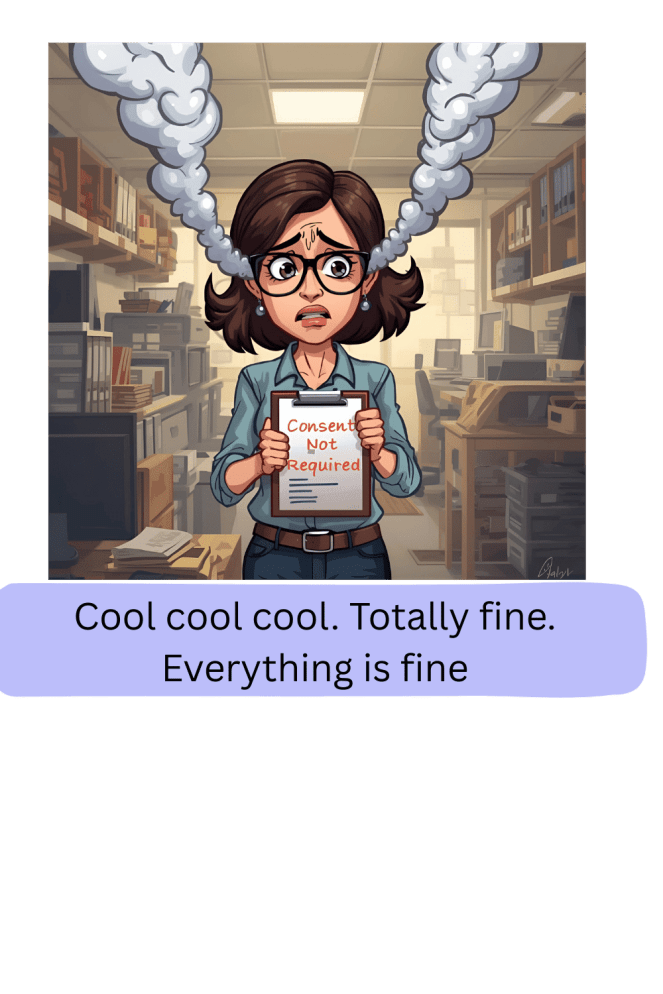
Technically they did this actually to a degree, They dropped the change in my inbox without a single explanation or a shred of guidance if we didn’t agree. Right there at the top, in bold: “We don’t need your consent we’re just letting you know.” (or words to that effect) So I refused to sign it. Or send it.

So in the span of one week, TWO different systems designed to support my disabled child have completely failed her – and apparently think the law is optional.

The Real-World Impact: Setting Kids Up to Fail

Here’s what makes this so insidious: delinquent accounts can harm credit scores, and this will impact them on their 18th birthday and thereafter.

Think about that for a moment. The system is literally trying to saddle my child with bad credit for bills she cannot legally be responsible for, for services she didn’t consent to receive, related to disabilities she didn’t choose to have.

They’re setting her up for financial failure before she even gets a chance to build credit legitimately. Before she can vote. Before she can legally sign a lease or apply for college loans.

The Insurance Shuffle Shell Game

Here’s what started this rolling: My husband got a new job with new insurance. Somewhere in that transition – without any notification to us – some of her services were deemed “not covered” under the new plan. Instead of notifying THE ADULTS who are responsible for these decisions, they:

This is not incompetence. This is systematic targeting of vulnerable families who may not know their rights.

Where Do We Go From Here? A Call to Action

If you’re facing similar situations, here’s what you need to know:

Resources That Actually Help:

The Bigger Picture: Systemic Targeting of Vulnerable Families

This isn’t just about my daughter. This is about a healthcare system that routinely targets families of disabled children, knowing that:

It’s predatory, it’s illegal, and it needs to stop.

To the Healthcare Industrial Complex Reading This:

My daughter is not your cash cow. She’s a human being with rights, and those rights don’t disappear because she has disabilities. Sending bills to minors is not just morally bankrupt – it’s legally indefensible.

You picked the wrong family to mess with. I’m a mother with ADHD hyperfocus, unlimited internet access, and righteous fury. I will make this everyone’s problem until it’s fixed.

To Other Parents: You’re Not Alone

If this happened to your family, you’re not imagining it. You’re not overreacting. This IS wrong, it IS illegal, and you DO have options.

Don’t let them intimidate you with official-looking bills and threatening letters. Know your rights. Research them! Use your voice. Protect your kids.

And if you need someone in your corner who understands exactly how infuriating and overwhelming this is, I’m here. We’re all here. The parent warrior network is real, and we’ve got each other’s backs.

UPDATE: I’ll be following up with exactly how I handle this situation, including any responses I get and resources that prove helpful. Because other parents need to know their options when the system fails their kids.

Til next time gang, take care of yourselves, and each other!

Have you dealt with similar billing issues or IEP violations? Drop your experiences in the comments. Knowledge is power, and we’re stronger when we share information.

Uncategorized

Your Brain’s Clock is Lying to You: A Field Guide to Weird Time Perception

Neurodivergent time is like dog years — it moves differently, feels different, and somehow makes perfect sense only to the person experiencing it.
If you’ve ever been both unfashionably early and catastrophically late in the same week, welcome to the club.


1. The Classic: Time Blindness

You look at the clock, it’s 3:05.
You blink, check again, and suddenly it’s 3:58, you’re still in pajamas, and the event was across town at 4.
This isn’t laziness — research suggests ADHD brains have differences in time estimation and temporal processing (Barkley, 2010), meaning we actually perceive time passing less accurately.
Translation: the clock is real, but our internal one is a knockoff from Wish.


2. The Paradox: Hyper-Punctuality

On the flip side, some of us are so terrified of being late that we swing too far the other way.
Now we’re sitting in the parking lot 25 minutes early, scrolling memes and contemplating our life choices.
Our brain’s solution to not trusting time is apparently to overcompensate until it’s awkward.


3. The “Just One More Thing” Trap

We swear we have time for one tiny task before we leave — toss in the laundry, answer that email, maybe make baked salsa chicken from scratch — and suddenly we’re in full panic mode.
The ADHD brain struggles with prospective memory (remembering to do something in the future) and transitions, so starting “one more thing” is basically time gambling with terrible odds.


4. The Black Hole Effect

You start reorganizing the spice rack. Next thing you know, it’s 2am, you’re alphabetizing oregano, and you have no idea how you got here.
Hyperfocus is great for productivity… until you remember you were supposed to eat dinner four hours ago.


Tips for Outsmarting Your Brain’s Broken Clock

  • Timers are your friend – Set alarms for when to start getting ready, not just when to leave.
  • The “fake leave time” trick – Tell yourself you have to be there 15 minutes earlier than you do.
  • Visible time cues – Use analog clocks or visual timers where you can see time moving.
  • Build a buffer – If you’re early, bring a book or podcast so you don’t feel like you’re wasting time.

📚 Fact Source: Barkley, R. A., Murphy, K. R., & Fischer, M. (2010). ADHD in Adults: What the Science Says. Guilford Press.
Yes, that’s an actual book. No, I didn’t make it up. It’s basically the ADHD brain user manual.
Til next time gang, take care of yourselves, and each other!

Uncategorized

ADHD and the Never-Ending Quest for the Right System

Or: How I Own More Planners Than Pairs of Jeans, and Still Can’t Find That Dentist Appointment Card

We’ve all been there. You buy the pretty planner with the gold coil, convinced that this will be the one to change your life. Then you try the bullet journal method because minimalism is supposed to cure chaos. Then you download six productivity apps, each promising to be the magic solution to your scattered existence. For one glorious week, you are an organizational deity, color-coding tasks (I have bought colored pens and every pen has the same color notebook and folder and yeah I am a giant nerd lol) and checking boxes like a productivity influencer. Then — poof — the planner’s under the couch collecting dust, the apps are unopened with little red notification badges mocking you, and you’re frantically scribbling your grocery list on the back of a Target receipt while standing in the cereal aisle.

Sound familiar? Welcome to the ADHD productivity paradox: we desperately need systems to function, but we’re spectacularly bad at sticking to them.

Why This Happens (Yes, Science Says So)

ADHD brains are novelty seekers. According to research published in Brain journal by Sethi et al. (2018), our dopamine reward system runs differently than neurotypical brains, with studies showing that people with ADHD have dysfunction in the dopamine reward pathway (Volkow et al., 2010). This means we thrive on new and interesting stimuli — like that gorgeous new planner layout with the perfect font — but struggle to maintain interest once the novelty wears off. That dopamine hit from “new system day” is real, but it’s also temporary.

Executive function is a fickle beast. Studies consistently show that people with ADHD have weaker function and structure of prefrontal cortex (PFC) circuits, the brain regions responsible for planning, prioritizing, and task-switching (Arnsten, 2009). Neuroimaging research has found reduced activity in certain parts of the PFC during tasks requiring sustained attention and complex decision-making (AGCO Health, 2024). It’s not laziness or lack of willpower — it’s literally how our brains are wired.. Thats why I cycle through hobbies so fast and its something I’m actively working on.

One size does not fit all. Most productivity systems are designed by and for neurotypical brains that can handle routine, sequential thinking, and sustained attention. Trying to wedge ourselves into these systems is like trying to wear jeans two sizes too small — you can do it, but it’s uncomfortable, restrictive, and not pretty.

Perfectionism is the enemy of progress. Many of us fall into the trap of thinking that if we can’t do a system “perfectly,” we shouldn’t do it at all. Miss one day of journaling? Throw out the whole journal. Forget to update the app for a week? Delete it in shame. This all-or-nothing thinking sabotages any chance of finding what actually works.

How to Work With Your Brain, Not Against It

1. Think Modular, Not Monumental. Instead of searching for one perfect “forever system,” embrace using multiple small, interchangeable tools that can work independently. Sticky notes for quick reminders that need immediate action, a large wall calendar for big-picture dates and deadlines, your phone’s alarm function for time-sensitive appointments, and maybe a simple notebook for brain dumps when your thoughts are spinning. Mix and match based on what your current life phase demands.

2. Use Dopamine to Your Advantage. Instead of fighting your brain’s need for novelty, make it part of the plan. Intentionally change colors, formats, or methods every few weeks to refresh your interest and re-engage that dopamine reward system. Buy different colored pens seasonally, switch between digital and paper tools, or reorganize your workspace regularly. Make variety a feature, not a bug.

3. Embrace “Good Enough” Productivity. You don’t need to track every habit, meal, mood, water intake, and bowel movement to be a functioning adult. Choose three key areas that truly impact your daily life and focus on keeping just those consistent. Let everything else flex and flow as needed. Progress, not perfection, is the goal.

4. Automate & Delegate Where Possible. Set recurring phone reminders for regular tasks, use grocery delivery or curbside pickup to eliminate list-making stress, automate bill payments, or recruit a family member to be your “appointment buddy” for remembering important dates. Your brain doesn’t have to carry every single piece of information if technology and other people can help.

5. Plan for Disruption. Build buffer days into your schedule, expect that your tools will need periodic rebooting, and never expect sustained perfection. Create “reset rituals” for when systems inevitably break down — maybe Sunday nights for clearing your workspace or the first of each month for reassessing what’s working. The point is to support your life, not win an imaginary “most organized person alive” award.

6. Start Ridiculously Small. Instead of overhauling your entire organizational approach, pick one tiny thing and make it automatic first. Maybe it’s putting your keys in the same spot every day, or writing tomorrow’s most important task on a sticky note before bed. Once that feels natural, add something else small. Baby steps prevent the overwhelm that kills motivation.

The Big Takeaway

You’re not broken because you can’t stick to one pristine system for years on end. Your brain is wired for variety, stimulation, and flexibility — so make those traits part of your organizational plan instead of fighting against them. You’re not failing the system. The system is failing you if it can’t adapt and flex with your very real, very human reality.

The goal isn’t to become neurotypical. It’s to find tools and approaches that work with your unique brain, even if they look messy or unconventional to outside observers. Some days that might mean a color-coded digital calendar. Other days it might mean a crumpled napkin with three things scrawled on it. Both are valid if they help you function.

Your worth isn’t measured by how perfectly you maintain a bullet journal or how consistently you use the latest productivity app. It’s measured by how well you’re living your life, taking care of what matters, and being kind to yourself in the process. Til next time gang, take care of yourselves, and each other!

Uncategorized

The Soundtrack of Sanity: How Music Saves Our Asses

let’s talk about how your Spotify playlist might just be the unsung hero in your battle against the chaos in your head. Buckle up, because we’re about to dive into the wild world of music therapy for our neurodivergent brains.

Life with ADHD, autism, or bipolar disorder is trying on its BEST behavior, but on particularly bad days it can be like is like being on a perpetual rollercoaster designed by a sadistic toddler. But before you dive headfirst into your Netflix queue (again), consider this: music isn’t just for your next embarrassing TikTok dance attempt. It’s scientifically proven to be your secret weapon in the war against your own brain. So, let’s crank up the volume and see why your playlist might be more effective than your therapist (don’t tell them I said that).

The Science Behind the Symphony (Or Why Your Brain is Basically a Rave)
First off, let’s talk brain chemistry, because nothing says “fun” like neurotransmitters, right? Turns out, listening to music triggers a dopamine release in your brain. Dopamine is like your brain’s personal cheerleader, minus the annoying pep. It’s the “fuck yeah!” chemical that makes everything seem less like a dumpster fire.

For us ADHD folks, music is like Ritalin without the side effects. Studies show that background tunes, especially with a steady beat, can help us focus and stop us from getting distracted by every shiny object in a five-mile radius. So, next time you’re struggling to read that mind-numbing report, slap on some Mozart or lo-fi beats. It’s like noise-canceling headphones for your ADHD.

And for our autistic pals, music is the universal translator we’ve been waiting for. It’s a way to express emotions without having to decipher the enigma that is human interaction. Research says music therapy can improve social skills, communication, and overall quality of life. It’s like having a cheat code for emotions.

Bipolar disorder, where your mood swings make a pendulum look stable. Music can be your emotional seatbelt on this wild ride. Studies show it can help regulate mood and reduce symptoms of depression and anxiety. When your brain is doing its best impression of a ping-pong ball between mania and depression, music can be the net that catches you. Think of it as your personal mood ring, but actually useful.

The Brain’s Playlist: How It All Works (Warning: Science Ahead)
So, what’s actually happening in your brain when you hit play? It’s like a rave in there. The limbic system (your brain’s drama queen) and the prefrontal cortex (the responsible adult) light up like a Christmas tree. This helps synchronize your neural networks, leading to improved mood and emotional resilience. In other words, music makes your brain cells hold hands and sing Kumbaya.

Why Your Music Taste Matters (Yes, Even Your Guilty Pleasures)
Of course, not all music is created equal. The impact on your mood can vary depending on what you’re into. So whether you’re headbanging to death metal or chilling to lo-fi beats, it’s all about what makes your neurons dance. The key is finding that sweet spot where the music enhances your mood without making you want to punch a wall.

Bottom Line: Hit Play for Better Days (Or At Least Slightly Less Terrible Ones)
So, the next time you’re feeling like your brain is a blender set to puree, don’t underestimate the power of a good playlist. Science says it’s not just about the sick beats; it’s about how music bitchslaps your brain into behaving. So go ahead—press play, let the music work its voodoo, and remember: sometimes the best therapy comes with a side of headphones and a killer soundtrack. Now, if you’ll excuse me, I need to go make a playlist for “Days When My Brain Decides to Be an Asshole.” It’s going to be fire. 🎵🧠🔥 Be kind to yourself and each other