Uncategorized

Things My Brain Treats Like Optional DLC

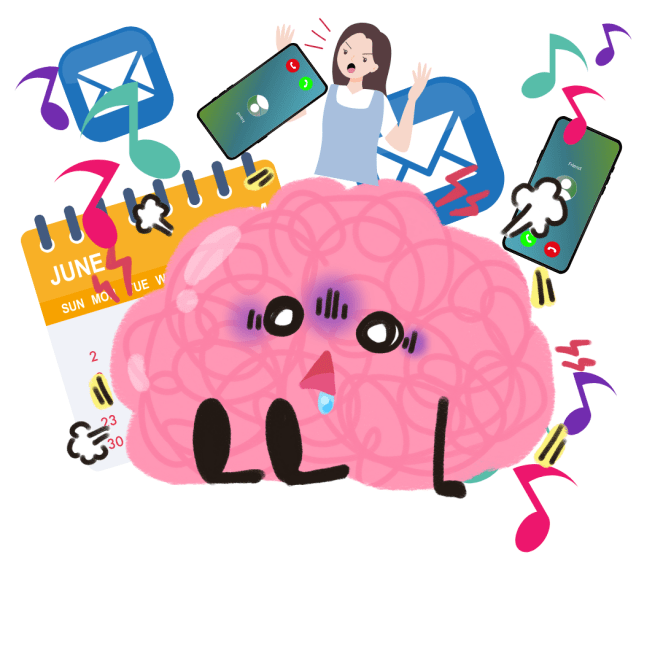
Living with Chronic Illness is basically like living with a brain that’s trying its best… but also doing parkour off the furniture. Some days I’m thriving, some days I’m forgetting what I’m doing mid-sentence, and honestly? Most days I’m just negotiating with my own executive function like it’s a hostile coworker. So here’s a little peek behind the curtain: the things my brain treats like optional DLC.

1. Object permanence… most of the time.
If I put it down and walk away, it may as well have been launched into another dimension. Keys, water bottles, important documents — all living their best lives in the ADHD void. Tell me its important, its the surefire way to get me to lose it.
2. Starting tasks? Easy. Finishing them? Bold of you to assume.
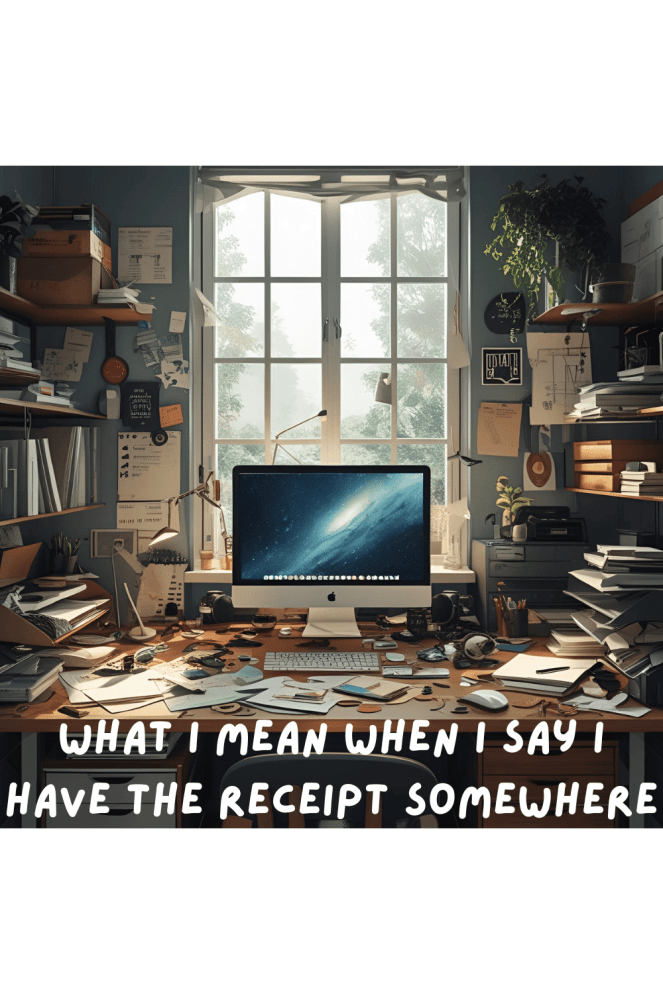
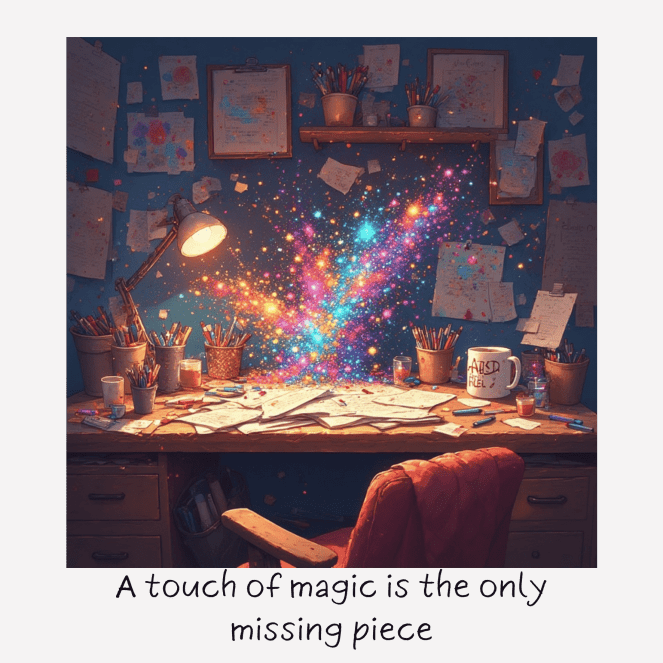
I will begin a project with Olympic enthusiasm and then abandon it halfway like a Victorian ghost girl drifting out of a scene. Don’t believe me? My craft desk is currently auditioning for a documentary called ‘When Hobbies Attack.’ Pearls would be clutched. Fainting couches would be used.

3. Time? A concept. A myth. A prank.
Ten minutes feels like an hour, an hour feels like twelve seconds, and deadlines feel like cosmic jokes written specifically for me. I need to get up, says my brain, the laundry should be done. Sure, its done, as is the day, the entire day slipped through my grasp like time itself saw me trying and said, ‘Aw, cute,’ before sprinting off.

4. Noise? Too much. Silence? Also too much.
I am either overstimulated by the faint hum of the fridge or suddenly panicking because the quiet feels suspicious. There is no chill setting. I generally leave the tv on and use the mute button, sometimes I even remember to unmute or unpause (go me)

5. Hyperfocus that appears only for hobbies, never chores.
Ask me to reorganize a shelf for fun? Instant productivity demon. Ask me to fold laundry? My brain blue screens. Meanwhile the laundry is over there quietly becoming part of the home’s structural integrity.

6. Forgetting why I opened a new tab mid-click.
My fingers click “new tab” with confidence. My brain immediately abandons the mission. We will never know what the goal was. This is the thing I hate the most. Yesterday I was at hubby’s desk and he was saying something and I said ‘I’ll go look that up’ and I turned and FELT myself forgetting it, I hadnt made it to the door when I had to turn back around and apologized and asked him to repeat himself.

7. Needing a reward just to take a shower like it’s a game quest.
“+10 XP for personal hygiene. New achievement unlocked: You Finally Did It.”
Honestly, adulting would be easier if life came with a loot box. Honestly, the only thing getting me in that shower is the promise of pajamas immediately after. The shower helps most days its just the act of doing all the things is exhausting.

8. “I’ll do it in a minute” — famous last words.
Because that “minute” might be five hours later… or three to five business days, depending on vibes and moon phases. And if a kid interrupts me? Congratulations, that task has now been postponed indefinitely.

Sure, my brain is a gremlin on roller skates, but honestly? I’m still waking up and doing my best every day. Til next time gang, take care of yourselves, and each other.


Uncategorized

Reasons I Walked Into This Room (Spoiler: I Still Don’t Know)

An ADHD mystery in real time

Here I am, standing in my bedroom, looking around like I’ve never seen this place before in my life. I definitely had a purpose when I left the kitchen. I was very determined. I had INTENT.

Now? I got nothing.

What I Tell Myself It Might Have Been:

  1. To get my phone charger
    (Nope my phone is at 97%)
  2. To grab that important document I need
    (what document? for what? the mystery deepens)
  3. To put away that thing I left in here yesterday
    (what thing? which yesterday? time is a construct)
  4. To check if I left my coffee cup in here
    (I’m not even drinking coffee today)
  5. To get something for my kid who asked for… something
    (they’re at school. it’s Tuesday. I think.)
  6. To turn off a light that was bothering me
    (all the lights are off. it’s 2 PM. I’m questioning reality)
  7. To find my glasses
    (they’re on my head. they’ve been on my head this entire time)
  8. To get that book I was reading
    (I haven’t touched a book in three weeks, what am I even talking about)
  9. To look for my keys so I don’t lose them later
    (they’re in my pocket. jingling. mocking me)

The Actual Reason:

I followed the cat.

The cat had no destination either.

We’re both just standing here now, equally confused, staring at each other and wondering what we’re doing with our lives. At least the cat has an excuse – he’s a cat. His life goals include knocking things off counters, judging my life choices, and staring at invisible things on the wall.

I’m a grown adult who apparently takes navigation cues from a creature whose biggest daily decision is which sunny spot to nap in.

Current Status:

Still in the room. Still don’t know why. The cat has moved on to more important cat business (aggressive grooming of one specific paw). I’m considering asking him for directions back to whatever I was originally doing, but he’s giving me that look that says, “Figure it out yourself, human. I’m not your GPS.”

Maybe I’ll just stay here forever. Set up camp. Make this room my new home base. At least then when people ask “Why are you in here?” I can say “I live here now. This is my life. The cat is my roommate. We don’t ask questions.”

Anyone else take mystery tours of their own house, or is it just me and my feline guide to nowhere?

Uncategorized

ADHD and the Never-Ending Quest for the Right System

Or: How I Own More Planners Than Pairs of Jeans, and Still Can’t Find That Dentist Appointment Card

We’ve all been there. You buy the pretty planner with the gold coil, convinced that this will be the one to change your life. Then you try the bullet journal method because minimalism is supposed to cure chaos. Then you download six productivity apps, each promising to be the magic solution to your scattered existence. For one glorious week, you are an organizational deity, color-coding tasks (I have bought colored pens and every pen has the same color notebook and folder and yeah I am a giant nerd lol) and checking boxes like a productivity influencer. Then — poof — the planner’s under the couch collecting dust, the apps are unopened with little red notification badges mocking you, and you’re frantically scribbling your grocery list on the back of a Target receipt while standing in the cereal aisle.

Sound familiar? Welcome to the ADHD productivity paradox: we desperately need systems to function, but we’re spectacularly bad at sticking to them.

Why This Happens (Yes, Science Says So)

ADHD brains are novelty seekers. According to research published in Brain journal by Sethi et al. (2018), our dopamine reward system runs differently than neurotypical brains, with studies showing that people with ADHD have dysfunction in the dopamine reward pathway (Volkow et al., 2010). This means we thrive on new and interesting stimuli — like that gorgeous new planner layout with the perfect font — but struggle to maintain interest once the novelty wears off. That dopamine hit from “new system day” is real, but it’s also temporary.

Executive function is a fickle beast. Studies consistently show that people with ADHD have weaker function and structure of prefrontal cortex (PFC) circuits, the brain regions responsible for planning, prioritizing, and task-switching (Arnsten, 2009). Neuroimaging research has found reduced activity in certain parts of the PFC during tasks requiring sustained attention and complex decision-making (AGCO Health, 2024). It’s not laziness or lack of willpower — it’s literally how our brains are wired.. Thats why I cycle through hobbies so fast and its something I’m actively working on.

One size does not fit all. Most productivity systems are designed by and for neurotypical brains that can handle routine, sequential thinking, and sustained attention. Trying to wedge ourselves into these systems is like trying to wear jeans two sizes too small — you can do it, but it’s uncomfortable, restrictive, and not pretty.

Perfectionism is the enemy of progress. Many of us fall into the trap of thinking that if we can’t do a system “perfectly,” we shouldn’t do it at all. Miss one day of journaling? Throw out the whole journal. Forget to update the app for a week? Delete it in shame. This all-or-nothing thinking sabotages any chance of finding what actually works.

How to Work With Your Brain, Not Against It

1. Think Modular, Not Monumental. Instead of searching for one perfect “forever system,” embrace using multiple small, interchangeable tools that can work independently. Sticky notes for quick reminders that need immediate action, a large wall calendar for big-picture dates and deadlines, your phone’s alarm function for time-sensitive appointments, and maybe a simple notebook for brain dumps when your thoughts are spinning. Mix and match based on what your current life phase demands.

2. Use Dopamine to Your Advantage. Instead of fighting your brain’s need for novelty, make it part of the plan. Intentionally change colors, formats, or methods every few weeks to refresh your interest and re-engage that dopamine reward system. Buy different colored pens seasonally, switch between digital and paper tools, or reorganize your workspace regularly. Make variety a feature, not a bug.

3. Embrace “Good Enough” Productivity. You don’t need to track every habit, meal, mood, water intake, and bowel movement to be a functioning adult. Choose three key areas that truly impact your daily life and focus on keeping just those consistent. Let everything else flex and flow as needed. Progress, not perfection, is the goal.

4. Automate & Delegate Where Possible. Set recurring phone reminders for regular tasks, use grocery delivery or curbside pickup to eliminate list-making stress, automate bill payments, or recruit a family member to be your “appointment buddy” for remembering important dates. Your brain doesn’t have to carry every single piece of information if technology and other people can help.

5. Plan for Disruption. Build buffer days into your schedule, expect that your tools will need periodic rebooting, and never expect sustained perfection. Create “reset rituals” for when systems inevitably break down — maybe Sunday nights for clearing your workspace or the first of each month for reassessing what’s working. The point is to support your life, not win an imaginary “most organized person alive” award.

6. Start Ridiculously Small. Instead of overhauling your entire organizational approach, pick one tiny thing and make it automatic first. Maybe it’s putting your keys in the same spot every day, or writing tomorrow’s most important task on a sticky note before bed. Once that feels natural, add something else small. Baby steps prevent the overwhelm that kills motivation.

The Big Takeaway

You’re not broken because you can’t stick to one pristine system for years on end. Your brain is wired for variety, stimulation, and flexibility — so make those traits part of your organizational plan instead of fighting against them. You’re not failing the system. The system is failing you if it can’t adapt and flex with your very real, very human reality.

The goal isn’t to become neurotypical. It’s to find tools and approaches that work with your unique brain, even if they look messy or unconventional to outside observers. Some days that might mean a color-coded digital calendar. Other days it might mean a crumpled napkin with three things scrawled on it. Both are valid if they help you function.

Your worth isn’t measured by how perfectly you maintain a bullet journal or how consistently you use the latest productivity app. It’s measured by how well you’re living your life, taking care of what matters, and being kind to yourself in the process. Til next time gang, take care of yourselves, and each other!

Uncategorized

Beyond Basic Spoon Theory: Strategic Energy Management for Complex Parenting

When your energy comes with an expiration date, every choice becomes strategic.

We all know spoon theory. But let’s be real—most of the advice assumes you’re managing your energy for your own activities. What happens when you can’t just “rest when you need to” because someone else depends on you for dinner, rides, and emotional regulation? When your autistic teenager needs consistency but your fibromyalgia is flaring? When your ADHD brain forgot to save energy for the evening routine, but bedtime still has to happen?

I’m not trying to be a saint here—I’m trying to survive until bedtime without completely falling apart. And that requires a different kind of energy strategy than the basic spoon theory tutorials assume.


The Complex Reality: When Multiple Conditions Collide

These are my dancin spoons

Here’s what the basic spoon theory explanations miss:
When you’re managing fibromyalgia, ADHD, and bipolar disorder simultaneously, your spoons aren’t just limited—they’re unpredictable.

My ADHD brain might hyperfocus and blow through six spoons organizing one closet. A bipolar mood shift can drain spoons faster than a phone with a cracked screen drains battery. And fibromyalgia? It’s like having a fluctuating baseline that changes without warning.

Add parenting an autistic teenager to the mix, and you’re not just managing your own energy—you’re strategically allocating it so everyone gets what they need, including you still being a functioning human by 8 PM. (Well I never claim to be a functioning human any time after 5 lol)

This isn’t about being selfless. It’s about being smart enough to pace yourself so you don’t crash and burn, leaving everyone (including yourself) worse off.


The Science Behind Why We Run Out of Spoons

Research backs up what we’ve always known: fibromyalgia isn’t just “feeling tired.” Studies show people with fibromyalgia experience disrupted sleep, increased pain sensitivity, and central sensitization—basically, our nervous systems are stuck in overdrive.

Key Research Findings:

  • Fibromyalgia and Central Sensitization: The National Institute of Arthritis and Musculoskeletal Diseases confirms fibromyalgia affects how the brain processes pain signals, leading to widespread pain and fatigue.
  • Sleep Disruption: 75–90% of people with fibromyalgia experience sleep disorders, creating a vicious cycle where pain disrupts sleep and poor sleep worsens pain.
  • ADHD and Executive Function: ADHD impacts energy regulation through executive dysfunction, making pacing activities harder.

But here’s what medical literature doesn’t capture: what happens when you can’t just “listen to your body” and rest whenever you need because someone else is counting on you?


Energy Pacing: The Research-Backed Strategy That Actually Works

The good news? There’s solid research supporting strategies beyond “just rest more.” Activity pacing is designed for people who can’t just stop when they’re tired.

Key Research Findings:

  • Activity Pacing Works: A 2023 systematic review found pacing—regulating activity to avoid post-exertional crashes—is one of the most effective strategies for chronic fatigue conditions.
  • Better Than Boom-Bust: People who learn pacing techniques report significantly improved quality of life compared to those who push through until they crash.
  • The Energy Envelope: Research shows staying within your “energy envelope” prevents the crash-and-burn cycle that leaves you useless for days.

The key insight? It’s not about doing less—it’s about doing things more strategically so you can sustain your energy over time.


My Real-Life Strategic Energy System

The Morning Energy Assessment

Every morning, I do a quick reality check: How’s my pain? Did I sleep? Is my brain foggy? This gives me a realistic count of my available energy for the day. A good day might be 15 units. A flare day? Maybe 8. The key is honesty about what I actually have, not what I wish I had.

The Triage System: Essential vs. Optional

I ruthlessly categorize tasks:

Essential: Medication, meals, safety, school pickup
Important: Homework, emotional check-ins, sensory accommodations
Optional: Fancy meals, deep cleaning, being the “fun mom”

On low-energy days, I focus only on essentials. My teen knows that sometimes we operate in “basic functioning mode,” and that’s just life—not failure. I have learned I am terrible at categorizing though lol.

The 80% Rule

Research shows staying within your “energy envelope” prevents crashes. For me, this means spending no more than 80% of my energy by 3 PM. Kids still need dinner, and I still need to exist as a person after sundown.


Practical Energy-Saving Strategies That Actually Work

Here’s where theory meets reality. These aren’t pie-in-the-sky ideas—these are battle-tested strategies for functioning for others while managing complex needs.

Batch Processing: Work Smarter, Not Harder

High-energy tasks happen on good days. Maintenance mode on the rest. Strategic, not lazy.

Examples:

  • Book medical appointments together to reduce recovery time
  • Meal prep when you’re energized, not hangry
  • Handle school stuff in batches

Environmental Modifications: Make Your Space Work for You

Our home reduces energy demands on purpose. Essentials are easy to reach, grab bars help, and my teen knows the layout.

Modifications:

  • Keep essentials within easy reach
  • Set up “stations” for meds, homework, decompression
  • Use timers and alarms because our brains aren’t built for mental tabs

The 20-Minute Rule

If it takes longer than 20 minutes, it gets chunked smaller or delegated. This prevents ADHD hyperfocus from burning my whole day’s energy.


When Your Teen Needs to Understand Your Reality

One of the hardest parts? Explaining to my autistic teen why I can’t do something today that I could yesterday. Consistency helps, but clarity wins. She’s gotten better since she goes to school based therapy, I’ve really been proud of her empathy lately.

What works:

  • Concrete language: “I have 3 energy units left. Dinner needs 2.”
  • Offer alternatives: “I can’t drive you, but I can order it.”
  • Honesty: “Energy changes daily. Not your fault or mine.”
  • Involve them: “How can we make this work with what I’ve got left?”

The Guilt Factor: Why Strategic Rest Isn’t Selfish

It took me years to accept this: protecting my energy isn’t lazy—it’s responsible. Proactive rest keeps me showing up tomorrow.

Saying no to extras isn’t shirking responsibility—it’s saving energy for what truly matters. Operating in “basic functioning mode” is how I keep us afloat without sinking out of stubbornness.


Next Week: Building your support network and emergency energy protocols—because even superheroes need backup plans. Til next time gang, take care of yourselves, and each other.

Sources / Further Reading:

Uncategorized

Neurospicy Household Rules

(Only mildly exaggerated, but it wouldnt matter because we’re spicy and no one tells US what to do!))

1. Snacks Count as a Coping Skill.

If it has carbs, it’s basically therapy. Cheese is classified as its own group lol.

2. “I Forgot” Is a Valid Reason.

So is “my brain glitched.” No need to lie about aliens (unless it’s funny). Maybe a George interrupted your thoughts IYKYK

3. Parallel Play Is Quality Time.

Existing near each other silently? Peak bonding. We congratulate each other when we imaginary win Wheel of Fortune.

4. Meltdowns Are Temporary; Love Is Not.

Cry it out, stim it out, leave the room dramatically — we’re still good. Some times we need to give each other a 15 minute buffer of alone time after disrupting or unsettling encounters.

5. Mutual Respect > Clean Counters.

Nobody ever died from crumbs, but words? They linger. I cannot emphasize this sarcastically because I really want you to think about what you say and as much as you can be, be intentional.

6. Matching Socks Are Optional. Headphones Are Not.

Protect your peace. Protect others from your playlists. Wear what you want some long as your covering the important parts lol.

7. No Important Conversations After 8pm.

Unless it’s about snacks, cat memes, or space facts. Write it down, type it out, I can promise you if you tell me something at night I have ZERO recall the next day.

8. Time Is Fake, But Deadlines Are Real.

We use timers, calendars, sticky notes, and sheer panic. As I’ve said in the past, try using time blocks rather than completed activities.

9. Sensory Needs Come First.

Dim the lights, turn down the noise, and yes, we will leave the store. I have no problem just getting up and going outside if the air starts to overwhelm and choke you.

10. We Are Allowed to Be Weird Here.

Repeat as needed: Normal is a setting on the dryer. Because normal is overrated, and honestly, it looks even more exhausting. Lol, til next time gang, take care of yourselves, and each other!

Uncategorized

Top 10 Things I’ve Googled This Week as a Chronically Ill, Neurospicy Parent

  • “Why does my hip make that sound?”
    Its not so much a pop as it is a crackle, I feel like the Rice Crispies guys are hiding somewhere.
  • “How to explain sarcasm to a teenager who is now more sarcastic than me
    It took forever for her to ‘get it’ (she’d say, is that sarcasm? every time we laugh at a joke) now she is almost more sarcastic than me. Almost lol.
  • “Can I survive on toaster waffles and spite?”
    No? Coca cola and contempt? Those are my wheelhouse.
  • “What does executive dysfunction look like in adults asking for a friend (it’s me)”
    Pretty sure I dissociated so hard I time-traveled. I came to around dinner like, wait… where did the day go?
  • “Symptoms of burnout vs laziness vs demonic possession”
    Spoiler: It was burnout. But let’s be honest, if a demon was possessing me, they’d at least fold the laundry

  • “How to nicely ask your teen to shower without being emotionally attacked”
    “I tried ‘Would you like a shower now or in 10 minutes?’ and still got hit with the emotional equivalent of a boss battle I didn’t consent to

  • “How long is too long to wait for meds to kick in before giving up on the day?”
    Asking for science. But also for vibes. Because the vibes are off and so is my serotonin.
  • “How to turn rage-cleaning into a workout”
    If slamming laundry baskets and scrubbing with vengeance burned calories, I’d be shredded by now.
  • “Can fidget toys fix my life or is that false advertising?”
    Look, they may not fix it — but they do keep me from sending That Text™ or scream-cleaning my kitchen.
  • “Is it normal to cry over spilled resin?”
    Normal? No clue. But between the cost, the smell, and the emotional spiral? Yeah. Very on brand.


Living with chronic illness, ADHD, and a teenager is like being the main character in a sitcom written by the universe when it was feeling particularly chaotic. But hey — at least I’m not boring.

BRB, googling if emotional support waffles are a thing. Til next time gang, take care of yourselves, and each other.

Uncategorized

Extremely Official Life Lessons I’ve Learned From Inanimate Objects

Hey friends. No heavy lifting today — unless you count carrying the emotional weight of a slightly stale muffin and a cluttered craft table. Just some wisdom I’ve gathered from staring at household objects for way too long and assigning them personalities.

1. My Laundry Basket

Life lesson: You can only carry so much emotional weight (and unmatched socks) before you drop something and cry about it.

2. My Microwave

Life lesson: You can explode if someone doesn’t give you enough time to cool off. It’s science. And vibes.

3. That One Spoon That’s Always Dirty

Life lesson: You are valuable. You are essential. And even if you feel gross and overlooked, someone’s probably looking for you right now.

4. The Craft Table (aka The Table Formerly Known as “Dining Room”)

Life lesson: You don’t have to be pretty to be productive. Also, chaos can be functional. It’s fine. It’s all fine.

5. My Phone Charger

Life lesson: You can’t be expected to power everything if you’re frayed at both ends. Unplug. Recharge. Or scream. Honestly, all valid.

6. The Thermostat

Life lesson: You can keep everything “set” just right and still end up wildly uncomfortable. Sometimes your system just doesn’t cooperate. That doesn’t mean you’re broken — it means you’re human. Or possibly perimenopausal. Or both. Let’s be honest, probably both.

7. The Floor

Life lesson: No matter how hard you hope, it still isn’t made of trampoline. Bouncing back takes work. And ice packs.

8. The Dish Towel That’s Always Damp

Life lesson: You can show up day after day, do your job, and still get left in a heap in the corner. But look at you — still wiping up messes like a champ.

9. That Cup in the Sink That No One Ever Claims

Life lesson: Boundaries are important. You are not the designated cleaner of everyone else’s mystery problems.

10. My Alarm Clock

Life lesson: People won’t always appreciate you for waking them up, but sometimes being the annoying truth-teller is your job. Be loud anyway.

Til next time gang, unless I resin my fingers together lol. Take care of yourselves, and each other!

Uncategorized

🧠 When You’re Too Overwhelmed to Function (Yes, It’s a Thing)

There are days — and let’s be honest, whole eras — where the simplest task feels like trying to run a marathon in molasses. You walk into a room and forget why. You stare at a sink full of dishes like it’s trying to fight you. Your to-do list is screaming, your brain is buffering, and somehow the only thing you do manage to do is… nothing.

You’re not lazy. You’re not broken. You’re overwhelmed — and your brain has hit the freeze setting.

This isn’t just relatable, it’s biological.


🧬 Why Your Brain Freezes When You’re Overwhelmed

When your brain perceives stress — whether that’s from sensory overload, emotional exhaustion, chronic illness, or straight-up having too many tabs open in your life — it doesn’t care if it’s “just” a sink full of dishes. It reacts like there’s danger.

And that reaction? It comes from your amygdala, the little almond-shaped area in your brain responsible for detecting threats. When it thinks something’s Too Much™, it sends a signal that hijacks your logical brain (the prefrontal cortex) and triggers a fight, flight, or freeze response.

According to a 2016 article in the Harvard Business Review, when we experience cognitive overload, we lose access to “working memory,” which is the part of our brain that helps us juggle tasks. And a study in the Journal of Neuroscience showed that chronic stress impairs decision-making and reduces the brain’s ability to adapt — making it even harder to snap out of the fog once you’re in it.

Basically: the more overwhelmed you are, the harder it is to stop being overwhelmed. Coolcoolcool.


🔓 Getting Unstuck: How to Unfreeze When You’re Overwhelmed

First, let’s make one thing clear: you don’t need a complete life overhaul to start moving again. We’re not doing a Marie Kondo purge, a 10-step plan, or a productivity bootcamp. We’re just finding tiny ways to signal to your brain, “Hey, we’re safe. We can take a step now.” I think I’ve talked about these before but they bear repeating.

Here are some strategies that actually help:

1. Name It to Tame It

Saying out loud, “I feel frozen right now,” isn’t weakness — it’s neuroscience. Recognizing your emotional state lights up the prefrontal cortex and starts to re-engage that logical part of your brain.
Bonus tip: Try writing it down, even if it’s just “overwhelmed AF” on a sticky note.

2. Do One Teeny, Tiny Thing

Literally one thing. Not “do the dishes.” Just “stand next to the sink.” Or “put one plate in the dishwasher.”
That’s it. Dopamine doesn’t care how small — it still gives you a little hit for doing something. And that can be just enough to take another step.

3. Try a “Body Double” Moment

This is magic for ADHD brains but helpful for anyone: having someone around (even virtually!) can snap your brain out of a freeze. It’s not about accountability — it’s about regulation.
Text a friend, turn on a co-working YouTube, or call your sister and do five minutes of Something While Complaining.

4. Change the Channel (Sensory Reset)

Sometimes your brain needs a hard reboot. That can be as simple as:

  • Splashing cold water on your face
  • Stepping outside and feeling the air
  • Listening to music with no lyrics (lofi is a fave here)
  • Switching to a different space (yes, flopping on a new surface counts)

5. The “Timer Trick”

Set a timer for 5–10 minutes and say, “I’ll just do this one thing until the timer goes off.”
You can stop when it dings — really! — but often, starting is the hardest part. The timer gives your brain a finish line.


🌱 One Last Thing: You’re Allowed to Rest

Freezing isn’t failure. It’s your brain doing its best to protect you — and that means you don’t need to bully it into productivity. Sometimes the most radical act is letting yourself rest without shame.

You are not lazy. You are not broken. You’re surviving in a system that wasn’t designed for brains like yours — but you’re still here. That’s power. Til next time gang, take care of yourselves, and each other!

Uncategorized

“Wait, Why Did I Walk in Here Again?” — The Silent Rage of Forgetting Everything and Blaming Yourself for It

I walked into the kitchen and immediately forgot why. So I stood there. Just… stood there. Like maybe the answer would jump out and bite me in the ass. Sometimes it does. Other times I start spinning like a loading screen stuck at 3%, muttering to myself, “No. I came in here for a reason. We are not leaving until we figure it out.”

And then I see the dishes. Maybe that’s why I came in? No… but might as well do them, right? But the water jug needs filling first. So I fill that. If I’m going to do the dishes I should grab my cup. So I go to grab my cup — and by the time I get to my room, the real reason I went into the kitchen finally slaps me in the face. I spin around and race back in before I forget again… but it’s too late. Whatever it was is gone. I sigh. I fill my water. I forget the dishes. And the next time I look up, it’s lunchtime and I have nothing to show for my entire morning but frustration, a full water jug, and a brain that feels like it’s made of mashed potatoes.

You already know I’ve written about executive dysfunction — and this, my friends, is a prime example. Forgetting what you were doing in the middle of doing it? Classic brain chaos.

But the part that really gets me? The rage at myself afterward.

It’s not just forgetfulness. It’s that instant gut-punch of anger when I realize I’ve wasted another 30 minutes chasing my own tail around the kitchen like a confused Sims character. It’s looking up at the clock and realizing that despite all my effort, I have nothing to show for it. Again.

And I know — I know — this isn’t a moral failure. I’ve read the books. I’ve written the posts. But logic doesn’t stop that voice in my head from whisper-screaming:
“Why can’t you just remember one simple thing?”


📚 You’re Not Broken. You’re Wired Differently.

Here’s the thing: this is common for people living with ADHD, bipolar disorder, and fibromyalgia — especially when you’ve got more than one working against you. We’re out here trying to be productive while our brains are basically running Windows 95 during a thunderstorm.

Let me throw you some validation, science-style:

  • A study in Psychiatry Research (2017) found that adults with ADHD often report intense frustration and self-directed anger after forgetful moments — especially when they’re trying to keep up with everyday tasks.
  • Another study in Bipolar Disorders Journal (2020) confirmed that even between episodes, people with bipolar disorder experience ongoing memory lapses and cognitive fog, which can trigger shame and feelings of incompetence.
  • Oh, and let’s not forget fibro fog, which isn’t just a cute nickname — it’s real cognitive dysfunction tied to chronic pain and fatigue. Researchers at the University of Michigan linked fibromyalgia with slower information processing, memory issues, and impaired attention — aka, the holy trifecta of “why am I like this?”

🧠 It’s Not a Lack of Effort — It’s a Lack of Mental Gas

We aren’t failing because we’re lazy or not trying hard enough. We’re just running on fumes while carrying twenty invisible backpacks full of mental weight.

Sometimes we remember. Sometimes we don’t. Sometimes we get furious with ourselves for not being able to hold all the tabs open, even though the mental browser has clearly crashed and is asking us to send an error report.

And the worst part? We carry that anger all day. It builds. It compounds. It turns into guilt, then into a shutdown. That’s the cost no one sees — and too many of us pay it in silence.


When the Tabs Crash – How to Forgive Yourself for Having a Human Brain

So what do you do when your brain throws a blue screen of death during your breakfast routine?

You don’t white-knuckle it through the guilt spiral, that’s for damn sure. Here’s what I’ve learned (sometimes the hard way) that might actually help when your brain taps out mid-task:


🔁 1. Reboot, Don’t Rage

When you realize you’ve just lost 20 minutes chasing nothing, pause. Literally. Sit down. Sip your coffee. Give your brain a hot minute to defragment.


📝 2. Use External Memory — Sticky Notes Are Your Friends, Not an Admission of Failure

Put a dry erase board in the kitchen. Use a Sharpie on your hand. Talk to yourself out loud like you’re your own helpful assistant.


🧍‍♀️ 3. Anchor the Space

If you forget why you walked into the room, try narrating the space to yourself.


🧠 4. Remember: Brains Use Energy. Yours Just Uses More.

You wouldn’t blame your phone for dying if you’d been using GPS, streaming music, and checking Instagram at the same time, right? You’d say, “Yeah, that makes sense.” Your brain is the same. ADHD, bipolar, fibro — they all eat cognitive battery life like candy.


💬 5. Talk Back to the Inner Bully

When that voice says “You’re useless,” respond with your voice:


💗 Final Words: You’re Not Alone. And You’re Not the Only One Forgetting Why You Opened the Fridge.

If you’ve ever felt like you’re the only person yelling at yourself in the middle of the day for forgetting why you walked into a room — you’re absolutely, 100% not.

And if you’ve been carrying that anger, thinking it means you’re weak or broken or lazy?

Let me tell you something:

Let the damn dishes wait. You’ve got enough on your plate. Til Next time guys, take care of yourselves, and each other.


Uncategorized

The ADHD Energy Crash: Why It Happens and How to Navigate It

If you live with ADHD, you’re likely familiar with the phenomenon of feeling mentally and physically drained by mid-afternoon. This isn’t just about being tired; it’s a distinct experience tied to the unique ways ADHD affects energy regulation.

🔍 Understanding the ADHD Energy Crash

ADHD is characterized by challenges in executive functioning, which means tasks that require planning, focus, and organization demand more cognitive effort. This heightened effort can lead to quicker depletion of mental energy. Additionally, individuals with ADHD often struggle with interoception—the ability to recognize internal bodily cues—making it harder to notice signs of fatigue until they’re overwhelming.

✅ Practical Strategies to Combat the Crash

Here are several evidence-based strategies to help manage and mitigate the afternoon energy slump:

  1. Incorporate Regular Physical Activity: Engaging in physical exercise can boost energy levels and improve focus. Even short walks or light stretching during breaks can make a significant difference. If you have a fitbit, the get up once an hour and do 250 steps setting, turn it on and stick to it.
  2. Prioritize a Protein-Rich Breakfast: Starting your day with a meal high in protein can stabilize blood sugar levels and provide sustained energy, reducing the likelihood of an early crash. Breakfast isnt a great meal on the go but if nothing else have a protein shake.
  3. Utilize Power Naps Wisely: Short naps, ideally between 10–20 minutes, taken in the early afternoon, can rejuvenate your mind without affecting nighttime sleep. This is a rule of thumb but not one I follow. I found my best nap is between 30 minutes to an hour, it gives me the perfect alertness when I get up. Experiment on your own and listen to your body.
  4. Practice Energy Pacing: Monitor your energy levels throughout the day and plan tasks accordingly. Scheduling demanding activities during peak energy times and allowing for rest during low-energy periods can enhance productivity. I tell people after dinner don’t ask me shit because once the last dish is done I am off the clock lol
  5. Engage in Body Doubling: Working alongside someone else, either in person or virtually, can increase accountability and focus, making tasks feel less daunting. This is seriously magic I don’t get why it works but it does.
  6. Stay Hydrated and Eat Balanced Meals: Dehydration and poor nutrition can exacerbate fatigue. Ensure you’re drinking enough water and consuming meals that balance carbohydrates, proteins, and healthy fats. Water water water. I hate it but it affects more than you’d think.
  7. Maintain Consistent Sleep Patterns: Establishing a regular sleep schedule helps regulate your body’s internal clock, leading to improved energy levels during the day. I’m up at 3. It was upsetting as I tried to change and mold it to conform with the usual hours, when I accepted that my body wanted to set its own schedule and started planning my days around that I was a great deal happier.
  8. Limit Caffeine Intake: While caffeine can provide a temporary boost, excessive consumption may lead to energy crashes later in the day. Moderation is key. HAHAHA! I can hear everyone who knows me heads whipping around. I’m a coca-cola girl, and maybe you arent overly sensitive to caffeine but thats where I’d make adjustments first.
  9. Create a Stimulating Work Environment: Incorporate elements that keep you engaged, such as background music or varying your workspace, to maintain interest and energy. They sell fidget mats that have all these things but your better off getting a fidget spinner, those are portable.
  10. Seek Professional Support: If energy crashes are significantly impacting your daily life, consider consulting a healthcare professional for personalized strategies and potential treatment options. Theres no shame in asking for help.

By understanding the underlying factors contributing to the ADHD energy crash and implementing these strategies, you can better manage your energy levels and maintain productivity throughout the day. Remember, it’s about finding what works best for you and being compassionate with yourself in the process. Til next time gang, take care of yourselves and each other.