Uncategorized

Survival and Sanity Week 21 & 22

Two Weeks of Sanity-Saving Dinners: The Reserve-Based Meal Plan That Keeps Me Sane (and Fed)โ€


If youโ€™ve ever stared into your fridge at 6:47 p.m., wondering if coffee counts as dinnerโ€ฆ hi, hello, welcome. Pull up a chair.

Iโ€™ve been there. Actually, I live there โ€” in that fun little corner of โ€œI want to eat real food, but executive dysfunction, fatigue, and a body that hates me say otherwise.โ€ Thatโ€™s why I started reserve-based meal planning. Itโ€™s not fancy. Itโ€™s not Instagram-perfect. But you know what? It works.

Hereโ€™s the deal: I only cook three times a week โ€” Tuesday, Thursday, and Sunday โ€” and I build in enough โ€œreserve mealsโ€ to handle the days in between without me having to think, chop, or remember what day it is.

This new 2-week plan is heavy on chicken and kielbasa, with some ground beef tossed in because my teen would eat ramen for every meal (and often does) if I let her. Everything is simple, budget-friendly, and spoonie-approved.


How It Works

  • Cook Days: Tuesday, Thursday, Sunday. Big batches, double recipes, whatever it takes.
  • Reserve Days: Meals that are already made or almost zero-effort to throw together.
  • Zero-Guilt Days: When you order pizza instead. It happens. Own it.

This Weekโ€™s Plan

  • Week 1 Cook Days:
    • Garlic Butter Kielbasa & Veggie Skewers (no pineapple, because no thank you but by all means, its an optional add on)
    • Chicken Alfredo Pasta Bake (lighter sauce, extra cheesy flavor)
    • Taco Night (make extra meat for another meal)
  • Week 2 Cook Days:
    • One-Pan Honey Garlic Chicken & Veggies
    • Kielbasa & Potato Skillet
    • Ground Beef Chili Mac (leftovers = instant win)
    • Simple Reserve Options (Single-Dish / Minimal Prep)
    • Chicken strips / nuggets (frozen) โ€“ microwave or oven
    • Grilled or pre-cooked sausages / kielbasa slices โ€“ heat in skillet or microwave
    • Mac & cheese โ€“ boxed or microwaveable
    • Quesadillas โ€“ just tortillas + shredded cheese, optional leftover meat
    • Pasta with jarred sauce โ€“ just boil noodles and pour sauce
    • Frozen veggies โ€“ steamable in bag
    • Instant rice / microwaveable rice packets โ€“ pair with protein
    • Frozen pizzas or flatbreads โ€“ heat & eat
    • Eggs โ€“ fried, scrambled, or boiled for super-quick meals
    • Snack plates โ€“ cheese, crackers, fruit, raw veggies

Everything โ€” recipes, grocery list, and instructions โ€” is laid out below so you can print, save, or just pull it up on your phone while you stand in the middle of the grocery aisle wondering if you already have paprika at home. (You donโ€™t. Buy more.) Til next time gang, take care of yourselves, and each other!

Uncategorized

Reasons I Walked Into This Room (Spoiler: I Still Don’t Know)

An ADHD mystery in real time

Here I am, standing in my bedroom, looking around like I’ve never seen this place before in my life. I definitely had a purpose when I left the kitchen. I was very determined. I had INTENT.

Now? I got nothing.

What I Tell Myself It Might Have Been:

  1. To get my phone charger
    (Nope my phone is at 97%)
  2. To grab that important document I need
    (what document? for what? the mystery deepens)
  3. To put away that thing I left in here yesterday
    (what thing? which yesterday? time is a construct)
  4. To check if I left my coffee cup in here
    (I’m not even drinking coffee today)
  5. To get something for my kid who asked for… something
    (they’re at school. it’s Tuesday. I think.)
  6. To turn off a light that was bothering me
    (all the lights are off. it’s 2 PM. I’m questioning reality)
  7. To find my glasses
    (they’re on my head. they’ve been on my head this entire time)
  8. To get that book I was reading
    (I haven’t touched a book in three weeks, what am I even talking about)
  9. To look for my keys so I don’t lose them later
    (they’re in my pocket. jingling. mocking me)

The Actual Reason:

I followed the cat.

The cat had no destination either.

We’re both just standing here now, equally confused, staring at each other and wondering what we’re doing with our lives. At least the cat has an excuse – he’s a cat. His life goals include knocking things off counters, judging my life choices, and staring at invisible things on the wall.

I’m a grown adult who apparently takes navigation cues from a creature whose biggest daily decision is which sunny spot to nap in.

Current Status:

Still in the room. Still don’t know why. The cat has moved on to more important cat business (aggressive grooming of one specific paw). I’m considering asking him for directions back to whatever I was originally doing, but he’s giving me that look that says, “Figure it out yourself, human. I’m not your GPS.”

Maybe I’ll just stay here forever. Set up camp. Make this room my new home base. At least then when people ask “Why are you in here?” I can say “I live here now. This is my life. The cat is my roommate. We don’t ask questions.”

Anyone else take mystery tours of their own house, or is it just me and my feline guide to nowhere?

Uncategorized

The Great Medication Shuffle: Morning Pills, Evening Pills, and the Ones I Forgot Existed

Or: How My Medicine Cabinet Became a Small Pharmacy and I Still Can’t Remember What I’m Supposed to Take When

Looking at my bathroom counter right now, I count fourteen different pill bottles, three liquid medications, two inhalers, and a partridge in a pear tree. Okay, maybe not the partridge, but at this point I wouldn’t be surprised if my doctor prescribed one for “mood support.”

For those of you managing multiple chronic conditions, you know the drill. What started as “just take this once a day” has evolved into a complex choreographed dance that would make Broadway jealous. And like any good performance, timing is everythingโ€”except I have ADHD and the memory of a goldfish with anxiety.

Meet the Cast of Characters

The Morning Crew: These are the heavy hitters that transform me from zombie to semi-functional human. They’re the ones that make it possible for me to remember my own name and possibly locate the coffee maker.

I have to take 16 pills in the morning, and it’s as gross and exhausting as it sounds. While I’m supposed to take all that in the morning, I split it up to make it easier to manage, so my pills are morning, later morning, dinner/bed. Frequently when I sit down to do my meds I have missed a few from the “later morning” category. Because nothing says “good morning” like swallowing what feels like a handful of gravel.

The Evening Squad: The night shift workers whose job is to help me actually sleep instead of lying awake cataloging every embarrassing thing I’ve done since 1987.

At night I feel like I do a lot of prep work. I take 5 at dinner. One of those is half a dose of sleep/anti-anxiety. I take another 3 when I sit down for the night. Once I have done my chores I pop the other half and soon am out cold. If any one of those is off by an inch I won’t sleep or will pass out mid-chore. It’s like a tightrope balance really, but I fall far more often lol. Nothing quite like waking up on the couch with a half-folded load of laundry as your blanket.

The Wildcards: These are the divas of the medication world. Take with food. Don’t take with food. Take two hours before this other medication but not within four hours of dairy products. Take while standing on your head during a full moon. (Okay, I made that last one up, but honestly, would you be surprised?)

I take one that’s ‘take with 600 calories.’ Ok, as in, how close to eating? Before? After? What will happen if I’m not a nutritionist and therefore have NO IDEA how many calories will be enough? Do I need to whip out a food scale? Should I be doing math at breakfast? Is a bagel with cream cheese 600 calories or am I supposed to add a side of existential dread?

The Forgotten: Every medicine cabinet has themโ€”the bottles in the back that you rediscover like archaeological artifacts. “Oh hey, I was supposed to be taking this for anxiety… six months ago. That explains a lot.”

I have a tough time with my late morning meds, so they often get forgotten until later in the day, then it’s the ‘would it be better to double up/take them closer to the night time ones? When do we no longer consider it because it’s too close to the others?’ Such fickle little things they are. It’s like playing medication Jengaโ€”one wrong move and the whole system comes tumbling down.

The Systems I’ve Tried (And How They’ve Failed Me)

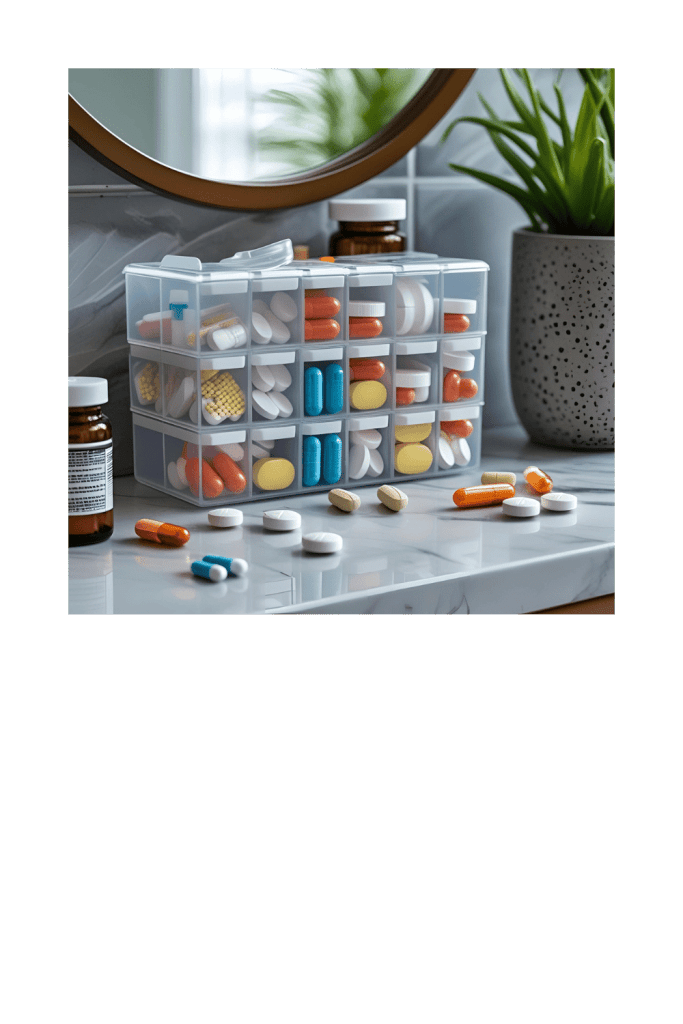
The Pill Organizer Approach: Seemed foolproof, right? Wrong. First, I had to figure out which size. The tiny ones where I can barely fit my horse-sized vitamins? The weekly ones that don’t account for my twice-daily medications? The monthly system that takes up half my kitchen counter?

I started out resisting these HARD, then went to the daily ones. They didn’t workโ€”I’d forget to fill it, so one day at a time, I was not responsible enough for that. I lived, I learned, I got a weekly with the days broke into 4 sections, and it works. And if I forget, I always skip just because that’s easier to fix than the opposite wayโ€”it’s better to err on the side of caution. Nothing like turning medication management into a weekly game of Tetris.

The Phone Alarm Method: Set seventeen different alarms with helpful names like “ADHD Med” and “Don’t Forget Thyroid Pill.” Works great until you’re in an important meeting and your phone starts screaming “TAKE YOUR CRAZY PILLS NOW” at full volume.

Or, like me, you manage to dismiss them all subconsciously or your brain chooses to ignore them lol. It’s like my ADHD brain has developed selective hearing specifically for the alarms that are supposed to help me function. I can hear a bag of chips opening from three rooms away, but medication reminders? Nope, not registering.

The Medication Apps: Downloaded four different apps that promised to change my life. They all judged me harder than my mother when I inevitably forgot to log my doses. Nothing like a guilt trip from your phone to start the day.

The apps that would change my life all involved either purchases through the app, or require so much of my time I spent more energy journaling and entering the same responses than actually taking the medications. Or I’d not remember to enter them at all after week two. Apparently, I need an app to remind me to use the app that reminds me to take my medication. It’s apps all the way down.

The “I’ll Just Remember” Method: The most delusional approach of all. My ADHD brain that can’t remember where I put my keys five minutes ago was somehow going to remember a complex medication schedule. Spoiler alert: it didn’t work.

I will have my bottle in my hand wondering if I JUST took one, or if my brain is showing me past me taking them as I’d done countless times before. It’s like my brain is running a highlight reel of every time I’ve ever taken that medication, making it impossible to distinguish between “five minutes ago” and “Tuesday three weeks ago.”

The Real Struggles Nobody Talks About

The “Did I or Didn’t I?” Game: Standing in your bathroom at 2 PM, staring at a pill bottle, trying to remember if you took your morning medication or just thought really hard about taking it. It’s like the worst guessing game ever, with side effects as consequences.

So I stand there, debating my next move like it’s a choose-your-own-adventure novel: Option A: Take the pills and risk double-dosing myself into a nap I didn’t plan. Option B: Skip them and spend the rest of the day vibrating at the wrong frequency. Spoiler alert: I picked Option C โ€” called my teen into the room and asked, “Hey, did you see me take these earlier?” They just stared at me like, “You realize I don’t follow your every move, right?” Thanks, kid. Very helpful.

The Pharmacy Mystery Calls: “Hi, your prescription for [medication you’ve never heard of] is ready for pickup!” Wait, what? When did I get prescribed that? Have I been supposed to be taking something this whole time?

Frequently I will go in for my appointment and bloodwork and she’ll call something in but forget to send the email until I contact them. So I’m left wondering if this mystery medication is something crucial I’ve been missing, or if it’s the pharmaceutical equivalent of a pocket dial. Either way, I’m driving to the pharmacy feeling like I’m solving a medical mystery.

The Coordination Nightmare: Doctor A wants to change medication X, but you have to check with Doctor B because it interacts with medication Y, and Doctor C doesn’t know about either of them because the medical records system is apparently held together with duct tape and prayers.

I once spent three weeks playing telephone between my psychiatrist, primary care doctor, and endocrinologist because nobody could agree on whether my new thyroid medication would interfere with my ADHD meds. Meanwhile, I’m sitting in the middle like a very tired, very caffeinated UN mediator, taking notes and trying to remember who said what about which pill. Spoiler alert: they all had different opinions, and I ended up being my own case study.

The Instruction Manual: That one medication that comes with a novel’s worth of instructions. Take with food, but not dairy. Don’t lie down for 30 minutes after taking. Avoid sunlight. May cause drowsiness or insomnia (thanks for being specific).

My personal favorite is the medication that says “may cause dizziness” and “do not operate heavy machinery,” but then also warns “may cause restlessness and inability to sit still.” So… I can’t drive, but I also can’t stop moving? Should I just pace around my house indefinitely? And don’t get me started on “take on an empty stomach” versus “take with food to avoid nausea.” Pick a lane, pharmaceutical industry!

What Actually Works (Sort Of)

After years of trial and error (emphasis on error), I’ve cobbled together a system that works approximately 73% of the time, which in my world counts as a rousing success.

My current system is that weekly pill organizer with four compartments per day, plus a backup system of keeping the bottles nearby for those “did I or didn’t I” moments and I actually write an x. I’ve learned to embrace the “when in doubt, skip it” philosophy because it’s easier to catch up on a missed dose than to undo a double dose. And yes, I still sometimes ask my family members if they’ve seen me take my pills, because apparently it takes a village to medicate one ADHD brain.

The key insight I’ve learned is this: there is no perfect system. There’s only the system that fails less catastrophically than the others. Some days I nail the medication schedule like a responsible adult. Other days I take my evening pills at 2 PM and wonder why I’m sleepy.

Just last week, I confidently took my morning pills, felt very proud of myself, and then found the same pills sitting in my pill organizer an hour later. Turns out I had taken yesterday’s forgotten dose. Mystery solved, but also… how did I not notice I was taking pills from the wrong day? ADHD brain strikes again.

The Bottom Line

If you’re struggling with medication management, know that you’re not alone in this pharmaceutical juggling act. We’re all just doing our best with brains that sometimes work against us and bodies that require more maintenance than a vintage car.

Your worth isn’t measured by how perfectly you follow your medication schedule. It’s measured by the fact that you keep trying, keep adapting, and keep finding ways to take care of yourself even when it feels impossibly complicated. Some days “good enough” really is good enough, and that’s perfectly okay.

Managing multiple chronic conditions isn’t just about remembering to take pillsโ€”it’s about being patient with yourself when your brain doesn’t cooperate, forgiving yourself when systems fail, and celebrating the small victories like remembering your evening meds before midnight.

Now if you’ll excuse me, I need to go stare at my pill bottles and try to remember if 2 PM counts as “evening” for my twice-daily medication.


Uncategorized

The ADHD Shopping Experience: How I Went for Milk and Came Home with a Succulent, Three Notebooks, and No Milk

A play-by-play of my brain vs. reality, or: Why simple errands are never simple

Setting the Scene: Just need milk. One item. Simple mission. What could possibly go wrong?


In the Parking Lot

ADHD Brain: “Okay, milk. Just milk. Wait, should I make a list? No, it’s just ONE thing. But what if I see something else we need while I’m there? Maybe I should text hubby and ask… no, that’s ridiculous. It’s MILK. But what kind of milk? 2% or whole? Did we discuss this? Should I check the fridge from here? Can’t do that. Focus. MILK. M-I-L-K. Got it.”

Fibromyalgia Body: “Why does every parking space require a trek equivalent to hiking the Appalachian Trail? And why is it windy? Wind makes everything hurt more.”

What Actually Happened: Sat in my car for 5 minutes trying to remember if we needed 2% or whole milk, googled “difference between 2% and whole milk nutritionally” fell down a rabbit hole about dairy farming, got distracted by a text from my mom, completely forgot why I had googled dairy farming, and finally got out of the car having made zero progress on the milk question.


Entering the Store

ADHD Brain: “Straight to dairy section. Do not pass Go. Do not collect impulse purchases. Laser focus. I am a milk-seeking missile.”

Fibromyalgia Body: “Of course I grabbed the cart with the wobbliest wheel in existence. Every step is sending shock waves through my joints. This cart sounds like a dying pterodactyl.”

Bipolar Brain: “Actually, this is kind of fun! Look at all the possibilities! So many choices! I love having choices!”

What Actually Happened: Grabbed the first cart without testing it (rookie mistake), immediately got distracted by the seasonal display of Halloween decorations prominently displayed in August, spent three minutes judging the capitalist machine that pushes holidays earlier each year, then realized I was still standing at the front of the store holding a cart that sounded like it was powered by wounded animals.


Stop #1: The Pharmacy Section

ADHD Brain: “Wait, didn’t I need to pick up that prescription? When was that due? Was it today or tomorrow? Better check while I’m here. Multitasking!”

Fibromyalgia Body: “Standing in lines is torture. Why does every person in front of me have the most complicated prescription issue in pharmacy history?”

What Actually Happened: Joined the pharmacy line without checking if I actually had a prescription ready, discovered I didn’t, but got into a fascinating conversation with the pharmacist about medication timing, learned three new things about drug interactions, forgot why I came to the store entirely, then remembered MILk when I saw the refrigerated section behind the pharmacy counter.


The Succulent Section (How Is This Even a Section?)

ADHD Brain: “Ooh, plants! I could be a plant person! Look at this tiny perfect one โ€“ it probably needs rescuing from this fluorescent wasteland. I would give it a good home. I’d name it Gerald. Gerald deserves better than this. I’ll justโ€”NO. MILK. FOCUS. But Gerald is so small and perfect…”

Bipolar Brain (manic whispering): “Plants are scientifically proven to improve mental health! This could be your new hobby! You deserve nice things! Gerald could be the first of many! Think of the Instagram potential!”

Fibromyalgia Body: “Bending over to look at these tiny plants is making my back scream, but Gerald IS pretty cute…”

What Actually Happened: Bought four succulents (Gerald, Susan, Peter,and one I didn’t name because I was trying to show restraint), plus a decorative pot that cost more than the plants, and mentally planned their placement in every room of my house despite historically being a plant serial killer.


Stop #2: The Drive-Through Coffee (Because Obviously)

ADHD Brain: “I should get coffee for this epic grocery mission. Caffeine will help me focus on the milk objective. This is strategic, not procrastination.”

Fibromyalgia Body: “My head is starting to hurt. Coffee will help. Coffee fixes everything.”

Bipolar Brain: “Treat yourself! You’re doing great! You deserve a fancy drink!”

What Actually Happened: Ordered a complicated seasonal latte, paid for it, thanked the barista, drove off immediately, got three blocks away before realizing I never actually received my coffee, circled back through the drive-through again to explain my ADHD brain to a confused teenager, got my coffee and a pitying look, then sat in the parking lot for 10 minutes mentally writing this exact blog post.


The Notebook Aisle (My Natural Habitat)

ADHD Brain: “These are on SALE! I always need notebooks! What if I run out of places to write my brilliant thoughts? What if this specific type gets discontinued forever and I never find another notebook that feels this perfect in my hands? This is an INVESTMENT.”

Bipolar Brain: “Look at all these possibilities! You could start journaling again! Or write that novel! Or organize your life! Each notebook could be a fresh start!”

What Actually Happened: Bought notebooks in three different sizes for “different purposes” – one for grocery lists (ironic, considering), one for “important thoughts,” and one for daily planning that I’ll definitely use this time, unlike the other twelve identical notebooks at home. Spent fifteen minutes arranging them in my cart by color.


At Checkout

ADHD Brain: “Mission accomplished! Wait… what was my mission? Milk! Did I get milk? I feel like I’m forgetting something important. Why do I have plants? OH RIGHT, Gerald!”

Fibromyalgia Body: “Why is this checkout line moving so slowly? My feet are killing me. Should have gotten a scooter cart.”

Cashier: “Did you find everything you needed today?”

Me: “Everything except what I came for!”

What Actually Happened: Paid $47 for succulents, notebooks, Halloween candy (forgot to mention grabbing that), fancy soap that “smelled like my childhood,” and a magazine about organizing your life. No milk. Not even close to milk.


Back Home

Family: “Did you get milk?”

Me: “I got… life lessons? And Gerald.”

Family: “Who’s Gerald?”

Me: “My new succulent son. Also, we still need milk.”

ADHD Brain: “But look how happy Gerald looks on the windowsill! This was basically a success!”


The Moral of the Story: Sometimes the journey is more important than the destination. Sometimes that journey involves adopting plant children and buying notebooks you don’t need. And sometimes you just have to go back to the store tomorrow for milk, but with Gerald watching over you from his new pot. Til next time gang, take care of yourselves, and each other.

Uncategorized

In the Blink of a Goodbye

Some goodbyes donโ€™t feel like moments. Maybe the worst goodbyes are the ones that shift everything and we dont see it until later. Goodbyes donโ€™t always announce themselves. They feel like earthquakesโ€”shifting everything inside of you, leaving you aching in a silence no one else can hear. Sometimes theyโ€™re hidden in the everyday, only revealing their weight once youโ€™ve had time to sit with them, to turn them over, to realize what they took with them. This poem grew out of that kind of goodbye โ€” the quiet, unexpected kind that reshapes you long after itโ€™s gone.

In the Blink of a Goodbye

In the blink of a goodbye
The pain is visceral and real
It makes me miss the hugs more
The painful ache I canโ€™t conceal

In the blink of a goodbye
Headlights pass a house unseen
Still it holds all the love I keep
In walls youโ€™ve never lived between

In the blink of a goodbye
Iโ€™d give anything to see your face
Iโ€™d recognize you anywhere
No matter how much time or space

In the blink of a goodbye
The quiet presses on my chest
Your absence echoes loud and sharp
A sound that never lets me rest

In the blink of a goodbye
I mourn the living shadows too
The ones who breathe, but not with me
A loss that time canโ€™t quite undo

In the blink of a goodbye
The quiet dark has turned
I trace the paths youโ€™ll never take
And count lessons painfully learned

Healing one moment at a time. Til next time gang, take care of yourselves, and each other

Uncategorized

Survival & Sanity Menu (Weeks 19 & 20)

Itโ€™s been hot, itโ€™s going to stay hot, and short of moving into your freezer with the ice cream, thereโ€™s not much we can do about it. What we can do is make sure dinner doesnโ€™t turn the kitchen into a sauna you never asked for. This weekโ€™s menu is built to keep the oven off, the heat low, and your sanity intact โ€” because sweating over a stove in August should be considered a human rights violation.

Weโ€™re talking meals that are light on effort, big on flavor, and wonโ€™t have you washing a sink full of dishes in what feels like the Sahara. Whether youโ€™re a crockpot devotee, a โ€œthrow it all in a skillet and call it goodโ€ person, or someone who just wants to avoid boiling anything for more than three minutes, thereโ€™s something here to help make this endless summer suck a little less.


Week 19

Tuesday โ€“ Salsa Chicken (Crockpot)
Chicken breasts, jar of salsa, packet of taco seasoningโ€”dump, cook, shred, serve. We love this over rice or wrapped in tortillas.


Thursday โ€“ Meatballs in Grape Jelly BBQ Sauce (Crockpot)
Yes, it sounds weird. Yes, itโ€™s delicious. Serve over buttered noodles for maximum comfort.
Sunday โ€“ Pasta with Meat Sauce
Brown ground beef, add jarred marinara, simmer, and serve over pasta. Garlic bread optional but encouraged.


Week 20

Tuesday โ€“ Sausage & Potato Skillet
Toss smoked sausage slices, chopped potatoes, and your choice of veggies in olive oil and seasoning. Fry until golden.
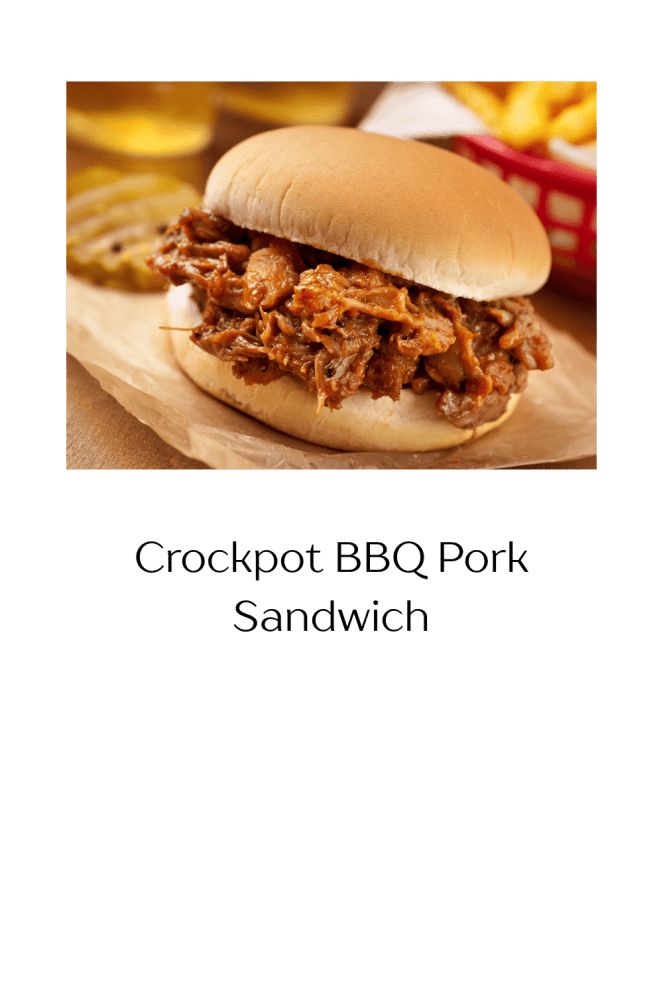
Thursday โ€“ Crockpot BBQ Pulled Pork Sandwiches
Pork roast + BBQ sauce in the crockpot all day = sandwich heaven. Serve with chips or a quick salad.
Sunday โ€“ Breakfast for Dinner
Eggs, sausage, and toastโ€”simple, quick, and always a crowd-pleaser.

Til next time gang, take care of yourselves, and each other!

Uncategorized

Your Brainโ€™s Clock is Lying to You: A Field Guide to Weird Time Perception

Neurodivergent time is like dog years โ€” it moves differently, feels different, and somehow makes perfect sense only to the person experiencing it.
If youโ€™ve ever been both unfashionably early and catastrophically late in the same week, welcome to the club.


1. The Classic: Time Blindness

You look at the clock, itโ€™s 3:05.
You blink, check again, and suddenly itโ€™s 3:58, youโ€™re still in pajamas, and the event was across town at 4.
This isnโ€™t laziness โ€” research suggests ADHD brains have differences in time estimation and temporal processing (Barkley, 2010), meaning we actually perceive time passing less accurately.
Translation: the clock is real, but our internal one is a knockoff from Wish.


2. The Paradox: Hyper-Punctuality

On the flip side, some of us are so terrified of being late that we swing too far the other way.
Now weโ€™re sitting in the parking lot 25 minutes early, scrolling memes and contemplating our life choices.
Our brainโ€™s solution to not trusting time is apparently to overcompensate until itโ€™s awkward.


3. The “Just One More Thing” Trap

We swear we have time for one tiny task before we leave โ€” toss in the laundry, answer that email, maybe make baked salsa chicken from scratch โ€” and suddenly weโ€™re in full panic mode.
The ADHD brain struggles with prospective memory (remembering to do something in the future) and transitions, so starting โ€œone more thingโ€ is basically time gambling with terrible odds.


4. The Black Hole Effect

You start reorganizing the spice rack. Next thing you know, itโ€™s 2am, youโ€™re alphabetizing oregano, and you have no idea how you got here.
Hyperfocus is great for productivityโ€ฆ until you remember you were supposed to eat dinner four hours ago.


Tips for Outsmarting Your Brainโ€™s Broken Clock

  • Timers are your friend โ€“ Set alarms for when to start getting ready, not just when to leave.
  • The โ€œfake leave timeโ€ trick โ€“ Tell yourself you have to be there 15 minutes earlier than you do.
  • Visible time cues โ€“ Use analog clocks or visual timers where you can see time moving.
  • Build a buffer โ€“ If youโ€™re early, bring a book or podcast so you donโ€™t feel like youโ€™re wasting time.

๐Ÿ“š Fact Source: Barkley, R. A., Murphy, K. R., & Fischer, M. (2010). ADHD in Adults: What the Science Says. Guilford Press.
Yes, thatโ€™s an actual book. No, I didnโ€™t make it up. Itโ€™s basically the ADHD brain user manual.
Til next time gang, take care of yourselves, and each other!

Uncategorized

ADHD and the Never-Ending Quest for the Right System

Or: How I Own More Planners Than Pairs of Jeans, and Still Can’t Find That Dentist Appointment Card

We’ve all been there. You buy the pretty planner with the gold coil, convinced that this will be the one to change your life. Then you try the bullet journal method because minimalism is supposed to cure chaos. Then you download six productivity apps, each promising to be the magic solution to your scattered existence. For one glorious week, you are an organizational deity, color-coding tasks (I have bought colored pens and every pen has the same color notebook and folder and yeah I am a giant nerd lol) and checking boxes like a productivity influencer. Then โ€” poof โ€” the planner’s under the couch collecting dust, the apps are unopened with little red notification badges mocking you, and you’re frantically scribbling your grocery list on the back of a Target receipt while standing in the cereal aisle.

Sound familiar? Welcome to the ADHD productivity paradox: we desperately need systems to function, but we’re spectacularly bad at sticking to them.

Why This Happens (Yes, Science Says So)

ADHD brains are novelty seekers. According to research published in Brain journal by Sethi et al. (2018), our dopamine reward system runs differently than neurotypical brains, with studies showing that people with ADHD have dysfunction in the dopamine reward pathway (Volkow et al., 2010). This means we thrive on new and interesting stimuli โ€” like that gorgeous new planner layout with the perfect font โ€” but struggle to maintain interest once the novelty wears off. That dopamine hit from “new system day” is real, but it’s also temporary.

Executive function is a fickle beast. Studies consistently show that people with ADHD have weaker function and structure of prefrontal cortex (PFC) circuits, the brain regions responsible for planning, prioritizing, and task-switching (Arnsten, 2009). Neuroimaging research has found reduced activity in certain parts of the PFC during tasks requiring sustained attention and complex decision-making (AGCO Health, 2024). It’s not laziness or lack of willpower โ€” it’s literally how our brains are wired.. Thats why I cycle through hobbies so fast and its something I’m actively working on.

One size does not fit all. Most productivity systems are designed by and for neurotypical brains that can handle routine, sequential thinking, and sustained attention. Trying to wedge ourselves into these systems is like trying to wear jeans two sizes too small โ€” you can do it, but it’s uncomfortable, restrictive, and not pretty.

Perfectionism is the enemy of progress. Many of us fall into the trap of thinking that if we can’t do a system “perfectly,” we shouldn’t do it at all. Miss one day of journaling? Throw out the whole journal. Forget to update the app for a week? Delete it in shame. This all-or-nothing thinking sabotages any chance of finding what actually works.

How to Work With Your Brain, Not Against It

1. Think Modular, Not Monumental. Instead of searching for one perfect “forever system,” embrace using multiple small, interchangeable tools that can work independently. Sticky notes for quick reminders that need immediate action, a large wall calendar for big-picture dates and deadlines, your phone’s alarm function for time-sensitive appointments, and maybe a simple notebook for brain dumps when your thoughts are spinning. Mix and match based on what your current life phase demands.

2. Use Dopamine to Your Advantage. Instead of fighting your brain’s need for novelty, make it part of the plan. Intentionally change colors, formats, or methods every few weeks to refresh your interest and re-engage that dopamine reward system. Buy different colored pens seasonally, switch between digital and paper tools, or reorganize your workspace regularly. Make variety a feature, not a bug.

3. Embrace “Good Enough” Productivity. You don’t need to track every habit, meal, mood, water intake, and bowel movement to be a functioning adult. Choose three key areas that truly impact your daily life and focus on keeping just those consistent. Let everything else flex and flow as needed. Progress, not perfection, is the goal.

4. Automate & Delegate Where Possible. Set recurring phone reminders for regular tasks, use grocery delivery or curbside pickup to eliminate list-making stress, automate bill payments, or recruit a family member to be your “appointment buddy” for remembering important dates. Your brain doesn’t have to carry every single piece of information if technology and other people can help.

5. Plan for Disruption. Build buffer days into your schedule, expect that your tools will need periodic rebooting, and never expect sustained perfection. Create “reset rituals” for when systems inevitably break down โ€” maybe Sunday nights for clearing your workspace or the first of each month for reassessing what’s working. The point is to support your life, not win an imaginary “most organized person alive” award.

6. Start Ridiculously Small. Instead of overhauling your entire organizational approach, pick one tiny thing and make it automatic first. Maybe it’s putting your keys in the same spot every day, or writing tomorrow’s most important task on a sticky note before bed. Once that feels natural, add something else small. Baby steps prevent the overwhelm that kills motivation.

The Big Takeaway

You’re not broken because you can’t stick to one pristine system for years on end. Your brain is wired for variety, stimulation, and flexibility โ€” so make those traits part of your organizational plan instead of fighting against them. You’re not failing the system. The system is failing you if it can’t adapt and flex with your very real, very human reality.

The goal isn’t to become neurotypical. It’s to find tools and approaches that work with your unique brain, even if they look messy or unconventional to outside observers. Some days that might mean a color-coded digital calendar. Other days it might mean a crumpled napkin with three things scrawled on it. Both are valid if they help you function.

Your worth isn’t measured by how perfectly you maintain a bullet journal or how consistently you use the latest productivity app. It’s measured by how well you’re living your life, taking care of what matters, and being kind to yourself in the process. Til next time gang, take care of yourselves, and each other!

Uncategorized

Hyperfixation Cuisine: A Love Story

When food is your ride-or-die for two weeksโ€ฆ until it ghosts you.

I don’t fall in love oftenโ€”but when I do, it’s usually with a snack. A drink. A cereal. A very specific sandwich from one very specific place that I will eat exclusively for 14 days straight like it holds the secrets of the universe and contains all the nutrients my body will ever need. During these passionate food affairs, I become a creature of pure obsessionโ€”calculating how many times per day I can reasonably consume my chosen item without judgment, researching the optimal preparation methods, and feeling genuinely excited about meal times in a way that probably isn’t normal for a grown adult. I’ll stock up like I’m preparing for the apocalypse, filling my cart with multiples of the same item while cashiers give me curious looks that I interpret as admiration for my decisive shopping skills. And then? I ghost. Cold turkey. No warning, no closure, no gradual tapering offโ€”just me and my shame in aisle 5, pretending I never knew that Creamsicle shake, avoiding eye contact with the 47 cans of soup I can no longer stomach, and wondering why my brain treats food like a series of intense but doomed romantic relationships.

What Is Hyperfixation Cuisine?

Itโ€™s the culinary equivalent of a summer fling. You’re obsessed. You plan your day around it. You talk about it to anyone who will listen (and a few who wonโ€™t). You buy in bulk. And then one morning, like a cursed love spell wearing off, itโ€™s done. Youโ€™re left with a pantry full of raisin bran and the haunting echoes of a snack you no longer want to eat.

Neurodivergent folksโ€”those of us with ADHD, autism, or bothโ€”know this dance well. Itโ€™s not a food phase; itโ€™s a full-blown romantic arc.

And science backs us up!

Let’s sneak in some facts while we laugh about it:

Nutritionists would say variety is key. But also? Survival. Joy. Convenience. These are not small things. And if eating the same 3 things on rotation keeps your body going through a rough patch? Thatโ€™s not failureโ€”thatโ€™s strategy.

Plus, it always changes eventually. Usually when you least expect it. Often mid-bite.

Honestly? Laugh. Embrace it. Maybe write a heartfelt goodbye letter to your former food flame. (โ€œDear Bagel Bites, we had some good times. Iโ€™m sorry I abandoned you half-eaten in the freezer door.โ€)

You donโ€™t have to force variety or shame yourself for what your brain finds comforting. Just make sure you stay fed, hydrated, and somewhat functional. And if one day you find yourself suddenly obsessed with cucumbers in vinegar, just know: you’re not alone.


What was your last food fling? Let me know so I donโ€™t feel like the only one who once ate eleven bowls of raisin bran in one week.

And to all the forgotten snacks still lurking in my pantryโ€ฆ
I loved you once. I swear I did, lol. Til next time gang, take care of yourselves

Uncategorized

The Autistic Teen Whisperer: A Nature Documentary of My Life

INT. KITCHEN โ€“ EARLY MORNING
Cue dramatic voiceover, ร  la David Attenborough:
“If we are quietโ€ฆ very quietโ€ฆ we may catch a glimpse of the elusive Autistic Teen in her natural habitat. There! A flash of movement, a hoodie, mismatched socks. Blink and sheโ€™s gone. Out the door before the sun can fully rise, leaving behind toast crumbs and an emotional riddle.”

Welcome to the wild world of neurodivergent parenting. Iโ€™m your guide, an exhausted mom attempting to decode the rituals, migrations, and sensory triggers of my favorite wild animal: my teenager.


The Habitat

The Autistic Teen typically roams the house after 10 PM, nesting primarily in her bedroomโ€”curated with LED lights, noise-canceling headphones, and Very Specific Textures. Her room is both her sanctuary and her command center, and entering without knocking is a rookie mistake you only make once.

Adaptations observed:

  • Can detect the faintest flicker of a light bulb in another room.
  • Has strong opinions about the temperature and humidity level of her socks.
  • Stores snacks in unexpected places. Foraging is an art.

The Communication Rituals

Communication with the Autistic Teen requires finesse, timing, and a willingness to interpret non-verbal cues like youโ€™re deciphering ancient cave drawings.

Sometimes we exchange whole conversations in Minecraft metaphors or sarcastic cat videos. Sometimes, the best thing I can do is sit quietly nearby and let her stim in peace.


Feeding Habits

She has strong food aversions and sacred favorites. Iโ€™ve learned the hard way not to mess with the shape of the nuggets or the brand of the mac and cheese. When in doubt: beige, crunchy, and emotionally comforting.

As her caregiver and personal short-order chef, Iโ€™ve adjusted. I stock the sensory-safe foods, experiment with new ones slowly, and always, always have backup pop tarts.


Daily Migration Patterns

Between school, stimming breaks, and doomscrolling, her internal compass doesnโ€™t follow a standard map. There is no “typical” day. But Iโ€™ve learned to track her rhythms:

  • Mornings: silent, hoodie up, minimal communication.
  • Afternoons: decompressing with art or YouTube rabbit holes.
  • Evenings: bursts of creativity, hyperfocus, or emotional monsoons.

Every day is an expedition. Sometimes Iโ€™m chasing her needs through sensory jungles. Other times, I just try to not mess up her flow.


Challenges in the Wild

Sometimes we clash. My ADHD brain is loud, scattered, and constantly shifting. Her autistic brain is methodical, specific, and easily overwhelmed by chaos. We are two storms learning to move together without wrecking each other.

I talk too much. She gets overwhelmed by too many words. I need novelty. She needs routine. Itโ€™s not always elegant, but itโ€™s always ours.


The Mutual Bonding Ritual

The bond between Whisperer and Teen is strong, even if it doesnโ€™t always look that way from the outside. Weโ€™ve developed our own languageโ€”half memes, half silence, all love. She knows I see her. She knows Iโ€™m trying. And I know that even when she disappears into her own world, she leaves the door open a crack.

Sometimes I catch her watching me with a mix of exasperation and affection.
Sometimes she randomly tells me a fact about spiders or space or mental health that makes me cry with pride.
Sometimes she texts me from her room to say, โ€œthanks for not being annoying today.โ€

I count that as a win.


Closing Narration

This isnโ€™t about having it all figured out. Itโ€™s about showing up anyway, even when the jungle is loud, the routines are broken, and the brain fog is real.

Because love, it turns out, is the greatest adaptation of all. Til next time gang, take care of yourselves, and each other.