(Inductees Chosen for Outstanding Contributions to Missing the Point)
There are two kinds of advice in the world:
Useful.
Enthusiastically useless.
Today, we honor the second category.
Welcome to the Unhelpful Advice Hall of Fame โ a carefully curated collection of statements that have survived decades despite helping absolutely no one.
Please hold your applause. Or donโt. It wonโt change anything.
๐ Inductee #1: โHave you tried yoga?โ
Yes.
I have also tried stretching, resting, hydration, optimism, and briefly considering becoming a houseplant.
Yoga is lovely. It is not a firmware update for my nervous system.
Next.
๐ Inductee #2: โYou just need to push through it.โ
Ah yes. The classic strategy of overriding biology with vibes.
If โpushing throughโ worked long-term, no one would burn out. No one would flare. No one would collapse two days later wondering why their body sent them a strongly worded letter.
I donโt lack effort. I lack unlimited reserves.
๐ Inductee #3: โEveryone gets tired.โ
Correct.
And everyone gets hungry. That doesnโt make famine a personality flaw.
There is a difference between โI stayed up too lateโ tired and โmy cells are filing a union complaintโ tired.
We can respect nuance.
๐ Inductee #4: โYouโre too young to feel this way.โ
I wasnโt aware age functioned as a warranty.
Bodies are not cars. There is no mileage-based fairness system. If there were, Iโd like to speak to management.
๐ Inductee #5: โYou just need to think positive.โ
I do think positive thoughts.
I also think realistic ones.
Positivity is not a structural support beam. Itโs a throw pillow. Decorative. Occasionally helpful. Not load-bearing.
๐ Inductee #6: โAt least itโs not worse.โ
This one wins for optimism with a side of existential dread.
Youโre right. It could always be worse.
It could also be better.
We donโt have to race to the bottom to validate discomfort.
๐ Inductee #7: โMaybe itโs stress.โ
Maybe.
And maybe stress is also a biological event, not a moral weakness.
Also, if the solution to stress were โsimply relax,โ the spa industry would have ended human suffering by now.
๐ Inductee #8: โHave you tried cutting out gluten/dairy/sugar/joy?โ
I appreciate the commitment to dietary experimentation.
However, if eliminating bread were the cure for complex medical conditions, Italy would not exist.
๐ Inductee #9: โBut you look fine.โ
Thank you. I moisturize.
Looking fine is not the same as being fine. Packaging can be deceiving. Ask any online order Iโve ever received.
๐ Inductee #10: โYou just need more discipline.โ
If discipline cured chronic illness, high-achievers would be immortal.
Sometimes the issue isnโt willpower. Itโs capacity. And capacity does not respond to shame-based motivational speeches.
Honorable Mention: Silence
Sometimes the most helpful response is:
โThat sounds hard.โ
No fix. No pivot. No silver lining.
Just acknowledgment.
It turns out being believed is far more effective than being optimized.
If youโve ever nodded politely while mentally nominating someone for this Hall of Fame, youโre not ungrateful. Youโre tired.
Advice is easy. Listening is harder.
And if nothing else, at least we can laugh โ carefully, responsibly, with proper hydration โ about the fact that some phrases will apparently outlive us all. Til next time gang, take care of yourselves, and each other!
I live in a time zone most people donโt know exists. It doesnโt follow clocks, calendars, or common sense. It does follow pain levels, fatigue spikes, and whether my nervous system has decided today is a โno thoughts, just vibesโ kind of day.
Welcome to Fibromyalgia Time.
1. Five Minutes Can Take an Hour
In Fibromyalgia Time, a โquick taskโ is a bold lie.
Showering
Getting dressed
Answering one email
Each looks like it should take five minutes. In reality, it includes:
A rest break
A mental pep talk
Forgetting what you were doing
Another rest break
Time stretches when pain shows up, and shrinks when energy disappears.
2. โLaterโ Is a Vague Concept at Best
When I say โIโll do it later,โ I donโt mean today. I also donโt mean tomorrow. I mean when my body allows it.
Fibromyalgia doesnโt run on deadlines. It runs on:
Pain levels
Brain fog density
How hard my nervous system is spiraling
Later is not procrastination. Itโs symptom-based scheduling.
3. Energy Expires Without Warning
Normal time assumes energy is steady.
Fibromyalgia Time says:
โSurprise! You had a 30-minute window and didnโt know it.โ
You can wake up feeling okay and hit empty before lunch. You can plan carefully and still lose the day by 2 p.m.
Energy doesnโt taper. It vanishes. And when itโs gone, the clock stops mattering.
4. Recovery Time Is Not Predictable
In normal time, rest has a formula:
Do thing โ Rest โ Feel better
In Fibromyalgia Time:
Do thing โ Rest โ Still tired โ Still tired โ Still tired โ Why am I still tired?
Recovery isnโt linear. Sometimes a nap helps. Sometimes it does nothing. Sometimes it makes things worse because now youโre groggy and in pain.
5. Past Me and Present Me Are Not the Same Person
Fibromyalgia Time has no memory continuity.
Past Me:
Made plans
Overestimated capacity
Was wildly optimistic
Present Me:
Is negotiating with joints
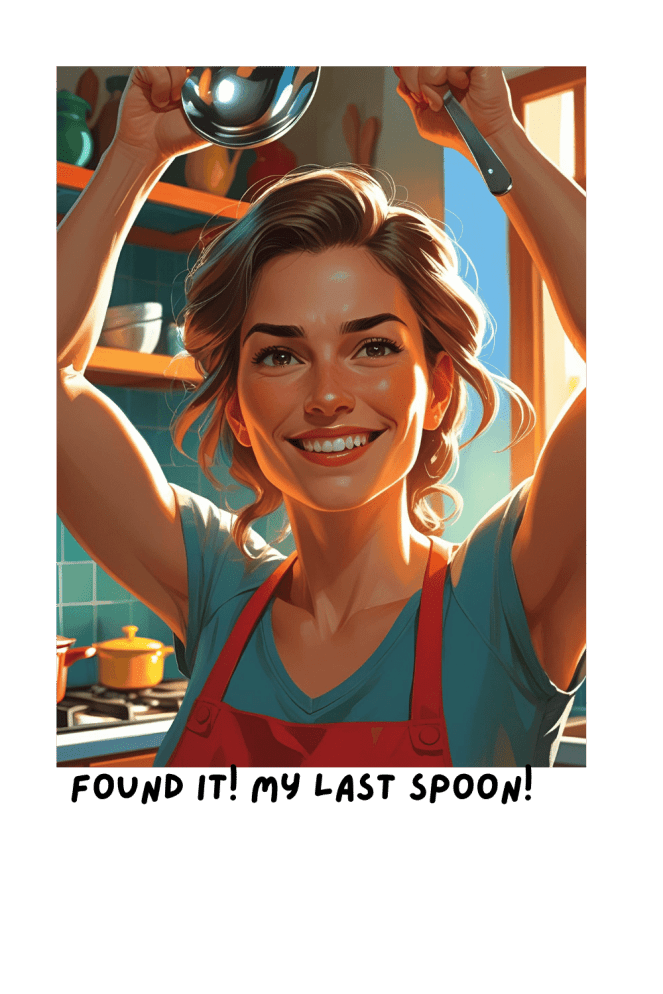
Has three spoons left
Is offended by Past Meโs confidence
Canceling plans isnโt flakiness โ itโs time travel without consent.
6. The Clock Keeps Moving Even When I Canโt
This is the cruelest part.
The world doesnโt pause when your body does. Bills are still due. Appointments still exist. Expectations donโt magically adjust.
Fibromyalgia Time moves slower inside your body โ but faster everywhere else. That disconnect is exhausting all by itself.
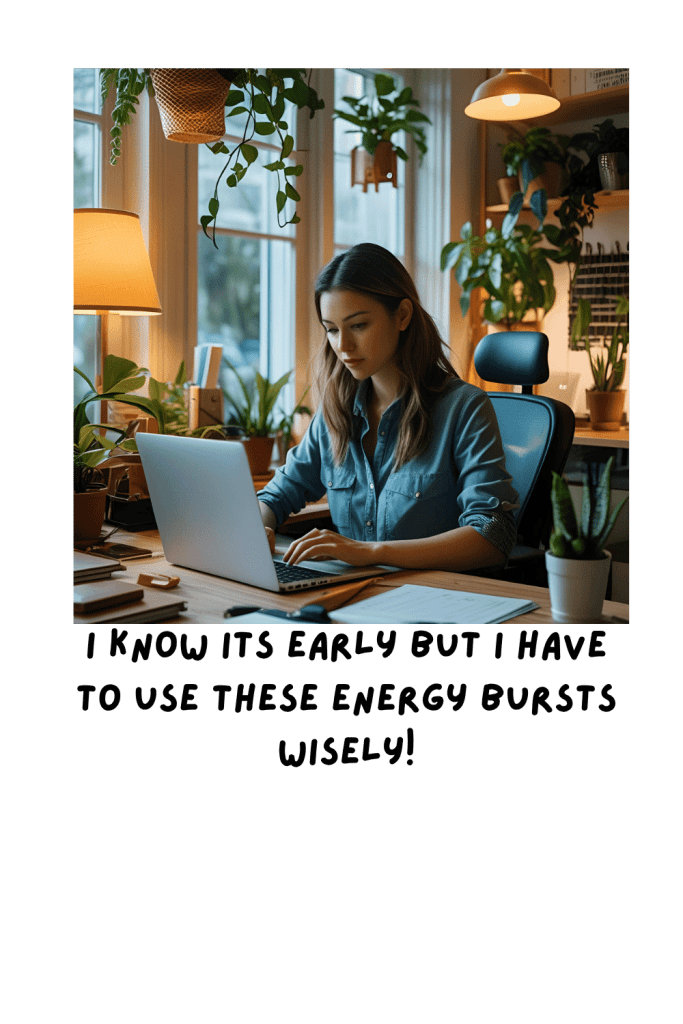
7. Productivity Happens in Weird Bursts
Fibromyalgia doesnโt believe in steady output.
Instead you get:
Sudden bursts of โmust do everything NOWโ
Followed by complete shutdown
Itโs not a lack of motivation. Itโs a nervous system that dumps all available energy at once and then clocks out.
8. Rest Is Not Wasted Time (Even If It Looks Like It)
In normal time, rest is a reward.
In Fibromyalgia Time, rest is maintenance.
Lying down isnโt laziness. Doing less isnโt failure. Pausing is how you stay functional at all.
The clock might say you did โnothing,โ but your body knows better.
9. Fibromyalgia Time Requires Translation
โJust five more minutesโ โCan you hurry?โ โIt wonโt take that longโ
These phrases assume a shared timeline.
Weโre not on the same clock โ and thatโs not a moral failing. Itโs a medical reality.
10. Surviving Fibromyalgia Means Redefining Time Entirely
Success isnโt measured in hours worked or tasks completed.
In Fibromyalgia Time, success looks like:
Listening to your body
Stopping before you crash
Adjusting expectations without self-blame
Youโre not behind. Youโre just operating in a different time zone โ one that requires patience, flexibility, and a whole lot of self-compassion.
Til next time gang, take care of yourselves, and each other.
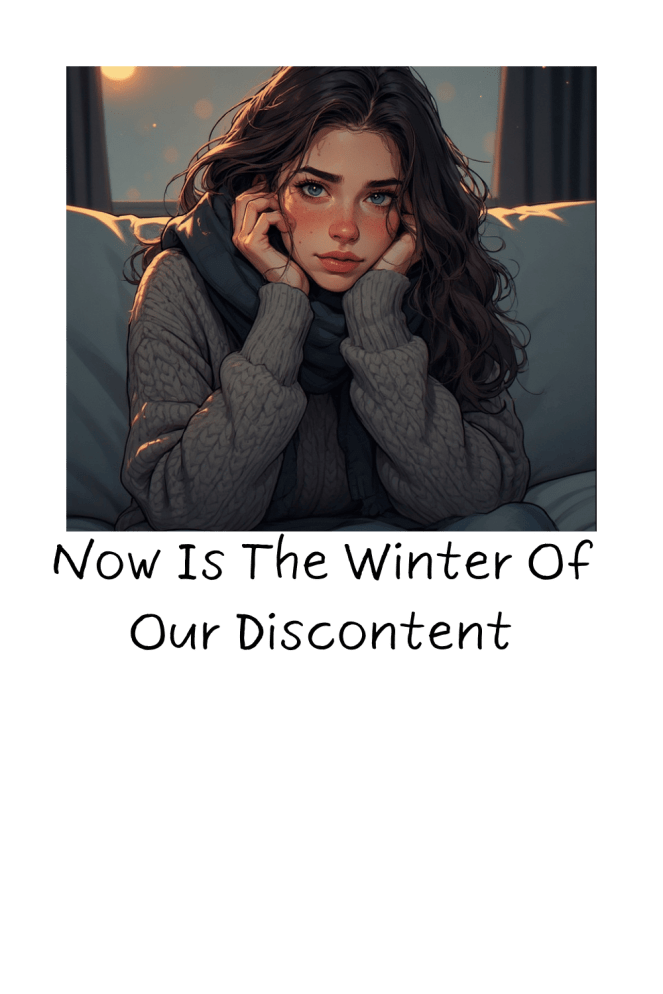
Cold doesnโt just make things uncomfortable. It changes how my body functions.
When temperatures drop, my muscles tighten automatically, my joints stiffen faster, my pain threshold lowers, and my nervous system shifts into protection mode. Even before I move, my body is already bracing โ like itโs expecting something bad to happen.
What helps: I warm my body before I ask anything of it. Heat isnโt a treat, itโs a prerequisite. Heating pads, hot showers, warm drinks โ anything that tells my nervous system itโs safe enough to stand down.
Cold also makes my muscles stay clenched โ especially my shoulders, neck, hips, and lower back. That constant tension creates soreness that doesnโt feel earned and doesnโt go away with rest alone.
What helps: Targeted warmth and gentle movement. Not โbundling up,โ but keeping the parts that guard the most actively warm. Slow stretching or light movement early prevents stiffness instead of fighting it later.
In winter, everything costs more energy. Getting dressed hurts more. Moving hurts more. Thinking hurts more. By noon, Iโm exhausted and I havenโt even done anything impressive.
What helps: I move earlier and smaller. A little motion before the stiffness sets in keeps my body from locking up. This isnโt exercise โ itโs lubrication. Waiting until later usually means paying interest.
Cold doesnโt just affect my body โ it stresses my nervous system. That means higher pain, lower tolerance, and less emotional bandwidth, even if nothing โbadโ is happening.
What helps: I treat cold days like high-stress days. Fewer plans. Fewer decisions. More quiet. Less pressure to perform. If my nervous system is already taxed, I donโt pile more on top of it.
Winter also messes with expectations. I want to function the same way I do in warmer months, and my body refuses. That gap between expectation and reality is where frustration lives.
What helps: I lower the bar before I hit it. Winter isnโt the season for pushing limits โ itโs the season for pacing. Needing more support when the environment is harsher isnโt regression. Itโs adaptation.
Cold doesnโt mean Iโm failing. It means my body is responding to stress the way it was built to.
Winter raises the difficulty level โ and Iโm allowed to adjust how I play the game. Til next time guys, take care of yourselves, and each other.
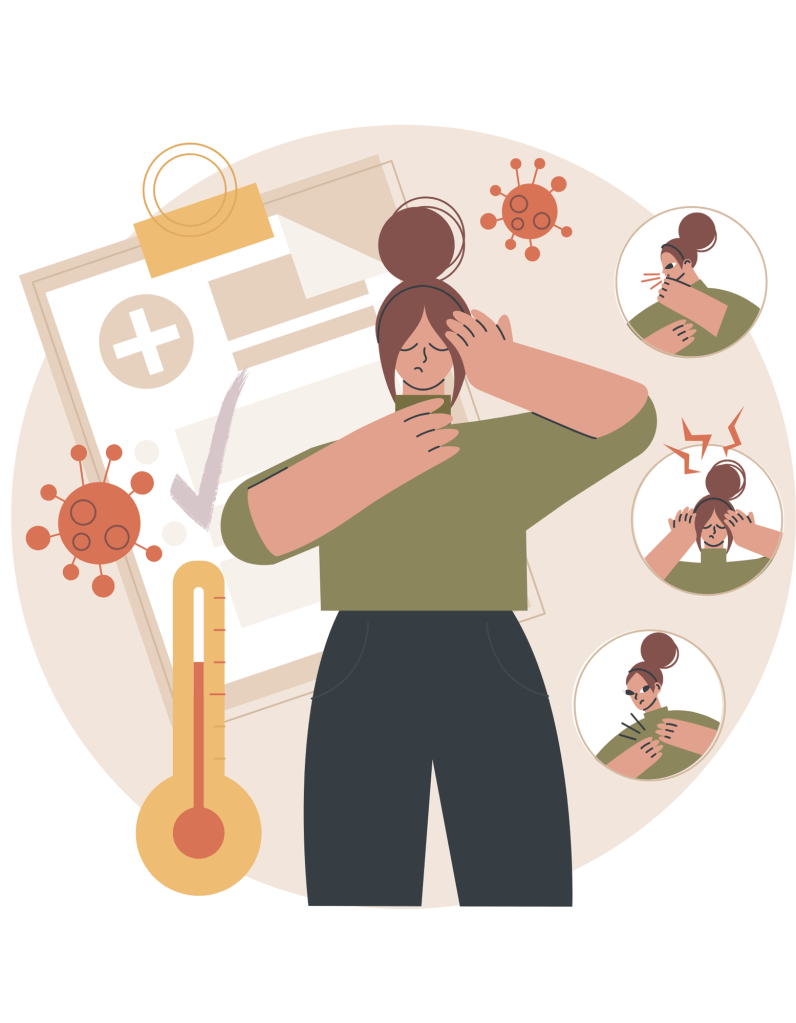
When people hear โfibromyalgia,โ they usually think of pain โ aching joints, sore muscles, that constant feeling like you overdid it yesterday even when you didnโt. Pain is part of it, yes. But for many people with fibromyalgia, fatigue is the symptom that quietly dismantles daily life.
This isnโt the kind of tired that goes away with a good nightโs sleep or a strong cup of coffee. Fibromyalgia fatigue is persistent, physical, and rooted in how the nervous system functions.
Common Fibromyalgia Symptoms (Beyond Pain)
Fibromyalgia is a multisystem condition, not a single-symptom diagnosis. Common symptoms include:
Chronic widespread musculoskeletal pain
Ongoing fatigue
Non-restorative sleep (waking up unrefreshed)
Cognitive difficulties (โfibro fogโ)
Sensitivity to light, sound, temperature, or touch
Headaches or migraines
Gastrointestinal issues (often overlapping with IBS)
Muscle stiffness, especially in the morning
Mood changes linked to nervous system stress
Not everyone experiences every symptom, and severity can fluctuate โ sometimes daily, sometimes hourly.
What Makes Fibromyalgia Fatigue Different?
Fibromyalgia fatigue isnโt simply being tired from doing too much. Itโs tied to central sensitization, a process in which the brain and spinal cord become overly reactive.
In simple terms:
The nervous system stays partially โon alertโ
Pain signals are amplified
The body burns energy just maintaining baseline function
Even rest can require effort when the system responsible for regulating stress, pain, and recovery isnโt working efficiently.
Think of it like running multiple background apps you canโt close. The battery drains faster โ even on low activity.
Mayo Clinic explains that people with fibromyalgia commonly experience fatigue and disrupted sleep, noting that individuals often wake up tired even after sleeping for a long time, as pain and related sleep disorders can interfere with rest. Mayo Clinic
Why Sleep Doesnโt Fix Fibromyalgia Fatigue
One of the most frustrating aspects of fibromyalgia is that sleep doesnโt reliably restore energy.
Research shows that people with fibromyalgia often experience:
Disrupted sleep architecture
Reduced time in deep, restorative sleep stages
Alpha-wave intrusion during sleep, keeping the brain partially alert
Frequent micro-arousals caused by pain or nervous system activity
This means someone can be unconscious for eight hours and still wake up feeling unrefreshed, stiff, and exhausted.
Sleep happens โ but rest doesnโt fully occur.
Sleep research indicates that people with fibromyalgia often experience abnormal sleep patterns, such as reduced deep sleep and brain activity resembling wakefulness during sleep stages, which helps explain why rest does not always feel restorative. Sleep Foundation
The Role of the Nervous System
Fibromyalgia is increasingly understood as a disorder of nervous system regulation, not muscle damage or inflammation alone.
When the nervous system struggles to downshift:
Muscles remain tense
Pain signals remain elevated
Stress hormones like cortisol can become dysregulated
Energy recovery is impaired
This is why fatigue in fibromyalgia often feels disproportionate to activity levels โ and why pushing through it usually backfires.
Why โJust Rest Moreโ Misses the Point
Well-meaning advice like โget more sleepโ or โlisten to your bodyโ often falls short because it assumes the system responsible for rest is functioning normally.
In fibromyalgia:
Rest helps, but itโs not a cure
Sleep matters, but itโs not always restorative
Energy management requires strategy, not willpower
Understanding this difference matters โ medically, socially, and personally.
The Bottom Line
Fibromyalgia fatigue is not laziness, lack of motivation, or deconditioning. Itโs a nervous system issue that affects how the body processes pain, stress, sleep, and recovery.
Recognizing fatigue as a core symptom โ not a side effect โ is essential to understanding what living with fibromyalgia actually looks like.
Because when the system itself is misfiring, exhaustion isnโt a failure. Itโs feedback. Til next time gang, take care of yourselves, and each other!
When your energy comes with an expiration date, every choice becomes strategic.
We all know spoon theory. But letโs be realโmost of the advice assumes youโre managing your energy for your own activities. What happens when you canโt just โrest when you need toโ because someone else depends on you for dinner, rides, and emotional regulation? When your autistic teenager needs consistency but your fibromyalgia is flaring? When your ADHD brain forgot to save energy for the evening routine, but bedtime still has to happen?
Iโm not trying to be a saint hereโIโm trying to survive until bedtime without completely falling apart. And that requires a different kind of energy strategy than the basic spoon theory tutorials assume.
The Complex Reality: When Multiple Conditions Collide
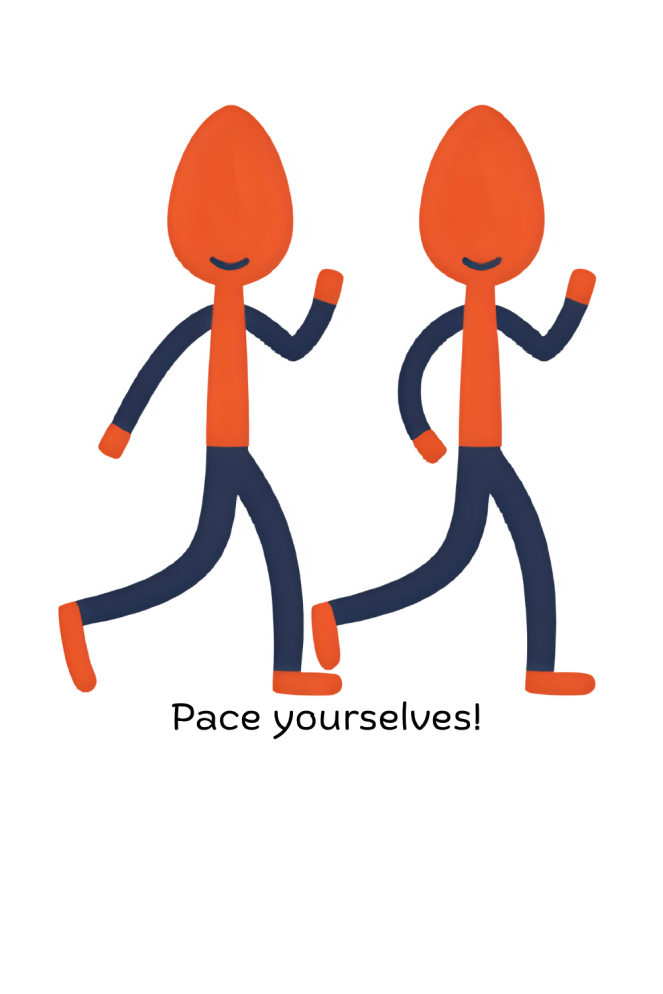
These are my dancin spoons
Hereโs what the basic spoon theory explanations miss: When youโre managing fibromyalgia, ADHD, and bipolar disorder simultaneously, your spoons arenโt just limitedโtheyโre unpredictable.
My ADHD brain might hyperfocus and blow through six spoons organizing one closet. A bipolar mood shift can drain spoons faster than a phone with a cracked screen drains battery. And fibromyalgia? Itโs like having a fluctuating baseline that changes without warning.
Add parenting an autistic teenager to the mix, and youโre not just managing your own energyโyouโreย strategically allocating itย so everyone gets what they need, including you still being a functioning human by 8 PM. (Well I never claim to be a functioning human any time after 5 lol)
This isnโt about being selfless. Itโs about being smart enough to pace yourself so you donโt crash and burn, leaving everyone (including yourself) worse off.
The Science Behind Why We Run Out of Spoons
Research backs up what weโve always known: fibromyalgia isnโt just โfeeling tired.โ Studies show people with fibromyalgia experience disrupted sleep, increased pain sensitivity, and central sensitizationโbasically, our nervous systems are stuck in overdrive.
Key Research Findings:
Fibromyalgia and Central Sensitization:ย The National Institute of Arthritis and Musculoskeletal Diseases confirms fibromyalgia affects how the brain processes pain signals, leading to widespread pain and fatigue.
Sleep Disruption:ย 75โ90% of people with fibromyalgia experience sleep disorders, creating a vicious cycle where pain disrupts sleep and poor sleep worsens pain.
ADHD and Executive Function:ย ADHD impacts energy regulation through executive dysfunction, making pacing activities harder.
But hereโs what medical literature doesnโt capture: what happens when you canโt just โlisten to your bodyโ and rest whenever you need because someone else is counting on you?
Energy Pacing: The Research-Backed Strategy That Actually Works
The good news? Thereโs solid research supporting strategies beyond โjust rest more.โ Activity pacing is designed for people who canโt just stop when theyโre tired.
Key Research Findings:
Activity Pacing Works:ย A 2023 systematic review found pacingโregulating activity to avoid post-exertional crashesโis one of the most effective strategies for chronic fatigue conditions.
Better Than Boom-Bust:ย People who learn pacing techniques report significantly improved quality of life compared to those who push through until they crash.
The Energy Envelope:ย Research shows staying within your โenergy envelopeโ prevents the crash-and-burn cycle that leaves you useless for days.
The key insight? Itโs not about doing lessโitโs about doing things more strategically so you can sustain your energy over time.
My Real-Life Strategic Energy System
The Morning Energy Assessment
Every morning, I do a quick reality check: Howโs my pain? Did I sleep? Is my brain foggy? This gives me a realistic count of my available energy for the day. A good day might be 15 units. A flare day? Maybe 8. The key is honesty about what I actually have, not what I wish I had.
The Triage System: Essential vs. Optional
I ruthlessly categorize tasks:
Essential: Medication, meals, safety, school pickup Important: Homework, emotional check-ins, sensory accommodations Optional: Fancy meals, deep cleaning, being the โfun momโ
On low-energy days, I focus only on essentials. My teen knows that sometimes we operate in โbasic functioning mode,โ and thatโs just lifeโnot failure. I have learned I am terrible at categorizing though lol.
The 80% Rule
Research shows staying within your โenergy envelopeโ prevents crashes. For me, this means spending no more than 80% of my energy by 3 PM. Kids still need dinner, and I still need to exist as a person after sundown.
Practical Energy-Saving Strategies That Actually Work
Hereโs where theory meets reality. These arenโt pie-in-the-sky ideasโthese are battle-tested strategies for functioning for others while managing complex needs.
Batch Processing: Work Smarter, Not Harder
High-energy tasks happen on good days. Maintenance mode on the rest. Strategic, not lazy.
Examples:
Book medical appointments together to reduce recovery time
Meal prep when youโre energized, not hangry
Handle school stuff in batches
Environmental Modifications: Make Your Space Work for You
Our home reduces energy demands on purpose. Essentials are easy to reach, grab bars help, and my teen knows the layout.
Modifications:
Keep essentials within easy reach
Set up โstationsโ for meds, homework, decompression
Use timers and alarms because our brains arenโt built for mental tabs
The 20-Minute Rule
If it takes longer than 20 minutes, it gets chunked smaller or delegated. This prevents ADHD hyperfocus from burning my whole dayโs energy.
When Your Teen Needs to Understand Your Reality
One of the hardest parts?ย Explaining to my autistic teen why I canโt do something today that I could yesterday.ย Consistency helps, but clarity wins. She’s gotten better since she goes to school based therapy, I’ve really been proud of her empathy lately.
What works:
Concrete language:ย โI have 3 energy units left. Dinner needs 2.โ
Offer alternatives:ย โI canโt drive you, but I can order it.โ
Honesty:ย โEnergy changes daily. Not your fault or mine.โ
Involve them:ย โHow can we make this work with what Iโve got left?โ
The Guilt Factor: Why Strategic Rest Isnโt Selfish
It took me years to accept this: protecting my energy isnโt lazyโitโs responsible. Proactive rest keeps me showing up tomorrow.
Saying no to extras isnโt shirking responsibilityโitโs saving energy for what truly matters. Operating in โbasic functioning modeโ is how I keep us afloat without sinking out of stubbornness.
Next Week:ย Building your support network and emergency energy protocolsโbecause even superheroes need backup plans. Til next time gang, take care of yourselves, and each other.
Ok gang, letโs get real about something that doesnโt get nearly enough attention: medical PTSD. If youโve ever left a doctorโs office feeling dismissed, doubted, or downright defeated, youโre not alone. For those of us with chronic illnesses and invisible conditions like fibromyalgia, bipolar disorder, autism, or ADHD, the healthcare system can feel less like a safety net and more like a minefield.
What Is Medical PTSD?
Medical PTSD is what happens when repeated negative experiences with healthcare providers leave you emotionally scarred. Itโs not just about a bad appointment here or thereโitโs about the trauma that builds up over time when your pain or symptoms are brushed off as โnothingโ or โall in your head.โ Spoiler alert: itโs not in your head. For many of us with invisible illnesses, this is an all-too-familiar story. Bloodwork comes back fine? Must be nothing. Physical exam looks normal? Youโre probably exaggerating. And suddenly, youโre left questioning your own reality because someone with a stethoscope couldnโt see what youโre feeling every single day. The number of times I’ve left a doctors appointment shaking my head saying ‘well, I mean if it WAS something wouldn’t they see it?’ No, thats not true, some stuff is tricky and it hides behind stuff. Some times you have to poke around at stuff until you figure it out, that doesnt mean things arent there to find.
Truth Bomb: Invisible Doesnโt Mean Imaginary
Hereโs the thing: just because something doesnโt show up on a test doesnโt mean it isnโt real. Fibromyalgia doesnโt light up on an X-ray. Bipolar disorder doesnโt leave a trail in your bloodwork. Autism and ADHD donโt come with flashing neon signs saying, โHey, Iโm here!โ But that doesnโt make them any less validโor any less debilitating. I canโt tell you how many times Iโve walked into an appointment armed with symptom logs, research, and sheer determination, only to be met with raised eyebrows and the dreaded โItโs probably just stress.โ Or, ‘well you DO have Fibro’ Oh really? Because last time I checked, Fibromyalgia didnโt cause my hip to stage a full-blown mutiny (looking at you, early retirement hip).
The Emotional Toll of Being Dismissed
Let me paint you a picture: Youโre already dealing with chronic pain, fatigue, mood swingsโbasically the greatest hits of invisible illness. Then you muster up the courage to seek help (because letโs be honest, even making the appointment feels like climbing Everest). You sit there, vulnerable and hopeful, only to be told your symptoms donโt add up or arenโt serious enough to warrant concern.
That kind of dismissal doesnโt just stingโit leaves scars. Over time, it can make you hesitant to seek care at all. Why bother if no oneโs going to listen? But hereโs the kicker: avoiding care can lead to worsening symptoms and even more complex health issues down the line. Itโs a vicious cycle that needs to stop.
Breaking the Cycle: Advocacy and Awareness
So how do we fix this mess? For starters:
Trust Your Gut: If something feels wrong in your body, it probably is. Donโt let anyone convince you otherwise.
Document Everything: Keep a symptom diary so you have concrete evidence to back up your concerns.
Bring Backup: Take a trusted friend or family member to appointmentsโthey can help advocate for you when youโre feeling overwhelmed.
Seek Second Opinions: If one doctor dismisses you, find another who will listen. Your health is worth fighting for. Though check with your doctors office or hospital system on policies, my doctor of 7 years dropped me because I got one.
And letโs not forget the role of healthcare providers in this equation. Doctors need better training on invisible illnessesโperiod. They need to understand that just because they canโt see it doesnโt mean it isnโt there. A little empathy goes a long way.
My Own Battle Scars
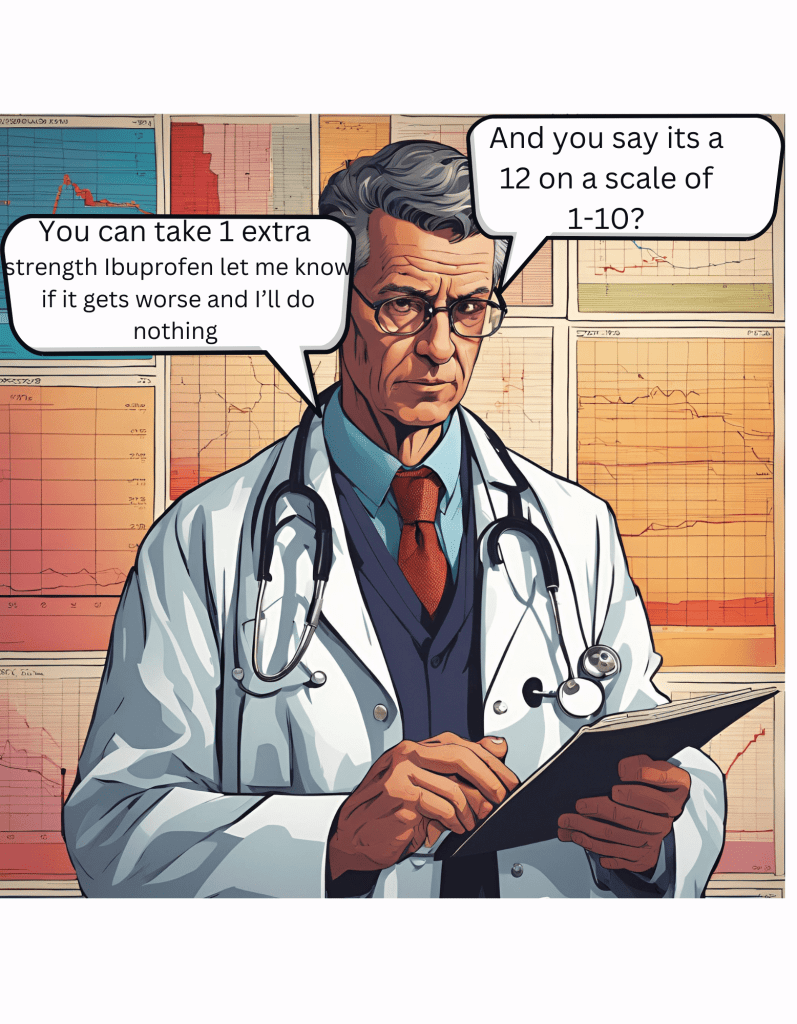
Iโve got plenty of stories I could share about being dismissed by doctors (and believe me, I will). Like the time I was told my fibro pain was just โoverexertionโ when I hadnโt done more than shuffle from my bed to the couch all week. Or when my bipolar symptoms were brushed off as โjust moodinessโ because I happened to be having a good day during my appointment. Yes its about highs and lows but there is so much nuance and theres no way to catalogue each patient’s symptoms into a graph saying which predominant symptom is worse from day to given day, I don’t even know a metric you could rate them on, its just too much. But perhaps the most frustrating moment was when my hipโyes, my actual jointโwas screaming for help, and I was told ‘Well, fibro is painful.’ said sincerely with a hand on my shoulder (do not touch a fibro sufferer there and expect to be conveying sympathy or empathy, its like my BIGGEST tender point, which I never mentioned SPECIFICALLY so I let it go, but you wouldnt do that) Spoiler alert: it wasnโt just fibro; it was my hip waving its white flag and demanding replacement parts.
The Bottom Line
Medical PTSD is real, and itโs time we start talking about it. For those of us living with chronic conditions and invisible illnesses, advocating for ourselves isnโt just an optionโitโs a necessity. So keep pushing for answers, keep telling your story, and never let anyone make you feel like your pain isnโt valid.Because at the end of the day? We know our bodies better than anyone else ever could. And who can tell your story and explain your pain better than you? Til next time gang, take care of yourselves, and each other!
Gather ’round fellow sufferers, for a tale of bodily betrayal that’ll make you laugh, cry, or maybe both โ because let’s face it, sometimes that’s all we can do when our parts start throwing in the towel! Welcome to your 40s, folks โ that magical decade when your body parts start sending out retirement notices faster than you can say “midlife crisis.” It’s like they all got together for a secret meeting (probably while I was napping โ thanks, fibro!) and decided, “Hey, we’ve been busting our butts for decades. Time to clock out and let the young’uns take over.” Now, I’m no stranger to the ol’ body part eviction notice. My colorful past has led to more parts being removed than I care to count. I’m basically a walking “Lost and Found” box at this point. But just when I thought I was done playing Operation with my own body, my hip decides to join the exodus.
There I am, minding my own business (okay, probably complaining about something else hurting, cuz fibro), when BAM! My hip sends in its resignation letter. It’s done. Finito. Sayonara. My hip’s basically like, “Listen, lady, I’ve put in my hours. I’ve carried your sorry ass around for 40+ years. It’s time for me to hang up my hat and enjoy some R&R. Maybe take up golfing or start a hip-hop career. Get it? Hip-hop?”
This trusty joint of mine has been putting in some serious overtime, and let me tell you, it’s been doing it without so much as a coffee break or a “Hip of the Month” plaque. For years, it’s been the unsung hero of my body’s workforce, carrying me through my fibro flare-ups, cat-chasing adventures, and those days when getting out of bed felt like scaling Mount Everest.But somewhere between the thousandth grocery bag lift and the millionth “I swear I’m not limping, I’m just walking with style” stride, my hip started getting a bit… well, hip-ster. It began demanding things like “rest” and “proper alignment” – the nerve! It’s like it suddenly remembered it had rights or something
When it started troubling me I faced the obstacles that are sadly all too familiar to my fellow warriors, I take this new concern to the doctor, it was initially just brushed off with ‘yes fibro is chronic pain’. Then two years after that, with me consistently saying it hurt DIFFERENT than the fibro, she ordered an x-ray since it was such a weird but steadily getting worse pain and the scan showed moderate osteoarthritis. Not curable and one of those ‘just gonna hurt’ pains. Fast forward three years, finaly got another x-ray that reclassified my OA status is severe and severe enough to put me on the hip replacement list. Color me terrified.
Not every pain we have is fibro related. I understand how easy it can be to dismiss our symptoms as โjust fibroโ or โjust stress.โ But we know our bodies, and sometimes what feels like one condition is actually something more. Donโt let anyone invalidate your experience. If you feel something isnโt right, advocate for yourself and push for the care you deserve. Our voices matter, and we deserve to be heard when it comes to our health.
So here I am, facing down a hip replacement way too young thanks to fibro, and thanks to the car hitting me when I was walking. Because apparently, I’m an overachiever even when it comes to falling apart. But hey, look on the bright side โ at least I’ll have a shiny new bionic part to add to my collection. Maybe I’ll even get a punch card: “10 surgeries and the next one’s free!” I’m probably up to that by now LOL.
The Moment of Truth: Cysts and No Hope for Fixing It
So, what happened next? Oh, just a little something called โThe Moment of Truth: Cysts and No Hope for Fixing It
So, what happened next? Oh, just a little something called โsubchondral cysts otherwise known as bone cysts.โ Because apparently, my body wasnโt just aging gracefullyโit decided to throw in some uninvited guests to make things extra fun. The cysts basically sealed the deal. My hip wasnโt just aging out; it was actively failing on me. After an x-ray, my ortho looked at me and said, โOh honey, this is severe. Thereโs no saving this one.โ
That was it. No shots, (and I had been putting off getting shots for the pain actually, was finally strong enough in my belief that I could do it and I had no more options since I wonโt take narcotics) no pills, no more easy fixes. It was time for major surgeryโa hip replacement. And honestly? It felt like a bit of a gut punch, but also a relief. I mean, Iโd been working with a hip that was basically clocking out without telling me, so now it was time to send it into official retirement.โ
Retirement Offer: The Hip Replacement Option
This is where things got real. I thought I could push through, maybe try some shots or other treatments, but nope, that wasnโt going to be enough. The hip sent a strong message that no amount of cortisone was going to keep it in the game any longer. And after consulting with my ortho, we discovered that my old hip wasn’t just tiredโit was severe. So, we started the paperwork. A hip replacement is on the horizon.
I look forward to the end of March, that will be near the official day that my hip clocks out for good, and a shiny new joint will step in to take its place. So, Whatโs Next?
Aging might be inevitable, but a hip replacement can be a total game-changer. And while Iโm not thrilled about the process (did I mention I almost passed out twice during the initial consult?), Iโm ready to get that shiny new hip and hopefully say goodbye to some of this pain.
Hereโs the thing: The bodyโs not like it used to be in your 20s and 30s when you could run full speed and wake up feeling like you just slept in a cloud. Nope, my body is now sending in its retirement applications early, and Iโm here for itโwith a little humor and a lot of prep work, of course.
In the upcoming posts, Iโll share more details about what the process actually looks like: from the pre-op checkups to the (probably highly entertaining) recovery phase. So, if youโre someone whoโs looking down the barrel of your own hip replacement, or you just want to see how this unfolds (because who doesnโt love a good recovery journey?), stick around! Maybe my hip will send me a post card lol. Til next time gang, take care of yourselves. And each other.
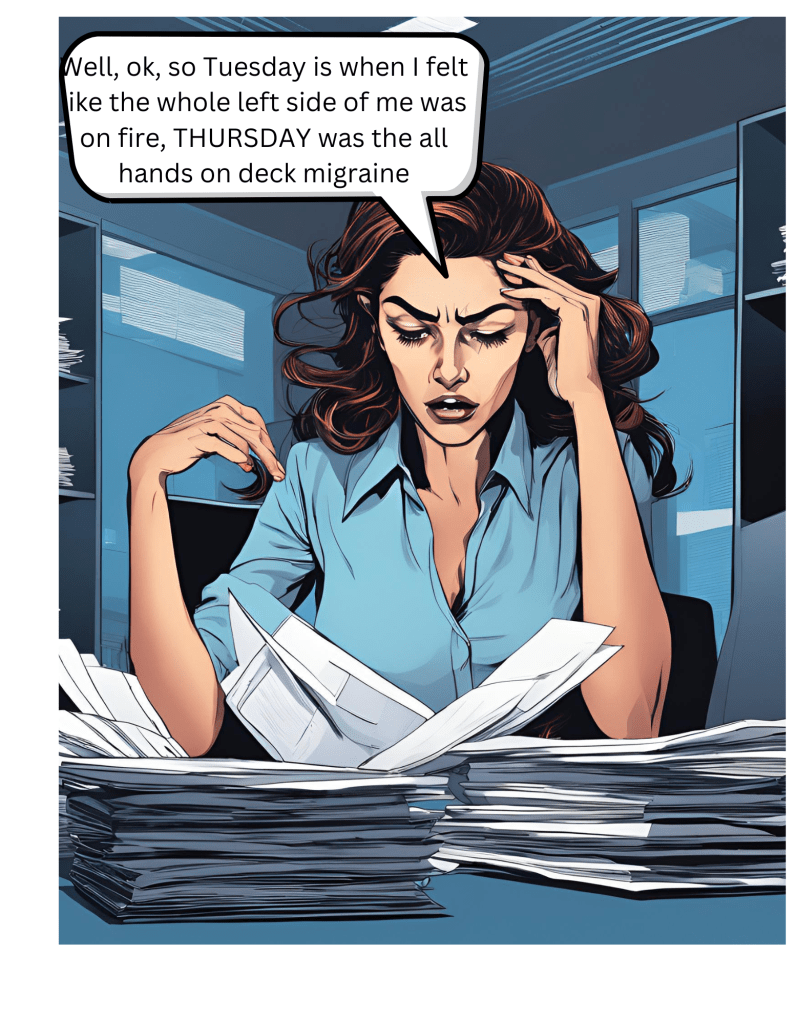
1. Misconception: Fibromyalgia is just “in your head” or not real. Truth: Fibromyalgia is a real, chronic medical condition that affects the central nervous system. Itโs characterized by widespread pain, fatigue, and other symptoms that are definitely not imagined. Itโs scientifically recognized and impacts both physical and emotional well-being. Science backs us up on this one, folks.
I can sometimes understand why people might not get itโif Iโm having a good day and Iโm active, I probably look like your average Midwestern mom. I mean, maybe I should just get an “F” tatted on my forehead? Iโve thought about it. The number of doctors whoโve been dismissive of my very real condition is almost as high as the number of people who are shocked when they hear about my bipolar diagnosis. Clearly, they havenโt seen the rapid mood swings or heard me say, “But youโre sad?” to which Iโll reply, “Yes, amazingly, I can be both sad and manic at the same time, and trust me, itโs a million times worse.”
But I digress. Letโs keep up hereโit’s 2025, and fibromyalgia has been a diagnosable illness since 1976. Before that, it was known as fibrositis in 1904, and even earlier, it was referred to as rheumatism. I mention this because, although no one knows exactly what causes it, Iโve been diving into my genealogyโyes, Iโm a bit of a nerdโand checking birth and death records to compare what I know versus what I think I know. In the process, Iโve noticed that at least six of my direct ancestors had some form of fibro or rheumatism.
Do I think fibromyalgia will kill me? Noโhonestly, I have more pressing health concerns to worry aboutโbut itโs been around for a long time. If you come across a medical professional who doesnโt think fibro is real, get a second opinion. And just to clarify: Iโm talking about someone who doesnโt believe fibro even existsโnot someone who doubts itโs what youโre suffering from. Iโll say it again: a second opinion never hurts… though, in my case, I had my doctor of 7 years drop me for getting one. So stay informed, donโt get discouraged, and keep pushing until you get the answers you deserve.
2. Misconception: Fibromyalgia is the same for everyone.
Truth : Fibromyalgia is like a box of chocolates, you never know what you’re gonna get. Sure, we’ve all got the greatest hits – pain that feels like we’ve gone ten rounds with a heavyweight champ and fatigue that makes sloths look energetic. But beyond that? It’s a grab bag of fun surprises. Some of us are walking zombies thanks to sleep issues, while others are living in a fog so thick you’d think we’re extras in a horror movie. And don’t even get me started on the triggers. What sets off my fibro might not even tickle yours. This is why docs often treat fibro like the ‘rule it out’ illness. They run every test under the sun, and when everything comes back squeaky clean, they throw up their hands and say, “Must be fibro!” I wonder how many times that phrase was said by a doctor to a person who died from something that should have been caught. Wouldn’t it be peachy if we could all agree on what fibro looks like? Maybe then we’d have a magic pill or a cure. Hell, I’d settle for a flashing neon sign that says, “Fibro flare incoming!” But nope, that’s not how this beast rolls.
3. Misconception: People with fibromyalgia are just “lazy.”
Truth: People with fibromyalgia often experience extreme fatigue that is not relieved by rest. This can make daily activities feel overwhelming and exhausting, but itโs not a matter of lazinessโitโs a physical condition that affects the bodyโs ability to generate energy and recover. Picture this: youโve just “slept” for 10 hours, but you feel like youโve been awake for days, You drag yourself out of bed, feeling like youโre moving through molasses, and even the simple act of making a cup of coffee feels like youโre scaling Mount Everest. Thatโs fibro fatigue, folks.
This isnโt about being lazy or needing an extra cup of coffee. Itโs your body throwing a full-on rebellion, refusing to generate the energy you need to function like a normal person. And let me tell you, itโs beyond frustrating.
The kicker? This fatigue doesnโt play fair. It doesnโt care if youโve rested, slept for 12 hours, or spent the day binge-watching your favorite show. Itโs always lurking, ready to sucker-punch you when you least expect it. And no matter how mad I get at myself, once I’m in a funk its necessities only and they tend to relate to immediate family, so the things I don’t get done pile up until they become daunting to the point that I don’t know where to start so I just DON’T start. Executive dysfunction at its best folks.
So next time you see someone with fibro canceling plans or looking like theyโve been hit by a truck, remember: weโre not being flaky or dramatic. Weโre just trying to navigate life with a body thatโs forgotten how to recharge its batteries. Itโs not lazinessโitโs our reality, and weโre doing our best to push through it every single day.
4. Misconception: Fibromyalgia only affects older people. Fibromyalgia is also not limited to adulthoodโchildren and adolescents can be diagnosed with it, though this is relatively rare. According to the American College of Rheumatology, fibromyalgia in children and teens often presents differently than it does in adults, with symptoms like widespread pain, fatigue, headaches, and difficulty concentrating (often referred to as “fibro fog”). The challenges with diagnosing fibro in younger individuals are compounded by the fact that many of these symptoms overlap with those of other conditions, making it harder to pinpoint fibromyalgia as the cause.
In younger patients, symptoms may be mistaken for growing pains or other childhood illnesses, which can delay a correct diagnosis. The National Fibromyalgia Association states that fibromyalgia in children may be underdiagnosed, partly because doctors may attribute symptoms like tiredness or pain to more common, non-chronic conditions. Additionally, children may struggle to articulate how theyโre feeling, which can make diagnosis even more difficult.
Fibromyalgia can occur at any stage of life, and its symptoms vary widely. While some people may have mild discomfort, others experience debilitating pain and fatigue that severely impacts their daily lives. As the condition often fluctuates in severity, it can be hard to predict its long-term course.
Itโs important to note that the cause of fibromyalgia is still not fully understood, though genetics, infections, physical trauma, and emotional stress are thought to contribute to its development.
5. Misconception: Thereโs no treatment for fibromyalgia.
You’ve probably heard there’s no treatment for this beast, right? Well, hold onto your hats, because that’s about as true as saying chocolate isn’t a food group. Sure, we don’t have a magic wand to make fibro disappear (believe me, I’ve looked). But we’ve got a whole arsenal of tricks to keep this monster at bay. It’s like playing whack-a-mole with your symptoms, but hey, at least we’re not sitting ducks! First up, we’ve got meds. From your garden variety pain killers to fancy-pants antidepressants and anti-seizure meds, there’s a buffet of options. These bad boys can help tame the pain and maybe even let you catch some Z’s without feeling like you’ve been hit by a truck. Then there’s physical therapy and exercise. I know, I know, the thought of moving when everything hurts is about as appealing as a root canal. But trust me, a little moderate exercise can work wonders. It’s like giving your body a tune-up.
And let’s not forget about the mind game. Cognitive-behavioral therapy isn’t just for when you’re feeling blue. It’s like a personal trainer for your brain, helping you outsmart the pain and stress. Now, for the lifestyle changes. Getting enough rest, eating right, and practicing good sleep hygiene might sound like advice your grandma would give, but don’t knock it ’til you’ve tried it. It’s amazing what a difference these can make. For those feeling a bit adventurous, there’s always acupuncture and massage. It’s like a spa day, but with actual health benefits. Who knew getting poked with needles could feel so good? The key here, my fellow fibro warriors, is to mix and match. It’s like creating your own personal fibro-fighting cocktail. What works for me might not work for you, and that’s okay. We’re all unique snowflakes in this blizzard of pain.So don’t let anyone tell you there’s no hope. We might not have a cure (yet), but we’ve got options. And in this fibro fight, options are our secret weapon. Now, go forth and conquer my friends, Until next time take care of yourselves, and each other.
Ah, fibromyalgia flare-upsโthe unpredictable, uninvited guests that crash our daily plans with the grace of a bull in a china shop. One minute, youโre checking off items on your to-do list, and the next, youโre grappling with a tidal wave of pain, fatigue, and brain fog. If youโre living with fibromyalgia, you know all too well how these flare-ups can wreak havoc on your daily routines. But fear not! There are ways to manage the chaos with a mix of practical strategies and a touch of humor.
Understanding Fibromyalgia Flare-Ups (Or: Why Your Body Hates You)
Fibromyalgia is like that annoying friend who shows up uninvited and brings a bunch of rowdy guests – pain, fatigue, and brain fog. A flare-up is when these uninvited guests decide to throw a rager in your body. Triggers? Oh honey, it could be anything from stress to the weather changing its mind faster than a toddler in a candy store.
Key Insights:
Flare-Ups Arenโt Always Predictable: Research published in the Journal of Clinical Rheumatology highlights that fibromyalgia symptoms can vary significantly in intensity and duration, making it challenging to plan activities around them. Will today be a “I can conquer the world” day or a “I can’t even conquer putting on pants” day? Spin the wheel and find out!
Stress Plays a Major Role: According to the Fibromyalgia Syndrome: A Comprehensive Approach study, stress is a significant trigger for flare-ups. Managing stress through relaxation techniques can help mitigate the severity of symptoms. Turns out, stress is like fuel for your fibro fire. So try to relax… which is totally easy when you’re in pain, right?
Weather Sensitivity: The Arthritis & Rheumatology journal notes that some fibromyalgia patients are sensitive to weather changes, which can exacerbate pain. However, the exact relationship between weather and flare-ups remains an area of ongoing research. Some fibro warriors are walking, talking weather predictors. Who needs a meteorologist when your joints can tell you it’s about to rain?
Tips for Surviving the Fibro Fiesta
Embrace the Chaos: Plan A, Plan B, Plan “Fuck It, I’m Staying in Bed.”
Journal Like a Teen with a Crush: Document every twinge, ache, and “why me?” moment. It’s like detective work, but less fun and more painful. Keeping a symptom journal is also advisable because what if its not fibro? The more info you have when trouble hits, the more you can tell the doc maybe its a tweak in meds, maybe its something else entirely.
Self-Care is Not Selfish: Prioritize yourself. Take that nap, do that gentle yoga, or just stare at the wall contemplating the meaning of life. It’s all valid. The American College of Rheumatology suggests incorporating mindfulness and stress-reduction techniques into your routine.
Set Realistic Goals: Like “get dressed today” or “remember why I walked into this room.” Break tasks into smaller, manageable chunks. This way, you can achieve your goals without overexerting yourself. Celebrate small victories, and donโt be too hard on yourself if you donโt accomplish everything on your list.
Pain Management Roulette: Hot baths, massages, meds – try them all and see what sticks. It’s like a spa day, but with more wincing. The National Fibromyalgia Association emphasizes that a combination of treatments often works best.
Find Your Tribe: Connect with other fibro warriors. Misery loves company, especially when that company gets why you’re canceling plans for the fifth time this week. Join a support group or online community where you can share experiences and gain advice from those who get it.
Stay Informed: Keep up with fibro research. It’s like following celebrity gossip, but the celebrity is your own body. This knowledge can empower you to make informed decisions about your health and treatment plan.
Communicate: Let people know when you’re having a bad day. Most people are understanding, and if they’re not, well, that’s what voodoo dolls are for. Let your family, friends, and colleagues know when youโre having a tough day. Most people are more understanding than you might expect.
A tale of grocery store glory gone wrong…
There I was, feeling like a damn superhero, armed with a shopping list and the misguided optimism of someone who’s forgotten they have fibromyalgia.I’m cruising through the aisles, tossing items into my cart like I’m on some twisted version of Supermarket Sweep. I’m on fire, baby! I’ve got a week’s worth of meals planned, and I’m actually remembering to buy vegetables that aren’t just potato chips. Look at me adulting like a boss!
But then, because the universe has a sick sense of humor, my right hip decides it’s the perfect moment to stage a revolt. It was as if my nerve on that side was a live wire that was getting repeatedly squeezed like a cartoon character. Out of fucking nowhere, it feels like a rabid badger has set up shop in my joint and is throwing a rave. One second I’m contemplating the merits of Frosted Flakes versus Froot Loops, and the next I’m clinging to my shopping cart like Rose clung to that door in Titanic.
Every step is like walking on Legos while being stabbed by a thousand tiny ninjas. The fluorescent lights are suddenly brighter than the sun, turning the store into a hellish disco of pain. My carefully crafted plan of “shop and go home to Netflix” is rapidly morphing into “try not to pass out in the cereal aisle.”
As I’m limping towards the checkout, looking like a drunk flamingo pushing a cart, I can’t help but laugh at the absurdity. Here I am, in the middle of Kroger, putting on a show that’s part wounded animal, part determined shopper. But hey, if you can’t laugh at your body’s betrayal in the frozen food section, when can you laugh?
So there you have it, folks. Another day in the life of a fibro warrior, where even a simple shopping trip can turn into an epic battle against your own rebellious body. Now, if you’ll excuse me, I need to go home and ice my hip while eating the comfort snacks I panic-bought during my pain-induced haze. Because nothing says “self-care” quite like ice cream and ibuprofen, am I right? Til next time gang, take care of yourselves, and each other.
Buckle up, because we’re about to dive headfirst into the batshit crazy world of navigating bipolar mania, fibromyalgia, and ADHD all at once. It’s a three-ring circus of creativity, pain, and squirrel-like attention spans that’ll make your head spin faster than a fucking top.
Way Down We Go is right!
Let’s start with the highs of bipolar mania, shall we? Imagine your brain as a pinball machine on steroids, ricocheting from one grandiose idea to the next with the force of a supernova. Every neuron is firing PURE GOLD, you’re a veritable fountain of creativity, spewing out ambitious plans and innovative concepts like a deranged Dr. Seuss on crack. The energy is intoxicating, the possibilities endless, and you’re ready to conquer the world with your sheer force of will (and maybe a touch of delusion).
But just as you’re revving up to change the course of human history, fibromyalgia comes crashing in like a drunk party guest, often giving you the coordination of one as well. Suddenly, every movement feels like you’re being stabbed by a thousand tiny knives, and even the simple act of getting out of bed becomes a Herculean feat of endurance. It’s like your body is actively sabotaging your mind’s grand schemes, leaving you to navigate the treacherous waters of creativity while battling a constant companion of pain and fatigue.
And just when you thought things couldn’t get any more chaotic, ADHD decides to join the party, bringing its own special brand of chaos to the mix. Suddenly, your pinball brain is not only ricocheting from one idea to the next but also careening off in a million different directions at once. Focusing on a single task becomes a Sisyphean struggle, as your attention span rivals that of a caffeinated toddler on a sugar high. (I’m really pleased with how that graphic came out. Thats right folks, I pick something for each paragraph and find and customize it myself, I’m a nerd lol)
But fear not, my fellow warriors, for we are nothing if not resilient AF. We may be a hot mess of contradictions, but we’re also a force to be reckoned with when it comes to navigating this twisted labyrinth of creativity and challenges.
First and foremost, self-awareness is key. We’ve got to learn to recognize the signs and symptoms of each condition, so we can manage them like the badass bosses we are. When the mania starts veering towards impulsivity, it’s time to rein that shit in. When the fibromyalgia pain is threatening to derail our productivity, we adapt and conquer.
Next up, we’ve got to embrace our creative outlets while setting some damn boundaries. Sure, we’re bursting with ideas and ambitions, but we’ve also got to break that shit down into manageable steps. Bite-sized chunks of creativity, if you will, that our ADHD brains can actually focus on without getting distracted by the next shiny object that catches our eye.
And let’s not forget the importance of taking care of our physical and mental health, shall we? Proper rest, nutrition, and exercise can work wonders in mitigating the symptoms of both fibromyalgia and ADHD. Throw in some mindfulness practices like meditation and yoga, and we might just achieve a semblance of inner peace amidst the chaos.
But let’s be real, we can’t do this shit alone. That’s why we’ve got to enlist the help of professionals โ therapists, specialists, and anyone else who can help us navigate this twisted labyrinth of conditions. They’re like our own personal Sherpas, guiding us through the treacherous terrain of our own minds and bodies.
At the end of the day, living with bipolar mania, fibromyalgia, and ADHD is a fucking testament to our resilience and strength. We’re a bunch of creative badasses who refuse to let our challenges define us. Sure, it’s a wild ride filled with ups, downs, and more twists and turns than a soap opera plot line, but we wouldn’t have it any other way. So let’s embrace the complexity, embody the resilience, and keep on creating our own unique brand of chaos โ one delightfully twisted day at a time. Til next time gang, take care of yourself, and each other!