Sometimes I wake up already in pain, which feels rude considering I was unconscious and minding my business.
My jaw aches like I spent the night grinding concrete. My shoulders are locked halfway to my ears. My hands hurt like I’ve been stress-clenching imaginary problems in my sleep (which, honestly, tracks). I didn’t overdo it yesterday. I didn’t injure anything. I just… existed.
This kind of flare doesn’t start in my body — it lands there.
My nervous system wakes up feral. Heart racing. Muscles braced. Skin overly dramatic. Brain fog so thick I could lose a thought mid-thought.
It’s like my body heard a rumor that something bad might happen and decided to prepare for war before confirming the details.
When the nervous system is under prolonged stress, it can amplify pain signals even without new injury — a process called central sensitization. It’s common in fibromyalgia and chronic pain conditions, and it means the pain is real, measurable, and neurological — not imagined or exaggerated.
Here’s the annoying science part: emotional stress doesn’t stay politely in the “feelings” department. It rewires pain pathways, cranks up inflammation, and lowers the threshold for flares. My body doesn’t care if the threat is physical or psychological — it reacts with the same unhinged enthusiasm either way.
So when I say I’m in pain, I’m not being metaphorical. I mean my body is cashing a check my nervous system wrote.
There’s research behind this, by the way. Emotional distress activates the same pain-processing pathways in the brain as physical injury. For people with fibromyalgia or trauma histories, the nervous system can stay stuck in high-alert mode — turning stress into very real, very physical pain.
It looks like moving slower. Canceling plans without guilt (or with guilt, but canceling anyway). It looks like heat packs, silence, and a deep distrust of anyone who suggests I “push through it.” It looks like exhaustion that sleep laughs at and pain that refuses to justify itself with visible damage.
This isn’t weakness. This is a system that’s been on high alert for too long and forgot how to stand down.
Some days the goal isn’t fixing anything — it’s lowering the volume. Fewer demands. Softer expectations. Treating my body like it’s been through something instead of asking it to perform like it hasn’t.
Pain doesn’t always come from injury. Sometimes it comes from carrying too much, for too long, with no off switch. Til next time gang, take gentle care of yourselves, and each other!
You ever have one of those weeks where time evaporates, laundry multiplies on its own, and your partner disappears for seven days like they’re on a side quest you definitely didn’t authorize? Yeah. That was my week. Which means today’s meal plan is brought to you by: Survival Mode But Make It Edible™.
This is a reserve-based, spoon-friendly, chronic-illness-approved, “I have three brain cells and two are fighting” kind of schedule. Six meals involve actual cooking (mostly crockpot because we respect our energy). The other nights? Reserves. Frozen. Pantry. Leftovers. Whatever doesn’t require you to stand upright for more than four minutes.
If that’s your vibe too, welcome home.
THIS WEEK’S MENU
Cooked Meals:
Tuesday Crockpot Salsa Chicken Bowls
Thursday Slow Cooker Garlic Herb Pork Roast + Potatoes
Sunday Crockpot Honey Teriyaki Chicken (No weird sauces, promise)
Tuesday Lemon Herb Chicken & Rice (No Creamy Stuff!)
Thursday Crockpot Tuscan Chicken & Potatoes (Light, Brothy Version)(Not creamy — just herbs, garlic, broth, and sunshine.)
Sunday Sheet Pan Italian Chicken & Veggies
Reserve Nights (1–2):
Frozen pizza, frozen enchiladas, freezer soup, freezer breakfast burritos, rotisserie chicken + bag salad… whatever you have in the stash.
And boom — another week fed, fueled, and officially handled, even if we handled it while lying horizontally with one sock on and exactly zero energy left. Reserve-based meal planning is basically the cheat code for spoonie life: cook when you can, stash when you can’t, survive the rest of the time on whatever doesn’t require opening the oven.
If you make any of these recipes, tell me which one your family inhaled first. Mine always pick the salsa chicken because apparently we’re a Taco Tuesday household… regardless of the actual day. Til next time gang, take care of yourselves, and each other!
When your energy comes with an expiration date, every choice becomes strategic.
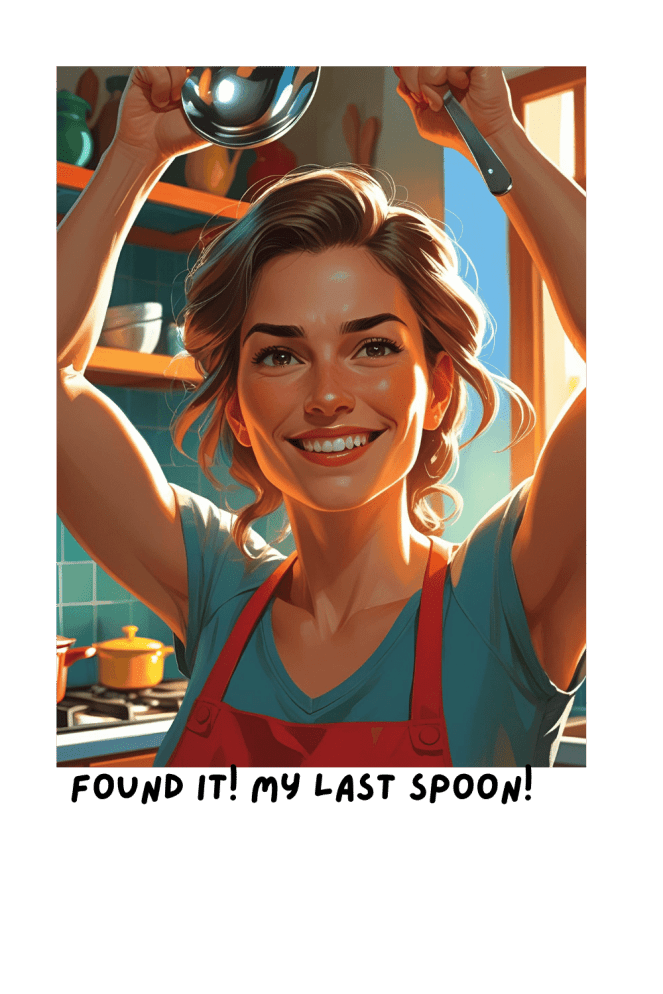
We all know spoon theory. But let’s be real—most of the advice assumes you’re managing your energy for your own activities. What happens when you can’t just “rest when you need to” because someone else depends on you for dinner, rides, and emotional regulation? When your autistic teenager needs consistency but your fibromyalgia is flaring? When your ADHD brain forgot to save energy for the evening routine, but bedtime still has to happen?
I’m not trying to be a saint here—I’m trying to survive until bedtime without completely falling apart. And that requires a different kind of energy strategy than the basic spoon theory tutorials assume.
The Complex Reality: When Multiple Conditions Collide
These are my dancin spoons
Here’s what the basic spoon theory explanations miss: When you’re managing fibromyalgia, ADHD, and bipolar disorder simultaneously, your spoons aren’t just limited—they’re unpredictable.
My ADHD brain might hyperfocus and blow through six spoons organizing one closet. A bipolar mood shift can drain spoons faster than a phone with a cracked screen drains battery. And fibromyalgia? It’s like having a fluctuating baseline that changes without warning.
Add parenting an autistic teenager to the mix, and you’re not just managing your own energy—you’re strategically allocating it so everyone gets what they need, including you still being a functioning human by 8 PM. (Well I never claim to be a functioning human any time after 5 lol)
This isn’t about being selfless. It’s about being smart enough to pace yourself so you don’t crash and burn, leaving everyone (including yourself) worse off.
The Science Behind Why We Run Out of Spoons
Research backs up what we’ve always known: fibromyalgia isn’t just “feeling tired.” Studies show people with fibromyalgia experience disrupted sleep, increased pain sensitivity, and central sensitization—basically, our nervous systems are stuck in overdrive.
Key Research Findings:
Fibromyalgia and Central Sensitization: The National Institute of Arthritis and Musculoskeletal Diseases confirms fibromyalgia affects how the brain processes pain signals, leading to widespread pain and fatigue.
Sleep Disruption: 75–90% of people with fibromyalgia experience sleep disorders, creating a vicious cycle where pain disrupts sleep and poor sleep worsens pain.
ADHD and Executive Function: ADHD impacts energy regulation through executive dysfunction, making pacing activities harder.
But here’s what medical literature doesn’t capture: what happens when you can’t just “listen to your body” and rest whenever you need because someone else is counting on you?
Energy Pacing: The Research-Backed Strategy That Actually Works
The good news? There’s solid research supporting strategies beyond “just rest more.” Activity pacing is designed for people who can’t just stop when they’re tired.
Key Research Findings:
Activity Pacing Works: A 2023 systematic review found pacing—regulating activity to avoid post-exertional crashes—is one of the most effective strategies for chronic fatigue conditions.
Better Than Boom-Bust: People who learn pacing techniques report significantly improved quality of life compared to those who push through until they crash.
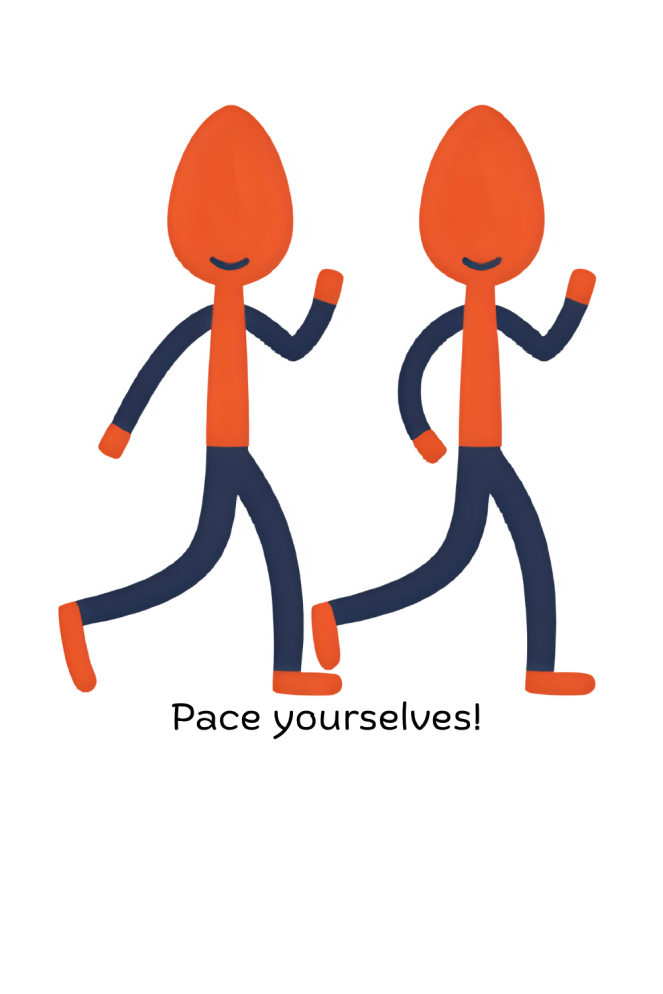
The Energy Envelope: Research shows staying within your “energy envelope” prevents the crash-and-burn cycle that leaves you useless for days.
The key insight? It’s not about doing less—it’s about doing things more strategically so you can sustain your energy over time.
My Real-Life Strategic Energy System
The Morning Energy Assessment
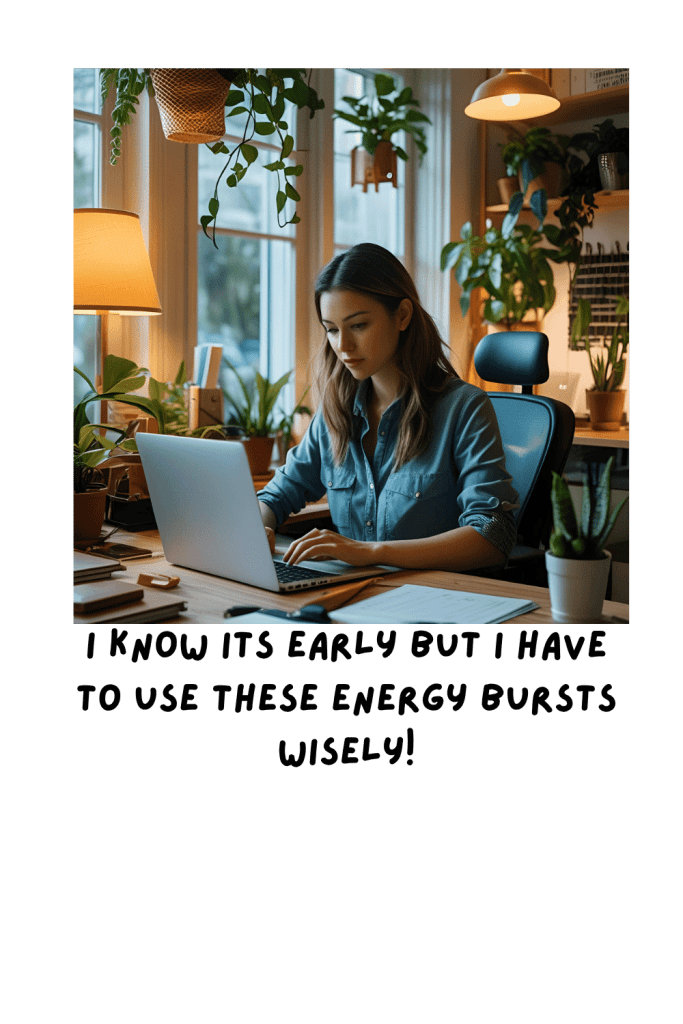
Every morning, I do a quick reality check: How’s my pain? Did I sleep? Is my brain foggy? This gives me a realistic count of my available energy for the day. A good day might be 15 units. A flare day? Maybe 8. The key is honesty about what I actually have, not what I wish I had.
The Triage System: Essential vs. Optional
I ruthlessly categorize tasks:
Essential: Medication, meals, safety, school pickup Important: Homework, emotional check-ins, sensory accommodations Optional: Fancy meals, deep cleaning, being the “fun mom”
On low-energy days, I focus only on essentials. My teen knows that sometimes we operate in “basic functioning mode,” and that’s just life—not failure. I have learned I am terrible at categorizing though lol.
The 80% Rule
Research shows staying within your “energy envelope” prevents crashes. For me, this means spending no more than 80% of my energy by 3 PM. Kids still need dinner, and I still need to exist as a person after sundown.
Practical Energy-Saving Strategies That Actually Work
Here’s where theory meets reality. These aren’t pie-in-the-sky ideas—these are battle-tested strategies for functioning for others while managing complex needs.
Batch Processing: Work Smarter, Not Harder
High-energy tasks happen on good days. Maintenance mode on the rest. Strategic, not lazy.
Examples:
Book medical appointments together to reduce recovery time
Meal prep when you’re energized, not hangry
Handle school stuff in batches
Environmental Modifications: Make Your Space Work for You
Our home reduces energy demands on purpose. Essentials are easy to reach, grab bars help, and my teen knows the layout.
Modifications:
Keep essentials within easy reach
Set up “stations” for meds, homework, decompression
Use timers and alarms because our brains aren’t built for mental tabs
The 20-Minute Rule
If it takes longer than 20 minutes, it gets chunked smaller or delegated. This prevents ADHD hyperfocus from burning my whole day’s energy.
When Your Teen Needs to Understand Your Reality
One of the hardest parts? Explaining to my autistic teen why I can’t do something today that I could yesterday. Consistency helps, but clarity wins. She’s gotten better since she goes to school based therapy, I’ve really been proud of her empathy lately.
What works:
Concrete language: “I have 3 energy units left. Dinner needs 2.”
Offer alternatives: “I can’t drive you, but I can order it.”
Honesty: “Energy changes daily. Not your fault or mine.”
Involve them: “How can we make this work with what I’ve got left?”
The Guilt Factor: Why Strategic Rest Isn’t Selfish
It took me years to accept this: protecting my energy isn’t lazy—it’s responsible. Proactive rest keeps me showing up tomorrow.
Saying no to extras isn’t shirking responsibility—it’s saving energy for what truly matters. Operating in “basic functioning mode” is how I keep us afloat without sinking out of stubbornness.
Next Week: Building your support network and emergency energy protocols—because even superheroes need backup plans. Til next time gang, take care of yourselves, and each other.
Let’s just get one thing out of the way: when we say we’re tired, we don’t mean “I could use a nap” tired. We mean, “it feels like my bones are made of lead and I’m dragging them through emotional quicksand” tired. Welcome to chronic illness fatigue — where the real game is not getting things done, but feeling guilty about the things we couldn’t do.
Invisible Illness Fatigue: A Sneaky Beast
When you live with something like fibromyalgia, ADHD, or bipolar disorder (or the full trifecta, if you’re really winning like I am), fatigue doesn’t show up like it does after a long day. It’s not solved with sleep. It’s a permanent roommate that throws a tantrum when you so much as think about productivity.
We don’t just skip tasks. We skip tasks, then feel like a failure for skipping them, then try to explain why, then realize we’re exhausted from the explaining. And even when people say they understand, there’s that unspoken “but everyone’s tired” hanging in the air. Sure, Karen, but not everyone needs to lie down after a shower.
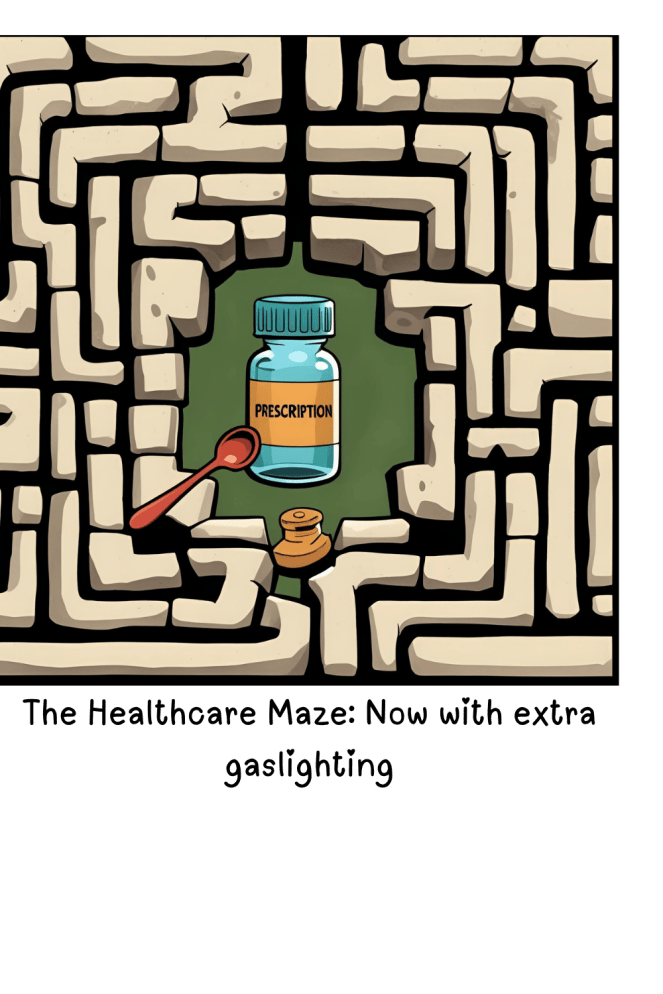
The Gaslight of the Medical Maze
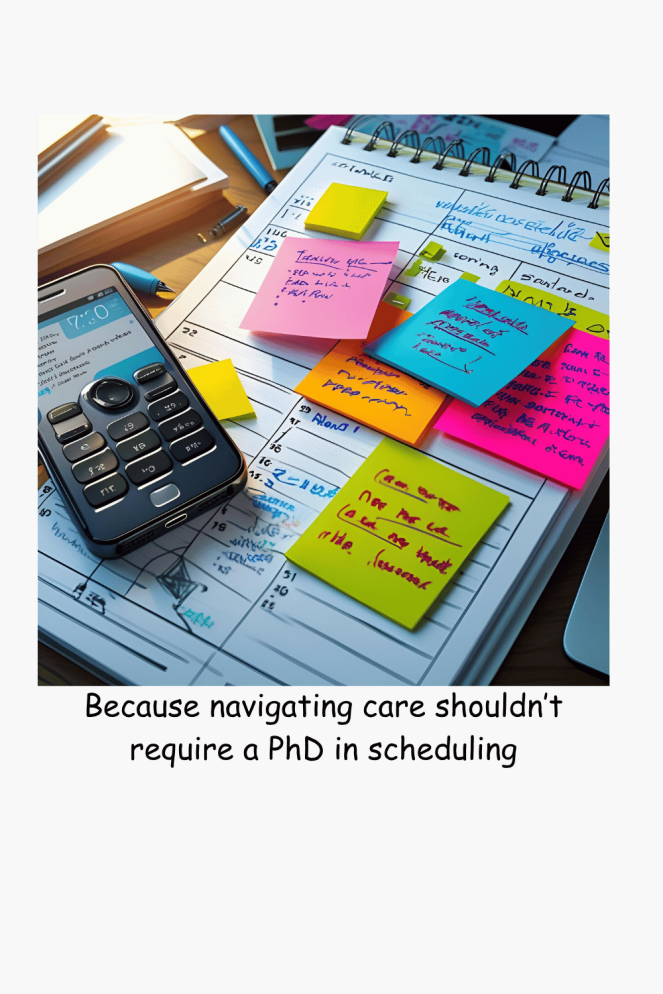
Now let’s sprinkle in a bit of medical neglect for flavor. According to the National Council for Mental Wellbeing, it takes an average of 48 days to get an appointment with a behavioral health provider in the U.S. — and that’s after you’ve made contact. Because what’s chronic illness without fighting the very system meant to help us? I spent this week trying to schedule a psych appointment for my teenager. I called seventeen times. Seventeen. Not metaphorically. SEVENTEEN. I left messages. I waited. I got bounced from voicemail to nowhere. Their voicemail message says ‘someone will get back to you within 24 hrs.’ Never not once called. Cold, Hard Reality Check: According to the National Council for Mental Wellbeing, the average wait time for behavioral health services in the U.S. is a staggering 48 days. That’s nearly seven weeks of waiting in limbo—waiting for care that should come sooner.
And when I finally got through — a moment of hard-earned triumph — I did what any burnt-out, panic-caffeinated, mom-on-the-edge might do: I scheduled it first available for the one day I absolutely can’t do it. Face palm? No. Face ground. But the idea of calling again, of pushing through the labyrinth of dead-end prompts and receptionist roulette? I physically can’t do it. I’ll move my own mountain that day instead.
This is what they don’t see. The victories that come covered in emotional tax. The way we beat ourselves up over accidents because we’re so used to feeling like we’re failing. Even our wins taste like stress.
The Never-Ending Ask for Help (That Goes Nowhere)
Everyone tells you to ask for help. But they don’t tell you what to do when that help turns out to be a ghost. Or a voicemail. Or an email that never gets answered. Or a friend who says, “Let me know if you need anything” but quietly disappears when you say, “Actually, I do.”
When you do speak up, you risk being labeled as dramatic or dependent. When you don’t, you’re “not taking care of yourself.” It’s a rigged game. The buck never stops. It just circles the drain while we’re clinging to the rim.
And yes, it gets to us. All the time. We internalize it. We feel like a burden. Like we have to keep apologizing for being sick. Like if we were just stronger, more organized, less emotional, less needy… we could pull off the impossible. You can gaslight yourself into silence before a single word leaves your mouth.
So Why Share This?
Because I know I’m not the only one. And if you’ve been spiraling, crying in between productivity guilt sessions, or clenching your teeth while listening to elevator hold music for the fifth time this week — you’re not alone.
This isn’t a cry for pity. It’s a call for reality. Let’s be honest about what it really feels like to be chronically ill, overwhelmed, and stuck inside a system that expects perfect performance from broken parts.
Let’s remind each other that doing our best sometimes looks like barely functioning — and that’s still valid. Let’s talk about how asking for help shouldn’t feel like rolling a boulder uphill.
Let’s be soft with ourselves.
You are not failing. You are carrying more than most people even know exists. And you’re still here, still trying. That’s resilience. That’s strength. That’s you. Til next time gang, take care of yourselves, and each other!







 Cold, Hard Reality Check: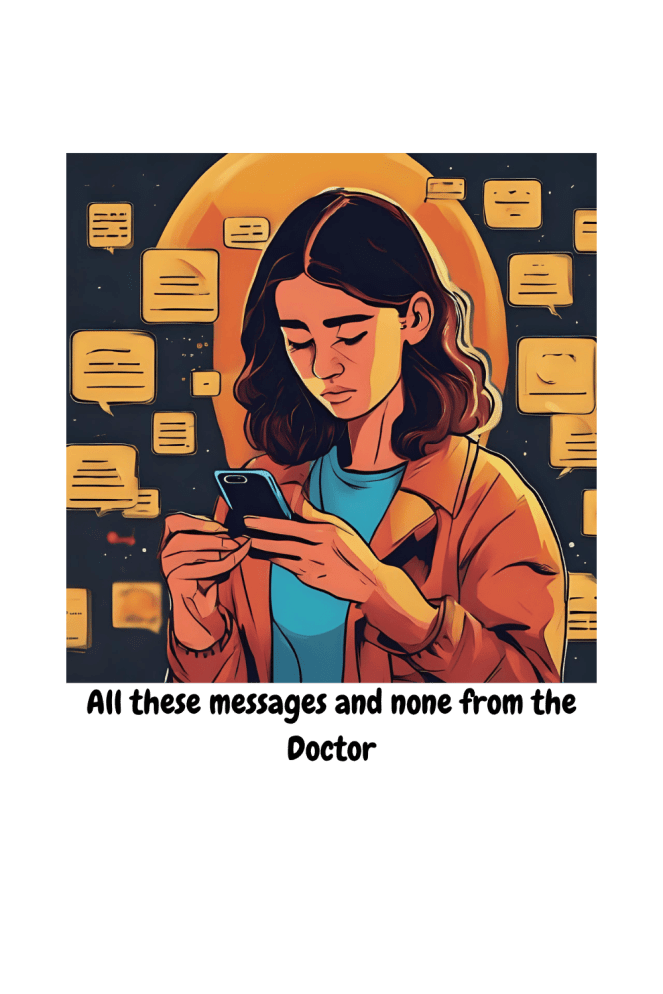

 WannaBeNormal