


For many of us who live with chronic illness, ADHD, bipolar disorder, trauma, or just the fallout of a childhood where vulnerability wasn’t safe, the idea of trusting our own thoughts and feelings is… complicated. We don’t just second-guess ourselves—we override ourselves. We self-gaslight.
“It’s not that bad.” “I’m just being dramatic.” “Other people have it worse.” Sound familiar? That’s not humility. That’s internalized invalidation, and it’s one of the cruelest things we do to ourselves.
What is Self-Gaslighting?

Self-gaslighting is when you question or dismiss your own reality, often as a learned response from years of being invalidated by others. According to therapist Stephanie Moulton Sarkis PhD, this pattern often forms in people who have experienced emotional abuse or childhood neglect.¹ It’s a survival mechanism that becomes self-sabotage.
And it’s common—especially in neurodivergent and chronically ill communities. Studies have shown that women are especially likely to have their symptoms dismissed or misdiagnosed, leading to a long-term mistrust of their own internal cues. For example:
- Up to 50% of women with ADHD are misdiagnosed with anxiety or depression first.²
- 1 in 5 people with bipolar disorder go undiagnosed for more than a decade.³
- Chronic pain conditions like fibromyalgia are disproportionately underdiagnosed and stigmatized, especially in women.⁴
“I Hate Needing Help”: The Roots of Self-Gaslighting and How I’m Unlearning the Lie
I hate needing help. Like… viscerally. It makes me feel less than, and not in some abstract way — in the deep, core-wounding kind of way. And it didn’t come from one trauma or a single toxic person. It came from a thousand tiny, normalized moments that stacked up over time, whispering that needing help was weak. That I was weak.
I grew up steeped in traditional expectations most of us did at my age: men work hard and provide, women do everything else. Even if she worked outside the home, the mom still handled the doctor appointments, the homework folders, the mental load of everyone’s everything. I saw it play out every day. When the school called home, they didn’t call my dad — even though he worked at the same place as my mom. They called her. Because, of course they did.
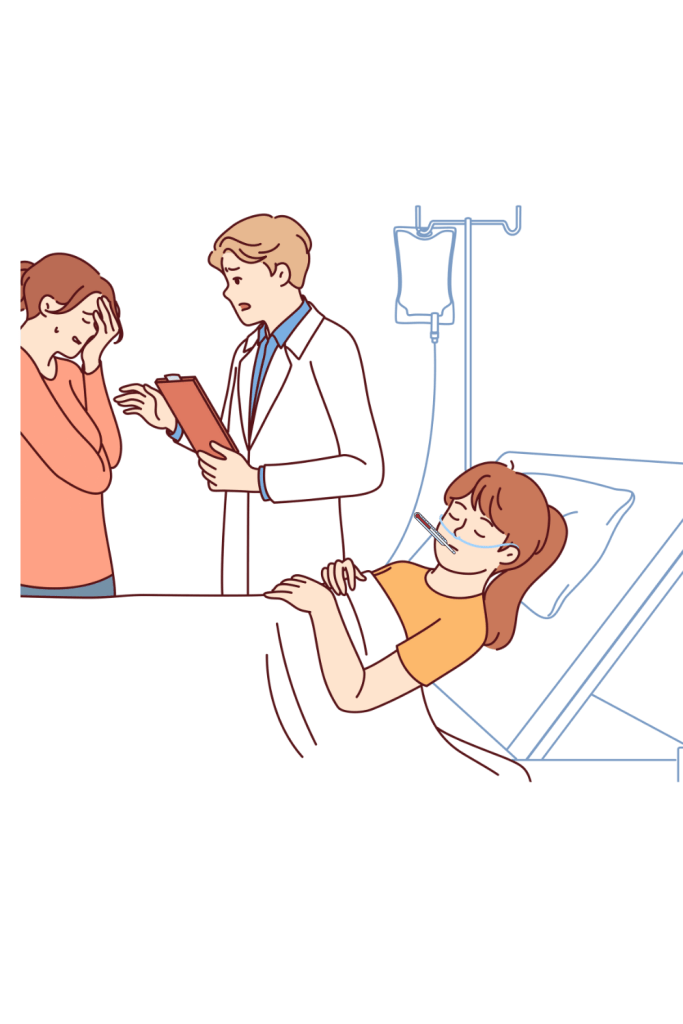
One of my earliest memories of being “too much” started when I was seven and sick — fever, sore throat, the works. I said I was hurting, but everyone figured I was just being dramatic. (To be fair, I am dramatic, but I was also SEVEN and clearly not faking it.) They took me to the doctor, got me antibiotics, and figured that was that. But I wasn’t getting better.
Eventually — after more crying, more pain, and more dismissal — my Gram told my Mom to take me to a backup pediatrician because my doctor happened to be out of the office that day. That man took one look at me and told my mom, “She needs to go to the ER. Now. Her appendix is rupturing.”
He didn’t mince words: “She’s small. If the infection spreads, it could be too late.”
The surgery happened that night. It turned out my appendix had been leaking slowly — poisoning my body while I was being told I was too sensitive, too loud, too whiny. And sure, they saved me (yay!)… but the version of the story that stuck in my head wasn’t about how I survived. It was about how much of a burden I was.
To this day, my mom recalls how she had to carry my “heavy ass” because I couldn’t walk. Now, was I actually heavy? No. I was maybe 45 pounds of dead weight and fever. But it embedded this core belief in me: I’m dramatic. I’m too much. I’m inconvenient.
That belief stayed with me. Through childhood. Through my first marriage. Through flare-ups of chronic illness. Through postpartum depression. Through ADHD paralysis. Through years of pushing myself past the edge so no one would see me as “lazy.”
When people doubted my pain — or worse, when I doubted it myself — I swallowed it. I thought maybe I was just being dramatic. Maybe I should be able to handle it all. After all, other people have it worse, right?
That’s self-gaslighting. And it’s insidious.
It’s the voice that says:
- “It’s not that bad. You’re overreacting.”
- “You’re not really in pain, you’re just tired.”
- “You could do this if you tried harder.”
It’s what kept me quiet when I needed help the most.
But therapy — lots of therapy — helped me finally unravel it. It took years, but I finally get it now:
- You don’t have to earn rest.
- You’re not a burden for having needs.
- You’re not weak for needing help.
- Other people can have it worse AND your situation can still suck.
- You are allowed to ask for support before you collapse.
And honestly? That doesn’t make you selfish. That makes you human.
If you’re unlearning this too, here’s what I want you to know:
You are not too much. You were never too much. People’s discomfort with your needs doesn’t make those needs invalid. Being the “strong one” doesn’t mean you can’t fall apart. You get to rest. You get to be supported. You get to live a life that isn’t about surviving on fumes and masking your pain to protect someone else’s comfort.
I spent decades trying to be perfect, to be easy, to be less. But screw that. Life is too short to shrink yourself into silence. Take up space. Let people help. Let them carry you sometimes.
Because you are worth it. Even on your worst day.
How to Begin Healing From Self-Gaslighting
Let’s be real—this is messy work. You don’t fix it by reading a meme or journaling once. You fix it by practicing the opposite, over and over, until it becomes your new truth. Here are some small steps with a big impact:
- Reality checking with safe people — someone who validates your feelings can be a lighthouse when you’re lost in doubt. It can be anyone but make sure its someone you can trust for their honesty but also know your heart and can be critical while still being gentle.
- Name the gaslighting — say it out loud: “That was a survival thought, not a truth.” Say it like you are talking to someone you are trying to help.
- Document your experiences — journaling, voice notes, or even social media posts (if safe) can help anchor you in your own story. I journal, its incredibly freeing even just writing it down, seeing it, releasing it, but find which of the healing paths fits the best for you. Sometimes, its beneficial to have a community for support, even if its online, so googling support groups for whatever is the most emergent need in your life. I’m big on support
- Therapy, when possible — especially trauma-informed or neurodiversity-affirming practitioners. If the first one you talk to doesnt vibe, don’t give up, sometimes it takes one or two before you really feel like you have that connection.
You’re Not Broken. You’re Healing.

You’re not too much. You’re not making it up. You’re not weak because you’re tired or need help. You are unlearning a system designed to keep you quiet and compliant. That is hard and brave and it counts—even when it’s invisible. Til next time gang, take care of yourselves and each other.
Sources:
- Sarkis, S. (2018). Gaslighting: Recognize Manipulative and Emotionally Abusive People—and Break Free.
- Quinn, P.O., & Madhoo, M. (2014). A Review of Attention-Deficit/Hyperactivity Disorder in Women and Girls. The Primary Care Companion for CNS Disorders.
- Hirschfeld, R.M.A. (2001). Bipolar disorder: The rate of nonrecognition. The Journal of Clinical Psychiatry.
- NIH & Mayo Clinic studies on gender bias in pain diagnosis and treatment.









 WannaBeNormal