Uncategorized

Times My ADHD Turns Into a Whole Side Quest Every December

Because nothing says “holiday spirit” like getting distracted by something shiny for 47 minutes.

1. When I go to wrap gifts and spend 20 minutes relearning how tape works.

I came here to be festive. I left with tape stuck to my elbow like a badge of incompetence. How’d it get on the cat?

2. When “cleaning for guests” becomes reorganizing a single drawer I haven’t opened since July.

Sure, the rest of the house is still a disaster, but hey — that one drawer is thriving. Bonus point if its a summer clothes drawer because of course I’m behind a whole season.

3. When I open my phone to check the weather and somehow end up reading a deep-dive on Victorian Christmas fruitcake crimes.

Do I know tomorrow’s temperature? Of course not.
Do I know 1800s pastry drama? Absolutely. Internet rabbit holes are my favorite places to spend time I should be using productively on something.

4. When I try to buy stocking stuffers but spend 40 minutes choosing between two nearly identical candles.

Both smell like cinnamon. Both smell like trauma. Why am I like this. I think part of my indecisive freeze up is the overwhelm of smells in that aisle.

5. When I start writing holiday cards and immediately get sucked into redesigning my handwriting.

Suddenly I’m practicing calligraphy like I’m auditioning for the Royal Court. My third cousin will appreciate the readable penmanship and heart doodles.

6. When I go to put leftovers away and end up cleaning the fridge shelf by shelf.

Because obviously THIS was the moment to reevaluate every condiment I own. Then get done and wash my hands only to find the thing I was making room for still there.

7. When one holiday decoration is crooked and suddenly I’m redecorating the entire room.

I blinked and now I’m elbow-deep in a “spontaneous redesign.” My ornaments are not hanging in a pleasing order as I am CONSTANTLY trying to rearrange them to ‘balance it out’.

8. When I sit down to finally relax and immediately decide the bookshelf needs color-coordinating.

My brain: “Rest.”
Also my brain: “Or… reorganize your entire personality via shelf.” Its chaos perfectly encapsulates my life.

9. When I go to pee and somehow come back holding a laundry basket, a snack, and the deep realization that time isn’t real.

Classic. And whats best is to sit down and immediately remember I didnt pee.

10. When a simple online search for a gift turns into reading reviews for products I will never buy.

“Why did I just spend five minutes learning about a blender?”

11. When I try to make a to-do list but end up with three half-lists, two doodles, and a sticky note that says ‘???’

A masterpiece of chaos.
Til next time gang, take care of yourselves, and each other.

Uncategorized

The Science of Laughing: Why Your Inner Comedian is Your Best Ally

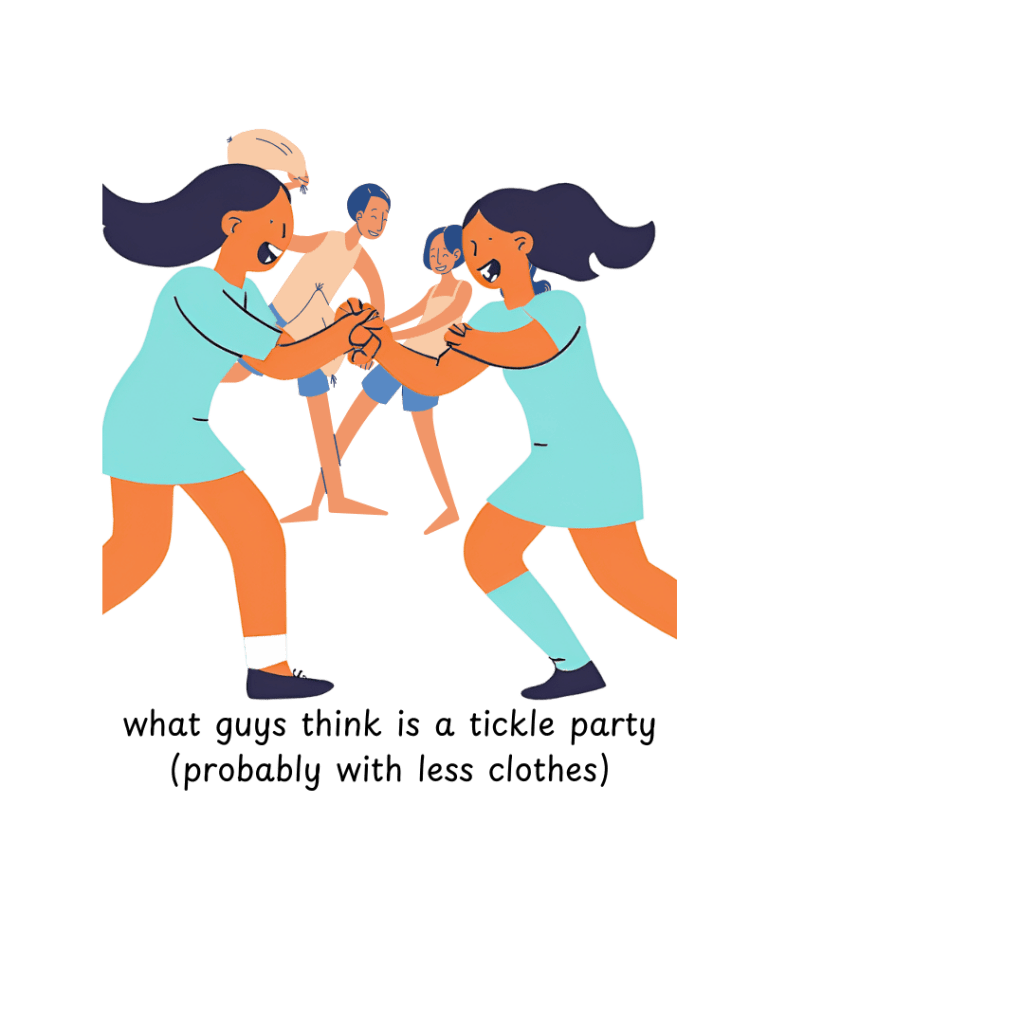
Hey there, laughter junkies! Ever wonder why that ridiculous meme or goofy joke makes you feel like you just hit the jackpot? If you’re dealing with bipolar disorder, autism, ADHD, or just need a good chuckle, you’re in for a treat. Let’s break down why humor and belly laughs aren’t just for TikTok dances—they’re scientifically proven mood boosters that can change your life. And yes, we’ll keep it as entertaining as a tickle fight at a pajama party!

1. Laugh Your Way to a Better Mood

Picture your brain as a social club with two main sections: the “Party Zone” and the “Stress Central.” When you laugh, you’re basically getting VIP access to the Party Zone.
Here’s the scoop:
The Science Bit: Laughter releases endorphins, those magical little chemicals that make you feel all warm and fuzzy inside.
Think of them as your brain’s version of confetti—it’s like a mini celebration of joy.
The Funny Twist: So, next time someone cracks a joke, just remember: your brain is throwing a tiny party in your honor. It’s like having a party planner who never runs out of snacks or energy!

2. Stress? More Like Jest!

Ever noticed how a good laugh can make your worries seem like a joke? That’s because laughter is a natural stress-buster.
The Science Bit:  When you laugh, your body lowers cortisol levels, the stress hormone. It’s like having a built-in stress shield that deflects worries and boosts your overall sense of well-being.
The Funny Twist: If stress was a villain, laughter would be your superhero cape. Imagine your worries being sent flying by a tidal wave of giggles. Who knew saving the day could be this much fun?

3. Laughing is Like a Full-Body Workout

Believe it or not, laughing actually gives your body a mini workout.
The Science Bit: Laughing engages your diaphragm, abs, and even your heart. It’s like cardio without the sweat—unless you’re laughing so hard you snort!
The Funny Twist: So, forget the gym for a moment. Just watch a funny movie or read a joke book and let those giggles be your exercise routine. It’s the only workout where you can sit on the couch and still feel like a champ!

4. The Social Magic of Laughing

Humor isn’t just a solo act; it’s also about connecting with others. And for those with autism, ADHD, or similar conditions, this can be a game-changer.
The Science Bit: Shared laughter strengthens social bonds and improves communication. It’s like having an invisible bridge that connects you to others, making interactions smoother and more enjoyable.
The Funny Twist: Think of it as having universal “friendship glue” that sticks people together. One joke at a time, you’re building a network of chuckles and camaraderie. (Love builds the bridge but its paved with jokes anyway)

5. A Natural High That’s Always Available

One of the best things about laughter is that it’s free and always on tap.
The Science Bit: Laughter enhances overall emotional resilience. It’s like having an emotional Swiss Army knife that’s always ready to handle life’s ups and downs.
The Funny Twist: So, if life hands you lemons, just laugh and turn those lemons into lemonade—extra sweet with a side of giggles!

6. For Bipolar Disorder: Laughter as a Mood Stabilizer

Laughter can be particularly helpful for those managing bipolar disorder.
The Science Bit: During the highs and lows, laughter provides a grounding effect, helping to balance mood swings. It’s like having a funny friend who keeps you steady.
The Funny Twist: Imagine laughter as your mood’s personal GPS—guiding you smoothly from “Whoopee!” to “Phew, that was intense!” without losing your way.

In Conclusion

Laughter isn’t just a reaction; it’s a powerful tool for improving mental health and well-being. From reducing stress and boosting mood to enhancing social connections and offering a full-body workout, humor really is the best medicine. So go ahead, indulge in those silly jokes, funny videos, and laugh-out-loud moments. Your brain, body, and even your social life will thank you for it! Cat videos have saved my life on more than one occassion.
Remember: life might not always be a laugh riot, but finding the humor in it makes the ride a lot more enjoyable. So, grab your favorite comedy and let those laughs fly. After all, happiness is just a chuckle away!

Uncategorized

A bit about sarcasm and the role of sardonic wit in our self care tool kit…

I was planning on a different topic for today but guys, I HURT. I was very dumb. Went to the little one’s track meet and applied sunscreen in the car. We’d been there about two hours when I started getting UNCOMFORTABLY hot on my legs. About an hour after that, I tell hubby I think I am burning and we get to the shade but damage was done and I’m so red, and SWOLLEN! I even took Ibu (not cool with the CKD but sporadic use should be ok.) So I needed to research laughing, to remind myself of its existence and that it wont hurt like this forever lol.

So, in the wild ride of managing fibromyalgia and bipolar disorder, self-care isn’t just a luxury—it’s a necessity. However,as with most of the challenges we face as chronic illness patients, our solution isnt going to look like everyone’s solution. We have to take each self care tip and tweak it, bend it like we’re working clay, shape it into a mold that fits our goals and our realistic expectations This is where the unexpected hero, sarcasm, comes into play.

Research has shown that humor, including sarcasm which is a personal favorite of mine, can be a powerful coping mechanism for individuals navigating the complexities of chronic conditions like fibromyalgia and bipolar disorder. Studies indicate that humor can provide numerous psychological and physiological benefits, from reducing stress and anxiety to boosting mood and resilience. It’s not just about sharing a laugh; it’s about finding moments of levity amidst the pain and chaos, reclaiming a sense of control in a situation that often feels overwhelming. Laughing has a very unique way of replenishing my spoons. I’ll be just DONE and something so absurd or silly happens and I find myself getting the energy to handle my shit.

For many of us, sarcasm isn’t just a form of humor—it’s a language of survival. It’s the witty retort we offer when faced with yet another flare-up or mood swing. It’s the ironic commentary we make to cope with the absurdity of our circumstances. Like truly ‘if I don’t laugh, I’ll cry’ moments. Sarcasm becomes a tool for self-expression, a way to assert our identity and reclaim power in moments when it feels like our bodies and minds are betraying us. Making someone laugh is a balm for me, maybe I CAN’T laugh, when I make someone else laugh I can’t help but to join in no matter how much I hurt.

Personally, I’ve found that incorporating sarcasm into my self-care routine has been both liberating and empowering. When the pain flares up and the depressive fog descends, sarcasm becomes my armor, shielding me from the weight of my symptoms. My friends and family think I’m having a good day, when in reality I feel like I’m coming out of my skin. Its only acceptable to hide from the world and cry under your desk in the fetal position for a limited amount of time. It’s not about denying the reality of my conditions; it’s about refusing to let them define me entirely.

You know, one of the coolest things about sarcasm is how it can turn the most ordinary moments into chances to crack up and bond. Like, picture this: you’re swapping sarcastic memes with other spoonies, or you’re joking about the utter ridiculousness of dealing with medical red tape. It’s like this secret language we share, right? It brings us together, helps us feel less alone in the chaos of chronic illness. It’s like saying, “Hey, I get it, and I’m right there with you.

Of course, sarcasm isn’t a cure all, and there are times when a good laugh won’t magically erase the pain or stabilize my mood. But by integrating sarcasm into my self-care toolkit, I’ve learned to embrace the messy, imperfect journey of living with chronic illness. It’s about finding joy amidst the pain, reclaiming my power in a world that often feels beyond my control. So, here’s to the healing power of sarcasm—may we always find reasons to laugh, even when the odds are stacked against us.
Til next time gang, be kind to yourself and each other