Uncategorized

Signs You’re Pacing Your Energy Correctly (Even If It Feels Like You’re Doing Nothing)

If you live with chronic illness, neurodivergence, or both, pacing your energy can feel suspiciously like… failing. We’ve been conditioned to believe that productivity equals worth, and rest is something you earn after pushing yourself to the brink. Spoiler alert: that mindset is garbage — and it actively works against bodies and brains like ours.

Energy pacing isn’t about doing less because you’re “giving up.” It’s about doing what keeps you functioning tomorrow. And sometimes that looks like absolutely nothing from the outside.

Here are signs you’re actually pacing correctly — even if it doesn’t feel impressive.


1. You Stop Before You Crash

If you’re resting while you still technically could keep going, congratulations — you’re doing it right. Pacing means stopping at the “I should probably rest soon” stage, not the “I have made a terrible mistake” stage.

Ending an activity while you still have a sliver of energy left isn’t weakness. It’s strategy.


2. You Plan Rest on Purpose

Rest isn’t something that “just happens” anymore. It’s scheduled. Protected. Sometimes defended like a feral raccoon.

If your calendar includes intentional downtime — especially after appointments, errands, or social interaction — that’s not laziness. That’s advanced-level self-management.


3. Your Week Looks Boring but Survivable

A paced week doesn’t look exciting. It looks quiet. Repetitive. Underwhelming.

And that’s the point.

If you’re no longer stacking five demanding things in one day and calling it “normal,” you’re learning how to live within your limits instead of constantly bulldozing them.


4. You Say No Without a Full PowerPoint Presentation

You don’t owe anyone your medical history, trauma background, or a five-paragraph explanation for why you can’t do something.

If you’re starting to say “I can’t” or “That won’t work for me” without spiraling into guilt — that’s growth. Messy, uncomfortable, necessary growth.


5. You Recover Faster Than You Used To

Maybe you still flare. Maybe you still crash. But if the recovery time is shorter than it used to be — that’s pacing working.

Progress with chronic illness is often measured in less severe consequences, not total avoidance.


6. You’re Choosing the Easier Option Without Shame

Delivery instead of cooking. Grocery pickup instead of the store. Frozen food instead of scratch meals. Sitting instead of standing.

If you’re choosing accessibility over aesthetics, you’re not “giving up.” You’re adapting. And adaptation is how people survive long-term.


7. You Feel “Unproductive” but Less Destroyed

This one messes with people the most.

If you feel like you didn’t do much, but you also didn’t completely wreck yourself — that’s a win. A quiet one. An invisible one. But a real one.


8. You’re Thinking About Tomorrow, Not Just Today

Pacing means asking, “How will this affect me later?” instead of “Can I force myself through this right now?”

If future-you is part of your decision-making process, you’re playing the long game — and that matters.


Final Thought

Pacing doesn’t look heroic. It doesn’t get applause. It doesn’t fit hustle culture or toxic positivity.

But it keeps you alive, functional, and able to show up again.

You are not doing nothing.
You are managing a body and nervous system that require intention, restraint, and care.

And honestly? That’s not weakness.
That’s skill. Til next time gang, take care of yourselves, and each other!

Uncategorized

Why Spoonies Are the Best Problem-Solvers (It’s Science)

Let’s talk about something we never get enough credit for: people with chronic illness are problem-solving ninjas.

And no, that’s not just me trying to make our daily struggle sound poetic — there’s actual science behind it.

While healthy folks go about their stable little lives with their cooperative bodies and reliable energy, we’re over here MacGyvering our way through every single day.

That constant adapting? It’s not just survival — it’s skill-building. Real, measurable, brain-changing skill-building.


🧠 The Science-y Bit

Research shows that adversity can actually boost creativity — making people more original, flexible, and engaged problem-solvers.

In plain English: hard stuff makes your brain weirdly good at solving other hard stuff.

So when you live with chronic illness, you’re basically getting a crash course in creative adaptation 24/7.

We’re not just surviving. We’re literally rewiring our brains to find new ways to function every single day.


💡 Spoonie Skill Set: Why We’d Crush Any Escape Room

1. Creative Constraint Management

Limited energy? Unpredictable symptoms? Welcome to our daily innovation lab.
Chronic illness is a masterclass in working under ridiculous constraints — and somehow making it work anyway.

2. Advanced Risk Assessment

Every activity is a cost-benefit analysis:
Shower or make dinner? Push through or rest now and avoid a three-day crash later?
That’s executive-level decision-making, my friend.

3. Reframing Like a Pro

Can’t work full-time? That’s not failure — that’s efficiency.
Need to cancel plans? That’s strategic rest.
We’ve had to reframe our entire lives, and that’s actually a top-tier cognitive skill.

4. Pattern Recognition on Steroids

Tracking symptoms, testing triggers, noticing connections? We’re basically data analysts in pajamas.
We notice what works, what doesn’t, and we constantly adapt.


🔁 Creativity + Resilience = Survival Superpower

Studies show creativity and resilience feed off each other — they grow together.

Spoonies don’t just “bounce back.” We reinvent how to exist in a world that wasn’t designed for us.

That kind of mental flexibility? It makes us great at:

  • Staying calm under chaos
  • Pivoting fast when plans fall apart
  • Finding new solutions when old ones fail
  • Surviving on 2 spoons and a half-decent snack

Basically, we’ve got the kind of mental agility CEOs put on résumés.


💼 Real-Life Problem-Solving Nobody Sees

  • Healthcare project management – coordinating meds, specialists, and insurance like a pro.
  • Energy economics – allocating resources like an overworked CFO.
  • Innovation on demand – finding new ways to cook, clean, and live when your body says “nope.”
  • Relationship navigation – balancing guilt, limits, and connection with Jedi-level emotional intelligence.

We do this every single day — quietly, constantly, expertly.


💬 Why It Matters

This isn’t toxic positivity. Chronic illness still sucks.
But recognizing the skills we’ve built? That’s validation, not sugarcoating.

✨ It crushes the “lazy” stereotype — our brains are working overtime.
🧩 It explains our exhaustion — cognitive heavy-lifting is still lifting.
💪 It proves we’re developing skills that translate everywhere — creativity, adaptability, resource management, resilience.


🧃 The Bottom Line

We’re not lazy.
We’re not fragile.
We’re elite-level problem-solvers operating under extreme conditions.

Our lives are one long masterclass in creativity, strategy, and resilience — and science says that makes us exceptional thinkers.

So the next time someone implies you’re “just resting,” remember: you’re actually performing high-level cognitive gymnastics 24/7.

Now if you’ll excuse me, I’m off to solve the complex equation of whether cereal counts as dinner.
(Spoiler alert: it does. That’s called strategic resource allocation.) Til next time gang, take care of yourselves, and each other.

Uncategorized

Can You Hear Me Now? Because the System Sure Doesn’t

Let’s just get one thing out of the way: when we say we’re tired, we don’t mean “I could use a nap” tired. We mean, “it feels like my bones are made of lead and I’m dragging them through emotional quicksand” tired. Welcome to chronic illness fatigue — where the real game is not getting things done, but feeling guilty about the things we couldn’t do.


Invisible Illness Fatigue: A Sneaky Beast

When you live with something like fibromyalgia, ADHD, or bipolar disorder (or the full trifecta, if you’re really winning like I am), fatigue doesn’t show up like it does after a long day. It’s not solved with sleep. It’s a permanent roommate that throws a tantrum when you so much as think about productivity.

We don’t just skip tasks. We skip tasks, then feel like a failure for skipping them, then try to explain why, then realize we’re exhausted from the explaining. And even when people say they understand, there’s that unspoken “but everyone’s tired” hanging in the air. Sure, Karen, but not everyone needs to lie down after a shower.


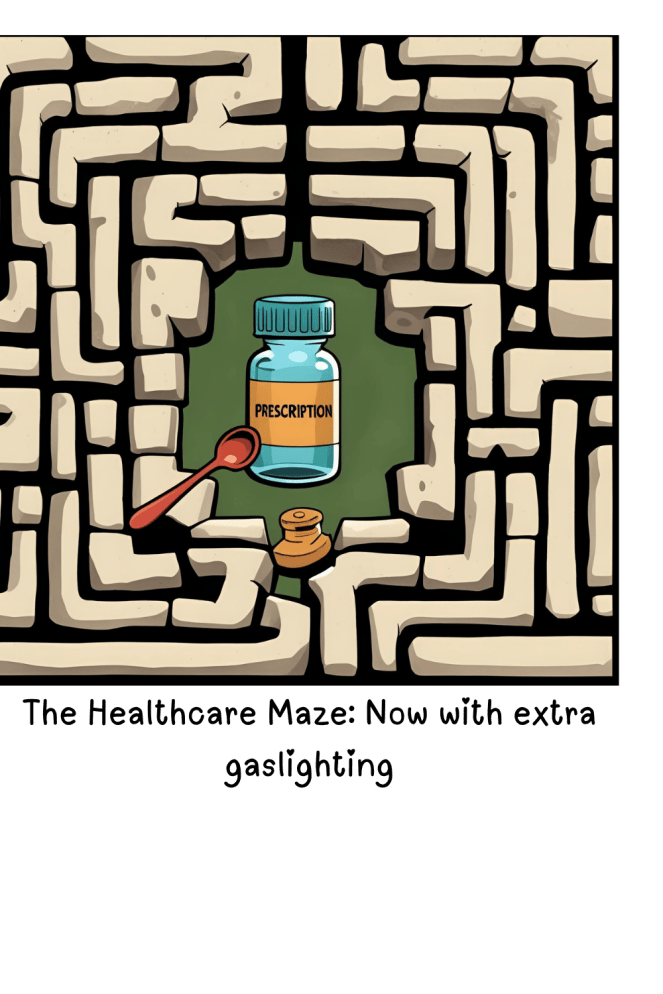
The Gaslight of the Medical Maze

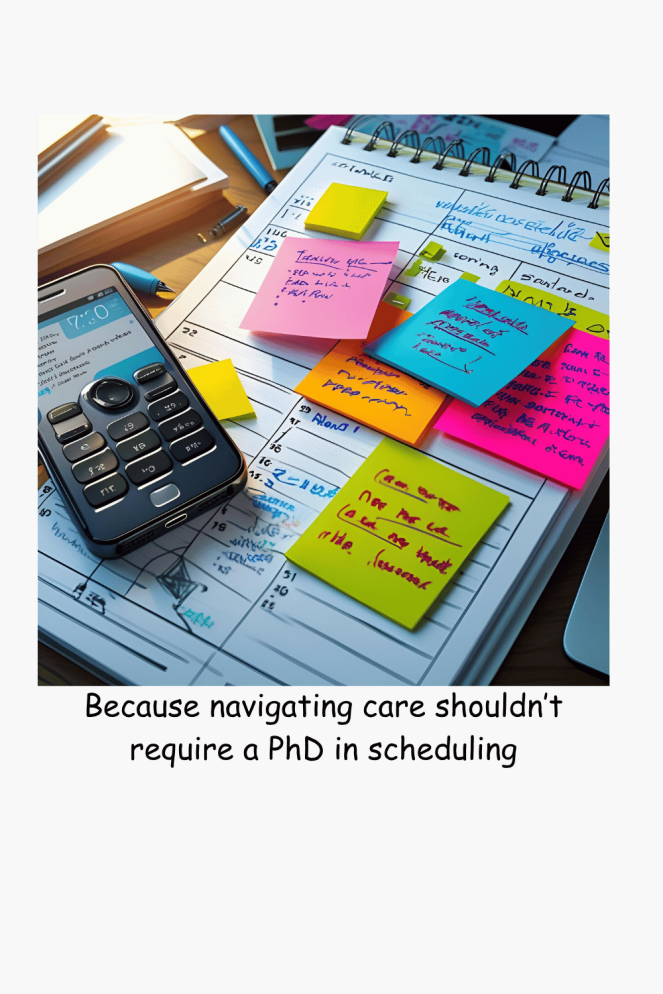
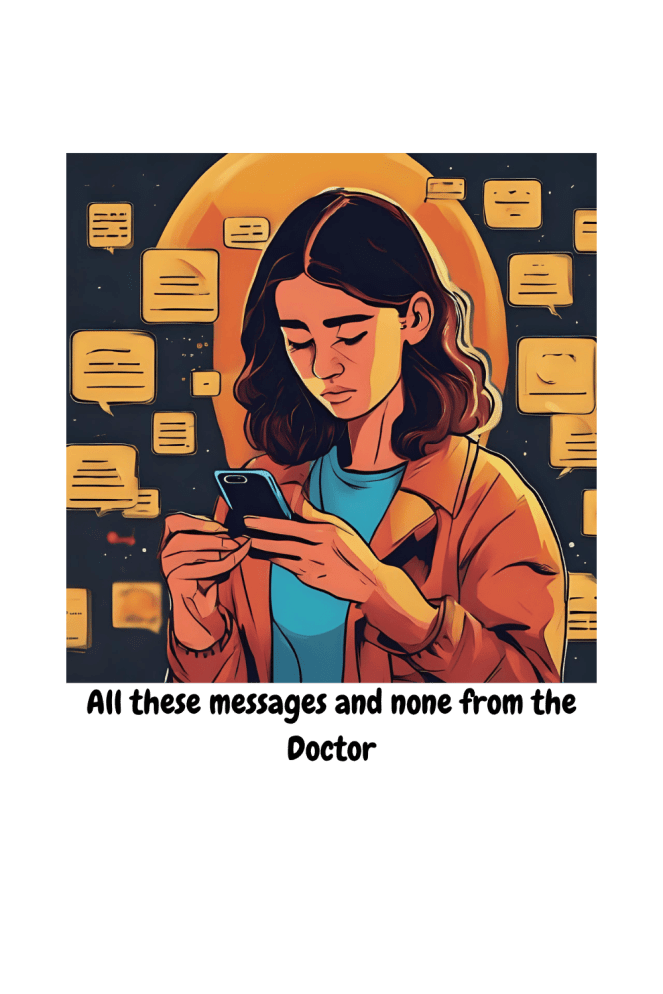
Now let’s sprinkle in a bit of medical neglect for flavor. ​According to the National Council for Mental Wellbeing, it takes an average of 48 days to get an appointment with a behavioral health provider in the U.S. — and that’s after you’ve made contact.​ Because what’s chronic illness without fighting the very system meant to help us? I spent this week trying to schedule a psych appointment for my teenager. I called seventeen times. Seventeen. Not metaphorically. SEVENTEEN. I left messages. I waited. I got bounced from voicemail to nowhere.​ Their voicemail message says ‘someone will get back to you within 24 hrs.’ Never not once called.
📌 Cold, Hard Reality Check:
According to the National Council for Mental Wellbeing, the average wait time for behavioral health services in the U.S. is a staggering 48 days. That’s nearly seven weeks of waiting in limbo—waiting for care that should come sooner.

And when I finally got through — a moment of hard-earned triumph — I did what any burnt-out, panic-caffeinated, mom-on-the-edge might do: I scheduled it ​first available for the one day I absolutely can’t do it. Face palm? No. Face ground. But the idea of calling again, of pushing through the labyrinth of dead-end prompts and receptionist roulette? I physically can’t do it. I’ll move my own mountain that day instead.

This is what they don’t see. The victories that come covered in emotional tax. The way we ​beat ourselves up over accidents because we’re so used to feeling like we’re failing. Even our wins taste like stress.


The Never-Ending Ask for Help (That Goes Nowhere)

Everyone tells you to ask for help. But they don’t tell you what to do when that help turns out to be a ghost. Or a voicemail. Or an email that never gets answered. Or a friend who says, “Let me know if you need anything” but quietly disappears when you say, “Actually, I do.”

When you do speak up, you risk being labeled as dramatic or dependent. When you don’t, you’re “not taking care of yourself.” It’s a rigged game. The buck never stops. It just circles the drain while we’re clinging to the rim.

And yes, it gets to us. All the time. We internalize it. We feel like a burden. Like we have to keep apologizing for being sick. Like if we were just stronger, more organized, less emotional, less needy… we could pull off the impossible. You can gaslight yourself into silence before a single word leaves your mouth.


So Why Share This?

Because I know I’m not the only one. And if you’ve been spiraling, crying in between productivity guilt sessions, or clenching your teeth while listening to elevator hold music for the fifth time this week — you’re not alone.

This isn’t a cry for pity. It’s a call for reality. Let’s be honest about what it really feels like to be chronically ill, overwhelmed, and stuck inside a system that expects perfect performance from broken parts.

Let’s remind each other that doing our best sometimes looks like barely functioning — and that’s still valid. Let’s talk about how asking for help shouldn’t feel like rolling a boulder uphill.

Let’s be soft with ourselves.

You are not failing. You are carrying more than most people even know exists. And you’re still here, still trying. That’s resilience. That’s strength. That’s you. Til next time gang, take care of yourselves, and each other!