Uncategorized

What I Wish People Knew About Parenting With a Body That Doesn’t Cooperate

(AKA: This body is glitchy, but the kids still need lunch.)

Most days, I’m parenting from a horizontal position — on the couch, in the bed, or emotionally face-down in a bowl of cereal. And no, it’s not because I’m lazy. It’s because my body and brain don’t always play nice. Parenting with chronic illness (and some extra mental health sprinkles) isn’t just a different experience — it’s an entirely different reality.

But unless you’re in it, it’s hard to truly understand. So let’s talk about it.


First of all, let’s acknowledge the facts.

  • Parenting is exhausting for anyone, but for people with chronic illnesses like fibromyalgia, arthritis, lupus, or conditions like bipolar disorder and ADHD, it’s a next-level endurance test.
  • A 2019 study published in Health Psychology Open found that parents with chronic pain often experience higher levels of stress, fatigue, and feelings of guilt, especially when they can’t physically engage the way they want to.
  • Many of us deal with “invisible disabilities”, which means the world still expects us to perform like we’re running at 100%… when we’re often at 37% and glitching.

Here’s what chronic parenting really looks like:

  • I’ve prepped lunch while sitting on a stool, with my heating pad strapped to my back and a migraine drilling behind my eyes.
  • I’ve cheered from the car at events because walking across a field was out of the question that day.
  • I’ve been too tired to parent, but parented anyway because these tiny humans don’t come with a pause button.

My kids not only did school things, they did extra curricular things that I’d try and cheer them on for, and maybe the hardest part of that was to remember even in my discomfort my kids are forming memories and I really feel like the most important thing is showing up. The kids see your effort (or they will at some point) and I think its also a good lesson to teach them if its important, you find a way.


🧰 The skill set no one talks about
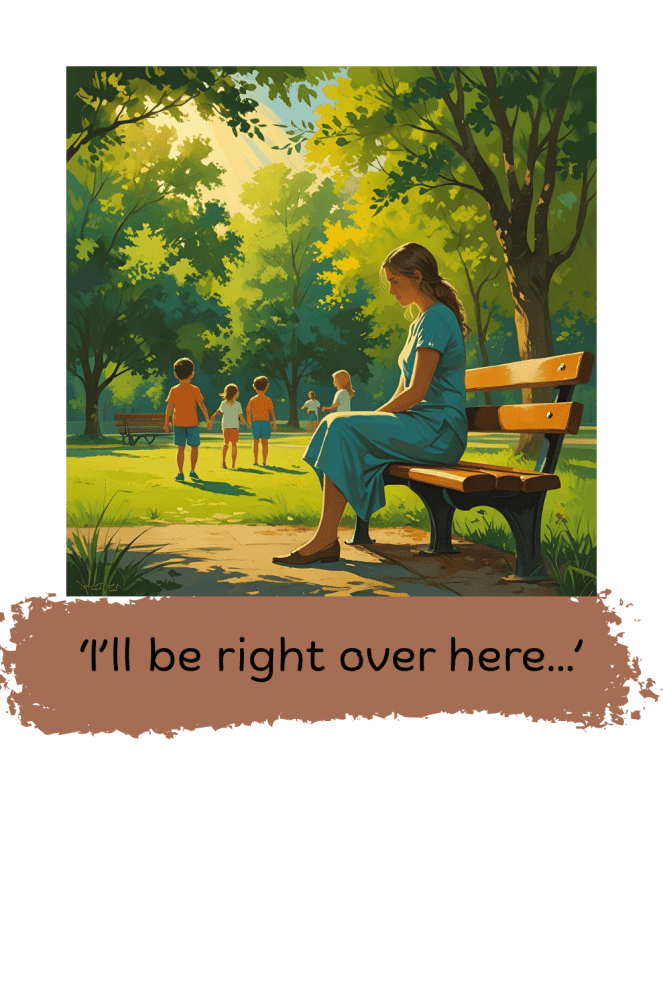
Sure, I can’t chase my kid around the park like some parents, but I’ve got other skills that are just as powerful:

  • Empathy: I notice when my kid is struggling, even when they don’t say it. That’s the emotional fluency that comes from living in survival mode.
  • Creative problem solving: If you’ve ever turned a laundry basket into a mobile toy bin so you don’t have to get up? You qualify. Incidentally get a grabber. I didnt have one until I had to be creative after my hip replacement, the grabber is a life saver for so simple it was honestly life changing lol.
  • Prioritizing rest over perfection: I’ve learned that being present matters more than doing it all. Show up even if it means napping.
  • Teaching independence: Out of necessity, my kids know how to microwave their snacks and fold their laundry. That’s not failure — it’s life skills.

    I’ve learned even in not being able to do things I’m teaching them to try, when faced with a choice of giving up or maybe altering something just enough to make it the right fit for you.

😞 The guilt is real. So is the resilience.

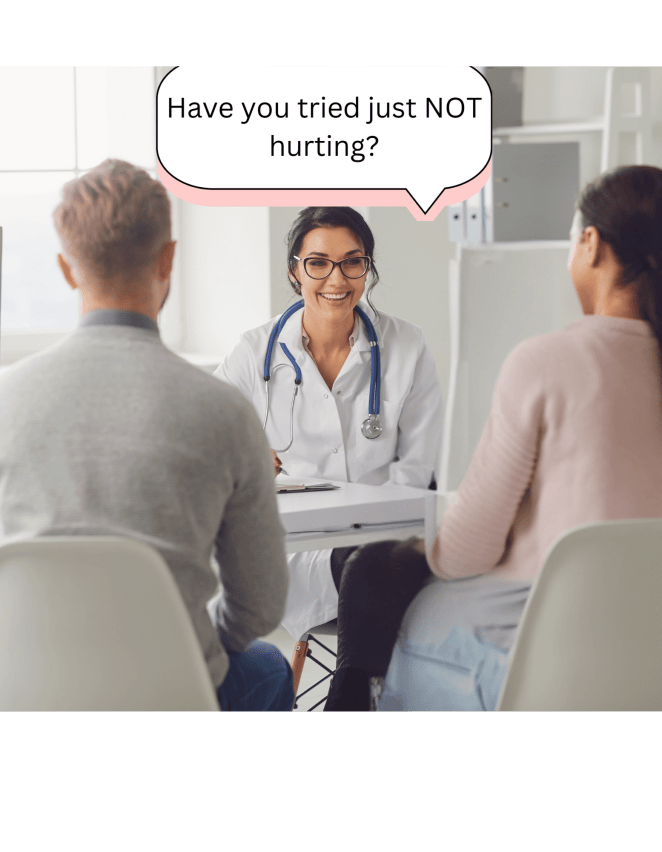
It hurts when I have to say no because my joints are angry or my brain is on fire. I hate the days when I feel like a spectator instead of a participant. And sometimes I worry about the memories my kids will hold — will they remember the things I couldn’t do?

But then they crawl into bed with me and asking ‘snuggle me in?’ and I realize they don’t see my limits the way I do. They see love, even on the hard days. Or the youngest one does, I don’t speak for the older two. There were days I didnt show up for them and I regret it. That being said, life only goes in one direction. You’ve got to keep walking with it adjusting as you go.


💬 What I want you to know

If you’re not parenting through chronic illness, here’s what helps:

  • Don’t offer unsolicited advice unless you’re also offering childcare or dinner.
  • Don’t assume we’re fine because we look okay for five minutes.
  • Ask how we’re really doing, and mean it.
  • Celebrate the small wins with us — like getting everyone dressed and vaguely fed before noon.

💛 And if you are one of us…

Parenting with a glitchy body, a misfiring brain, or both? You’re not alone. You’re not broken. And your kids don’t need perfect — they need you.

Even if today’s victory is frozen waffles and letting the screen time run wild while you rest? That counts.

You’re doing enough. More than enough.


Want to connect with more parents who get it?
👉 https://www.pinterest.com/wannabenormal/
or visit my etsy shop https://www.etsy.com/shop/JoknowsCreations
📌 Share this post to remind another spoonie mama she’s not alone.
Til next time gang. Take care of yourselves, and each other!!!

Uncategorized

🩰 The Bipolar-Fibro Tango: When Mood Swings and Muscle Screams Collide

Welcome welcome one and all come on in. Its me —your neighborhood chronically exhausted gremlin with a nervous system that’s basically running Windows 95. If you’ve ever looked at your list of diagnoses and thought, “Cool, now I can collect the whole set,” then friend, pull up a chair and a heating pad. Today we’re talking about the beautiful disaster that is living with both fibromyalgia and bipolar disorder—aka “Mood Swings & Musculoskeletal Mayhem.”

I live it. I hate it. I laugh at it. Let’s go.

🎭 Act I: “What Fresh Hell Is This?”

So, first off: what the hell is fibromyalgia?

It’s that charming condition where your body interprets gentle breeze as blowtorch, basic fatigue as brain-dead exhaustion, and sleep as an optional luxury item from a catalog you can’t afford.

And bipolar disorder? Oh, that’s just where your brain slaps the gas and brake pedals randomly while you’re driving through Lifeville. Sometimes you feel like a goddess who could run a Fortune 500 company on three hours of sleep and a Red Bull. Other times, putting on socks feels like solving a Rubik’s cube blindfolded.

So what happens when you have both?

Well, according to a 2020 study in the Journal of Affective Disorders, roughly 32% of fibromyalgia patients also meet the criteria for bipolar disorder, compared to only 4.4% in the general population.

I would say I’m honored to be part of that elite club, but no one’s handing out free tote bags, just prescriptions and pity.


🧠 Act II: Pain Perception Is a Lying Liar

One of the cruelest things about this combo platter is how bipolar mood states can hijack your pain perception.

During manic or hypomanic episodes, people sometimes experience reduced sensitivity to pain, which sounds amazing until you realize it’s just your brain temporarily gaslighting you while it prepares to body slam you into a depressive episode later. A study published in Pain Practice found that manic states may suppress pain sensitivity, while depressive states amplify it. Seriously guys, this is real. Not saying its the same for everyone, but I had my hip REPLACED, and since I got home from the hospital I started like 5 new hobbies and don’t sit down more than 5 minutes a stretch lol. When asked if I hurt, I would answer yes, when I stop and put any thought to it I’m usually in the 5-7 range but when I distract myself I can go hours before I hurt so bad it will literally take my breath.

So some days, I’m cleaning the kitchen like a superhero with zero regard for my spine. Other days, I need a break halfway through brushing my teeth because my jaw hurts like I chewed concrete in my sleep. (Spoiler: I didn’t. Probably.)


⚖️ Act III: Treatment Is a Dumpster Fire of Trial and Error

If you’re wondering what it’s like to treat both bipolar and fibromyalgia, imagine playing Jenga on a trampoline.

You want something for the pain? Great! Depressed because ouch, it hurts. Well, chemical imbalance of the brain can be fixed right? Except—oops—some antidepressants often used for fibro (like SNRIs and SSRIs) can trigger manic episodes if you’re bipolar and not carefully mood-stabilized first.
https://pmc.ncbi.nlm.nih.gov/articles/PMC3181950/A 2011 article in Dialogues in Clinical Neuroscience warned that antidepressant monotherapy in bipolar patients can significantly increase the risk of manic switches.

So, you try another med. That one numbs the pain but gives you brain fog so thick you forget where your fridge is. Or it stabilizes your mood but turns you into an emotionless zombie who eats beige food and says, “I’m fine” in a monotone voice while dying inside.

It’s fine. I’m fine. Everything’s… fine.


🧃 Act IV: The Emotional Toll of Being the Human Equivalent of a Glitchy App

Let’s not forget the emotional side. Chronic pain and bipolar disorder don’t just tag-team your physical body; they start squatting in your brain and charging rent. There’s grief for the person you used to be, guilt about being “too much” or “not enough,” and shame for not being able to manifest healing with gratitude journaling and kale smoothies.

Here’s the sciencey truth: a study in Arthritis Care & Research found that patients with fibromyalgia are 3.4 times more likely to have suicidal ideation, and bipolar disorder increases that risk even further.
🔗 Source

So no, you’re not just “being dramatic.” Your pain is real, your mood shifts are real, and your struggle is so valid it could be a thesis.

🎤 Curtain Call: Embrace the Chaos (or at Least Laugh at It)

Look, I didn’t sign up for this. No one hands you a diagnosis of bipolar disorder and fibromyalgia and says, “Congrats, you’ve unlocked hard mode—now go parent your autistic teen and try to cook something that isn’t beige.”

But I’m here. You’re here. We’re doing it—badly, weirdly, and with frequent snack breaks.

This dance between bipolar disorder and fibromyalgia is exhausting, confusing, and often unfair. But it’s not the end of the story. There’s still joy. There’s still meaning. And there’s still a damn good reason to keep showing up (even if it’s just for memes and microwave mashed potatoes).

So if you’re out there thinking, “Why is my body like this?”—just know you’re not alone. You’re part of a weird, wonderful, warrior community. We’re the ones limping into therapy with caffeine in one hand, a heating pad in the other, and a sarcastic one-liner ready to go.

And that, my friend, is something to be proud of. Til Next time gang take care of yourselves, and each other.

Sources for the Nerds Like Me(or your doctor who thinks you’re exaggerating): (full disclosure the sciencey stuff I googled and chat GPT’d the source links because its been a long time since I’ve had to cite things and I wanted to make sure I did it right.)

  1. Di Salvo et al. (2020). Journal of Affective Disorders, “High prevalence of bipolar disorder in fibromyalgia patients” – PubMed
  2. Dvir et al. (2011). Dialogues in Clinical Neuroscience, “Bipolar disorder: new strategies for treatment” – PMC
  3. Lautenschlager, J. et al. (2005). Arthritis Care & Research, “Suicidal ideation and risk in fibromyalgia” – Wiley Online
  4. Pain Practice, 2011. “Mood and pain: Depression, mania, and the modulation of physical suffering” – PubMed