Uncategorized

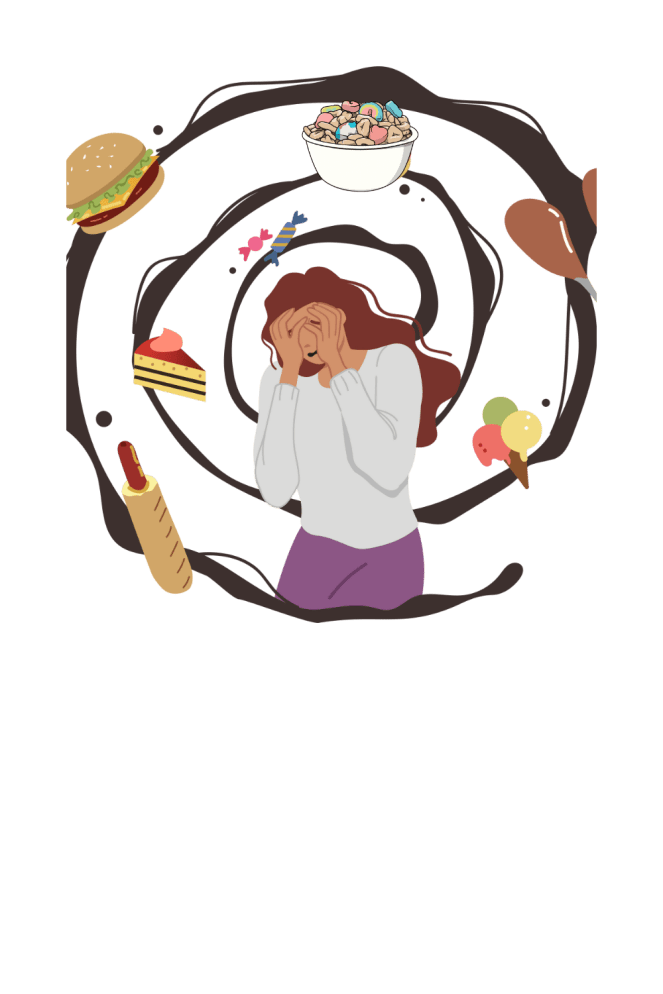
The ADHD Shopping Experience: How I Went for Milk and Came Home with a Succulent, Three Notebooks, and No Milk

A play-by-play of my brain vs. reality, or: Why simple errands are never simple

Setting the Scene: Just need milk. One item. Simple mission. What could possibly go wrong?


In the Parking Lot

ADHD Brain: “Okay, milk. Just milk. Wait, should I make a list? No, it’s just ONE thing. But what if I see something else we need while I’m there? Maybe I should text hubby and ask… no, that’s ridiculous. It’s MILK. But what kind of milk? 2% or whole? Did we discuss this? Should I check the fridge from here? Can’t do that. Focus. MILK. M-I-L-K. Got it.”

Fibromyalgia Body: “Why does every parking space require a trek equivalent to hiking the Appalachian Trail? And why is it windy? Wind makes everything hurt more.”

What Actually Happened: Sat in my car for 5 minutes trying to remember if we needed 2% or whole milk, googled “difference between 2% and whole milk nutritionally” fell down a rabbit hole about dairy farming, got distracted by a text from my mom, completely forgot why I had googled dairy farming, and finally got out of the car having made zero progress on the milk question.


Entering the Store
ADHD Brain: “Straight to dairy section. Do not pass Go. Do not collect impulse purchases. Laser focus. I am a milk-seeking missile.”

Fibromyalgia Body: “Of course I grabbed the cart with the wobbliest wheel in existence. Every step is sending shock waves through my joints. This cart sounds like a dying pterodactyl.”

Bipolar Brain: “Actually, this is kind of fun! Look at all the possibilities! So many choices! I love having choices!”

What Actually Happened: Grabbed the first cart without testing it (rookie mistake), immediately got distracted by the seasonal display of Halloween decorations prominently displayed in August, spent three minutes judging the capitalist machine that pushes holidays earlier each year, then realized I was still standing at the front of the store holding a cart that sounded like it was powered by wounded animals.


Stop #1: The Pharmacy Section

ADHD Brain: “Wait, didn’t I need to pick up that prescription? When was that due? Was it today or tomorrow? Better check while I’m here. Multitasking!”

Fibromyalgia Body: “Standing in lines is torture. Why does every person in front of me have the most complicated prescription issue in pharmacy history?”

What Actually Happened: Joined the pharmacy line without checking if I actually had a prescription ready, discovered I didn’t, but got into a fascinating conversation with the pharmacist about medication timing, learned three new things about drug interactions, forgot why I came to the store entirely, then remembered MILk when I saw the refrigerated section behind the pharmacy counter.


The Succulent Section (How Is This Even a Section?)

ADHD Brain: “Ooh, plants! I could be a plant person! Look at this tiny perfect one โ€“ it probably needs rescuing from this fluorescent wasteland. I would give it a good home. I’d name it Gerald. Gerald deserves better than this. I’ll justโ€”NO. MILK. FOCUS. But Gerald is so small and perfect…”
Bipolar Brain (manic whispering): “Plants are scientifically proven to improve mental health! This could be your new hobby! You deserve nice things! Gerald could be the first of many! Think of the Instagram potential!”

Fibromyalgia Body: “Bending over to look at these tiny plants is making my back scream, but Gerald IS pretty cute…”

What Actually Happened: Bought four succulents (Gerald, Susan, Peter,and one I didn’t name because I was trying to show restraint), plus a decorative pot that cost more than the plants, and mentally planned their placement in every room of my house despite historically being a plant serial killer.


Stop #2: The Drive-Through Coffee (Because Obviously)

ADHD Brain: “I should get coffee for this epic grocery mission. Caffeine will help me focus on the milk objective. This is strategic, not procrastination.”
Fibromyalgia Body: “My head is starting to hurt. Coffee will help. Coffee fixes everything.”

Bipolar Brain: “Treat yourself! You’re doing great! You deserve a fancy drink!”

What Actually Happened: Ordered a complicated seasonal latte, paid for it, thanked the barista, drove off immediately, got three blocks away before realizing I never actually received my coffee, circled back through the drive-through again to explain my ADHD brain to a confused teenager, got my coffee and a pitying look, then sat in the parking lot for 10 minutes mentally writing this exact blog post.


The Notebook Aisle (My Natural Habitat)

ADHD Brain: “These are on SALE! I always need notebooks! What if I run out of places to write my brilliant thoughts? What if this specific type gets discontinued forever and I never find another notebook that feels this perfect in my hands? This is an INVESTMENT.”

Bipolar Brain: “Look at all these possibilities! You could start journaling again! Or write that novel! Or organize your life! Each notebook could be a fresh start!”

What Actually Happened: Bought notebooks in three different sizes for “different purposes” – one for grocery lists (ironic, considering), one for “important thoughts,” and one for daily planning that I’ll definitely use this time, unlike the other twelve identical notebooks at home. Spent fifteen minutes arranging them in my cart by color.


At Checkout

ADHD Brain: “Mission accomplished! Wait… what was my mission? Milk! Did I get milk? I feel like I’m forgetting something important. Why do I have plants? OH RIGHT, Gerald!”

Fibromyalgia Body: “Why is this checkout line moving so slowly? My feet are killing me. Should have gotten a scooter cart.”

Cashier: “Did you find everything you needed today?”

Me: “Everything except what I came for!”

What Actually Happened: Paid $47 for succulents, notebooks, Halloween candy (forgot to mention grabbing that), fancy soap that “smelled like my childhood,” and a magazine about organizing your life. No milk. Not even close to milk.


Back Home

Family: “Did you get milk?”

Me: “I got… life lessons? And Gerald.”

Family: “Who’s Gerald?”

Me: “My new succulent son. Also, we still need milk.”

ADHD Brain: “But look how happy Gerald looks on the windowsill! This was basically a success!”


The Moral of the Story: Sometimes the journey is more important than the destination. Sometimes that journey involves adopting plant children and buying notebooks you don’t need. And sometimes you just have to go back to the store tomorrow for milk, but with Gerald watching over you from his new pot. Til next time gang, take care of yourselves, and each other.

Uncategorized

In the Blink of a Goodbye

Some goodbyes donโ€™t feel like moments. Maybe the worst goodbyes are the ones that shift everything and we dont see it until later. Goodbyes donโ€™t always announce themselves. They feel like earthquakesโ€”shifting everything inside of you, leaving you aching in a silence no one else can hear. Sometimes theyโ€™re hidden in the everyday, only revealing their weight once youโ€™ve had time to sit with them, to turn them over, to realize what they took with them. This poem grew out of that kind of goodbye โ€” the quiet, unexpected kind that reshapes you long after itโ€™s gone.

In the Blink of a Goodbye

In the blink of a goodbye
The pain is visceral and real
It makes me miss the hugs more
The painful ache I canโ€™t conceal

In the blink of a goodbye
Headlights pass a house unseen
Still it holds all the love I keep
In walls youโ€™ve never lived between

In the blink of a goodbye
Iโ€™d give anything to see your face
Iโ€™d recognize you anywhere
No matter how much time or space

In the blink of a goodbye
The quiet presses on my chest
Your absence echoes loud and sharp
A sound that never lets me rest

In the blink of a goodbye
I mourn the living shadows too
The ones who breathe, but not with me
A loss that time canโ€™t quite undo

In the blink of a goodbye
The quiet dark has turned
I trace the paths youโ€™ll never take
And count lessons painfully learned

Healing one moment at a time. Til next time gang, take care of yourselves, and each other

Uncategorized

Your Brainโ€™s Clock is Lying to You: A Field Guide to Weird Time Perception

Neurodivergent time is like dog years โ€” it moves differently, feels different, and somehow makes perfect sense only to the person experiencing it.
If youโ€™ve ever been both unfashionably early and catastrophically late in the same week, welcome to the club.


1. The Classic: Time Blindness

You look at the clock, itโ€™s 3:05.
You blink, check again, and suddenly itโ€™s 3:58, youโ€™re still in pajamas, and the event was across town at 4.
This isnโ€™t laziness โ€” research suggests ADHD brains have differences in time estimation and temporal processing (Barkley, 2010), meaning we actually perceive time passing less accurately.
Translation: the clock is real, but our internal one is a knockoff from Wish.


2. The Paradox: Hyper-Punctuality

On the flip side, some of us are so terrified of being late that we swing too far the other way.
Now weโ€™re sitting in the parking lot 25 minutes early, scrolling memes and contemplating our life choices.
Our brainโ€™s solution to not trusting time is apparently to overcompensate until itโ€™s awkward.


3. The “Just One More Thing” Trap

We swear we have time for one tiny task before we leave โ€” toss in the laundry, answer that email, maybe make baked salsa chicken from scratch โ€” and suddenly weโ€™re in full panic mode.
The ADHD brain struggles with prospective memory (remembering to do something in the future) and transitions, so starting โ€œone more thingโ€ is basically time gambling with terrible odds.


4. The Black Hole Effect

You start reorganizing the spice rack. Next thing you know, itโ€™s 2am, youโ€™re alphabetizing oregano, and you have no idea how you got here.
Hyperfocus is great for productivityโ€ฆ until you remember you were supposed to eat dinner four hours ago.


Tips for Outsmarting Your Brainโ€™s Broken Clock

  • Timers are your friend โ€“ Set alarms for when to start getting ready, not just when to leave.
  • The โ€œfake leave timeโ€ trick โ€“ Tell yourself you have to be there 15 minutes earlier than you do.
  • Visible time cues โ€“ Use analog clocks or visual timers where you can see time moving.
  • Build a buffer โ€“ If youโ€™re early, bring a book or podcast so you donโ€™t feel like youโ€™re wasting time.

๐Ÿ“š Fact Source: Barkley, R. A., Murphy, K. R., & Fischer, M. (2010). ADHD in Adults: What the Science Says. Guilford Press.
Yes, thatโ€™s an actual book. No, I didnโ€™t make it up. Itโ€™s basically the ADHD brain user manual.
Til next time gang, take care of yourselves, and each other!

Uncategorized

ADHD and the Never-Ending Quest for the Right System

Or: How I Own More Planners Than Pairs of Jeans, and Still Can’t Find That Dentist Appointment Card

We’ve all been there. You buy the pretty planner with the gold coil, convinced that this will be the one to change your life. Then you try the bullet journal method because minimalism is supposed to cure chaos. Then you download six productivity apps, each promising to be the magic solution to your scattered existence. For one glorious week, you are an organizational deity, color-coding tasks (I have bought colored pens and every pen has the same color notebook and folder and yeah I am a giant nerd lol) and checking boxes like a productivity influencer. Then โ€” poof โ€” the planner’s under the couch collecting dust, the apps are unopened with little red notification badges mocking you, and you’re frantically scribbling your grocery list on the back of a Target receipt while standing in the cereal aisle.

Sound familiar? Welcome to the ADHD productivity paradox: we desperately need systems to function, but we’re spectacularly bad at sticking to them.

Why This Happens (Yes, Science Says So)

ADHD brains are novelty seekers. According to research published in Brain journal by Sethi et al. (2018), our dopamine reward system runs differently than neurotypical brains, with studies showing that people with ADHD have dysfunction in the dopamine reward pathway (Volkow et al., 2010). This means we thrive on new and interesting stimuli โ€” like that gorgeous new planner layout with the perfect font โ€” but struggle to maintain interest once the novelty wears off. That dopamine hit from “new system day” is real, but it’s also temporary.

Executive function is a fickle beast. Studies consistently show that people with ADHD have weaker function and structure of prefrontal cortex (PFC) circuits, the brain regions responsible for planning, prioritizing, and task-switching (Arnsten, 2009). Neuroimaging research has found reduced activity in certain parts of the PFC during tasks requiring sustained attention and complex decision-making (AGCO Health, 2024). It’s not laziness or lack of willpower โ€” it’s literally how our brains are wired.. Thats why I cycle through hobbies so fast and its something I’m actively working on.

One size does not fit all. Most productivity systems are designed by and for neurotypical brains that can handle routine, sequential thinking, and sustained attention. Trying to wedge ourselves into these systems is like trying to wear jeans two sizes too small โ€” you can do it, but it’s uncomfortable, restrictive, and not pretty.

Perfectionism is the enemy of progress. Many of us fall into the trap of thinking that if we can’t do a system “perfectly,” we shouldn’t do it at all. Miss one day of journaling? Throw out the whole journal. Forget to update the app for a week? Delete it in shame. This all-or-nothing thinking sabotages any chance of finding what actually works.

How to Work With Your Brain, Not Against It

1. Think Modular, Not Monumental. Instead of searching for one perfect “forever system,” embrace using multiple small, interchangeable tools that can work independently. Sticky notes for quick reminders that need immediate action, a large wall calendar for big-picture dates and deadlines, your phone’s alarm function for time-sensitive appointments, and maybe a simple notebook for brain dumps when your thoughts are spinning. Mix and match based on what your current life phase demands.

2. Use Dopamine to Your Advantage. Instead of fighting your brain’s need for novelty, make it part of the plan. Intentionally change colors, formats, or methods every few weeks to refresh your interest and re-engage that dopamine reward system. Buy different colored pens seasonally, switch between digital and paper tools, or reorganize your workspace regularly. Make variety a feature, not a bug.

3. Embrace “Good Enough” Productivity. You don’t need to track every habit, meal, mood, water intake, and bowel movement to be a functioning adult. Choose three key areas that truly impact your daily life and focus on keeping just those consistent. Let everything else flex and flow as needed. Progress, not perfection, is the goal.

4. Automate & Delegate Where Possible. Set recurring phone reminders for regular tasks, use grocery delivery or curbside pickup to eliminate list-making stress, automate bill payments, or recruit a family member to be your “appointment buddy” for remembering important dates. Your brain doesn’t have to carry every single piece of information if technology and other people can help.

5. Plan for Disruption. Build buffer days into your schedule, expect that your tools will need periodic rebooting, and never expect sustained perfection. Create “reset rituals” for when systems inevitably break down โ€” maybe Sunday nights for clearing your workspace or the first of each month for reassessing what’s working. The point is to support your life, not win an imaginary “most organized person alive” award.

6. Start Ridiculously Small. Instead of overhauling your entire organizational approach, pick one tiny thing and make it automatic first. Maybe it’s putting your keys in the same spot every day, or writing tomorrow’s most important task on a sticky note before bed. Once that feels natural, add something else small. Baby steps prevent the overwhelm that kills motivation.

The Big Takeaway

You’re not broken because you can’t stick to one pristine system for years on end. Your brain is wired for variety, stimulation, and flexibility โ€” so make those traits part of your organizational plan instead of fighting against them. You’re not failing the system. The system is failing you if it can’t adapt and flex with your very real, very human reality.

The goal isn’t to become neurotypical. It’s to find tools and approaches that work with your unique brain, even if they look messy or unconventional to outside observers. Some days that might mean a color-coded digital calendar. Other days it might mean a crumpled napkin with three things scrawled on it. Both are valid if they help you function.

Your worth isn’t measured by how perfectly you maintain a bullet journal or how consistently you use the latest productivity app. It’s measured by how well you’re living your life, taking care of what matters, and being kind to yourself in the process. Til next time gang, take care of yourselves, and each other!

Uncategorized

Hyperfixation Cuisine: A Love Story

When food is your ride-or-die for two weeksโ€ฆ until it ghosts you.

I don’t fall in love oftenโ€”but when I do, it’s usually with a snack. A drink. A cereal. A very specific sandwich from one very specific place that I will eat exclusively for 14 days straight like it holds the secrets of the universe and contains all the nutrients my body will ever need. During these passionate food affairs, I become a creature of pure obsessionโ€”calculating how many times per day I can reasonably consume my chosen item without judgment, researching the optimal preparation methods, and feeling genuinely excited about meal times in a way that probably isn’t normal for a grown adult. I’ll stock up like I’m preparing for the apocalypse, filling my cart with multiples of the same item while cashiers give me curious looks that I interpret as admiration for my decisive shopping skills. And then? I ghost. Cold turkey. No warning, no closure, no gradual tapering offโ€”just me and my shame in aisle 5, pretending I never knew that Creamsicle shake, avoiding eye contact with the 47 cans of soup I can no longer stomach, and wondering why my brain treats food like a series of intense but doomed romantic relationships.

What Is Hyperfixation Cuisine?

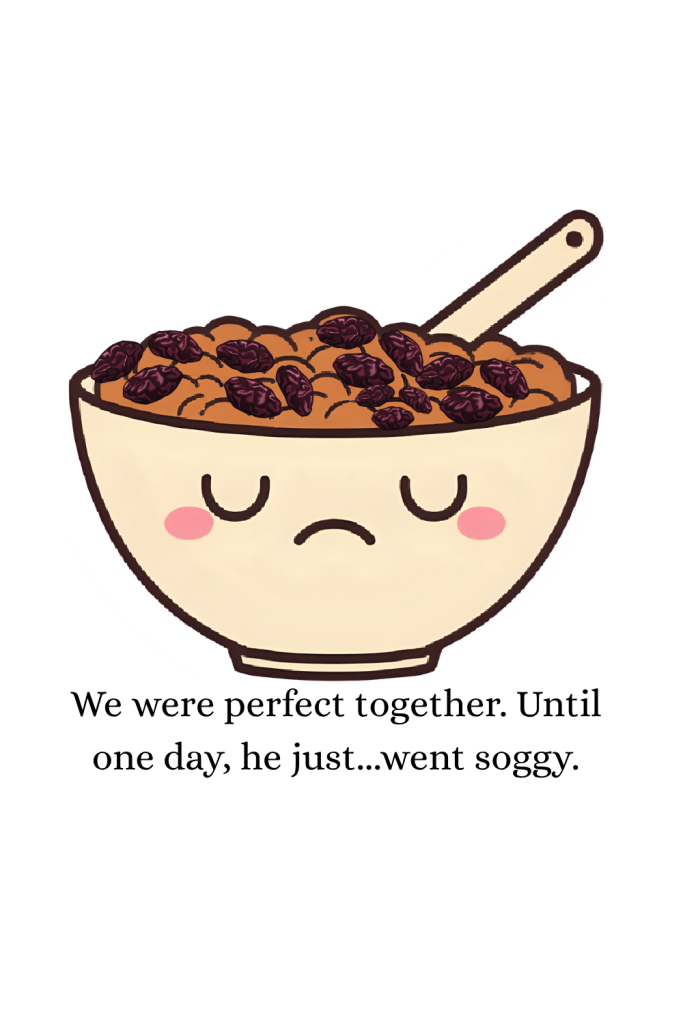
Itโ€™s the culinary equivalent of a summer fling. You’re obsessed. You plan your day around it. You talk about it to anyone who will listen (and a few who wonโ€™t). You buy in bulk. And then one morning, like a cursed love spell wearing off, itโ€™s done. Youโ€™re left with a pantry full of raisin bran and the haunting echoes of a snack you no longer want to eat.

Neurodivergent folksโ€”those of us with ADHD, autism, or bothโ€”know this dance well. Itโ€™s not a food phase; itโ€™s a full-blown romantic arc.

And science backs us up!

Let’s sneak in some facts while we laugh about it:

Nutritionists would say variety is key. But also? Survival. Joy. Convenience. These are not small things. And if eating the same 3 things on rotation keeps your body going through a rough patch? Thatโ€™s not failureโ€”thatโ€™s strategy.

Plus, it always changes eventually. Usually when you least expect it. Often mid-bite.

Honestly? Laugh. Embrace it. Maybe write a heartfelt goodbye letter to your former food flame. (โ€œDear Bagel Bites, we had some good times. Iโ€™m sorry I abandoned you half-eaten in the freezer door.โ€)

You donโ€™t have to force variety or shame yourself for what your brain finds comforting. Just make sure you stay fed, hydrated, and somewhat functional. And if one day you find yourself suddenly obsessed with cucumbers in vinegar, just know: you’re not alone.


What was your last food fling? Let me know so I donโ€™t feel like the only one who once ate eleven bowls of raisin bran in one week.

And to all the forgotten snacks still lurking in my pantryโ€ฆ
I loved you once. I swear I did, lol. Til next time gang, take care of yourselves

Uncategorized

The Autistic Teen Whisperer: A Nature Documentary of My Life

INT. KITCHEN โ€“ EARLY MORNING
Cue dramatic voiceover, ร  la David Attenborough:
“If we are quietโ€ฆ very quietโ€ฆ we may catch a glimpse of the elusive Autistic Teen in her natural habitat. There! A flash of movement, a hoodie, mismatched socks. Blink and sheโ€™s gone. Out the door before the sun can fully rise, leaving behind toast crumbs and an emotional riddle.”

Welcome to the wild world of neurodivergent parenting. Iโ€™m your guide, an exhausted mom attempting to decode the rituals, migrations, and sensory triggers of my favorite wild animal: my teenager.


The Habitat

The Autistic Teen typically roams the house after 10 PM, nesting primarily in her bedroomโ€”curated with LED lights, noise-canceling headphones, and Very Specific Textures. Her room is both her sanctuary and her command center, and entering without knocking is a rookie mistake you only make once.

Adaptations observed:

  • Can detect the faintest flicker of a light bulb in another room.
  • Has strong opinions about the temperature and humidity level of her socks.
  • Stores snacks in unexpected places. Foraging is an art.

The Communication Rituals

Communication with the Autistic Teen requires finesse, timing, and a willingness to interpret non-verbal cues like youโ€™re deciphering ancient cave drawings.

Sometimes we exchange whole conversations in Minecraft metaphors or sarcastic cat videos. Sometimes, the best thing I can do is sit quietly nearby and let her stim in peace.


Feeding Habits

She has strong food aversions and sacred favorites. Iโ€™ve learned the hard way not to mess with the shape of the nuggets or the brand of the mac and cheese. When in doubt: beige, crunchy, and emotionally comforting.

As her caregiver and personal short-order chef, Iโ€™ve adjusted. I stock the sensory-safe foods, experiment with new ones slowly, and always, always have backup pop tarts.


Daily Migration Patterns

Between school, stimming breaks, and doomscrolling, her internal compass doesnโ€™t follow a standard map. There is no “typical” day. But Iโ€™ve learned to track her rhythms:

  • Mornings: silent, hoodie up, minimal communication.
  • Afternoons: decompressing with art or YouTube rabbit holes.
  • Evenings: bursts of creativity, hyperfocus, or emotional monsoons.

Every day is an expedition. Sometimes Iโ€™m chasing her needs through sensory jungles. Other times, I just try to not mess up her flow.


Challenges in the Wild

Sometimes we clash. My ADHD brain is loud, scattered, and constantly shifting. Her autistic brain is methodical, specific, and easily overwhelmed by chaos. We are two storms learning to move together without wrecking each other.

I talk too much. She gets overwhelmed by too many words. I need novelty. She needs routine. Itโ€™s not always elegant, but itโ€™s always ours.


The Mutual Bonding Ritual

The bond between Whisperer and Teen is strong, even if it doesnโ€™t always look that way from the outside. Weโ€™ve developed our own languageโ€”half memes, half silence, all love. She knows I see her. She knows Iโ€™m trying. And I know that even when she disappears into her own world, she leaves the door open a crack.

Sometimes I catch her watching me with a mix of exasperation and affection.
Sometimes she randomly tells me a fact about spiders or space or mental health that makes me cry with pride.
Sometimes she texts me from her room to say, โ€œthanks for not being annoying today.โ€

I count that as a win.


Closing Narration

This isnโ€™t about having it all figured out. Itโ€™s about showing up anyway, even when the jungle is loud, the routines are broken, and the brain fog is real.

Because love, it turns out, is the greatest adaptation of all. Til next time gang, take care of yourselves, and each other.
Uncategorized

Body Function Bingo

A totally real medical game where everyoneโ€™s a winner and no one feels good.

๐ŸŽฏ 1. The Surprise Soundtrack

Symptom: Your joints crack like bubble wrap every time you move.
Fun fact: The average human knee wasn’t designed to sound like a haunted rocking chair โ€” yet here we are.
Personal take: I’m TERRIFIED of moving like swaying because I’ve been warned repeatedly if my hip pops out I wont enjoy it. I keep remembering how EASY my hip used to pop out, I gotta be mindful of yet another ailment; *Dramatic fall upon our ‘fainting couch’ only to pop right back up*


๐Ÿง  2. Brain Fog Blackout

Symptom: You walk into a room and instantly forget why.
Science says: Fibro and ADHD can both affect working memory. That means your brainโ€™s โ€œclipboardโ€ is full of glitter and expired coupons.
Pro tip: Keep a notebook, or just live in the room you walked into. Itโ€™s yours now. Your life exists there.


๐Ÿ”ฅ 3. Is It a Hot Flash or Anxiety?

Symptom: Sudden wave of heat. Chest tight. Soul leaving body?
Reality: Could be hormones, could be panic, could be both. Whee!
Personal take: Am I the only one who walks around with sweats on *mostly* but when a hot flash hits, I’m in a tank and shorts, that I also set out to wear today because I did this so often that now I pick out a 4 piece outfit every day? Its like my anemia and my hormones have a time share in the place that controls my temp.


๐ŸŽญ 4. Mood Swing Square Dance

Symptom: Feeling fine โ†’ rage โ†’ tears โ†’ existential dread โ†’ cookie?
FYI: Bipolar mood shifts are no joke. Hormones and chronic pain don’t help.
Fun twist: Sometimes the mood changes faster than your outfit.


๐Ÿงƒ 5. โ€œOwโ€ Before It Happens

Symptom: You say โ€œowโ€ before doing the thing.
Science says: Anticipatory pain is real in chronic illness brains. Itโ€™s like your nervous systemโ€™s version of spoilers.
Bonus round: Saying โ€œowโ€ also applies to thoughts and feelings now.


๐Ÿงฌ 6. Random Pain That Leaves as Mysteriously as It Came

Symptom: Stabbed in the ribs by an invisible elf. Gone five seconds later.
No explanation. No follow-up. No peace.
Personal take: (That sharp twinge in your back today? Yep.) I’m honestly not sure about back pain there are far too many terrible things it could be (thanks Dr Google) but its me so of COURSE we escalate to the worst case scenario, but its just as likely these days to be muscle strain. It was stabby and dull and seemed to move while radiating from the same region. Magic.


๐Ÿ“บ 7. Micro-Naps & Blinking Time Warps

Symptom: You swear it was just 2:30pm. Now it’s 4:17 and youโ€™re holding a half-eaten piece of toast.
Whatโ€™s happening: Could be fatigue, could be disassociation, could be alien abduction.
Helpful? No. Hilarious? Sometimes.


How many squares did you hit today? Bingo or just big โ€˜nopeโ€™? Either way โ€” youโ€™re still here, and thatโ€™s a win. Til next time gang, take care of yourselves, and each other.

Uncategorized

Hot Weather, No Problem: 2 Weeks of Summer Dinners That Wonโ€™t Heat Up Your House

Your August-friendly, spoonie-tested meal plan with recipes, reserves, and a grocery list that wonโ€™t make you sweat (literally or figuratively).

Because itโ€™s August. The sun is trying to kill us. I don’t know about you all, but I’m over this heat! Bring me sweater weather! And the idea of turning on the oven is borderline offensive while mother nature is giving us this 100+ degree nonsense.. But we still need to eat, right? So hereโ€™s a two-week dinner plan designed to save your spoons, your sanity, and your electric bill. I went a whole summer once with only using the crockpot. Lots of research went into it but it did help not having to run the oven, and limited running of the stove top. Youโ€™ll see strategic โ€œreserveโ€ nights for leftovers or backup meals, plus flexible recipes using what youโ€™ve already got.


๐Ÿฝ๏ธ Week 17 and 18 Menu (Crisis-Friendly and Summer-Approved)

Sunday:
๐ŸŽ‰ Out to Eat โ€“ Itโ€™s My Daughterโ€™s Birthday!
(If youโ€™re not celebrating someoneโ€™s life, I still give you full permission to skip cooking.)

Monday (Reserve Night):
Snack plate, leftovers, or a no-cook rescue meal

Tuesday:
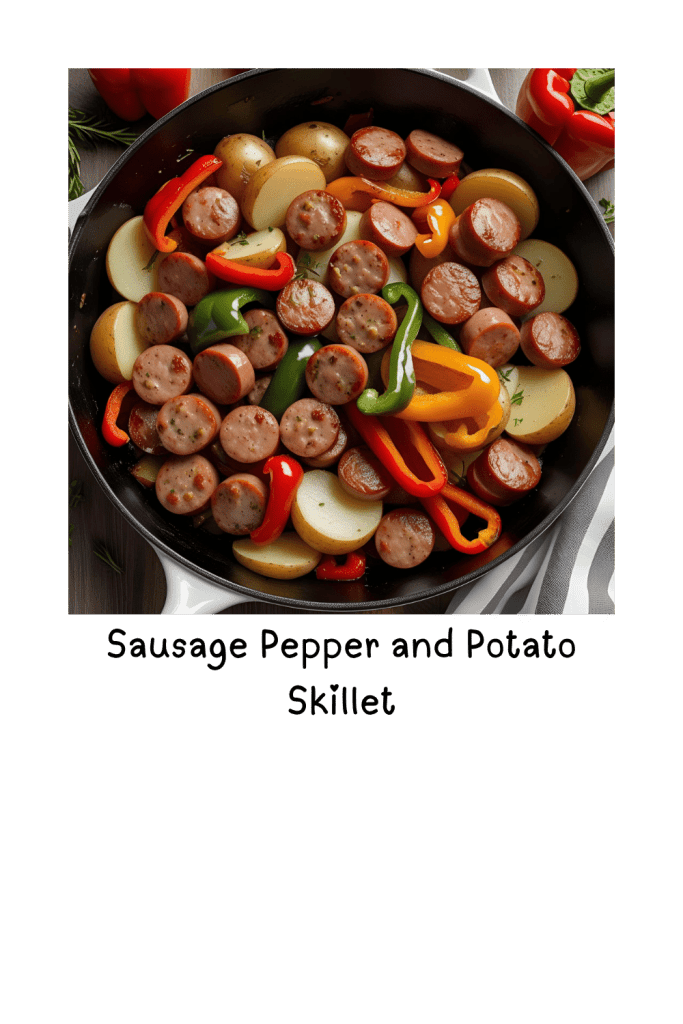
๐ŸŒญ Sausage, Peppers & Potatoes Skillet
โ†’ Just toss sausage slices, bell peppers, and diced potatoes into a skillet. Season with olive oil, garlic powder, salt, and pepper. Cook until golden and tender.

Wednesday (Reserve Night):
Use whatโ€™s left or pretend cheese and crackers is a full meal. (It is, hence lunchables exist.)

Thursday:
๐Ÿ Pasta with Meat Sauce
โ†’ Brown ground beef or sausage, stir in tomato sauce, garlic, onion, Italian seasoning. Serve over cooked pasta. Easy, satisfying, barely a sweat.

Friday (Reserve Night):
Whatever’s easiest. Pizza, wrap, cereal… judgment-free zone.

Saturday:
๐Ÿง„ Garlic Butter Chicken Bites with Rice + Green Beans
โ†’ Chicken breast cut into chunks, seared in garlic butter with herbs. Serve with rice (instant is fine!) and green beans, frozen or fresh.


๐Ÿฝ๏ธ Week 18 Menu (Low Heat, High Reward)

Sunday:
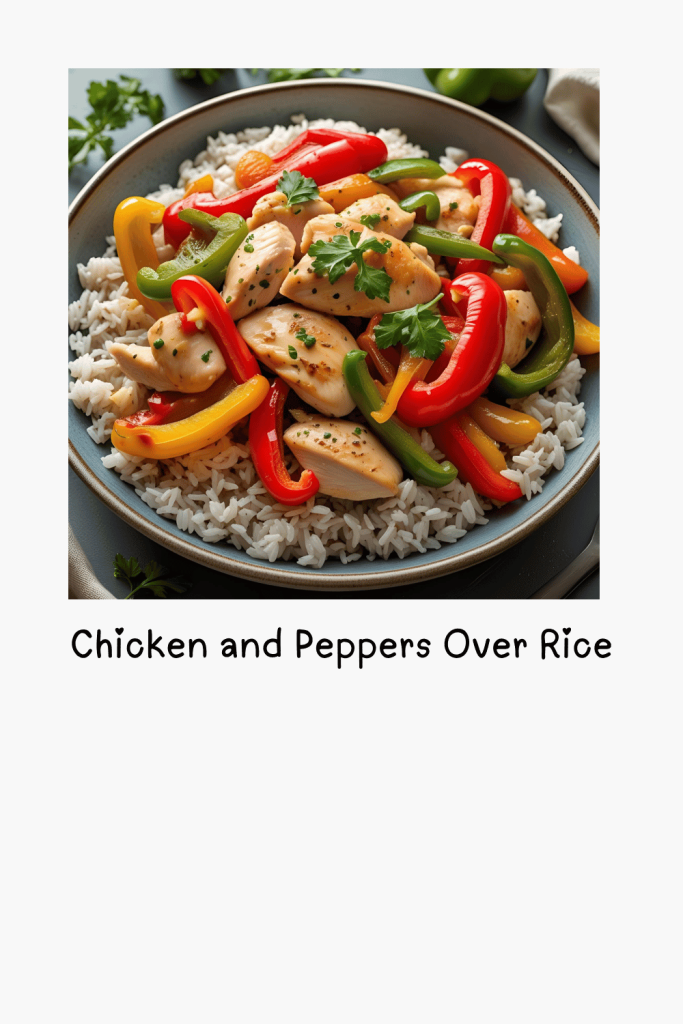
๐Ÿฅ˜ Crockpot Chicken & Peppers over Rice
โ†’ Chicken thighs or breasts + sliced peppers + garlic + a little broth and salsa in the crockpot for 4โ€“6 hrs. Serve over rice.

Monday (Reserve Night):
Dinner roulette: whatever shows up when you open the fridge.

Tuesday:
๐Ÿฅ” Loaded Potato Bowls (Dairy-Free)
โ†’ Roast or skillet-fry diced potatoes. Top with leftover chicken or sausage, green beans, onions, drizzle of olive oil + garlic salt.

Wednesday (Reserve Night):
No stress. Pull out leftovers or do DIY sandwich night.

Thursday:
๐Ÿ… One-Pot Garlic Herb Pasta
โ†’ Pasta, diced tomato, garlic, and herbs cooked in one pot with water or broth until creamy and tender. Olive oil instead of butter or cream. Done.

Friday (Reserve Night):
No cooking. Everyone fends for themselves. That’s self-care.

Saturday:
๐Ÿฒ Stovetop Chicken & Rice with Garlic Broth
โ†’ Chicken sautรฉed with garlic and onion, simmered in broth with rice until fluffy and flavorful. Comfort food without the oven.

๐Ÿง  Spoonie Tips for Sanity:

Reserves = You win at meal planning even when you donโ€™t cook.

Cook extra rice or pasta and use it again later.

Crockpot liners are your BFF.

Thats all I’ve got for you today folks, just over here trying not to melt lol. Til next time, take care of yourselves, and each other.

Uncategorized

The PTSD Plot Twist: How Nearly Dying Made Living Feel Impossible

The unexpected psychological aftermath of medical trauma that nobody warns you about.

You’d think that surviving something as dramatic as your heart stopping would make you grateful for every breath, right? That’s what everyone assumes. Thatโ€™s what I assumed. But here’s the plot twist nobody talks about: sometimes surviving the unsurvivable doesn’t make you appreciate life moreโ€”it makes living feel impossibly dangerous.

Welcome to the mind-bending world of medical trauma PTSD, where your brain decides that since you almost died once, you’re probably about to die again. Any minute now. Maybe even right now while you’re reading this.

The Science Behind the Psychological Sucker Punch

Hereโ€™s what the research says about cardiac arrest survivors that no one mentioned in the hospital discharge paperwork: the prevalence of PTSD among us is high. Like, surprisingly high. Studies vary, but they all agree itโ€™s not just a few people who “canโ€™t handle it.”

Even worse? PTSD in cardiac arrest survivors is linked to a significantly higher risk of another heart event or death within a year. So, while your brain is tormenting you with the idea that you’re going to die… that very torment might actually make you more likely to die.

It’s psychological Russian roulette, designed by a trauma specialist with a PhD in irony.

When I first woke up, I was full of gratitude. My brain was too busy relearning how to walk and do basic things to spiral about what almost happened. But once the dust settled? Thatโ€™s when the fear moved in.

The Hypervigilance Trap: When Your Body Becomes the Threat

Hypervigilance means constantly scanning your surroundings for danger. But when the danger came from inside your own body, where exactly are you supposed to feel safe?

Every chest flutter is a heart attack. Every dizzy spell is a stroke. And donโ€™t even get me started on tracking your own breathing. Your body becomes a 24/7 threat detection system, and youโ€™re the one being surveilled.

I drink water like itโ€™s a competition. I got a fitness tracker. I monitor every symptom: is that back pain from fibro, chronic kidney disease, or something more sinister? Often, Iโ€™ve just pulled a muscle from existing too hardโ€”but my brain doesnโ€™t buy that.

The Symptoms No One Prepares You For

We all know PTSD comes with flashbacks, nightmares, and anxiety. But medical PTSD has some bonus round features:

  • Medical Setting Panic: The sound of a heart monitor beep? Instant terror.
  • Body Betrayal Complex: Your once-trusty body now feels like a traitor.
  • Gratitude Guilt: Youโ€™re supposed to feel thankful, but mostly you feel terrified. Then you feel guilty about not feeling thankful. It’s like emotional inception.
  • Hypervigilant Exhaustion: Your body never relaxes, so your muscles never heal. Which means you always hurt. Which means your mood crashes. And the cycle repeats.

When I close my eyes, I don’t see calm or rest. I see regret. Unfinished business. Conversations I didnโ€™t have. My muscles are always clenched. If Iโ€™m always hurting, Iโ€™m always depressedโ€”and if Iโ€™m depressed, Iโ€™m even more tense. Rinse and repeat.

When Existing Conditions Complicate the Picture

If you already had health issues, medical trauma PTSD is like throwing a grenade into a house of cards. For me, fibromyalgia, ADHD, and bipolar disorder were already hard enough. Add PTSD?

  • ADHD + Hypervigilance = Brain ping-pong with a side of dread.
  • Bipolar + Trauma = Racing thoughts that might be mania or might be panic. Who knows?
  • Fibro + PTSD = Every ache becomes a “what if.”

The Irony of Fighting Fear While Pretending You Arenโ€™t

The most exhausting part? You know it sounds ridiculous. You know your stats. You know not every chest tightness is a heart attack. But logic doesnโ€™t matter. PTSD doesnโ€™t speak statistics.

So youโ€™re fighting fear with one hand while pretending to be okay with the other. Panic attack on the inside, small talk on the outside.

The Treatment Nobody Mentions

Hereโ€™s a shred of hope: studies show mindfulness-based therapy can actually help cardiac arrest survivors manage PTSD. Itโ€™s not one-size-fits-all, but itโ€™s a start.

The problem is, most doctors donโ€™t screen for PTSD after a medical event. Theyโ€™re focused on your physical recovery. The emotional wreckage? Not on the chart.

Living in the Plot Twist

Some days, I can go hours without mentally scanning every inch of my body. Other days, itโ€™s like I have ESPN for doom.

The real twist? Surviving doesnโ€™t always make you feel grateful. It can make you feel fragile. And maybe that’s okay.

Maybe we donโ€™t need to bounce back stronger. Maybe we just need to keep going, scared or not. Thatโ€™s resilience too.

The Ongoing Experiment

Every day, I try to live without panicking about living. Some days I fail. Some days I donโ€™t. But Iโ€™m still here. Still experimenting. Still trying. Til next time gang, you’re not alone, take care of yourselves, and each other!

If you’re navigating this too, you’re not broken. You’re not being dramatic. You’re surviving something nobody talks about.


Sources:

  1. Columbia University Department of Psychiatry โ€“ Mindfulness-based Therapy for Cardiac Arrest Survivors
  2. PubMed โ€“ PTSD in Cardiac Arrest Survivors
  3. American Heart Association โ€“ Psychological Impact of Cardiac Arrest
  4. Cleveland Clinic โ€“ PTSD Symptoms and Treatment
  5. Mayo Clinic โ€“ PTSD Causes and Risk Factors
  6. Bay Area CBT Center โ€“ Understanding Hypervigilance
  7. Balanced Awakening โ€“ Hypervigilance and Trauma
Uncategorized

What Rest Feels Like When Youโ€™re Used to Being in Crisis

Rest is weird.

Letโ€™s just start there. Because when your baseline is fight-or-flight, freeze-or-fawn, dissociate-or-die-tryingโ€ฆ “rest” doesnโ€™t always feel peaceful. Sometimes it feels like guilt. Or like you’re forgetting something. Like you’re doing life wrong.

If you’ve lived in survival mode for months or yearsโ€”or foreverโ€”itโ€™s not just that you donโ€™t rest. Itโ€™s that youโ€™ve forgotten what real rest is supposed to feel like.

1. Rest Feels Like Uncertainty at First

The first few minutes of trying to rest when youโ€™re used to chaos? Horrible. It’s like the world got too quiet and suddenly your brain is staging a protest:

  • โ€œShouldnโ€™t you be doing something right now?โ€
  • โ€œIs the other shoe about to drop?โ€
  • โ€œAre you being lazy or just conveniently forgetful?โ€

I have terrible self talk and my therapist always has me ‘reframe’ things. Turns out, your nervous system isnโ€™t sure what to do when it isnโ€™t in go-go-go mode. It gets twitchy. Suspicious. Like a cat in a bathtub.

2. Rest Can Look Lazy When Itโ€™s Actually Life-Saving

Rest isnโ€™t always bubble baths and soft jazz. Sometimes rest looks like staring at the ceiling, numb and unmoving, because thatโ€™s all your body can manage. And that counts. Especially when youโ€™re healing.

Some people take naps. Sometimes I can but I keep naps under an hour if exhaustion hits.
Othersโ€ฆ collapse. I’ve done that. I’ve driven cross country 21 hours and legitimately passed out cold. I was apparently parked in front my aunt’s neighbors tennant’s garage and they banged on the window, clearly seeing me sleeping on the couch and not hearing them. LOL They thought I was dead,

Same nervous system need, just wearing different outfits.

3. Rest Doesnโ€™t Mean Everything Is Fixed

Hereโ€™s the kicker: you can be exhausted and doing nothing. Thatโ€™s not failure. Thatโ€™s biology catching up.

Rest doesnโ€™t mean youโ€™re healed, fixed, or suddenly energetic. Though it helps when the goal is reached. Sometimes itโ€™s just the space between breakdowns. And thatโ€™s okay. Thatโ€™s real. Thatโ€™s progress, even if it doesnโ€™t sparkle.

4. Rest Can Feel Like Withdrawal

When adrenaline has been your main fuel source, rest can feel like crashing after a sugar binge. You may feel down, irritable, even achey. Youโ€™re not broken. Your brainโ€™s just recalibrating. Imagine detoxing from chaos. Thatโ€™s what this is. Detoxing from adrenaline.

5. You Might Feel Worthless While Restingโ€”But You’re Not

This one cuts deep: โ€œIf Iโ€™m not producing, Iโ€™m not valuable.โ€ Sound familiar?

Thatโ€™s a trauma belief, not a truth. My eyes were opened with this little nugget, my therapist was the one who started it, and I did believe no one cared about me unless I did things for them, even though I love people without calculating what they can do for me, my brain was hard-wired to tell me I was worthless and I STILL have more days I believe the bad over the good about myself. Curious to see how many of you guys have felt that way too.

We live in a society that measures worth by productivity, but healing means learning your value exists even when youโ€™re still. Even when youโ€™re not doing. You donโ€™t have to earn your rest. You deserve it because you’re human and thats hard enough.


So How Do You Learn to Feel Rest?

Gently. And over time.

Here are a few ways to start:

  • Name it. Tell yourself, โ€œI am resting right now,โ€ even if it feels like loafing.
  • Track your thoughts. Notice when guilt or shame show up. Are they old scripts? Keep a journal by your bed and write whats bothering you down before you lay down so you know you can work on it tomorrow.
  • Set tiny rest rituals. One song. One stretch. One sit on the porch. Practice. One little thing, whatever it is, that gets your mind to stop spinning and rest.
  • Celebrate doing less. Rest is not a reward. It’s a requirement. Its hard NOT to reward ourselves with rest, thats why we have to re-frame our thoughts how we talk to ourselves.

Final Thought: If Youโ€™ve Been in Crisis, You Deserve to Feel Safe in Stillness

Thatโ€™s the hard partโ€”retraining your body and brain to trust quiet moments. But you can. One awkward attempt at a time. Youโ€™re not failing when rest feels weird. Youโ€™re rewiring. Thatโ€™s brave work.

And if no oneโ€™s told you lately: youโ€™re doing a damn good job surviving. Now, letโ€™s practice what it means to actually live. It feels like all I’ve done my adult life is to go from surviving one thing to surviving the next, I’m going to try and make more time to look around and enjoy the in between. I’ll keep you posted. If anyone has any tips to help with rest be kind and share it with the class. Til next time gang, take care of yourselves, and each other!