Uncategorized

My December Brain Thinks It’s Being Chased by a Tiger

A spoonie’s guide to understanding why this month feels like a boss battle

December arrives every year like it’s auditioning for a “Most Dramatic Month” award. Lights! Deadlines! Events! Family! Weather that makes my joints feel like they were installed backwards! I swear this month shows up wearing a sequined gown and holding a megaphone screaming, “SURPRISE, IT’S ME! LET’S CHAOS.”

And listen… I’m doing my best.
But my brain?
My brain is over in the corner rubbing two neurons together trying to make a spark like a Boy Scout with wet matches.

And that’s the thing: December is uniquely designed to absolutely obliterate neurodivergent and chronically ill people.

Let me explain — with actual science.
(But don’t worry, it’s me. I’ll keep it spicy.)


1. December is basically sensory overload in a trench coat.

Think about it: blinking lights, crowds, loud music, bells, scents, glitter everywhere like it escaped a containment lab… it’s a full assault on the senses.

For ADHD and autistic brains, the sensory load of ONE Target trip in December is equivalent to running a psychological marathon while someone throws cinnamon pinecones at your face.

When you see people calmly strolling through a decorated mall, please understand they are operating at a level of sensory privilege I can only dream of.


2. Our executive function gets hit with a holiday piñata stick.

Executive function — the part of the brain responsible for planning, organizing, remembering, transitioning, and not screaming into the void — already runs on 2% battery for a lot of us.

Then December rolls in and demands:

  • Coordination
  • Decision-making
  • Gift lists
  • Cooking
  • Routines changing
  • Socializing
  • Budgeting
  • TIME MANAGEMENT (okay calm down, this is a safe space)

It’s too much.
Neuroscience basically says: if your brain already struggles with dopamine, working memory, or task sequencing, December is like trying to juggle flaming swords with oven mitts on.


3. Chronic illness + cold weather = my body filing hostile complaints with HR.

Fibromyalgia loves the cold the way cats love knocking stuff off counters: it finds an opportunity and goes for it.

Scientific fun fact: colder temperatures can increase muscle tension and pain sensitivity, and reduced sunlight messes with serotonin levels, which can intensify fatigue and mood dips.

Scientific non-fun fact: my body reacts to December like someone unplugged it mid-update.


4. The holidays trigger “performance mode” whether we want it or not.

If you grew up in chaos, survived medical trauma, or just exist as a human with trauma baggage (hi, welcome, there are snacks), your nervous system may automatically shift into high-alert this time of year.

The brain hates unpredictability.
December is 90% unpredictability.

So your amygdala goes, “Heyyyy remember when things went bad before? Let’s be ready. Just in case.”

Which is cute.
Except it’s not.
Because suddenly everything feels urgent.


5. And then there’s the emotional landmines.

Family stuff. Estrangement. Loss. Loneliness. Pressure to be joyful on command.
This season brings things to the surface like the ghosts of holidays past showed up for a group project.

So if you’re exhausted?
Forgetful?
Behind on everything?
Crying at commercials about soup?
Shoving wrapping paper under the bed and pretending it’s not your problem?

Yeah. Same.
You’re not broken — you’re overloaded.


So what do we DO about it?

(You know… besides giving up and becoming a winter hermit.)

1. Drop the “holiday expectations” bar until it’s at ankle height.

You’re allowed to celebrate at your energy level, not Hallmark’s.

2. Use “do it the lazy way” as your December mantra.

If there’s an easier version of something? Do that.
Frozen food? Yes.
Gift bags instead of wrapping? Absolutely.
Paper plates? You’re doing amazing.

3. Build in tiny pockets of sensory calm.

Dark room + blanket + phone on silent = a spiritual experience.

4. If your brain is spiraling, label it.

“My nervous system is overwhelmed. This isn’t a failure; it’s a signal.”
Boom. Power move.

5. Accept that December brain is a special, limited-edition seasonal disorder.

It’s not you.
It’s the month.


And here’s the part I want you to hear the loudest:

You do not owe December a performance.
You don’t owe tradition your body.
You don’t owe the holiday season a curated, Pinterest-perfect experience.
You owe your life — your REAL life — kindness, rest, and honesty.

If you make it through the month fed, semi-warm, and not buried under gift wrap, congratulations: you won December.

Even if your brain thinks it’s running from a tiger. Til next time gang, take care of yourselves, and each other!

Uncategorized

10 Times I Should’ve Trusted My Gut

Let’s talk about intuition.
That little voice in your head that says, “Maybe don’t send that text,” or “You don’t actually need to reorganize your pantry at 2 a.m.” For people with Bipolar sometimes that voice gives conflicting advice

Mine’s been screaming for years, but I usually answer with, “Shh, I’m busy ignoring you while doing exactly what you told me not to.”

So, here’s a list of ten times I absolutely should’ve listened to my gut — and how my new pendulum board helps me keep my chaos at least moderately guided now.


1. When I Thought “One More Load of Laundry” Was Harmless

My back disagreed. My spoons evaporated. Should’ve trusted the gut that said, “Sit down, you maniac” and not got back up repeatedly.


2. When I Answered That Text From My Ex

Intuition: “Don’t.”
Me: “Maybe he’s changed!”
Spoiler: He had not.


3. When I Said “Sure, I Can Handle That Project”

What I meant was: “I will spiral into a stress coma and regret everything.” Not sure if thats any illness talking I think we all over promise sometimes, even to ourselves lol.


4. When I Ignored the Weird Rattle in My Car


Turns out the “ghost” was a very real, very expensive muffler issue. Of all the times my gut cost me, this was an EXTRA pricey one lol.
Gut: 1. Me: $600.

5. When I Thought I Could Skip My Meds “Just for a Day”

LOL. Never again. My brain chemistry is not DIY-friendly. Most of them arent shy about telling me I forgot them either. Not just for a day, not even just for an afternoon lol.


6. When I Tried To Explain My Chronic Illness to a Facebook Comment Section

Intuition said log off.
Ego said educate.
Result: chaos and regret.


Lately, I’ve been using this pendulum board I made — not as some mystical fortune-teller thing, but as a quick way to ground myself. Watching it swing back and forth slows my thoughts down enough to actually hear what my gut’s saying.

7. When I Said “It’s Just a Little Pain”

…and three days later I’m Googling “can you die from ignoring your body?”


8. When I Thought “I’ll Sleep When I’m Dead” Was a Vibe

SO MANY people say this! Turns out it’s… not great health advice.


9. When I Ordered the Giant Craft Supply Haul “For Business Purposes”

I mean, it was technically business-related. Just… maybe not this month’s business. Maybe I wanted to not be rude, gotta get something for everybody!

10. When I Ignored My Gut About Taking a Break


(aka any time I have been up out of my chair for over 5 minutes)

Every time I push through instead of pausing, my body yells louder next time.
Now I ask my pendulum, and if it swings toward “Sit down,” I listen.
(Okay, fine, I try to listen.)


🌙 Moral of the Story: Trust Yourself, Babe.

Intuition isn’t mystical nonsense—it’s your nervous system whispering what it already knows.
The pendulum just helps quiet the noise long enough for you to actually hear it.

If you want a gentle nudge toward trusting yourself again (or just something gorgeous and witchy for your nightstand), my new 3D-printed Pendulum Board Kit is going to be perfect for you.
It includes:

  • A black + purple board engraved with intuitive answers
  • A matching pendulum
  • A mini guide for using it (with question prompts!) I can make custom ones with special colors.
    Coming to you in the next few days, keep an eye out for it

✨ Perfect for the overthinker who’s spiritually curious but still skeptical (hi, it’s me). Til next time gang, take care of yourselves, and eachother!

Uncategorized

💊 When Your Body Stages a Coup: Surviving Withdrawal from Your Legally Prescribed Meds

So picture this: you’re minding your business, taking your meds like a responsible adult, when suddenly—boom.
Pharmacy delay. Doctor out of town. Prior authorization “pending.” Ah the setback of psych meds.
And your nervous system? It’s like, “Cool cool cool… let’s panic about everything now.”

Let’s be clear right out of the gate:
This isn’t addiction.
This is what happens when your body gets used to something your doctor prescribed, and then it disappears faster than your motivation on a Monday.

For people managing chronic pain, ADHD, bipolar disorder, fibromyalgia, anxiety—basically anything that makes life feel like juggling flaming swords—missing meds can wreck your whole week. Sometimes your whole month. It used to be pain meds were controlled, well I got off all them and then I find out one of my meds for my mental state is controlled too.

So here’s the practical, not-patronizing guide to surviving it.


🧠 1. Know What’s Happening — It’s Not “Just in Your Head”

Your body doesn’t care that you’re being responsible. It just knows chemistry changed.
Withdrawal from meds like antidepressants, or mood stabilizers can cause:

  • Flu-like symptoms (the fever, chills, and “oh God, why” kind)
  • Dizziness or brain zaps
  • Stomach chaos (you know what I mean)
  • Anxiety that feels like being trapped in your own skin
  • Crying at car insurance commercials

You’re not crazy, dramatic, or weak. You’re literally detoxing from a medication your body depended on.


🩺 2. Call the Pharmacy and Doctor — Every. Single. Day.

Yes, it’s annoying. Yes, they hate it. Do it anyway.
Sometimes the squeaky wheel really does get the refill.

Ask for:

  • A partial fill (even a few days’ worth helps)
  • Generic or alternative options
  • If your doctor can bridge it with samples or a similar med

If you can’t get through to your doctor, ask to speak to the nurse or pharmacist directly—they can often light a fire under the process faster than anyone else.


🧘‍♀️ 3. Temporary Coping Tools (That Actually Help)

You can’t cure withdrawal, but you can soften the edges.
Try:

  • Hydration like it’s your job. Electrolytes help your body flush junk out faster.
  • Protein and complex carbs. Blood sugar swings make symptoms worse.
  • Body temp tricks: cool showers for feverish restlessness, warm baths for muscle tension.
  • Magnesium and vitamin B supplements (if cleared by your doc).
  • Ginger tea or mints for nausea.
  • Noise + comfort TV. Distract your brain from itself. (“SVU’ or ‘Chicago’ shows is a favorite here.)

And yes, sleep whenever you can. Withdrawal can feel like a bad breakup between your brain and your body, and you’ll need rest to survive the drama.


🚨 4. Know When It’s Too Much

If your symptoms go beyond “ugh” and start looking like “dangerous,” it’s time to get help.
Go to urgent care or call your doctor if you experience:

  • Suicidal thoughts
  • Chest pain
  • Severe confusion or disorientation
  • Tremors, seizures, or blood pressure spikes

No guilt, no hesitation. This isn’t weakness—it’s biology in meltdown mode.


💬 5. You’re Not a “Druggie.” You’re a Human Being.

Let’s kill that stigma right now.
There’s a difference between dependency and addiction—one means your body adapted to a med, the other means there’s misuse or compulsion.

If you’re following your prescription and life implodes when you miss it, that’s not moral failure. That’s chemistry. And it deserves compassion, not judgment.


🌿 Bonus: What to Do Once You’re Back on Track

  • Ask about tapering. Even a few days’ gap can make restarting rough.
  • Set up refill reminders. Calendar, app, sticky note, carrier pigeon—whatever works.
  • Request overlap fills (some pharmacies will fill a few days early if you ask).
  • Stock an emergency buffer once you can, even if it’s just a few days’ worth.

And most importantly: forgive yourself for the mess that isn’t your fault.
Medication management in modern healthcare is like playing whack-a-mole blindfolded. You’re doing great just by surviving it. Dependency is’nt addiction. Til next time gang, take care of yourselves, and each other!

Uncategorized

Why Sleep Is So Complicated When You’re Living With ADHD, Bipolar Disorder, and Fibromyalgia

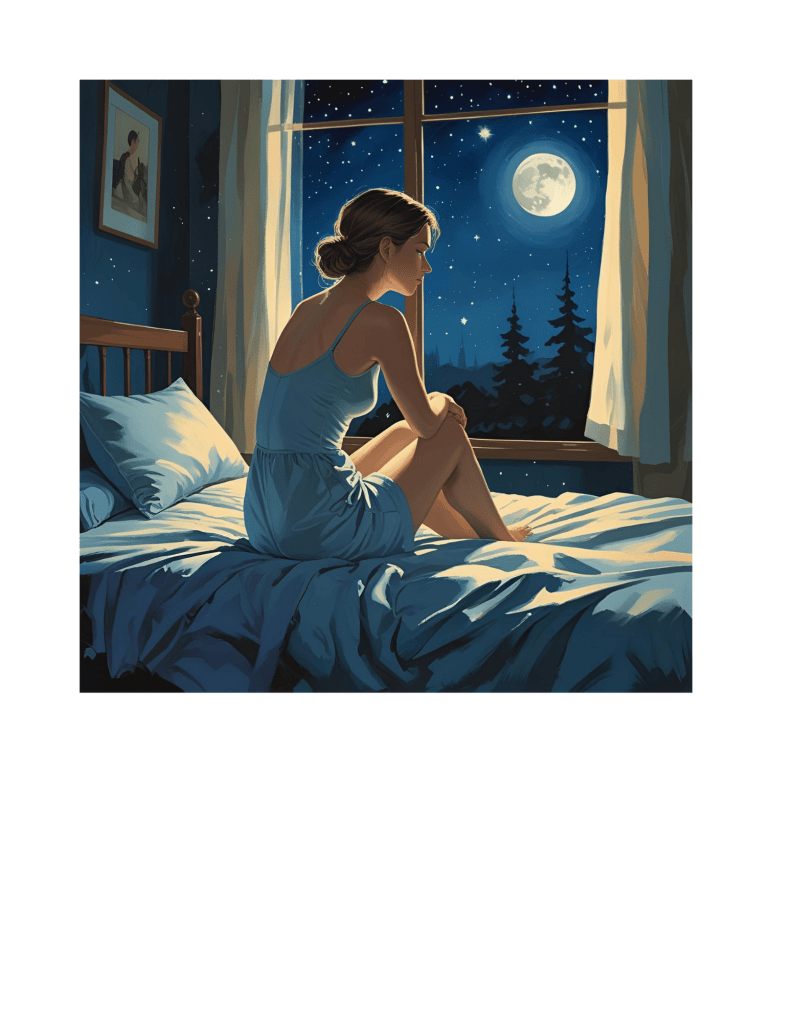
Sleep isn’t just about closing your eyes and drifting off. For some of us, it’s like trying to land a plane in a thunderstorm with three different copilots all fighting over the controls. ADHD, bipolar disorder, and fibromyalgia each mess with sleep in their own ways—and when they show up together, it’s no wonder rest feels more like a negotiation than a guarantee.


ADHD: A Brain That Won’t Clock Out

With ADHD, the brain doesn’t exactly come with an off-switch. Racing thoughts, late-night hyperfocus, or the dreaded “second wind” make it easy to miss sleep windows. Research shows people with ADHD often experience delayed sleep phase syndrome—meaning their internal clock is naturally shifted later.

What helps:

  • Keep a consistent bedtime routine (same order, every night, like brushing teeth → skincare → reading).
  • Use a “wind-down timer” alarm to remind you when to step away from screens.
  • Try body-doubling for bedtime (texting a friend “logging off now” helps hold you accountable).

Bipolar Disorder: Sleep as a Mood Swing Marker

Sleep disruption isn’t just a symptom of bipolar disorder—it’s also a warning sign. During manic episodes, people may need little to no sleep and still feel wired. In depressive episodes, hypersomnia (sleeping too much) or insomnia are both common. Clinicians even track sleep patterns as a way to gauge where someone is on the bipolar spectrum, because sleep disturbance is that central to the condition.

What helps:

  • Stick to a strict sleep/wake schedule—even on weekends.
  • Limit caffeine, alcohol, and late-night stimulation, since they can trigger swings.
  • Track sleep with an app or journal to catch changes early (your future self and your doctor will thank you).

Fibromyalgia: The Non-Restorative Sleep Thief

Fibro brings its own brand of sleep sabotage. Studies point to “alpha wave intrusion,” where the brain doesn’t stay in deep, restorative stages of sleep. Combine that with pain flare-ups and restless legs, and even if you technically sleep for eight hours, you wake up feeling like you pulled an all-nighter.

What helps:

  • Prioritize pain management before bed—stretching, warm baths, or heat pads can calm flare-ups.
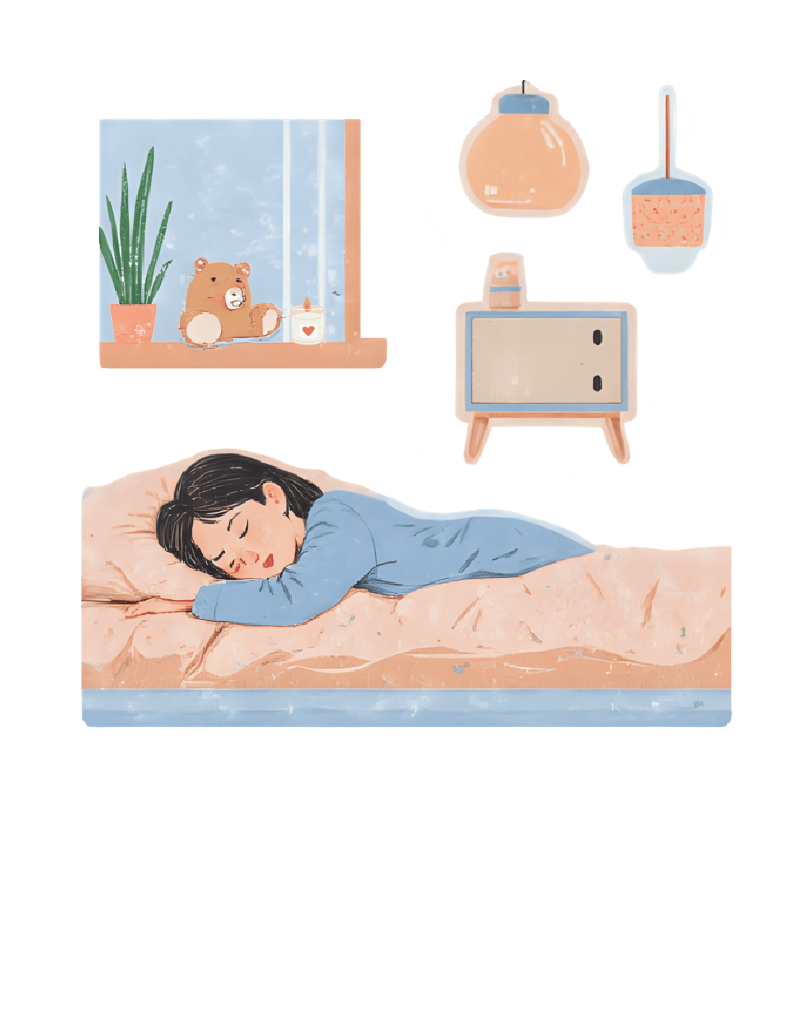
  • Create a cozy sleep space: blackout curtains, white noise, supportive mattress.
  • Try gentle sleep hygiene aids, like calming teas or magnesium (if your doctor approves).

The Triple-Whammy Effect

Now imagine all three at once: ADHD pushing bedtime later, bipolar flipping the switch between insomnia and oversleeping, and fibromyalgia making whatever sleep you do get feel useless. No wonder mornings feel brutal and exhaustion never really leaves.


Why It Matters

Poor sleep isn’t just a nuisance—it worsens mood swings, flares up pain, and makes executive function even harder. But knowing the “why” behind your exhaustion is powerful. It means you can stop blaming yourself and start stacking small, realistic strategies that give you a fighting chance at rest. Til next time gang, take care of yourselves and each other.

Research Toolbox:
Sources

The National Fibromyalgia Association — Sleep Disturbances & Fibromyalgia
(information on fibro and sleep disturbances)

International Journal of Bipolar Disorders – Sleep and Circadian Rhythms in Bipolar Disorder
(research on bipolar disorder and sleep)

PubMed — ADHD and Circadian Rhythm Sleep-Wake Disorders
(research on ADHD and circadian rhythm)

Uncategorized

Watching the Drama: I Know It’s Not That Bad — Except My Brain Won’t Believe Me

There’s a terrible little superpower I’ve developed: I can watch myself overreact.

It’s the worst seat in the house — front row, center stage — where my brain is performing a full-throttle disaster musical and I’m sitting there with the program, thinking, “Yep. That’s… dramatic.” Meanwhile my chest is doing interpretive dance, my throat is tight, and my hands have decided to be useless for the foreseeable future.

I know the script. I know the facts. I know that my kid is safe, that no one is angry enough to leave forever, that the noise outside is probably just traffic, not the arrival of doom. I can literally name the thoughts as they happen: This is a sign. This is going to spiral. Everyone will leave. I am unfixable. And I know, in a rational, calm part of my brain, that the thought is an alarm that’s been stuck on repeat. I also know that knowing it — intellectually — doesn’t flip a switch and make my body stop treating it like an emergency.

That’s PTSD after medical trauma for you in a sentence: your mind is both the actor and the audience. The rest of your life keeps going. You keep getting up, you keep making tea, you keep paying bills. But some invisible part of you stays backstage, rewinding and replaying a scary scene, making sound effects, and refusing to let the house lights come up.

Why the “I know it’s not true” feeling is its own kind of hell

It’s isolating. Because the knowledge that your thoughts are lying should be freeing, right? In theory. But being the person who can say, “This is irrational,” while your body screams “RUN” is exhausting and weirdly lonely. You end up apologizing to people for things they weren’t even upset about, or you cancel plans because you feel unsafe even though everything else says you’re fine. You blame yourself for being dramatic. You try to be the reasonable adult and the reasonable adult keeps getting ignored.

And then there’s guilt. If friends or family do help, you watch them pay attention and you feel both relieved and awful — because you think you’re costing them time and energy. You start to believe that self-sufficiency is the only moral option and asking for help is taking more than you deserve. Spoiler: that’s not the truth. It’s an emotional trap set up by fear.

Tiny, practical things that actually help when your brain runs the show

I’m not going to give you platitudes. Here are things that have helped me — small, honest, and doable even on the worst days.

  • Label the play: When the alarm starts, say out loud (or mentally): “That’s my PTSD talking. That’s the survival brain.” Naming it doesn’t make it vanish but it takes away some of its power.
  • Two-minute grounding: Five things you see, four things you can touch, three sounds, two smells, one thing you can taste (or one thing you like about the moment). It’s boring, and that’s the point. It pulls you out of the theater.
  • Breathe like you mean it: 4-4-6 breathing (inhale 4, hold 4, exhale 6) calms the vagus nerve faster than a pep talk.
  • Write the loop down: If a memory keeps looping, grab a notebook and write it until you’re bored of it. Then scribble one practical line: “Right now: I am home. Right now: I can breathe.” The page can hold the drama when your brain insists on replaying it.
  • Micro-asks for people: Don’t make others guess. Say, “Can you sit with me for ten minutes?” or “Could you text me at 7 to check in?” People who care usually want the script — they just don’t want to mess it up.
  • Make a tiny safety plan: three things to do if it spikes (call X, 2-minute grounding, favorite playlist). Tape it to the fridge if you have to. Pre-deciding reduces panic.

What to say — when you want to ask for help but hate feeling needy

Try something simple and specific:

Or, if you need practical help:

Short. Specific. Low drama. It gives people an easy yes.

The honest truth I remind myself (even when my brain screams otherwise)

I can hold two truths at once:

  • My mind is telling a bigger story than the facts support.
  • Needing help right now doesn’t make me a burden — it makes me human.

There’s a difference between the loudness of a feeling and the size of reality. Your feelings are not the final arbiters of truth. They are signals. Sometimes they’re reliable, sometimes they’re not. You don’t have to act on every alarm. You can notice it, honor it, and then choose what you do next.

A small support for the messy days

If you’re reading this while your chest is tight and your brain is staging a meltdown, I see you. I know how lonely it becomes to watch yourself react and feel like you’ve failed at being calm. You haven’t failed. You’ve survived things that rewired your alarm system. That makes your reactions loud — not your worth small. Til next time gang, take care of yourselves, and each other.

Uncategorized

What Rest Feels Like When You’re Used to Being in Crisis

Rest is weird.

Let’s just start there. Because when your baseline is fight-or-flight, freeze-or-fawn, dissociate-or-die-trying… “rest” doesn’t always feel peaceful. Sometimes it feels like guilt. Or like you’re forgetting something. Like you’re doing life wrong.

If you’ve lived in survival mode for months or years—or forever—it’s not just that you don’t rest. It’s that you’ve forgotten what real rest is supposed to feel like.

1. Rest Feels Like Uncertainty at First

The first few minutes of trying to rest when you’re used to chaos? Horrible. It’s like the world got too quiet and suddenly your brain is staging a protest:

  • “Shouldn’t you be doing something right now?”
  • “Is the other shoe about to drop?”
  • “Are you being lazy or just conveniently forgetful?”

I have terrible self talk and my therapist always has me ‘reframe’ things. Turns out, your nervous system isn’t sure what to do when it isn’t in go-go-go mode. It gets twitchy. Suspicious. Like a cat in a bathtub.

2. Rest Can Look Lazy When It’s Actually Life-Saving

Rest isn’t always bubble baths and soft jazz. Sometimes rest looks like staring at the ceiling, numb and unmoving, because that’s all your body can manage. And that counts. Especially when you’re healing.

Some people take naps. Sometimes I can but I keep naps under an hour if exhaustion hits.
Others… collapse. I’ve done that. I’ve driven cross country 21 hours and legitimately passed out cold. I was apparently parked in front my aunt’s neighbors tennant’s garage and they banged on the window, clearly seeing me sleeping on the couch and not hearing them. LOL They thought I was dead,

Same nervous system need, just wearing different outfits.

3. Rest Doesn’t Mean Everything Is Fixed

Here’s the kicker: you can be exhausted and doing nothing. That’s not failure. That’s biology catching up.

Rest doesn’t mean you’re healed, fixed, or suddenly energetic. Though it helps when the goal is reached. Sometimes it’s just the space between breakdowns. And that’s okay. That’s real. That’s progress, even if it doesn’t sparkle.

4. Rest Can Feel Like Withdrawal

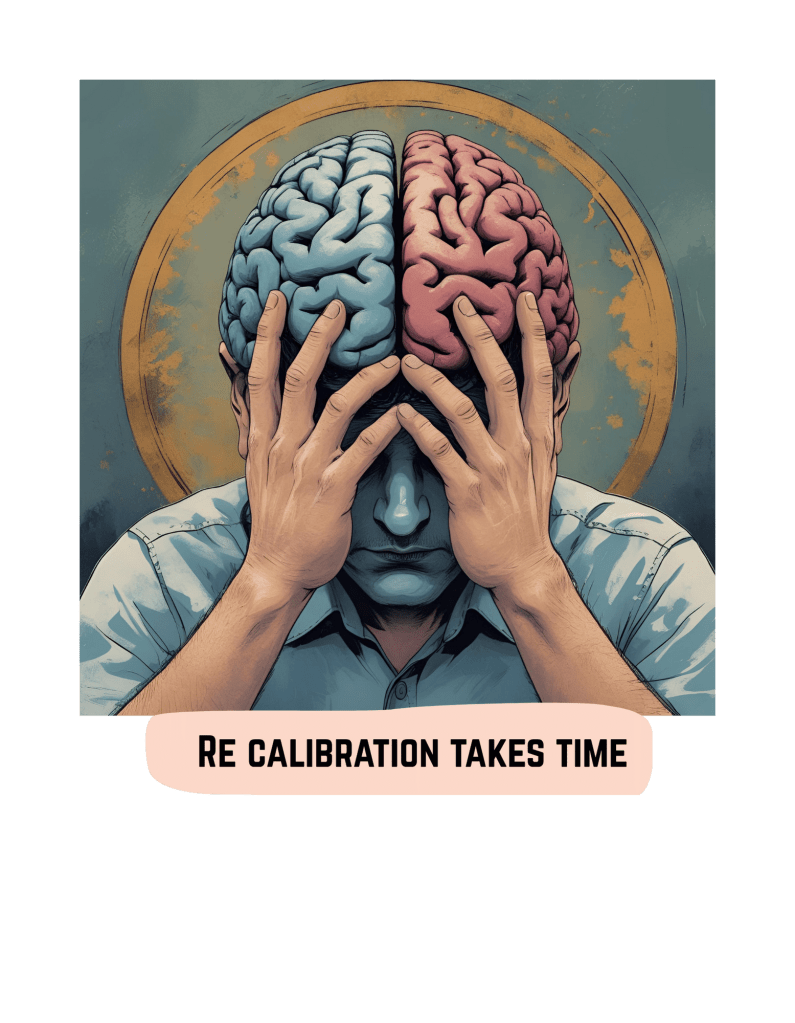
When adrenaline has been your main fuel source, rest can feel like crashing after a sugar binge. You may feel down, irritable, even achey. You’re not broken. Your brain’s just recalibrating. Imagine detoxing from chaos. That’s what this is. Detoxing from adrenaline.

5. You Might Feel Worthless While Resting—But You’re Not

This one cuts deep: “If I’m not producing, I’m not valuable.” Sound familiar?

That’s a trauma belief, not a truth. My eyes were opened with this little nugget, my therapist was the one who started it, and I did believe no one cared about me unless I did things for them, even though I love people without calculating what they can do for me, my brain was hard-wired to tell me I was worthless and I STILL have more days I believe the bad over the good about myself. Curious to see how many of you guys have felt that way too.

We live in a society that measures worth by productivity, but healing means learning your value exists even when you’re still. Even when you’re not doing. You don’t have to earn your rest. You deserve it because you’re human and thats hard enough.


So How Do You Learn to Feel Rest?

Gently. And over time.

Here are a few ways to start:

  • Name it. Tell yourself, “I am resting right now,” even if it feels like loafing.
  • Track your thoughts. Notice when guilt or shame show up. Are they old scripts? Keep a journal by your bed and write whats bothering you down before you lay down so you know you can work on it tomorrow.
  • Set tiny rest rituals. One song. One stretch. One sit on the porch. Practice. One little thing, whatever it is, that gets your mind to stop spinning and rest.
  • Celebrate doing less. Rest is not a reward. It’s a requirement. Its hard NOT to reward ourselves with rest, thats why we have to re-frame our thoughts how we talk to ourselves.

Final Thought: If You’ve Been in Crisis, You Deserve to Feel Safe in Stillness

That’s the hard part—retraining your body and brain to trust quiet moments. But you can. One awkward attempt at a time. You’re not failing when rest feels weird. You’re rewiring. That’s brave work.

And if no one’s told you lately: you’re doing a damn good job surviving. Now, let’s practice what it means to actually live. It feels like all I’ve done my adult life is to go from surviving one thing to surviving the next, I’m going to try and make more time to look around and enjoy the in between. I’ll keep you posted. If anyone has any tips to help with rest be kind and share it with the class. Til next time gang, take care of yourselves, and each other!

Uncategorized

Reframing for Real Life: How to Shift Your Thoughts Without Gaslighting Yourself

AKA Why My Brain is Not the Boss of Me

Let’s be honest: brains can be drama queens. They catastrophize. They tell half-truths. They rerun that one embarrassing moment from seventh grade like it’s a Netflix Original. And when you live with chronic illness, ADHD, bipolar disorder, or you’re just a human being trying to function, those mental reruns can get extra spicy.

Enter: reframing. It’s a simple but powerful cognitive strategy that helps you shift how you view a situation or thought—without pretending everything is fine when it’s clearly not. This isn’t about toxic positivity. This is about mental judo.


What Is Reframing (And Why Should I Care?)

Reframing is the mental equivalent of turning the pillow over to the cool side. It’s rooted in Cognitive Behavioral Therapy (CBT) and helps you challenge automatic negative thoughts by looking at things from a different (and often more helpful) perspective.

It’s not about lying to yourself. It’s about finding a version of the truth that doesn’t punch you in the gut.


How Reframing Works (Spoiler: Science Says It Does)

Research shows that reframing, also called “cognitive reappraisal,” can significantly reduce symptoms of anxiety, depression, and stress. Two studies worth name-dropping at your next emotionally intelligent brunch:

  1. Gross & John (2003) found that people who use reappraisal are more emotionally balanced and less likely to explode or implode emotionally.
  2. Jamieson et al. (2012) showed that people who reframed their stress (as the body preparing to rise to a challenge) performed better and felt less overwhelmed.
    • Citation: Jamieson, J. P., Nock, M. K., & Mendes, W. B. (2012). Mind over matter. Journal of Experimental Psychology: General, 141(3), 417–422.
      https://doi.org/10.1037/a0025719

How to Reframe Without Losing Your Edge

  1. Catch the Thought
    Example: “I’m lazy. I didn’t get anything done today.”
  2. Reality Check
    Ask: Is this a feeling or a fact? Would I say this to a friend?
  3. Flip It Gently
    Reframe: “My energy was low, and I did what I could. Resting isn’t lazy.”
  4. Add Sass or Compassion (Optional but Recommended)
    Try: “Okay, Brain. Thanks for your input. Now please go sit in the back with Anxiety and Guilt.”

Everyday Reframes That Save My Sanity

Unhelpful ThoughtReframed Thought
“I’m falling behind.”“I’m moving at my own pace, and that’s valid.”
“I should be doing more.”“I’m doing what I can, and that counts.”
“Everyone else has it together.”“They’re probably also crying in their car.”
“I’ll never get it right.”“Progress isn’t linear, and effort matters.”

Closing Thoughts (AKA Why You Deserve a Brain That Isn’t Mean)

You don’t need to have perfect mental health to practice reframing. You just need to notice when your thoughts are dragging you under and say, “Actually, no thanks.”

Reframing isn’t pretending life is great. It’s realizing you don’t have to believe every thought your brain throws at you. Especially the mean ones. Especially the hopeless ones.

You are allowed to talk back.

And you deserve to hear yourself say something kinder. Til next time guys. Take care of yourselves, and each other

Uncategorized

My Brain Buffering: A Love Letter to the Thoughts I Forgot Mid-Sentence

Let’s be honest: if forgetting what you were saying mid-thought was an Olympic sport, I’d have gold medals in every category. Freestyle Rambling. Synchronized Brain Fog. And my personal favorite: Disappearing Train of Thought With a Triple Mental Backflip.

People say “don’t be so hard on yourself,” and I’m like—buddy, I’m not. I’m just trying to remember what I came into this room for. And repeatedly. I’m not being ‘so hard’ on myself, I’d say I’m at least the appropriate level of hardness if not under lol

Somewhere between ADHD, fibromyalgia fog, bipolar whiplash, and a few hundred browser tabs in my brain, my inner monologue starts to sound like a dial-up modem trying to load a YouTube video. In 2003. On satellite internet. In a thunderstorm. A mile and a half down a country dirt road where theres NOTHING for miles

🧠 Exhibit A: “What Was I Saying?”

It’s not even a joke anymore. I’ll be mid-conversation, completely coherent, and suddenly—boom. Blank screen. I can literally see the words running off a cliff like cartoon lemmings.

“Wait—what was I saying?”

No really. What was I saying? I know its annoying to you, do you know how annoying it is and how much I absolutely hate the part of my brain thats supposed to remember things? Me and my brain are in an absolute love/hate relationship and we are definitely in our Hate each other era.

🤯 Fibro Fog: Not Just a Myth, Unfortunately

If you’ve never tried to function while your entire nervous system is on delay like it’s waiting for subtitles, congratulations—you’re not me. Fibro fog isn’t just forgetfulness. It’s walking into a room and standing there like you’re the main character in a slow-motion scene… except no one yelled “Action,” and you definitely missed your cue.

My body hurts, my thoughts hurt, my hair hurts, and occasionally my elbow forgets how to be an elbow. But hey, at least I still remember none of my passwords!

🎢 Bipolar Bonus: Now With Extra Whiplash!

Imagine being hyperfocused on color-coding your sock drawer one minute, then sobbing because your spoon fell on the floor the next. Now toss in some guilt about not replying to texts from 2017, and you’ve got the Bipolar Expansion Pack.

Highs that make you reorganize your pantry at 2 a.m., lows that make brushing your hair feel like a heroic feat. All while your memory plays musical chairs.

💁‍♀️ So What’s the Point?

The point is: if you’re out here trying your best with a glitchy brain, a misfiring mood system, and a body that acts like it was coded in beta—you’re not alone. You’re in deeply relatable, exhausted, beautifully chaotic company.

Some days I cry over spilled plans. Some days I laugh at my own internal commentary. And most days, I absolutely forget what I was saying.

But I’m still here. Still making stuff. Still showing up. Even if it’s ten minutes late and I forgot to put on pants. Til next time guys, take care of yourselves, and each other.

Uncategorized

10 Mental Health Truths I Wish I Could Return for Store Credit

Look, I’ve learned a lot on this magical, chaotic, sometimes-on-fire journey called mental health. Some of it has been helpful. Some of it has been… character-building. And some of it? Honestly? I’d like to return. No receipt. No questions asked.

So here they are: the Extremely Official, Totally Relatable truths I’ve collected while navigating ADHD, bipolar disorder, fibromyalgia, and the delightful rollercoaster of chronic illness and healing. May they make you laugh, cry-laugh, or at least feel seen.


1. Hyperfocus Is Basically Time Travel, but for Grown-Ups with Deadlines

You sit down to answer one email and suddenly it’s 3:47 AM, you’ve organized your entire digital photo archive by vibe, and your actual to-do list is untouched.
Ask me how I ended up rearranging pintrest pins instead of posting this post I’d already written lol.


2. Fibro Fog Is Just Nature’s Way of Saying ‘You Didn’t Need That Thought Anyway’

What was I saying?
Seriously though — memory glitches, word loss, and that feeling of trying to think through molasses? Welcome to chronic illness.
The word loss alone is going to end up hospitalizing me lol I swear nothing aggravates me as much as forgetting a work I can SEE in my head!


3. Manic Cleaning Sprees Are Not the Same as Stability

Sure, the baseboards are spotless, but also I haven’t eaten in 14 hours and I’m crying because I accidentally broke a plastic fork. Balanced, right?


4. My Thermostat Is Broken and So Am I

One minute I’m freezing, the next I’m sweating like I ran a marathon in a snowsuit. Is it ADHD? Bipolar? Perimenopause? Chronic illness roulette? Who knows.
All I know is that my house is 70 degrees and I am 100% not okay.


5. “Self-Care” Can Feel Like a Full-Time Job I’m Bad At

Some days self-care is a bubble bath and deep breathing.
Other days it’s canceling everything, laying facedown, and rage-scrolling memes until I feel slightly less like a soggy tissue.


6. Rest Guilt Is Real

If I lie down, I feel guilty.
If I don’t lie down, my body throws a full tantrum.
Either way, I lose — and my couch wins.


7. “You Seem Fine” Is the Greatest Lie Ever Told

I’ve smiled through panic attacks. I’ve small-talked while dissociating. I’ve joked my way through days that felt like molasses dipped in dread.
Trust me — looking fine is a survival tactic, not a wellness update.


8. Executive Dysfunction Is Not Laziness. I’d LOVE to Do the Thing. I Just… Can’t.

Making a phone call, doing the dishes, starting a task — sometimes it feels like standing at the bottom of a mountain with no ropes, no snacks, and brain fog rolling in fast.


9. Chronic Illness and Mental Health Issues Rarely RSVP — They Just Show Up and Rearrange the Furniture

Plans? Canceled. Energy? Randomized.
And trying to explain why today’s “bad” looks totally different than yesterday’s? Exhausting.


10. Humor Isn’t a Coping Mechanism. It’s a Survival Skill.

If you can’t laugh at this mess, you’ll drown in it.
So yes, I make sarcastic jokes, weird art, and trays that say things like “mentally chill” or “still here, still weird.”
Because some days, that little spark of laughter is what gets me through — and maybe it’ll help someone else, too.


🎁 P.S. Wanna Carry This Energy Home?

If you made it this far, you’re clearly my people. I make handmade trays, keychains, and small gifts designed for overwhelmed brains, messy moods, and healing hearts.
https://www.etsy.com/shop/JoknowsCreations
Come browse the chaos collection — snark included at no extra cost. Til next time gang, take care of yourselves, and each other.

Uncategorized

🧠 When You’re Too Overwhelmed to Function (Yes, It’s a Thing)

There are days — and let’s be honest, whole eras — where the simplest task feels like trying to run a marathon in molasses. You walk into a room and forget why. You stare at a sink full of dishes like it’s trying to fight you. Your to-do list is screaming, your brain is buffering, and somehow the only thing you do manage to do is… nothing.

You’re not lazy. You’re not broken. You’re overwhelmed — and your brain has hit the freeze setting.

This isn’t just relatable, it’s biological.


🧬 Why Your Brain Freezes When You’re Overwhelmed

When your brain perceives stress — whether that’s from sensory overload, emotional exhaustion, chronic illness, or straight-up having too many tabs open in your life — it doesn’t care if it’s “just” a sink full of dishes. It reacts like there’s danger.

And that reaction? It comes from your amygdala, the little almond-shaped area in your brain responsible for detecting threats. When it thinks something’s Too Much™, it sends a signal that hijacks your logical brain (the prefrontal cortex) and triggers a fight, flight, or freeze response.

According to a 2016 article in the Harvard Business Review, when we experience cognitive overload, we lose access to “working memory,” which is the part of our brain that helps us juggle tasks. And a study in the Journal of Neuroscience showed that chronic stress impairs decision-making and reduces the brain’s ability to adapt — making it even harder to snap out of the fog once you’re in it.

Basically: the more overwhelmed you are, the harder it is to stop being overwhelmed. Coolcoolcool.


🔓 Getting Unstuck: How to Unfreeze When You’re Overwhelmed

First, let’s make one thing clear: you don’t need a complete life overhaul to start moving again. We’re not doing a Marie Kondo purge, a 10-step plan, or a productivity bootcamp. We’re just finding tiny ways to signal to your brain, “Hey, we’re safe. We can take a step now.” I think I’ve talked about these before but they bear repeating.

Here are some strategies that actually help:

1. Name It to Tame It

Saying out loud, “I feel frozen right now,” isn’t weakness — it’s neuroscience. Recognizing your emotional state lights up the prefrontal cortex and starts to re-engage that logical part of your brain.
Bonus tip: Try writing it down, even if it’s just “overwhelmed AF” on a sticky note.

2. Do One Teeny, Tiny Thing

Literally one thing. Not “do the dishes.” Just “stand next to the sink.” Or “put one plate in the dishwasher.”
That’s it. Dopamine doesn’t care how small — it still gives you a little hit for doing something. And that can be just enough to take another step.

3. Try a “Body Double” Moment

This is magic for ADHD brains but helpful for anyone: having someone around (even virtually!) can snap your brain out of a freeze. It’s not about accountability — it’s about regulation.
Text a friend, turn on a co-working YouTube, or call your sister and do five minutes of Something While Complaining.

4. Change the Channel (Sensory Reset)

Sometimes your brain needs a hard reboot. That can be as simple as:

  • Splashing cold water on your face
  • Stepping outside and feeling the air
  • Listening to music with no lyrics (lofi is a fave here)
  • Switching to a different space (yes, flopping on a new surface counts)

5. The “Timer Trick”

Set a timer for 5–10 minutes and say, “I’ll just do this one thing until the timer goes off.”
You can stop when it dings — really! — but often, starting is the hardest part. The timer gives your brain a finish line.


🌱 One Last Thing: You’re Allowed to Rest

Freezing isn’t failure. It’s your brain doing its best to protect you — and that means you don’t need to bully it into productivity. Sometimes the most radical act is letting yourself rest without shame.

You are not lazy. You are not broken. You’re surviving in a system that wasn’t designed for brains like yours — but you’re still here. That’s power. Til next time gang, take care of yourselves, and each other!