
Uncategorized

The Science of Laughing: Why Your Inner Comedian is Your Best Ally

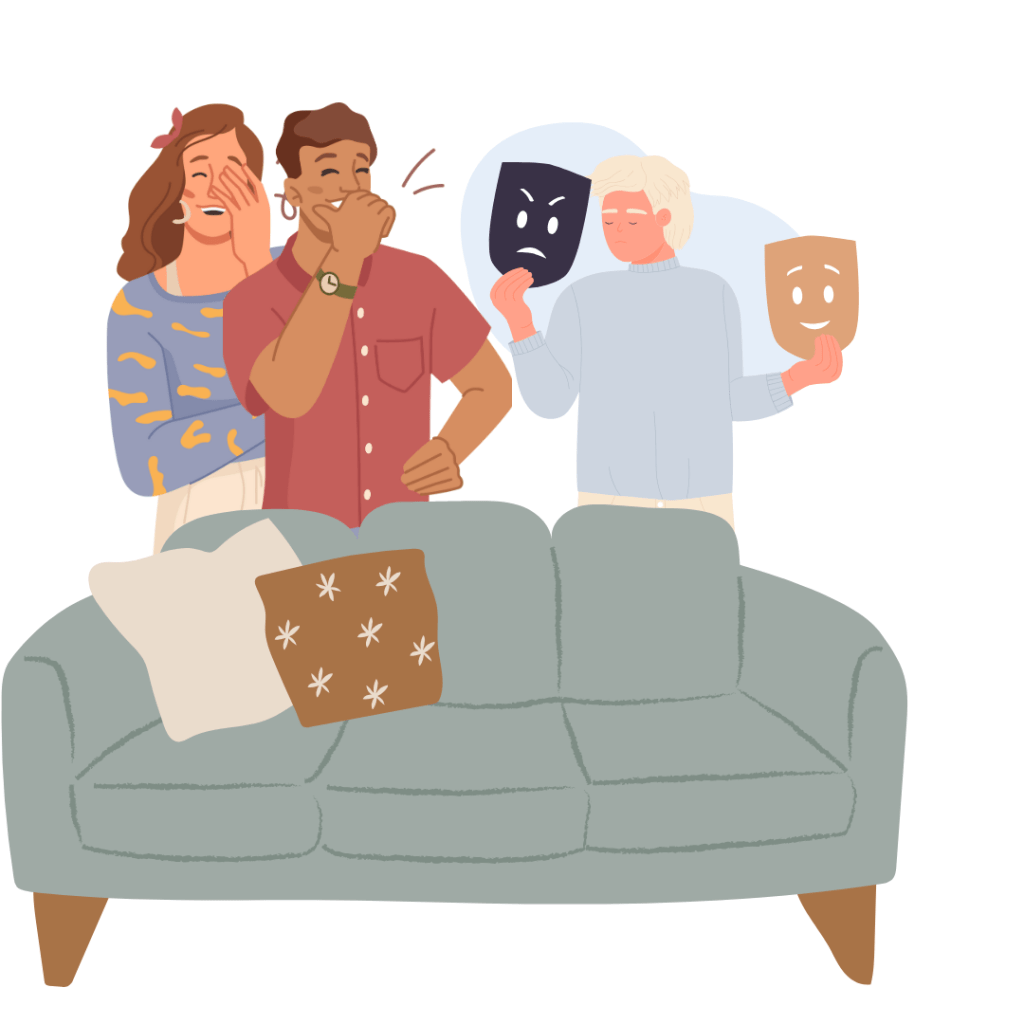
Hey there, laughter junkies! Ever wonder why that ridiculous meme or goofy joke makes you feel like you just hit the jackpot? If you’re dealing with bipolar disorder, autism, ADHD, or just need a good chuckle, you’re in for a treat. Let’s break down why humor and belly laughs aren’t just for TikTok dances—they’re scientifically proven mood boosters that can change your life. And yes, we’ll keep it as entertaining as a tickle fight at a pajama party!

1. Laugh Your Way to a Better Mood

Picture your brain as a social club with two main sections: the “Party Zone” and the “Stress Central.” When you laugh, you’re basically getting VIP access to the Party Zone.
Here’s the scoop:
The Science Bit: Laughter releases endorphins, those magical little chemicals that make you feel all warm and fuzzy inside.
Think of them as your brain’s version of confetti—it’s like a mini celebration of joy.
The Funny Twist: So, next time someone cracks a joke, just remember: your brain is throwing a tiny party in your honor. It’s like having a party planner who never runs out of snacks or energy!

2. Stress? More Like Jest!

Ever noticed how a good laugh can make your worries seem like a joke? That’s because laughter is a natural stress-buster.
The Science Bit:  When you laugh, your body lowers cortisol levels, the stress hormone. It’s like having a built-in stress shield that deflects worries and boosts your overall sense of well-being.
The Funny Twist: If stress was a villain, laughter would be your superhero cape. Imagine your worries being sent flying by a tidal wave of giggles. Who knew saving the day could be this much fun?

3. Laughing is Like a Full-Body Workout

Believe it or not, laughing actually gives your body a mini workout.
The Science Bit: Laughing engages your diaphragm, abs, and even your heart. It’s like cardio without the sweat—unless you’re laughing so hard you snort!
The Funny Twist: So, forget the gym for a moment. Just watch a funny movie or read a joke book and let those giggles be your exercise routine. It’s the only workout where you can sit on the couch and still feel like a champ!

4. The Social Magic of Laughing

Humor isn’t just a solo act; it’s also about connecting with others. And for those with autism, ADHD, or similar conditions, this can be a game-changer.
The Science Bit: Shared laughter strengthens social bonds and improves communication. It’s like having an invisible bridge that connects you to others, making interactions smoother and more enjoyable.
The Funny Twist: Think of it as having universal “friendship glue” that sticks people together. One joke at a time, you’re building a network of chuckles and camaraderie. (Love builds the bridge but its paved with jokes anyway)

5. A Natural High That’s Always Available

One of the best things about laughter is that it’s free and always on tap.
The Science Bit: Laughter enhances overall emotional resilience. It’s like having an emotional Swiss Army knife that’s always ready to handle life’s ups and downs.
The Funny Twist: So, if life hands you lemons, just laugh and turn those lemons into lemonade—extra sweet with a side of giggles!

6. For Bipolar Disorder: Laughter as a Mood Stabilizer

Laughter can be particularly helpful for those managing bipolar disorder.
The Science Bit: During the highs and lows, laughter provides a grounding effect, helping to balance mood swings. It’s like having a funny friend who keeps you steady.
The Funny Twist: Imagine laughter as your mood’s personal GPS—guiding you smoothly from “Whoopee!” to “Phew, that was intense!” without losing your way.

In Conclusion

Laughter isn’t just a reaction; it’s a powerful tool for improving mental health and well-being. From reducing stress and boosting mood to enhancing social connections and offering a full-body workout, humor really is the best medicine. So go ahead, indulge in those silly jokes, funny videos, and laugh-out-loud moments. Your brain, body, and even your social life will thank you for it! Cat videos have saved my life on more than one occassion.
Remember: life might not always be a laugh riot, but finding the humor in it makes the ride a lot more enjoyable. So, grab your favorite comedy and let those laughs fly. After all, happiness is just a chuckle away!

Uncategorized

Balancing Creativity and Risk

Living with ADHD brings its own set of challenges, from struggling with focus and organization to navigating daily tasks. However, one often overlooked aspect of ADHD is impulsivity—a trait that goes beyond mere spontaneity and can significantly impact decision-making, finances, and relationships. When paired with bipolar disorder and its manic phases, impulsivity takes on an even more complex dimension, swinging between moments of exhilarating creativity and potentially risky behavior. The bounce between the extremes can be exhausting.

ADHD impulsivity is like having a toddler at the wheel of your decision-making process. “Ooh, shiny!” becomes your life motto as you navigate a world full of temptations and distractions. Your bank account? A magical place where money disappears faster than your ability to remember why you walked into a room. Relationships? A thrilling game of “How Many Foot-in-Mouth Moments Can I Have Today?” If you are me, the answer is usually ALL OF THEM. Add bipolar mania to the mix, and suddenly you’re not just impulsive – you’re impulsive with a side of “I can conquer the world in my underwear!”

When bipolar mania crashes the ADHD party, it’s like your brain decided to upgrade from espresso to rocket fuel. Suddenly, every half-baked idea seems like pure genius. “Start a llama farm in the Arctic? Brilliant!” (This sent me on a side quest to see if there were llamas in the Arctic, from what I’m reading, the answer is yes?) Your creativity skyrockets, and for a brief, glorious moment, you’re convinced you’re the love child of Einstein and Picasso.The problem? That fine line between “creative genius” and “holy shit, what was I thinking?” becomes blurrier than your vision after a tequila binge.

In everyday life, impulsivity can lead to financial troubles as individuals with ADHD may overspend on fleeting desires or fail to budget effectively. Relationships can suffer due to impulsive outbursts or decisions that strain trust and communication. Professionally, impulsivity may result in missed deadlines or unfinished projects as focus shifts rapidly from one idea to another. During manic episodes, the intersection of impulsivity and creativity becomes pronounced. Mania is characterized by heightened energy, racing thoughts, and inflated self-esteem—traits that, when combined with ADHD impulsivity, can fuel bursts of creativity and productivity. During these times, individuals may feel invincible, generating innovative ideas and pursuing ambitious projects with fervor and enthusiasm.

Mania can lead to moments of brilliance in artistic endeavors (really! just by sheer volume of things running through my head. its a numbers game, one of them is the magic, we just gotta find it), entrepreneurial ventures, or academic pursuits. The ability to think outside the box and take risks can result in breakthrough innovations and unconventional solutions. Many creative geniuses throughout history are believed to have had traits associated with ADHD and bipolar disorder, harnessing their unique neurodivergent perspectives to reshape art, science, and culture.

However, the flip side of this creative dynamism is the potential for risky behavior. Impulsivity during manic episodes can lead to reckless spending, engaging in unsafe activities, or making decisions with far-reaching consequences. The euphoria and grandiosity of mania may obscure the risks involved, leading individuals to disregard caution and endanger their well-being or the stability of their relationships.

Managing impulsivity in the context of ADHD and bipolar disorder requires a multifaceted approach.

Navigating the Chaos: Tips for the Creatively Unhinged:

  1. Embrace the Madness (But Maybe Wear a Helmet): Your brain’s unique wiring is a superpower and a curse. Use it to create, innovate, and occasionally freak out the normies.
  2. Find Your Kryptonite Crew: Surround yourself with people who’ll admire your genius but also gently remind you that, no, you can’t actually fly.
  3. Therapy: Because Sometimes You Need a Professional to Tell You You’re Not Actually Losing It
  4. Medication Roulette: Work with your doc to find the right cocktail of meds. It’s like playing pharmacological Jenga, but with your sanity! This is one of my most hated things, I do not enjoy this one, because medication wears off, our bodies have minute chemical differences so what works for you might not work for others and vice versa. Sometimes the side effects cancel out the benefits.
  5. Impulse Control Hacks: Implement a 24-hour rule for big decisions. If it still seems like a good idea after a day, maybe it’s not just the mania talking.

Remember, fellow chaotic creatives, you’re not broken – you’re just operating on a different frequency. A frequency that sometimes leads to groundbreaking ideas and other times to wondering why you thought skydiving without a parachute was a solid plan.

So embrace your wild, impulsive, manic-creative self. Just maybe keep the receipts for those 3 AM purchases, yeah? ‘Oh Look! George!’

Disclaimer: This blog post is not a substitute for actual medical advice. Please consult a professional before making any life-altering decisions, especially if they involve llamas or Arctic real estate. Til next time gang, take care of yourself, and each other!
‘No George, we absolutely do NOT need an Alpaca, I don’t care how good of a deal you can get.’

DAMN IT. Meet Lenny, he’s fancy.