Uncategorized

When My Brain Checks Out: Dissociation, Explained Gently

There are moments when I’m technically awake, technically functioning, but not really here.

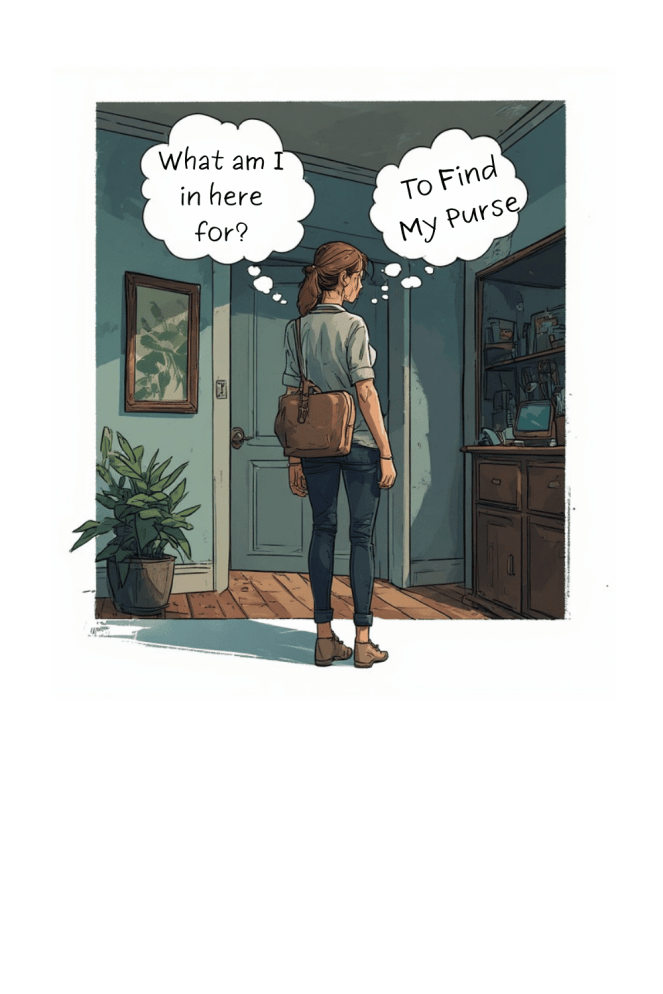
I’ll be mid-sentence and lose the sentence. Mid-thought and lose the thought. Mid-day and suddenly it’s hours later.

That’s dissociation — and it’s a lot quieter, weirder, and more common than people think.

This isn’t a dramatic shutdown. It’s not a panic attack. It’s not giving up.

It’s my nervous system quietly saying: this is too much right now.

What Dissociation Actually Feels Like

Not the textbook version. The real-life one.

  • My body keeps going, but my brain feels like it stepped out for coffee.
  • Sounds feel slightly delayed, like everything is happening behind glass.
  • Emotions flatten — not sad, not calm, just muted.
  • I forget what I’m saying while I’m saying it.
  • Time skips. Ten minutes disappears. Sometimes an hour.

It doesn’t feel scary in the moment — it feels empty. And that’s often what makes it unsettling afterward.

Why It Happens (No Jargon, I Promise)

Your brain has two big jobs:

  1. Keep you alive
  2. Process information and feelings

When stress, pain, trauma, sensory overload, or emotional pressure stack too high, the brain makes a call:

So it pulls back.

Less sensation. Less emotion. Less memory formation.

This isn’t a flaw. It’s a conservation strategy.

How to Gently Come Back (Without Forcing It)

Dissociation doesn’t respond well to yelling at yourself to focus.

It responds to safety cues.

1. Start With the Body

Thinking your way out rarely works — the body has to go first.

  • Press your feet into the floor and notice the pressure
  • Wrap up in a hoodie or blanket (weight helps)
  • Hold something textured: a mug, fabric seam, stone

Feeling your body is the bridge back.

2. Use Temperature as a Reset

Temperature changes speak directly to the nervous system.

  • Splash cool water on your face
  • Hold something warm or cold in your hands
  • Step outside for fresh air if you can

You’re telling your body: we’re here, and it’s now.

3. Name What’s Happening

No analysis required.

Quietly acknowledging it helps reduce fear:

  • “I’m dissociating right now.”
  • “My system is protecting me.”
  • “I don’t have to fix this — just notice it.”

Naming brings orientation without pressure.

4. Ground Through One Sense (Not Five)

Sometimes the classic five-senses exercise is too much.

Try just one:

  • Sight: name one color you can see
  • Sound: listen for the furthest noise you can hear
  • Touch: rub your thumb across your fingers slowly

Simple works better than intense.

5. Externalize Memory When Words Slip

If thoughts are falling through trapdoors:

  • Write a single keyword
  • Record a 10‑second voice memo
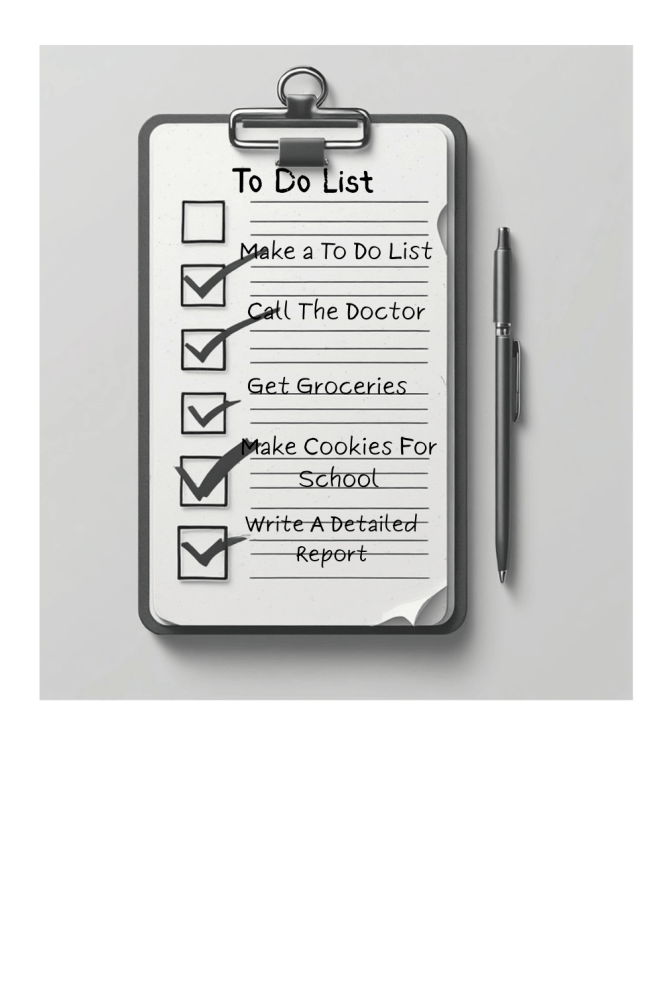
  • Text yourself: “brain offline — continue later”

This isn’t failure. It’s accommodation.

Aftercare Matters More Than You Think

When dissociation fades, what often shows up next is shame.

Why can’t I just stay present?

But dissociation means something was already overwhelming.

The kind response is not pushing harder — it’s softer transitions:

  • water
  • food
  • low stimulation
  • rest

You don’t need to earn recovery.

One Last Thing

Dissociation doesn’t mean you’re bad at coping.

It usually means you’ve coped a lot.

Your nervous system learned this because it once helped you survive.

Now you’re teaching it that there are other safe options too.

And that learning takes time.

Gentle time. Til next time gang, take care of yourselves, and each other.
Uncategorized

Things I Learned the Hard Way (A Fact-Based Rant) BTW This is post 200!

I used to think my body malfunctioning was a personal flaw.
Turns out it’s mostly biology reacting to stress and occasionally filing a formal complaint.

Here’s what’s actually happening — and what helps a little.


1. Stress Steals Memory Access

Fact: Cortisol suppresses the hippocampus, the brain region responsible for forming and retrieving memories.

Translation: The information is still there. Stress just locked the door.

What helps:

  • Write it down immediately (notes app, scrap paper, hand, whatever)
  • Say it out loud once — verbal encoding helps retrieval
  • Reduce decision load where possible (same routines, fewer choices)

2. Cold Weather Makes Pain Louder

Fact: Cold increases nerve sensitivity and muscle stiffness while reducing blood flow.

Translation: Winter doesn’t create new pain. It turns the volume knob up.

What helps:

  • Pre-warm before moving (heated blanket, warm shower, heating pad)
  • Layer before you feel cold — not after
  • Gentle movement > total stillness (even tiny stretches count)

3. Writing Things Down Works Even If You Never Read It Again

Fact: Writing engages motor, visual, and language centers, strengthening memory encoding.

Translation: Your brain remembers better when your hands are involved.

What helps:

  • Write while someone is talking to you (yes, even mid-sentence)
  • Use ugly notes — perfection kills follow-through
  • One notebook or app only (scattered systems cancel each other out)

4. Stress Interrupts Thoughts Mid-Sentence

Fact: High cognitive load disrupts working memory and verbal recall.

Translation: Your thought didn’t disappear. It got stuck in traffic.

What helps:

  • Pause instead of apologizing — the thought often comes back
  • Say “hold on” and take one breath (literally one)
  • Jot down keywords, not full sentences

5. Your Brain Uses Food as Fuel and a Clock

Fact: Irregular eating can destabilize blood sugar, affecting attention and recall.

Translation: Skipping meals doesn’t just make you hungry — it makes your brain unreliable.

What helps:

  • Eat something at the same time daily (even if it’s small)
  • Pair eating with a routine you already do
  • Low-effort calories count — fed is better than ideal

6. Fatigue and Forgetfulness Share a Nervous System

Fact: Chronic fatigue alters neurotransmitters and executive function.

Translation: “I’m tired” and “I can’t think” are often the same sentence.

What helps:

  • Stop pushing for clarity when exhausted — it won’t come
  • Plan important thinking for your best energy window
  • Rest without guilt; recovery is not optional maintenance

Closing Thought

None of this is a character flaw.
It’s a nervous system under prolonged stress doing its best with limited resources.

Coping doesn’t mean fixing it.
Sometimes it just means making today slightly less hostile.
Til next time guys, take care of yourselves, and each other!

Uncategorized

The Quiet Depression No One Warns You About After the Holidays

The holidays end, and everyone else seems to bounce back into life like it was all just a brief inconvenience. Decorations come down. Resolutions go up. People start talking about productivity and “fresh starts.”

There’s a strange sadness that settles in after the holidays — not dramatic, not loud, just heavy. The excitement is gone, the lights are packed away, and spring feels like a rumor someone made up to be polite.

Meanwhile, I’m standing in my kitchen staring out the window at gray trees, wondering how many months it is until I can touch dirt again. The holidays were made for family so when you are missing part of your family, you begin to question ever feeling anything other than this ever. Some days the hardest part isn’t missing them — it’s wondering if the version of me who was their mom actually existed.

This stretch of time — from after the holidays until the world thaws out — hits a lot of people harder than we admit. Shorter days mean less sunlight, which affects serotonin and melatonin levels in the brain. That shift alone can mess with mood, energy, and sleep. It’s one of the reasons Seasonal Affective Disorder (SAD) tends to peak in late winter, not December when everyone expects it.

But even without a formal diagnosis, this season can still feel emotionally brutal.

It’s the letdown after months of buildup.
The loss of structure.
The quiet after forced togetherness.
The waiting.

Everyone talks about January as a reset, but for some of us it’s more like limbo. Not moving forward. Not moving back. Just stuck — watching other people carry on while we tread emotional water.

I’m not drifting, I’m not drowning — I’m stuck treading water, burning energy just to stay here.

What makes this season especially isolating is that it doesn’t look like depression the way people expect. You’re still functioning. Still showing up. Still doing what needs to be done. You just feel… dulled. Unmotivated. Sad without a clean reason.

And because nothing is technically wrong, it’s easy to tell yourself you should be fine.

But this isn’t a personal failure. It’s a seasonal one.

Human beings aren’t designed to thrive in months of darkness, cold, and waiting. We’re meant to move, to grow things, to be outside doing something that feels alive. When that gets taken away, it leaves a very real emotional gap.

So if you’re struggling right now, you’re not weak.
You’re not ungrateful.
You’re not broken.

You’re just in the long, quiet middle — the part no one puts on a calendar.

And sometimes the only goal isn’t happiness. It’s getting through this season gently enough to meet yourself again when the light comes back. This is the year I stop treading water, I will start swimming again. Til next time gang, take care of yourselves, and each other