Uncategorized

Things I’ve Googled at 2 AM: A Greatest Hits Collection

Welcome to the dark underbelly of my internet search history – that beautiful, chaotic wasteland where insomnia meets ADHD curiosity and good judgment goes to die. If Google keeps receipts (and let’s be honest, they absolutely do), then I’m pretty sure I owe them an apology and possibly therapy fees.

For those blessed neurotypical souls who can actually fall asleep at reasonable hours, let me explain what happens in the 2 AM Google zone: it’s where rational thought meets hyperfocus, and somehow you end up three hours deep in research about whether penguins have knees. Spoiler alert: they do, and now I know more about penguin anatomy than any reasonable adult should.

The Medical Anxiety Spiral

Let’s start with the classics – those searches that begin with a minor bodily concern and end with me mentally writing my will:

  • “why does my left eyelid twitch”
  • “is eye twitching a sign of brain tumor”
  • “brain tumor symptoms”
  • “how long do you live with undiagnosed brain tumor”
  • “can stress cause fake brain tumor symptoms”
  • “how to tell if you’re being dramatic about health symptoms”

This particular rabbit hole usually ends with me either completely convinced I’m dying or completely convinced I’m a hypochondriac, with no middle ground available. WebMD is not your friend at 2 AM, people. WebMD at 2 AM is that friend who tells you your headache is definitely a rare tropical disease even though you live nowhere near water and haven’t left your house in three days.

The Parenting Panic Searches

Nothing quite like teenage behavior to send you spiraling into the depths of Google at ungodly hours:
  • “is it normal for 16 year old to sleep 14 hours”
  • “how much attitude is normal for teenager”
  • “signs your teenager actually hates you vs normal teenage behavior”
  • “how to communicate with teenager who speaks only in grunts”
  • “when do teenagers become human again”

The best part about these searches is that every parenting forum has exactly two types of responses: “totally normal, you’re doing great!” and “this is a red flag, call a professional immediately.” There’s no middle ground in internet parenting advice, which is super helpful when you’re already spiraling at 2 AM.

The Random Life Questions That Consume My Soul

This is where things get weird. These are the searches that start nowhere and go everywhere:
  • “how do they get ships in glass bottles”
  • “what happens if you never cut your fingernails”
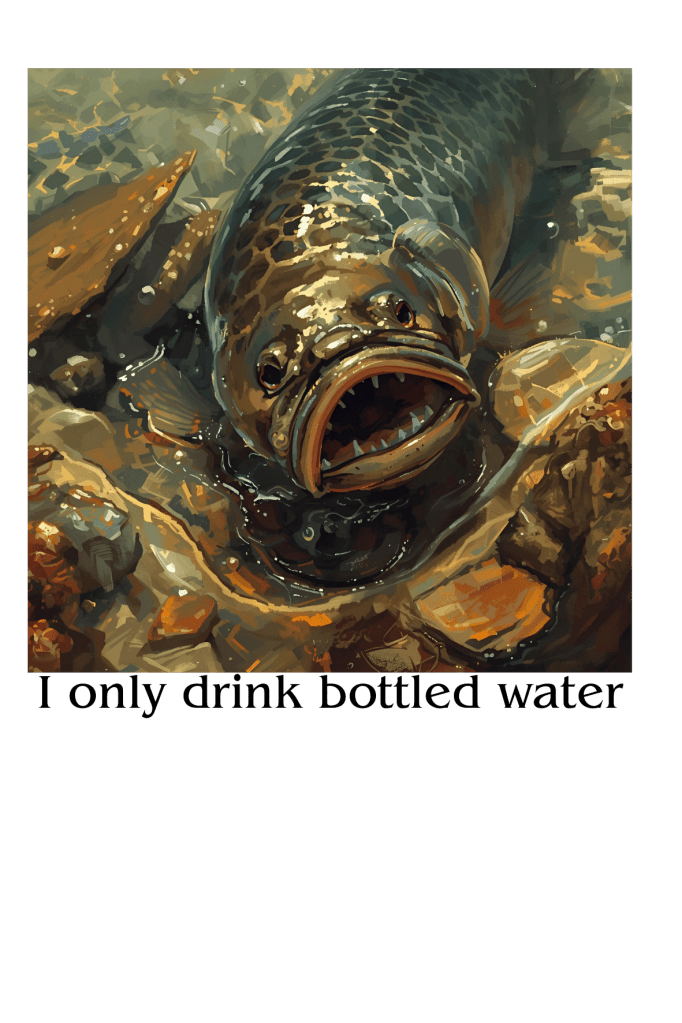
  • “do fish get thirsty”
  • “why do we say ‘after dark’ when it’s still light after dark in summer”
  • “how many people are named Steve in the world right now”
  • “what’s the oldest living thing on earth”
  • “can you die from lack of sleep”

That last one usually comes up around hour four of my insomnia adventures, when I’m googling whether my inability to sleep is actually going to kill me. The internet has mixed opinions on this, which is not reassuring when you’re already not sleeping.

The Organizational Fantasy Research

These searches represent my eternal optimism that the right system will finally fix my chaotic life:

  • “best planner for ADHD brain”
  • “bullet journaling for beginners”
  • “how to organize small spaces”
  • “Marie Kondo method actually work”
  • “minimalism with ADHD”
  • “organization systems that actually work for messy people”

I’ve researched more organizational systems than I’ve actually implemented, which tells you everything you need to know about how this usually goes. But hey, at 2 AM, I’m always convinced that THIS system will be the one that changes everything.

The Philosophical Crisis Questions

When the insomnia really sets in and I start questioning the nature of existence:

  • “what is the point of life”
  • “are we living in a simulation”
  • “do other people think in words or pictures”
  • “is everyone else just pretending to have their life together”
  • “what happens to consciousness when you die”
  • “why do humans need meaning in life”

These usually pop up around 3 AM when my brain decides that sleep is for quitters and existential dread is the only logical response to being awake this long.

The Wikipedia Rabbit Holes
These start with one innocent click and end with me knowing way too much about completely random topics:

Starting search: “what year was the microwave invented” Six hours later: I’m an expert on the history of food preservation, the science of radiation, and somehow the entire genealogy of the inventor’s family tree.

Starting search: “why do cats purr” Final destination: A comprehensive understanding of feline evolution, big cat behavior in the wild, and the physics of sound vibration.

The “Do Normal People…” Medical Questions

These are the searches I’m too embarrassed to ask my actual doctor about:

  • “is it normal to talk to yourself out loud”
  • “how often should normal people shower”
  • “what does a normal sleep schedule look like”
  • “do normal people remember their dreams”
  • “how much coffee is too much coffee per day for a normal person”

The irony is that I have an actual doctor I could ask these questions, but somehow googling them at 2 AM feels less judgmental than admitting to a medical professional that I don’t know what constitutes normal human behavior.

The Conspiracy Theory Adjacent Searches
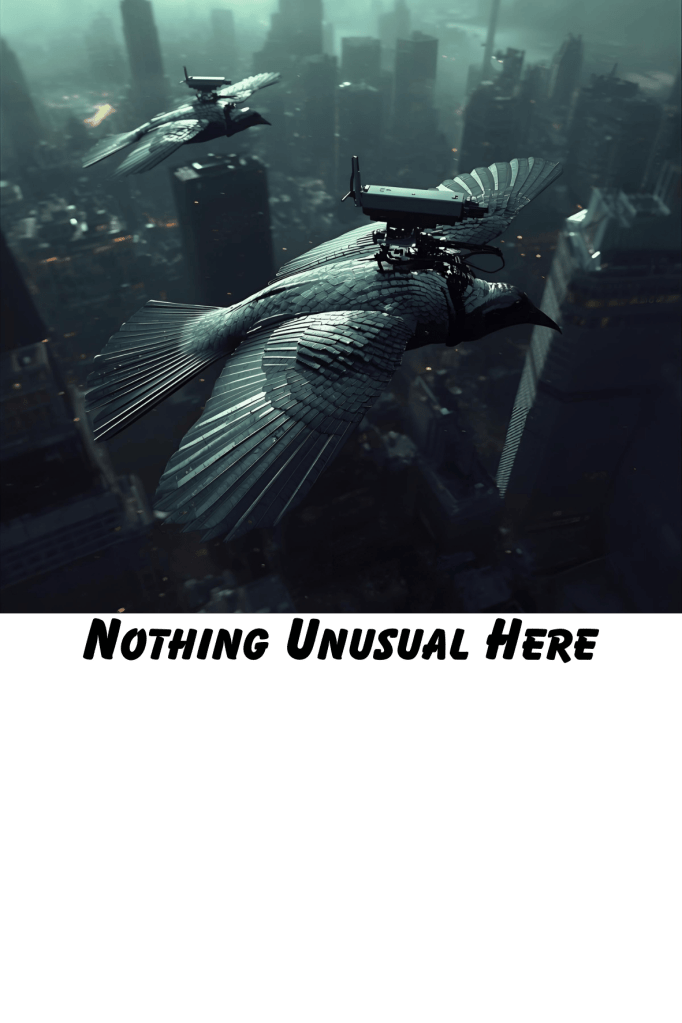
I’m not saying I believe in conspiracy theories, but 2 AM me is definitely more open to alternative explanations for things:

  • “why do all mattress stores seem empty but stay in business”
  • “do birds actually exist or are they government drones”
  • “what’s really in hot dogs”
  • “why do all celebrities look younger than their age”
  • “are we alone in the universe”

These searches usually happen when I’ve been awake too long and my critical thinking skills have left the building. Daylight me reads these search histories and wonders what the hell nighttime me was thinking.

The Conclusion I Never Reach

The beautiful thing about 2 AM Google spirals is that they never actually end with answers – they just end with exhaustion or the sudden realization that it’s somehow 5 AM and I have to be functional in three hours.

I’ve learned more random facts from insomnia-driven research than from college, but I couldn’t tell you how any of it connects or why I needed to know that octopuses have three hearts at 2:30 in the morning.

The real kicker? I’ll do it all again tonight, because apparently my brain believes that this time will be different. This time, I’ll find the perfect solution to all of life’s problems hidden somewhere in the depths of the internet.

Spoiler alert: it’s usually just more questions and the growing realization that humans are weird, life is complicated, and I should probably just go to sleep.

But first, let me just quickly Google why I can’t fall asleep… Til next time gang, take care of yourselves, and each other!
Uncategorized

Hyperfixation Cuisine: A Love Story

When food is your ride-or-die for two weeks… until it ghosts you.

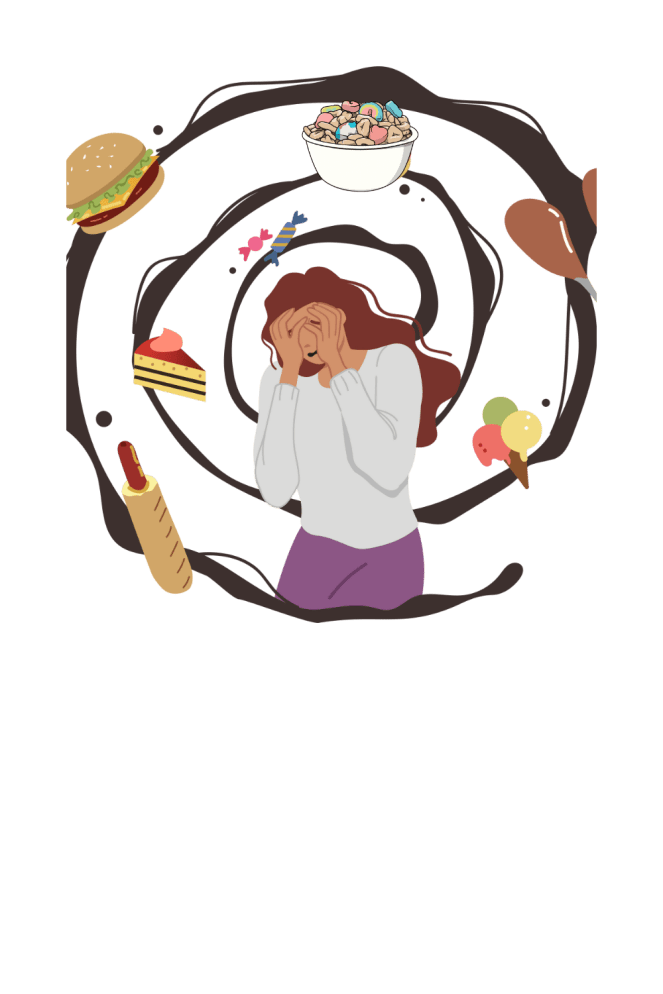
I don’t fall in love often—but when I do, it’s usually with a snack. A drink. A cereal. A very specific sandwich from one very specific place that I will eat exclusively for 14 days straight like it holds the secrets of the universe and contains all the nutrients my body will ever need. During these passionate food affairs, I become a creature of pure obsession—calculating how many times per day I can reasonably consume my chosen item without judgment, researching the optimal preparation methods, and feeling genuinely excited about meal times in a way that probably isn’t normal for a grown adult. I’ll stock up like I’m preparing for the apocalypse, filling my cart with multiples of the same item while cashiers give me curious looks that I interpret as admiration for my decisive shopping skills. And then? I ghost. Cold turkey. No warning, no closure, no gradual tapering off—just me and my shame in aisle 5, pretending I never knew that Creamsicle shake, avoiding eye contact with the 47 cans of soup I can no longer stomach, and wondering why my brain treats food like a series of intense but doomed romantic relationships.

What Is Hyperfixation Cuisine?

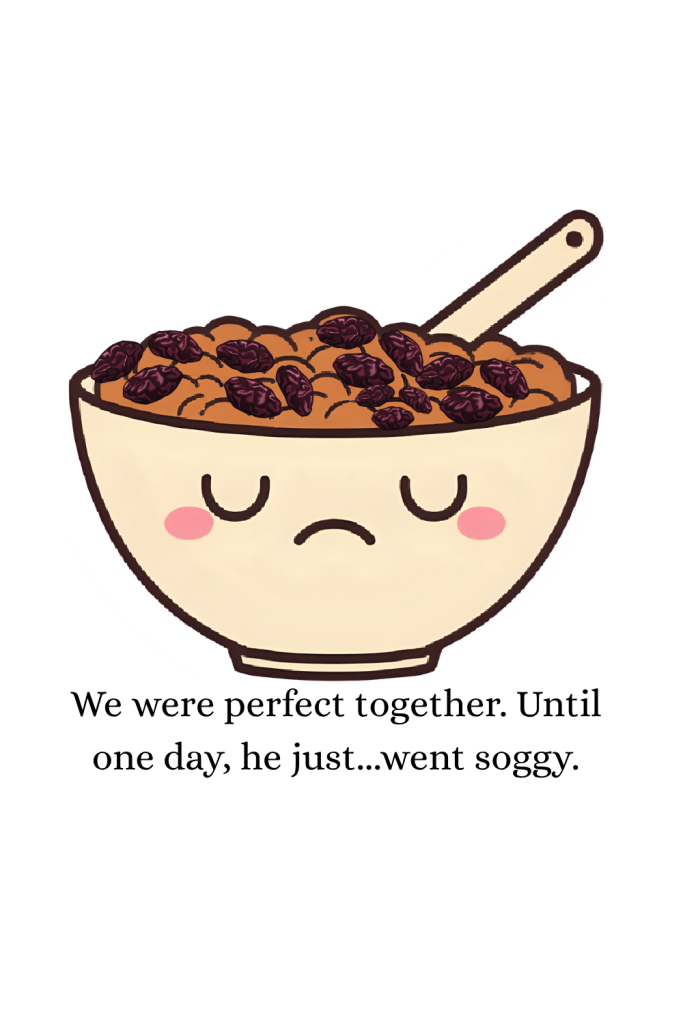
It’s the culinary equivalent of a summer fling. You’re obsessed. You plan your day around it. You talk about it to anyone who will listen (and a few who won’t). You buy in bulk. And then one morning, like a cursed love spell wearing off, it’s done. You’re left with a pantry full of raisin bran and the haunting echoes of a snack you no longer want to eat.

Neurodivergent folks—those of us with ADHD, autism, or both—know this dance well. It’s not a food phase; it’s a full-blown romantic arc.

And science backs us up!

Let’s sneak in some facts while we laugh about it:

Nutritionists would say variety is key. But also? Survival. Joy. Convenience. These are not small things. And if eating the same 3 things on rotation keeps your body going through a rough patch? That’s not failure—that’s strategy.

Plus, it always changes eventually. Usually when you least expect it. Often mid-bite.

Honestly? Laugh. Embrace it. Maybe write a heartfelt goodbye letter to your former food flame. (“Dear Bagel Bites, we had some good times. I’m sorry I abandoned you half-eaten in the freezer door.”)

You don’t have to force variety or shame yourself for what your brain finds comforting. Just make sure you stay fed, hydrated, and somewhat functional. And if one day you find yourself suddenly obsessed with cucumbers in vinegar, just know: you’re not alone.


What was your last food fling? Let me know so I don’t feel like the only one who once ate eleven bowls of raisin bran in one week.

And to all the forgotten snacks still lurking in my pantry…
I loved you once. I swear I did, lol. Til next time gang, take care of yourselves

Uncategorized

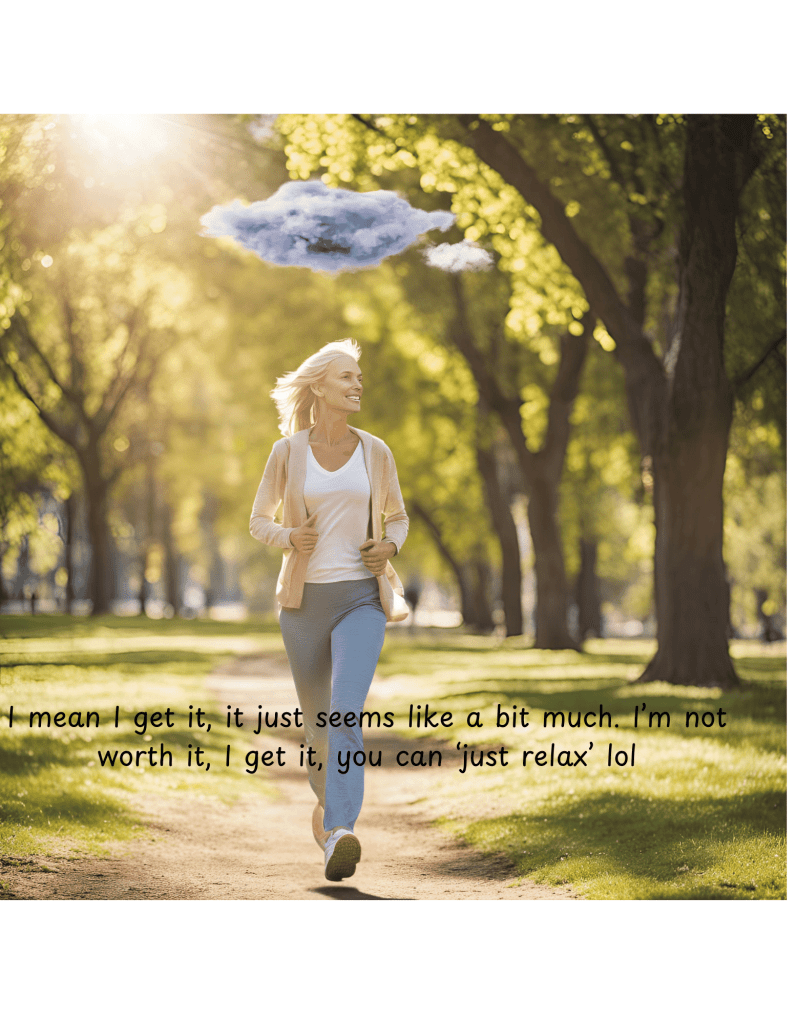
Why Telling Someone with Anxiety to ‘Just Relax’ Doesn’t Help—and What Actually Works

In today’s fast-paced world, we’re constantly flooded with news from every direction—social media, TV, podcasts, and more. It can feel impossible to escape the nonstop flow of information, and for many, this leads to increased anxiety. As someone navigating a neurodivergent mind, I often struggle with how to handle this overwhelming surge of news. I always have. I remember my first existential crisis thought. I asked my Mom what happens when you die and while I don’t remember her reply the feeling of ice down my spine is burned into my soul. I was eight.

When anxiety levels rise due to the relentless news cycle, well-meaning friends and family often offer the same advice: “Just relax” or “Take a break from the news.” While this may sound simple and straightforward, it can feel dismissive to those of us who experience anxiety or ADHD. The implication is that we can simply switch off our feelings and concerns with a flick of a switch. I get the impulse to say it, it comes to mind for us too. Do you think I am not SCREAMING at myself on the inside to just relax? Did you think thats not a thought that has occurred to me in multiple scenarios in my life, NOTHING coming from my rational adult mind is saying lay on the floor in the fetal position and remember every single thing that could go wrong in life, and then here we are.

For many neurotypical individuals, taking a break from the news or engaging in self-care activities can be effective strategies for managing stress. They might find that stepping away from their screens allows them to recharge and regain perspective. This approach can help them feel more grounded and less affected by external chaos. I’ve seen the methods everyone has suggested work, a lot worked well with people I knew to have heightened anxiety, I have SEEN the benefits.

However, for those of us who are neurodivergent, the situation is often more complex. The advice to “just relax” can feel like a foreign language when our brains are wired differently. Anxiety can manifest as racing thoughts or an inability to focus on anything other than the distressing information we consume. This makes it challenging to simply “turn it off.”

For many neurodivergent individuals, there’s a compulsion to stay informed about current events—often driven by anxiety about missing crucial information. This need can lead to excessive news consumption, where checking updates becomes a ritual rather than a choice. Ironically, this behavior can exacerbate feelings of distress rather than alleviate them. Like I GET that the room is on fire, I can feel the heat of it, and you are RIGHT that the room will be on fire whether I’m looking at it or not, HOWEVER if I’m not looking at it how do I know if a spark will land on me. (That metaphor works on multiple levels, my high brain is giving itself a high five lol)

Hyperfixation is another common experience for those with ADHD or anxiety. When something captures our attention—like a troubling news story—we may find ourselves fixated on it for hours or even days. This rumination can lead us down a rabbit hole of worry and fear, making it difficult to engage in other activities or enjoy moments of peace. It follows you whether you want it to or not any the second you relax that control just a little in your mind the bad thoughts have the clearance they need to invade.

The sensory overload created by constant notifications and alerts can further complicate our ability to cope with anxiety. The barrage of sounds and visuals can feel overwhelming, leading to heightened stress levels and an increased sense of panic. It’s as if our brains are on high alert all the time, making relaxation nearly impossible.

Interestingly, the advice to avoid news altogether can create its own set of challenges. For some neurodivergent individuals (myself included) , avoiding distressing information doesn’t eliminate anxiety; instead, it may lead to increased worry about what we might be missing out on or how we might be unprepared for future events. If I don’t know whats coming at me how can I prepare for the inevitable pop up derailments that follow me around like a rain cloud.

The phrase “just relax” often comes from a place of care but can feel frustrating and invalidating for those dealing with anxiety or ADHD. It minimizes the complexity of our experiences and implies that we lack control over our emotions when, in reality, we’re navigating a much more intricate landscape. On top of that it makes me want to look at them and say ‘REALLY? OMG YOU’RE RIGHT THATS THE ANSWER! Thank you SO much now I am cured’

Ultimately, it’s essential for friends, family members, and healthcare providers to recognize that everyone experiences anxiety differently. Acknowledging these differences can foster better communication and support systems that allow neurodivergent individuals to express their needs without feeling judged or misunderstood.

Strategies to Help:

  1. Mindful Media Consumption: Set specific times during the day when you check the news instead of allowing it to infiltrate every moment.
  2. Curate Your Information Sources: Choose reliable sources that provide balanced reporting without sensationalism.
  3. Practice Grounding Techniques: Techniques like the 5-4-3-2-1 method (identifying five things you see, four things you hear, etc.) can help anchor you in the present.
  4. Engage in Absorbing Activities: Pursue hobbies that require focus—like painting or reading—to provide a healthy distraction from distressing thoughts.
  5. Seek Support: Talk openly with understanding friends or mental health professionals who respect your experiences and offer guidance tailored to your needs.

There’s little we can do for much of life beside hang on for the ride but distraction can work wonders. I throw myself into finding the best deals. My mind hasnt quieted enough to help me read which is my favorite down time activity, thoughts are too loud for the book words to penetrate the frustrating shell over my brain. Hang in there guys, lets build a community of people who listen and support rather than rush to judge. I’m always happy to hear what helps for you guys, lets share strategies! Til next time gang. Take care of yourselves, and each other.