Uncategorized

The Great Household Item Hide & Seek (and the Conversations I’ve Had With Myself While Looking for Them)

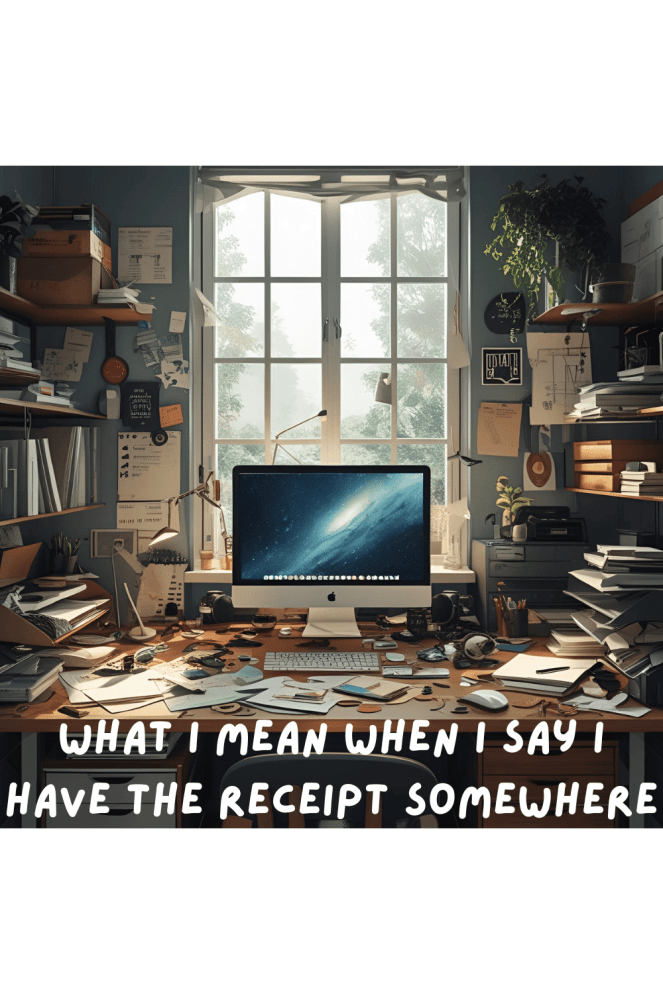
You know how some people lose themselves in books or meditation? Yeah, not me. I lose myself in a daily game of hide & seek with my household items. Keys, phones, socks, remotes, pens — all apparently sentient and united in their mission to make me look ridiculous.

What makes it worse? The conversations I have with myself while I’m searching. Spoiler: I’m both the villain and the detective, and I’m never kind to myself in either role.

Here’s a peek into the thrilling mysteries that unfold in my home:


🧦 The Missing Socks Saga

One sock left in the dryer, the other AWOL.

Me: “Did I put this in the laundry?”
Also me: “Nope, it was definitely in the drawer.”
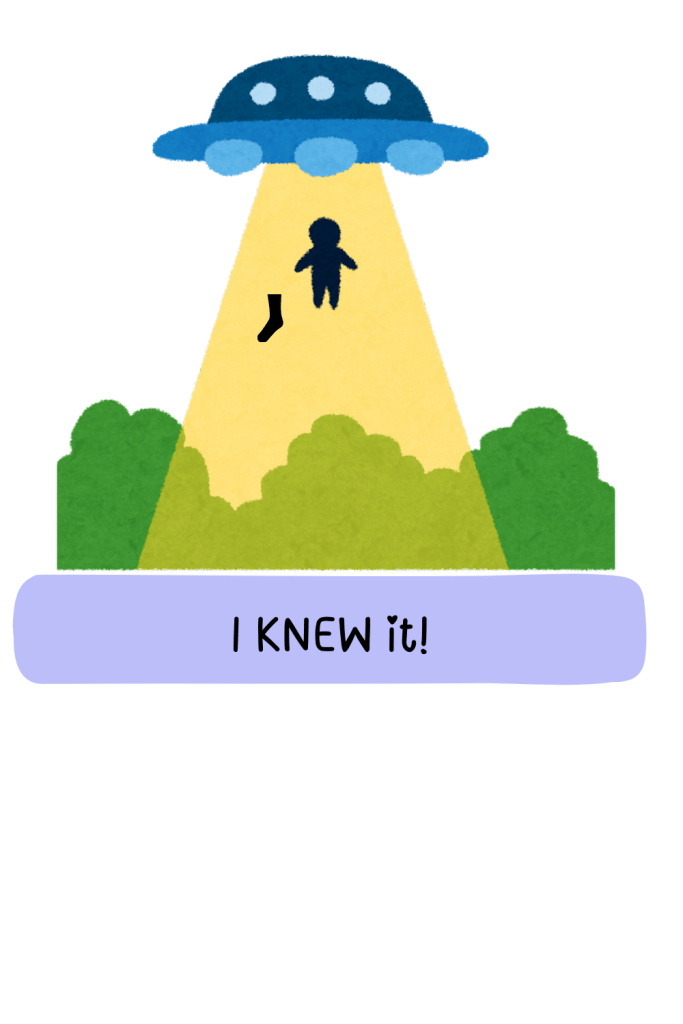
Me: “So… abducted by aliens?”
Also me: “Or maybe it’s sipping espresso in Paris while you walk around like a mismatched peasant.”

Result: I usually find it way too late — after my daughter has cut it into an art project, or the cat has been subjected to a “custom sweater” that was three sizes too small.


📱 The Vanishing Phone Mystery

My phone disappears precisely when I’m already late.

Me: “I know I set it down… somewhere.”
Also me: “Maybe in the fridge? You’ve done worse.”
Me: “I don’t know! I don’t know anything anymore! This is how the chaos wins.”
Also me: “Honestly, you’d be late even if it was taped to your forehead.”


📺 The Remote’s Secret Life

The remote hides in plain sight: under cushions, in laundry baskets, behind the cat.

Me: “This remote is plotting against me.”
Also me: “Yep, it’s basically Loki in plastic form.”
Me: “It knows I want to binge my show. This is betrayal on a molecular level.”
Also me: “Face it, the remote has stronger boundaries than you do.”


✨ Bonus Round – The Usual Suspects

Pens that vanish. Hair ties that escape. Phone chargers that ghost me like a bad date.

Me: “Is it under the bed, on the counter, or did it grow legs?”
Also me: “Nah, it packed a bag and joined the circus.”
Me: “Fine. I’ll just survive off raw anxiety.”
Also me: “Cool, that’s basically your whole lifestyle brand anyway.”


The Takeaway

Somewhere between yelling at invisible forces and negotiating with the cat, I’ve realized: maybe this is just normal. Maybe everyone’s household is secretly playing hide & seek with their sanity. Also me is a comedy genius lol.

Or maybe I’m just cursed.

Either way, I’m declaring a truce. But first… coffee. Definitely coffee.


Uncategorized

IEPs, Insurance, and Insanity: How the System Sets Disabled Kids Up to Fail

Or: How They Tried to Give My 16-Year-Old Bad Credit Before She Even Gets Good Credit

I’m writing this while I’m still seeing red, because sometimes rage is the only appropriate response to systematic incompetence that targets our most vulnerable children.

My teenage daughter, just received TWO medical bills addressed directly to her. Not even to her, to her NICKNAME. Not to me, her parent and legal guardian. To HER. A minor who cannot legally enter into contracts, cannot vote, cannot even get a credit card, but apparently CAN be held financially responsible for psychiatric appointments that she never consented to pay for.

I’m beyond livid, and here’s why that’s food for thought…

The Legal Facts (Because Rage Needs Receipts)

Let me be crystal clear about what’s happening here, because the healthcare system is banking on parents not knowing their rights:

FACT: In the United States, minors (individuals under 18) are not legally responsible for debts incurred, including medical bills. The responsibility typically falls on parents or legal guardians.

FACT: Requiring a person to pay medical bills accumulated when they were a child is unethical and legally unsound because that child never entered into the contract – their parents did.

FACT: Minors are not authorized by law to enter into financial responsibility agreements with medical care providers.

Yet here we are, with a healthcare billing department that apparently thinks legal precedent is more of a “suggestion” than actual law.

The Double Whammy: IEP Violations Too

But wait, there’s more dysfunction! Not only did they bill my minor child directly, but the school also changed her IEP – removing over 200 minutes of support – WITHOUT any explanation to us as parents.

FACT: Schools must send prior written notice even if a teacher notified you verbally about a change. If the school fails to send you prior written notice, it’s violating the law.
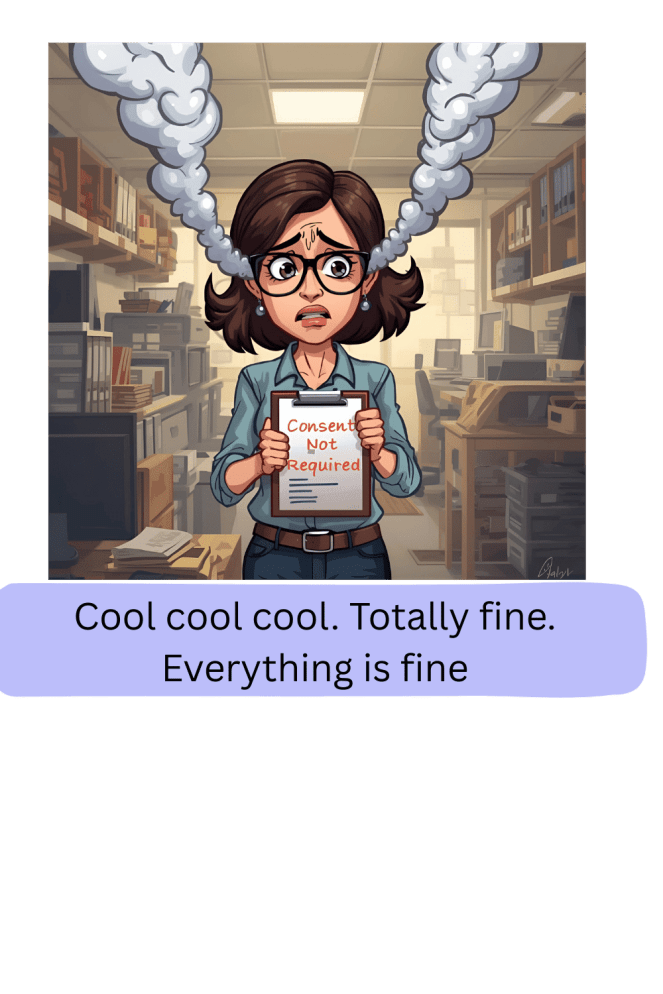
Technically they did this actually to a degree, They dropped the change in my inbox without a single explanation or a shred of guidance if we didn’t agree. Right there at the top, in bold: “We don’t need your consent we’re just letting you know.” (or words to that effect) So I refused to sign it. Or send it.

So in the span of one week, TWO different systems designed to support my disabled child have completely failed her – and apparently think the law is optional.

The Real-World Impact: Setting Kids Up to Fail

Here’s what makes this so insidious: delinquent accounts can harm credit scores, and this will impact them on their 18th birthday and thereafter.

Think about that for a moment. The system is literally trying to saddle my child with bad credit for bills she cannot legally be responsible for, for services she didn’t consent to receive, related to disabilities she didn’t choose to have.

They’re setting her up for financial failure before she even gets a chance to build credit legitimately. Before she can vote. Before she can legally sign a lease or apply for college loans.

The Insurance Shuffle Shell Game

Here’s what started this rolling: My husband got a new job with new insurance. Somewhere in that transition – without any notification to us – some of her services were deemed “not covered” under the new plan. Instead of notifying THE ADULTS who are responsible for these decisions, they:

This is not incompetence. This is systematic targeting of vulnerable families who may not know their rights.

Where Do We Go From Here? A Call to Action

If you’re facing similar situations, here’s what you need to know:

Resources That Actually Help:

The Bigger Picture: Systemic Targeting of Vulnerable Families

This isn’t just about my daughter. This is about a healthcare system that routinely targets families of disabled children, knowing that:

It’s predatory, it’s illegal, and it needs to stop.

To the Healthcare Industrial Complex Reading This:

My daughter is not your cash cow. She’s a human being with rights, and those rights don’t disappear because she has disabilities. Sending bills to minors is not just morally bankrupt – it’s legally indefensible.

You picked the wrong family to mess with. I’m a mother with ADHD hyperfocus, unlimited internet access, and righteous fury. I will make this everyone’s problem until it’s fixed.

To Other Parents: You’re Not Alone

If this happened to your family, you’re not imagining it. You’re not overreacting. This IS wrong, it IS illegal, and you DO have options.

Don’t let them intimidate you with official-looking bills and threatening letters. Know your rights. Research them! Use your voice. Protect your kids.

And if you need someone in your corner who understands exactly how infuriating and overwhelming this is, I’m here. We’re all here. The parent warrior network is real, and we’ve got each other’s backs.

UPDATE: I’ll be following up with exactly how I handle this situation, including any responses I get and resources that prove helpful. Because other parents need to know their options when the system fails their kids.

Til next time gang, take care of yourselves, and each other!

Have you dealt with similar billing issues or IEP violations? Drop your experiences in the comments. Knowledge is power, and we’re stronger when we share information.


Uncategorized

Your Brain’s Clock is Lying to You: A Field Guide to Weird Time Perception

Neurodivergent time is like dog years — it moves differently, feels different, and somehow makes perfect sense only to the person experiencing it.
If you’ve ever been both unfashionably early and catastrophically late in the same week, welcome to the club.


1. The Classic: Time Blindness

You look at the clock, it’s 3:05.
You blink, check again, and suddenly it’s 3:58, you’re still in pajamas, and the event was across town at 4.
This isn’t laziness — research suggests ADHD brains have differences in time estimation and temporal processing (Barkley, 2010), meaning we actually perceive time passing less accurately.
Translation: the clock is real, but our internal one is a knockoff from Wish.


2. The Paradox: Hyper-Punctuality

On the flip side, some of us are so terrified of being late that we swing too far the other way.
Now we’re sitting in the parking lot 25 minutes early, scrolling memes and contemplating our life choices.
Our brain’s solution to not trusting time is apparently to overcompensate until it’s awkward.


3. The “Just One More Thing” Trap

We swear we have time for one tiny task before we leave — toss in the laundry, answer that email, maybe make baked salsa chicken from scratch — and suddenly we’re in full panic mode.
The ADHD brain struggles with prospective memory (remembering to do something in the future) and transitions, so starting “one more thing” is basically time gambling with terrible odds.


4. The Black Hole Effect

You start reorganizing the spice rack. Next thing you know, it’s 2am, you’re alphabetizing oregano, and you have no idea how you got here.
Hyperfocus is great for productivity… until you remember you were supposed to eat dinner four hours ago.


Tips for Outsmarting Your Brain’s Broken Clock

  • Timers are your friend – Set alarms for when to start getting ready, not just when to leave.
  • The “fake leave time” trick – Tell yourself you have to be there 15 minutes earlier than you do.
  • Visible time cues – Use analog clocks or visual timers where you can see time moving.
  • Build a buffer – If you’re early, bring a book or podcast so you don’t feel like you’re wasting time.

📚 Fact Source: Barkley, R. A., Murphy, K. R., & Fischer, M. (2010). ADHD in Adults: What the Science Says. Guilford Press.
Yes, that’s an actual book. No, I didn’t make it up. It’s basically the ADHD brain user manual.
Til next time gang, take care of yourselves, and each other!

Uncategorized

Things I Forgave Myself For This Week

Some weeks you crush goals.
Some weeks you just survive with your dignity slightly intact.
This week? I did a little of both, and I’m not dragging myself for the rest. I’m not. Ok, I am TRYING not to lol. I looked up all these things so we know, this happens to alot of us.

Here’s what I’m letting go of:

Eating crackers for dinner.
It was beige. It was crunchy. It was all I had in me. I know its not nutritional, but I put peanut butter on them, that counts right?

People with chronic pain or fatigue often struggle with meal prep. One study found that when we remove the guilt, we’re more likely to eat again tomorrow—and better. (Neff, 2003)

 Snapping at a stranger when I was overstimulated.
Was it my finest moment? No. But was it the end of the world? Also no.

Emotional dysregulation is common in both ADHD and bipolar. Reframe the moment to be more valuable than perfection. Modeling apology actually builds trust. (Siegel & Bryson, 2011)

Crying over a tv personality retiring.
But who will give me the news everyday at 6? I won’t be able to get the exact same news and information from the person they already filled the position with.

Not cleaning up the kitchen. Or the bathroom. Or basically anything.
The mess wasn’t going anywhere. The mess NEVER goes anywhere, its relentless. Unfortunately, my energy very much goes away lol.

Fatigue from chronic illness isn’t laziness. Research shows that pacing (doing less on purpose) leads to more consistent function long-term. (Nielson et al., 2013)

Skipping my meds one day, even though I knew better.
I forgot. That’s it. That’s the reason.

People with ADHD and mood disorders often struggle with medication consistency. Shame spirals make it worse. Compassion-based routines improve long-term adherence. (Safren et al., 2005)

Needing space from literally everyone.
Even the people I like. Especially them. Even the cats.

Sensory overload and mental fatigue demand recovery time. Boundaries aren’t selfish—they’re how we stay functional. (Brown, 2019)

 Wishing I had a different body.
This one feels broken. I still have to live here. Down to the tip of my hair I want everything new. Or I’ll take recycled, I shop at thrift stores

Body grief is real in chronic illness. Acceptance doesn’t mean joy—it just means recognizing pain without adding shame to it. (Cash & Pruzinsky, 2002)

Wanting to give up.
But I didn’t. I just wanted to. And that counts.

Suicidal ideation and burnout can flare in depression or mania recovery. Naming those moments gives you back control. It’s a signal—not a verdict. I’m trying my best to make the most positive of that signal that I possibly can. (Linehan, 1993)

💬 Final Thought:

If this list hits home, maybe you need to make one of your own.

Forgive the little stuff.
Forgive the big stuff.
Forgive the you that’s still trying, even if it doesn’t look like much from the outside.

You’re not weak. You’re wicked strong for feeling this much and still showing up. Til next time gang. Take care of yourselves, and each other!

Uncategorized

Lessons from a Neurospicy Household

(Or: Things I’ve Learned the Hard Way and Now Pass Off as Wisdom)

1️⃣ If you open the dishwasher to “just add one thing,” congratulations. You now live here.
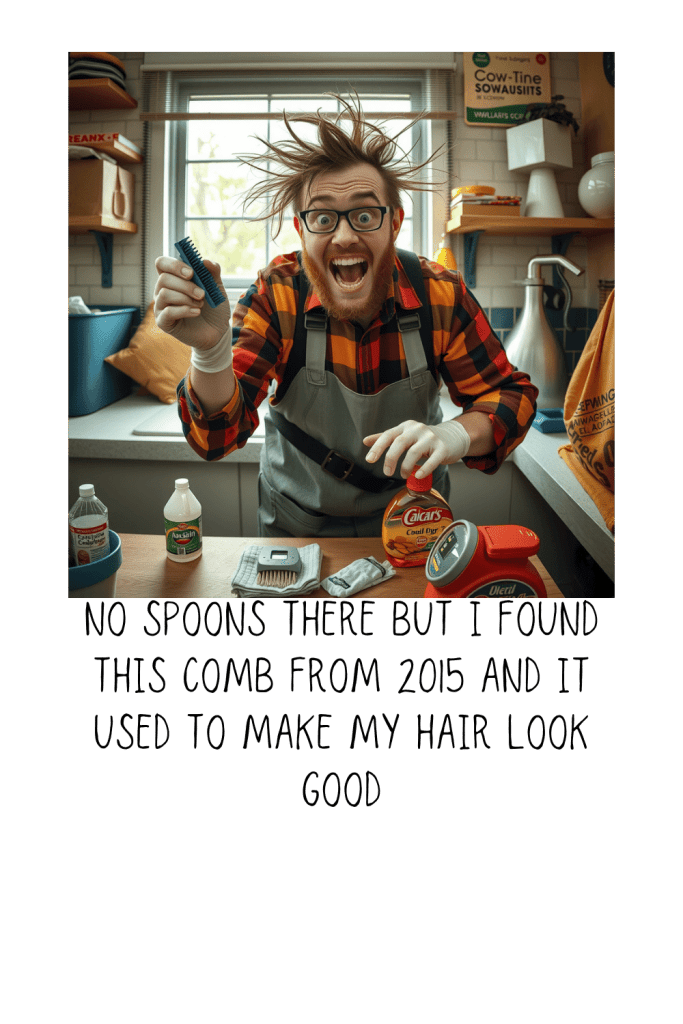
Ownership transfers upon entry. If you can’t fill it, go check your room. I know you dont eat in there as a general rule but go look and see if the random missing spoon is hanging out with the stray socks in their hideout.

2️⃣ “We’ll deal with it later” is a valid strategy until further notice.
No one said when later is. Legally, you’re covered. Until 5 pm when all the things you were going to do catch up and your teenager is asking why something isnt done to their exacting standards.

3️⃣ Matching socks are a social construct.
As are bedtimes, sanity, and tidy junk drawers. For socks, maybe track some other missing stuff (like the spoon from before), I swear theres a Narnia or hiding dimension.

4️⃣ No one has ever truly recovered from stepping on a rogue Lego.
We carry these wounds in silence. And orthopedic inserts. My kitty in the sky Bonkers used to sleep on them, a full bucket without the lid, weirdo. Miss you little dude but thanks for sending me Fryday who amuses me endlessly, but I still miss you!

5️⃣ If you set something down ‘just for a second,’ it’s gone forever.
Gone to the shadow realm. Gone where keys and pens go to die. See narnia, also with socks and spoons. And the tupperware lids vs tupperware ratio is always uneven so I blame them too.

6️⃣ Your brain will retain the lyrics to a 1997 boy band hit but not why you walked into the room.
Priorities. We don’t make the rules. Its tearing up my heart that you don’t ‘remember the time’ you walked into a room and left with exactly what you walked in there for but honestly ‘bye bye bye’ to that dream because honestly we’re ‘never gonna get it no never gonna get it’

7️⃣ Snacks are sacred.
Do not touch another’s designated snack without first drafting a formal agreement and receiving notarized consent. I think it sucks so much worse when you crave a texture and have no food with that texture available. Like I hate it when I bring home fresh baked goods because I can only eat one every few days or I forget its there. I MIGHT get one. Vultures.

8️⃣ If the ADHD person in your house starts cleaning, DO NOT INTERRUPT.
You’re witnessing a natural phenomenon rarer than a solar eclipse. Often whats good is pulling up a rag and joining them, not that you need to do any of the cleaning, they’ll do it but they will do it alot faster if you join them.

9️⃣ We don’t do ‘normal’ here.
We tried. It was exhausting. Weird is cheaper and fits better. I have discussed this at length, I know the name is deceiving because I love being weird and don’t want any part of me normal lol. There was a time I did strive to an impossibly high level too. That me burned herself out a decade ago.

🔟 The motto remains: Lower the bar, keep the vibe.
Survival with style. That’s the goal. Often its just survival.


Closing Thought:

Some houses run on routine, others run on vibes and caffeine.
Guess which one we are. Til next time gang, take care of yourselves, and each other!

Uncategorized

Neurospicy Household Rules

(Only mildly exaggerated, but it wouldnt matter because we’re spicy and no one tells US what to do!))

1. Snacks Count as a Coping Skill.

If it has carbs, it’s basically therapy. Cheese is classified as its own group lol.

2. “I Forgot” Is a Valid Reason.

So is “my brain glitched.” No need to lie about aliens (unless it’s funny). Maybe a George interrupted your thoughts IYKYK

3. Parallel Play Is Quality Time.

Existing near each other silently? Peak bonding. We congratulate each other when we imaginary win Wheel of Fortune.

4. Meltdowns Are Temporary; Love Is Not.

Cry it out, stim it out, leave the room dramatically — we’re still good. Some times we need to give each other a 15 minute buffer of alone time after disrupting or unsettling encounters.

5. Mutual Respect > Clean Counters.

Nobody ever died from crumbs, but words? They linger. I cannot emphasize this sarcastically because I really want you to think about what you say and as much as you can be, be intentional.

6. Matching Socks Are Optional. Headphones Are Not.

Protect your peace. Protect others from your playlists. Wear what you want some long as your covering the important parts lol.

7. No Important Conversations After 8pm.

Unless it’s about snacks, cat memes, or space facts. Write it down, type it out, I can promise you if you tell me something at night I have ZERO recall the next day.

8. Time Is Fake, But Deadlines Are Real.

We use timers, calendars, sticky notes, and sheer panic. As I’ve said in the past, try using time blocks rather than completed activities.

9. Sensory Needs Come First.

Dim the lights, turn down the noise, and yes, we will leave the store. I have no problem just getting up and going outside if the air starts to overwhelm and choke you.

10. We Are Allowed to Be Weird Here.

Repeat as needed: Normal is a setting on the dryer. Because normal is overrated, and honestly, it looks even more exhausting. Lol, til next time gang, take care of yourselves, and each other!

Uncategorized

Grounded Spirit, Chaotic Body: Spoonie Grounding Tricks That Actually Work

So your brain is playing musical chairs, your body feels like a poorly-updated weather app, and you’re trying not to scream into the void. Welcome to Tuesday.

Let’s talk grounding. No, not like punishment (though if my body had a curfew, it’d definitely be in trouble. Or WAIT, better yet what if I could ground myself? I have had a bit of an attitude lately lol). I mean the kind of grounding that keeps your head tethered to Earth when the world starts to spin—literally or metaphorically.

These tricks aren’t cures. They’re sanity-saving, meltdown-preventing hacks from a fibro-fueled, ADHD-spicy, anxiety-sparked brain that’s been there. A lot.

1. 5-4-3-2-1 Technique
Engage all your senses:

  • 5 things you can see
  • 4 things you can touch
  • 3 things you can hear
  • 2 things you can smell
  • 1 thing you can taste (coffee counts. So does chocolate.)

*This works great when your brain is running full-speed in five directions and not one of them is “calm.”

2. Cold Water, Meet Overheated Brain
Grab a frozen veggie bag, cold can of soda, or run cold water over your wrists.

It’s a little jolt to your system that says: Hey, still alive. Chill out (literally).

3. Root Down (With or Without a Tree)
Press your feet into the ground. Feel the floor. Imagine roots growing into the Earth.
Bonus if you’re outside and can touch actual grass—unless you’re allergic. Then, uh… maybe stick to carpet.

4. Texture Check
Have a fidget, squish, or tactile object you like the feel of? Use it.

I include a small sensory item with every tray I sell because I know how hard it is to find something that doesn’t scream “kid toy” but still gets the job done.

5. Pick a Word, Repeat It Like a Mantra
Mine is “magic” today. Because even in the chaos, there’s some weird alchemy that happens when you survive anyway. Choose yours.

Speaking of grounding (see what I did there?), I made a tray that says “Grounded Spirit” because some days I need that reminder sitting right next to me—especially when my brain wants to float away and my pain wants to knock me down.

But this post isn’t about the tray.

It’s about remembering that you deserve tools that help you stay rooted when everything feels like it’s spinning.

Try one, try them all. Add your own. Tape them to your fridge. And if you fall apart a little later? That doesn’t mean you failed. It means you’re trying.

And that’s more than enough today. Do you have any tips others could benefit from? I’m always looking for new ways to ground myself, email me at wannabenormal@gmail.com or contact me through the contact form. Til next time gang, take care of yourselves, and each other.

PS.
Because Apparently I’m Not the First Genius to Try Grounding

Look, I’d love to say I invented these grounding techniques while dramatically staring into the void, but some actual professionals with degrees and peer-reviewed studies beat me to it. If you want to nerd out—or just need proof to show your skeptical co-worker—here’s where the science lives:

SAMHSA (Substance Abuse and Mental Health Services Administration)
Trauma-informed care guidelines include grounding as a legit tool for managing anxiety and dissociation.
👉 samhsa.gov

Anxiety Canada: 5-4-3-2-1 Grounding
This popular CBT/DBT trick is clinically recognized for calming panic and reorienting during sensory overload.
👉 anxietycanada.com/articles/grounding-techniques

National Library of Medicine
Peer-reviewed proof that sensory-based grounding techniques actually help regulate stress and pain.
👉 ncbi.nlm.nih.gov

Uncategorized

Extremely Official Life Lessons I’ve Learned From Inanimate Objects

Hey friends. No heavy lifting today — unless you count carrying the emotional weight of a slightly stale muffin and a cluttered craft table. Just some wisdom I’ve gathered from staring at household objects for way too long and assigning them personalities.

1. My Laundry Basket

Life lesson: You can only carry so much emotional weight (and unmatched socks) before you drop something and cry about it.

2. My Microwave

Life lesson: You can explode if someone doesn’t give you enough time to cool off. It’s science. And vibes.

3. That One Spoon That’s Always Dirty

Life lesson: You are valuable. You are essential. And even if you feel gross and overlooked, someone’s probably looking for you right now.

4. The Craft Table (aka The Table Formerly Known as “Dining Room”)

Life lesson: You don’t have to be pretty to be productive. Also, chaos can be functional. It’s fine. It’s all fine.

5. My Phone Charger

Life lesson: You can’t be expected to power everything if you’re frayed at both ends. Unplug. Recharge. Or scream. Honestly, all valid.

6. The Thermostat

Life lesson: You can keep everything “set” just right and still end up wildly uncomfortable. Sometimes your system just doesn’t cooperate. That doesn’t mean you’re broken — it means you’re human. Or possibly perimenopausal. Or both. Let’s be honest, probably both.

7. The Floor

Life lesson: No matter how hard you hope, it still isn’t made of trampoline. Bouncing back takes work. And ice packs.

8. The Dish Towel That’s Always Damp

Life lesson: You can show up day after day, do your job, and still get left in a heap in the corner. But look at you — still wiping up messes like a champ.

9. That Cup in the Sink That No One Ever Claims

Life lesson: Boundaries are important. You are not the designated cleaner of everyone else’s mystery problems.

10. My Alarm Clock

Life lesson: People won’t always appreciate you for waking them up, but sometimes being the annoying truth-teller is your job. Be loud anyway.

Til next time gang, unless I resin my fingers together lol. Take care of yourselves, and each other!

Uncategorized

“Wait, Why Did I Walk in Here Again?” — The Silent Rage of Forgetting Everything and Blaming Yourself for It

I walked into the kitchen and immediately forgot why. So I stood there. Just… stood there. Like maybe the answer would jump out and bite me in the ass. Sometimes it does. Other times I start spinning like a loading screen stuck at 3%, muttering to myself, “No. I came in here for a reason. We are not leaving until we figure it out.”

And then I see the dishes. Maybe that’s why I came in? No… but might as well do them, right? But the water jug needs filling first. So I fill that. If I’m going to do the dishes I should grab my cup. So I go to grab my cup — and by the time I get to my room, the real reason I went into the kitchen finally slaps me in the face. I spin around and race back in before I forget again… but it’s too late. Whatever it was is gone. I sigh. I fill my water. I forget the dishes. And the next time I look up, it’s lunchtime and I have nothing to show for my entire morning but frustration, a full water jug, and a brain that feels like it’s made of mashed potatoes.

You already know I’ve written about executive dysfunction — and this, my friends, is a prime example. Forgetting what you were doing in the middle of doing it? Classic brain chaos.

But the part that really gets me? The rage at myself afterward.

It’s not just forgetfulness. It’s that instant gut-punch of anger when I realize I’ve wasted another 30 minutes chasing my own tail around the kitchen like a confused Sims character. It’s looking up at the clock and realizing that despite all my effort, I have nothing to show for it. Again.

And I know — I know — this isn’t a moral failure. I’ve read the books. I’ve written the posts. But logic doesn’t stop that voice in my head from whisper-screaming:
“Why can’t you just remember one simple thing?”


📚 You’re Not Broken. You’re Wired Differently.

Here’s the thing: this is common for people living with ADHD, bipolar disorder, and fibromyalgia — especially when you’ve got more than one working against you. We’re out here trying to be productive while our brains are basically running Windows 95 during a thunderstorm.

Let me throw you some validation, science-style:

  • A study in Psychiatry Research (2017) found that adults with ADHD often report intense frustration and self-directed anger after forgetful moments — especially when they’re trying to keep up with everyday tasks.
  • Another study in Bipolar Disorders Journal (2020) confirmed that even between episodes, people with bipolar disorder experience ongoing memory lapses and cognitive fog, which can trigger shame and feelings of incompetence.
  • Oh, and let’s not forget fibro fog, which isn’t just a cute nickname — it’s real cognitive dysfunction tied to chronic pain and fatigue. Researchers at the University of Michigan linked fibromyalgia with slower information processing, memory issues, and impaired attention — aka, the holy trifecta of “why am I like this?”

🧠 It’s Not a Lack of Effort — It’s a Lack of Mental Gas

We aren’t failing because we’re lazy or not trying hard enough. We’re just running on fumes while carrying twenty invisible backpacks full of mental weight.

Sometimes we remember. Sometimes we don’t. Sometimes we get furious with ourselves for not being able to hold all the tabs open, even though the mental browser has clearly crashed and is asking us to send an error report.

And the worst part? We carry that anger all day. It builds. It compounds. It turns into guilt, then into a shutdown. That’s the cost no one sees — and too many of us pay it in silence.


When the Tabs Crash – How to Forgive Yourself for Having a Human Brain

So what do you do when your brain throws a blue screen of death during your breakfast routine?

You don’t white-knuckle it through the guilt spiral, that’s for damn sure. Here’s what I’ve learned (sometimes the hard way) that might actually help when your brain taps out mid-task:


🔁 1. Reboot, Don’t Rage

When you realize you’ve just lost 20 minutes chasing nothing, pause. Literally. Sit down. Sip your coffee. Give your brain a hot minute to defragment.


📝 2. Use External Memory — Sticky Notes Are Your Friends, Not an Admission of Failure

Put a dry erase board in the kitchen. Use a Sharpie on your hand. Talk to yourself out loud like you’re your own helpful assistant.


🧍‍♀️ 3. Anchor the Space

If you forget why you walked into the room, try narrating the space to yourself.


🧠 4. Remember: Brains Use Energy. Yours Just Uses More.

You wouldn’t blame your phone for dying if you’d been using GPS, streaming music, and checking Instagram at the same time, right? You’d say, “Yeah, that makes sense.” Your brain is the same. ADHD, bipolar, fibro — they all eat cognitive battery life like candy.


💬 5. Talk Back to the Inner Bully

When that voice says “You’re useless,” respond with your voice:


💗 Final Words: You’re Not Alone. And You’re Not the Only One Forgetting Why You Opened the Fridge.

If you’ve ever felt like you’re the only person yelling at yourself in the middle of the day for forgetting why you walked into a room — you’re absolutely, 100% not.

And if you’ve been carrying that anger, thinking it means you’re weak or broken or lazy?

Let me tell you something:

Let the damn dishes wait. You’ve got enough on your plate. Til Next time guys, take care of yourselves, and each other.


Uncategorized

The ADHD Energy Crash: Why It Happens and How to Navigate It

If you live with ADHD, you’re likely familiar with the phenomenon of feeling mentally and physically drained by mid-afternoon. This isn’t just about being tired; it’s a distinct experience tied to the unique ways ADHD affects energy regulation.

🔍 Understanding the ADHD Energy Crash

ADHD is characterized by challenges in executive functioning, which means tasks that require planning, focus, and organization demand more cognitive effort. This heightened effort can lead to quicker depletion of mental energy. Additionally, individuals with ADHD often struggle with interoception—the ability to recognize internal bodily cues—making it harder to notice signs of fatigue until they’re overwhelming.

✅ Practical Strategies to Combat the Crash

Here are several evidence-based strategies to help manage and mitigate the afternoon energy slump:

  1. Incorporate Regular Physical Activity: Engaging in physical exercise can boost energy levels and improve focus. Even short walks or light stretching during breaks can make a significant difference. If you have a fitbit, the get up once an hour and do 250 steps setting, turn it on and stick to it.
  2. Prioritize a Protein-Rich Breakfast: Starting your day with a meal high in protein can stabilize blood sugar levels and provide sustained energy, reducing the likelihood of an early crash. Breakfast isnt a great meal on the go but if nothing else have a protein shake.
  3. Utilize Power Naps Wisely: Short naps, ideally between 10–20 minutes, taken in the early afternoon, can rejuvenate your mind without affecting nighttime sleep. This is a rule of thumb but not one I follow. I found my best nap is between 30 minutes to an hour, it gives me the perfect alertness when I get up. Experiment on your own and listen to your body.
  4. Practice Energy Pacing: Monitor your energy levels throughout the day and plan tasks accordingly. Scheduling demanding activities during peak energy times and allowing for rest during low-energy periods can enhance productivity. I tell people after dinner don’t ask me shit because once the last dish is done I am off the clock lol
  5. Engage in Body Doubling: Working alongside someone else, either in person or virtually, can increase accountability and focus, making tasks feel less daunting. This is seriously magic I don’t get why it works but it does.
  6. Stay Hydrated and Eat Balanced Meals: Dehydration and poor nutrition can exacerbate fatigue. Ensure you’re drinking enough water and consuming meals that balance carbohydrates, proteins, and healthy fats. Water water water. I hate it but it affects more than you’d think.
  7. Maintain Consistent Sleep Patterns: Establishing a regular sleep schedule helps regulate your body’s internal clock, leading to improved energy levels during the day. I’m up at 3. It was upsetting as I tried to change and mold it to conform with the usual hours, when I accepted that my body wanted to set its own schedule and started planning my days around that I was a great deal happier.
  8. Limit Caffeine Intake: While caffeine can provide a temporary boost, excessive consumption may lead to energy crashes later in the day. Moderation is key. HAHAHA! I can hear everyone who knows me heads whipping around. I’m a coca-cola girl, and maybe you arent overly sensitive to caffeine but thats where I’d make adjustments first.
  9. Create a Stimulating Work Environment: Incorporate elements that keep you engaged, such as background music or varying your workspace, to maintain interest and energy. They sell fidget mats that have all these things but your better off getting a fidget spinner, those are portable.
  10. Seek Professional Support: If energy crashes are significantly impacting your daily life, consider consulting a healthcare professional for personalized strategies and potential treatment options. Theres no shame in asking for help.

By understanding the underlying factors contributing to the ADHD energy crash and implementing these strategies, you can better manage your energy levels and maintain productivity throughout the day. Remember, it’s about finding what works best for you and being compassionate with yourself in the process. Til next time gang, take care of yourselves and each other.