Life is overwhelming enough without adding big, complicated “fixes” to the mix. That’s why sometimes the smallest shifts—things you can do in a minute or less—end up making the biggest difference. None of these will change your entire world, but they will help smooth the edges of a rough day.
1. Drink Water Out of a Fancy Cup
Hydration is one of those “simple but annoying” tasks. But pour that same water into a glass you love—a stemless wine glass, a mason jar with a straw, or even a mug that makes you smile—and suddenly it feels less like a chore and more like a treat. Little brain tricks for the win.
2. Keep a Blanket in Arm’s Reach
There’s something grounding about having a blanket nearby. Whether it’s the middle of the day or late at night, grabbing it is an instant way to give yourself comfort without any effort. Bonus: it doubles as a nap invitation if you need it.
3. Use the “Two-Minute Rule”
Procrastination thrives on tasks that feel bigger than they are. The two-minute rule says: if it takes less than two minutes, do it now. Throw away that receipt, reply to the text, wipe the counter. You’ll be surprised how much mental clutter disappears when you knock out those quick wins. I’ve noticed this alot cleaning, it feels good to see the problem disappear.
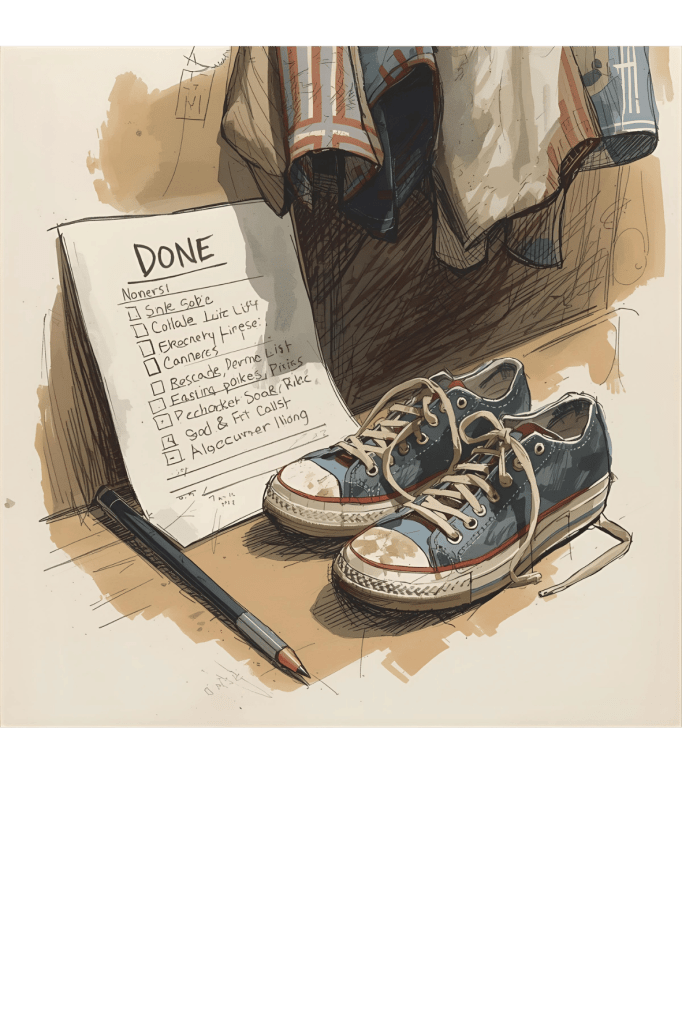
4. Make a “Done List”
To-do lists can be overwhelming, especially when they never seem to shrink. A “done list” flips the script—you jot down everything you’ve already managed, even the small stuff. It shifts your focus from “never enough” to “look what I actually did.” And honestly? That’s the energy boost most of us need. I don’t do this enough, often I’m like, what did I even do all day? show yourself all the hard work you put into your day.
5. Change Your Socks
It sounds silly, but fresh socks are an underrated reset button. They’re small, clean, and cozy, and they send your body the message that something has shifted. On a day when everything feels stagnant, that tiny reset can make you feel just a little more human. Mind the seam placement, that was always a concern with my oldest, she’d refuse to go if she felt the seam in the wrong place.
Closing
Will these tips solve all of life’s chaos? Absolutely not. But they’re proof that you don’t always need massive changes to feel a little better. Sometimes the easiest way forward is simply stacking up these micro-comforts until the day feels lighter. Til next time gang, take car of yourselves, and each other.
Life is messy, exhausting, and sometimes downright unfair—but there are clever little hacks that can help you catch your breath, keep your sanity, and even sneak in some joy. None of these tips will magically erase your stress (I wish), but they will make the load lighter.
1. Automate the Little Things
Decision fatigue is real—our brains get worn down by endless small choices. Automating the basics can free up precious energy.
Schedule grocery delivery or subscriptions for your must-haves.
Set bills to auto-pay.
Use reminders for meds, appointments, or chores.
It may feel tiny, but the mental relief adds up.
2. Reserve-Based Meal Planning
Instead of starting from scratch every day, build meals off “reserves” you’ve already cooked. Think big-batch taco meat, roast chicken, or skillet sausage that can be reimagined into multiple meals. Less chopping, less cooking, more living. I do this biweekly and feature a menu plan and shopping list every other Sunday, but its not rocket science so if you don’t stick 100% to it no big deal, I just keep the featured ingredients on hand and offer a multitude of uses for it. As stated above, decision fatigue is real and its so helpful to have that choice already made.
3. Build a “Bad Day Box”
Keep a stash of small comforts for the days when everything feels impossible. Fill it with:
A favorite snack or tea
Cozy socks or a heating pad
A playlist that makes you laugh or sing along
It doesn’t solve the hard stuff, but it gives you a lifeline when you’re sinking. If you want one already made I might know someone….
4. Quick Mental Resets
A five-minute pause can do more than you think. Whether it’s a short guided meditation, deep breathing, or blasting your favorite song, those tiny resets can shift your brain out of panic mode and back toward calm. Make it something easy that you have access to, it can be comedy or a podcast that makes you laugh, anything that shifts the focus of your thoughts is the idea.
5. Make Your Space Work for You
Clutter equals stress. Even little changes—like keeping meds, remotes, or supplies in a caddy by your chair—cut down on the low-grade chaos. Lighting, airflow, and comfort matter more than we admit.
6. Outsource Where You Can
If you can swing it, pay for help. Order takeout, hire a cleaner, or swap chores with a friend. Energy is a resource, and saving yours is not laziness—it’s smart strategy.
7. Celebrate Tiny Wins
You got out of bed? That counts. Finished a task? Write it down and cross it off just for the satisfaction. Momentum grows when you notice the little victories instead of waiting for the big ones.
Life isn’t perfect, and neither are we—but small hacks like these add up. They create breathing room, lighten the load, and make survival a little more manageable. Try one or two this week. You deserve the ease. Til next time gang, take care of yourselves, and each other!
For the nights when you’re out of energy, out of time, or just plain over it.
Let’s be real: I’m not living in a Pinterest-perfect kitchen with endless time, energy, or executive function. I’m not even 50% back to where I WAS, which is to say subpar and inefficient.
So yeah—there’s a lot going on at any given moment in my house.
Meal planning used to feel like one more thing I was “failing” at. I’d write out seven dinners for the week, try to stick to it, and inevitably hit a wall by Wednesday. Leftovers piled up, produce went bad, or we ended up eating cereal because the plan didn’t match real life.
That’s when I stopped trying to force a perfect schedule and started building something that actually works for us. I call it my Reserves-Based Meal Plan—a mix of flexible structure, intentional leftovers, and reliable “backup” meals. It’s made our evenings smoother, saved money, and reduced the constant stress around food. Are you sick and tired of looking in your fridge saying ‘I don’t know what do YOU want to eat?’ We were to the point of it being overwhelming. I am nearly done with week 1 and its gone well and we havent asked the dreaded question yet.
If you’re overwhelmed, neurodivergent, chronically ill, or just busy as hell—this system might help you too.
🧂 What Is a Reserves-Based Meal Plan?
You know how most meal plans assume you’re going to cook every single night like some kind of apron-wearing domestic goddess who enjoys washing cutting boards?
Yeah. No thanks.
A Reserves-Based Meal Plan is built for people with actual lives—and possibly brain fog, executive dysfunction, chronic pain, or a teen who suddenly “doesn’t like chicken anymore” even though it was fine yesterday.
Here’s how it works:
I plan 3–4 solid meals a week—things I know we’ll probably eat together.
The rest of the week is leftovers or “reserves.”
Reserves = easy backup meals I can make fast with zero emotional commitment. Think: chicken strips, scrambled eggs, or anything that comes out of a box and doesn’t judge me. (Hamburgers, Keilbasa, eggs and chicken strips are pretty well what we stick to)
This plan is flexible on purpose. It gives me room to shift things around when life gets chaotic (which, let’s be real, is always), and it keeps food from going to waste when plans change or I just can’t that night.
🗓️ Two-Week Meal Plan (With Commentary & Chaos)
Welcome to the plan that might save your week—or at least reduce the number of emergency cereal nights.
This plan assumes you’re cooking about 3–4 times a week, depending on energy levels, surprise IEP meetings, or spontaneous teenage existential crises. The rest of the time is covered by leftovers, reserves, or the ancient rite of takeout.
Week One
Day
Meal
Sunday
Hamburger Helper – Not fancy, but comforting. It’s giving “90s latchkey kid,” and we respect that energy. I sometimes switch out the burger and go with ground turkey or throw some veggies. Its the only way I can sneak them into her
Ingredients: ground beef, boxed hamburger helper mix, milk, water, and your dignity.
Monday
Leftovers or Reserves – Whatever is easiest to microwave while standing in socks staring into the fridge.
Tuesday
Sausage & Peppers with Jasmine Rice – Colorful enough to feel like you’re trying, but simple enough to cook on autopilot. You can also make it without the rice, put it on a hoagie roll (or grinder to my RI friends)
Ingredients: sausage (Italian or kielbasa), bell peppers, onions, canned tomatoes, garlic, olive oil, jasmine rice.
Wednesday
Leftovers or Reserves – The peppers are still in the fridge, but now they’re suspicious.
Thursday
Leftovers or Reserves – Try and use up one reserve or another.
Friday
Chicken Fajitas – Hot, sizzling, and guaranteed to make the kitchen smell like you’re doing something impressive. (Also a good way to use up the rest of the peppers)
Ingredients: chicken breast or thighs, bell peppers, onions, spices (paprika, cumin, garlic), tortillas. Optional: sour cream, salsa, shredded cheese. Rice
Saturday
Leftovers or Takeout – Translation: The fridge is now an emotional puzzle, and you’ve earned the right to outsource.
Week Two
Day
Meal
Sunday
Chicken & Rice Casserole – A cozy, low-effort oven hug.
Finish All Reserves – If it’s not gone today, it’s getting freezer-burned or forgotten.
Sunday
Mac & Cheese with Kielbasa – The grand finale. This meal says, “We made it. Somehow.”
Ingredients: boxed mac & cheese or homemade, kielbasa or smoked sausage, butter, milk, cheese, sense of victory.
🛒 The “I Got Everything, I Think” Shopping List
This is the comprehensive list for the full two-week plan. It includes all the main meal ingredients and reserves. You won’t need everything every time, so adjust based on what’s already hiding in your pantry or freezer.
Feel free to highlight the things that are “yes, I must buy this” and ignore the things that are already fossilized in the back of your cabinet. Also, I’m not going to say its the same for everyone, but this list at Walmart the way I bought everything ended up being roughly 150 dollars. I estimate we MIGHT spend another 100 on snacks any given MONTH, and 400-500 a month for groceries seems ideal for a family of 3-4 to aim for
🥩 Protein Zone (a.k.a. Things That Should Be Thawed but Probably Aren’t)
Chicken breasts or thighs – 4-5 lbs (fajitas, maple glazed, casserole) (if you get frozen breasts you can easily pull out however many you need)
Sausage (Italian or smoked/kielbasa) – 2–3 packs (I buy the horseshoe one and the pack of bun sized ones, you can use either or interchangably.)
Eggs – 2 dozen (reserves, baking, general survival)
Pre-cooked chicken strips or tenders – 1 bag or box (reserves)
The reserves figure in because you can move them around. So many times I see Sausage and peppers and think, ‘ugh, thats a lot of standing’ I try and get the bag of frozen chicken, I take out 3-4 depending on what I’m making, but its easier to thaw and plan for it and I get the 5 lb bag. For the ground beef, I get one lb, but then I get frozen burgers. You can break them up for the pasta, mix whatever sausage is left, it will give you a nice thick meat sauce.
🥕 Produce That Will Eventually Get Sketchy
Bell peppers – 4–5 (fajitas, sausage & peppers) OR I get the small bag of sweet peppers or stoplight peppers as they are sometimes called.
Onions – 3–4 (every meal ever)
Tomatoes – 2–3 (general use)
Garlic – 1 bulb (for when you want to feel like a chef)
Salad greens – if you want to pretend you eat salads
Optional: carrots, celery, herbs (fancy but not required)
🥖 Bread & Grains (Carb Comfort Section)
Hamburger buns – 1 pack
Hot dog buns – 1 pack
Bread – 1 loaf (toast, sandwiches, life raft)
Jasmine rice – 1 bag (sausage & peppers, casserole)
Egg noodles – 1 bag (maple glazed chicken)
Elbow macaroni – 1 box (mac & cheese)
Pasta (penne/spaghetti/etc.) – 1–2 boxes
Knorr sides – 1–2 packets (reserves)
Tortillas – 1 pack (fajitas, leftover tacos)
📝 Check your pantry before heading to the store. The easiest way I have found is to get your list then go through your pantry and check off what you see. Otherwise you end up with half filled bags, or worse, moldy stuff.
🧀 Fridge Friends (aka: Things I Steal Bites Of While Cooking)
Milk – 1 gallon
Butter – 1–2 sticks
Shredded cheese – 2–3 cups I get different kinds
Cream cheese – optional, but excellent
Parmesan – optional but classy
🥫 Pantry Staples & Secret Weapons
Hamburger Helper – 1 box (nostalgia in a packet)
Pasta sauce – 1 jar (or make your own if you’re feeling bold)
Canned tomatoes – 4 cans, I like to get petite diced but there are a number of cuts and flavors to try.
Maple syrup – not just for pancakes anymore Use REAL syrup though.
Chicken broth – 2–3 cups or 2 cans
Cream of chicken soup – 1–2 cans
Mac & cheese – 1 box (or ingredients for homemade) I want to do the mac and cheese and sausage in a casserole but you can just make it by frying up the sausage and making the mac and cheese seperate.
Cooking oil – olive or vegetable
Salt, pepper, garlic powder, cumin, paprika, Italian seasoning
🧂 Extras / Condiments / Things You Forget Until It’s Too Late
Ketchup, (burgers, sandwiches)
Salsa, hot sauce
Soy Sauce
Frozen veggies – great for sides or stuffing into casseroles – I put them in EVERYTHING, its the best way to get veggies in front of her without her really noticing.
Tortilla chips – for reserve dinner morale boosts
🍽️ Basic Recipe Rundown
(for all the planned meals — not reserves) Reserves for this week: Hamburger, sausage, eggs, chicken strips and endless knorr sides.
🍔 Hamburger Helper (Sunday, Week 1)
Nostalgic chaos in a box, and honestly? Still slaps.
How to: Brown the ground beef. Drain the grease if it’s swimming. Add in the mix, milk, and water. Stir, simmer, stir again, ignore for a while, then serve. Bonus points if you add frozen peas or shredded cheese. Or depending on the flavor a can of tomatoes.
🌶️ Sausage & Peppers with Jasmine Rice (Tuesday, Week 1)
Looks colorful. Feels like effort. Isn’t.
You’ll need:
1 lb sausage (Italian or smoked kielbasa)
Bell peppers (2–3), onions (1–2), and tomatoes (canned)
Garlic, olive oil, salt/pepper
1/2 cup chopped fresh basil leaves
4 garlic cloves, chopped
2 tablespoons tomato paste
1 cup Chicken broth, you CAN use marsala wine but I dont keep that handy
1 (15-ounce) can diced tomatoes
1/4 teaspoon red pepper flakes, optional
Jasmine rice
How to: Heat the oil in a heavy large skillet over medium heat. Add the sausages and cook until brown on both sides, about 7 to 10 minutes. Remove from the pan and drain. Keeping the pan over medium heat, add the peppers, onions, salt, and pepper and cook until golden brown, about 5 minutes. Add the oregano, basil, and garlic and cook 2 more minutes. Add the tomato paste and stir. Add the Marsala wine, tomatoes, and chili flakes, if using. Stir to combine, scraping the bottom of the pan with a wooden spoon to release all the browned bits. Bring to a simmer. Cut the sausages into 4 to 6 pieces each, about 1-inch cubes. Add the sausage back to the pan and stir to combine. Cook until the sauce has thickened, about 20 minutes. Fix the rice per instructions, serve on top of Jasmine rice or put it on a bun.
🌯 Chicken Fajitas (Friday, Week 1)
Sizzling pan. Big energy. Barely any effort.
You’ll need:
1–1.5 lbs chicken (breast or thigh), sliced
Bell peppers + onions, sliced
Spices: paprika, cumin, garlic powder, salt
Tortillas
can of petite diced tomatoes
Optional toppings: cheese, salsa, lime
Rice (use Jasmine if you want to use it up, but any rice works)
How to: Toss chicken in spices, sauté in oil. Add peppers and onions and can of tomato with most of the water drained. Cook till soft and a little browned. Wrap in tortillas with rice and top with whatever’s in the fridge cheese and salsa wise.
🍗 Chicken & Rice Casserole (Sunday, Week 2)
Comfort food with a “throw it in the oven and pray” vibe.
You’ll need:
Cooked or leftover chicken
Cooked rice
1–2 cans cream of chicken soup
Chicken broth
Shredded cheese
Optional: peas, carrots, frozen sadness
How to: Mix everything in a baking dish—rice, chopped chicken, soup, splash of broth, cheese. Stir. Bake at 350°F for 30–40 min. Top with extra cheese if you love yourself.
🍁 Maple Glazed Chicken with Egg Noodles (Tuesday, Week 2)
Sweet, sticky, and weirdly impressive for how lazy it is.
You’ll need:
Chicken (breasts or thighs)
Maple syrup PURE
Garlic (minced)
Chicken Broth
Lemon juice
Egg noodles
Butter
How to: Mix maple, garlic, chicken broth lemon juice in a medium bowl. Set aside. Season chicken salt and pepper, sear in a skillet. 3-4 minutes on each side. Set aside and wait for the pan to cool completely. Once cool, add maple sauce mixture. Bring to simmer and scrape all the brown bits off the bottom of the pan. Add in the seared chicken back into the skillet, simmer 5-8 minutes until chicken is done Simmer until cooked and glazed. Remove the chicken and reduce the glaze. That sounds daunting but its not. You just turn the heat on high and simmer for 1-3 minutes, DON’T BURN IT! Stay with it and stir it. Cook noodles, strain leave 1/2-1 cup of starchy water, throw in garlic butter. Slap it all on a plate. Smile faintly.
🍝 Pasta & Meat Sauce (Wednesday, Week 2)
The crowd-pleaser. The fallback. The midweek MVP.
You’ll need:
Pasta (any kind)
1 lb ground beef
1 jar pasta sauce
Garlic, onion, herbs (optional)
How to: Brown ground beef with garlic/onion if using. Pour in sauce. Simmer while the pasta cooks. Drain pasta, mix, serve, top with cheese and relief. You can easily break up the burgers, you can also break up the sausage.
🧀 Mac & Cheese with Kielbasa (Sunday, Week 2)
Is it a kid meal? Is it comfort food? Is it just what you had left? Yes.
You’ll need:
Boxed mac & cheese or your homemade version
Kielbasa/smoked sausage
Butter, milk, shredded cheese (if DIY)
How to: Cook kielbasa separately (sauté or bake). Make mac & cheese. Mix them together or serve side-by-side like a classy cafeteria dinner.
Or for more of a homemade from scratch feel: Cook and stir the cut-up kielbasa in a large skillet over medium heat for 6 to 8 minutes, until heated through and beginning to brown. Remove the sausage from the skillet, and set aside.
Fill a pan with lightly salted water, bring to a boil over medium-high heat, stir in the macaroni, and return to a boil. Cook, stirring occasionally, until the pasta has cooked through but is still firm to the bite, about 8 minutes. Drain well.
Preheat an oven to 350 degrees F (175 degrees C). Grease a 9×13 inch baking dish. Melt the butter in the skillet over medium-low heat, and cook and stir the chopped onion for about 5 minutes, until translucent. Whisk in the flour, stirring constantly to avoid lumps. Cook and stir the butter, onion and flour for 2 to 3 minutes to make a roux, and remove from the heat. Whisk in the milk a little at a time, stirring constantly, until all the milk has been incorporated, and return to low heat. Bring the sauce to a simmer, and cook over low heat for about 2 minutes, stirring constantly, to finish cooking the flour. Whisk in the cheese, most use cheddar but theres no hard and fast rule so I throw in a mix generally, a few cubes at a time, until all the cheese has been incorporated and the sauce is hot and smooth. Pour the macaroni into the cheese sauce, and stir to combine. Stir in the cooked kielbasa, salt, and pepper.
Spoon the macaroni mixture into the prepared baking dish, and sprinkle the bread crumbs over the top. Bake for about 20 minutes in the preheated oven, until the crumbs are brown and the casserole is bubbling. Let stand for 15 minutes after baking, to set before serving. The bread crumbs make it FEEL authentically homemade.
🎉 Conclusion: You’ve Got This (Seriously)
Look, meal planning doesn’t have to be a perfect science. If it were, we’d all have an army of chefs and a fridge that actually respects us. But I’ve learned that the most important part is making a plan that fits your life. And let’s be honest—life is messy.
This Reserves-Based Meal Plan is designed to take the pressure off and give you a framework that works around whatever’s going on in your world, from chronic illness to teenage moods. It’s not about perfection; it’s about giving yourself room to breathe, stay flexible, and get dinner on the table without pulling your hair out. I also did it to stream line shopping. Our personal plan is twice a month, but you could go weekly or monthly easily.
I know some nights will be leftovers, some will be reserves, and sometimes I’ll be ordering pizza and pretending it’s part of the plan. And that’s okay. We’re all just doing our best.
So, whether you’re juggling multiple schedules, battling a mental health day, or just trying to get through the week without eating cereal at 8 p.m., I hope this plan helps you keep things moving—without making you feel like you’re failing. You’ve got this. And if you don’t, well, there’s always takeout.
📚 Final Thoughts
Meal planning doesn’t need to be overwhelming. Use this system to make meals work for you—whether that’s through leftovers, reserves, or embracing the chaos of real life. And remember: this plan is just a starting point. You’ll tweak it, adjust it, and make it yours. Start with the easiest things you can, the more versatile the better I tried to make it so I got at least two meals out of everything And that’s what’s going to make it actually stick. I might wait until I see whats left over after two weeks before I do the next or I might plan it out today, not like I got much going on lol
If you’ve got questions or want to share your own tricks for surviving busy nights, drop a comment below. Let’s all be in this together. We can’t be perfect, but we can be practical. And trust me, that’s better anyway. Til next time gang, take care of yourselves, and each other.










 WannaBeNormal