Two Weeks of Sanity-Saving Dinners: The Reserve-Based Meal Plan That Keeps Me Sane (and Fed)”
If you’ve ever stared into your fridge at 6:47 p.m., wondering if coffee counts as dinner… hi, hello, welcome. Pull up a chair.
I’ve been there. Actually, I live there — in that fun little corner of “I want to eat real food, but executive dysfunction, fatigue, and a body that hates me say otherwise.” That’s why I started reserve-based meal planning. It’s not fancy. It’s not Instagram-perfect. But you know what? It works.
Here’s the deal: I only cook three times a week — Tuesday, Thursday, and Sunday — and I build in enough “reserve meals” to handle the days in between without me having to think, chop, or remember what day it is.
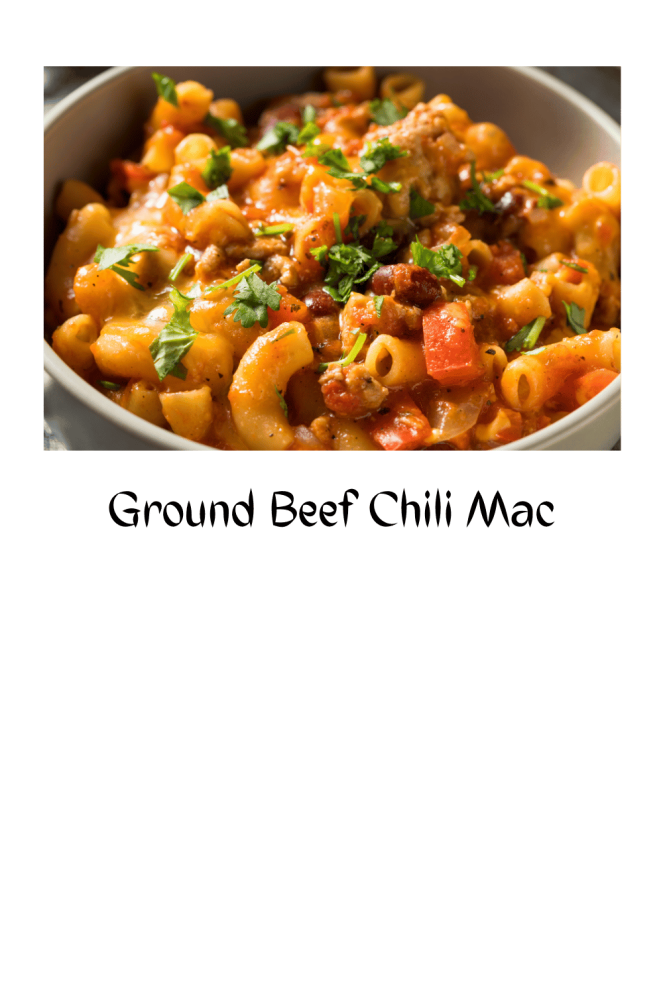
This new 2-week plan is heavy on chicken and kielbasa, with some ground beef tossed in because my teen would eat ramen for every meal (and often does) if I let her. Everything is simple, budget-friendly, and spoonie-approved.
How It Works
Cook Days: Tuesday, Thursday, Sunday. Big batches, double recipes, whatever it takes.
Reserve Days: Meals that are already made or almost zero-effort to throw together.
Zero-Guilt Days: When you order pizza instead. It happens. Own it.
This Week’s Plan
Week 1 Cook Days:
Garlic Butter Kielbasa & Veggie Skewers (no pineapple, because no thank you but by all means, its an optional add on)
Chicken Alfredo Pasta Bake (lighter sauce, extra cheesy flavor)
Chicken strips / nuggets (frozen) – microwave or oven
Grilled or pre-cooked sausages / kielbasa slices – heat in skillet or microwave
Mac & cheese – boxed or microwaveable
Quesadillas – just tortillas + shredded cheese, optional leftover meat
Pasta with jarred sauce – just boil noodles and pour sauce
Frozen veggies – steamable in bag
Instant rice / microwaveable rice packets – pair with protein
Frozen pizzas or flatbreads – heat & eat
Eggs – fried, scrambled, or boiled for super-quick meals
Snack plates – cheese, crackers, fruit, raw veggies
Everything — recipes, grocery list, and instructions — is laid out below so you can print, save, or just pull it up on your phone while you stand in the middle of the grocery aisle wondering if you already have paprika at home. (You don’t. Buy more.) Til next time gang, take care of yourselves, and each other!
(Or: Things I’ve Learned the Hard Way and Now Pass Off as Wisdom)
1️⃣ If you open the dishwasher to “just add one thing,” congratulations. You now live here. Ownership transfers upon entry. If you can’t fill it, go check your room. I know you dont eat in there as a general rule but go look and see if the random missing spoon is hanging out with the stray socks in their hideout.
2️⃣ “We’ll deal with it later” is a valid strategy until further notice. No one said when later is. Legally, you’re covered. Until 5 pm when all the things you were going to do catch up and your teenager is asking why something isnt done to their exacting standards.
3️⃣ Matching socks are a social construct. As are bedtimes, sanity, and tidy junk drawers. For socks, maybe track some other missing stuff (like the spoon from before), I swear theres a Narnia or hiding dimension.
4️⃣ No one has ever truly recovered from stepping on a rogue Lego. We carry these wounds in silence. And orthopedic inserts. My kitty in the sky Bonkers used to sleep on them, a full bucket without the lid, weirdo. Miss you little dude but thanks for sending me Fryday who amuses me endlessly, but I still miss you!
5️⃣ If you set something down ‘just for a second,’ it’s gone forever. Gone to the shadow realm. Gone where keys and pens go to die. See narnia, also with socks and spoons. And the tupperware lids vs tupperware ratio is always uneven so I blame them too.
6️⃣ Your brain will retain the lyrics to a 1997 boy band hit but not why you walked into the room. Priorities. We don’t make the rules. Its tearing up my heart that you don’t ‘remember the time’ you walked into a room and left with exactly what you walked in there for but honestly ‘bye bye bye’ to that dream because honestly we’re ‘never gonna get it no never gonna get it’
7️⃣ Snacks are sacred. Do not touch another’s designated snack without first drafting a formal agreement and receiving notarized consent. I think it sucks so much worse when you crave a texture and have no food with that texture available. Like I hate it when I bring home fresh baked goods because I can only eat one every few days or I forget its there. I MIGHT get one. Vultures.
8️⃣ If the ADHD person in your house starts cleaning, DO NOT INTERRUPT. You’re witnessing a natural phenomenon rarer than a solar eclipse. Often whats good is pulling up a rag and joining them, not that you need to do any of the cleaning, they’ll do it but they will do it alot faster if you join them.
9️⃣ We don’t do ‘normal’ here. We tried. It was exhausting. Weird is cheaper and fits better. I have discussed this at length, I know the name is deceiving because I love being weird and don’t want any part of me normal lol. There was a time I did strive to an impossibly high level too. That me burned herself out a decade ago.
🔟 The motto remains: Lower the bar, keep the vibe. Survival with style. That’s the goal. Often its just survival.
Closing Thought:
Some houses run on routine, others run on vibes and caffeine. Guess which one we are. Til next time gang, take care of yourselves, and each other!
When your energy comes with an expiration date, every choice becomes strategic.
We all know spoon theory. But let’s be real—most of the advice assumes you’re managing your energy for your own activities. What happens when you can’t just “rest when you need to” because someone else depends on you for dinner, rides, and emotional regulation? When your autistic teenager needs consistency but your fibromyalgia is flaring? When your ADHD brain forgot to save energy for the evening routine, but bedtime still has to happen?
I’m not trying to be a saint here—I’m trying to survive until bedtime without completely falling apart. And that requires a different kind of energy strategy than the basic spoon theory tutorials assume.
The Complex Reality: When Multiple Conditions Collide
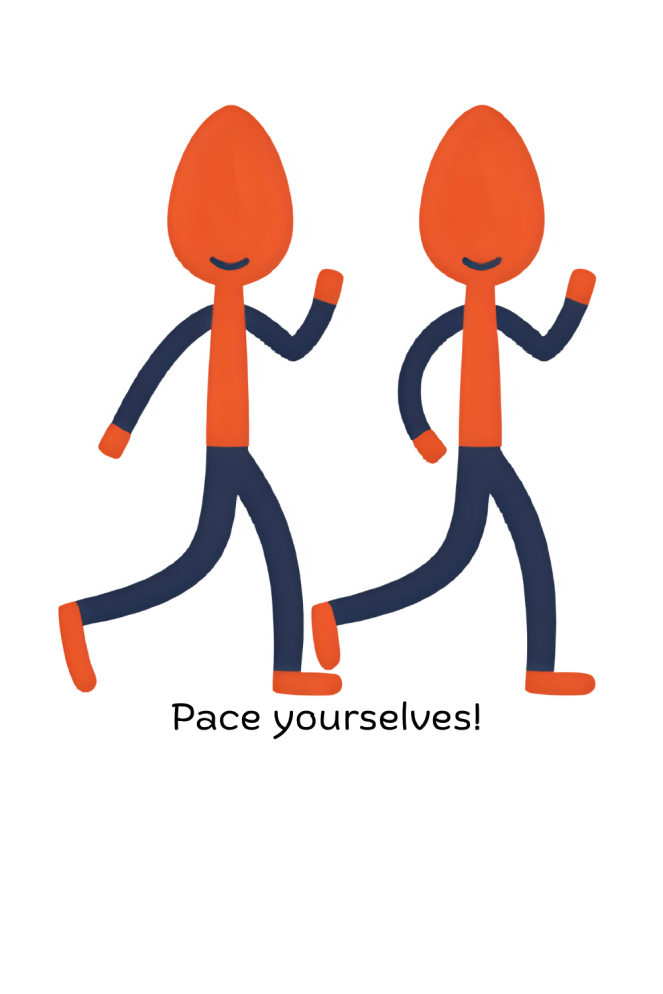
These are my dancin spoons
Here’s what the basic spoon theory explanations miss: When you’re managing fibromyalgia, ADHD, and bipolar disorder simultaneously, your spoons aren’t just limited—they’re unpredictable.
My ADHD brain might hyperfocus and blow through six spoons organizing one closet. A bipolar mood shift can drain spoons faster than a phone with a cracked screen drains battery. And fibromyalgia? It’s like having a fluctuating baseline that changes without warning.
Add parenting an autistic teenager to the mix, and you’re not just managing your own energy—you’re strategically allocating it so everyone gets what they need, including you still being a functioning human by 8 PM. (Well I never claim to be a functioning human any time after 5 lol)
This isn’t about being selfless. It’s about being smart enough to pace yourself so you don’t crash and burn, leaving everyone (including yourself) worse off.
The Science Behind Why We Run Out of Spoons
Research backs up what we’ve always known: fibromyalgia isn’t just “feeling tired.” Studies show people with fibromyalgia experience disrupted sleep, increased pain sensitivity, and central sensitization—basically, our nervous systems are stuck in overdrive.
Key Research Findings:
Fibromyalgia and Central Sensitization: The National Institute of Arthritis and Musculoskeletal Diseases confirms fibromyalgia affects how the brain processes pain signals, leading to widespread pain and fatigue.
Sleep Disruption: 75–90% of people with fibromyalgia experience sleep disorders, creating a vicious cycle where pain disrupts sleep and poor sleep worsens pain.
ADHD and Executive Function: ADHD impacts energy regulation through executive dysfunction, making pacing activities harder.
But here’s what medical literature doesn’t capture: what happens when you can’t just “listen to your body” and rest whenever you need because someone else is counting on you?
Energy Pacing: The Research-Backed Strategy That Actually Works
The good news? There’s solid research supporting strategies beyond “just rest more.” Activity pacing is designed for people who can’t just stop when they’re tired.
Key Research Findings:
Activity Pacing Works: A 2023 systematic review found pacing—regulating activity to avoid post-exertional crashes—is one of the most effective strategies for chronic fatigue conditions.
Better Than Boom-Bust: People who learn pacing techniques report significantly improved quality of life compared to those who push through until they crash.
The Energy Envelope: Research shows staying within your “energy envelope” prevents the crash-and-burn cycle that leaves you useless for days.
The key insight? It’s not about doing less—it’s about doing things more strategically so you can sustain your energy over time.
My Real-Life Strategic Energy System
The Morning Energy Assessment
Every morning, I do a quick reality check: How’s my pain? Did I sleep? Is my brain foggy? This gives me a realistic count of my available energy for the day. A good day might be 15 units. A flare day? Maybe 8. The key is honesty about what I actually have, not what I wish I had.
The Triage System: Essential vs. Optional
I ruthlessly categorize tasks:
Essential: Medication, meals, safety, school pickup Important: Homework, emotional check-ins, sensory accommodations Optional: Fancy meals, deep cleaning, being the “fun mom”
On low-energy days, I focus only on essentials. My teen knows that sometimes we operate in “basic functioning mode,” and that’s just life—not failure. I have learned I am terrible at categorizing though lol.
The 80% Rule
Research shows staying within your “energy envelope” prevents crashes. For me, this means spending no more than 80% of my energy by 3 PM. Kids still need dinner, and I still need to exist as a person after sundown.
Practical Energy-Saving Strategies That Actually Work
Here’s where theory meets reality. These aren’t pie-in-the-sky ideas—these are battle-tested strategies for functioning for others while managing complex needs.
Batch Processing: Work Smarter, Not Harder
High-energy tasks happen on good days. Maintenance mode on the rest. Strategic, not lazy.
Examples:
Book medical appointments together to reduce recovery time
Meal prep when you’re energized, not hangry
Handle school stuff in batches
Environmental Modifications: Make Your Space Work for You
Our home reduces energy demands on purpose. Essentials are easy to reach, grab bars help, and my teen knows the layout.
Modifications:
Keep essentials within easy reach
Set up “stations” for meds, homework, decompression
Use timers and alarms because our brains aren’t built for mental tabs
The 20-Minute Rule
If it takes longer than 20 minutes, it gets chunked smaller or delegated. This prevents ADHD hyperfocus from burning my whole day’s energy.
When Your Teen Needs to Understand Your Reality
One of the hardest parts? Explaining to my autistic teen why I can’t do something today that I could yesterday. Consistency helps, but clarity wins. She’s gotten better since she goes to school based therapy, I’ve really been proud of her empathy lately.
What works:
Concrete language: “I have 3 energy units left. Dinner needs 2.”
Offer alternatives: “I can’t drive you, but I can order it.”
Honesty: “Energy changes daily. Not your fault or mine.”
Involve them: “How can we make this work with what I’ve got left?”
The Guilt Factor: Why Strategic Rest Isn’t Selfish
It took me years to accept this: protecting my energy isn’t lazy—it’s responsible. Proactive rest keeps me showing up tomorrow.
Saying no to extras isn’t shirking responsibility—it’s saving energy for what truly matters. Operating in “basic functioning mode” is how I keep us afloat without sinking out of stubbornness.
Next Week: Building your support network and emergency energy protocols—because even superheroes need backup plans. Til next time gang, take care of yourselves, and each other.
Let me paint you a picture: One neurodivergent parent with executive dysfunction, sensory issues, a flair for hyperfocus (at the worst times), and a caffeine addiction… raising a neurodivergent teen who also has executive dysfunction, sensory issues, and a flair for hyperfocus (also at the worst times). Poor non neurodivirgent Dad lol. (Lucky he’s a little spicy in his own way so he gets it)
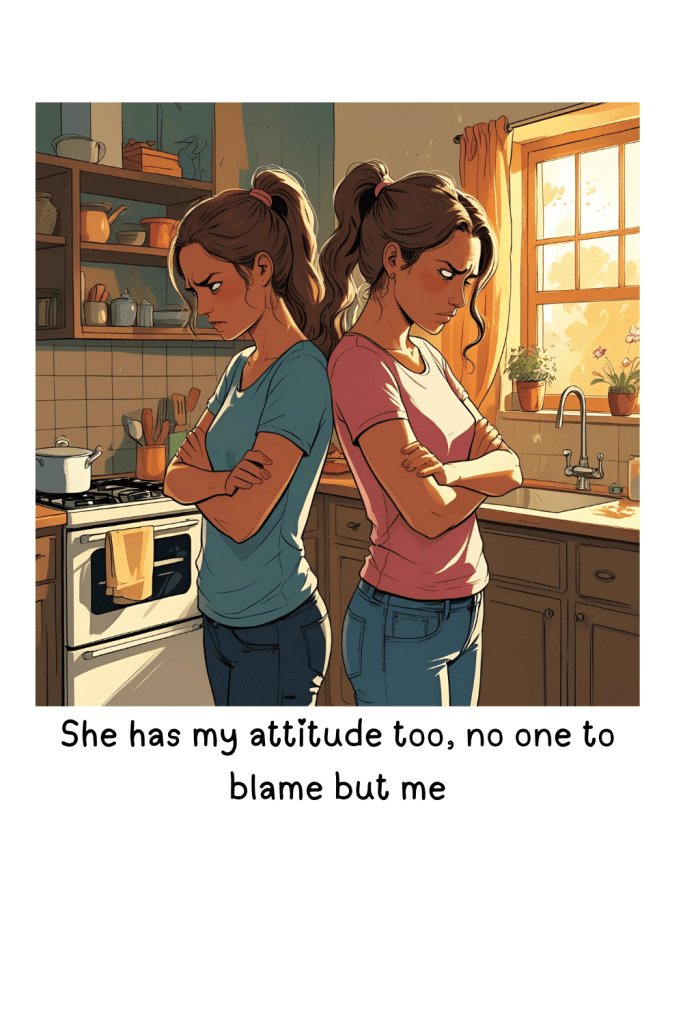
What we’ve got here, folks, is not a traditional household. It’s a feedback loop with matching eye rolls and snack wrappers. With attitude.
“I’m Not Yelling, I’m Just Expressing Loudly With My Whole Body”
I used to think parenting would be about teaching my child how to be a functioning adult. Now I realize it’s about co-regulating while we both spiral in different directions over things like why the peanut butter is wrong. Not gone. Just wrong.
We’ve had conversations like:
“I can’t handle this right now.”
“Same.”
“So what do you want to do about it?”
“I don’t know”
“Cool me either. Want to avoid it together?”
When You’re the Grown-Up and Still Don’t Have the Manual
Let’s be real: parenting any teen is a mix of love, worry, and mystery smells.
Sometimes I’m the wise mentor. Sometimes I’m the raccoon in the laundry room making emotionally impulsive decisions because my hair hurts and I need a snack.
We forget things together. We hyperfixate on the same random topic (shoutout to that two-week deep dive into plane crash documentaries, but our fallback is cat videos lol). We both get overstimulated in stores and end up leaving without whatever we went in for.
But at least we do it as a team.
What Actually Helps Us (Spoiler: Not Just Schedules)
People say neurodivergent kids need structure. Sure. But have you ever tried creating that structure while your brain is doing circus tricks and crying at the same time?
So we’ve learned to build little systems that don’t require too many spoons:
Timers with fun alarms. (Because “Gentle bells” don’t work on either of us. We need “aggressive robot beep.”)
Codewords for meltdowns. (We’ve used “just “NOPE.” but I think we’re good at picking up on each others tells by now no words needed)
Parallel processing. (We do our own things side by side while exchanging exactly 4.5 words. Always. We watch Wheel together, we’re not watching it together so much as competing between each other but the sentiment is there)
And when all else fails: snacks, memes, and leaving the room before anyone says something regrettable.
The Pick Your Battles™ Scale
Let me introduce you to my secret weapon: the Pick Your Battles™ Scale. It’s how I decide whether to engage or let it go with my spicy teen (and honestly, with myself).
Situation
Rating
Translation
They wore pajama pants to the store.
1/10
Not a fight worth my last nerve, so long as all the bits are covered I’m not stressin.
They forgot their homework again.
4/10
Gently nudge, don’t die on this hill.
They said I ruined their life because I made pasta instead of rice.
2/10
Sounds like a feelings day. Feed them, don’t fight them.
They screamed into a pillow instead of at me.
0/10
That’s emotional maturity, baby. Celebrate it. Hubby gets mad if she walks away mumbling under her breath. I’m like really thats NORMAL teen behavior, I’ve done it, so long as the words are to herself I see no harm in letting her cuss me out. Its when she screams at me thats the problem.
They were mean to the cat.
10/10
Pause the world. This one needs addressing.
This little internal rubric helps me reserve energy for what actually matters. (Spoiler: it’s not always the socks on the floor.)
The Secret Sauce: Radical Compassion + Shared Eye Rolls
My kid gets it. I get it. We’re both doing our best with the wonky wiring we’ve got.
Some days that means deep talks about emotions and neurobiology. Other days that means forgetting it’s trash day for the third week in a row and bonding over mutual shame while taking it out in pajamas at 3 p.m.
There’s beauty in the chaos. There’s humor in the mess. There’s love in the way we see each other clearly, even when the world doesn’t.
So If You’re Out There, Fellow Neurospicy Parent…
You’re not failing. You’re not alone. You’re just raising a tiny mirror who also loses their phone in their own hand and argues like a well-informed gremlin.
And that? That’s something worth celebrating.
Preferably with matching fidgets and a mutually agreed-upon “silent hour.” Til next time gang. Take care of yourselves, and each other.
The Dishes, the Drama, and the Floor Dive That Saved the Day
‘woe is me’ – me probably being melodramatic
Let me set the scene: I’m a chronic-illness, ADHD, bipolar, recently-hip-replaced mom trying to hold the household together with duct tape and sarcasm. My teen? Smart. Strong-willed. And currently convinced I’m the villain in her origin story.
And today? Today was The Dishes Incident™.
✋ Scene One: A Chore of Her Own Choosing
We don’t assign chores like a dictatorship around here. I made a list. She chose “dishes.” It was her idea. Ten bucks a week. Seemed simple. No tricks, no traps. Just a job she picked herself.
Last night, after hours of computer time, I said: “It’s time.”
She said: “I’m tired.”
I said: “Fine. Tomorrow morning, before school.”
She said: “Okay.”
Agreement made. Terms accepted. Treaty signed.
⏰ Scene Two: The Deal Breaker
She woke up on her own at 5 AM — a miracle I did not question. Then she asked:
“Can I do them when I get home?”
Cue my calm-but-firm voice: “No. That’s not the deal.” The deal. Her deal.
Enter: rage. Defiance. And the words that burn like fire even when you know they’re just teen flailing:
“I hate you! I want to go live with Grandma!”
Classic. Not the first time I have heard it and it wont be the last I’m sure but it guts me every time.
🐈 Scene Three: The Cat, the Crisis, and the Floor
Then I saw her on the living room camera… getting way too close to one of the cats. And a pit hit my stomach: Was she looking for something to hurt because she was hurting?
the cat was like, ‘you broke the food lady’
I ran. Too fast. My hip screamed. I told her: “If you need to hurt someone, hurt me. I’m the one you’re mad at.”
Then her dad got up. And I — knowing better — told him what she said.
Cue: screaming. Yelling. Not listening. To me, nor each other.
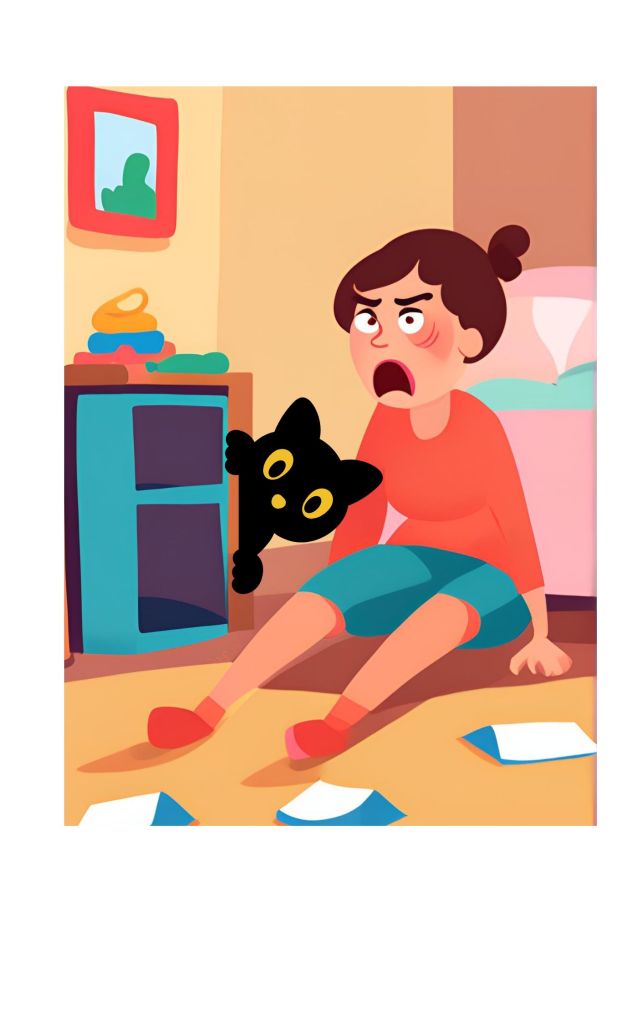
So I did the only thing I could think of. I threw myself on the floor. Literally. Like a one-woman protest movement.
It worked. Not proud of it. But it worked. Because when words don’t reach them, drama sometimes does.
🫱 Scene Four: The Olive Branch (and the Laundry)
Later, I offered her a new deal. The laundry. Every day. Not as punishment — as partnership.
Her dad won’t have to haul baskets up and down stairs. I still can’t do them after surgery. It’s a chance for her to contribute and feel capable again.
But just so we’re clear: If she cooks it, she cleans it. I may be flexible, but I’m not a doormat.
💬 What I’m Learning (Even When It Hurts)
Holding boundaries hurts sometimes. Offering grace doesn’t always feel graceful. Being the “mean mom” isn’t about being cruel — it’s about being consistent.
She sees me as mean today. We’ll see how she is when she gets home. We havent had a blow up like that in a while, sometimes she comes home apologetic, sometimes she doubles down. Maybe one day she’ll see it for what it was: love that didn’t flinch, even when it limped. Til next time gang, take care of yourselves, and each other!










 WannaBeNormal