Uncategorized

IEPs, Insurance, and Insanity: How the System Sets Disabled Kids Up to Fail

Or: How They Tried to Give My 16-Year-Old Bad Credit Before She Even Gets Good Credit

I’m writing this while I’m still seeing red, because sometimes rage is the only appropriate response to systematic incompetence that targets our most vulnerable children.

My teenage daughter, just received TWO medical bills addressed directly to her. Not even to her, to her NICKNAME. Not to me, her parent and legal guardian. To HER. A minor who cannot legally enter into contracts, cannot vote, cannot even get a credit card, but apparently CAN be held financially responsible for psychiatric appointments that she never consented to pay for.

I’m beyond livid, and here’s why that’s food for thought…

The Legal Facts (Because Rage Needs Receipts)

Let me be crystal clear about what’s happening here, because the healthcare system is banking on parents not knowing their rights:

FACT: In the United States, minors (individuals under 18) are not legally responsible for debts incurred, including medical bills. The responsibility typically falls on parents or legal guardians.

FACT: Requiring a person to pay medical bills accumulated when they were a child is unethical and legally unsound because that child never entered into the contract – their parents did.

FACT: Minors are not authorized by law to enter into financial responsibility agreements with medical care providers.

Yet here we are, with a healthcare billing department that apparently thinks legal precedent is more of a “suggestion” than actual law.

The Double Whammy: IEP Violations Too
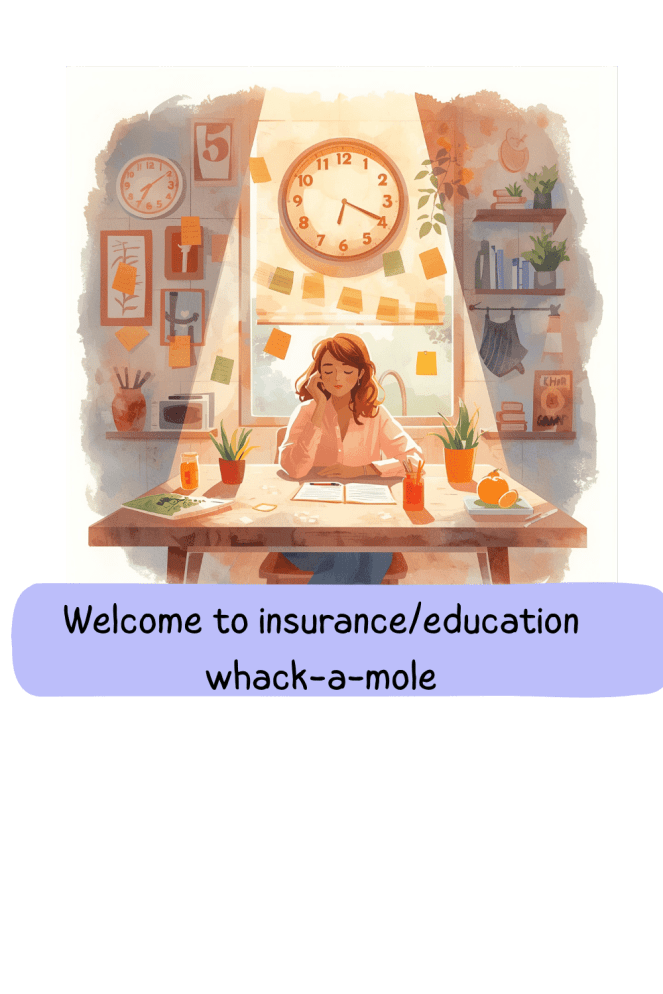
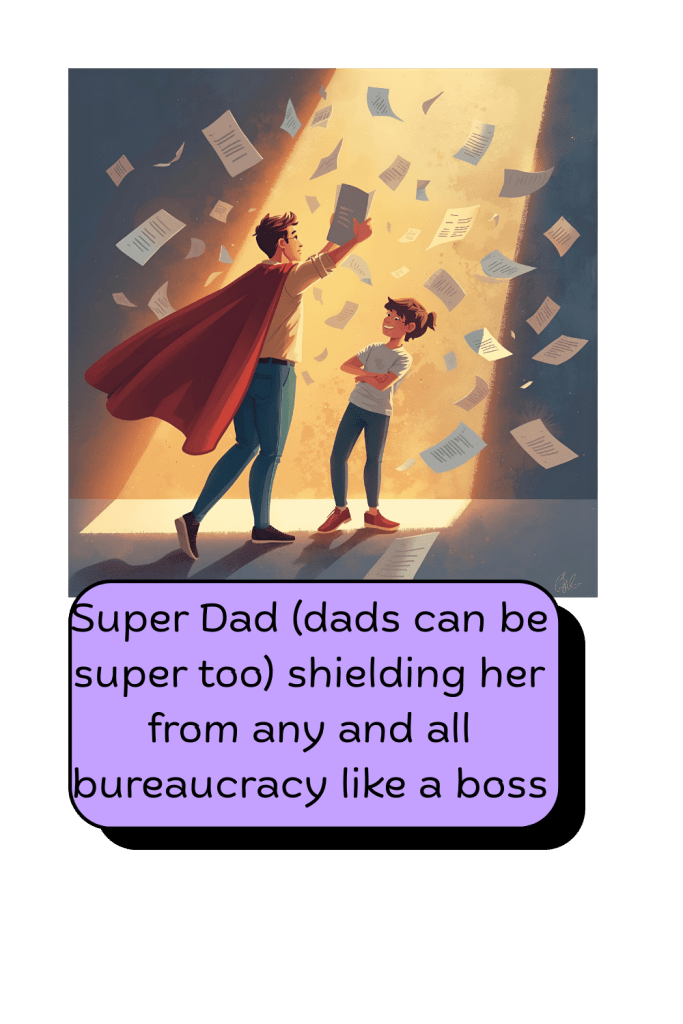
But wait, there’s more dysfunction! Not only did they bill my minor child directly, but the school also changed her IEP – removing over 200 minutes of support – WITHOUT any explanation to us as parents.

FACT: Schools must send prior written notice even if a teacher notified you verbally about a change. If the school fails to send you prior written notice, it’s violating the law.
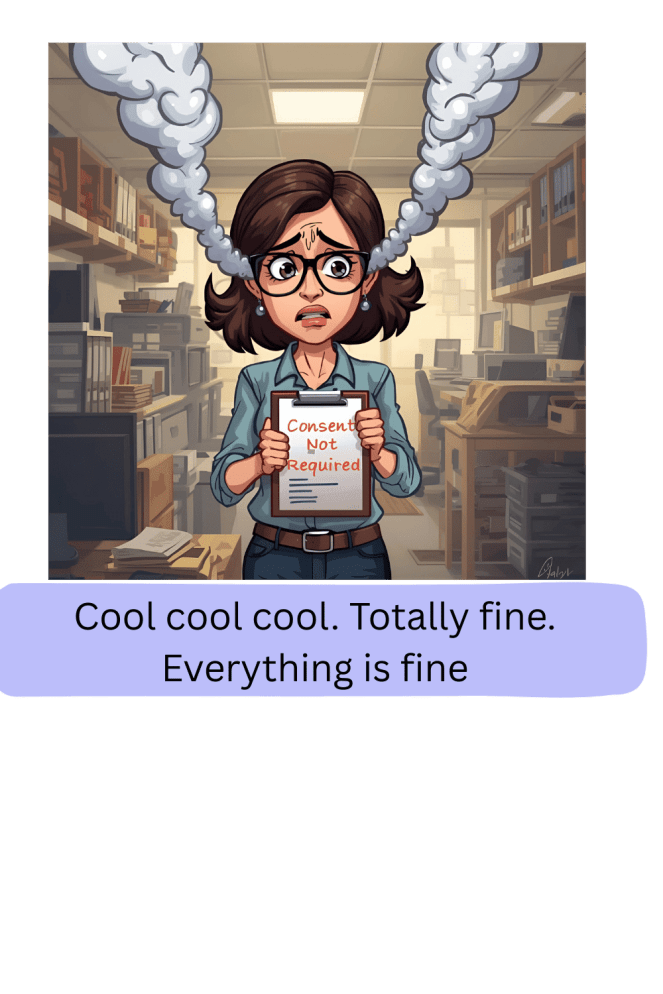
Technically they did this actually to a degree, They dropped the change in my inbox without a single explanation or a shred of guidance if we didn’t agree. Right there at the top, in bold: “We don’t need your consent we’re just letting you know.” (or words to that effect) So I refused to sign it. Or send it.

So in the span of one week, TWO different systems designed to support my disabled child have completely failed her – and apparently think the law is optional.

The Real-World Impact: Setting Kids Up to Fail

Here’s what makes this so insidious: delinquent accounts can harm credit scores, and this will impact them on their 18th birthday and thereafter.

Think about that for a moment. The system is literally trying to saddle my child with bad credit for bills she cannot legally be responsible for, for services she didn’t consent to receive, related to disabilities she didn’t choose to have.

They’re setting her up for financial failure before she even gets a chance to build credit legitimately. Before she can vote. Before she can legally sign a lease or apply for college loans.

The Insurance Shuffle Shell Game

Here’s what started this rolling: My husband got a new job with new insurance. Somewhere in that transition – without any notification to us – some of her services were deemed “not covered” under the new plan. Instead of notifying THE ADULTS who are responsible for these decisions, they:

This is not incompetence. This is systematic targeting of vulnerable families who may not know their rights.

Where Do We Go From Here? A Call to Action

If you’re facing similar situations, here’s what you need to know:

Resources That Actually Help:

The Bigger Picture: Systemic Targeting of Vulnerable Families

This isn’t just about my daughter. This is about a healthcare system that routinely targets families of disabled children, knowing that:

It’s predatory, it’s illegal, and it needs to stop.

To the Healthcare Industrial Complex Reading This:

My daughter is not your cash cow. She’s a human being with rights, and those rights don’t disappear because she has disabilities. Sending bills to minors is not just morally bankrupt – it’s legally indefensible.

You picked the wrong family to mess with. I’m a mother with ADHD hyperfocus, unlimited internet access, and righteous fury. I will make this everyone’s problem until it’s fixed.

To Other Parents: You’re Not Alone
If this happened to your family, you’re not imagining it. You’re not overreacting. This IS wrong, it IS illegal, and you DO have options.

Don’t let them intimidate you with official-looking bills and threatening letters. Know your rights. Research them! Use your voice. Protect your kids.

And if you need someone in your corner who understands exactly how infuriating and overwhelming this is, I’m here. We’re all here. The parent warrior network is real, and we’ve got each other’s backs.

UPDATE: I’ll be following up with exactly how I handle this situation, including any responses I get and resources that prove helpful. Because other parents need to know their options when the system fails their kids.

Til next time gang, take care of yourselves, and each other!

Have you dealt with similar billing issues or IEP violations? Drop your experiences in the comments. Knowledge is power, and we’re stronger when we share information.

Uncategorized

What I Wish People Knew About Parenting With a Body That Doesn’t Cooperate

(AKA: This body is glitchy, but the kids still need lunch.)

Most days, I’m parenting from a horizontal position — on the couch, in the bed, or emotionally face-down in a bowl of cereal. And no, it’s not because I’m lazy. It’s because my body and brain don’t always play nice. Parenting with chronic illness (and some extra mental health sprinkles) isn’t just a different experience — it’s an entirely different reality.

But unless you’re in it, it’s hard to truly understand. So let’s talk about it.


First of all, let’s acknowledge the facts.

  • Parenting is exhausting for anyone, but for people with chronic illnesses like fibromyalgia, arthritis, lupus, or conditions like bipolar disorder and ADHD, it’s a next-level endurance test.
  • A 2019 study published in Health Psychology Open found that parents with chronic pain often experience higher levels of stress, fatigue, and feelings of guilt, especially when they can’t physically engage the way they want to.
  • Many of us deal with “invisible disabilities”, which means the world still expects us to perform like we’re running at 100%… when we’re often at 37% and glitching.

Here’s what chronic parenting really looks like:

  • I’ve prepped lunch while sitting on a stool, with my heating pad strapped to my back and a migraine drilling behind my eyes.
  • I’ve cheered from the car at events because walking across a field was out of the question that day.
  • I’ve been too tired to parent, but parented anyway because these tiny humans don’t come with a pause button.

My kids not only did school things, they did extra curricular things that I’d try and cheer them on for, and maybe the hardest part of that was to remember even in my discomfort my kids are forming memories and I really feel like the most important thing is showing up. The kids see your effort (or they will at some point) and I think its also a good lesson to teach them if its important, you find a way.


🧰 The skill set no one talks about

Sure, I can’t chase my kid around the park like some parents, but I’ve got other skills that are just as powerful:

  • Empathy: I notice when my kid is struggling, even when they don’t say it. That’s the emotional fluency that comes from living in survival mode.
  • Creative problem solving: If you’ve ever turned a laundry basket into a mobile toy bin so you don’t have to get up? You qualify. Incidentally get a grabber. I didnt have one until I had to be creative after my hip replacement, the grabber is a life saver for so simple it was honestly life changing lol.
  • Prioritizing rest over perfection: I’ve learned that being present matters more than doing it all. Show up even if it means napping.
  • Teaching independence: Out of necessity, my kids know how to microwave their snacks and fold their laundry. That’s not failure — it’s life skills.

    I’ve learned even in not being able to do things I’m teaching them to try, when faced with a choice of giving up or maybe altering something just enough to make it the right fit for you.

😞 The guilt is real. So is the resilience.

It hurts when I have to say no because my joints are angry or my brain is on fire. I hate the days when I feel like a spectator instead of a participant. And sometimes I worry about the memories my kids will hold — will they remember the things I couldn’t do?

But then they crawl into bed with me and asking ‘snuggle me in?’ and I realize they don’t see my limits the way I do. They see love, even on the hard days. Or the youngest one does, I don’t speak for the older two. There were days I didnt show up for them and I regret it. That being said, life only goes in one direction. You’ve got to keep walking with it adjusting as you go.


💬 What I want you to know

If you’re not parenting through chronic illness, here’s what helps:

  • Don’t offer unsolicited advice unless you’re also offering childcare or dinner.
  • Don’t assume we’re fine because we look okay for five minutes.
  • Ask how we’re really doing, and mean it.
  • Celebrate the small wins with us — like getting everyone dressed and vaguely fed before noon.

💛 And if you are one of us…

Parenting with a glitchy body, a misfiring brain, or both? You’re not alone. You’re not broken. And your kids don’t need perfect — they need you.

Even if today’s victory is frozen waffles and letting the screen time run wild while you rest? That counts.

You’re doing enough. More than enough.


Want to connect with more parents who get it?
👉 https://www.pinterest.com/wannabenormal/
or visit my etsy shop https://www.etsy.com/shop/JoknowsCreations
📌 Share this post to remind another spoonie mama she’s not alone.
Til next time gang. Take care of yourselves, and each other!!!

Uncategorized

Lessons from a Neurospicy Household

(Or: Things I’ve Learned the Hard Way and Now Pass Off as Wisdom)

1️⃣ If you open the dishwasher to “just add one thing,” congratulations. You now live here.
Ownership transfers upon entry. If you can’t fill it, go check your room. I know you dont eat in there as a general rule but go look and see if the random missing spoon is hanging out with the stray socks in their hideout.

2️⃣ “We’ll deal with it later” is a valid strategy until further notice.
No one said when later is. Legally, you’re covered. Until 5 pm when all the things you were going to do catch up and your teenager is asking why something isnt done to their exacting standards.

3️⃣ Matching socks are a social construct.
As are bedtimes, sanity, and tidy junk drawers. For socks, maybe track some other missing stuff (like the spoon from before), I swear theres a Narnia or hiding dimension.

4️⃣ No one has ever truly recovered from stepping on a rogue Lego.
We carry these wounds in silence. And orthopedic inserts. My kitty in the sky Bonkers used to sleep on them, a full bucket without the lid, weirdo. Miss you little dude but thanks for sending me Fryday who amuses me endlessly, but I still miss you!

5️⃣ If you set something down ‘just for a second,’ it’s gone forever.
Gone to the shadow realm. Gone where keys and pens go to die. See narnia, also with socks and spoons. And the tupperware lids vs tupperware ratio is always uneven so I blame them too.

6️⃣ Your brain will retain the lyrics to a 1997 boy band hit but not why you walked into the room.
Priorities. We don’t make the rules. Its tearing up my heart that you don’t ‘remember the time’ you walked into a room and left with exactly what you walked in there for but honestly ‘bye bye bye’ to that dream because honestly we’re ‘never gonna get it no never gonna get it’

7️⃣ Snacks are sacred.
Do not touch another’s designated snack without first drafting a formal agreement and receiving notarized consent. I think it sucks so much worse when you crave a texture and have no food with that texture available. Like I hate it when I bring home fresh baked goods because I can only eat one every few days or I forget its there. I MIGHT get one. Vultures.

8️⃣ If the ADHD person in your house starts cleaning, DO NOT INTERRUPT.
You’re witnessing a natural phenomenon rarer than a solar eclipse. Often whats good is pulling up a rag and joining them, not that you need to do any of the cleaning, they’ll do it but they will do it alot faster if you join them.

9️⃣ We don’t do ‘normal’ here.
We tried. It was exhausting. Weird is cheaper and fits better. I have discussed this at length, I know the name is deceiving because I love being weird and don’t want any part of me normal lol. There was a time I did strive to an impossibly high level too. That me burned herself out a decade ago.

🔟 The motto remains: Lower the bar, keep the vibe.
Survival with style. That’s the goal. Often its just survival.


Closing Thought:

Some houses run on routine, others run on vibes and caffeine.
Guess which one we are. Til next time gang, take care of yourselves, and each other!

Uncategorized

10 Half-Assed Mindfulness Hacks for Parents Who Are Losing Their Shit

Listen up, you beautiful disasters! If you’re like me—juggling ADHD, bipolar disorder, fibromyagia, and a kid on the autism spectrum—you probably feel like you’re one meltdown away from joining the circus. Well, grab a seat and a drink (coffee, wine, whatever floats your boat), because I’m about to drop some truth bombs about mindfulness for parents who don’t have time to om their way to nirvana. As if life isnt stressful enough we have elections and questionable economics time. Seriously guys if I think about it too long I cry. So, the answers? I don’t have any, but we’re in it together, so lets get more mindful and attentive and lets be present.

  1. The “Oh Shit” Breath
    When life’s going to hell in a handbasket, take five seconds to breathe like you mean it. It’s not meditation, it’s survival.

  2. Actually Listen to Your Kid (Revolutionary, I Know)
    Put down your phone and pretend your kid’s the most interesting person in the world. Bonus: You might actually learn something.

  3. Body Scan for the Chronically Pained
    From your toes to your “I need coffee” headache, check in with your body. It’s like playing “Where’s Waldo?” but with pain.

  4. One Damn Thing at a Time
    ADHD brain wants to do all the things? Tough shit. Pick one task and stick to it like your sanity depends on it (because it does).

  5. Mindful Eating (Or Inhaling, Let’s Be Real)
    Take a hot second to actually taste that cold pizza you’re scarfing down between crises. Your taste buds will thank you.
  6. Savor the Silence (All 3 Seconds of It)
    Find a quiet moment and cling to it like it’s the last lifeboat on the Titanic. Even if it’s just hiding in the bathroom.
  7. Gratitude: Not Just for Hippies
    When your brain’s being a jerk, list three things you’re grateful for. Even if it’s “I’m grateful I haven’t lost my mind… yet.”
  8. Transition Without Tantrums (You, Not the Kids)
    Take a breath before switching gears. It’s like hitting the mental reset button, but without the IT guy.
  9. Self-Compassion for the Self-Loathing
    On days when you feel like the world’s worst parent, remind yourself: “I haven’t sold the kids to the circus yet, so I’m winning.”
  10. Mindful Moments for the Time-Strapped
    Use those in-between moments to check in with yourself. Waiting in line? Perfect time for a mental health check instead of doom-scrolling.

Look, I know mindfulness sounds like something for people who have their shit together. But trust me, it’s for us mess-makers too. These aren’t fancy techniques; they’re survival skills for parents on the brink. So the next time you’re about to lose it, try one of these. And remember, we’re all in this chaotic, beautiful clusterfuck together. Now go forth and half-ass your way to mindfulness, you amazing people and take care of yourselves, and each other

Uncategorized

Navigating Parental Estrangement

As I have alluded to previously, this is a subject that touches my life. I’m not yet ready to be so vulnerable and open in public but I will in time, with the understanding that I won’t do or say anything assigning any blame. I made mistakes and I am living with the results of the choices I made, I’m to blame, but I need to move past , well, no, I need to move forward with this, the anchor around my neck. I can’t imagine it ever getting any lighter so the time to discuss it is now I suppose.
Parental estrangement is when a parent and their child have a significant and often prolonged rift in their relationship. It’s like a big emotional gap between them, where they might not talk to each other or have very limited contact. This can happen for various reasons, like conflicts, misunderstandings, or even unresolved issues from the past. It’s a tough situation for both the parent and the child, and it often involves a lot of hurt feelings and sadness. I won’t get into my story in too much detail, but its fair to say I have knowledge in the subject and I am looking for my tribe of other people who share this horrible impactful experience. I’m seeking understanding and connection with others who have gone through similar situations. It’s natural to want to find a community where you feel heard, validated, and supported. Join us!

https://youtu.be/QGD17bIZsnk

Uncategorized

Some words about being an autism parent…

Hi! Sick of me yet? You will be, I’m A LOT.
So I thought I’d write a few words about being the parent of an autistic child. It is not an easy thing to summarize, and no two kids with autism or without are the same, so this might not be your experience but for those out there who are experiencing ANY aspect of this, I empathize!

I’m a mom and was a daycare worker for years, and yet when my youngest came along I was incredibly ill prepared for her special brand of antics. We didn’t really worry much when our little one missed some verbal milestones, every kid is different and we knew she COULD vocalize, it was almost like she wanted to study words and letters, how they felt coming out of her mouth, I swear she vocalized every combo of sounds you can think of just none in the combos that meant actual tangible things. So when she hit age 2 she had enough of a deficit in the language skills area that we were sent to a specialist. Honestly, getting her diagnosis was a turning point, we could put a name to it, develop strategies to deal with it, like the devil you know argument. So to the google I went to learn everything there was to know about how to give her the very best chances in life.


If I were to give advice, it would be absorb all the info you can from the experts, same as you would with anything you had no experience with, but in those experts, know who speaks your language and can answer your questions honestly in ways you can understand, because in the end, you’re all working towards the same goal. For me that was through a program called Parents As Teachers. I met the greatest people, I really did, and I loved them like family. We got her immediately into other therapy programs, started her in preschool soon as they’d take her, and had home based therapy for at least the first year maybe two. Those pivotal years right before regular school starts where they get more one on one time. We all learned some basic sign language, and for some reason that worked. I’ve always been confused about why it worked, because she’s learning the words but not saying the words with her mouth just with her hands. By the time she was school age she had the expected vocabulary and had grown exceedingly easier to understand, though we did rely on a small group of people who ‘spoke Z’. The way she words things to this day still confuses me, like if she’d like something she’ll say ‘there are Gatorades in the living room’ when what she actually means is ‘hey, I saw the Gatorades out there, MAY I HAVE ONE?’ Lol, I have countless quotes of the way she words things that I was smart enough to stick on facebook any time one gave me a healthy chuckle. One of the more recent examples of this was this year, in her doctors office they gave her a wellness checklist of some sort, but they just gave it to her, no explanation and expected her to fill it out and give it right back, meaning we didn’t see it. That’s fine, I don’t need to input anything she can speak for herself, however, I feel like they are treating her for her age rather than her mental age which is a few years slower. I knew it didn’t go well when they doc came in and put the rolley chair so they were between us and her, and said ‘so why do you hurt yourself?’ Speaking of self harm, where she thought the question was more of a ‘do you trip fall and hit yourself on things’ and she was just telling them she was clumsy. She also is a very literal child, for as indirect as she words things sometimes, and she lives in a house with two of the most sarcastic parents you’ll ever meet. It was hard, but what options did we have? I feel like through her we all learned different ways of learning things so we could teach her better.
She wasn’t fully potty trained at five but she was speaking more and phasing the sign language out in favor of speaking. She had a wonderful, amazing, committed teacher who had her for all of her preschool years (shout out to Ms Tracy, you are an angel and we love you).


As she got older, it was the meltdowns that got us pulling our hair out. I can’t tell you how many times she’d hyper fixate on something (usually a food) and she’d only have that one thing…. Until she was just dead to it. So many times, you buy as many chicken nuggets as your freezer can hold because that’s all she will eat, then one day she wakes up and says ‘no I HATE chicken nuggets’ then it was a corndog kick. We tried to explain to her she could have both we could rotate things, she wasn’t having it. So quick to use words like hate and just switching things off like a switch. She did it with movies, she’d have one playing on a loop since she was like 4 and could figure out the remotes. THAT was a kicker. We had to put a LOCKING gate on our kitchen entryway because we kept waking up to her helping herself to the fridge. She was SO smart in someways, I would watch as she worked something out in her head, so her not knowing how to say things confused me, because I’ve always been the opposite, I have the words but not the figuring out skills. It was very conflicting. School was a blessing as she started to fall into line a bit and get a bit more structured, but it came with its own struggles, she was ‘misplaced’ more than once, as recently as THIS YEAR by the school and also because she doesn’t pay attention. To be clear I do not fault the school for the issue this year but there were no check and balances or we wouldn’t have this problem still.


She still has meltdowns, they have thankfully become less frequent which good considering she’s bigger than me now. The biggest concern there was she would frequently shut off in the middle of a melt down and there was no reasoning with her she’d just lash out. A lot of times it was about keeping her from hurting herself. Like LITERALLY hitting and scratching herself. Other times it was about other people. We got a call from the school once because she threw a shoe at her teacher. Once it was called to the school with them telling us they could have called the cops on her for assault, and I think she was 8, they were just telling us they had that option and we were lucky they didn’t choose to use it. We decided early on that her being difficult with US was preferable to her being difficult at school. Most teachers spoke of her like she was a different kid at parent teacher conferences, but that’s common for a lot of kids I know.

When she was diagnosed, like in the meeting, the doctor tried to illustrate a point and he handed my kid a pencil and said ‘this is an airplane’. My kid looked to us like ‘is this guy an idiot? that’s a pencil’ The doctor then tells us ‘see? she has no imagination’ then moved along as if he hadn’t just totally gas lit my kid. I often think about that doctor and wonder why he still had a job because he could not have been more wrong in regards to imagination. She was raised mostly as a single child because my ex did not believe law applied to him and disregarded visitation schedules, so she got bored and invented kids to play with. She had the same imaginary friends for years, and in 5th grade she wrote a little bio about herself and had her teacher believing we had other younger kids, a dog, just a whole narrative of inaccurate info. She started talking about them, and people kept telling us she’ll grow out of it, unfortunately I think that approach failed us because while having conversations with yourself is pretty common, the fact that she did it around people and to all her made up friends around REAL kids who could have been her friends left her being seen as the ‘weird kid’ so the other kids would ignore her, so she relied harder on the imaginary ones who never made fun or disagreed with her, vicious cycle. Between people telling us this was normal and she’d grow out of it PLUS the pandemic we didn’t have the opportunity to get her tested for Schizophrenia and related diagnosis until last year. As expected, they don’t think she believes the voices to be real, and hubby and I are wondering if she lied to the doctor and on the test (which she filled out faster than anyone had the doctor said) because she is very good at coming up with an answer you want to hear. So much so that if you ask her a yes or no question, then ask her to explain why she answered that way, she will often times say the exact opposite. She doesn’t want to explain, she has more urgent matters that involve bouncing around (her stimming) and talking to her imaginary friends and she wants to get back to it. I’ve had more and more difficulty with meaningful conversations. That said, if we’re talking about one of her hyper focus things she’s surprisingly insightful because she will research things relentlessly, so long as its something she likes. Which changes at the drop of a hat. An invisible hat lol.

I love my kiddo and I know she’s different, but we encourage anything that she wants to do that involves other kids because its less time alone with only her imaginary friends. She’s a good kid and a fun kid and I want others to see that. I want others to see the similarities and appreciate the differences rather than thinking she’s weird or any kind of ridicule but we can’t save her from all of it, kids are mean. They did put her on some meds after I refused for years trying to give her brain time to develop. I also had to be convinced that I wasn’t just trying to give her meds to make my life easier. I didn’t want to drug her into zombie compliance. In the end its an individual decision but she’s in therapy and closely monitored. I’d love to hear from other Autism parents, brainstorm some tips to make the imaginary friends become less of an obstacle, maybe fade into the background once she gets to high school. There’s so SO much more I’d love to and will share with you at a later time but I wanted to bring Autism awareness and neurodivergence into the conversation. Until next time, stay kind to yourselves and each other.