You know how some people lose themselves in books or meditation? Yeah, not me. I lose myself in a daily game of hide & seek with my household items. Keys, phones, socks, remotes, pens — all apparently sentient and united in their mission to make me look ridiculous.
What makes it worse? The conversations I have with myself while I’m searching. Spoiler: I’m both the villain and the detective, and I’m never kind to myself in either role.
Here’s a peek into the thrilling mysteries that unfold in my home:
🧦 The Missing Socks Saga
One sock left in the dryer, the other AWOL.
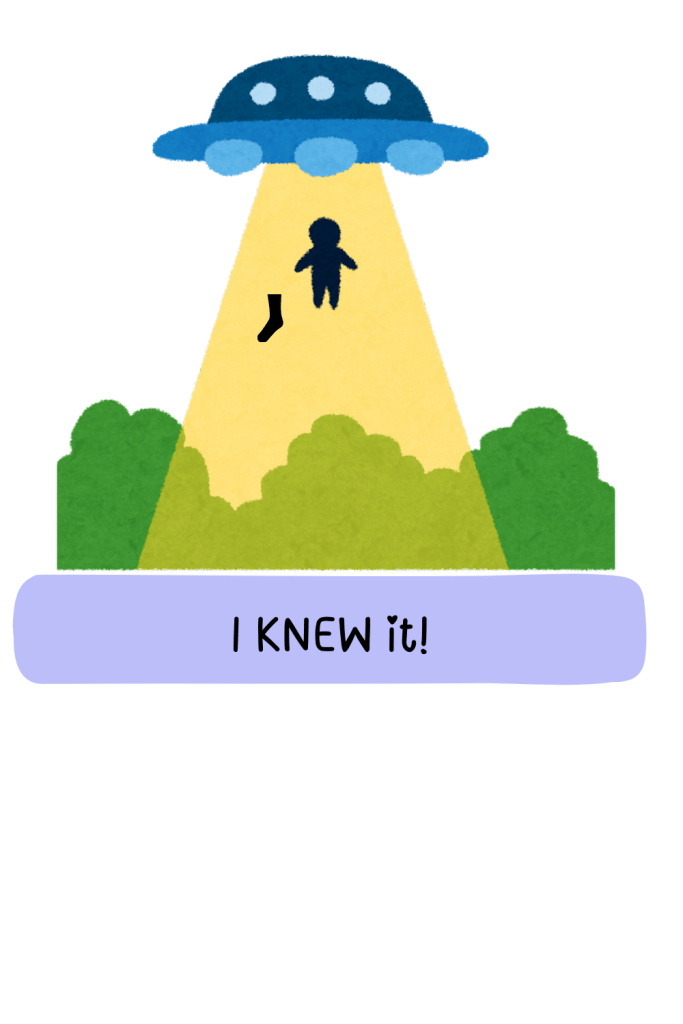
Me: “Did I put this in the laundry?” Also me: “Nope, it was definitely in the drawer.” Me: “So… abducted by aliens?” Also me: “Or maybe it’s sipping espresso in Paris while you walk around like a mismatched peasant.”
Result: I usually find it way too late — after my daughter has cut it into an art project, or the cat has been subjected to a “custom sweater” that was three sizes too small.
📱 The Vanishing Phone Mystery
My phone disappears precisely when I’m already late.
Me: “I know I set it down… somewhere.” Also me: “Maybe in the fridge? You’ve done worse.” Me: “I don’t know! I don’t know anything anymore! This is how the chaos wins.” Also me: “Honestly, you’d be late even if it was taped to your forehead.”
📺 The Remote’s Secret Life
The remote hides in plain sight: under cushions, in laundry baskets, behind the cat.
Me: “This remote is plotting against me.” Also me: “Yep, it’s basically Loki in plastic form.” Me: “It knows I want to binge my show. This is betrayal on a molecular level.” Also me: “Face it, the remote has stronger boundaries than you do.”
✨ Bonus Round – The Usual Suspects
Pens that vanish. Hair ties that escape. Phone chargers that ghost me like a bad date.
Me: “Is it under the bed, on the counter, or did it grow legs?” Also me: “Nah, it packed a bag and joined the circus.” Me: “Fine. I’ll just survive off raw anxiety.” Also me: “Cool, that’s basically your whole lifestyle brand anyway.”
The Takeaway
Somewhere between yelling at invisible forces and negotiating with the cat, I’ve realized: maybe this is just normal. Maybe everyone’s household is secretly playing hide & seek with their sanity. Also me is a comedy genius lol.
Or maybe I’m just cursed.
Either way, I’m declaring a truce. But first… coffee. Definitely coffee.
(Or: Things I’ve Learned the Hard Way and Now Pass Off as Wisdom)
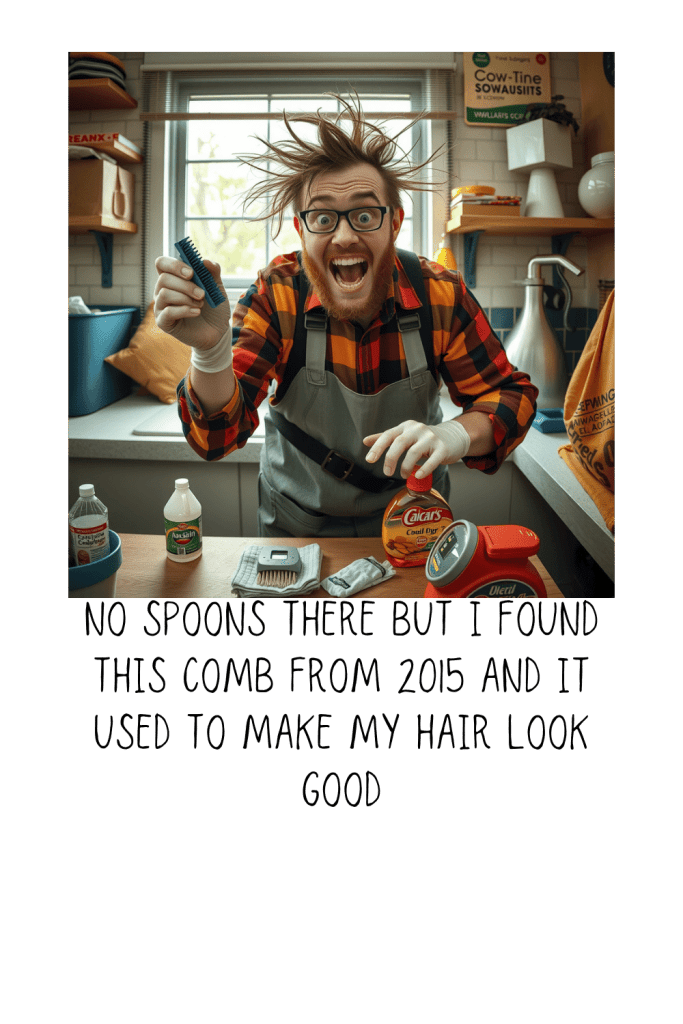
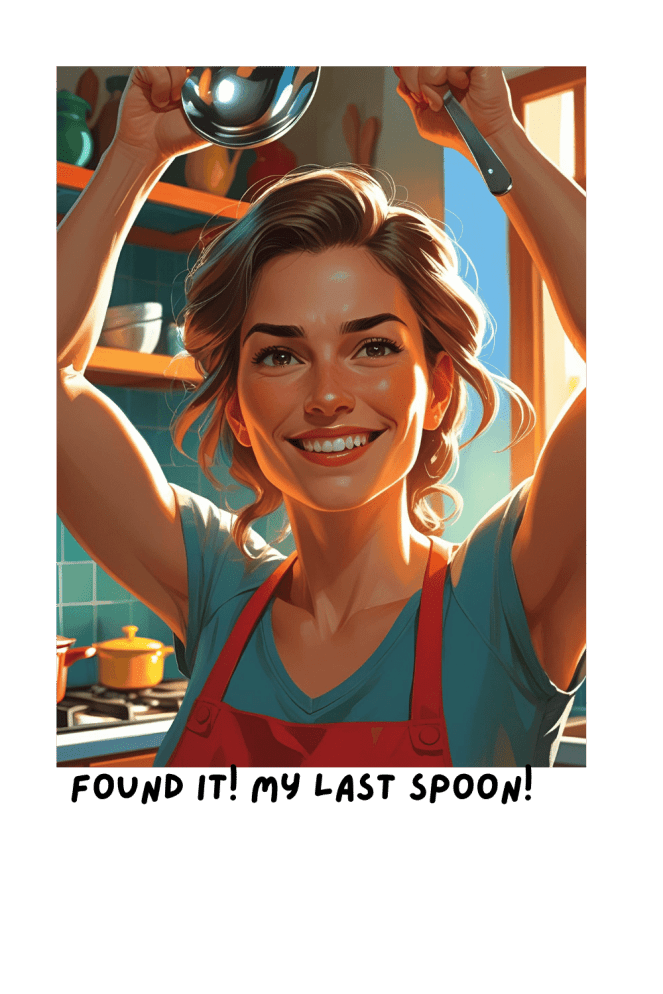
1️⃣ If you open the dishwasher to “just add one thing,” congratulations. You now live here. Ownership transfers upon entry. If you can’t fill it, go check your room. I know you dont eat in there as a general rule but go look and see if the random missing spoon is hanging out with the stray socks in their hideout.
2️⃣ “We’ll deal with it later” is a valid strategy until further notice. No one said when later is. Legally, you’re covered. Until 5 pm when all the things you were going to do catch up and your teenager is asking why something isnt done to their exacting standards.
3️⃣ Matching socks are a social construct. As are bedtimes, sanity, and tidy junk drawers. For socks, maybe track some other missing stuff (like the spoon from before), I swear theres a Narnia or hiding dimension.
4️⃣ No one has ever truly recovered from stepping on a rogue Lego. We carry these wounds in silence. And orthopedic inserts. My kitty in the sky Bonkers used to sleep on them, a full bucket without the lid, weirdo. Miss you little dude but thanks for sending me Fryday who amuses me endlessly, but I still miss you!
5️⃣ If you set something down ‘just for a second,’ it’s gone forever. Gone to the shadow realm. Gone where keys and pens go to die. See narnia, also with socks and spoons. And the tupperware lids vs tupperware ratio is always uneven so I blame them too.
6️⃣ Your brain will retain the lyrics to a 1997 boy band hit but not why you walked into the room. Priorities. We don’t make the rules. Its tearing up my heart that you don’t ‘remember the time’ you walked into a room and left with exactly what you walked in there for but honestly ‘bye bye bye’ to that dream because honestly we’re ‘never gonna get it no never gonna get it’
7️⃣ Snacks are sacred. Do not touch another’s designated snack without first drafting a formal agreement and receiving notarized consent. I think it sucks so much worse when you crave a texture and have no food with that texture available. Like I hate it when I bring home fresh baked goods because I can only eat one every few days or I forget its there. I MIGHT get one. Vultures.
8️⃣ If the ADHD person in your house starts cleaning, DO NOT INTERRUPT. You’re witnessing a natural phenomenon rarer than a solar eclipse. Often whats good is pulling up a rag and joining them, not that you need to do any of the cleaning, they’ll do it but they will do it alot faster if you join them.
9️⃣ We don’t do ‘normal’ here. We tried. It was exhausting. Weird is cheaper and fits better. I have discussed this at length, I know the name is deceiving because I love being weird and don’t want any part of me normal lol. There was a time I did strive to an impossibly high level too. That me burned herself out a decade ago.
🔟 The motto remains: Lower the bar, keep the vibe. Survival with style. That’s the goal. Often its just survival.
Closing Thought:
Some houses run on routine, others run on vibes and caffeine. Guess which one we are. Til next time gang, take care of yourselves, and each other!
When your energy comes with an expiration date, every choice becomes strategic.
We all know spoon theory. But let’s be real—most of the advice assumes you’re managing your energy for your own activities. What happens when you can’t just “rest when you need to” because someone else depends on you for dinner, rides, and emotional regulation? When your autistic teenager needs consistency but your fibromyalgia is flaring? When your ADHD brain forgot to save energy for the evening routine, but bedtime still has to happen?
I’m not trying to be a saint here—I’m trying to survive until bedtime without completely falling apart. And that requires a different kind of energy strategy than the basic spoon theory tutorials assume.
The Complex Reality: When Multiple Conditions Collide
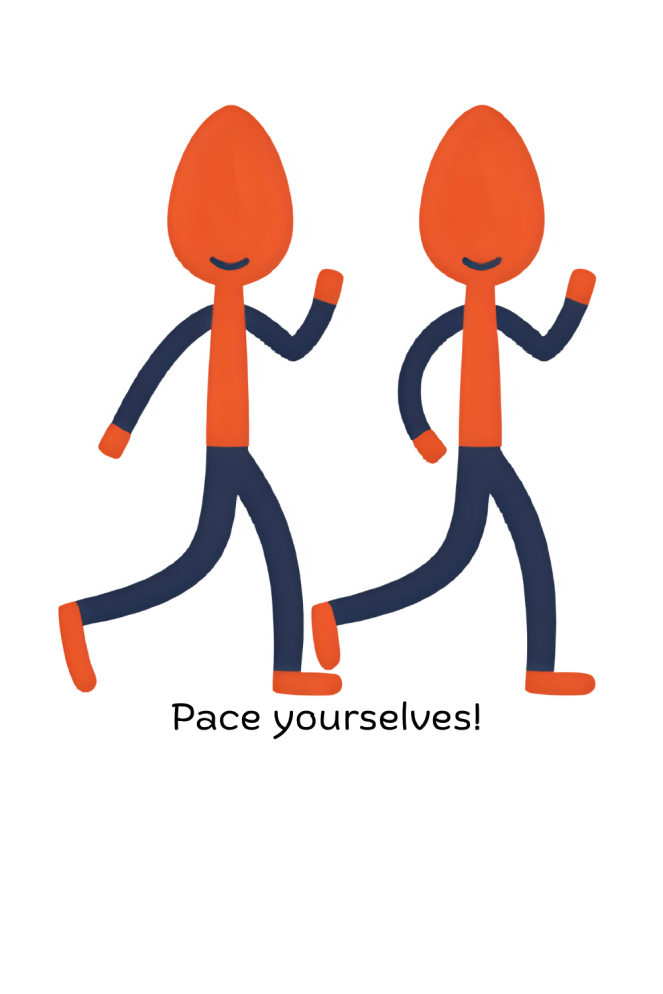
These are my dancin spoons
Here’s what the basic spoon theory explanations miss: When you’re managing fibromyalgia, ADHD, and bipolar disorder simultaneously, your spoons aren’t just limited—they’re unpredictable.
My ADHD brain might hyperfocus and blow through six spoons organizing one closet. A bipolar mood shift can drain spoons faster than a phone with a cracked screen drains battery. And fibromyalgia? It’s like having a fluctuating baseline that changes without warning.
Add parenting an autistic teenager to the mix, and you’re not just managing your own energy—you’re strategically allocating it so everyone gets what they need, including you still being a functioning human by 8 PM. (Well I never claim to be a functioning human any time after 5 lol)
This isn’t about being selfless. It’s about being smart enough to pace yourself so you don’t crash and burn, leaving everyone (including yourself) worse off.
The Science Behind Why We Run Out of Spoons
Research backs up what we’ve always known: fibromyalgia isn’t just “feeling tired.” Studies show people with fibromyalgia experience disrupted sleep, increased pain sensitivity, and central sensitization—basically, our nervous systems are stuck in overdrive.
Key Research Findings:
Fibromyalgia and Central Sensitization: The National Institute of Arthritis and Musculoskeletal Diseases confirms fibromyalgia affects how the brain processes pain signals, leading to widespread pain and fatigue.
Sleep Disruption: 75–90% of people with fibromyalgia experience sleep disorders, creating a vicious cycle where pain disrupts sleep and poor sleep worsens pain.
ADHD and Executive Function: ADHD impacts energy regulation through executive dysfunction, making pacing activities harder.
But here’s what medical literature doesn’t capture: what happens when you can’t just “listen to your body” and rest whenever you need because someone else is counting on you?
Energy Pacing: The Research-Backed Strategy That Actually Works
The good news? There’s solid research supporting strategies beyond “just rest more.” Activity pacing is designed for people who can’t just stop when they’re tired.
Key Research Findings:
Activity Pacing Works: A 2023 systematic review found pacing—regulating activity to avoid post-exertional crashes—is one of the most effective strategies for chronic fatigue conditions.
Better Than Boom-Bust: People who learn pacing techniques report significantly improved quality of life compared to those who push through until they crash.
The Energy Envelope: Research shows staying within your “energy envelope” prevents the crash-and-burn cycle that leaves you useless for days.
The key insight? It’s not about doing less—it’s about doing things more strategically so you can sustain your energy over time.
My Real-Life Strategic Energy System
The Morning Energy Assessment
Every morning, I do a quick reality check: How’s my pain? Did I sleep? Is my brain foggy? This gives me a realistic count of my available energy for the day. A good day might be 15 units. A flare day? Maybe 8. The key is honesty about what I actually have, not what I wish I had.
The Triage System: Essential vs. Optional
I ruthlessly categorize tasks:
Essential: Medication, meals, safety, school pickup Important: Homework, emotional check-ins, sensory accommodations Optional: Fancy meals, deep cleaning, being the “fun mom”
On low-energy days, I focus only on essentials. My teen knows that sometimes we operate in “basic functioning mode,” and that’s just life—not failure. I have learned I am terrible at categorizing though lol.
The 80% Rule
Research shows staying within your “energy envelope” prevents crashes. For me, this means spending no more than 80% of my energy by 3 PM. Kids still need dinner, and I still need to exist as a person after sundown.
Practical Energy-Saving Strategies That Actually Work
Here’s where theory meets reality. These aren’t pie-in-the-sky ideas—these are battle-tested strategies for functioning for others while managing complex needs.
Batch Processing: Work Smarter, Not Harder
High-energy tasks happen on good days. Maintenance mode on the rest. Strategic, not lazy.
Examples:
Book medical appointments together to reduce recovery time
Meal prep when you’re energized, not hangry
Handle school stuff in batches
Environmental Modifications: Make Your Space Work for You
Our home reduces energy demands on purpose. Essentials are easy to reach, grab bars help, and my teen knows the layout.
Modifications:
Keep essentials within easy reach
Set up “stations” for meds, homework, decompression
Use timers and alarms because our brains aren’t built for mental tabs
The 20-Minute Rule
If it takes longer than 20 minutes, it gets chunked smaller or delegated. This prevents ADHD hyperfocus from burning my whole day’s energy.
When Your Teen Needs to Understand Your Reality
One of the hardest parts? Explaining to my autistic teen why I can’t do something today that I could yesterday. Consistency helps, but clarity wins. She’s gotten better since she goes to school based therapy, I’ve really been proud of her empathy lately.
What works:
Concrete language: “I have 3 energy units left. Dinner needs 2.”
Offer alternatives: “I can’t drive you, but I can order it.”
Honesty: “Energy changes daily. Not your fault or mine.”
Involve them: “How can we make this work with what I’ve got left?”
The Guilt Factor: Why Strategic Rest Isn’t Selfish
It took me years to accept this: protecting my energy isn’t lazy—it’s responsible. Proactive rest keeps me showing up tomorrow.
Saying no to extras isn’t shirking responsibility—it’s saving energy for what truly matters. Operating in “basic functioning mode” is how I keep us afloat without sinking out of stubbornness.
Next Week: Building your support network and emergency energy protocols—because even superheroes need backup plans. Til next time gang, take care of yourselves, and each other.
(Only mildly exaggerated, but it wouldnt matter because we’re spicy and no one tells US what to do!))
1. Snacks Count as a Coping Skill.
If it has carbs, it’s basically therapy. Cheese is classified as its own group lol.
2. “I Forgot” Is a Valid Reason.
So is “my brain glitched.” No need to lie about aliens (unless it’s funny). Maybe a George interrupted your thoughts IYKYK
3. Parallel Play Is Quality Time.
Existing near each other silently? Peak bonding. We congratulate each other when we imaginary win Wheel of Fortune.
4. Meltdowns Are Temporary; Love Is Not.
Cry it out, stim it out, leave the room dramatically — we’re still good. Some times we need to give each other a 15 minute buffer of alone time after disrupting or unsettling encounters.
5. Mutual Respect > Clean Counters.
Nobody ever died from crumbs, but words? They linger. I cannot emphasize this sarcastically because I really want you to think about what you say and as much as you can be, be intentional.
6. Matching Socks Are Optional. Headphones Are Not.
Protect your peace. Protect others from your playlists. Wear what you want some long as your covering the important parts lol.
7. No Important Conversations After 8pm.
Unless it’s about snacks, cat memes, or space facts. Write it down, type it out, I can promise you if you tell me something at night I have ZERO recall the next day.
8. Time Is Fake, But Deadlines Are Real.
We use timers, calendars, sticky notes, and sheer panic. As I’ve said in the past, try using time blocks rather than completed activities.
9. Sensory Needs Come First.
Dim the lights, turn down the noise, and yes, we will leave the store. I have no problem just getting up and going outside if the air starts to overwhelm and choke you.
10. We Are Allowed to Be Weird Here.
Repeat as needed: Normal is a setting on the dryer. Because normal is overrated, and honestly, it looks even more exhausting. Lol, til next time gang, take care of yourselves, and each other!
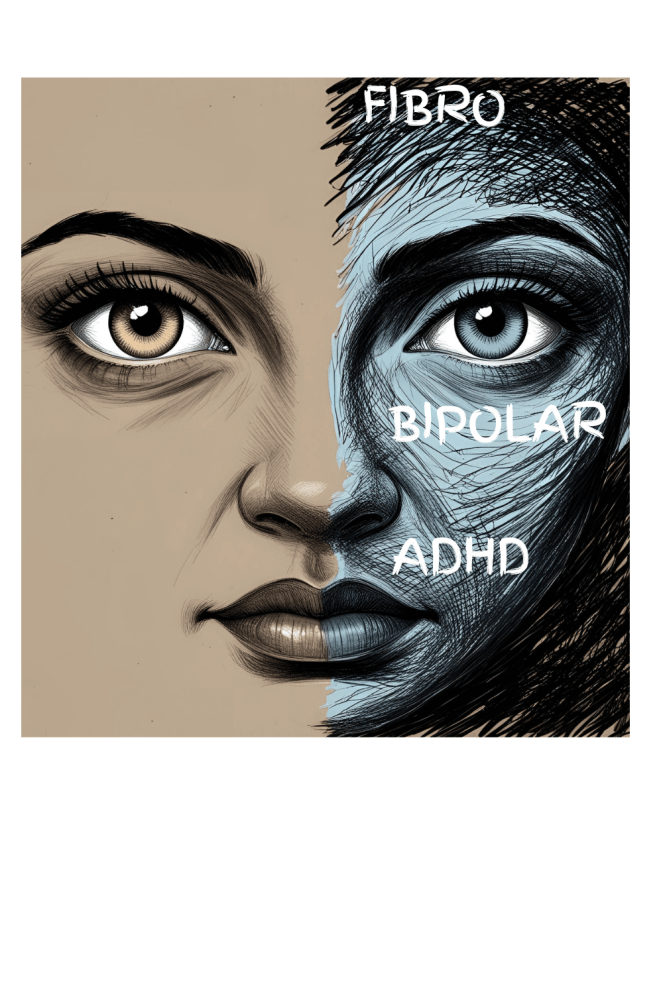
Some mornings, the win is just getting pants on. Other mornings, it’s breakfast made, meds taken, laundry halfway done before noon, and a gold star for basic humaning. But when you live with both Bipolar and fibromyalgia, (with a little ADHD thrown in for good measure) parenting becomes less of a schedule and more of a survival sport.
And the thing no one tells you? Showing up imperfectly still counts.
The Day-to-Day: A Symphony of Chaos and Grit
On paper, it probably looks like we’re flaky. Late to the appointment, forgot the school form (again), still haven’t finished the laundry from last Tuesday. In reality, it’s brain fog, chronic pain, executive dysfunction, and a nervous system that acts like it’s sprinting from a bear… while we’re just trying to make dinner.
It’s the kind of exhaustion you can’t nap your way out of.
Some days you’re the mom who makes Halloween costumes from scratch. Other days you’re the mom who considers goldfish crackers and applesauce a win. You are both and neither — and you are enough.
💡 My Daily Routine (On a Good-ish Day):
I am up at 4. No reason for it, just can’t sleep any later ever since my heart when I was in the hospital, first thing they did was draw blood so I think I started getting up early to psych myself up for it lol/ I do my Duolingo (gotta get to exercising the brain) I ‘watch the news’, I listen to all the late night monologues and any interviews I wanted to catch, or just some music in my headphones when the news isnt interesting. This is the quiet start to the day.. 5:30 First attempt waking hubby 6 First attempt waking up monkey Usually I watch the news or do my steps in between going room to room rousing people. 6:30 daughters not up start getting irritated. 7:40 I feed and medicate the furry children 8 I start on either post or making something. 10 I have to eat to take my meds 12 the cats get fed and medicated again 12-3 Always cleaning. Folding clothes, vacuuming and dishes usually round out my day. 4 I typically start either project or chat with daughter about her day, dinner 5:30 all my chores are done by now, or as I say to them ‘if it aint done it aint gettin done til tomorrow’ I watch tv til 8 and put myself into bed, usually falling asleep, when I don’t I get up and take a gummie, because I NEED sleep and no matter what time I go to bed I am up at 4, so might as well get some sleep you know?
This might be the hardest for me. Or it WAS, I’m finally letting go.
Spoonie-friendly routines. Simplify where you can. Wash days spaced out. Clothes that don’t need ironing. Outsource or automate what you can. I have an every other day routine because I am honest with myself and I know I need a day to recover after a productive day LOL
Movement, but gentle. Stretching or chair yoga instead of pretending we’re still in our 20s with full cartilage and a pain-free morning. Walking, so much walking lol
Let someone help. Even if it’s just asking your kid to throw their trash away. Micro-help still counts. Stop feeling guilt, other people have hands and feet too!
Digital checklists or ADHD-friendly planners (visual, colorful, forgiving of missed days). I might know somewhere to get them… LOL Seriously I love mine and feeling halfway organized.
The Numbers Behind the Fog
ADHD is underdiagnosed in women by huge margins. One study found girls are 50–75% less likely to be diagnosed than boys, often because they’re more “daydreamy” than disruptive.
Fibromyalgia affects 80–90% women, and often takes 5+ years to diagnose. Why? Because women’s pain is historically minimized or chalked up to anxiety.
Executive dysfunction isn’t laziness — it’s a brain-based difficulty in initiating, organizing, and following through on tasks. ADHD and fibro both contribute as does the Bipolar.
Bipolar disorder is frequently misdiagnosed in women, often as depression or borderline personality disorder. Studies show up to 69% of women with bipolar are initially misdiagnosed, and the average delay before an accurate diagnosis is 6 to 8 years.
So yeah… it’s not in your head. But even if it were, that would still be real.
You’re Not a Failure, You’re a Force
If all you did today was exist in your body and care about your kids, you’ve already done the hard part.
The parenting books didn’t cover flare days or mental fog. But we are writing the new manual: one honest, messy, beautiful chapter at a time.
You’re not alone, you’re not broken — and you don’t have to do this perfectly to be doing it well. Til next time guys, take care of yourselves, and each other
Goldberg, J. F., & Ernst, C. L. (2002). Features associated with the delayed initiation of mood stabilizers at illness onset in bipolar disorder. https://pubmed.ncbi.nlm.nih.gov/12425278/











 WannaBeNormal