At some point, without your consent, you were promoted to CEO of Existing, Inc.
You did not apply for this role. You do not remember interviewing. There is no HR department. There are no sick days.
But somehow, every basic human task now requires a full-scale operational strategy.
Example: Leaving the House
This is no longer “put on shoes and go.”
This is now a multi-phase initiative involving:
Phase 1: Forecasting
You must analyze projected variables, including but not limited to:
Current pain levels
Predicted pain levels
Weather (your nemesis)
Duration of outing
Availability of seating
Distance from parking to destination
Whether the building was designed by someone who hates humanity
Phase 2: Resource Allocation
You assemble supplies like you’re preparing for a polar expedition:
Medications
Water
Backup medications
Emotional support snacks
Backup emotional support snacks in case the first emotional support snacks fail emotionally
Phone charger
Backup charger because betrayal is everywhere
Phase 3: Contingency Planning
You must prepare for possible catastrophic scenarios such as:
Unexpected stairs
No seating
Loud environments
Temperature extremes
Your body suddenly filing a formal complaint
This includes identifying exit strategies and recovery plans.
Phase 4: Risk Assessment
You ask yourself critical executive-level questions such as:
Is this worth tomorrow’s consequences?
Will Future Me be furious?
Am I about to ruin Thursday by attempting Tuesday?
Phase 5: Executive Override
Despite all data suggesting this is a terrible idea, you go anyway because you are a human being who would like to participate in your own life occasionally.
Bold. Visionary. Reckless.
Deliverables
Upon completion of this task, you will receive:
Extreme fatigue
A flare
Zero financial compensation
And the overwhelming sense that you just completed something equivalent to summiting Everest, but everyone else calls it “running an errand”
Performance Review
You will be evaluated by:
Your nervous system
Your immune system
Your guilt
And society, which will say, “But you don’t look sick.”
Mission Statement of Existing, Inc.:
To successfully complete one (1) task without accidentally destroying the rest of the week.
There’s a terrible little superpower I’ve developed: I can watch myself overreact.
It’s the worst seat in the house — front row, center stage — where my brain is performing a full-throttle disaster musical and I’m sitting there with the program, thinking, “Yep. That’s… dramatic.” Meanwhile my chest is doing interpretive dance, my throat is tight, and my hands have decided to be useless for the foreseeable future.
I know the script. I know the facts. I know that my kid is safe, that no one is angry enough to leave forever, that the noise outside is probably just traffic, not the arrival of doom. I can literally name the thoughts as they happen: This is a sign. This is going to spiral. Everyone will leave. I am unfixable. And I know, in a rational, calm part of my brain, that the thought is an alarm that’s been stuck on repeat. I also know that knowing it — intellectually — doesn’t flip a switch and make my body stop treating it like an emergency.
That’s PTSD after medical trauma for you in a sentence: your mind is both the actor and the audience. The rest of your life keeps going. You keep getting up, you keep making tea, you keep paying bills. But some invisible part of you stays backstage, rewinding and replaying a scary scene, making sound effects, and refusing to let the house lights come up.
Why the “I know it’s not true” feeling is its own kind of hell
It’s isolating. Because the knowledge that your thoughts are lying should be freeing, right? In theory. But being the person who can say, “This is irrational,” while your body screams “RUN” is exhausting and weirdly lonely. You end up apologizing to people for things they weren’t even upset about, or you cancel plans because you feel unsafe even though everything else says you’re fine. You blame yourself for being dramatic. You try to be the reasonable adult and the reasonable adult keeps getting ignored.
And then there’s guilt. If friends or family do help, you watch them pay attention and you feel both relieved and awful — because you think you’re costing them time and energy. You start to believe that self-sufficiency is the only moral option and asking for help is taking more than you deserve. Spoiler: that’s not the truth. It’s an emotional trap set up by fear.
Tiny, practical things that actually help when your brain runs the show
I’m not going to give you platitudes. Here are things that have helped me — small, honest, and doable even on the worst days.
Label the play: When the alarm starts, say out loud (or mentally): “That’s my PTSD talking. That’s the survival brain.” Naming it doesn’t make it vanish but it takes away some of its power.
Two-minute grounding: Five things you see, four things you can touch, three sounds, two smells, one thing you can taste (or one thing you like about the moment). It’s boring, and that’s the point. It pulls you out of the theater.
Breathe like you mean it: 4-4-6 breathing (inhale 4, hold 4, exhale 6) calms the vagus nerve faster than a pep talk.
Write the loop down: If a memory keeps looping, grab a notebook and write it until you’re bored of it. Then scribble one practical line: “Right now: I am home. Right now: I can breathe.” The page can hold the drama when your brain insists on replaying it.
Micro-asks for people: Don’t make others guess. Say, “Can you sit with me for ten minutes?” or “Could you text me at 7 to check in?” People who care usually want the script — they just don’t want to mess it up.
Make a tiny safety plan: three things to do if it spikes (call X, 2-minute grounding, favorite playlist). Tape it to the fridge if you have to. Pre-deciding reduces panic.
What to say — when you want to ask for help but hate feeling needy
Try something simple and specific:
“I’m feeling fragile today. I don’t need advice — could you just sit with me for 10 minutes?”
Or, if you need practical help:
“My energy is low; could you pick up milk on the way home? It would help more than you know.”
Short. Specific. Low drama. It gives people an easy yes.
The honest truth I remind myself (even when my brain screams otherwise)
I can hold two truths at once:
My mind is telling a bigger story than the facts support.
Needing help right now doesn’t make me a burden — it makes me human.
There’s a difference between the loudness of a feeling and the size of reality. Your feelings are not the final arbiters of truth. They are signals. Sometimes they’re reliable, sometimes they’re not. You don’t have to act on every alarm. You can notice it, honor it, and then choose what you do next.
A small support for the messy days
If you’re reading this while your chest is tight and your brain is staging a meltdown, I see you. I know how lonely it becomes to watch yourself react and feel like you’ve failed at being calm. You haven’t failed. You’ve survived things that rewired your alarm system. That makes your reactions loud — not your worth small. Til next time gang, take care of yourselves, and each other.
Let’s be honest: brains can be drama queens. They catastrophize. They tell half-truths. They rerun that one embarrassing moment from seventh grade like it’s a Netflix Original. And when you live with chronic illness, ADHD, bipolar disorder, or you’re just a human being trying to function, those mental reruns can get extra spicy.
Enter: reframing. It’s a simple but powerful cognitive strategy that helps you shift how you view a situation or thought—without pretending everything is fine when it’s clearly not. This isn’t about toxic positivity. This is about mental judo.
What Is Reframing (And Why Should I Care?)
Reframing is the mental equivalent of turning the pillow over to the cool side. It’s rooted in Cognitive Behavioral Therapy (CBT) and helps you challenge automatic negative thoughts by looking at things from a different (and often more helpful) perspective.
It’s not about lying to yourself. It’s about finding a version of the truth that doesn’t punch you in the gut.
How Reframing Works (Spoiler: Science Says It Does)
Research shows that reframing, also called “cognitive reappraisal,” can significantly reduce symptoms of anxiety, depression, and stress. Two studies worth name-dropping at your next emotionally intelligent brunch:
Gross & John (2003) found that people who use reappraisal are more emotionally balanced and less likely to explode or implode emotionally.
Citation: Gross, J. J., & John, O. P. (2003). Individual differences in two emotion regulation processes. Journal of Personality and Social Psychology, 85(2), 348. https://doi.org/10.1037/0022-3514.85.2.348
Jamieson et al. (2012) showed that people who reframed their stress (as the body preparing to rise to a challenge) performed better and felt less overwhelmed.
Citation: Jamieson, J. P., Nock, M. K., & Mendes, W. B. (2012). Mind over matter. Journal of Experimental Psychology: General, 141(3), 417–422. https://doi.org/10.1037/a0025719
How to Reframe Without Losing Your Edge
Catch the Thought Example: “I’m lazy. I didn’t get anything done today.”
Reality Check Ask: Is this a feeling or a fact? Would I say this to a friend?
Flip It Gently Reframe: “My energy was low, and I did what I could. Resting isn’t lazy.”
Add Sass or Compassion (Optional but Recommended) Try: “Okay, Brain. Thanks for your input. Now please go sit in the back with Anxiety and Guilt.”
Everyday Reframes That Save My Sanity
Unhelpful Thought
Reframed Thought
“I’m falling behind.”
“I’m moving at my own pace, and that’s valid.”
“I should be doing more.”
“I’m doing what I can, and that counts.”
“Everyone else has it together.”
“They’re probably also crying in their car.”
“I’ll never get it right.”
“Progress isn’t linear, and effort matters.”
Closing Thoughts (AKA Why You Deserve a Brain That Isn’t Mean)
You don’t need to have perfect mental health to practice reframing. You just need to notice when your thoughts are dragging you under and say, “Actually, no thanks.”
Reframing isn’t pretending life is great. It’s realizing you don’t have to believe every thought your brain throws at you. Especially the mean ones. Especially the hopeless ones.
You are allowed to talk back.
And you deserve to hear yourself say something kinder. Til next time guys. Take care of yourselves, and each other
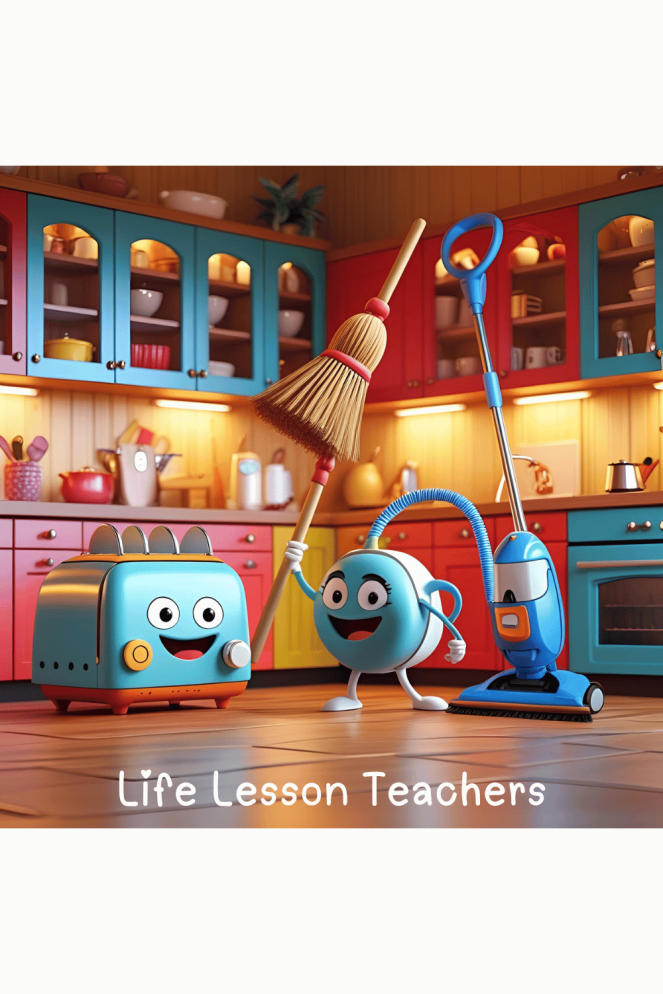
Hey friends. No heavy lifting today — unless you count carrying the emotional weight of a slightly stale muffin and a cluttered craft table. Just some wisdom I’ve gathered from staring at household objects for way too long and assigning them personalities.
1. My Laundry Basket
Life lesson: You can only carry so much emotional weight (and unmatched socks) before you drop something and cry about it.
2. My Microwave
Life lesson: You can explode if someone doesn’t give you enough time to cool off. It’s science. And vibes.
3. That One Spoon That’s Always Dirty
Life lesson: You are valuable. You are essential. And even if you feel gross and overlooked, someone’s probably looking for you right now.
4. The Craft Table (aka The Table Formerly Known as “Dining Room”)
Life lesson: You don’t have to be pretty to be productive. Also, chaos can be functional. It’s fine. It’s all fine.
5. My Phone Charger
Life lesson: You can’t be expected to power everything if you’re frayed at both ends. Unplug. Recharge. Or scream. Honestly, all valid.
6. The Thermostat
Life lesson: You can keep everything “set” just right and still end up wildly uncomfortable. Sometimes your system just doesn’t cooperate. That doesn’t mean you’re broken — it means you’re human. Or possibly perimenopausal. Or both. Let’s be honest, probably both.
7. The Floor
Life lesson: No matter how hard you hope, it still isn’t made of trampoline. Bouncing back takes work. And ice packs.
8. The Dish Towel That’s Always Damp
Life lesson: You can show up day after day, do your job, and still get left in a heap in the corner. But look at you — still wiping up messes like a champ.
9. That Cup in the Sink That No One Ever Claims
Life lesson: Boundaries are important. You are not the designated cleaner of everyone else’s mystery problems.
10. My Alarm Clock
Life lesson: People won’t always appreciate you for waking them up, but sometimes being the annoying truth-teller is your job. Be loud anyway.
Til next time gang, unless I resin my fingers together lol. Take care of yourselves, and each other!
Ah, the never-ending battle between self-care and self-sabotage – a war as ancient as time itself, and one that leaves us feeling like we’re constantly stuck in a deranged game of tug-of-war with our own psyche. Strap in, sunshine, because we’re about to dive headfirst into this delightful clusterfuck of contradictions.
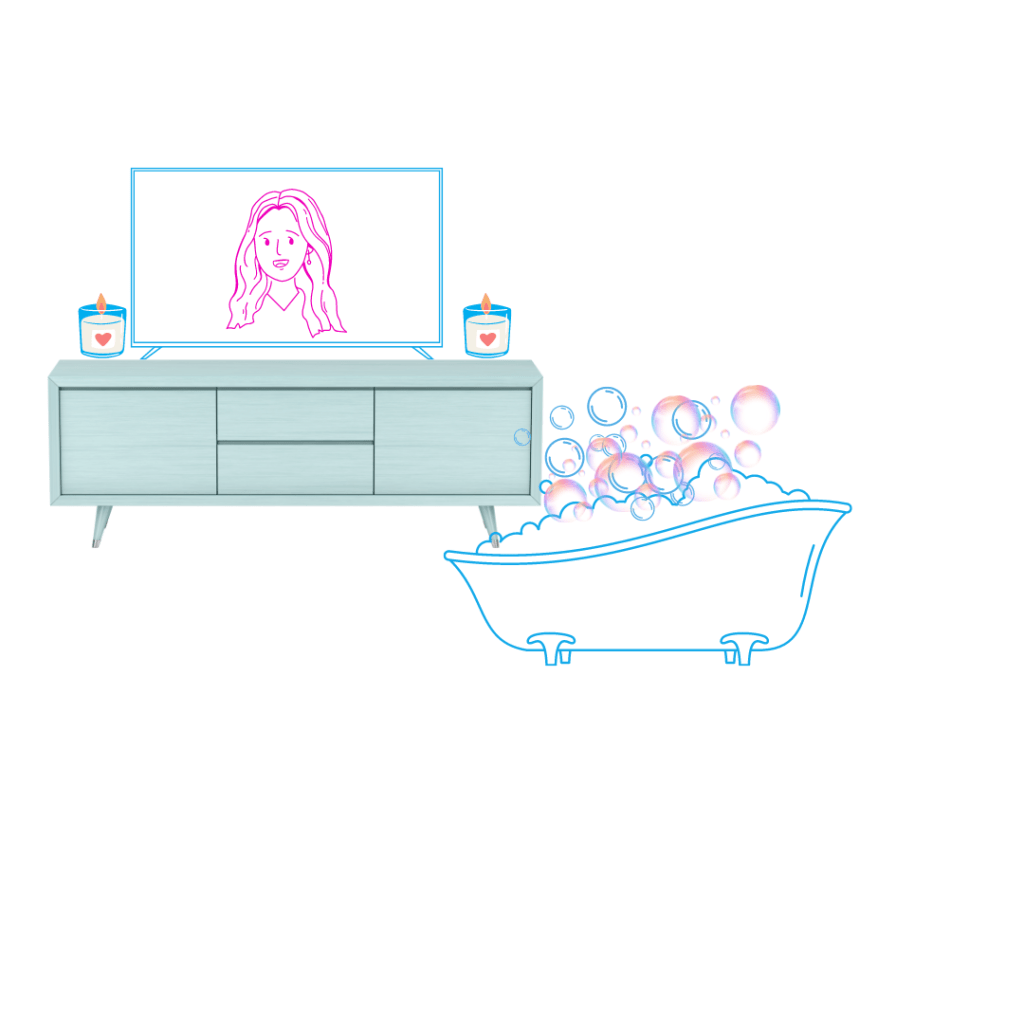
On one side of the ring, we have self-care – that elusive state of being where we’re supposed to treat ourselves like precious little snowflakes, indulging in face masks, bubble baths, and all sorts of other bougie bullshit. And on the other side, we have self-sabotage – that devious little voice in our heads that whispers sweet nothings like, “Fuck it, let’s order an entire pizza and binge-watch trashy reality TV until our eyes bleed.” (Though if you indulge in this pass time on occasion its not sabotage, its critical to have some time to just not care for a few minutes but you get my meaning)
Now, in a perfect world, we’d all be able to find that magical sweet spot where we’re simultaneously treating ourselves like royalty and also not completely derailing our lives with reckless abandon. But let’s be real, that’s about as likely as spotting a unicorn dabbing under the full moon. (not this one, this is George’s friend Carl, he’s just doing me a favor lol)
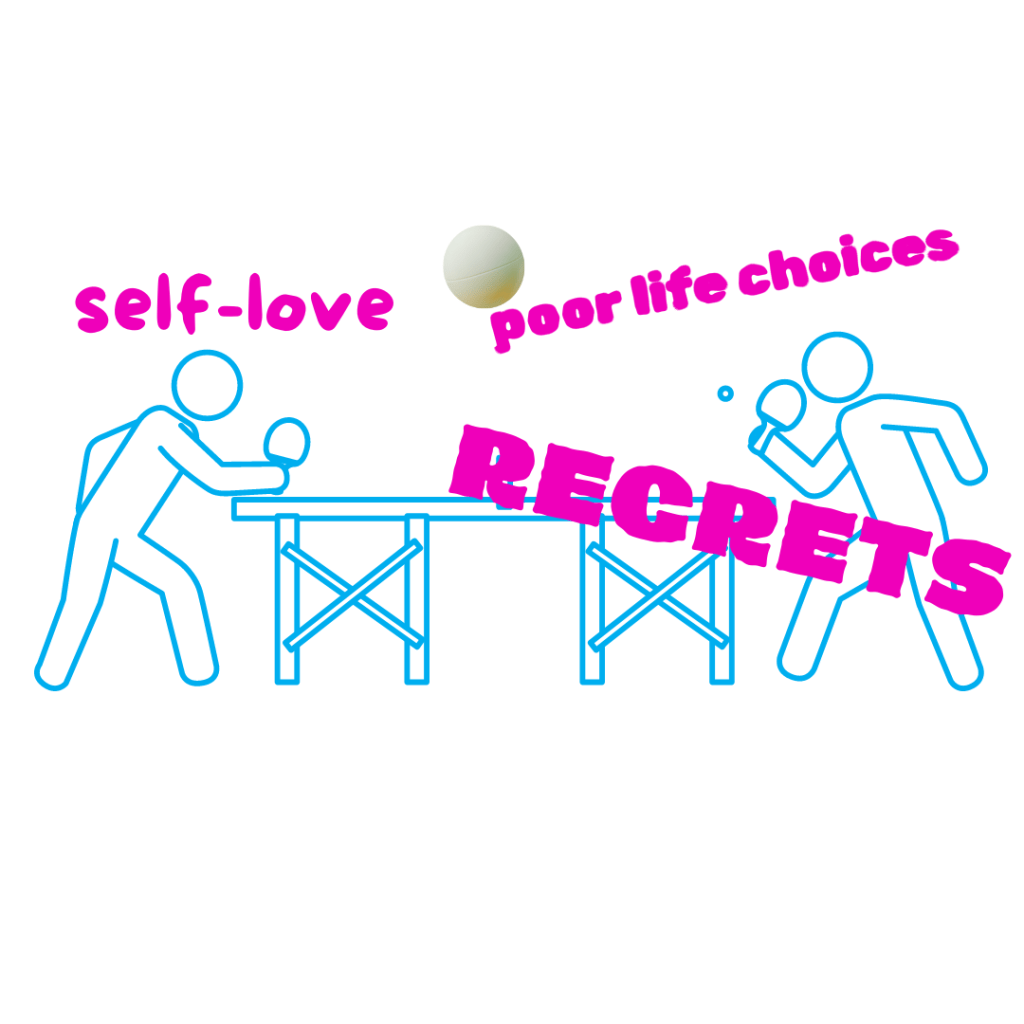
Instead, we find ourselves ping-ponging between these two extremes, one minute basking in the glow of our own self-love, and the next, spiraling down a rabbit hole of poor life choices and regret. It’s like our brains are hardwired to sabotage any semblance of balance we manage to achieve, just to keep things interesting (or to torture us, who knows?).
Take, for instance, that time you decided to treat yourself to a luxurious spa day, complete with a full-body massage and a fancy-schmancy facial. You emerged feeling like a million bucks, ready to conquer the world with your newfound zen. But then, like a cruel twist of fate, you found yourself elbow-deep in a family-sized bag of chips, binge-watching “The Bachelor” until the wee hours of the morning, undoing all that self-care goodness in one fell swoop.
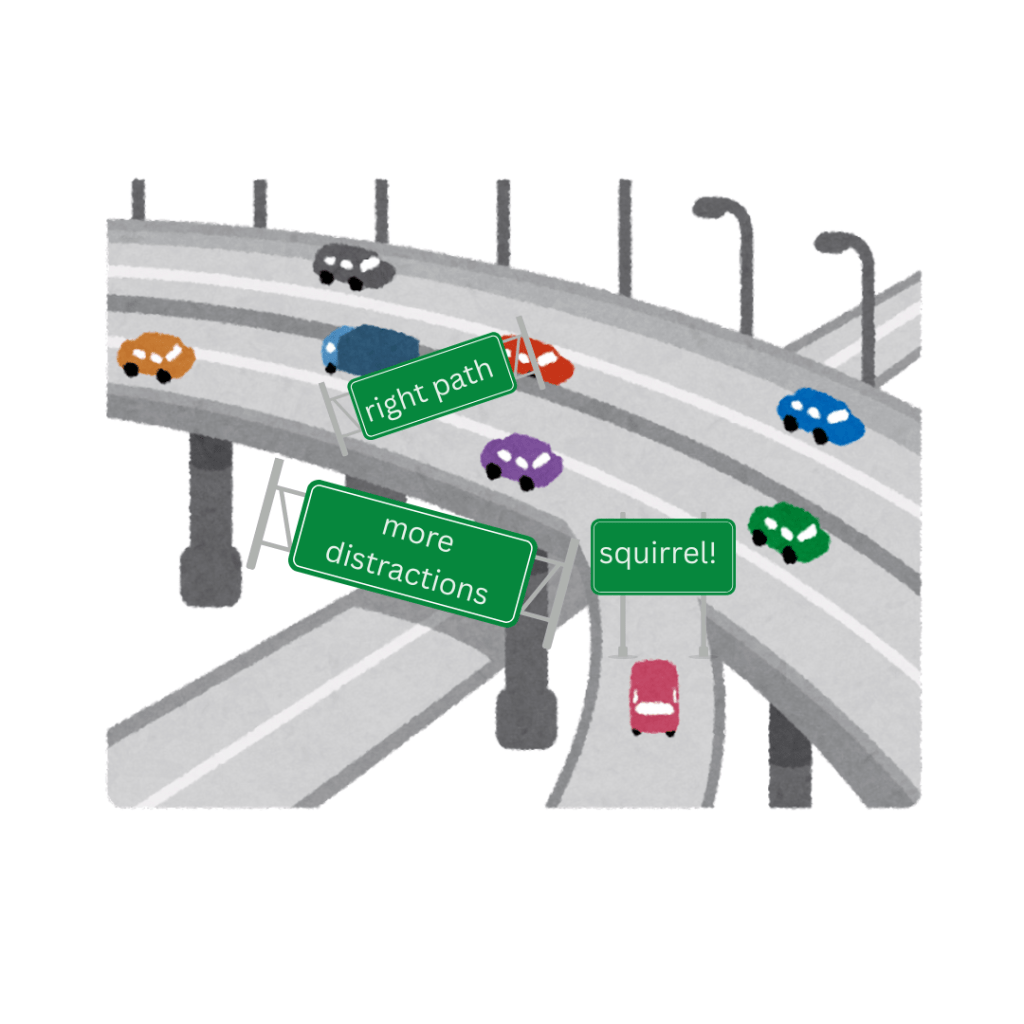
But fear not, my fellow self-care warriors! For in this endless cycle of indulgence and self-destruction, there lies a glimmer of hope – a path to that elusive equilibrium, if you’re willing to embrace the chaos. First and foremost, ditch the all-or-nothing mentality. Self-care isn’t a destination; it’s a journey filled with detours, pit stops, and the occasional wrong turn. Embrace the fact that you’re going to stumble, fall, and maybe even face-plant into a pile of your own poor decisions from time to time. It’s all part of the process, baby.
Next, I CANNOT stress this enough, learn to laugh at your own ridiculousness. Even when its not funny, even if you are the only one laughing. When you find yourself knee-deep in a pint of ice cream, having just binged an entire season of “Bridgerton” in one sitting, don’t beat yourself up. Instead, embrace the absurdity of the situation, and revel in the fact that you’re a delightfully flawed human being, capable of both self-love and self-destruction in equal measure.
Finally, remember that balance is a myth perpetuated by those who have yet to experience the true joy of embracing their inner chaos. With any of the ailments you are going to find additional obstacles to inner harmony.
– For those on the autism spectrum, sensory processing differences and difficulties with emotional regulation can make traditional self-care activities like meditation or relaxation techniques extremely challenging. At the same time, autistic burnout from masking and societal demands heightens the risk of self-sabotaging behaviors as a coping mechanism.
-Fibromyalgia’s chronic pain and fatigue create physical barriers to self-care, while the condition’s cognitive impacts like brain fog can derail routines, inadvertently enabling self-sabotage. In bipolar disorder, the depressive and manic episodes inherently disrupt self-care routines. During manic phases, impulsivity and risk-taking behaviors verge into self-sabotage. Conversely, the lethargy of depressive periods makes basic self-care feel insurmountable.
-Those with ADHD frequently struggle with self-care due to executive function challenges around planning, initiating tasks, and sustaining routines. Their propensity for hyperfocus can lead to cycles of self sabotage by neglecting their needs and responsibilities.
Across all these conditions, self-care is crucial yet enormously difficult. The mental and physical demands create a high risk of self-sabotaging behaviors, even when the intention is self-preservation. Establishing compassionate, sustainable self-care practices tailored to the specific needs of each diagnosis is vital for disrupting patterns of burnout and self-destruction. Lifestyle adjustments, therapy, medication, and strong support systems are often needed to strike that elusive self-care/self-sabotage balance.
So, go ahead, indulge in that face mask, but don’t be afraid to follow it up with a night of reckless abandon. Treat yourself to that fancy workout class, but don’t beat yourself up if you end up skipping a few sessions in favor of a Netflix binge. Til next time, take care of yourself gang, and each other!




















 WannaBeNormal