Uncategorized

Help From My Friends, yes YOU!

Alright, listen up you badass warriors battling chronic health issues! We’re about to get real about why having a solid support system is crucial for not losing your fucking mind.

First off, let’s be honest – chronic health conditions are a colossal pain in the ass, both physically and emotionally. One minute you’re cruising along, feeling like you’ve got a handle on this whole “life” thing, and the next, your body is pulling some straight-up sabotage moves that leave you feeling like a hot mess express. That’s where your support squad comes in – those ride-or-die homies who get it, empathize with your situation, and offer the kind of emotional support that’s better than any overpriced therapy session.

But it’s not just about the warm fuzzies, folks. Your support system is also a lifeline when it comes to practical shit. Need someone to help with daily tasks that suddenly feel like climbing Mount Everest? Bam, your crew’s got your back. Need a ride to yet another doctor’s appointment where you’ll inevitably be poked and prodded like a human pin-cushion? Your support squad is there to chauffeur your ass and make sure you don’t get lost in the labyrinth of the medical-industrial complex. Not to mention the opportunity for some EPIC road trips!

Speaking of navigating that shitshow, having a support network can be a game-changer when it comes to knowledge and information. Chances are, someone in your crew has been through a similar health struggle or knows someone who has, which means they’ve got insider intel on treatments, therapies, and coping strategies that could make your life a whole lot easier. It’s like having a cheat code for managing your condition without having to spend hours scouring the depths of WebMD and scaring the crap out of yourself.

But wait, there’s more! Being part of a supportive community isn’t just about the practical perks – it’s also a lifeline for your mental health. Chronic health issues can be a lonely, isolating journey, especially when the people around you just don’t get it. Having a crew of fellow warriors who’ve been there, done that, and got the battle scars to prove it? That’s the kind of solidarity and mutual understanding that can make you feel like you’re not alone in this shitshow.

And let’s not forget the most important benefit of all: a support system can be the ultimate confidence booster and source of resilience. Dealing with chronic health issues often means navigating complex healthcare systems, advocating for your needs, and persevering through setbacks that would make even the toughest badass want to throw in the towel. But with your crew in your corner, cheering you on and reminding you of your inner strength, you’ll be unstoppable. It’s like having your own personal hype squad, but instead of cheering you on at a lame sporting event, they’re helping you slay the dragon that is chronic illness.

So, to all you warriors out there battling chronic health issues, remember: building and nurturing a solid support system isn’t just a nice-to-have – it’s a fucking necessity. Surround yourself with people who get it, lift you up, and remind you that you’re a total badass, even on your worst days. Because at the end of the day, having that crew in your corner might just be the secret weapon you need to conquer this shitshow and come out on top. Thats why we need to come together guys, this sick nonsense can be tackled alone but shouldn’t. Reach out. Til next time gang, take care of yourself, and each other!

Uncategorized

The fine line when you’re your own worst enemy

Ah, the never-ending battle between self-care and self-sabotage – a war as ancient as time itself, and one that leaves us feeling like we’re constantly stuck in a deranged game of tug-of-war with our own psyche. Strap in, sunshine, because we’re about to dive headfirst into this delightful clusterfuck of contradictions.

On one side of the ring, we have self-care – that elusive state of being where we’re supposed to treat ourselves like precious little snowflakes, indulging in face masks, bubble baths, and all sorts of other bougie bullshit. And on the other side, we have self-sabotage – that devious little voice in our heads that whispers sweet nothings like, “Fuck it, let’s order an entire pizza and binge-watch trashy reality TV until our eyes bleed.” (Though if you indulge in this pass time on occasion its not sabotage, its critical to have some time to just not care for a few minutes but you get my meaning)

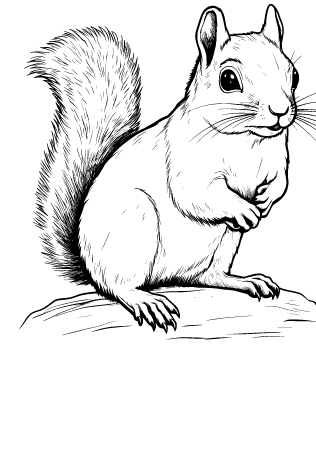
Now, in a perfect world, we’d all be able to find that magical sweet spot where we’re simultaneously treating ourselves like royalty and also not completely derailing our lives with reckless abandon. But let’s be real, that’s about as likely as spotting a unicorn dabbing under the full moon. (not this one, this is George’s friend Carl, he’s just doing me a favor lol)

Instead, we find ourselves ping-ponging between these two extremes, one minute basking in the glow of our own self-love, and the next, spiraling down a rabbit hole of poor life choices and regret. It’s like our brains are hardwired to sabotage any semblance of balance we manage to achieve, just to keep things interesting (or to torture us, who knows?).

Take, for instance, that time you decided to treat yourself to a luxurious spa day, complete with a full-body massage and a fancy-schmancy facial. You emerged feeling like a million bucks, ready to conquer the world with your newfound zen. But then, like a cruel twist of fate, you found yourself elbow-deep in a family-sized bag of chips, binge-watching “The Bachelor” until the wee hours of the morning, undoing all that self-care goodness in one fell swoop.

But fear not, my fellow self-care warriors! For in this endless cycle of indulgence and self-destruction, there lies a glimmer of hope – a path to that elusive equilibrium, if you’re willing to embrace the chaos. First and foremost, ditch the all-or-nothing mentality. Self-care isn’t a destination; it’s a journey filled with detours, pit stops, and the occasional wrong turn. Embrace the fact that you’re going to stumble, fall, and maybe even face-plant into a pile of your own poor decisions from time to time. It’s all part of the process, baby.

Next, I CANNOT stress this enough, learn to laugh at your own ridiculousness. Even when its not funny, even if you are the only one laughing. When you find yourself knee-deep in a pint of ice cream, having just binged an entire season of “Bridgerton” in one sitting, don’t beat yourself up. Instead, embrace the absurdity of the situation, and revel in the fact that you’re a delightfully flawed human being, capable of both self-love and self-destruction in equal measure.

Finally, remember that balance is a myth perpetuated by those who have yet to experience the true joy of embracing their inner chaos. With any of the ailments you are going to find additional obstacles to inner harmony.

– For those on the autism spectrum, sensory processing differences and difficulties with emotional regulation can make traditional self-care activities like meditation or relaxation techniques extremely challenging. At the same time, autistic burnout from masking and societal demands heightens the risk of self-sabotaging behaviors as a coping mechanism.

-Fibromyalgia’s chronic pain and fatigue create physical barriers to self-care, while the condition’s cognitive impacts like brain fog can derail routines, inadvertently enabling self-sabotage.
In bipolar disorder, the depressive and manic episodes inherently disrupt self-care routines. During manic phases, impulsivity and risk-taking behaviors verge into self-sabotage. Conversely, the lethargy of depressive periods makes basic self-care feel insurmountable. 

-Those with ADHD frequently struggle with self-care due to executive function challenges around planning, initiating tasks, and sustaining routines. Their propensity for hyperfocus can lead to cycles of self sabotage by neglecting their needs and responsibilities.

Across all these conditions, self-care is crucial yet enormously difficult. The mental and physical demands create a high risk of self-sabotaging behaviors, even when the intention is self-preservation. Establishing compassionate, sustainable self-care practices tailored to the specific needs of each diagnosis is vital for disrupting patterns of burnout and self-destruction. Lifestyle adjustments, therapy, medication, and strong support systems are often needed to strike that elusive self-care/self-sabotage balance.


So, go ahead, indulge in that face mask, but don’t be afraid to follow it up with a night of reckless abandon. Treat yourself to that fancy workout class, but don’t beat yourself up if you end up skipping a few sessions in favor of a Netflix binge. Til next time, take care of yourself gang, and each other!

Uncategorized

Is it blindness if we choose not to see it?

Tonight lets talk about something SUPER fun for people who are NORMAL procrastinators, or people who are just chronically punctual, this shit makes my eye twitch. I want to be on time, but I am ALWAYS either embarrassingly early or unforgivably late, I just can’t find a way to strike a happy medium. I was surprised to learn of the other ways time blindness presents itself in my life, its not just about not being on time. So lets dive into the wild world of time blindness. You know, that delightful phenomenon where your brain treats the concept of time like a cruel joke? Yeah, for those of us with autism or ADHD, keeping track of the chronological flow of existence is about as easy as herding cats on meth.

Let’s start with our autistic homies. For them, time blindness can manifest in a few gloriously confusing ways:
First up, we’ve got the struggle to grasp the very concept of past, present, and future. It’s like the abstract notion of time is an ancient language only understood by neurotypical scholars. “What do you mean, this moment won’t last forever? Blasphemy!”

Then there’s the complete obliviousness to how much damn time has passed. You could be happily stimming away, lost in your own little world, only to emerge hours later wondering where the hell the day went. Time? What’s that? A construct created by the neurotypical elite to oppress us?

And let’s not forget the sacred routines. Stray from the schedule even a smidgen, and it’s like the world is ending. Spontaneity? Never heard of her. Rigidity and predictability are our jam, thank you very much.

But wait, there’s more! Our ADHD brethren also get to experience the joys of time blindness in their own unique ways:

Impulsivity and time management? What a delightful oxymoron! Thinking ahead and considering consequences is for the weak. We prefer to live life on the edge, making split-second decisions without a care for that pesky thing called “time.”

Procrastination is our middle name. Why do today what you can put off until tomorrow, next week, or maybe even next year? Prioritizing tasks and meeting deadlines is so overrated when you could be hyperfocusing on reorganizing your sock drawer instead.

Speaking of hyperfocus, that’s another fun ADHD party trick. One minute you’re trying to be a productive member of society, the next you’re utterly consumed by whatever random interest has captured your brain’s fleeting attention. Time? What’s that again?

At the end of the day, both autism and ADHD involve executive function challenges that make time management about as easy as walking a tightrope while juggling chainsaws. But hey, at least we’re keeping things interesting, right?So embrace the time blindness, folks. Lean into the chaos and confusion. After all, who needs to follow the neurotypical construct of time when you can march to the beat of your own delightfully disordered drum? Til next time gang, take care of yourself, and each other!

Uncategorized

Auditory Processing Issues, AKA ‘wait… what?’

Part of coming back from the abyss that has been so difficult for me is this new thing, that I’m told is common after head injuries, strokes, blood loss, high fever, basically a LOT, is something called Auditory Processing difficulties, and I’ve since learned thats also something ADHD-ers and Autism sufferers sometimes experience it as well. I will say for me, this mainly presents as I can look at you talking and forget what you are saying before you are even done saying it. Now a lot of times, I’ll ask a question to be 100% clear that I understood it, and you will get irritated thinking I wasnt paying attention, but its as if its just on a delay, my brain IS listening and it knows something important is being said, it just takes a minute to translate it to English from Galifreyan (Dr Who reference for nerds like me but if you are unfamiliar substitute any alien language). Its annoying to me just as much as it is to the person I am talking to, maybe more so for me because I know I’m not dumb so why do I need to be talked to like I’m 12 for me to process it?

So what are Auditory Processing difficulties? Auditory processing difficulties are like having trouble with how your brain understands and makes sense of the things you hear, even though your ears work fine. It’s sort of like trying to listen to someone talk when there’s a lot of background noise – it can be hard to pick out the words and understand what’s being said. People with auditory processing issues might struggle to follow conversations, remember spoken instructions, or tell the difference between similar sounds. These difficulties can make it challenging to learn, communicate, and engage in everyday activities that involve listening.

Imagine you’re in a noisy restaurant, and your friend is telling you a story. While you can hear their voice just fine, the background noise makes it incredibly challenging to follow the narrative. You keep missing crucial details or misinterpreting what they’re saying, even though you’re trying your best to focus. This is similar to the experience of someone with AP issues, where filtering out background noise and isolating the important sounds is a constant struggle.

Another example could be trying to follow a set of verbal instructions. Let’s say someone tells you, “First, take the blue folder from the cabinet, then make three copies of the document inside, and finally, staple them together.” For someone with AP issues, the order of these steps might get jumbled in their brain, leading them to make copies first, then retrieve the folder, and potentially forget the stapling part altogether.

Auditory memory is also affected in AP issues, making it challenging to remember things that were said, even just moments ago. This can be particularly problematic in classroom settings, where a student with AP issues might struggle to recall the teacher’s instructions or retain information from lectures or discussions.

In some cases, AP issues can also impact language development and comprehension. A child with problems with AP might have trouble learning nursery rhymes, songs, or even their own name, as the sounds and syllables get jumbled in their brain. This can lead to delays in speech and language acquisition, as well as difficulties with reading and writing later on.

It’s important to note that we are not talking about a hearing impairment and its important to get everything checked out when you start to notice these issues as they CAN be indicative of other more serious problem, or a neurological condition that affects how the brain processes and interprets auditory information. While there is no cure for AP issues, early intervention and specialized therapies can help individuals develop strategies to manage their symptoms and improve their auditory processing abilities.

There are some tips that can help this be more manageable:
1. Minimize background noise and improve acoustics
2. Use visual aids and cues  NOTES ARE MY BEST FRIENDS, I am never without a pen.
3. Use a recorder- even a notes app on your phone will work.
4. Always check that you are understanding and being understood. Its easiest to ask and repeat it to yourself
5. Know your weaknesses, if this is one of them, being upfront with save everyone headaches when you find something that works for everyone involved.

Be patient and supportive guys, believe me, most of the time these people are more frustrated with themselves than you are. You never know, this is incredibly hard to deal with if someone is struggling with it and then aware that everyone is getting irritated at the clarifying questions, the person won’t ask the questions, shit will get done wrong, and everyone suffers. Til next time gang, take care of yourself, and each other!

Uncategorized

ADHD Paralysis: When Even Your To-Do List Needs a Nap

I know this happens with several different conditions, so I wanted to address it but it seems most prevalent with ADHD, so tonight we are diving into ADHD paralysis.

So who’s been here you know those moments when you’re supposed to be doing something important, but your brain decides to take an impromptu siesta instead? Yeah, that’s the wild world of ADHD paralysis in all its glory. It’s like your brain is a computer running too many damn programs at once, and suddenly, everything just crashes into a flaming pile of fuck-it-all.

Picture this nonsense: You’ve got a mountain of work to tackle, deadlines looming like hungry wolves at the door. But instead of diving in like a reasonable human being, you find yourself staring blankly at the screen, lost in a vortex of distraction and self-loathing. That’s ADHD paralysis in its full, unfiltered glory. It’s that frustrating feeling of being simultaneously overwhelmed and underwhelmed by the simplest of tasks, like your brain is playing a cruel joke on you.

For another example: You need to clean your damn room. Sounds easy enough, right? Wrong, you sweet summer child. For the ADHD brain, cleaning isn’t just a chore; it’s a Herculean feat requiring divine intervention and a partridge in a pear tree. You start with the best intentions, but then suddenly find yourself engrossed in a forgotten childhood photo album, three hours deep into a nostalgia spiral, and your room still looks like a tornado hit it after a night of binge drinking.

But fear not, my fellow hot messes, for there are ways to combat this sneaky paralysis and emerge victorious (or at least semi-functional). First off, embrace the power of breaking tasks into bite-sized chunks. Instead of staring down the behemoth of “clean the entire fucking apartment,” start with something manageable like “put away the dishes” or “tackle Mount Laundry, you filthy animal.”

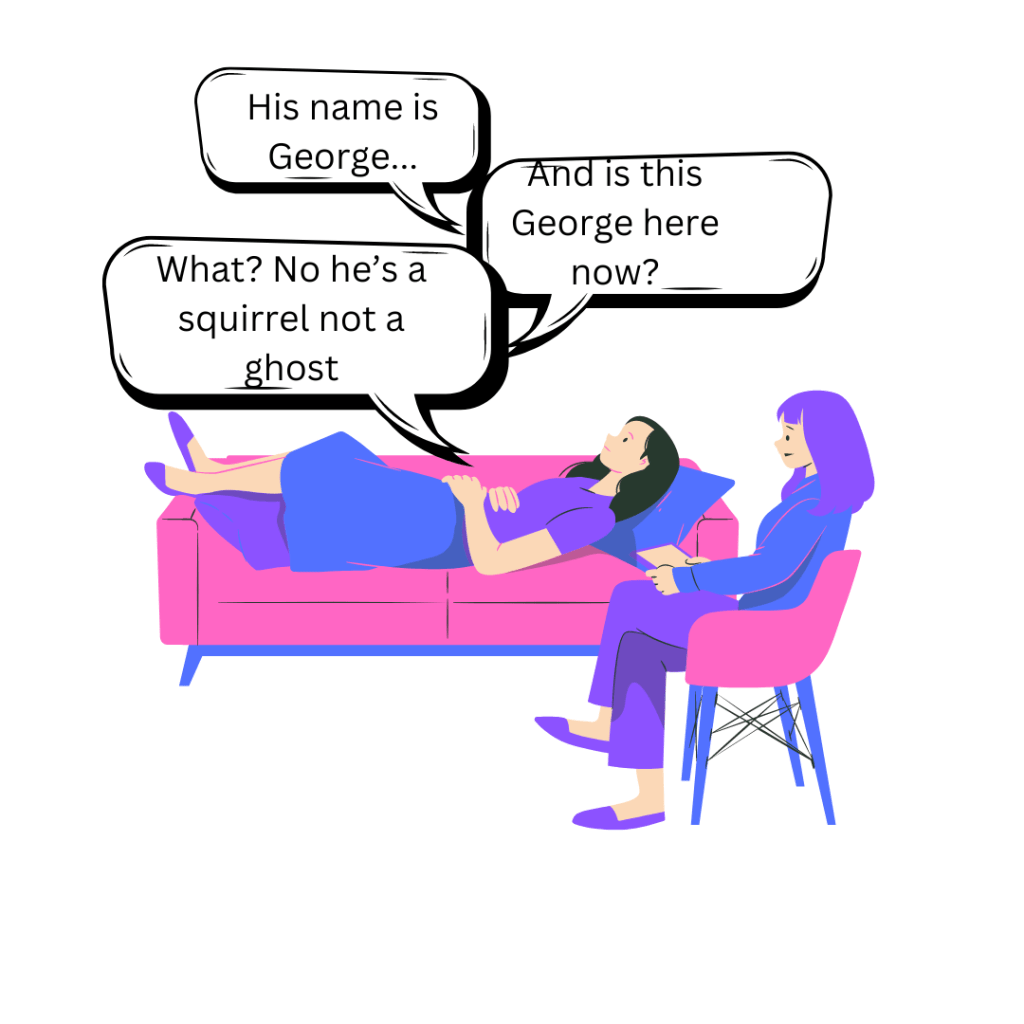
Next up, leverage the magic of timers and alarms. Set yourself a time limit for each task, preferably with a snazzy countdown soundtrack to keep things interesting. It’s amazing how much more motivated you can become when you’re racing against the clock (even if you’re just racing against your own tendency to get distracted by shiny objects and squirrels, no offense George!).

Now, here’s a tip: Don’t be afraid to call in reinforcements, you stubborn as. Whether it’s a supportive friend, understanding family member, or a professional who specializes in wrangling ADHD brains, there’s no shame in asking for help. In fact, sometimes a fresh perspective or a gentle (or not-so-gentle) nudge in the right direction is all it takes to break free from the paralysis and get back on track. Let your loved ones know when you’re stuck in that funk, and let them be your lifeline to sanity and productivity.

And for all you wonderful, well-meaning loved ones! If you want to help someone with ADHD without turning into a helicopter parent or a nagging pain in the ass, here’s the lowdown: First, educate yourself about ADHD and its symptoms so you actually know what the hell you’re dealing with. Then, practice patience and understanding – remember, they’re not trying to piss you off on purpose. Help them set up organizational strategies like calendars and checklists, but don’t micromanage every damn thing. Encourage self-care and breaks when they’re overwhelmed, and most importantly, be their cheerleader. Positive reinforcement can work wonders. And for the love of all things holy, listen without judgment. Create a safe space for them to express their frustrations and emotions. Your support can make a world of difference without smothering their progress.

So there you have it, folks: a crash course in ADHD paralysis, served with a side of humor and a dollop of hope (and a whole lot of swears). Remember, you’re not alone in this wacky adventure called life with ADHD. With a bit of patience, perseverance, and maybe a strategically placed sticky note or two, you can conquer the paralysis and emerge triumphant. Now, if you’ll excuse me, I’ve got a room to clean… or at least attempt to clean before getting distracted by the latest internet rabbit hole (or a mischievous but well meaning squirrel!) Til next time gang, take care of yourself and each other!

Uncategorized

Anything executive does NOT sound like something I’d say… though the DYSfunction, yeah that tracks…

Tonight lets talk about something that affects me in each one of my health issues, and many others, chances are if you are reading this it will resonate with you deep down, and all I can say is ‘I feel ya’.

Executive dysfunction refers to the brain’s delightful way of screwing up the cognitive processes that let you plan, focus, remember instructions, and juggle multiple tasks without losing your mind. These processes are crucial for, you know, actually getting stuff done and functioning like a semi-competent human being. When executive dysfunction kicks in, it can manifest in all sorts of fun ways, like having the working memory of a goldfish, the cognitive flexibility of a brick, the inhibitory control of a toddler, and the decision-making skills of a squirrel on caffeine.

(I know, I’m sorry George, just trying to make other people understand what its like to be you. I know you are a good boy and stay away from caffeine)

Fibromyalgia patients often get the short end of the stick with executive dysfunction, which can royally fuck up their daily lives. Studies show that folks with fibromyalgia perform about as well as a drunk turtle on tasks that measure executive functions like updating, shifting, inhibition, decision-making, and planning. Imagine trying to switch between different sets of rules or stop automatic responses when your brain feels like it’s been run over by a truck. This cognitive impairment is often linked to the severity of pain, psychiatric comorbidities, and other delightful variables like body mass index (BMI) and sleep disturbances. Basically, the brain areas involved in both pain processing and executive functions decide to throw a party, but forget to invite cognitive resources.

Individuals with autism spectrum disorder (ASD) also get to enjoy the rollercoaster of executive dysfunction. This can show up as difficulties with planning, flexibility, and inhibitory control. Picture an autistic person trying to switch tasks or adapt to new routines—it’s like asking a cat to take a bath. They might also struggle with organizing their thoughts and actions, which can turn completing tasks into a Herculean effort. Executive dysfunction in autism can add a lovely layer of complexity to the social and communication difficulties that are already part of the package, making it even harder to understand and respond to social cues.

Executive dysfunction is basically the middle name of attention-deficit/hyperactivity disorder (ADHD). Individuals with ADHD often have the working memory of a sieve, the inhibitory control of a sugar-high kid, and the cognitive flexibility of a rusty hinge. This can lead to a spectacular mess of disorganized tasks, half-finished projects, and impulsive decisions that make you wonder if they have a death wish. For instance, someone with ADHD might start a dozen projects but finish none, or act on a whim without considering the fallout. These executive function deficits can turn academic, occupational, and social functioning into a daily struggle, making it a challenge to meet the demands of life without constant chaos.

During manic episodes, individuals with bipolar disorder can experience executive dysfunction on steroids. This might include making decisions that are about as well-thought-out as a drunk text, poor impulse control, and planning skills that make you question their sanity. For example, someone in a manic state might blow their life savings on a whim or engage in risky behaviors without a second thought. They may also have the attention span of a gnat, making it impossible to focus on tasks or follow through with plans. These executive function impairments can turn managing bipolar disorder into a circus act, with stability being the elusive tightrope walker.

Executive dysfunction is the brain’s way of throwing a wrench into the lives of those with fibromyalgia, autism, ADHD, and bipolar disorder. It screws with their ability to plan, organize, and execute tasks, leading to a daily struggle to function. Understanding the specific ways executive dysfunction manifests in these conditions can help in developing targeted interventions to improve cognitive functioning and overall quality of life. Because let’s face it, everyone deserves a fighting chance to get their shit together. We need to help each other out, especially reach out if you are struggling, we’re all swimming against the current. Til next time gang, take care of yourselves, and each other!

Uncategorized

R.S.D….elightful!

For years, rejection has been a constant presence and the fear of it hindered many important moments in my life, if only I’d known how common of a thing it was, maybe I could have talked with someone who would have understood, made myself feel a little less isolated. So tonight I wanted to talk a little bit about something I wish I knew then, maybe if someone else is aware of it they could be like OMG ME TOO! And feel at least a little less alone.

For many with ADHD, even minor incidents of perceived rejection can trigger an overwhelming flood of negative emotions that feel utterly unbearable. This phenomenon, known as rejection sensitive dysphoria or RSD, causes what should be a mild feeling of disappointment or sadness to escalate rapidly into intense emotional agony.

The dysphoria from RSD is described as a “wounded” feeling, where the emotional pain and hurt from the rejection consumes every thought. It’s not just being sad or upset – it’s a visceral, physical sensation of being acutely injured by the rejection. Small critiques or casual teasing that would roll off most people’s backs can send the ADHD brain spiraling into self-loathing, anxiety, depression and even anger or lashing out.

This emotional dysregulation and inability to keep emotions within a normal range is thought to be hard-wired into the ADHD brain. The regions that regulate emotional responses and pain perception may be wired differently, causing the brain to treat perceived rejection as incredibly painful, personal attacks rather than minor slights. What feels like a subtle social cue to others is processed as deep, searing rejection.

ADHD brains are also more sensitive to dopamine levels, the neurotransmitter linked to motivation and reward. So rejection feels more punishing, with the sting of failure and negative reinforcement hitting harder. This hypersensitivity fuels the RSD response, where any critique or rejection is blown out of proportion into something viscerally agonizing.

While everyone dislikes rejection, the RSD reaction goes far beyond the typical human experience. It’s a level of emotional turmoil described as “unbearable” and “devastating” by those who suffer from it. Managing these intense emotions is one of the most disruptive and impairing aspects of living with ADHD.
Til next time gang, you know what to do.

Uncategorized

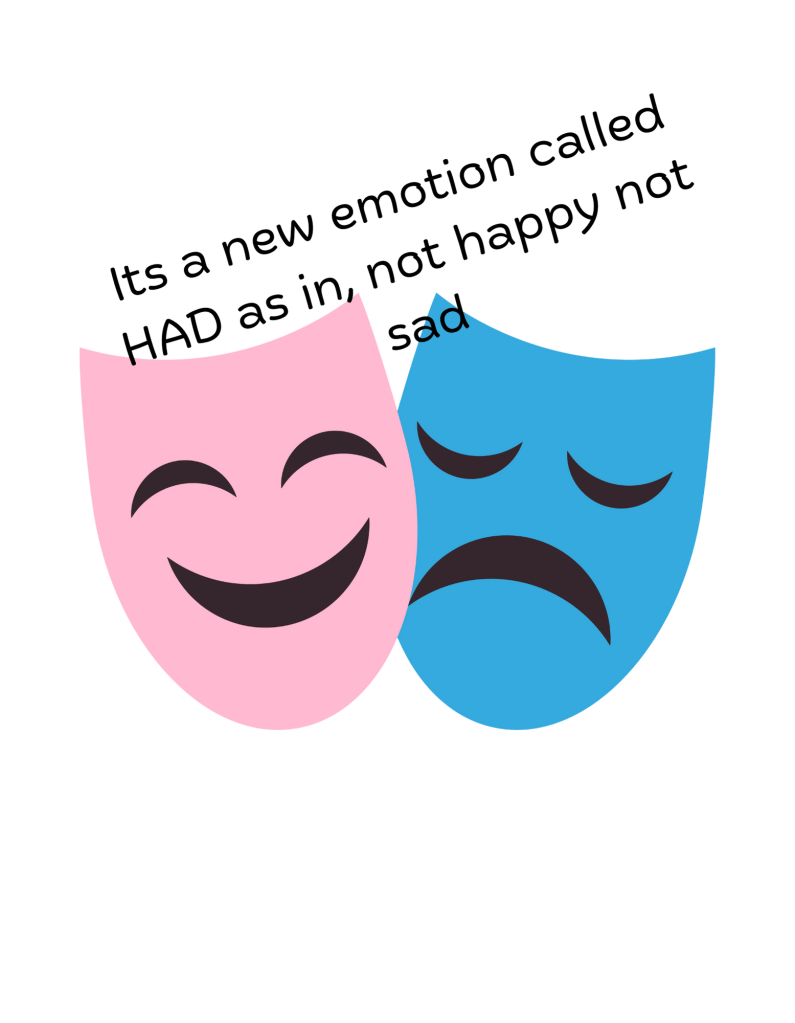
Emotional Yo-yo AKA Don’t like my attitude? Give it 3 minutes, it’ll change

I had a topic picked for today, for days really, but it’s deeply personal and today I’ve already cried over three commercials and once cuz I was pissed off, so I’m going to wait on that one, I feel too vulnerable. So instead, why don’t we talk about one of the middle symptoms in my ven diagram of my illnesses (its also a common comorbidity of autism, so I am getting it from all sides folks) its called Emotional Dysregulation.

What IS emotional dysregulation? Emotional dysregulation is like having your emotions go on a rollercoaster ride without your consent. You know, it’s when you struggle to keep those feelings in check and end up reacting in ways that might seem a bit over-the-top to others. It’s like your emotions are playing tug-of-war with you, making everyday situations feel like a big deal. And it’s not just about feeling all the feels, but also struggling with how to respond appropriately. Think of it as your emotional volume knob stuck on high, making it tough to keep things chill when you need to. And hey, it’s often buddies with executive dysfunction, so they like to hang out together, but we’ll dive into that one another time.

In Bipolar Mania, this is going to be like someone put a rocket booster in your brain and lit the fuse. One minute you’re feeling energetic and euphoric, making grandiose plans to start 17 new business ventures. The next, you’re sobbing uncontrollably because a Geico commercial reminded you of that goldfish you killed in 3rd grade. Your moods careen so violently, loved ones get whiplash just watching. It’s a real hoot when the mania convinces you that you’re a world-renowned painter, so you “decorate” the living room walls with your…unique…art. Its ok guys, mine just makes me think I write anything worth reading LOL.

In ADHD you are going to recognize this as more like having a nuclear meltdown at the sight of a mildly inconvenient traffic jam. You go from 0 to rage monster in 3.5 seconds over something as minor as the remote being lost. Then just as quickly, you’re cackling at internet memes, having completely forgotten what set you off. Your emotional outbursts are so disproportionate and fleeting, it’s like watching a moody toddler control the weather. Things that are of vital importance RIGHT NOW suddenly don’t seem like a big deal especially after thinking of all the work involved. Its not that I’m lazy its just there are days when I think all the thoughts and there are days where I will work myself to exhaustion and bleeding to avoid thinking ANY thoughts. Its a delight really lol.

Fibromyalgia brings a special kind of emotional chaos. You wake up feeling somewhat human, but by noon, the brain fog has you zoning out mid-sentence while describing your weekend. Nobody I’m talking to can possibly be more pissed at me zoning out than me, so often times I will catch myself and not say anything, because when I do then the person I’m talking to just gets annoyed at me whereas my way I only annoy myself. Though it does mean I miss whole convos, so eventually it comes out that I totally spaced it so I guess either way I’m pissing people off. By 2pm, you’re snapping at loved ones over the slightest noise because everything is exacerbating your body’s pain signals. But then a good cry sesh has you feeling marginally better, so you impulsively buy yourself 10 shirts because they are a good deal in bulk. An emotional rollercoaster where the only consistent thing is inconsistency.

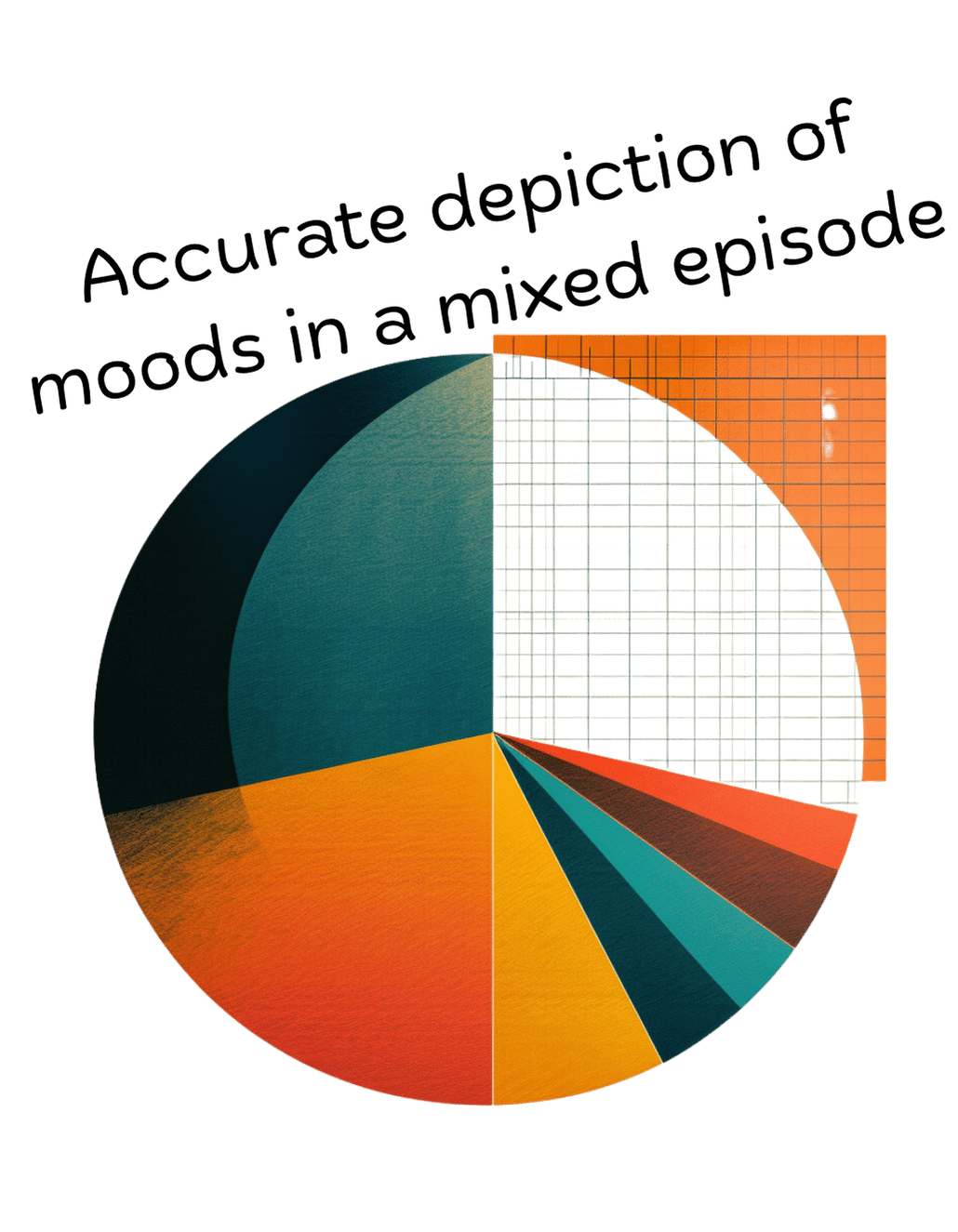
Now take all three of those delightful experiences and put them in a blender – that’s the big mood gumbo you get with comorbid bipolar, ADHD and fibromyalgia. One second you’re manically rearranging the furniture and rapidly rambling business plans. The next you’re lashing out at your spouse for daring to breathe too loudly near your full-body ache-fest. Throw in some weepy fibro fog where you forget what you’re upset about, and baby, you’ve got a stew going!

And lets not forget I’m navigating around a moody autistic teenager thats dealing with her own emotional dysregulation. In her that can present as intense outbursts or all out shutdowns, difficulty calming down, they already struggle to self soothe, this just highlights and exacerbates it. They might struggle to express emotions appropriately, its often a big deal and takes a while to settle. Sensory overload is also a problem, if overwhelmed everything is amplified by ten. Stimming is a big indicator, and for most kids that sounds or repetitive movements and also a rigidity and difficulty with flexibility can be considered emotional dyregulation.



For the blissfully unacquainted, just imagine a rollercoaster designed by a schizophrenic rocket scientist who’s ingested every mind-altering substance known to humanity. Ups, downs, loop-de-loops and sudden screeching emotional halts that make no sense. That’s the bipolar/ADHD/fibromyalgia brain on a good day! But don’t worry, we’re sure the burning desire to both achieve world domination and take a 5-year nap will balance itself out…any minute now. Until next time gang, take care of yourself and each other. (Oh I forgot to say, when I was taking my trash out I saw a real life George. He says ‘hey’ lol)