Uncategorized

Signs You’re Pacing Your Energy Correctly (Even If It Feels Like You’re Doing Nothing)

If you live with chronic illness, neurodivergence, or both, pacing your energy can feel suspiciously like… failing. We’ve been conditioned to believe that productivity equals worth, and rest is something you earn after pushing yourself to the brink. Spoiler alert: that mindset is garbage — and it actively works against bodies and brains like ours.

Energy pacing isn’t about doing less because you’re “giving up.” It’s about doing what keeps you functioning tomorrow. And sometimes that looks like absolutely nothing from the outside.

Here are signs you’re actually pacing correctly — even if it doesn’t feel impressive.


1. You Stop Before You Crash

If you’re resting while you still technically could keep going, congratulations — you’re doing it right. Pacing means stopping at the “I should probably rest soon” stage, not the “I have made a terrible mistake” stage.

Ending an activity while you still have a sliver of energy left isn’t weakness. It’s strategy.


2. You Plan Rest on Purpose

Rest isn’t something that “just happens” anymore. It’s scheduled. Protected. Sometimes defended like a feral raccoon.

If your calendar includes intentional downtime — especially after appointments, errands, or social interaction — that’s not laziness. That’s advanced-level self-management.


3. Your Week Looks Boring but Survivable

A paced week doesn’t look exciting. It looks quiet. Repetitive. Underwhelming.

And that’s the point.

If you’re no longer stacking five demanding things in one day and calling it “normal,” you’re learning how to live within your limits instead of constantly bulldozing them.


4. You Say No Without a Full PowerPoint Presentation

You don’t owe anyone your medical history, trauma background, or a five-paragraph explanation for why you can’t do something.

If you’re starting to say “I can’t” or “That won’t work for me” without spiraling into guilt — that’s growth. Messy, uncomfortable, necessary growth.


5. You Recover Faster Than You Used To

Maybe you still flare. Maybe you still crash. But if the recovery time is shorter than it used to be — that’s pacing working.

Progress with chronic illness is often measured in less severe consequences, not total avoidance.


6. You’re Choosing the Easier Option Without Shame

Delivery instead of cooking. Grocery pickup instead of the store. Frozen food instead of scratch meals. Sitting instead of standing.

If you’re choosing accessibility over aesthetics, you’re not “giving up.” You’re adapting. And adaptation is how people survive long-term.


7. You Feel “Unproductive” but Less Destroyed

This one messes with people the most.

If you feel like you didn’t do much, but you also didn’t completely wreck yourself — that’s a win. A quiet one. An invisible one. But a real one.


8. You’re Thinking About Tomorrow, Not Just Today

Pacing means asking, “How will this affect me later?” instead of “Can I force myself through this right now?”

If future-you is part of your decision-making process, you’re playing the long game — and that matters.


Final Thought

Pacing doesn’t look heroic. It doesn’t get applause. It doesn’t fit hustle culture or toxic positivity.

But it keeps you alive, functional, and able to show up again.

You are not doing nothing.
You are managing a body and nervous system that require intention, restraint, and care.

And honestly? That’s not weakness.
That’s skill. Til next time gang, take care of yourselves, and each other!

Uncategorized

The Spoonie Survival Guide to December: Manage the Joy Without the Meltdown (Ok SOME meltdowns, but minimal)

Ah, December.
The month where everyone else seems to be powered by peppermint and holiday magic… and I’m over here running on fumes, stubbornness, and one functioning spoon. Maybe two if I slept weird and accidentally charged myself.

But here’s the thing: December doesn’t have to eat us alive.
We can enjoy the cute twinkle lights, the cozy vibes, the nostalgia — without sacrificing our last working nerve.

So here are my tried-and-true, spoonie-approved tips for making it through the season with your sanity (mostly) intact.


1. Lower the Bar. Then Lower It Again.

Holiday movies lied.
No one needs matching pajamas, a handmade wreath, and a three-course dinner.
Pick the bare minimum that still feels like joy — the rest can sit in the corner and think about what it’s done. Matching PJs? Nope, I get everyone a shirt and call it good.

2. Build Your “Nope List” Early

These are the things you’re not doing.
Not even considering.
Not even thinking about reconsidering.

Mine includes:

  • Wrapping gifts like a Pinterest mom
  • Baking anything that requires more than one bowl
  • Going to three events in one weekend (laughable)

Write it down. Honor it like a boundary carved in stone. I will NOT be guilted into something I physically am unable to do.

3. Embrace the Lazy-Girl Gift Strategy

If it can be ordered, mailed, or printed without me putting on real pants?
It’s fair game.

Digital gifts, Etsy finds, consumables… honestly, the best gifts don’t come from a craft room meltdown. Pants arent really the enemy but shoes and a bra always seem to take more spoons than I have.

4. Schedule Recovery Time Like It’s a Medical Appointment

Events = exhaustion.
Fun = exhaustion.
Walking from the couch to the door to sign for a package = sometimes also exhaustion.

So plan buffer days around anything that drains you. No guilt.

Your energy is a budget — spend wisely. I try to not plan anything for the whole month of December because things come up.

5. Keep One “Emergency Joy” Thing Nearby

A candle.
A smashbook.
Your comfort show.
A snack that makes you feel alive.

Something tiny that sparks joy when your spoon count hits “Windows XP crashing” mode.

6. Delegate Like a CEO on a Deadline

Kids can help.
Partners can help.
DoorDash exists for a reason.

Being a spoonie in December means becoming a master delegator with zero apologies.

7. Create a Bare-Minimum Holiday Tradition

One thing.
Just one.

A movie you always watch.
A hot cocoa night.
A drive to see lights.

Consistency beats intensity every time. I’ve got little things I add each year, with trimming the tree (daughter does under my supervision.) We TRY and watch a movie with a holiday theme. Hot chocolate. Little things.

8. Let Go of the Ghost of December Past

Maybe old you did more.
Maybe old you hosted dinners or ran around like a festive tornado.

New you deserves grace — not comparison. What sucks is there is ten years between middle and last child. I could do WAY more when the older two were prime Christmas ages! Theres not even a comparison.

9. Pick the Memories Over the Motion

If something makes a good memory but doesn’t drain you?
That’s the sweet spot.

We’re not chasing “perfect.”
We’re chasing “present.” There’s a lot of moments you can be ‘present’ for once you take shortcuts on the things that matter less.

10. Celebrate Your Way — Even If Your Way Is the Couch

Rest doesn’t make you less festive.
Joy doesn’t require performance.
You’re allowed to celebrate at the speed your body allows. Do things in advance to use when your spoons are empty, cook in bulk when you have everything out.

And honestly?
That’s where the real peace of the season lives.
December is not a test you have to pass.
It’s a month — messy, beautiful, loud, overwhelming — that you get to shape in the way that works for you.

You deserve moments of joy that don’t cost you your health.
You deserve ease.
You deserve gentleness.

So here’s to a season that meets us where we are — not where the world tells us we “should” be.Til next time gang, take care of yourselves, and each other.

Uncategorized

7 Unexpected Ways to Make Life a Little Easier When You’re Overwhelmed

Life is messy, exhausting, and sometimes downright unfair—but there are clever little hacks that can help you catch your breath, keep your sanity, and even sneak in some joy. None of these tips will magically erase your stress (I wish), but they will make the load lighter.


1. Automate the Little Things

Decision fatigue is real—our brains get worn down by endless small choices. Automating the basics can free up precious energy.

  • Schedule grocery delivery or subscriptions for your must-haves.
  • Set bills to auto-pay.
  • Use reminders for meds, appointments, or chores.

It may feel tiny, but the mental relief adds up.


2. Reserve-Based Meal Planning

Instead of starting from scratch every day, build meals off “reserves” you’ve already cooked. Think big-batch taco meat, roast chicken, or skillet sausage that can be reimagined into multiple meals. Less chopping, less cooking, more living. I do this biweekly and feature a menu plan and shopping list every other Sunday, but its not rocket science so if you don’t stick 100% to it no big deal, I just keep the featured ingredients on hand and offer a multitude of uses for it. As stated above, decision fatigue is real and its so helpful to have that choice already made.


3. Build a “Bad Day Box”

Keep a stash of small comforts for the days when everything feels impossible. Fill it with:

  • A favorite snack or tea
  • Cozy socks or a heating pad
  • A playlist that makes you laugh or sing along

It doesn’t solve the hard stuff, but it gives you a lifeline when you’re sinking. If you want one already made I might know someone….


4. Quick Mental Resets

A five-minute pause can do more than you think. Whether it’s a short guided meditation, deep breathing, or blasting your favorite song, those tiny resets can shift your brain out of panic mode and back toward calm. Make it something easy that you have access to, it can be comedy or a podcast that makes you laugh, anything that shifts the focus of your thoughts is the idea.


5. Make Your Space Work for You

Clutter equals stress. Even little changes—like keeping meds, remotes, or supplies in a caddy by your chair—cut down on the low-grade chaos. Lighting, airflow, and comfort matter more than we admit.


6. Outsource Where You Can

If you can swing it, pay for help. Order takeout, hire a cleaner, or swap chores with a friend. Energy is a resource, and saving yours is not laziness—it’s smart strategy.


7. Celebrate Tiny Wins

You got out of bed? That counts. Finished a task? Write it down and cross it off just for the satisfaction. Momentum grows when you notice the little victories instead of waiting for the big ones.


Life isn’t perfect, and neither are we—but small hacks like these add up. They create breathing room, lighten the load, and make survival a little more manageable. Try one or two this week. You deserve the ease. Til next time gang, take care of yourselves, and each other!

Uncategorized

What Rest Feels Like When You’re Used to Being in Crisis

Rest is weird.

Let’s just start there. Because when your baseline is fight-or-flight, freeze-or-fawn, dissociate-or-die-trying… “rest” doesn’t always feel peaceful. Sometimes it feels like guilt. Or like you’re forgetting something. Like you’re doing life wrong.

If you’ve lived in survival mode for months or years—or forever—it’s not just that you don’t rest. It’s that you’ve forgotten what real rest is supposed to feel like.

1. Rest Feels Like Uncertainty at First

The first few minutes of trying to rest when you’re used to chaos? Horrible. It’s like the world got too quiet and suddenly your brain is staging a protest:

  • “Shouldn’t you be doing something right now?”
  • “Is the other shoe about to drop?”
  • “Are you being lazy or just conveniently forgetful?”

I have terrible self talk and my therapist always has me ‘reframe’ things. Turns out, your nervous system isn’t sure what to do when it isn’t in go-go-go mode. It gets twitchy. Suspicious. Like a cat in a bathtub.

2. Rest Can Look Lazy When It’s Actually Life-Saving

Rest isn’t always bubble baths and soft jazz. Sometimes rest looks like staring at the ceiling, numb and unmoving, because that’s all your body can manage. And that counts. Especially when you’re healing.

Some people take naps. Sometimes I can but I keep naps under an hour if exhaustion hits.
Others… collapse. I’ve done that. I’ve driven cross country 21 hours and legitimately passed out cold. I was apparently parked in front my aunt’s neighbors tennant’s garage and they banged on the window, clearly seeing me sleeping on the couch and not hearing them. LOL They thought I was dead,

Same nervous system need, just wearing different outfits.

3. Rest Doesn’t Mean Everything Is Fixed

Here’s the kicker: you can be exhausted and doing nothing. That’s not failure. That’s biology catching up.

Rest doesn’t mean you’re healed, fixed, or suddenly energetic. Though it helps when the goal is reached. Sometimes it’s just the space between breakdowns. And that’s okay. That’s real. That’s progress, even if it doesn’t sparkle.

4. Rest Can Feel Like Withdrawal

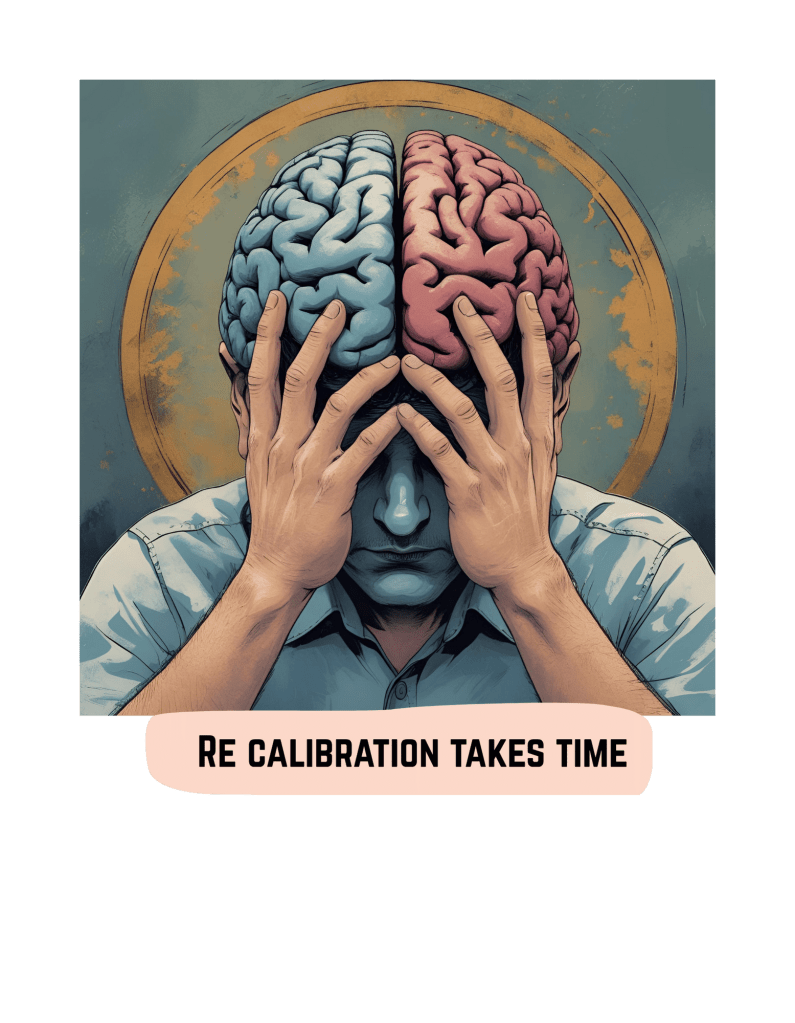
When adrenaline has been your main fuel source, rest can feel like crashing after a sugar binge. You may feel down, irritable, even achey. You’re not broken. Your brain’s just recalibrating. Imagine detoxing from chaos. That’s what this is. Detoxing from adrenaline.

5. You Might Feel Worthless While Resting—But You’re Not

This one cuts deep: “If I’m not producing, I’m not valuable.” Sound familiar?

That’s a trauma belief, not a truth. My eyes were opened with this little nugget, my therapist was the one who started it, and I did believe no one cared about me unless I did things for them, even though I love people without calculating what they can do for me, my brain was hard-wired to tell me I was worthless and I STILL have more days I believe the bad over the good about myself. Curious to see how many of you guys have felt that way too.

We live in a society that measures worth by productivity, but healing means learning your value exists even when you’re still. Even when you’re not doing. You don’t have to earn your rest. You deserve it because you’re human and thats hard enough.


So How Do You Learn to Feel Rest?

Gently. And over time.

Here are a few ways to start:

  • Name it. Tell yourself, “I am resting right now,” even if it feels like loafing.
  • Track your thoughts. Notice when guilt or shame show up. Are they old scripts? Keep a journal by your bed and write whats bothering you down before you lay down so you know you can work on it tomorrow.
  • Set tiny rest rituals. One song. One stretch. One sit on the porch. Practice. One little thing, whatever it is, that gets your mind to stop spinning and rest.
  • Celebrate doing less. Rest is not a reward. It’s a requirement. Its hard NOT to reward ourselves with rest, thats why we have to re-frame our thoughts how we talk to ourselves.

Final Thought: If You’ve Been in Crisis, You Deserve to Feel Safe in Stillness

That’s the hard part—retraining your body and brain to trust quiet moments. But you can. One awkward attempt at a time. You’re not failing when rest feels weird. You’re rewiring. That’s brave work.

And if no one’s told you lately: you’re doing a damn good job surviving. Now, let’s practice what it means to actually live. It feels like all I’ve done my adult life is to go from surviving one thing to surviving the next, I’m going to try and make more time to look around and enjoy the in between. I’ll keep you posted. If anyone has any tips to help with rest be kind and share it with the class. Til next time gang, take care of yourselves, and each other!
Uncategorized

Strangers And Estrangement Questions

Let’s talk about something as tough as politics at a holiday dinner: dealing with questions about your estranged child at festive gatherings. It’s like navigating an emotional minefield while balancing sugar cookies and a glass of eggnog. Here’s the deal, people are going to ask. They’ll ask because they care, or because they’re nosy, or because they forgot that small talk can sometimes be big talk. When they do, it’s like someone blasting “All I Want for Christmas Is You” right in your face – jarring and overwhelming.

But here’s the thing: you don’t owe anyone your full story. You’re allowed to protect your heart, even if Aunt Mildred thinks she’s entitled to the details. So, for the sake of your sanity (and to avoid ugly-crying into the punch bowl), it’s a good idea to have a few responses ready. Think of them as emotional armor or your invisibility cloak at the holiday party of life. These responses aren’t deflections; they’re self-care. They allow you to acknowledge the situation without turning the evening into a therapy session. Because, let’s be real, the only professional help we need during the holidays is from a chef or bartender.

Here are 10 responses that google thinks are easier to digest than dinner and won’t give you emotional indigestion, along with my opinion of each They are not lies or anything negative, just a subtle change of direction to avoid awkwardness and not be sitting there talking trash or anything but make you feel more prepared.:

“It’s been a year of changes. I’m learning to embrace the present moment. How are you handling the holiday bustle?

“They’re on their own journey right now. How about you? How’s your family doing?”

“It’s a complicated situation, but I’m working on finding joy in other aspects of life. How are you enjoying the party?”

“They couldn’t make it this year. I’m grateful for the loved ones who are here. Have you tried the appetizers?”

“We’re navigating some challenges. I appreciate your concern, but I’d prefer not to discuss it today.”

“They’re taking time for themselves this holiday. Speaking of which, do you have any exciting plans for the season?”

“It’s a sensitive topic for me right now. I hope you understand if I’d rather talk about something else.”

“We’re in a period of transition. But enough about that – how have you been?”

“They’re finding their own way this year. I’m focusing on creating new traditions. What’s your favorite holiday tradition?”

Using these doesn’t mean you’re in denial or don’t care—it means you’re choosing self-preservation. And if someone pushes for more info, feel free to disappear to the bathroom or suddenly become fascinated by the nearest houseplant. You’ve got this, holiday warriors. May your responses be smooth, your boundaries strong, and may there always be a distraction when you need one. Until next time guys, take care of yourselves, and each other

Uncategorized

Finding Joy in Everyday Life: Cultivating Small Moments of Joy and Gratitude

Hey there! Life can sometimes feel like a whirlwind, especially when you’re juggling the ups and downs of mental health and family life. As a bipolar mama dealing with anxiety and ADHD and chronic pain, I totally get how tough it can be to spot joy amidst the chaos. But trust me, it’s those little moments that can help us cultivate gratitude and find some peace. So, let’s chat about how to invite joy into your everyday life, even when things get a bit bumpy.

Embrace the Power of Small Moments
Joy often sneaks in through the little things—a warm cup of coffee, a quick chat with a friend, or a giggle with your kid. So, hit pause for a sec and soak it all in. Take a deep breath, be present, and notice the little details around you. Practicing mindfulness can help you stay anchored in the moment and make it easier to see the beauty hiding in plain sight.

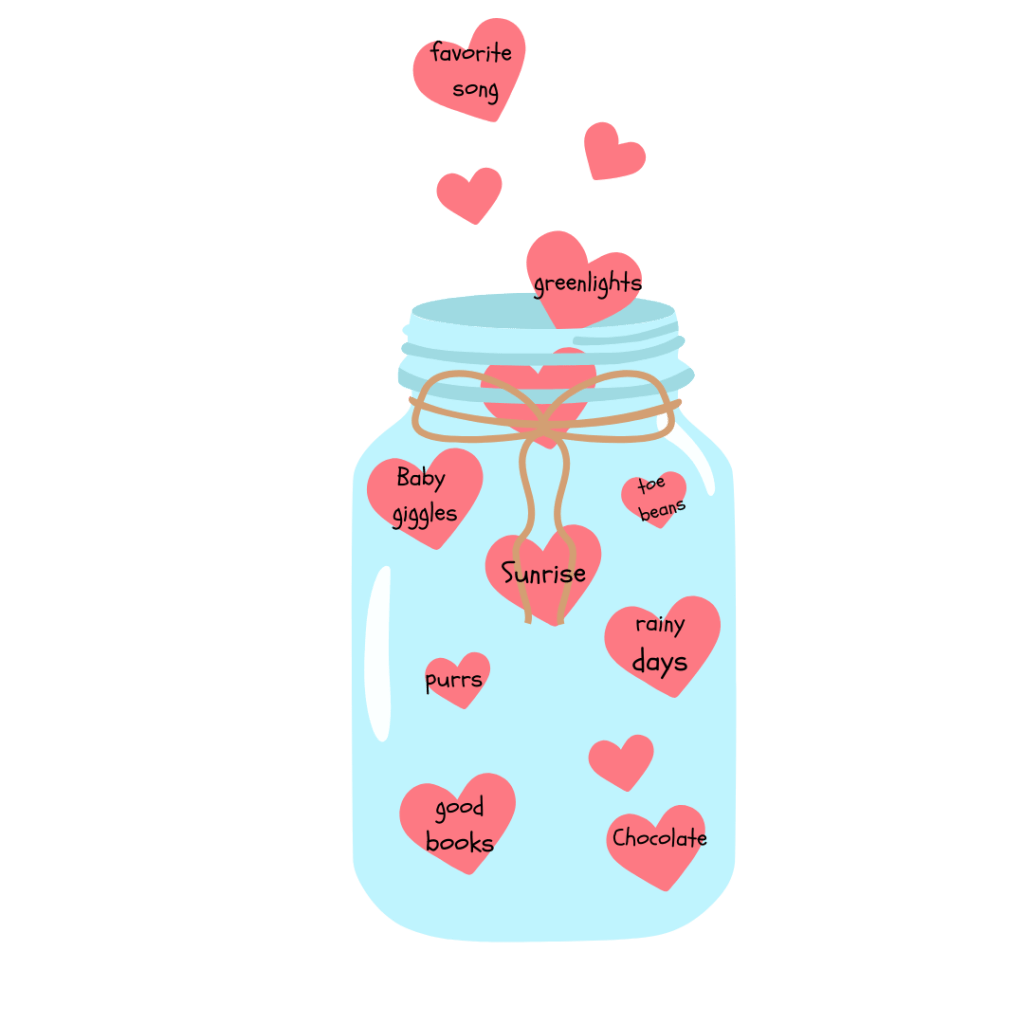
Create a Joy Jar
Here’s a fun idea: grab a jar and some slips of paper. Whenever something brings you joy or you feel grateful, jot it down and toss it in the jar. Over time, you’ll have a treasure trove of positive reminders to dig into whenever you need a little pick-me-up. It’s a great way to shift your focus from challenges to the bright spots that pop up throughout your day.

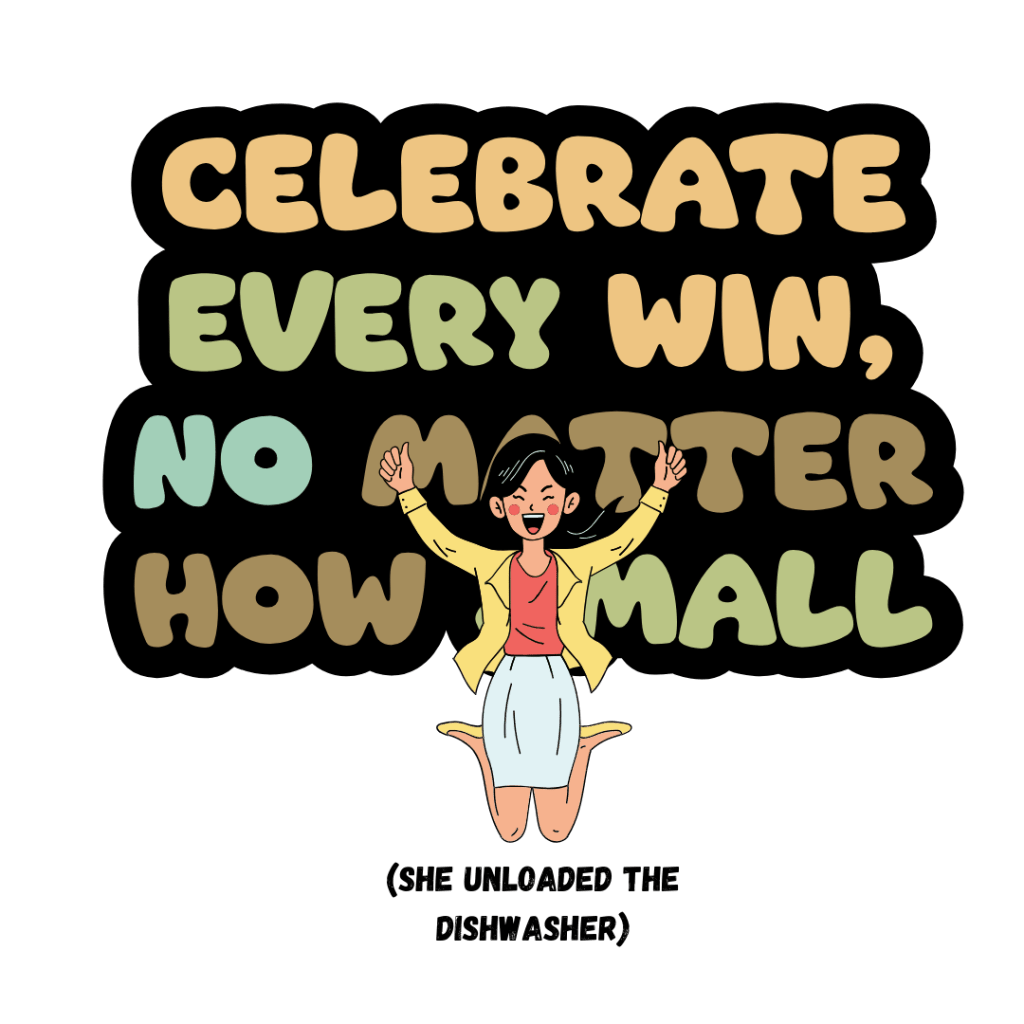
Celebrate Your Achievements
Big or small, every win counts! Set some manageable goals—like finally tackling that mountain of laundry or taking a stroll outside—and give yourself a high-five when you achieve them. Celebrating these little victories helps build momentum and reinforces the idea that joy can come from everyday accomplishments. Try and limit the unpleasant activities to one each day, we can all stomach a lot more if we break it off into bite size chunks.

Cultivate Gratitude
Gratitude is like magic for your perspective. Try keeping a gratitude journal where you jot down three things you’re thankful for each day. This simple practice helps shift your focus from what’s missing in your life to what you already have, nurturing a more positive mindset. If three sounds daunting, start with one. There is air in your lungs. Tomorrow it can be the baby that smiled at you in the check out lane. If you can’t find one thing to be grateful for, then be someone else’s reason to give thanks, then there will be two of you.

Connect with Nature
Nature is like a big hug for your soul. Even a short walk around the block or spending some time with your plants can lift your spirits. Pay attention to the sounds, colors, and textures around you—engaging with nature can really help ground you and reconnect you with yourself. Sunlight, and I am one of those people that hisses when light touches me, but 20 minutes of open air sunlight exposure every day will connect you, ground you to your surroundings and give you vitamins and minerals that light bulbs can’t replace.

Engage in Creative Activities
Get those creative juices flowing! Whether it’s painting, writing, gardening, or crafting, find something that sparks joy for you. Allow yourself to create without any judgment; just enjoy the process and let it be a source of happiness and self-discovery. A fifteen minute block of time with nothing but a piece of paper and a pen and just write or draw, whatever you feel.

Reach Out for Connection
Feeling isolated can be tough when you’re navigating mental health challenges. Reach out to friends, family, or support groups—sharing your experiences can lighten the load and remind you that you’re not alone in this journey. I’ve found a lot of help and information in message boards. I’ve considered setting up a small message board here, not with any centralized theme I just want somewhere anyone can come to not feel alone.

Practice Self-Compassion
We all have tough days; it’s part of being human! So, be kind to yourself. Treat yourself with the same compassion you’d offer a friend going through a rough patch. Remember that every step toward joy matters—even if it feels small. You don’t have to have it all together, you don’t have to have anything together and its ok to not be ok.

Make Room for Play
As busy mamas, we often forget how important play is! Carve out time for activities that bring you joy—whether it’s playing games with your autistic teen or trying out a new hobby. Play helps relieve stress and reminds us of the simple joys in life. If you can share the hobbies you enjoy with the ones you love it will give you both reasons to smile.

Find Meaning in Challenges
It might be hard, but try to find meaning in your struggles. Reflect on what you’ve learned from those experiences and how they’ve shaped you. This perspective can help build resilience and deepen your appreciation for the joy that follows tough times. Its lessons that shape us good or bad and its because of where we’ve been that we know where we ARE.

Conclusion

Finding joy in everyday life isn’t about pretending challenges don’t exist; it’s about embracing those small moments that light up our days. As someone navigating bipolar disorder, anxiety, and ADHD, I know how real the struggle is—but by cultivating gratitude and seeking out joy, we can tackle our journeys with more resilience and hope. Remember: it’s perfectly okay to seek support and take time for yourself. You deserve joy, and it’s often hiding in the simplest moments! Take care of yourselves, and each other!

Uncategorized

The Power of Structure

Alright, you beautiful chaos machines, let’s talk about the magical world of structure – because nothing says “I’ve got my shit together” quite like a color-coded schedule and a to-do list longer than your last therapy session. The Power of Structure: How It Benefits Us Neurodivergent Disasters
Living with a brain that’s wired differently is like trying to navigate a maze blindfolded while riding a unicycle. But fear not, my fellow hot messes, because structure is here to save our collective asses. Let’s dive into why slapping some order onto our chaotic lives might just be the secret sauce we’ve been missing.

  • Predictability: Because Surprises Are Overrated
    For those of us who treat unexpected changes like a cat treats a bath, having a structured routine is like a warm, cozy blanket for our anxiety-riddled souls. Knowing what’s coming next means fewer chances for our brains to play the “What If?” game at 3 AM.
  • Time Management: Or, “How to Adult Without Losing Your Mind”
    Let’s face it, time management for us is like herding cats – theoretically possible, but usually a disaster. A structured schedule helps us pretend we’re responsible adults who don’t lose track of time scrolling through memes for three hours.
  • Focus: Squirrel! …Wait, What Was I Saying?
    Maintaining focus when your brain treats every thought like a new, shiny toy is a challenge. Structure gives us guardrails to keep our minds on track, or at least in the general vicinity of where they should be

  • Emotional Regulation: Because Feelings Are Hard
    For those of us who experience emotions like we’re on an endless roller coaster, having a structured routine that includes “Don’t Have a Meltdown” time can be a lifesaver. It’s like giving your emotions a nice, predictable map to follow.
  • .Independence: Fake It Till You Make It
    Structure helps us pretend we’re functioning members of society who can adult with the best of them. It’s like training wheels for life, but with less scraped knees and more “Holy shit, I actually remembered to pay my bills!”

Implementing Structure Without Losing Your Mind:
Now, before you run off to color-code your entire life, remember that structure doesn’t mean turning into a robot. It’s about finding a balance that works for your unique brand of chaos. Start small – maybe try setting a consistent wake-up time (and by consistent, I mean within a two-hour window). Schedule regular meals, because apparently, we’re supposed to eat more than just coffee and anxiety.
Remember, flexibility is key. Your structured routine should be more like yoga pants than a straitjacket – stretchy enough to accommodate life’s curveballs and the occasional “fuck it” day.

Final Thoughts
Structure might not cure our neurodivergence (and let’s be honest, would we want it to?), but it can make navigating this neurotypical world a bit less like trying to fit a square peg into a round hole while blindfolded and on fire. So embrace the power of structure, you beautiful disasters. Create a routine that works for you, even if that routine includes scheduled time for staring blankly at the wall. Because hey, at least you’re staring at the wall at the designated time, right?
Now go forth and structure the hell out of your life. And remember, if all else fails, there’s always coffee and sarcasm to get you through the day. Hope you beautiful people are all happy and had an awesome weekend, take care of yourself and each other!

Uncategorized

The fine line when you’re your own worst enemy

Ah, the never-ending battle between self-care and self-sabotage – a war as ancient as time itself, and one that leaves us feeling like we’re constantly stuck in a deranged game of tug-of-war with our own psyche. Strap in, sunshine, because we’re about to dive headfirst into this delightful clusterfuck of contradictions.

On one side of the ring, we have self-care – that elusive state of being where we’re supposed to treat ourselves like precious little snowflakes, indulging in face masks, bubble baths, and all sorts of other bougie bullshit. And on the other side, we have self-sabotage – that devious little voice in our heads that whispers sweet nothings like, “Fuck it, let’s order an entire pizza and binge-watch trashy reality TV until our eyes bleed.” (Though if you indulge in this pass time on occasion its not sabotage, its critical to have some time to just not care for a few minutes but you get my meaning)

Now, in a perfect world, we’d all be able to find that magical sweet spot where we’re simultaneously treating ourselves like royalty and also not completely derailing our lives with reckless abandon. But let’s be real, that’s about as likely as spotting a unicorn dabbing under the full moon. (not this one, this is George’s friend Carl, he’s just doing me a favor lol)

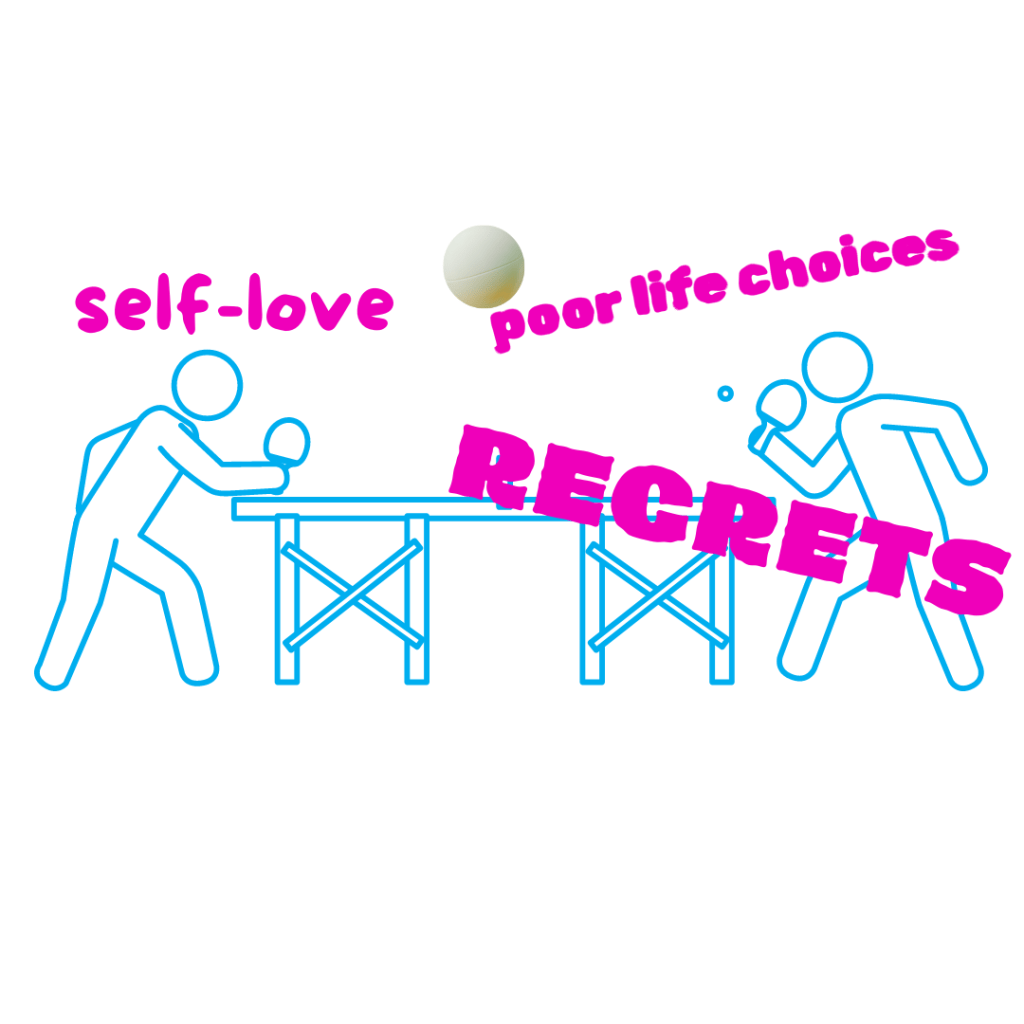
Instead, we find ourselves ping-ponging between these two extremes, one minute basking in the glow of our own self-love, and the next, spiraling down a rabbit hole of poor life choices and regret. It’s like our brains are hardwired to sabotage any semblance of balance we manage to achieve, just to keep things interesting (or to torture us, who knows?).

Take, for instance, that time you decided to treat yourself to a luxurious spa day, complete with a full-body massage and a fancy-schmancy facial. You emerged feeling like a million bucks, ready to conquer the world with your newfound zen. But then, like a cruel twist of fate, you found yourself elbow-deep in a family-sized bag of chips, binge-watching “The Bachelor” until the wee hours of the morning, undoing all that self-care goodness in one fell swoop.

But fear not, my fellow self-care warriors! For in this endless cycle of indulgence and self-destruction, there lies a glimmer of hope – a path to that elusive equilibrium, if you’re willing to embrace the chaos. First and foremost, ditch the all-or-nothing mentality. Self-care isn’t a destination; it’s a journey filled with detours, pit stops, and the occasional wrong turn. Embrace the fact that you’re going to stumble, fall, and maybe even face-plant into a pile of your own poor decisions from time to time. It’s all part of the process, baby.

Next, I CANNOT stress this enough, learn to laugh at your own ridiculousness. Even when its not funny, even if you are the only one laughing. When you find yourself knee-deep in a pint of ice cream, having just binged an entire season of “Bridgerton” in one sitting, don’t beat yourself up. Instead, embrace the absurdity of the situation, and revel in the fact that you’re a delightfully flawed human being, capable of both self-love and self-destruction in equal measure.

Finally, remember that balance is a myth perpetuated by those who have yet to experience the true joy of embracing their inner chaos. With any of the ailments you are going to find additional obstacles to inner harmony.

– For those on the autism spectrum, sensory processing differences and difficulties with emotional regulation can make traditional self-care activities like meditation or relaxation techniques extremely challenging. At the same time, autistic burnout from masking and societal demands heightens the risk of self-sabotaging behaviors as a coping mechanism.

-Fibromyalgia’s chronic pain and fatigue create physical barriers to self-care, while the condition’s cognitive impacts like brain fog can derail routines, inadvertently enabling self-sabotage.
In bipolar disorder, the depressive and manic episodes inherently disrupt self-care routines. During manic phases, impulsivity and risk-taking behaviors verge into self-sabotage. Conversely, the lethargy of depressive periods makes basic self-care feel insurmountable. 

-Those with ADHD frequently struggle with self-care due to executive function challenges around planning, initiating tasks, and sustaining routines. Their propensity for hyperfocus can lead to cycles of self sabotage by neglecting their needs and responsibilities.

Across all these conditions, self-care is crucial yet enormously difficult. The mental and physical demands create a high risk of self-sabotaging behaviors, even when the intention is self-preservation. Establishing compassionate, sustainable self-care practices tailored to the specific needs of each diagnosis is vital for disrupting patterns of burnout and self-destruction. Lifestyle adjustments, therapy, medication, and strong support systems are often needed to strike that elusive self-care/self-sabotage balance.


So, go ahead, indulge in that face mask, but don’t be afraid to follow it up with a night of reckless abandon. Treat yourself to that fancy workout class, but don’t beat yourself up if you end up skipping a few sessions in favor of a Netflix binge. Til next time, take care of yourself gang, and each other!