Uncategorized

Totally Reasonable Things I’ve Cried About Recently

I’d like to start by saying I am mentally stable.

Unfortunately, the evidence does not support this claim.

In my defense, none of these were dramatic public meltdowns. These were private, dignified emotional collapses. The kind where you stare at a wall and question your entire operating system.

Here are some of the completely reasonable, fully justified things that have recently broken me.


1. Dropping Something

Not the act itself.

The realization of what comes next.

Because dropping something isn’t just dropping something. It’s a full decision tree.

Do I pick it up now?
Do I leave it there and pretend it doesn’t exist?
Do I reorganize my entire life around avoiding that specific area of the floor?

The object now lives there. This is its home. I am its neighbor.


2. Being Hungry, But Nothing Feeling Worth It

This is a special kind of psychological warfare.

You’re hungry. Your body is sending signals. But every single food option feels like an insult.

Nothing sounds good. Nothing feels doable. Everything requires effort I do not possess.

I once stared into my refrigerator like it had personally betrayed me.

It knew what it did.


3. Being Too Tired to Do the Thing I’ve Been Waiting to Do All Day

This one feels especially personal.

You finally have time. The house is quiet. The moment has arrived.

And your body is like, “Absolutely not.”

The betrayal is staggering.

I had plans. Dreams. Mild intentions.

Now I have a blanket and resentment.


4. Dropping Something Again After I Just Picked Something Else Up

This is targeted harassment.

There is no other explanation.


5. Feeling Overwhelmed by Completely Normal Responsibilities

Nothing dramatic. Just basic, everyday tasks.

Replying to a message. Making a phone call. Deciding what to do next.

Individually, they are manageable.

Collectively, they form a powerful emotional boss battle.


6. Being Touched by My Own Shirt Incorrectly

There are moments when fabric becomes the enemy.

Suddenly the sleeve is wrong. The collar is wrong. Everything is wrong.

I don’t know what changed.

But I know I cannot go on like this.


7. Being Exhausted by Something That Shouldn’t Be Exhausting

You ever do one normal thing and your body reacts like you just completed a wilderness survival challenge?

Same.

I did not climb Everest.

I sat upright too long.


8. Realizing I Still Have to Do This Again Tomorrow

This one sneaks up on you.

You finish the tasks. You survive the day.

And then it hits you.

This is a recurring series.

There is no series finale.


9. Something Small Finally Being the Last Straw

Not a big thing.

A small thing.

A stupid thing.

The emotional equivalent of a Jenga piece.

And suddenly the entire structure collapses and you’re sitting there wondering how we got here.


10. Absolutely Nothing Specific

Sometimes there is no reason.
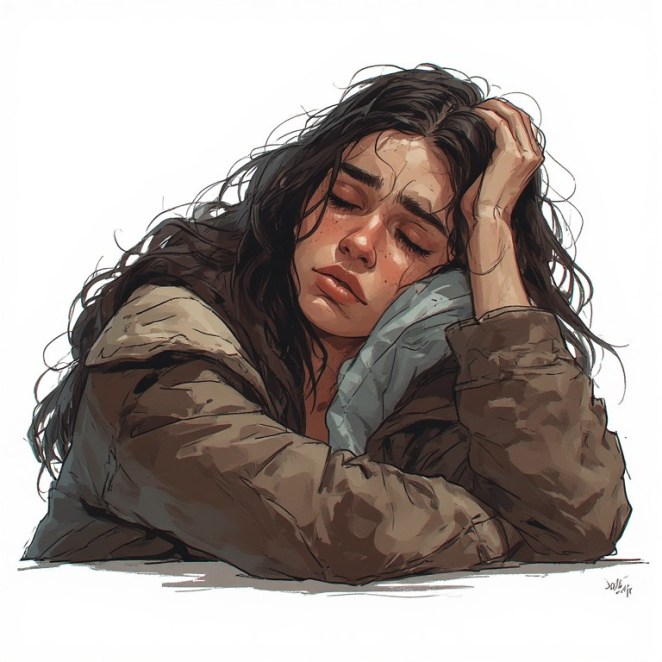
Just a vague sense of overwhelm. Of fragility. Of existing inside a nervous system that has its own agenda.

No trigger. No explanation.

Just vibes.

Bad vibes.


Closing Thoughts

The thing about crying over “small” things is that it’s rarely about the small thing.

It’s about the accumulation.

The constant adjusting. The constant managing. The constant existing inside a body and brain that require more negotiation than expected.

Sometimes crying is not a breakdown.

Sometimes it’s just a system reset.

Still inconvenient.

But necessary. Til next time gang, take care of yourselves, and each other.

Uncategorized

Normal Things That Now Require Project Management

At some point, without your consent, you were promoted to CEO of Existing, Inc.

You did not apply for this role.
You do not remember interviewing.
There is no HR department.
There are no sick days.

But somehow, every basic human task now requires a full-scale operational strategy.

Example: Leaving the House

This is no longer “put on shoes and go.”

This is now a multi-phase initiative involving:

Phase 1: Forecasting

You must analyze projected variables, including but not limited to:

  • Current pain levels
  • Predicted pain levels
  • Weather (your nemesis)
  • Duration of outing
  • Availability of seating
  • Distance from parking to destination
  • Whether the building was designed by someone who hates humanity

Phase 2: Resource Allocation

You assemble supplies like you’re preparing for a polar expedition:

  • Medications
  • Water
  • Backup medications
  • Emotional support snacks
  • Backup emotional support snacks in case the first emotional support snacks fail emotionally
  • Phone charger
  • Backup charger because betrayal is everywhere

Phase 3: Contingency Planning

You must prepare for possible catastrophic scenarios such as:

  • Unexpected stairs
  • No seating
  • Loud environments
  • Temperature extremes
  • Your body suddenly filing a formal complaint

This includes identifying exit strategies and recovery plans.

Phase 4: Risk Assessment

You ask yourself critical executive-level questions such as:

  • Is this worth tomorrow’s consequences?
  • Will Future Me be furious?
  • Am I about to ruin Thursday by attempting Tuesday?

Phase 5: Executive Override

Despite all data suggesting this is a terrible idea, you go anyway because you are a human being who would like to participate in your own life occasionally.

Bold. Visionary. Reckless.

Deliverables

Upon completion of this task, you will receive:

  • Extreme fatigue
  • A flare
  • Zero financial compensation
  • And the overwhelming sense that you just completed something equivalent to summiting Everest, but everyone else calls it “running an errand”

Performance Review

You will be evaluated by:

  • Your nervous system
  • Your immune system
  • Your guilt
  • And society, which will say, “But you don’t look sick.”

Mission Statement of Existing, Inc.:

Uncategorized

The Unhelpful Advice Hall of Fame

(Inductees Chosen for Outstanding Contributions to Missing the Point)

There are two kinds of advice in the world:

  1. Useful.
  2. Enthusiastically useless.

Today, we honor the second category.

Welcome to the Unhelpful Advice Hall of Fame — a carefully curated collection of statements that have survived decades despite helping absolutely no one.

Please hold your applause. Or don’t. It won’t change anything.

🏆 Inductee #1: “Have you tried yoga?”

Yes.

I have also tried stretching, resting, hydration, optimism, and briefly considering becoming a houseplant.

Yoga is lovely. It is not a firmware update for my nervous system.

Next.

🏆 Inductee #2: “You just need to push through it.”

Ah yes. The classic strategy of overriding biology with vibes.

If “pushing through” worked long-term, no one would burn out. No one would flare. No one would collapse two days later wondering why their body sent them a strongly worded letter.

I don’t lack effort. I lack unlimited reserves.

🏆 Inductee #3: “Everyone gets tired.”

Correct.

And everyone gets hungry. That doesn’t make famine a personality flaw.

There is a difference between “I stayed up too late” tired and “my cells are filing a union complaint” tired.

We can respect nuance.

🏆 Inductee #4: “You’re too young to feel this way.”

I wasn’t aware age functioned as a warranty.

Bodies are not cars. There is no mileage-based fairness system. If there were, I’d like to speak to management.

🏆 Inductee #5: “You just need to think positive.”

I do think positive thoughts.

I also think realistic ones.

Positivity is not a structural support beam. It’s a throw pillow. Decorative. Occasionally helpful. Not load-bearing.

🏆 Inductee #6: “At least it’s not worse.”

This one wins for optimism with a side of existential dread.

You’re right. It could always be worse.

It could also be better.

We don’t have to race to the bottom to validate discomfort.

🏆 Inductee #7: “Maybe it’s stress.”

Maybe.

And maybe stress is also a biological event, not a moral weakness.

Also, if the solution to stress were “simply relax,” the spa industry would have ended human suffering by now.

🏆 Inductee #8: “Have you tried cutting out gluten/dairy/sugar/joy?”

I appreciate the commitment to dietary experimentation.

However, if eliminating bread were the cure for complex medical conditions, Italy would not exist.

🏆 Inductee #9: “But you look fine.”

Thank you. I moisturize.

Looking fine is not the same as being fine. Packaging can be deceiving. Ask any online order I’ve ever received.

🏆 Inductee #10: “You just need more discipline.”

If discipline cured chronic illness, high-achievers would be immortal.

Sometimes the issue isn’t willpower. It’s capacity. And capacity does not respond to shame-based motivational speeches.

Honorable Mention: Silence

Sometimes the most helpful response is:

“That sounds hard.”

No fix. No pivot. No silver lining.

Just acknowledgment.

It turns out being believed is far more effective than being optimized.

If you’ve ever nodded politely while mentally nominating someone for this Hall of Fame, you’re not ungrateful. You’re tired.

Advice is easy. Listening is harder.

And if nothing else, at least we can laugh — carefully, responsibly, with proper hydration — about the fact that some phrases will apparently outlive us all. Til next time gang, take care of yourselves, and each other!

Uncategorized

Fibromyalgia Time Is a Completely Different Time Zone

I live in a time zone most people don’t know exists.
It doesn’t follow clocks, calendars, or common sense.
It does follow pain levels, fatigue spikes, and whether my nervous system has decided today is a “no thoughts, just vibes” kind of day.

Welcome to Fibromyalgia Time.


1. Five Minutes Can Take an Hour

In Fibromyalgia Time, a “quick task” is a bold lie.

  • Showering
  • Getting dressed
  • Answering one email

Each looks like it should take five minutes. In reality, it includes:

  • A rest break
  • A mental pep talk
  • Forgetting what you were doing
  • Another rest break

Time stretches when pain shows up, and shrinks when energy disappears.


2. “Later” Is a Vague Concept at Best

When I say “I’ll do it later,” I don’t mean today.
I also don’t mean tomorrow.
I mean when my body allows it.

Fibromyalgia doesn’t run on deadlines. It runs on:

  • Pain levels
  • Brain fog density
  • How hard my nervous system is spiraling

Later is not procrastination. It’s symptom-based scheduling.


3. Energy Expires Without Warning

Normal time assumes energy is steady.

Fibromyalgia Time says:

You can wake up feeling okay and hit empty before lunch.
You can plan carefully and still lose the day by 2 p.m.

Energy doesn’t taper. It vanishes.
And when it’s gone, the clock stops mattering.


4. Recovery Time Is Not Predictable

In normal time, rest has a formula:

In Fibromyalgia Time:

Recovery isn’t linear.
Sometimes a nap helps.
Sometimes it does nothing.
Sometimes it makes things worse because now you’re groggy and in pain.


5. Past Me and Present Me Are Not the Same Person

Fibromyalgia Time has no memory continuity.

Past Me:

  • Made plans
  • Overestimated capacity
  • Was wildly optimistic

Present Me:

  • Is negotiating with joints
  • Has three spoons left
  • Is offended by Past Me’s confidence

Canceling plans isn’t flakiness — it’s time travel without consent.


6. The Clock Keeps Moving Even When I Can’t

This is the cruelest part.

The world doesn’t pause when your body does.
Bills are still due.
Appointments still exist.
Expectations don’t magically adjust.

Fibromyalgia Time moves slower inside your body — but faster everywhere else.
That disconnect is exhausting all by itself.


7. Productivity Happens in Weird Bursts

Fibromyalgia doesn’t believe in steady output.

Instead you get:

  • Sudden bursts of “must do everything NOW”
  • Followed by complete shutdown

It’s not a lack of motivation.
It’s a nervous system that dumps all available energy at once and then clocks out.


8. Rest Is Not Wasted Time (Even If It Looks Like It)

In normal time, rest is a reward.

In Fibromyalgia Time, rest is maintenance.

Lying down isn’t laziness.
Doing less isn’t failure.
Pausing is how you stay functional at all.

The clock might say you did “nothing,” but your body knows better.


9. Fibromyalgia Time Requires Translation

“Just five more minutes”
“Can you hurry?”
“It won’t take that long”

These phrases assume a shared timeline.

We’re not on the same clock — and that’s not a moral failing.
It’s a medical reality.


10. Surviving Fibromyalgia Means Redefining Time Entirely

Success isn’t measured in hours worked or tasks completed.

In Fibromyalgia Time, success looks like:

  • Listening to your body
  • Stopping before you crash
  • Adjusting expectations without self-blame

You’re not behind.
You’re just operating in a different time zone — one that requires patience, flexibility, and a whole lot of self-compassion.

Til next time gang, take care of yourselves, and each other.


Uncategorized

Cold Weather Things My Body Strongly Objects To

My body and winter are not in a partnership.
This is not a misunderstanding.
This is a formal complaint.

Here are the cold-weather offenses my body would like formally noted.


1. Cold Floors

The floor should not feel like it’s actively trying to steal my soul through my feet.
Socks help. Slippers help. BOTH preferred.
Nothing helps enough.


2. Wind That Feels Personal

Some wind is just weather.
Some wind shows up with intent.

If I wanted to be slapped by air, I would have made different life choices.


3. Joints That Suddenly Think They’re 90 Years Old

One normal movement.
One tiny twist.
And now my knee is filing paperwork.

Cold makes every joint feel like it’s been pre-injured in a previous life. Somebody borrowed my body for something fun then returned it all achey and broken.


4. The Way Cold Makes Pain Louder

Pain already exists.
Cold weather just turns the volume knob and snaps it off.

It’s not new pain — it’s amplified pain, which somehow feels ruder. Shut it off. Ok thats not practical, how about just a polite ‘can you turn that down please.’


5. Muscles That Refuse to Warm Up

Stretching?
Heating pads?
Positive thoughts?

My muscles respond with:
“No 💖” then it laughs and says no again and I could cry.


6. Static Electricity Betrayal

Nothing like being attacked by your own light switch.

Winter electricity has trust issues, and now I do too. It pairs well with skin so dry it’s legally kindling.


7. Getting Out of Bed

The bed is warm.
The air is hostile.
My body cannot be expected to make that transition peacefully. I wish I could be like Roman Emperors and have the business of the day brought to my bed. I’d hate it there too but at least I’d be comfortable.


8. Cold Air in My Lungs

Breathing should not hurt.
Yet here we are.

Why does cold air feel like inhaling disappointment?


9. The Lie of “Just Bundle Up”

Oh, sure.
Let me just add one more layer and magically override my nervous system. Adding more clothes means more weight, more seams, and puts me on a fast track to sweating.


10. The Way Winter Pretends This Is Normal

People will say:

  • “It’s not that cold.”
  • “You’ll get used to it.”
  • “It’s just the season.”

My body disagrees. Loudly. Daily. Til next time gang, take care of yourselves, and each other.

Uncategorized

Why Cold Wrecks My Body (and What Actually Helps)

Cold doesn’t just make things uncomfortable.
It changes how my body functions.

When temperatures drop, my muscles tighten automatically, my joints stiffen faster, my pain threshold lowers, and my nervous system shifts into protection mode. Even before I move, my body is already bracing — like it’s expecting something bad to happen.

What helps:
I warm my body before I ask anything of it. Heat isn’t a treat, it’s a prerequisite. Heating pads, hot showers, warm drinks — anything that tells my nervous system it’s safe enough to stand down.


Cold also makes my muscles stay clenched — especially my shoulders, neck, hips, and lower back. That constant tension creates soreness that doesn’t feel earned and doesn’t go away with rest alone.

What helps:
Targeted warmth and gentle movement. Not “bundling up,” but keeping the parts that guard the most actively warm. Slow stretching or light movement early prevents stiffness instead of fighting it later.


In winter, everything costs more energy. Getting dressed hurts more. Moving hurts more. Thinking hurts more. By noon, I’m exhausted and I haven’t even done anything impressive.

What helps:
I move earlier and smaller. A little motion before the stiffness sets in keeps my body from locking up. This isn’t exercise — it’s lubrication. Waiting until later usually means paying interest.


Cold doesn’t just affect my body — it stresses my nervous system. That means higher pain, lower tolerance, and less emotional bandwidth, even if nothing “bad” is happening.

What helps:
I treat cold days like high-stress days. Fewer plans. Fewer decisions. More quiet. Less pressure to perform. If my nervous system is already taxed, I don’t pile more on top of it.


Winter also messes with expectations. I want to function the same way I do in warmer months, and my body refuses. That gap between expectation and reality is where frustration lives.

What helps:
I lower the bar before I hit it. Winter isn’t the season for pushing limits — it’s the season for pacing. Needing more support when the environment is harsher isn’t regression. It’s adaptation.


Cold doesn’t mean I’m failing.
It means my body is responding to stress the way it was built to.

Winter raises the difficulty level — and I’m allowed to adjust how I play the game. Til next time guys, take care of yourselves, and each other.

Uncategorized

Times My ADHD Turns Into a Whole Side Quest Every December

Because nothing says “holiday spirit” like getting distracted by something shiny for 47 minutes.

1. When I go to wrap gifts and spend 20 minutes relearning how tape works.

I came here to be festive. I left with tape stuck to my elbow like a badge of incompetence. How’d it get on the cat?

2. When “cleaning for guests” becomes reorganizing a single drawer I haven’t opened since July.

Sure, the rest of the house is still a disaster, but hey — that one drawer is thriving. Bonus point if its a summer clothes drawer because of course I’m behind a whole season.

3. When I open my phone to check the weather and somehow end up reading a deep-dive on Victorian Christmas fruitcake crimes.

Do I know tomorrow’s temperature? Of course not.
Do I know 1800s pastry drama? Absolutely. Internet rabbit holes are my favorite places to spend time I should be using productively on something.

4. When I try to buy stocking stuffers but spend 40 minutes choosing between two nearly identical candles.

Both smell like cinnamon. Both smell like trauma. Why am I like this. I think part of my indecisive freeze up is the overwhelm of smells in that aisle.

5. When I start writing holiday cards and immediately get sucked into redesigning my handwriting.

Suddenly I’m practicing calligraphy like I’m auditioning for the Royal Court. My third cousin will appreciate the readable penmanship and heart doodles.

6. When I go to put leftovers away and end up cleaning the fridge shelf by shelf.

Because obviously THIS was the moment to reevaluate every condiment I own. Then get done and wash my hands only to find the thing I was making room for still there.

7. When one holiday decoration is crooked and suddenly I’m redecorating the entire room.

I blinked and now I’m elbow-deep in a “spontaneous redesign.” My ornaments are not hanging in a pleasing order as I am CONSTANTLY trying to rearrange them to ‘balance it out’.

8. When I sit down to finally relax and immediately decide the bookshelf needs color-coordinating.

My brain: “Rest.”
Also my brain: “Or… reorganize your entire personality via shelf.” Its chaos perfectly encapsulates my life.

9. When I go to pee and somehow come back holding a laundry basket, a snack, and the deep realization that time isn’t real.

Classic. And whats best is to sit down and immediately remember I didnt pee.

10. When a simple online search for a gift turns into reading reviews for products I will never buy.

“Why did I just spend five minutes learning about a blender?”

11. When I try to make a to-do list but end up with three half-lists, two doodles, and a sticky note that says ‘???’

A masterpiece of chaos.
Til next time gang, take care of yourselves, and each other.