

When your energy comes with an expiration date, every choice becomes strategic.

We all know spoon theory. But let’s be real—most of the advice assumes you’re managing your energy for your own activities. What happens when you can’t just “rest when you need to” because someone else depends on you for dinner, rides, and emotional regulation? When your autistic teenager needs consistency but your fibromyalgia is flaring? When your ADHD brain forgot to save energy for the evening routine, but bedtime still has to happen?
I’m not trying to be a saint here—I’m trying to survive until bedtime without completely falling apart. And that requires a different kind of energy strategy than the basic spoon theory tutorials assume.
The Complex Reality: When Multiple Conditions Collide

Here’s what the basic spoon theory explanations miss:
When you’re managing fibromyalgia, ADHD, and bipolar disorder simultaneously, your spoons aren’t just limited—they’re unpredictable.
My ADHD brain might hyperfocus and blow through six spoons organizing one closet. A bipolar mood shift can drain spoons faster than a phone with a cracked screen drains battery. And fibromyalgia? It’s like having a fluctuating baseline that changes without warning.
Add parenting an autistic teenager to the mix, and you’re not just managing your own energy—you’re strategically allocating it so everyone gets what they need, including you still being a functioning human by 8 PM. (Well I never claim to be a functioning human any time after 5 lol)
This isn’t about being selfless. It’s about being smart enough to pace yourself so you don’t crash and burn, leaving everyone (including yourself) worse off.
The Science Behind Why We Run Out of Spoons
Research backs up what we’ve always known: fibromyalgia isn’t just “feeling tired.” Studies show people with fibromyalgia experience disrupted sleep, increased pain sensitivity, and central sensitization—basically, our nervous systems are stuck in overdrive.
Key Research Findings:
- Fibromyalgia and Central Sensitization: The National Institute of Arthritis and Musculoskeletal Diseases confirms fibromyalgia affects how the brain processes pain signals, leading to widespread pain and fatigue.
- Sleep Disruption: 75–90% of people with fibromyalgia experience sleep disorders, creating a vicious cycle where pain disrupts sleep and poor sleep worsens pain.
- ADHD and Executive Function: ADHD impacts energy regulation through executive dysfunction, making pacing activities harder.
But here’s what medical literature doesn’t capture: what happens when you can’t just “listen to your body” and rest whenever you need because someone else is counting on you?
Energy Pacing: The Research-Backed Strategy That Actually Works
The good news? There’s solid research supporting strategies beyond “just rest more.” Activity pacing is designed for people who can’t just stop when they’re tired.
Key Research Findings:
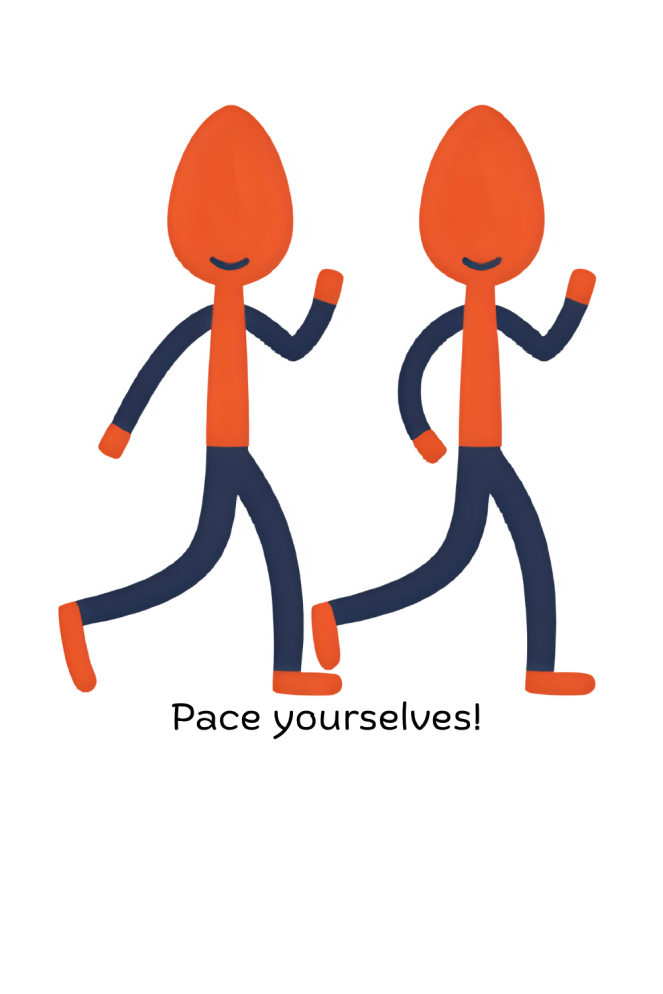
- Activity Pacing Works: A 2023 systematic review found pacing—regulating activity to avoid post-exertional crashes—is one of the most effective strategies for chronic fatigue conditions.
- Better Than Boom-Bust: People who learn pacing techniques report significantly improved quality of life compared to those who push through until they crash.
- The Energy Envelope: Research shows staying within your “energy envelope” prevents the crash-and-burn cycle that leaves you useless for days.
The key insight? It’s not about doing less—it’s about doing things more strategically so you can sustain your energy over time.
My Real-Life Strategic Energy System
The Morning Energy Assessment
Every morning, I do a quick reality check: How’s my pain? Did I sleep? Is my brain foggy? This gives me a realistic count of my available energy for the day. A good day might be 15 units. A flare day? Maybe 8. The key is honesty about what I actually have, not what I wish I had.
The Triage System: Essential vs. Optional
I ruthlessly categorize tasks:
Essential: Medication, meals, safety, school pickup
Important: Homework, emotional check-ins, sensory accommodations
Optional: Fancy meals, deep cleaning, being the “fun mom”
On low-energy days, I focus only on essentials. My teen knows that sometimes we operate in “basic functioning mode,” and that’s just life—not failure. I have learned I am terrible at categorizing though lol.
The 80% Rule
Research shows staying within your “energy envelope” prevents crashes. For me, this means spending no more than 80% of my energy by 3 PM. Kids still need dinner, and I still need to exist as a person after sundown.
Practical Energy-Saving Strategies That Actually Work

Here’s where theory meets reality. These aren’t pie-in-the-sky ideas—these are battle-tested strategies for functioning for others while managing complex needs.
Batch Processing: Work Smarter, Not Harder
High-energy tasks happen on good days. Maintenance mode on the rest. Strategic, not lazy.
Examples:
- Book medical appointments together to reduce recovery time
- Meal prep when you’re energized, not hangry
- Handle school stuff in batches
Environmental Modifications: Make Your Space Work for You
Our home reduces energy demands on purpose. Essentials are easy to reach, grab bars help, and my teen knows the layout.
Modifications:
- Keep essentials within easy reach
- Set up “stations” for meds, homework, decompression
- Use timers and alarms because our brains aren’t built for mental tabs
The 20-Minute Rule
If it takes longer than 20 minutes, it gets chunked smaller or delegated. This prevents ADHD hyperfocus from burning my whole day’s energy.
When Your Teen Needs to Understand Your Reality

One of the hardest parts? Explaining to my autistic teen why I can’t do something today that I could yesterday. Consistency helps, but clarity wins. She’s gotten better since she goes to school based therapy, I’ve really been proud of her empathy lately.
What works:
- Concrete language: “I have 3 energy units left. Dinner needs 2.”
- Offer alternatives: “I can’t drive you, but I can order it.”
- Honesty: “Energy changes daily. Not your fault or mine.”
- Involve them: “How can we make this work with what I’ve got left?”
The Guilt Factor: Why Strategic Rest Isn’t Selfish
It took me years to accept this: protecting my energy isn’t lazy—it’s responsible. Proactive rest keeps me showing up tomorrow.
Saying no to extras isn’t shirking responsibility—it’s saving energy for what truly matters. Operating in “basic functioning mode” is how I keep us afloat without sinking out of stubbornness.

Next Week: Building your support network and emergency energy protocols—because even superheroes need backup plans. Til next time gang, take care of yourselves, and each other.
Sources / Further Reading:
- National Institute of Arthritis and Musculoskeletal Diseases: https://www.niams.nih.gov/health-topics/fibromyalgia
- Journal of Clinical Medicine: https://www.ncbi.nlm.nih.gov/pmc/articles/PMC7564074/
- Journal of Attention Disorders: https://journals.sagepub.com/doi/10.1177/1087054720943271
- Journal of Translational Medicine: https://www.ncbi.nlm.nih.gov/pmc/articles/PMC9912226/
- CDC ME/CFS Treatment Guidance: https://www.cdc.gov/me-cfs/treatment/index.html
- Activity Pacing Studies: https://pubmed.ncbi.nlm.nih.gov/32799204/




 WannaBeNormal