Uncategorized

The Great Medication Shuffle: Morning Pills, Evening Pills, and the Ones I Forgot Existed

Or: How My Medicine Cabinet Became a Small Pharmacy and I Still Can’t Remember What I’m Supposed to Take When

Looking at my bathroom counter right now, I count fourteen different pill bottles, three liquid medications, two inhalers, and a partridge in a pear tree. Okay, maybe not the partridge, but at this point I wouldn’t be surprised if my doctor prescribed one for “mood support.”

For those of you managing multiple chronic conditions, you know the drill. What started as “just take this once a day” has evolved into a complex choreographed dance that would make Broadway jealous. And like any good performance, timing is everything—except I have ADHD and the memory of a goldfish with anxiety.

Meet the Cast of Characters

The Morning Crew: These are the heavy hitters that transform me from zombie to semi-functional human. They’re the ones that make it possible for me to remember my own name and possibly locate the coffee maker.

I have to take 16 pills in the morning, and it’s as gross and exhausting as it sounds. While I’m supposed to take all that in the morning, I split it up to make it easier to manage, so my pills are morning, later morning, dinner/bed. Frequently when I sit down to do my meds I have missed a few from the “later morning” category. Because nothing says “good morning” like swallowing what feels like a handful of gravel.
The Evening Squad: The night shift workers whose job is to help me actually sleep instead of lying awake cataloging every embarrassing thing I’ve done since 1987.

At night I feel like I do a lot of prep work. I take 5 at dinner. One of those is half a dose of sleep/anti-anxiety. I take another 3 when I sit down for the night. Once I have done my chores I pop the other half and soon am out cold. If any one of those is off by an inch I won’t sleep or will pass out mid-chore. It’s like a tightrope balance really, but I fall far more often lol. Nothing quite like waking up on the couch with a half-folded load of laundry as your blanket.

The Wildcards: These are the divas of the medication world. Take with food. Don’t take with food. Take two hours before this other medication but not within four hours of dairy products. Take while standing on your head during a full moon. (Okay, I made that last one up, but honestly, would you be surprised?)

I take one that’s ‘take with 600 calories.’ Ok, as in, how close to eating? Before? After? What will happen if I’m not a nutritionist and therefore have NO IDEA how many calories will be enough? Do I need to whip out a food scale? Should I be doing math at breakfast? Is a bagel with cream cheese 600 calories or am I supposed to add a side of existential dread?

The Forgotten: Every medicine cabinet has them—the bottles in the back that you rediscover like archaeological artifacts. “Oh hey, I was supposed to be taking this for anxiety… six months ago. That explains a lot.”

I have a tough time with my late morning meds, so they often get forgotten until later in the day, then it’s the ‘would it be better to double up/take them closer to the night time ones? When do we no longer consider it because it’s too close to the others?’ Such fickle little things they are. It’s like playing medication Jenga—one wrong move and the whole system comes tumbling down.

The Systems I’ve Tried (And How They’ve Failed Me)
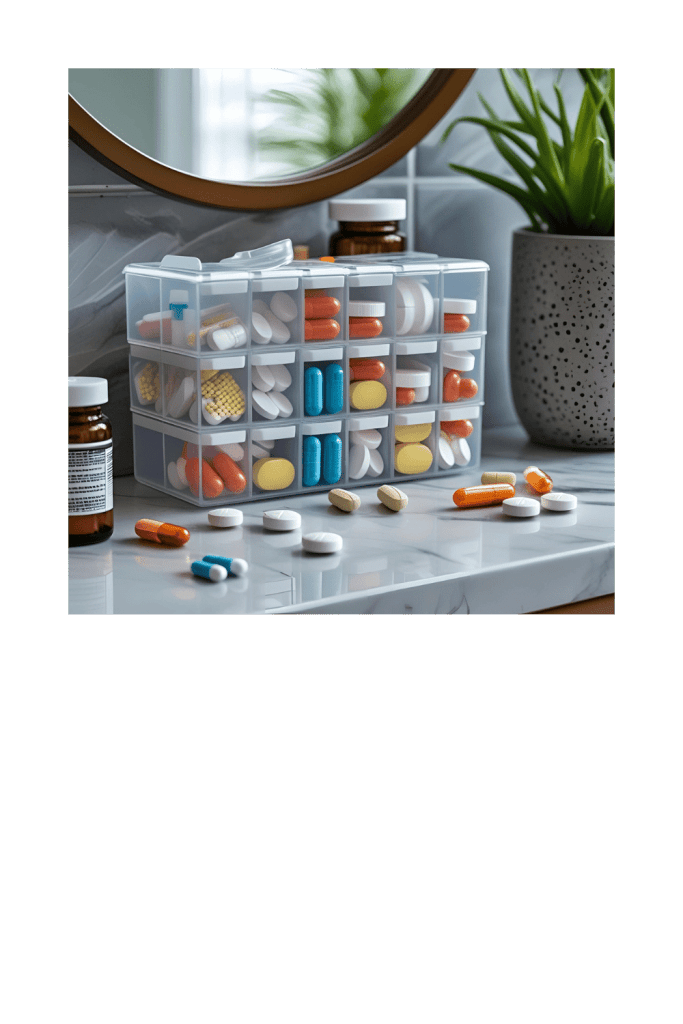
The Pill Organizer Approach: Seemed foolproof, right? Wrong. First, I had to figure out which size. The tiny ones where I can barely fit my horse-sized vitamins? The weekly ones that don’t account for my twice-daily medications? The monthly system that takes up half my kitchen counter?

I started out resisting these HARD, then went to the daily ones. They didn’t work—I’d forget to fill it, so one day at a time, I was not responsible enough for that. I lived, I learned, I got a weekly with the days broke into 4 sections, and it works. And if I forget, I always skip just because that’s easier to fix than the opposite way—it’s better to err on the side of caution. Nothing like turning medication management into a weekly game of Tetris.

The Phone Alarm Method: Set seventeen different alarms with helpful names like “ADHD Med” and “Don’t Forget Thyroid Pill.” Works great until you’re in an important meeting and your phone starts screaming “TAKE YOUR CRAZY PILLS NOW” at full volume.

Or, like me, you manage to dismiss them all subconsciously or your brain chooses to ignore them lol. It’s like my ADHD brain has developed selective hearing specifically for the alarms that are supposed to help me function. I can hear a bag of chips opening from three rooms away, but medication reminders? Nope, not registering.

The Medication Apps: Downloaded four different apps that promised to change my life. They all judged me harder than my mother when I inevitably forgot to log my doses. Nothing like a guilt trip from your phone to start the day.

The apps that would change my life all involved either purchases through the app, or require so much of my time I spent more energy journaling and entering the same responses than actually taking the medications. Or I’d not remember to enter them at all after week two. Apparently, I need an app to remind me to use the app that reminds me to take my medication. It’s apps all the way down.

The “I’ll Just Remember” Method: The most delusional approach of all. My ADHD brain that can’t remember where I put my keys five minutes ago was somehow going to remember a complex medication schedule. Spoiler alert: it didn’t work.
I will have my bottle in my hand wondering if I JUST took one, or if my brain is showing me past me taking them as I’d done countless times before. It’s like my brain is running a highlight reel of every time I’ve ever taken that medication, making it impossible to distinguish between “five minutes ago” and “Tuesday three weeks ago.”

The Real Struggles Nobody Talks About

The “Did I or Didn’t I?” Game: Standing in your bathroom at 2 PM, staring at a pill bottle, trying to remember if you took your morning medication or just thought really hard about taking it. It’s like the worst guessing game ever, with side effects as consequences.

So I stand there, debating my next move like it’s a choose-your-own-adventure novel: Option A: Take the pills and risk double-dosing myself into a nap I didn’t plan. Option B: Skip them and spend the rest of the day vibrating at the wrong frequency. Spoiler alert: I picked Option C — called my teen into the room and asked, “Hey, did you see me take these earlier?” They just stared at me like, “You realize I don’t follow your every move, right?” Thanks, kid. Very helpful.

The Pharmacy Mystery Calls: “Hi, your prescription for [medication you’ve never heard of] is ready for pickup!” Wait, what? When did I get prescribed that? Have I been supposed to be taking something this whole time?

Frequently I will go in for my appointment and bloodwork and she’ll call something in but forget to send the email until I contact them. So I’m left wondering if this mystery medication is something crucial I’ve been missing, or if it’s the pharmaceutical equivalent of a pocket dial. Either way, I’m driving to the pharmacy feeling like I’m solving a medical mystery.

The Coordination Nightmare: Doctor A wants to change medication X, but you have to check with Doctor B because it interacts with medication Y, and Doctor C doesn’t know about either of them because the medical records system is apparently held together with duct tape and prayers.

I once spent three weeks playing telephone between my psychiatrist, primary care doctor, and endocrinologist because nobody could agree on whether my new thyroid medication would interfere with my ADHD meds. Meanwhile, I’m sitting in the middle like a very tired, very caffeinated UN mediator, taking notes and trying to remember who said what about which pill. Spoiler alert: they all had different opinions, and I ended up being my own case study.

The Instruction Manual: That one medication that comes with a novel’s worth of instructions. Take with food, but not dairy. Don’t lie down for 30 minutes after taking. Avoid sunlight. May cause drowsiness or insomnia (thanks for being specific).

My personal favorite is the medication that says “may cause dizziness” and “do not operate heavy machinery,” but then also warns “may cause restlessness and inability to sit still.” So… I can’t drive, but I also can’t stop moving? Should I just pace around my house indefinitely? And don’t get me started on “take on an empty stomach” versus “take with food to avoid nausea.” Pick a lane, pharmaceutical industry!

What Actually Works (Sort Of)

After years of trial and error (emphasis on error), I’ve cobbled together a system that works approximately 73% of the time, which in my world counts as a rousing success.

My current system is that weekly pill organizer with four compartments per day, plus a backup system of keeping the bottles nearby for those “did I or didn’t I” moments and I actually write an x. I’ve learned to embrace the “when in doubt, skip it” philosophy because it’s easier to catch up on a missed dose than to undo a double dose. And yes, I still sometimes ask my family members if they’ve seen me take my pills, because apparently it takes a village to medicate one ADHD brain.

The key insight I’ve learned is this: there is no perfect system. There’s only the system that fails less catastrophically than the others. Some days I nail the medication schedule like a responsible adult. Other days I take my evening pills at 2 PM and wonder why I’m sleepy.

Just last week, I confidently took my morning pills, felt very proud of myself, and then found the same pills sitting in my pill organizer an hour later. Turns out I had taken yesterday’s forgotten dose. Mystery solved, but also… how did I not notice I was taking pills from the wrong day? ADHD brain strikes again.

The Bottom Line

If you’re struggling with medication management, know that you’re not alone in this pharmaceutical juggling act. We’re all just doing our best with brains that sometimes work against us and bodies that require more maintenance than a vintage car.

Your worth isn’t measured by how perfectly you follow your medication schedule. It’s measured by the fact that you keep trying, keep adapting, and keep finding ways to take care of yourself even when it feels impossibly complicated. Some days “good enough” really is good enough, and that’s perfectly okay.

Managing multiple chronic conditions isn’t just about remembering to take pills—it’s about being patient with yourself when your brain doesn’t cooperate, forgiving yourself when systems fail, and celebrating the small victories like remembering your evening meds before midnight.

Now if you’ll excuse me, I need to go stare at my pill bottles and try to remember if 2 PM counts as “evening” for my twice-daily medication.
Uncategorized

Things I Forgave Myself For This Week

Some weeks you crush goals.
Some weeks you just survive with your dignity slightly intact.
This week? I did a little of both, and I’m not dragging myself for the rest. I’m not. Ok, I am TRYING not to lol. I looked up all these things so we know, this happens to alot of us.

Here’s what I’m letting go of:

Eating crackers for dinner.
It was beige. It was crunchy. It was all I had in me. I know its not nutritional, but I put peanut butter on them, that counts right?

People with chronic pain or fatigue often struggle with meal prep. One study found that when we remove the guilt, we’re more likely to eat again tomorrow—and better. (Neff, 2003)

 Snapping at a stranger when I was overstimulated.
Was it my finest moment? No. But was it the end of the world? Also no.

Emotional dysregulation is common in both ADHD and bipolar. Reframe the moment to be more valuable than perfection. Modeling apology actually builds trust. (Siegel & Bryson, 2011)

Crying over a tv personality retiring.
But who will give me the news everyday at 6? I won’t be able to get the exact same news and information from the person they already filled the position with.

Not cleaning up the kitchen. Or the bathroom. Or basically anything.
The mess wasn’t going anywhere. The mess NEVER goes anywhere, its relentless. Unfortunately, my energy very much goes away lol.

Fatigue from chronic illness isn’t laziness. Research shows that pacing (doing less on purpose) leads to more consistent function long-term. (Nielson et al., 2013)

Skipping my meds one day, even though I knew better.
I forgot. That’s it. That’s the reason.

People with ADHD and mood disorders often struggle with medication consistency. Shame spirals make it worse. Compassion-based routines improve long-term adherence. (Safren et al., 2005)

Needing space from literally everyone.
Even the people I like. Especially them. Even the cats.

Sensory overload and mental fatigue demand recovery time. Boundaries aren’t selfish—they’re how we stay functional. (Brown, 2019)

 Wishing I had a different body.
This one feels broken. I still have to live here. Down to the tip of my hair I want everything new. Or I’ll take recycled, I shop at thrift stores

Body grief is real in chronic illness. Acceptance doesn’t mean joy—it just means recognizing pain without adding shame to it. (Cash & Pruzinsky, 2002)

Wanting to give up.
But I didn’t. I just wanted to. And that counts.

Suicidal ideation and burnout can flare in depression or mania recovery. Naming those moments gives you back control. It’s a signal—not a verdict. I’m trying my best to make the most positive of that signal that I possibly can. (Linehan, 1993)

💬 Final Thought:

If this list hits home, maybe you need to make one of your own.

Forgive the little stuff.
Forgive the big stuff.
Forgive the you that’s still trying, even if it doesn’t look like much from the outside.

You’re not weak. You’re wicked strong for feeling this much and still showing up. Til next time gang. Take care of yourselves, and each other!

Uncategorized

Top 10 Things I’ve Googled This Week as a Chronically Ill, Neurospicy Parent

  • “Why does my hip make that sound?”
    Its not so much a pop as it is a crackle, I feel like the Rice Crispies guys are hiding somewhere.
  • “How to explain sarcasm to a teenager who is now more sarcastic than me
    It took forever for her to ‘get it’ (she’d say, is that sarcasm? every time we laugh at a joke) now she is almost more sarcastic than me. Almost lol.
  • “Can I survive on toaster waffles and spite?”
    No? Coca cola and contempt? Those are my wheelhouse.
  • “What does executive dysfunction look like in adults asking for a friend (it’s me)”
    Pretty sure I dissociated so hard I time-traveled. I came to around dinner like, wait… where did the day go?
  • “Symptoms of burnout vs laziness vs demonic possession”
    Spoiler: It was burnout. But let’s be honest, if a demon was possessing me, they’d at least fold the laundry

  • “How to nicely ask your teen to shower without being emotionally attacked”
    “I tried ‘Would you like a shower now or in 10 minutes?’ and still got hit with the emotional equivalent of a boss battle I didn’t consent to

  • “How long is too long to wait for meds to kick in before giving up on the day?”
    Asking for science. But also for vibes. Because the vibes are off and so is my serotonin.
  • “How to turn rage-cleaning into a workout”
    If slamming laundry baskets and scrubbing with vengeance burned calories, I’d be shredded by now.
  • “Can fidget toys fix my life or is that false advertising?”
    Look, they may not fix it — but they do keep me from sending That Text™ or scream-cleaning my kitchen.
  • “Is it normal to cry over spilled resin?”
    Normal? No clue. But between the cost, the smell, and the emotional spiral? Yeah. Very on brand.


Living with chronic illness, ADHD, and a teenager is like being the main character in a sitcom written by the universe when it was feeling particularly chaotic. But hey — at least I’m not boring.

BRB, googling if emotional support waffles are a thing. Til next time gang, take care of yourselves, and each other.

Uncategorized

Can You Hear Me Now? Because the System Sure Doesn’t

Let’s just get one thing out of the way: when we say we’re tired, we don’t mean “I could use a nap” tired. We mean, “it feels like my bones are made of lead and I’m dragging them through emotional quicksand” tired. Welcome to chronic illness fatigue — where the real game is not getting things done, but feeling guilty about the things we couldn’t do.


Invisible Illness Fatigue: A Sneaky Beast

When you live with something like fibromyalgia, ADHD, or bipolar disorder (or the full trifecta, if you’re really winning like I am), fatigue doesn’t show up like it does after a long day. It’s not solved with sleep. It’s a permanent roommate that throws a tantrum when you so much as think about productivity.

We don’t just skip tasks. We skip tasks, then feel like a failure for skipping them, then try to explain why, then realize we’re exhausted from the explaining. And even when people say they understand, there’s that unspoken “but everyone’s tired” hanging in the air. Sure, Karen, but not everyone needs to lie down after a shower.


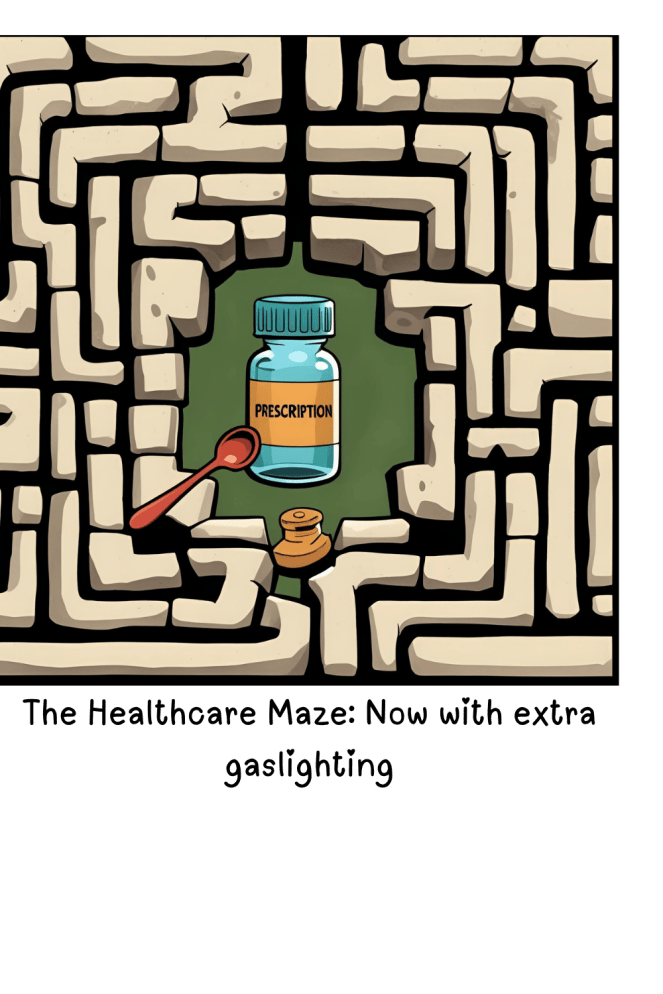
The Gaslight of the Medical Maze

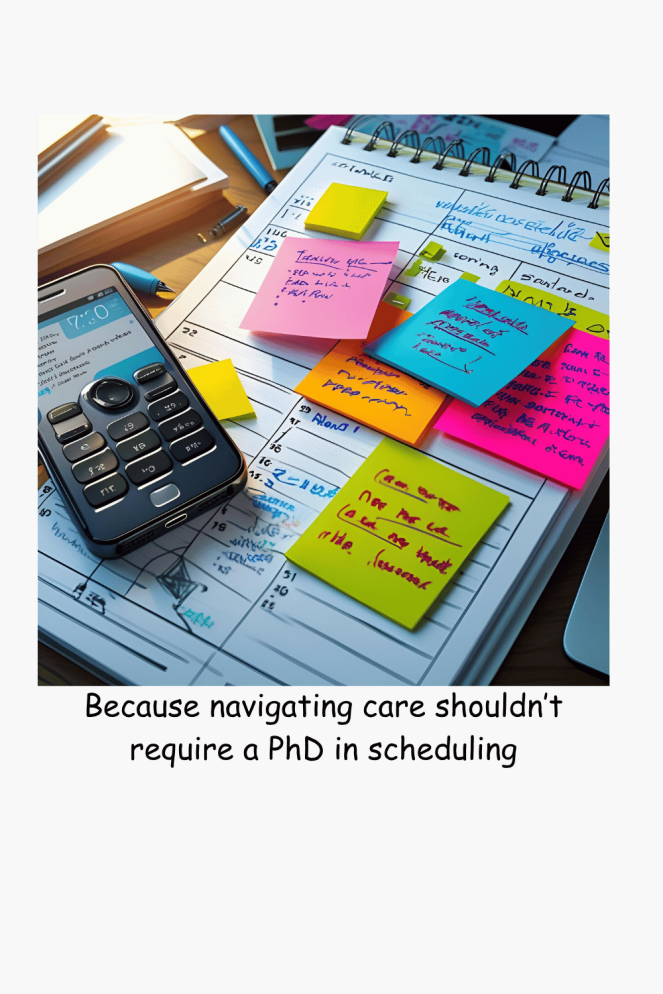
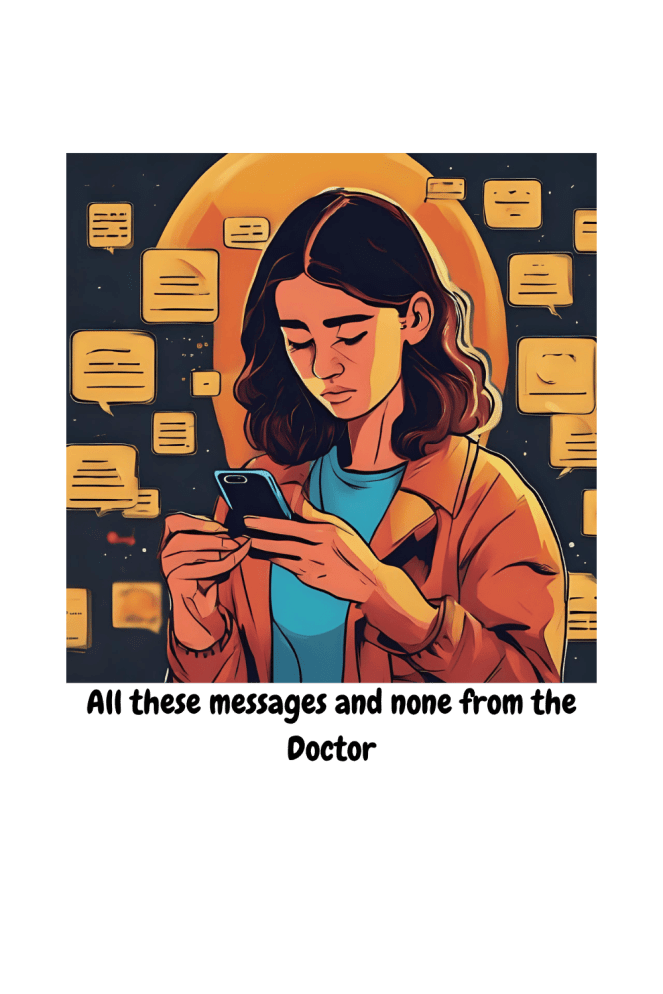
Now let’s sprinkle in a bit of medical neglect for flavor. ​According to the National Council for Mental Wellbeing, it takes an average of 48 days to get an appointment with a behavioral health provider in the U.S. — and that’s after you’ve made contact.​ Because what’s chronic illness without fighting the very system meant to help us? I spent this week trying to schedule a psych appointment for my teenager. I called seventeen times. Seventeen. Not metaphorically. SEVENTEEN. I left messages. I waited. I got bounced from voicemail to nowhere.​ Their voicemail message says ‘someone will get back to you within 24 hrs.’ Never not once called.
📌 Cold, Hard Reality Check:
According to the National Council for Mental Wellbeing, the average wait time for behavioral health services in the U.S. is a staggering 48 days. That’s nearly seven weeks of waiting in limbo—waiting for care that should come sooner.

And when I finally got through — a moment of hard-earned triumph — I did what any burnt-out, panic-caffeinated, mom-on-the-edge might do: I scheduled it ​first available for the one day I absolutely can’t do it. Face palm? No. Face ground. But the idea of calling again, of pushing through the labyrinth of dead-end prompts and receptionist roulette? I physically can’t do it. I’ll move my own mountain that day instead.

This is what they don’t see. The victories that come covered in emotional tax. The way we ​beat ourselves up over accidents because we’re so used to feeling like we’re failing. Even our wins taste like stress.


The Never-Ending Ask for Help (That Goes Nowhere)

Everyone tells you to ask for help. But they don’t tell you what to do when that help turns out to be a ghost. Or a voicemail. Or an email that never gets answered. Or a friend who says, “Let me know if you need anything” but quietly disappears when you say, “Actually, I do.”

When you do speak up, you risk being labeled as dramatic or dependent. When you don’t, you’re “not taking care of yourself.” It’s a rigged game. The buck never stops. It just circles the drain while we’re clinging to the rim.

And yes, it gets to us. All the time. We internalize it. We feel like a burden. Like we have to keep apologizing for being sick. Like if we were just stronger, more organized, less emotional, less needy… we could pull off the impossible. You can gaslight yourself into silence before a single word leaves your mouth.


So Why Share This?

Because I know I’m not the only one. And if you’ve been spiraling, crying in between productivity guilt sessions, or clenching your teeth while listening to elevator hold music for the fifth time this week — you’re not alone.

This isn’t a cry for pity. It’s a call for reality. Let’s be honest about what it really feels like to be chronically ill, overwhelmed, and stuck inside a system that expects perfect performance from broken parts.

Let’s remind each other that doing our best sometimes looks like barely functioning — and that’s still valid. Let’s talk about how asking for help shouldn’t feel like rolling a boulder uphill.

Let’s be soft with ourselves.

You are not failing. You are carrying more than most people even know exists. And you’re still here, still trying. That’s resilience. That’s strength. That’s you. Til next time gang, take care of yourselves, and each other!

Uncategorized

Sunday Scaries, Spoonie Style: A Checklist for Surviving Monday Without Crying (Much)

If Sunday is supposed to be a day of rest, why does it feel like a suspense thriller called “What Fresh Hell Will Monday Bring?”

📝 Quick bulleted list to get you ready for Monday:

  •  Locate your bra.
    Or make peace with not wearing one. Honestly, if it doesn’t bring me joy, it’s not making the cut today.
  •  Stare at your meds and pretend you’re not already tired of managing this circus.
    The greatest show on Earth is mostly side effects and co-pays.
  •  Do exactly none of the things you swore you’d prep this weekend.
    I meant to meal prep, but I accidentally disassociated for 24 hours. Like a whole day just gone!
  •  Question if you actually rested, or if you just laid still while panicking quietly.
    There’s a difference between rest and being emotionally paralyzed. I did the second one.
  •  Mentally prepare to act like a human when your body screams “nope.”
    The performance is called “Functioning Adult” and I deserve an Oscar.
  •  Tell yourself this week you will go to bed on time (you liar).
    Sure, keep spewing those filthy lies until one day it happens on accident lol
  •  Wonder if it’s too late to run away and become a moss-covered tree sprite.
    Honestly? Forest Wi-Fi sounds more stable than my mental health.
  •  Make a meal plan that may or may not involve cereal and vibes.
    Nutritional value: questionable. Emotional support: unmatched.

    💡 

You made it to Sunday. That’s already a win. Monday can wait its damn turn. Til next time gang, we got this! Take care of yourselves, and each other!

Uncategorized

Weather or Not, Fibro Hurts: Barometric Whiplash and Summer Survival Tips

Fibro Doesn’t Care About the Season

You’d think pain would be more predictable. Cold = bad, right? Well yes… and no. Because in summer, when the air pressure plays trampoline, humidity tries to choke you out, and thunderstorms sneak up like mood-swing ninjas, your fibromyalgia goes, “Yay! A chance to be more dramatic!”

Your body doesn’t just hurt — it panics, it protests, and it often completely forgets how to function like a semi-sentient adult human.

Why Weather Screws Us Up (Even in Summer)

  1. Barometric Pressure is a Jerk.
    When pressure drops fast (hello, pre-storm), tissues expand. Nerves already oversensitive in fibro-land get even more irritable. It’s like your whole body got a weather alert and decided to throw a tantrum. The research is mixed—effects vary, and for some folks may be subtle. But that doesn’t make your flare-up any less real.
  2. Humidity and Heat Mess with Everything.
    • Heat dilates blood vessels → more fatigue, dizziness, swelling.
    • Humidity slows evaporation of sweat → overheating faster.
    • Add in pain? You’re basically a melted candle with opinions.
  3. Storms Make the Air Feel Heavy.
    Your head hurts, your joints ache, and standing up feels like moving through soup. The pressure swings during storms are sneaky saboteurs.
  4. Your Nervous System is Already Confused.
    Fibromyalgia is a central sensitization disorder. Your brain and nerves are like over-caffeinated chihuahuas — already jumpy, now add atmospheric chaos? It’s not great, Bob.

What Can You Actually Do About It?

💧1. Hydrate Like It’s Your Job.

Barometric shifts and heat can mess with circulation and fluid retention. Water helps regulate your internal temp and reduces dizziness and fatigue.

❄️2. Cooling Tools Are Your Friends.

  • Cooling towels
  • Ice packs on pulse points
  • Fans in every room
  • Spray bottle with peppermint water (YES, seriously)

🧘‍♀️3. Stretch and Move, Gently.

Movement keeps things from stiffening up worse, but go slow. A few light yoga poses, shoulder rolls, or just pacing your hallway counts. You’re not prepping for the Olympics — you’re surviving a weather system.

🛋️4. Pace Like a Pro.

Your energy is a budget. Don’t overspend it just because the sun’s out. Schedule breaks. Cancel plans. Use that “no” like SPF for your soul.

🌀5. Watch the Weather. Plan Ahead.

There are apps just for barometric pressure (like Migraine Buddy or WeatherX). When you see a dip coming, prep your nest: meds ready, chores done ahead, comfy clothes out.

You Are Not Broken — You Are Barometrically Betrayed

So no, it’s not “just in your head.” The weather does affect your fibro. You are not imagining it. And just because you don’t see storm clouds doesn’t mean your body isn’t screaming “WE’RE UNDER ATTACK!”

But you’re learning, adjusting, and finding ways to soften the crash. That’s strength — not weakness. Til next time guys, take care of yourselves, and each other.

Uncategorized

Extremely Official Life Lessons I’ve Learned From Inanimate Objects

Hey friends. No heavy lifting today — unless you count carrying the emotional weight of a slightly stale muffin and a cluttered craft table. Just some wisdom I’ve gathered from staring at household objects for way too long and assigning them personalities.

1. My Laundry Basket

Life lesson: You can only carry so much emotional weight (and unmatched socks) before you drop something and cry about it.

2. My Microwave

Life lesson: You can explode if someone doesn’t give you enough time to cool off. It’s science. And vibes.

3. That One Spoon That’s Always Dirty

Life lesson: You are valuable. You are essential. And even if you feel gross and overlooked, someone’s probably looking for you right now.

4. The Craft Table (aka The Table Formerly Known as “Dining Room”)

Life lesson: You don’t have to be pretty to be productive. Also, chaos can be functional. It’s fine. It’s all fine.

5. My Phone Charger

Life lesson: You can’t be expected to power everything if you’re frayed at both ends. Unplug. Recharge. Or scream. Honestly, all valid.

6. The Thermostat

Life lesson: You can keep everything “set” just right and still end up wildly uncomfortable. Sometimes your system just doesn’t cooperate. That doesn’t mean you’re broken — it means you’re human. Or possibly perimenopausal. Or both. Let’s be honest, probably both.

7. The Floor

Life lesson: No matter how hard you hope, it still isn’t made of trampoline. Bouncing back takes work. And ice packs.

8. The Dish Towel That’s Always Damp

Life lesson: You can show up day after day, do your job, and still get left in a heap in the corner. But look at you — still wiping up messes like a champ.

9. That Cup in the Sink That No One Ever Claims

Life lesson: Boundaries are important. You are not the designated cleaner of everyone else’s mystery problems.

10. My Alarm Clock

Life lesson: People won’t always appreciate you for waking them up, but sometimes being the annoying truth-teller is your job. Be loud anyway.

Til next time gang, unless I resin my fingers together lol. Take care of yourselves, and each other!