Uncategorized

When You Can’t Tell If It’s a Flare or a Flashback (And Why That’s Terrifying)

Your heart’s doing the cha-cha at 130 beats per minute. Your chest tightens. The world tilts. Your hands shake. Your brain starts whispering, “Hey, are we dying or just freaking out again?”

Is it POTS? A panic attack? A flashback to that one time your body really did betray you?
You’ve got about thirty seconds to figure it out before the anxiety of not knowing makes everything worse.

Welcome to the impossible diagnostic puzzle that is living with chronic illness and PTSD from medical trauma.


When Your Body Is Both the Scene of the Crime and the Witness

People with chronic illnesses are statistically more likely to develop PTSD-like symptoms—but the kicker is, it’s not from a one-time event. It’s because your body is an ongoing threat to your own sense of safety.

Unlike classic PTSD, where the trauma is technically in the past, medical PTSD means the trauma could literally happen again.
When you live with something like POTS, EDS, or MCAS, your body is both the suspect and the alarm system. The hypervigilance isn’t paranoia—it’s pattern recognition. You’ve learned that symptoms can mean something is seriously wrong.

But here’s the nightmare twist: those same symptoms—heart racing, shaking, dizziness—are also identical to a panic attack.


The Overlap That Makes You Want to Scream Into a Pillow

Let’s play a fun game called “Spot the Difference” between POTS and panic attacks:

POTS Symptoms:

  • Rapid heart rate (120+ bpm)
  • Dizziness or lightheadedness
  • Shortness of breath
  • Chest tightness
  • Trembling, sweating, nausea
  • Feeling like you might pass out

Panic Attack Symptoms:

  • Rapid heart rate
  • Dizziness or lightheadedness
  • Shortness of breath
  • Chest tightness
  • Trembling, sweating, nausea
  • Feeling like you might pass out

Yeah. Exactly the same.

So you sit there, pulse pounding, trying to decide if you need electrolytes or grounding exercises. And the longer you try to figure it out, the more anxious you get. Which—you guessed it—makes your heart race even more.

Congratulations, you’ve just triggered both conditions at once.


The “Is It My Body or My Brain?” Spiral

  1. Heart rate spikes.
  2. You think, “Is this POTS or panic?”
  3. The uncertainty feeds the anxiety.
  4. Anxiety makes your heart rate climb higher.
  5. PTSD brain jumps in like, “Hey, remember the last time this happened?”
  6. Your body floods with stress hormones.
  7. Symptoms worsen, clarity vanishes, and you’re stuck in a full-body loop of chaos.

Sometimes grounding doesn’t work. Sometimes standing makes it worse. Sometimes everything makes it worse. The mental gymnastics of self-triage would exhaust an Olympic athlete, and that’s before you even factor in the fatigue that both conditions bring.


When Hypervigilance Isn’t a “Coping Issue”

In classic PTSD, hypervigilance—constantly scanning for danger—is something therapy tries to reduce.
But when you live with a chronic condition that can cause fainting, cardiac issues, or anaphylaxis, that vigilance might literally save your life.

So how do you tell your brain to “calm down, you’re safe” when sometimes… you actually aren’t?

This is the impossible bind of trauma plus illness:
PTSD therapy says, stop monitoring every sensation.
Your medical team says, monitor every sensation.
Neither is wrong. Neither fully works.


The Medical Gaslighting Cherry on Top

And just to make it more fun: when you do seek help, you get hit with the “it’s just anxiety” script.

Even though POTS isn’t caused by anxiety, and even though research shows anxiety rates are about the same as the general population, you’ll still have doctors waving off your physical symptoms because your chart says PTSD.

You start to lose faith in professionals. You stop asking for help. You learn to rely only on yourself for triage—because nobody else seems capable of telling the difference either.

Which means you’re back to square one, again, sitting in the impossible space of trying to figure it out alone.


The Treatment Contradiction

PTSD therapy often involves exposure work—facing the thing that scares you until your brain chills out about it.
Except in this case, the “thing that scares you” is your own body.

You can’t just take a break from having a body. You can’t “gradually reintroduce” the experience of dizziness or tachycardia when those things are daily realities that might require medical intervention.

Worse, some PTSD therapies intentionally raise your heart rate to help you practice staying calm through physical sensations. That’s great… unless you have POTS, where that heart rate spike might actually make you faint.

So you end up in a no-win situation where treating one condition can trigger the other.


What Actually Helps (Sometimes)

There’s no perfect fix here. But there are ways to soften the edges:

💡 Look for patterns, not moments. Track triggers over time. Are symptoms linked to posture, temperature, dehydration, or specific memories? Zooming out can help reduce panic in the moment.

💡 Build a “both/and” plan. Sit down? Yes (helps POTS). Ground yourself? Yes (helps panic). You don’t have to guess which one it is to respond with compassion instead of chaos.

💡 Find trauma-informed doctors. You need providers who understand that your nervous system and your medical symptoms aren’t separate universes.

💡 Accept uncertainty. Sometimes you just won’t know—and that’s not failure. That’s reality.

💡 Validate yourself. You’re not dramatic. You’re not broken. You’re reacting appropriately to a wildly confusing body situation that most people can’t imagine.


The Unspoken Truth

Living with medical PTSD and chronic illness means constantly trying to interpret a body that lies to you and tells the truth at the same time.

It means your hypervigilance is both too much and not enough.
It means your body is both the warning sign and the danger.

You’re not failing to cope—you’re surviving something that isn’t designed to make sense.

And honestly? That’s nothing short of heroic.

Til next time, gang, take care of yourselves, and each other!


🧠 Research Toolbox

  • American Psychological Association. Medical trauma and PTSD in patients with chronic illness (2020).
  • Raj, S. R. (2022). Postural Orthostatic Tachycardia Syndrome (POTS): Pathophysiology, Diagnosis, and Management. Cleveland Clinic Journal of Medicine.
  • Löwe, B. et al. (2021). Trauma, PTSD, and chronic illn

Uncategorized

5 Ridiculously Small Things That Actually Make Life Easier

Life is overwhelming enough without adding big, complicated “fixes” to the mix. That’s why sometimes the smallest shifts—things you can do in a minute or less—end up making the biggest difference. None of these will change your entire world, but they will help smooth the edges of a rough day.


1. Drink Water Out of a Fancy Cup

Hydration is one of those “simple but annoying” tasks. But pour that same water into a glass you love—a stemless wine glass, a mason jar with a straw, or even a mug that makes you smile—and suddenly it feels less like a chore and more like a treat. Little brain tricks for the win.


2. Keep a Blanket in Arm’s Reach

There’s something grounding about having a blanket nearby. Whether it’s the middle of the day or late at night, grabbing it is an instant way to give yourself comfort without any effort. Bonus: it doubles as a nap invitation if you need it.


3. Use the “Two-Minute Rule”

Procrastination thrives on tasks that feel bigger than they are. The two-minute rule says: if it takes less than two minutes, do it now. Throw away that receipt, reply to the text, wipe the counter. You’ll be surprised how much mental clutter disappears when you knock out those quick wins. I’ve noticed this alot cleaning, it feels good to see the problem disappear.


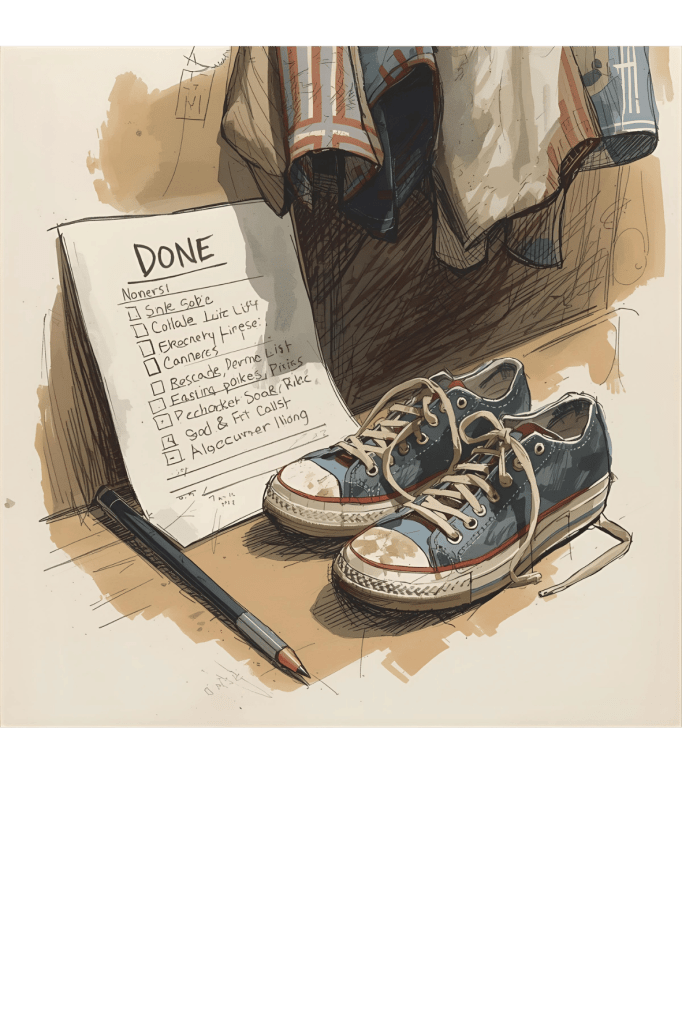
4. Make a “Done List”

To-do lists can be overwhelming, especially when they never seem to shrink. A “done list” flips the script—you jot down everything you’ve already managed, even the small stuff. It shifts your focus from “never enough” to “look what I actually did.” And honestly? That’s the energy boost most of us need. I don’t do this enough, often I’m like, what did I even do all day? show yourself all the hard work you put into your day.


5. Change Your Socks

It sounds silly, but fresh socks are an underrated reset button. They’re small, clean, and cozy, and they send your body the message that something has shifted. On a day when everything feels stagnant, that tiny reset can make you feel just a little more human. Mind the seam placement, that was always a concern with my oldest, she’d refuse to go if she felt the seam in the wrong place.


Closing

Will these tips solve all of life’s chaos? Absolutely not. But they’re proof that you don’t always need massive changes to feel a little better. Sometimes the easiest way forward is simply stacking up these micro-comforts until the day feels lighter. Til next time gang, take car of yourselves, and each other.

Uncategorized

7 Unexpected Ways to Make Life a Little Easier When You’re Overwhelmed

Life is messy, exhausting, and sometimes downright unfair—but there are clever little hacks that can help you catch your breath, keep your sanity, and even sneak in some joy. None of these tips will magically erase your stress (I wish), but they will make the load lighter.


1. Automate the Little Things

Decision fatigue is real—our brains get worn down by endless small choices. Automating the basics can free up precious energy.

  • Schedule grocery delivery or subscriptions for your must-haves.
  • Set bills to auto-pay.
  • Use reminders for meds, appointments, or chores.

It may feel tiny, but the mental relief adds up.


2. Reserve-Based Meal Planning

Instead of starting from scratch every day, build meals off “reserves” you’ve already cooked. Think big-batch taco meat, roast chicken, or skillet sausage that can be reimagined into multiple meals. Less chopping, less cooking, more living. I do this biweekly and feature a menu plan and shopping list every other Sunday, but its not rocket science so if you don’t stick 100% to it no big deal, I just keep the featured ingredients on hand and offer a multitude of uses for it. As stated above, decision fatigue is real and its so helpful to have that choice already made.


3. Build a “Bad Day Box”

Keep a stash of small comforts for the days when everything feels impossible. Fill it with:

  • A favorite snack or tea
  • Cozy socks or a heating pad
  • A playlist that makes you laugh or sing along

It doesn’t solve the hard stuff, but it gives you a lifeline when you’re sinking. If you want one already made I might know someone….


4. Quick Mental Resets

A five-minute pause can do more than you think. Whether it’s a short guided meditation, deep breathing, or blasting your favorite song, those tiny resets can shift your brain out of panic mode and back toward calm. Make it something easy that you have access to, it can be comedy or a podcast that makes you laugh, anything that shifts the focus of your thoughts is the idea.


5. Make Your Space Work for You

Clutter equals stress. Even little changes—like keeping meds, remotes, or supplies in a caddy by your chair—cut down on the low-grade chaos. Lighting, airflow, and comfort matter more than we admit.


6. Outsource Where You Can

If you can swing it, pay for help. Order takeout, hire a cleaner, or swap chores with a friend. Energy is a resource, and saving yours is not laziness—it’s smart strategy.


7. Celebrate Tiny Wins

You got out of bed? That counts. Finished a task? Write it down and cross it off just for the satisfaction. Momentum grows when you notice the little victories instead of waiting for the big ones.


Life isn’t perfect, and neither are we—but small hacks like these add up. They create breathing room, lighten the load, and make survival a little more manageable. Try one or two this week. You deserve the ease. Til next time gang, take care of yourselves, and each other!

Uncategorized

Watching the Drama: I Know It’s Not That Bad — Except My Brain Won’t Believe Me

There’s a terrible little superpower I’ve developed: I can watch myself overreact.

It’s the worst seat in the house — front row, center stage — where my brain is performing a full-throttle disaster musical and I’m sitting there with the program, thinking, “Yep. That’s… dramatic.” Meanwhile my chest is doing interpretive dance, my throat is tight, and my hands have decided to be useless for the foreseeable future.

I know the script. I know the facts. I know that my kid is safe, that no one is angry enough to leave forever, that the noise outside is probably just traffic, not the arrival of doom. I can literally name the thoughts as they happen: This is a sign. This is going to spiral. Everyone will leave. I am unfixable. And I know, in a rational, calm part of my brain, that the thought is an alarm that’s been stuck on repeat. I also know that knowing it — intellectually — doesn’t flip a switch and make my body stop treating it like an emergency.

That’s PTSD after medical trauma for you in a sentence: your mind is both the actor and the audience. The rest of your life keeps going. You keep getting up, you keep making tea, you keep paying bills. But some invisible part of you stays backstage, rewinding and replaying a scary scene, making sound effects, and refusing to let the house lights come up.

Why the “I know it’s not true” feeling is its own kind of hell

It’s isolating. Because the knowledge that your thoughts are lying should be freeing, right? In theory. But being the person who can say, “This is irrational,” while your body screams “RUN” is exhausting and weirdly lonely. You end up apologizing to people for things they weren’t even upset about, or you cancel plans because you feel unsafe even though everything else says you’re fine. You blame yourself for being dramatic. You try to be the reasonable adult and the reasonable adult keeps getting ignored.

And then there’s guilt. If friends or family do help, you watch them pay attention and you feel both relieved and awful — because you think you’re costing them time and energy. You start to believe that self-sufficiency is the only moral option and asking for help is taking more than you deserve. Spoiler: that’s not the truth. It’s an emotional trap set up by fear.

Tiny, practical things that actually help when your brain runs the show

I’m not going to give you platitudes. Here are things that have helped me — small, honest, and doable even on the worst days.

  • Label the play: When the alarm starts, say out loud (or mentally): “That’s my PTSD talking. That’s the survival brain.” Naming it doesn’t make it vanish but it takes away some of its power.
  • Two-minute grounding: Five things you see, four things you can touch, three sounds, two smells, one thing you can taste (or one thing you like about the moment). It’s boring, and that’s the point. It pulls you out of the theater.
  • Breathe like you mean it: 4-4-6 breathing (inhale 4, hold 4, exhale 6) calms the vagus nerve faster than a pep talk.
  • Write the loop down: If a memory keeps looping, grab a notebook and write it until you’re bored of it. Then scribble one practical line: “Right now: I am home. Right now: I can breathe.” The page can hold the drama when your brain insists on replaying it.
  • Micro-asks for people: Don’t make others guess. Say, “Can you sit with me for ten minutes?” or “Could you text me at 7 to check in?” People who care usually want the script — they just don’t want to mess it up.
  • Make a tiny safety plan: three things to do if it spikes (call X, 2-minute grounding, favorite playlist). Tape it to the fridge if you have to. Pre-deciding reduces panic.

What to say — when you want to ask for help but hate feeling needy

Try something simple and specific:

Or, if you need practical help:

Short. Specific. Low drama. It gives people an easy yes.

The honest truth I remind myself (even when my brain screams otherwise)

I can hold two truths at once:

  • My mind is telling a bigger story than the facts support.
  • Needing help right now doesn’t make me a burden — it makes me human.

There’s a difference between the loudness of a feeling and the size of reality. Your feelings are not the final arbiters of truth. They are signals. Sometimes they’re reliable, sometimes they’re not. You don’t have to act on every alarm. You can notice it, honor it, and then choose what you do next.

A small support for the messy days

If you’re reading this while your chest is tight and your brain is staging a meltdown, I see you. I know how lonely it becomes to watch yourself react and feel like you’ve failed at being calm. You haven’t failed. You’ve survived things that rewired your alarm system. That makes your reactions loud — not your worth small. Til next time gang, take care of yourselves, and each other.

Uncategorized

Survival and Sanity Reserve-Based Meal Plan: Weeks [Insert Numbers Because I Lost Track LOL]

(its 15&16 I did go back and look)]

Chronic Illness Friendly • ADHD Approved • Neurospicy Tested

Welcome back to another two weeks of me pretending I’ve got it together. I do not in fact, have ANYTHING together and this week has taxed my brain so much I am ready to not have to make the dinner decisions for a few more weeks. Does this work for you guys? I have found I am spending less on groceries. (Thanks for the tips about my low spoon days btw!) This is how I keep myself from crying into a crumpled DoorDash receipt: six planned dinners that don’t require Michelin star skills, plus reserve meals to fill in the gaps when I’m too tired, too sore, or too done with everyone’s nonsense to cook.


Here’s what I’ve got for you:
A 2-week plan.
Six home-cooked meals.
Eight “reserve” meals pulled from pantry, freezer, or leftovers.
A printable grocery list.
Recipes that don’t require you to pretend you’re a Food Network star.

Because some days you’re Julia Child. Some days you’re just a tired gremlin trying to survive until bedtime.


The Lineup: What We’re Cooking

Cook Days (3-4x per week)

These are meals you’ll actually make with fresh-ish ingredients and some degree of effort.

1️⃣ Slow Cooker Italian Beef Sandwiches

Juicy chuck roast, spicy giardiniera, hoagie rolls. Perfect for people who forgot to plan dinner but did remember how to dump things into a crockpot.

2️⃣ Honey Garlic Chicken Thighs (Stovetop)

Savory-sweet chicken served with rice and frozen stir-fry veggies. Quick. Easy. Tastes like you tried.

3️⃣ Garlic Butter Chicken Bites (Skillet)

Pan-fried happiness in butter and garlic, paired with green beans and potatoes (microwave or skillet — you do you).

4️⃣ Smothered Chicken & Rice Bake

One pan. Chicken thighs. Rice. Cream-of-something soup. Zero regrets.

5️⃣ Kielbasa & Potato Skillet

Hearty, fast, requires almost no brain cells. Bonus points if you add onions.

6️⃣ Baked Pasta

Cheesy, saucy, optionally beefy. Feeds a crowd or just you for three days.


Reserve Days (4-5x per week)

These are your “I cannot even” days. Pantry, freezer, leftovers, and minimal thought required.
BBQ Chicken Sandwiches (reserve buns, chips, pickles)

Chicken Fried Rice (leftover rice, frozen veggies, quick stir-fry)

Leftovers (Italian Beef, Kielbasa, Pasta)

Frozen pizza

Pantry pasta + jar sauce

Breakfast-for-dinner (pancakes, eggs, cereal, who’s judging?)kles)

Chicken Fried Rice (leftover rice, frozen veggies, quick stir-fry)

Leftovers (Italian Beef, Kielbasa, Pasta)

Frozen pizza

Pantry pasta + jar sauce

  • BBQ Chicken Sandwiches (reserve buns, pulled chicken)
  • Chicken Fried Rice (rice + strips + frozen veg)
  • Leftover Italian Beef
  • Kielbasa & Potatoes leftovers
  • Frozen pizza
  • Pantry pasta + jar sauce
  • Freezer sandwiches
  • Breakfast for dinner (eggs, toast, sausage)

🎯 Why This Works (For Me, Maybe You Too)

You’re not overspending on groceries you’re too tired to cook.

You’re only cooking 3-4x a week.

You’ve got backup meals in reserve.

You’re not reinventing the wheel every night.

You get to stop asking, “What’s for dinner?”
Thats all I got today guys, til next time, take care of yourselves, and each other!

Uncategorized

Can You Hear Me Now? Because the System Sure Doesn’t

Let’s just get one thing out of the way: when we say we’re tired, we don’t mean “I could use a nap” tired. We mean, “it feels like my bones are made of lead and I’m dragging them through emotional quicksand” tired. Welcome to chronic illness fatigue — where the real game is not getting things done, but feeling guilty about the things we couldn’t do.


Invisible Illness Fatigue: A Sneaky Beast

When you live with something like fibromyalgia, ADHD, or bipolar disorder (or the full trifecta, if you’re really winning like I am), fatigue doesn’t show up like it does after a long day. It’s not solved with sleep. It’s a permanent roommate that throws a tantrum when you so much as think about productivity.

We don’t just skip tasks. We skip tasks, then feel like a failure for skipping them, then try to explain why, then realize we’re exhausted from the explaining. And even when people say they understand, there’s that unspoken “but everyone’s tired” hanging in the air. Sure, Karen, but not everyone needs to lie down after a shower.


The Gaslight of the Medical Maze

Now let’s sprinkle in a bit of medical neglect for flavor. ​According to the National Council for Mental Wellbeing, it takes an average of 48 days to get an appointment with a behavioral health provider in the U.S. — and that’s after you’ve made contact.​ Because what’s chronic illness without fighting the very system meant to help us? I spent this week trying to schedule a psych appointment for my teenager. I called seventeen times. Seventeen. Not metaphorically. SEVENTEEN. I left messages. I waited. I got bounced from voicemail to nowhere.​ Their voicemail message says ‘someone will get back to you within 24 hrs.’ Never not once called.
📌 Cold, Hard Reality Check:
According to the National Council for Mental Wellbeing, the average wait time for behavioral health services in the U.S. is a staggering 48 days. That’s nearly seven weeks of waiting in limbo—waiting for care that should come sooner.

And when I finally got through — a moment of hard-earned triumph — I did what any burnt-out, panic-caffeinated, mom-on-the-edge might do: I scheduled it ​first available for the one day I absolutely can’t do it. Face palm? No. Face ground. But the idea of calling again, of pushing through the labyrinth of dead-end prompts and receptionist roulette? I physically can’t do it. I’ll move my own mountain that day instead.

This is what they don’t see. The victories that come covered in emotional tax. The way we ​beat ourselves up over accidents because we’re so used to feeling like we’re failing. Even our wins taste like stress.


The Never-Ending Ask for Help (That Goes Nowhere)

Everyone tells you to ask for help. But they don’t tell you what to do when that help turns out to be a ghost. Or a voicemail. Or an email that never gets answered. Or a friend who says, “Let me know if you need anything” but quietly disappears when you say, “Actually, I do.”

When you do speak up, you risk being labeled as dramatic or dependent. When you don’t, you’re “not taking care of yourself.” It’s a rigged game. The buck never stops. It just circles the drain while we’re clinging to the rim.

And yes, it gets to us. All the time. We internalize it. We feel like a burden. Like we have to keep apologizing for being sick. Like if we were just stronger, more organized, less emotional, less needy… we could pull off the impossible. You can gaslight yourself into silence before a single word leaves your mouth.


So Why Share This?

Because I know I’m not the only one. And if you’ve been spiraling, crying in between productivity guilt sessions, or clenching your teeth while listening to elevator hold music for the fifth time this week — you’re not alone.

This isn’t a cry for pity. It’s a call for reality. Let’s be honest about what it really feels like to be chronically ill, overwhelmed, and stuck inside a system that expects perfect performance from broken parts.

Let’s remind each other that doing our best sometimes looks like barely functioning — and that’s still valid. Let’s talk about how asking for help shouldn’t feel like rolling a boulder uphill.

Let’s be soft with ourselves.

You are not failing. You are carrying more than most people even know exists. And you’re still here, still trying. That’s resilience. That’s strength. That’s you. Til next time gang, take care of yourselves, and each other!

Uncategorized

🧠 When You’re Too Overwhelmed to Function (Yes, It’s a Thing)

There are days — and let’s be honest, whole eras — where the simplest task feels like trying to run a marathon in molasses. You walk into a room and forget why. You stare at a sink full of dishes like it’s trying to fight you. Your to-do list is screaming, your brain is buffering, and somehow the only thing you do manage to do is… nothing.

You’re not lazy. You’re not broken. You’re overwhelmed — and your brain has hit the freeze setting.

This isn’t just relatable, it’s biological.


🧬 Why Your Brain Freezes When You’re Overwhelmed

When your brain perceives stress — whether that’s from sensory overload, emotional exhaustion, chronic illness, or straight-up having too many tabs open in your life — it doesn’t care if it’s “just” a sink full of dishes. It reacts like there’s danger.

And that reaction? It comes from your amygdala, the little almond-shaped area in your brain responsible for detecting threats. When it thinks something’s Too Much™, it sends a signal that hijacks your logical brain (the prefrontal cortex) and triggers a fight, flight, or freeze response.

According to a 2016 article in the Harvard Business Review, when we experience cognitive overload, we lose access to “working memory,” which is the part of our brain that helps us juggle tasks. And a study in the Journal of Neuroscience showed that chronic stress impairs decision-making and reduces the brain’s ability to adapt — making it even harder to snap out of the fog once you’re in it.

Basically: the more overwhelmed you are, the harder it is to stop being overwhelmed. Coolcoolcool.


🔓 Getting Unstuck: How to Unfreeze When You’re Overwhelmed

First, let’s make one thing clear: you don’t need a complete life overhaul to start moving again. We’re not doing a Marie Kondo purge, a 10-step plan, or a productivity bootcamp. We’re just finding tiny ways to signal to your brain, “Hey, we’re safe. We can take a step now.” I think I’ve talked about these before but they bear repeating.

Here are some strategies that actually help:

1. Name It to Tame It

Saying out loud, “I feel frozen right now,” isn’t weakness — it’s neuroscience. Recognizing your emotional state lights up the prefrontal cortex and starts to re-engage that logical part of your brain.
Bonus tip: Try writing it down, even if it’s just “overwhelmed AF” on a sticky note.

2. Do One Teeny, Tiny Thing

Literally one thing. Not “do the dishes.” Just “stand next to the sink.” Or “put one plate in the dishwasher.”
That’s it. Dopamine doesn’t care how small — it still gives you a little hit for doing something. And that can be just enough to take another step.

3. Try a “Body Double” Moment

This is magic for ADHD brains but helpful for anyone: having someone around (even virtually!) can snap your brain out of a freeze. It’s not about accountability — it’s about regulation.
Text a friend, turn on a co-working YouTube, or call your sister and do five minutes of Something While Complaining.

4. Change the Channel (Sensory Reset)

Sometimes your brain needs a hard reboot. That can be as simple as:

  • Splashing cold water on your face
  • Stepping outside and feeling the air
  • Listening to music with no lyrics (lofi is a fave here)
  • Switching to a different space (yes, flopping on a new surface counts)

5. The “Timer Trick”

Set a timer for 5–10 minutes and say, “I’ll just do this one thing until the timer goes off.”
You can stop when it dings — really! — but often, starting is the hardest part. The timer gives your brain a finish line.


🌱 One Last Thing: You’re Allowed to Rest

Freezing isn’t failure. It’s your brain doing its best to protect you — and that means you don’t need to bully it into productivity. Sometimes the most radical act is letting yourself rest without shame.

You are not lazy. You are not broken. You’re surviving in a system that wasn’t designed for brains like yours — but you’re still here. That’s power. Til next time gang, take care of yourselves, and each other!

Uncategorized

A Grown-Up Juice Box and Other Things I Wish Existed Today

Survival & Sanity Edition

Some days, I just need something to fix everything instantly.
A nap. A hug. A reset button. A very large grilled cheese that appears by yelling “Grilled cheese!”

Since none of that magically appeared (yet), here’s my list of things I wish existed today. Feel free to add yours in the comments, because I know I’m not the only one on the edge.


🌈 Today’s Top 10 Things That Should Exist But Don’t:

  1. A grown-up juice box with electrolytes, magnesium, and a splash of wine. Or beer. Or a shot of Jack lol it depends on the day.
  2. A “No One Is Allowed to Ask Me Anything Today” hat—everyone must obey it. Also on a related note, a personal bubble. Let those suckers keep their distance .
  3. A teleporting weighted blanket that hugs you and then disappears before you get too hot. Does anyone’s body temp go wonky with sleep deprivation or high anxiety? No just me? Sweet! It actually makes me have a physical ‘flush’
  4. An adult-sized baby swing that rocks you while playing lo-fi beats and whispering “you’re doing great.” Maybe music instead of the whispering, that actually sounds a little creepy lol but I’m down for the swings! Hubby even has hooks indoors to hang hammocks sometimes the swinging or rocking repetitive motion helps.
  5. A “pause the world” button. Just for an hour. Or a week. It was kind of like that when I was in the coma, don’t recommend that route.
  6. A clone who does your grocery shopping and argues with the insurance company for you. Use what you’ve got though, we do pick up whenever possible even if we plan on going inside, its easier to manage the list, keeps things a little more organized.
  7. A universal “I’m spiraling, treat me gently” badge that everyone understands. Or don’t understand, just respect others feelings, that shouldnt even have to be a wish, but its not exactly great out there.
  8. An emotional support burrito that is also a functioning therapist. Or tacos! Emotional support tacos with some frozen margs lol.
  9. A magic snack drawer that restocks with your comfort food daily (and knows your allergies). Cool ranch on lock!
  10. A panic shutoff switch. Like a car alarm button, but for your brain. A pause? Maybe just not a multi party pile up on the everything all at once highway lol
  11. A fidget suit. I would straight up rock that thing at every opportunity. Imagine: a soft, cozy hoodie with textured sleeves, loops to tug on, snap buttons, zipper pulls, maybe even little hidden squeeze pouches and stretchy straps to tug when you’re crawling out of your own skin, I can tell you how often the panic will come over me at night and the only thing that helps is hopping out of bed and MOVING. Oh and POCKETS.
  12. Weighted curtains for your brain, you pull them closed and suddenly outside voices get quiet, to-do lists stop screaming, and it’s like a sensory hug for your overstimulated self.
    Bonus: blocks gaslighting and unsolicited advice.
  13. A Spoon Dispenser lol you swipe a card or breathe into it, and if it senses you’ve been emotionally juggling chainsaws, it gives you five extra spoons for the day. So many days I’d give my last penny for a spoon lol
  14. Memory foam couch that holds you like a mom, it knows when you’re about to cry and reclines automatically. One arm dispenses hot tea, the other tucks a weighted blanket around you.
    Available in “Smells Like Cookies” and “Washes Your Hair Energy.”
    Limited edition comes with caffeine mist and validation.

Whether it’s imaginary inventions or real-deal coping tools, the truth is we’re all just trying to patch together peace in a loud, messy world. Some days we thrive. Some days we spiral in our soft pants and pray the coffee kicks in before the anxiety does. Either way, you’re not alone in this. You never were.

So take your meds, drink some water, and rest when you need to. Find something small to laugh about if you can. And remember: survival is still survival, even when it’s messy.

Take care of yourselves—and each other.

Uncategorized

Flaky Doesn’t Mean Faithless: Chronic Illness and Friendship Guilt


🧠 The Truth About Being a ‘Flaky’ Friend

People with chronic illness or neurodivergence often carry a ton of guilt about canceling plans, going silent, or not showing up “like we used to.” We’ve internalized the idea that not being physically or emotionally available = not being a good friend.

But here’s the reality:
➡️ According to a 2019 survey by the NIH, over 60% of chronically ill individuals reported losing friendships due to symptoms like fatigue, pain, or mental health swings.
➡️ A 2022 study on social isolation in disability populations found that many people with invisible conditions felt “socially unreliable” — not because they didn’t care, but because their bodies were unpredictable.

I don’t make plans anymore. I can’t remember exact situations where I flaked due to hurting but I do remember the fun others had without me and who wants that?


💬 You’re Not Letting People Down — You’re Living with Limits

Chronic illness isn’t convenient. ADHD isn’t on a timer. Fibro flares don’t RSVP.
Being “flaky” is often just a side effect of surviving something the world wasn’t built to accommodate.

That doesn’t make you unreliable.
That makes you human.

I’ve certainly had others call and cancel for short notice, so intellectually I know I’m not the only one, but shit every time I can’t do something I feel like someone is shining a spotlight on me.


🧷 What Real Friendship Looks Like

True friendship isn’t measured by how often you show up, but how real you are when you do.
Some friends won’t get it—and that hurts. But the right people? The ones who stay? They see your effort, not your absence.

And let’s be honest, sometimes we don’t show up for others because we can’t even show up for ourselves. That’s not selfish. That’s self-preservation.


What You Can Do Instead of Guilt-Looping

  • Send a quick check-in text even if you can’t talk: “Hey, not up for chatting, but I’m thinking of you.”
  • Leave room for honest updates, not excuses: “I wish I had more spoons today. I hate canceling.”
  • Say thank you to the people who stay without making you feel bad.

To the select few who love me regardless and pick up where we left off no matter how much time passed, I appreciate and love you.


❤️ Final Thought

You’re not a bad friend. You’re just living in a body that asks a lot of you. If people mistake that for being faithless, they were never seeing you clearly to begin with.

Give yourself the grace you’d give anyone else struggling.

You don’t owe anyone more than what you’ve got to give. And what you do give—your honesty, your love, your truth—is enough. Til next time gang, take care of yourselves, and each other.

Uncategorized

Trying to Be a Present Parent When You’re Dissociating

(Or: “Sorry, kid, my brain’s floating three feet to the left right now.”)

Some days, I’m Supermom(ish).
Other days, I’m just a sentient pile of laundry pretending to be a person.
And then there are the days I’m trying to parent through a fog so thick it feels like I’m watching my life on a 5-second delay. Do you ever do that? Your nodding along, it appears you are in agreement only to blurt out an answer to a rhetorical question from two topics ago and its just stares and crickets? No? just me?

That’s dissociation — and it’s not just zoning out. It’s a real and very common symptom of trauma, stress, and neurodivergence.


🧠 What Dissociation Actually Is

Dissociation is your brain’s way of going, “Nope. Too much. We’re going to detach for survival now.” Believe it or not I learned this when my heart stopped. I have ZERO recollection of at least a month on either side, and I hope I never get those memories back because they had to be scary for my brain to hide them like that.

Dissociation can feel like:

  • You’re watching yourself from outside your body
  • Time is warped or unreal
  • The world looks… fake. Like how they depict it in movies with people in your face that look like characters from a dream
  • Emotions are muted, or you’re totally numb

According to the National Alliance on Mental Illness (NAMI), dissociation can affect people with PTSD, anxiety, depression, ADHD, and bipolar disorder — basically, a Greatest Hits list of what I’m working with.

And yes, it can show up in chronic pain conditions too. Research in the Journal of Trauma & Dissociation (2020) found that people with fibromyalgia reported higher dissociation symptoms than control groups — likely because living in constant pain is its own form of trauma.


👩‍👧 But What Does That Look Like as a Parent?

It looks like:

  • Nodding at your teen’s story but realizing you didn’t process a word of it
  • Looking at the kitchen sink and wondering how the dishes multiplied like gremlins
  • Holding your kid’s hand while mentally floating somewhere in 2004
  • Hearing “Mom?” for the third time before realizing you are Mom. Or your name, anything someone has to say three times before it registers.

And when your kid’s autistic and needs you fully present — or your brain’s ADHD and skittering like George in a glitter store — that’s a special brand of guilt.


🧷 What Helps Me Come Back

I’m still figuring it out. But here’s what works — sometimes:

  • Name it: “I’m dissociating” sounds weird at first, but saying it out loud grounds me. It also helps my teen understand it’s not personal. It has helped countless times with hubby.
  • Cold water or texture changes: Ice packs, textured putty, or touching something rough brings me back. Try keeping a wash cloth in the freezer.
  • Mindless movement: Folding towels. Walking in circles. Tapping my fingers. Rhythm helps. Fidget spinners. Keep a pencil and paper and doodle. Anything mindless.
  • Breathing and narration: “I’m sitting. My feet are on the floor. I can hear the fan.” It’s cheesy. It works. Its a variation of a tact professionals use, five things you can see, four things you can hear, etc.

💬 If This Is You Too…

You’re not broken.
You’re not a bad parent.
You’re not failing because your brain protects you in weird, inconvenient ways.

You’re doing the best you can. And you’re still showing up. Even if it’s in pieces, even if you’re floating — you’re here.

That counts for something. Til next time gang, take care of yourselves and each other.