


Ah, fibromyalgia, the notorious party crasher of the nervous system. If you think of your body as a bustling metropolis, with nerves running around like frantic commuters during rush hour and sprinkle in some miscommunication among these nerves, and ta-da, you’ve got yourself a fibromyalgia flare-up – an event no one signed up for.

Living with fibromyalgia is a bit like playing a twisted game of “Guess That Pain.” You wake up each day, take stock of your aches and pains, and try to play detective to figure out which ailment is causing today’s particular brand of discomfort. Will it be a symphony of soreness or a relentless drumbeat of dull aches? The suspense is killing me…oh wait, no, it’s just the pain.

But there’s a secret component: the tender points. They’re like hidden treasure spots on a map of your body, except instead of gold, you find pure unadulterated pain. Seriously digging on these x’s are not going to find anything remotely rewarding. Prodding them is like poking a bear—you know it’s a terrible idea, yet you can’t resist the temptation to see if it’s still there, waiting to pounce.
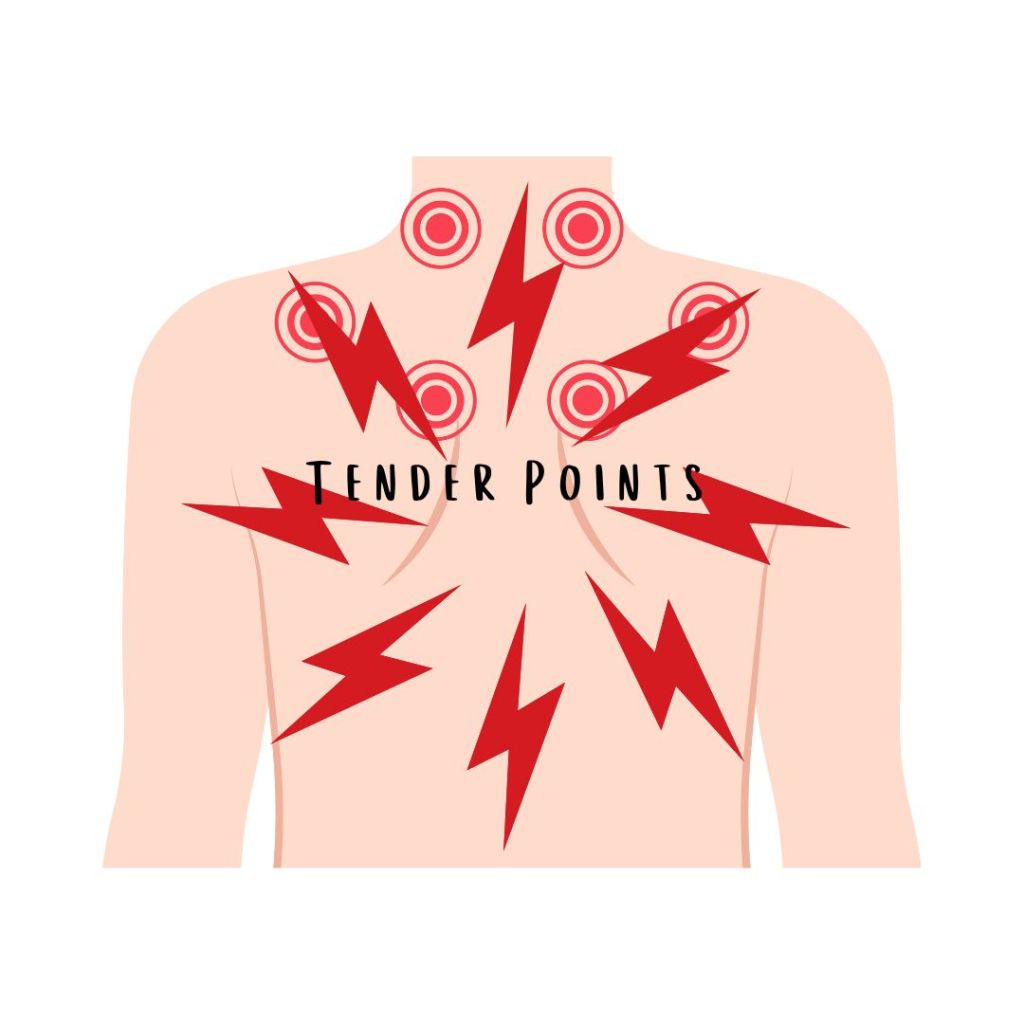
Tender points in fibromyalgia are like little pressure-sensitive landmines scattered throughout the body’s landscape. Picture them as tiny protest sites where your nerves have decided to stage a full-blown rebellion against anything remotely resembling comfort.
These tender points aren’t just your run-of-the-mill sore spots and they arent there for decoration; they’re hyper-reactive areas where even the gentlest touch can trigger a symphony of pain signals that reverberate throughout your entire nervous system. While anyone can experience tenderness in various parts of their body, those with fibromyalgia have a specific set of tender points identified by the American College of Rheumatology.
Traditionally, there are 18 designated tender points, symmetrically distributed across the body, ranging from the base of the skull to the inner knee. Pressing on these points feels less like a gentle poke and more like poking a hornet’s nest—you’re bound to get stung.

The role these tender points play in fibromyalgia is twofold. First and foremost, they serve as diagnostic landmarks, helping healthcare professionals differentiate between fibromyalgia and other conditions that may mimic its symptoms. If you wince in agony at the mere mention of pressing on these tender points, congratulations, you’ve just earned yourself a potential fibromyalgia diagnosis.

But beyond their diagnostic significance, tender points are also notorious troublemakers in the world of fibromyalgia management. They’re like stubborn guests at a party who refuse to leave, no matter how many hints you drop. You may try to ignore them, but they’ll make their presence known with a vengeance, sabotaging your attempts at relaxation and hijacking your sleep.
Moreover, these tender points often team up with their cohorts—muscle stiffness, fatigue, and sleep disturbances—to form a formidable alliance against your well-being. They thrive on chaos, exacerbating each other’s effects and leaving you feeling like you’ve been hit by a proverbial pain train.

But fear not, brave fibromyalgia warrior, for knowledge is power. By understanding the role of tender points in your condition, you can arm yourself with strategies to manage their mischief. From gentle stretching and low-impact exercise to stress management techniques and medications, there’s a plethora of tools at your disposal to tame the tender point beast and reclaim control of your life. So the next time those tender points come knocking, show them who’s boss with a steely gaze and a well-aimed dose of self-care.

So here’s to the fibro warriors, bravely battling your own body through each day armed with a healthy dose of humor and a stubborn refusal to let pain steal their joy. After all, if life gives you fibromyalgia, you might as well make jokes about it. Until next time guys, take care of yourselves, and each other.

 WannaBeNormal