Uncategorized

The Body That Never Stands Down: Living With PTSD and Constant Hypervigilance

PTSD isn’t one-size-fits-all, and it definitely isn’t one-story-fits-all. Some people develop it after combat. Others after a car crash, a hospital stay, a toxic relationship, or years of just surviving things that weren’t survivable.
The point is — the body doesn’t know why it’s scared. It only knows that something hurt it, and now it refuses to let its guard down again.

And for a lot of us? That means living in a constant state of alert — hypervigilance.

When the Body Becomes the Alarm System

Hypervigilance isn’t about being “paranoid” or “dramatic.” It’s what happens when your brain gets stuck in survival mode. People with PTSD often show increased activation of the amygdala and insula (the brain’s threat detectors), and reduced regulation from the prefrontal cortex (the part that manages logic and fear control). https://pmc.ncbi.nlm.nih.gov/articles/PMC9682920

This creates a brain more prone to automatic threat response and less able to override it.Over time, your body forgets what calm even feels like. It treats peace like a setup.

You start scanning for the next problem, the next crisis, the next disappointment — because deep down, your body doesn’t believe it’s safe unless it’s braced for impact.

What That Does to the Mind

Living that way rewires your thinking.

  • You might second-guess every decision, waiting for the fallout. You’re never wrong if you argue both sides of the problem.
  • You may feel detached or foggy — a kind of emotional autopilot. Fibrofog is bad enough but a bad brain day on top of it means no one is getting anything done today lol.
  • Focus gets harder because your brain is too busy running background security checks on your environment. You spend so much time doing your background checks you miss all the good things.
  • Even joy feels suspicious, like the quiet before a storm. Waiting for the other shoe to drop is a terrible way to go through life because you have no time to dwell on the good.

Over time, it’s exhausting. Not just “I need a nap” tired, but that bone-deep exhaustion that comes from being on guard 24/7.

What That Does to the Body

Hypervigilance isn’t just mental — it’s physical.
When your nervous system keeps sounding the alarm, your body floods with stress hormones like adrenaline and cortisol. That’s great if you’re outrunning a tiger, not so great if you’re just trying to grocery shop.

It can lead to:

  • Muscle tension (especially in your neck, shoulders, and jaw)
  • The body doesn’t heal well under constant fight-or-flight — it’s too busy defending.
  • Headaches and chronic pain Studies show that people with hypervigilance scan their surroundings more, fixate more broadly on ambiguous scenes, and show enlarged pupil responses even when no actual threat is present https://pmc.ncbi.nlm.nih.gov/articles/PMC4211931
  • Stomach issues or IBS
  • Insomnia or restless sleep In PTSD, sleep architecture often gets altered: more light sleep, fragmented REM (dream) sleep, and difficulty getting into deep, restorative sleep https://pmc.ncbi.nlm.nih.gov/articles/PMC9682920
  • Fatigue that doesn’t go away even after rest Also, individuals with PTSD have been shown to keep a higher resting heart rate even while sleeping — signifying that the body never fully “turns off.”
  • Long-term hypervigilance is associated with physical health risks: elevated blood pressure, inflammation, and cardiovascular stress. https://pmc.ncbi.nlm.nih.gov/articles/PMC7263347

Your body ends up running a marathon it never trained for, with no finish line in sight.

Important Note

This is not about comparing kinds of trauma. PTSD is real whether it came from a battlefield, a hospital bed, a car crash, or a childhood that never felt safe. The source may differ — but the physiology of trauma is remarkably similar. If your nervous system is stuck in fight-or-flight, it deserves care, not comparison.

How to Calm the Body That Won’t Relax

You can’t logic your way out of hypervigilance — trust me, we’ve all tried. The goal isn’t to “calm down,” it’s to teach your body that safety is possible again.

Some small but powerful ways to start:

  • Name it when it’s happening. “I’m safe right now, but my body doesn’t believe it.” It sounds simple, but naming it gives your brain a choice other than panic.
  • Release one muscle group. Shoulders, jaw, stomach — anywhere you’re braced. I try and take a shower because my whole body locks up tight.
  • Temperature reset. Cool water on your wrists or neck, or a cold drink, can nudge your nervous system out of fight-or-flight. I’ve started putting a cool cloth on my neck, if that helps some but I’m still plagued with thoughts I need a break from I’ve started sticking my feet in warm water
  • Ground through your senses. Notice what you can see, hear, touch, or smell right now. It pulls your brain back to the present. Name all the things you can.
  • Predictable rituals. Same mug every morning, same playlist before bed — consistency tells your body, “this is safe, this is familiar.”
  • Gentle movement. Rocking, stretching, or walking helps process the adrenaline your body keeps making. (My movement of choice is rocking, often thats how hubby and monkey know when I am stressed a lot of time I dont realize I’m doing it. Sometimes I start to rock but whatever my pain is stops me)

Healing doesn’t happen in one “aha” moment — it happens in these small, repeated acts of safety. Over time, they teach your body it doesn’t have to live like the worst thing is always about to happen.


Final Thought

If you recognize yourself in this — you’re not weak, dramatic, or broken. You’re someone whose body learned to survive. And now you’re teaching it to live. Til next time gang, take care of yourselves, and each other!

Uncategorized

When You Can’t Tell If It’s a Flare or a Flashback (And Why That’s Terrifying)

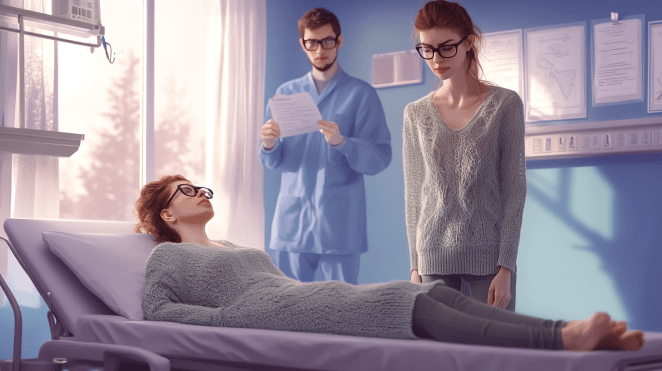
Your heart’s doing the cha-cha at 130 beats per minute. Your chest tightens. The world tilts. Your hands shake. Your brain starts whispering, “Hey, are we dying or just freaking out again?”

Is it POTS? A panic attack? A flashback to that one time your body really did betray you?
You’ve got about thirty seconds to figure it out before the anxiety of not knowing makes everything worse.

Welcome to the impossible diagnostic puzzle that is living with chronic illness and PTSD from medical trauma.


When Your Body Is Both the Scene of the Crime and the Witness

People with chronic illnesses are statistically more likely to develop PTSD-like symptoms—but the kicker is, it’s not from a one-time event. It’s because your body is an ongoing threat to your own sense of safety.

Unlike classic PTSD, where the trauma is technically in the past, medical PTSD means the trauma could literally happen again.
When you live with something like POTS, EDS, or MCAS, your body is both the suspect and the alarm system. The hypervigilance isn’t paranoia—it’s pattern recognition. You’ve learned that symptoms can mean something is seriously wrong.

But here’s the nightmare twist: those same symptoms—heart racing, shaking, dizziness—are also identical to a panic attack.


The Overlap That Makes You Want to Scream Into a Pillow

Let’s play a fun game called “Spot the Difference” between POTS and panic attacks:

POTS Symptoms:

  • Rapid heart rate (120+ bpm)
  • Dizziness or lightheadedness
  • Shortness of breath
  • Chest tightness
  • Trembling, sweating, nausea
  • Feeling like you might pass out

Panic Attack Symptoms:

  • Rapid heart rate
  • Dizziness or lightheadedness
  • Shortness of breath
  • Chest tightness
  • Trembling, sweating, nausea
  • Feeling like you might pass out

Yeah. Exactly the same.

So you sit there, pulse pounding, trying to decide if you need electrolytes or grounding exercises. And the longer you try to figure it out, the more anxious you get. Which—you guessed it—makes your heart race even more.

Congratulations, you’ve just triggered both conditions at once.


The “Is It My Body or My Brain?” Spiral

  1. Heart rate spikes.
  2. You think, “Is this POTS or panic?”
  3. The uncertainty feeds the anxiety.
  4. Anxiety makes your heart rate climb higher.
  5. PTSD brain jumps in like, “Hey, remember the last time this happened?”
  6. Your body floods with stress hormones.
  7. Symptoms worsen, clarity vanishes, and you’re stuck in a full-body loop of chaos.

Sometimes grounding doesn’t work. Sometimes standing makes it worse. Sometimes everything makes it worse. The mental gymnastics of self-triage would exhaust an Olympic athlete, and that’s before you even factor in the fatigue that both conditions bring.


When Hypervigilance Isn’t a “Coping Issue”

In classic PTSD, hypervigilance—constantly scanning for danger—is something therapy tries to reduce.
But when you live with a chronic condition that can cause fainting, cardiac issues, or anaphylaxis, that vigilance might literally save your life.

So how do you tell your brain to “calm down, you’re safe” when sometimes… you actually aren’t?

This is the impossible bind of trauma plus illness:
PTSD therapy says, stop monitoring every sensation.
Your medical team says, monitor every sensation.
Neither is wrong. Neither fully works.


The Medical Gaslighting Cherry on Top

And just to make it more fun: when you do seek help, you get hit with the “it’s just anxiety” script.

Even though POTS isn’t caused by anxiety, and even though research shows anxiety rates are about the same as the general population, you’ll still have doctors waving off your physical symptoms because your chart says PTSD.

You start to lose faith in professionals. You stop asking for help. You learn to rely only on yourself for triage—because nobody else seems capable of telling the difference either.

Which means you’re back to square one, again, sitting in the impossible space of trying to figure it out alone.


The Treatment Contradiction

PTSD therapy often involves exposure work—facing the thing that scares you until your brain chills out about it.
Except in this case, the “thing that scares you” is your own body.

You can’t just take a break from having a body. You can’t “gradually reintroduce” the experience of dizziness or tachycardia when those things are daily realities that might require medical intervention.

Worse, some PTSD therapies intentionally raise your heart rate to help you practice staying calm through physical sensations. That’s great… unless you have POTS, where that heart rate spike might actually make you faint.

So you end up in a no-win situation where treating one condition can trigger the other.


What Actually Helps (Sometimes)

There’s no perfect fix here. But there are ways to soften the edges:

💡 Look for patterns, not moments. Track triggers over time. Are symptoms linked to posture, temperature, dehydration, or specific memories? Zooming out can help reduce panic in the moment.

💡 Build a “both/and” plan. Sit down? Yes (helps POTS). Ground yourself? Yes (helps panic). You don’t have to guess which one it is to respond with compassion instead of chaos.

💡 Find trauma-informed doctors. You need providers who understand that your nervous system and your medical symptoms aren’t separate universes.

💡 Accept uncertainty. Sometimes you just won’t know—and that’s not failure. That’s reality.

💡 Validate yourself. You’re not dramatic. You’re not broken. You’re reacting appropriately to a wildly confusing body situation that most people can’t imagine.


The Unspoken Truth

Living with medical PTSD and chronic illness means constantly trying to interpret a body that lies to you and tells the truth at the same time.

It means your hypervigilance is both too much and not enough.
It means your body is both the warning sign and the danger.

You’re not failing to cope—you’re surviving something that isn’t designed to make sense.

And honestly? That’s nothing short of heroic.

Til next time, gang, take care of yourselves, and each other!


🧠 Research Toolbox

  • American Psychological Association. Medical trauma and PTSD in patients with chronic illness (2020).
  • Raj, S. R. (2022). Postural Orthostatic Tachycardia Syndrome (POTS): Pathophysiology, Diagnosis, and Management. Cleveland Clinic Journal of Medicine.
  • Löwe, B. et al. (2021). Trauma, PTSD, and chronic illn
Uncategorized

The PTSD Plot Twist: How Nearly Dying Made Living Feel Impossible

The unexpected psychological aftermath of medical trauma that nobody warns you about.

You’d think that surviving something as dramatic as your heart stopping would make you grateful for every breath, right? That’s what everyone assumes. That’s what I assumed. But here’s the plot twist nobody talks about: sometimes surviving the unsurvivable doesn’t make you appreciate life more—it makes living feel impossibly dangerous.

Welcome to the mind-bending world of medical trauma PTSD, where your brain decides that since you almost died once, you’re probably about to die again. Any minute now. Maybe even right now while you’re reading this.

The Science Behind the Psychological Sucker Punch

Here’s what the research says about cardiac arrest survivors that no one mentioned in the hospital discharge paperwork: the prevalence of PTSD among us is high. Like, surprisingly high. Studies vary, but they all agree it’s not just a few people who “can’t handle it.”

Even worse? PTSD in cardiac arrest survivors is linked to a significantly higher risk of another heart event or death within a year. So, while your brain is tormenting you with the idea that you’re going to die… that very torment might actually make you more likely to die.

It’s psychological Russian roulette, designed by a trauma specialist with a PhD in irony.

When I first woke up, I was full of gratitude. My brain was too busy relearning how to walk and do basic things to spiral about what almost happened. But once the dust settled? That’s when the fear moved in.

The Hypervigilance Trap: When Your Body Becomes the Threat

Hypervigilance means constantly scanning your surroundings for danger. But when the danger came from inside your own body, where exactly are you supposed to feel safe?

Every chest flutter is a heart attack. Every dizzy spell is a stroke. And don’t even get me started on tracking your own breathing. Your body becomes a 24/7 threat detection system, and you’re the one being surveilled.

I drink water like it’s a competition. I got a fitness tracker. I monitor every symptom: is that back pain from fibro, chronic kidney disease, or something more sinister? Often, I’ve just pulled a muscle from existing too hard—but my brain doesn’t buy that.

The Symptoms No One Prepares You For

We all know PTSD comes with flashbacks, nightmares, and anxiety. But medical PTSD has some bonus round features:

  • Medical Setting Panic: The sound of a heart monitor beep? Instant terror.
  • Body Betrayal Complex: Your once-trusty body now feels like a traitor.
  • Gratitude Guilt: You’re supposed to feel thankful, but mostly you feel terrified. Then you feel guilty about not feeling thankful. It’s like emotional inception.
  • Hypervigilant Exhaustion: Your body never relaxes, so your muscles never heal. Which means you always hurt. Which means your mood crashes. And the cycle repeats.

When I close my eyes, I don’t see calm or rest. I see regret. Unfinished business. Conversations I didn’t have. My muscles are always clenched. If I’m always hurting, I’m always depressed—and if I’m depressed, I’m even more tense. Rinse and repeat.

When Existing Conditions Complicate the Picture

If you already had health issues, medical trauma PTSD is like throwing a grenade into a house of cards. For me, fibromyalgia, ADHD, and bipolar disorder were already hard enough. Add PTSD?

  • ADHD + Hypervigilance = Brain ping-pong with a side of dread.
  • Bipolar + Trauma = Racing thoughts that might be mania or might be panic. Who knows?
  • Fibro + PTSD = Every ache becomes a “what if.”

The Irony of Fighting Fear While Pretending You Aren’t

The most exhausting part? You know it sounds ridiculous. You know your stats. You know not every chest tightness is a heart attack. But logic doesn’t matter. PTSD doesn’t speak statistics.

So you’re fighting fear with one hand while pretending to be okay with the other. Panic attack on the inside, small talk on the outside.

The Treatment Nobody Mentions

Here’s a shred of hope: studies show mindfulness-based therapy can actually help cardiac arrest survivors manage PTSD. It’s not one-size-fits-all, but it’s a start.

The problem is, most doctors don’t screen for PTSD after a medical event. They’re focused on your physical recovery. The emotional wreckage? Not on the chart.

Living in the Plot Twist

Some days, I can go hours without mentally scanning every inch of my body. Other days, it’s like I have ESPN for doom.

The real twist? Surviving doesn’t always make you feel grateful. It can make you feel fragile. And maybe that’s okay.

Maybe we don’t need to bounce back stronger. Maybe we just need to keep going, scared or not. That’s resilience too.

The Ongoing Experiment

Every day, I try to live without panicking about living. Some days I fail. Some days I don’t. But I’m still here. Still experimenting. Still trying. Til next time gang, you’re not alone, take care of yourselves, and each other!

If you’re navigating this too, you’re not broken. You’re not being dramatic. You’re surviving something nobody talks about.


Sources:

  1. Columbia University Department of Psychiatry – Mindfulness-based Therapy for Cardiac Arrest Survivors
  2. PubMed – PTSD in Cardiac Arrest Survivors
  3. American Heart Association – Psychological Impact of Cardiac Arrest
  4. Cleveland Clinic – PTSD Symptoms and Treatment
  5. Mayo Clinic – PTSD Causes and Risk Factors
  6. Bay Area CBT Center – Understanding Hypervigilance
  7. Balanced Awakening – Hypervigilance and Trauma
Uncategorized

Trying to Be a Present Parent When You’re Dissociating

(Or: “Sorry, kid, my brain’s floating three feet to the left right now.”)

Some days, I’m Supermom(ish).
Other days, I’m just a sentient pile of laundry pretending to be a person.
And then there are the days I’m trying to parent through a fog so thick it feels like I’m watching my life on a 5-second delay. Do you ever do that? Your nodding along, it appears you are in agreement only to blurt out an answer to a rhetorical question from two topics ago and its just stares and crickets? No? just me?

That’s dissociation — and it’s not just zoning out. It’s a real and very common symptom of trauma, stress, and neurodivergence.


🧠 What Dissociation Actually Is

Dissociation is your brain’s way of going, “Nope. Too much. We’re going to detach for survival now.” Believe it or not I learned this when my heart stopped. I have ZERO recollection of at least a month on either side, and I hope I never get those memories back because they had to be scary for my brain to hide them like that.

Dissociation can feel like:

  • You’re watching yourself from outside your body
  • Time is warped or unreal
  • The world looks… fake. Like how they depict it in movies with people in your face that look like characters from a dream
  • Emotions are muted, or you’re totally numb

According to the National Alliance on Mental Illness (NAMI), dissociation can affect people with PTSD, anxiety, depression, ADHD, and bipolar disorder — basically, a Greatest Hits list of what I’m working with.

And yes, it can show up in chronic pain conditions too. Research in the Journal of Trauma & Dissociation (2020) found that people with fibromyalgia reported higher dissociation symptoms than control groups — likely because living in constant pain is its own form of trauma.


👩‍👧 But What Does That Look Like as a Parent?

It looks like:

  • Nodding at your teen’s story but realizing you didn’t process a word of it
  • Looking at the kitchen sink and wondering how the dishes multiplied like gremlins
  • Holding your kid’s hand while mentally floating somewhere in 2004
  • Hearing “Mom?” for the third time before realizing you are Mom. Or your name, anything someone has to say three times before it registers.

And when your kid’s autistic and needs you fully present — or your brain’s ADHD and skittering like George in a glitter store — that’s a special brand of guilt.


🧷 What Helps Me Come Back

I’m still figuring it out. But here’s what works — sometimes:

  • Name it: “I’m dissociating” sounds weird at first, but saying it out loud grounds me. It also helps my teen understand it’s not personal. It has helped countless times with hubby.
  • Cold water or texture changes: Ice packs, textured putty, or touching something rough brings me back. Try keeping a wash cloth in the freezer.
  • Mindless movement: Folding towels. Walking in circles. Tapping my fingers. Rhythm helps. Fidget spinners. Keep a pencil and paper and doodle. Anything mindless.
  • Breathing and narration: “I’m sitting. My feet are on the floor. I can hear the fan.” It’s cheesy. It works. Its a variation of a tact professionals use, five things you can see, four things you can hear, etc.

💬 If This Is You Too…

You’re not broken.
You’re not a bad parent.
You’re not failing because your brain protects you in weird, inconvenient ways.

You’re doing the best you can. And you’re still showing up. Even if it’s in pieces, even if you’re floating — you’re here.

That counts for something. Til next time gang, take care of yourselves and each other.

Uncategorized

Rejection Sensitive Dysphoria: A Rollercoaster Ride Through My Messy Mind

Time’s been flying, but not because of any fun reason Nah, I’ve been wrestling with my own brain, and let me tell you, it’s been about as much fun as trying to wrangle cats. Pissed off cats at that.
.So, RSD. is characterized by an intense emotional reaction to perceived rejection or criticism. People with RSD may feel overwhelming sadness, anger, or anxiety in response to situations where they believe they have been rejected or judged. This can lead to avoidance of social situations or extreme sensitivity to feedback. It’s like your brain decided to crank the “giving a fuck” dial up to eleven and then broke it off. Every perceived rejection or criticism feels like a punch to the gut, leaving you gasping for air and questioning your entire existence. It’s the emotional equivalent of stepping on a Lego in the dark – unexpected, painful as hell, and makes you want to curl up in a ball and cry.

When I try to explain this shit to people, they look at me like I’ve grown a second head. They don’t understand how some times that inner critic is far too loud to ignore Its hard for someone without these thoughts to understand why we know its irrational and try our best to correct things before we speak. People without these thoughts can wonder about why we feel the way we feel but if that voice is not in you, you won’t get why we end up being so fucked up we don’t know up from down right from left. They don’t get how how this is such a debilitating, all encompassing feeling that makes the bad little intrusive thoughts that you normally think, feel, and let go, end up more like think, feel, think some more about why this feeling won’t go away, argue with the sane reasonable side of yourself, lose all faith in yourself and motivation to do anything because you can’t get past this one intrusive thought as it gets louder and louder and harder and harder to reason with or ignore, cry until there’s no tears left, find more tears, eat ice cream and accept that you are unlovable and no one wants you around.

Wow, that was quick with the big feelings right? It really does go like that. It really does make you examine every interaction and put it in the frame of a failure Lets look at how impactful this is and next time I will talk about some possible help.

Self-Blame and Doubt:
I’m always on high alert for ways I can screw things up. It’s like I’m a disaster magnet, and no matter how hard I try to steer clear, I end up crashing headfirst into every emotional tree in sight. And yeah, I know it’s exhausting for everyone around me. Who wants to be a full-time firefighter for someone else’s emotional dumpster fires that seemingly never end?

Fear of Rejection:
The minute someone’s two minutes late, my brain goes into overdrive. “They hate me, I’m worthless, I knew this would happen.” It’s like I’m constantly waiting for the other shoe to drop, just so I can say “I told you so” to myself while I’m crying into a pint of ice cream.

Catastrophizing:
Every little hiccup feels like the end of the world. I’m the queen of “I’m sorry” – I’d probably apologize to a chair for bumping into it. I have in fact, and also a random shoe, a WALL, don’t know how I did that one.and probably five more crazy things, and thats only this month lol. People get tired of hearing it, but I can’t stop. It’s like my default setting is set to “Everything is my fault.” The sky isn’t falling Chicken Little!

Overgeneralization:
Sometimes in my head, every relationship is a competition, and I’m always coming in dead last. It’s like I’m playing a game where the rules keep changing, and I’m the only one who doesn’t know how to play.

Perfectionism and Self-Criticism:
I have mini freak-outs if I have to give anyone anything that’s not absolutely perfect. It’s like my brain only operates in extremes – either I’m the best, or I’m a complete failure. There’s no room for the messy middle ground where most of life actually happens.

Emotional Magnification:
The delusions during these moments are what really fuck me up. If I text three people and no one responds immediately, my brain convinces me they’re all off somewhere plotting my social demise. Rational me knows this is bullshit, but try telling that to my anxiety.

Personalization:
I’m a master at blaming myself for everything while simultaneously feeling like an arrogant ass for thinking I have that much impact on others. It’s a mind-bending paradox of self-importance and self-loathing.

But here’s the thing – I’m putting this out there because maybe, just maybe, someone else is feeling this way too. If even one person reads this and feels less alone, or understands why their thought pattern is more toxic than a radioactive waste dump, then it’s worth it.

Remember, you magnificent mess, you’re not alone in this. We’re all just trying to navigate this crazy existence, one emotional rollercoaster at a time. Til next time (which will be fairly quick since I’ve already written it) take care of yourselves, and each other.