


Ok gang, let’s get real about something that doesn’t get nearly enough attention: medical PTSD. If you’ve ever left a doctor’s office feeling dismissed, doubted, or downright defeated, you’re not alone. For those of us with chronic illnesses and invisible conditions like fibromyalgia, bipolar disorder, autism, or ADHD, the healthcare system can feel less like a safety net and more like a minefield.
What Is Medical PTSD?
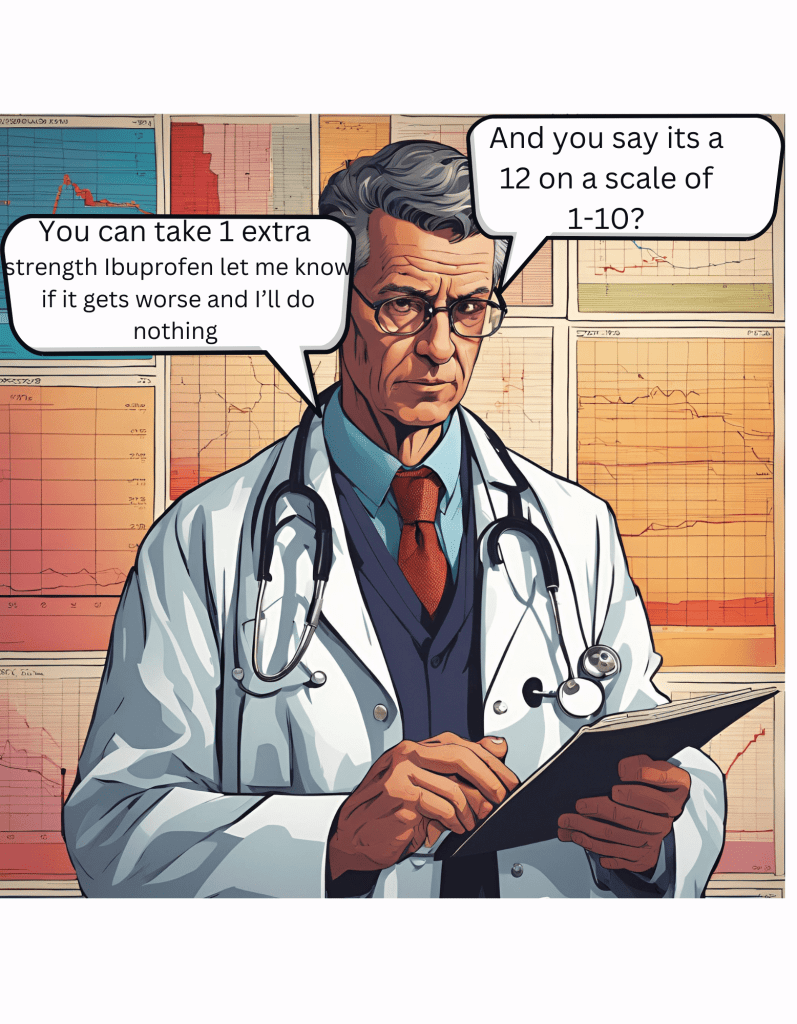
Medical PTSD is what happens when repeated negative experiences with healthcare providers leave you emotionally scarred. It’s not just about a bad appointment here or there—it’s about the trauma that builds up over time when your pain or symptoms are brushed off as “nothing” or “all in your head.” Spoiler alert: it’s not in your head.
For many of us with invisible illnesses, this is an all-too-familiar story. Bloodwork comes back fine? Must be nothing. Physical exam looks normal? You’re probably exaggerating. And suddenly, you’re left questioning your own reality because someone with a stethoscope couldn’t see what you’re feeling every single day. The number of times I’ve left a doctors appointment shaking my head saying ‘well, I mean if it WAS something wouldn’t they see it?’ No, thats not true, some stuff is tricky and it hides behind stuff. Some times you have to poke around at stuff until you figure it out, that doesnt mean things arent there to find.
Truth Bomb: Invisible Doesn’t Mean Imaginary
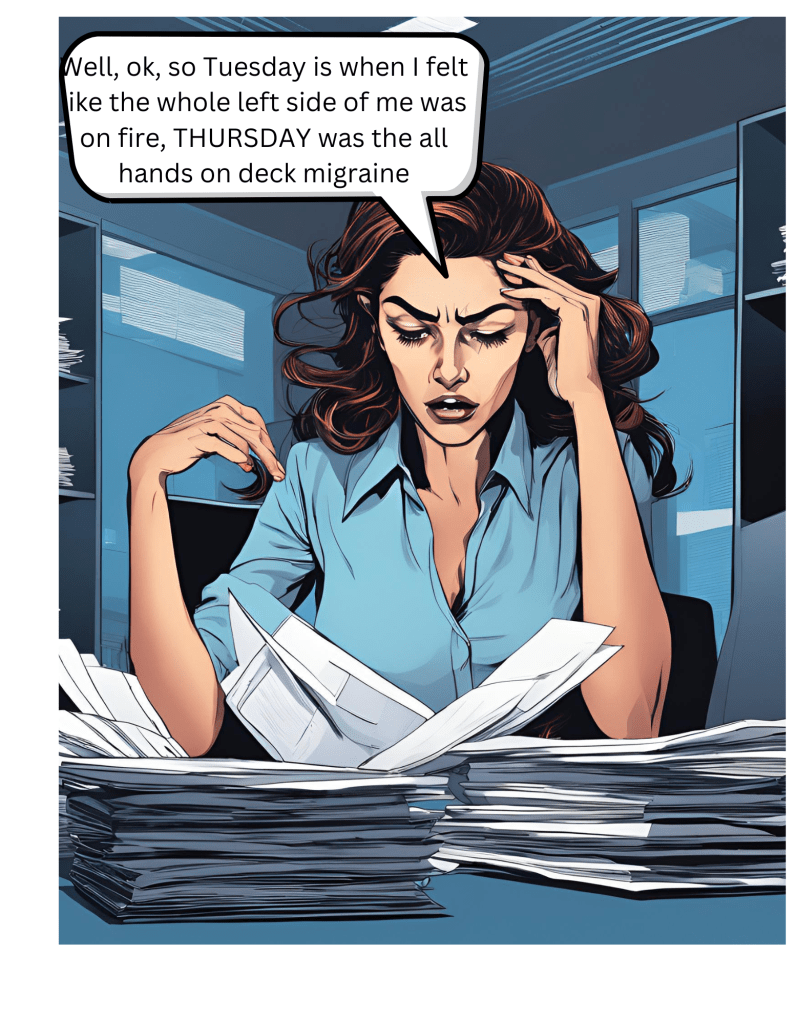
Here’s the thing: just because something doesn’t show up on a test doesn’t mean it isn’t real. Fibromyalgia doesn’t light up on an X-ray. Bipolar disorder doesn’t leave a trail in your bloodwork. Autism and ADHD don’t come with flashing neon signs saying, “Hey, I’m here!” But that doesn’t make them any less valid—or any less debilitating.
I can’t tell you how many times I’ve walked into an appointment armed with symptom logs, research, and sheer determination, only to be met with raised eyebrows and the dreaded “It’s probably just stress.” Or, ‘well you DO have Fibro’ Oh really? Because last time I checked, Fibromyalgia didn’t cause my hip to stage a full-blown mutiny (looking at you, early retirement hip).
The Emotional Toll of Being Dismissed
Let me paint you a picture: You’re already dealing with chronic pain, fatigue, mood swings—basically the greatest hits of invisible illness. Then you muster up the courage to seek help (because let’s be honest, even making the appointment feels like climbing Everest). You sit there, vulnerable and hopeful, only to be told your symptoms don’t add up or aren’t serious enough to warrant concern.
That kind of dismissal doesn’t just sting—it leaves scars. Over time, it can make you hesitant to seek care at all. Why bother if no one’s going to listen? But here’s the kicker: avoiding care can lead to worsening symptoms and even more complex health issues down the line. It’s a vicious cycle that needs to stop.
Breaking the Cycle: Advocacy and Awareness
So how do we fix this mess? For starters:

Trust Your Gut: If something feels wrong in your body, it probably is. Don’t let anyone convince you otherwise.
Document Everything: Keep a symptom diary so you have concrete evidence to back up your concerns.

Bring Backup: Take a trusted friend or family member to appointments—they can help advocate for you when you’re feeling overwhelmed.

Seek Second Opinions: If one doctor dismisses you, find another who will listen. Your health is worth fighting for. Though check with your doctors office or hospital system on policies, my doctor of 7 years dropped me because I got one.
And let’s not forget the role of healthcare providers in this equation. Doctors need better training on invisible illnesses—period. They need to understand that just because they can’t see it doesn’t mean it isn’t there. A little empathy goes a long way.
My Own Battle Scars

I’ve got plenty of stories I could share about being dismissed by doctors (and believe me, I will). Like the time I was told my fibro pain was just “overexertion” when I hadn’t done more than shuffle from my bed to the couch all week.
Or when my bipolar symptoms were brushed off as “just moodiness” because I happened to be having a good day during my appointment. Yes its about highs and lows but there is so much nuance and theres no way to catalogue each patient’s symptoms into a graph saying which predominant symptom is worse from day to given day, I don’t even know a metric you could rate them on, its just too much.
But perhaps the most frustrating moment was when my hip—yes, my actual joint—was screaming for help, and I was told ‘Well, fibro is painful.’ said sincerely with a hand on my shoulder (do not touch a fibro sufferer there and expect to be conveying sympathy or empathy, its like my BIGGEST tender point, which I never mentioned SPECIFICALLY so I let it go, but you wouldnt do that)
Spoiler alert: it wasn’t just fibro; it was my hip waving its white flag and demanding replacement parts.
The Bottom Line

Medical PTSD is real, and it’s time we start talking about it. For those of us living with chronic conditions and invisible illnesses, advocating for ourselves isn’t just an option—it’s a necessity. So keep pushing for answers, keep telling your story, and never let anyone make you feel like your pain isn’t valid.Because at the end of the day? We know our bodies better than anyone else ever could. And who can tell your story and explain your pain better than you? Til next time gang, take care of yourselves, and each other!
Discover more from WannaBeNormal
Subscribe to get the latest posts sent to your email.

 WannaBeNormal