Uncategorized

Why Spoonies Are the Best Problem-Solvers (It’s Science)

Let’s talk about something we never get enough credit for: people with chronic illness are problem-solving ninjas.
And no, that’s not just me trying to make our daily struggle sound poetic — there’s actual science behind it.

While healthy folks go about their stable little lives with their cooperative bodies and reliable energy, we’re over here MacGyvering our way through every single day.

That constant adapting? It’s not just survival — it’s skill-building. Real, measurable, brain-changing skill-building.


🧠 The Science-y Bit

Research shows that adversity can actually boost creativity — making people more original, flexible, and engaged problem-solvers.

In plain English: hard stuff makes your brain weirdly good at solving other hard stuff.

So when you live with chronic illness, you’re basically getting a crash course in creative adaptation 24/7.

We’re not just surviving. We’re literally rewiring our brains to find new ways to function every single day.


💡 Spoonie Skill Set: Why We’d Crush Any Escape Room

1. Creative Constraint Management

Limited energy? Unpredictable symptoms? Welcome to our daily innovation lab.
Chronic illness is a masterclass in working under ridiculous constraints — and somehow making it work anyway.

2. Advanced Risk Assessment

Every activity is a cost-benefit analysis:
Shower or make dinner? Push through or rest now and avoid a three-day crash later?
That’s executive-level decision-making, my friend.

3. Reframing Like a Pro

Can’t work full-time? That’s not failure — that’s efficiency.
Need to cancel plans? That’s strategic rest.
We’ve had to reframe our entire lives, and that’s actually a top-tier cognitive skill.

4. Pattern Recognition on Steroids

Tracking symptoms, testing triggers, noticing connections? We’re basically data analysts in pajamas.
We notice what works, what doesn’t, and we constantly adapt.


🔁 Creativity + Resilience = Survival Superpower

Studies show creativity and resilience feed off each other — they grow together.

Spoonies don’t just “bounce back.” We reinvent how to exist in a world that wasn’t designed for us.
That kind of mental flexibility? It makes us great at:

  • Staying calm under chaos
  • Pivoting fast when plans fall apart
  • Finding new solutions when old ones fail
  • Surviving on 2 spoons and a half-decent snack

Basically, we’ve got the kind of mental agility CEOs put on résumés.


💼 Real-Life Problem-Solving Nobody Sees

  • Healthcare project management – coordinating meds, specialists, and insurance like a pro.
  • Energy economics – allocating resources like an overworked CFO.
  • Innovation on demand – finding new ways to cook, clean, and live when your body says “nope.”
  • Relationship navigation – balancing guilt, limits, and connection with Jedi-level emotional intelligence.

We do this every single day — quietly, constantly, expertly.


💬 Why It Matters

This isn’t toxic positivity. Chronic illness still sucks.
But recognizing the skills we’ve built? That’s validation, not sugarcoating.

✨ It crushes the “lazy” stereotype — our brains are working overtime.
🧩 It explains our exhaustion — cognitive heavy-lifting is still lifting.
💪 It proves we’re developing skills that translate everywhere — creativity, adaptability, resource management, resilience.


🧃 The Bottom Line

We’re not lazy.
We’re not fragile.
We’re elite-level problem-solvers operating under extreme conditions.

Our lives are one long masterclass in creativity, strategy, and resilience — and science says that makes us exceptional thinkers.

So the next time someone implies you’re “just resting,” remember: you’re actually performing high-level cognitive gymnastics 24/7.

Now if you’ll excuse me, I’m off to solve the complex equation of whether cereal counts as dinner.
(Spoiler alert: it does. That’s called strategic resource allocation.) Til next time gang, take care of yourselves, and each other.


Uncategorized

Taylor Swift Gets Us All: Even the Spoonie Ones

From survival mode to regret, heartbreak to invisibly raging chaos, Taylor somehow finds the words for it all. These lyrics aren’t just clever turns of phrase — they’re mirrors for anyone struggling to be seen, understood, or simply to make it through another day. So the next time your body, brain, or emotions feel like they’re on fire, remember: Taylor’s got a line for that, and so do you. It’s not about whose pain is “worse” or more legitimate — it’s about being seen, validated, and reminded that even in the middle of your messiest moments, you’re still here, still trying, and still worthy of recognition.

“Balancin’ on breaking branches.” — Exile
Tell me you live with chronic illness, ADHD, or bipolar disorder without telling me. That line is the daily tightrope walk — trying to look stable while everything underneath you is creaking. You’re functioning, technically… but one more unexpected email, flare-up, or emotional storm and snap. It’s the exhausted kind of resilience that looks impressive from the outside but feels like survival from the inside.

“I’d go back in time and change it but I can’t.” — Back to December, Speak Now
Sometimes life leaves you with regrets that can’t be undone. Chronic illness, mental health episodes, or relationship missteps can haunt you, and all you can do is keep going forward while carrying those lessons with you.


“They told me all my cages were mental.” — This Is Me Trying, Folklore
Living with invisible illness or neurodivergence can make people question your experience. Taylor nails the frustration of having your struggles minimized or dismissed, even when you’re doing your absolute best to keep it together.

“Love slipped beyond your reaches.” — Champagne Problems, Folklore
For anyone navigating relationships while dealing with chronic pain, mental illness, or emotional turmoil, this lyric speaks to those moments when your best efforts simply aren’t enough — and you feel powerless watching connection slip away.

“Did you ever hear about the girl who got frozen?” — Right Where You Left Me, Folklore
That’s literally trauma in a sentence. Perfect for describing being stuck in survival mode long after the danger has passed.

“When I was drownin’, that’s when I could finally breathe.” — Clean, 1989
Leave it to Taylor to turn a mental breakdown into poetry. That line perfectly sums up what it feels like when you finally stop pretending you’re fine — when the exhaustion, pain, or chaos finally knocks you flat, and somehow, that’s when you start healing. It’s not weakness; it’s the breath you take after holding it for way too long.


“You made a rebel of a careless man’s careful daughter.” — Mine
Generational trauma wrapped in a love song. It’s breaking the patterns you were born into, learning love without fear, and realizing being “the careful daughter” was never the same as being safe.

“Why’d I have to break what I love so much.” — Afterglow
For anyone who’s accidentally hurt someone they care about — a child, partner, or even themselves. Chronic illness, emotional overwhelm, or mental health challenges can make us stumble in ways we never intended, and this lyric captures that ache of regret perfectly.

“The room is on fire, invisible smoke.” — The Archer
This is what living with chronic illness, PTSD, or anxiety can feel like. Everything in you is alight — panic, pain, exhaustion — but the world sees nothing. Your body aches, your brain races, your emotions combust… and everyone else is just like, “You seem fine.” It’s invisible chaos, and that’s the cruelest part: no one can help fight a fire they can’t see.

“I guess sometimes we all get some kind of haunted.” — Midnight Rain
The emotional equivalent of a PTSD flashback, chronic pain flare-up, or neurodivergent meltdown. It’s the moment when your past — trauma, illness, or just life — creeps up on you uninvited. It’s not about reliving the past; it’s about acknowledging that it still lingers.

“I miss who I used to be.” — Would’ve, Could’ve, Should’ve
When life steals pieces of you. Chronic illness, mental health struggles, or trauma can leave you staring at the mirror wondering if you’ll ever recognize yourself again. Taylor nails the quiet heartbreak of missing the “you” that existed before pain, betrayal, or illness started rewriting your story.

“How much sad did you think I had in me?” — So Long, London
Nails the emotional extremes of bipolar or just being completely maxed out emotionally. That mix of exhaustion, overwhelm, and “I’m still standing, barely” is instantly relatable to anyone with intense mood swings or chronic emotional strain.

“I can go anywhere I want — just not home.” — Exile
The heartbreak of estrangement in one line. You build a life, you heal, but that door you once knew as “home” doesn’t open anymore. It’s grief with no funeral, just echoes.


    From survival mode to heartbreak, estrangement to invisible chaos, Taylor somehow finds the words for it all. Each lyric shows us we’re not alone in our experiences, that even invisible struggles — chronic illness, mental health battles, neurodivergence, estrangement — are valid and worthy of recognition. So the next time your body, brain, or emotions feel like they’re on fire, remember: Taylor’s got a line for that, and so do you. It’s not a contest about whose pain is “worse.” It’s about being seen, being validated, and acknowledging that even in the middle of your messiest moments, you’re still here, still trying, and still worthy of recognition.

    Til next time, gang: take care of yourselves, and of each other.

    Uncategorized

    Two-Week Spoonie Menu: The “We Survived the Plague” Edition Week 25 & 26

    We got hit hard this round — hubby brought home some sort of mutant cold that ran through the house like a toddler through a toy aisle. Everyone took turns coughing, whining, and refusing soup (because of course). The good news: we’re on the mend, and I’m finally feeling ready to cook again… in moderation.

    So, this week’s menu leans heavy on reserves, comfort, and low-effort dinners that still taste like you tried. Three cook days (Sunday, Tuesday, Thursday) with flexible leftovers and built-in sanity savers. Nothing fancy, just survival-mode delicious.

    Week 25

    Sunday – Crockpot Salsa Chicken

    • Cooking Method: Crockpot
    • Ingredients:
      • 2 lbs chicken breasts
      • 1 jar (16 oz) salsa
      • 1 tsp cumin
      • 1 tsp chili powder
      • Salt & pepper to taste
    • Directions:
      1. Place chicken in crockpot, pour salsa over it, sprinkle with spices.
      2. Cook on LOW for 6–7 hours or HIGH for 3–4 hours.
      3. Shred chicken and serve over rice, in tortillas, or with a salad.

    Monday – Reserve Meal

    • Leftover salsa chicken over rice or salad.

    Tuesday – Crockpot Italian Chicken & Veggies

    • Cooking Method: Crockpot
    • Ingredients:
      • 2 lbs chicken thighs
      • 1 cup baby carrots
      • 1 cup potatoes, diced
      • 1 cup zucchini, sliced
      • 1 tsp Italian seasoning
      • Salt & pepper to taste
    • Directions:
      1. Place chicken and veggies in crockpot.
      2. Sprinkle with Italian seasoning and a little salt & pepper.
      3. Cook LOW 6–7 hours or HIGH 3–4 hours.

    Wednesday – Reserve Meal

    • Leftovers from Tuesday; can toss with pasta or eat as-is.

    Thursday – Sheet Pan Sausage & Veggies (not crockpot)

    • Ingredients:
      • 1 lb sausage (turkey or chicken)
      • 1 red bell pepper, sliced
      • 1 zucchini, sliced
      • 1 cup baby potatoes, halved
      • Olive oil, salt, pepper, garlic powder
    • Directions:
      1. Toss all ingredients with olive oil and seasonings.
      2. Roast at 400°F (205°C) for 25–30 minutes, turning once.

    Friday – Reserve Meal

    • Leftovers from Thursday.

    Saturday – Reserve Meal

    • Quick scramble, salad, or grain + protein from reserves.

    Week 26

    Sunday – Salsa Chicken (repeat, make extra for Monday)

    Monday – Reserve Meal

    • Leftover salsa chicken.

    Tuesday – Crockpot Teriyaki Chicken & Rice

    • Ingredients:
      • 2 lbs chicken thighs
      • 1/2 cup teriyaki sauce
      • 1 cup broccoli florets
      • 1 cup carrots, sliced
    • Directions:
      1. Place chicken in crockpot, pour sauce over.
      2. Cook LOW 6–7 hours or HIGH 3–4 hours.
      3. Add veggies in last 30 minutes of cooking.
      4. Serve with rice.

    Wednesday – Reserve Meal

    • Leftovers from Tuesday.

    Thursday – Crockpot Creamy (Light) Chicken & Mushrooms (dairy-light)

    • Ingredients:
      • 2 lbs chicken breasts
      • 1 cup mushrooms, sliced
      • 1/2 cup chicken broth
      • 1 tsp garlic powder
      • Salt & pepper
    • Directions:
      1. Place chicken and mushrooms in crockpot, pour broth over.
      2. Season with garlic powder, salt, pepper.
      3. Cook LOW 6–7 hours or HIGH 3–4 hours.

    Friday – Reserve Meal

    • Leftovers from Thursday.

    Saturday – Reserve Meal

    • Quick grain + protein + veggie, or scrambled eggs + toast + veggies.

    Reserves / Backup Meals Ideas

    These are quick, simple, and interchangeable for non-cooking days:

    • Rotisserie chicken + microwavable veggies
    • Pre-cooked frozen grains (rice, quinoa) + frozen veggies + protein
    • Eggs scrambled or hard-boiled + toast + fruit
    • Canned tuna or chicken salad (without mayo)
    • Salad kits with added beans, eggs, or cooked meat

    Uncategorized

    7 Weird Life Skills Chronic Illness Gave Me

    Chronic illness is the world’s most aggressive “skills training program.” Except instead of a certificate and a raise, you get brain fog, pain, and an ongoing relationship with your heating pad. Still, I’ve picked up some unique skills along the way—stuff I never knew I’d need but now couldn’t live without.

    1. Mastering the Art of Fake Smiling

    I could win Olympic gold for pretending I’m fine while my joints are staging a coup. Do I want to collapse in a heap? Yes. Am I going to grin like I just won a cruise? Also yes.

    2. Human Calculator for Spoonie Math

    “Can I shower and cook dinner today, or is that too ambitious?” I can do the math faster than you can open your planner. Spoiler: the answer is usually “nope.”

    3. Expert in Improvised Heat Therapy

    Rice sock? Check. Heating pad? Check. Sitting on my kid’s warm laundry fresh out of the dryer because I can’t wait for relief? Double check. Pro tip, heat rises, I sleep ON not UNDER an electric blanket it has made a world of difference.

    4. Planning for Chaos Like a Pro

    You know how event planners can handle weddings with 200 guests? Try managing your day when you don’t know if you’ll wake up with a migraine, a hip flare, or zero energy. I don’t plan weddings. I plan for chaos.

    5. Napping Anywhere, Anytime

    Airports, doctor’s waiting rooms, my car in the school pickup line—I have the gift of nap. If there was a frequent napper punch card, I’d have earned a free mattress by now.

    6. Doctor Jargon Translator

    I can translate “mild discomfort” into “you won’t walk tomorrow” and “we’ll keep an eye on it” into “we have no idea what’s wrong.” Basically, I’m bilingual.

    7. Black-Belt Level Boundary Setting

    When you’ve got limited spoons, you learn real quick how to say, “No, I can’t go to your cousin’s friend’s birthday barbecue three towns over.” Honestly, it’s a superpower.


    ✨ Chronic illness may have wrecked my body, but hey—it gave me some weird little life skills along the way. Your turn: what weird skill has chronic illness forced you to master? Til next time gang, take care of yourselves, and each other.

    Uncategorized

    Why Sleep Is So Complicated When You’re Living With ADHD, Bipolar Disorder, and Fibromyalgia

    Sleep isn’t just about closing your eyes and drifting off. For some of us, it’s like trying to land a plane in a thunderstorm with three different copilots all fighting over the controls. ADHD, bipolar disorder, and fibromyalgia each mess with sleep in their own ways—and when they show up together, it’s no wonder rest feels more like a negotiation than a guarantee.


    ADHD: A Brain That Won’t Clock Out

    With ADHD, the brain doesn’t exactly come with an off-switch. Racing thoughts, late-night hyperfocus, or the dreaded “second wind” make it easy to miss sleep windows. Research shows people with ADHD often experience delayed sleep phase syndrome—meaning their internal clock is naturally shifted later.

    What helps:

    • Keep a consistent bedtime routine (same order, every night, like brushing teeth → skincare → reading).
    • Use a “wind-down timer” alarm to remind you when to step away from screens.
    • Try body-doubling for bedtime (texting a friend “logging off now” helps hold you accountable).

    Bipolar Disorder: Sleep as a Mood Swing Marker

    Sleep disruption isn’t just a symptom of bipolar disorder—it’s also a warning sign. During manic episodes, people may need little to no sleep and still feel wired. In depressive episodes, hypersomnia (sleeping too much) or insomnia are both common. Clinicians even track sleep patterns as a way to gauge where someone is on the bipolar spectrum, because sleep disturbance is that central to the condition.

    What helps:

    • Stick to a strict sleep/wake schedule—even on weekends.
    • Limit caffeine, alcohol, and late-night stimulation, since they can trigger swings.
    • Track sleep with an app or journal to catch changes early (your future self and your doctor will thank you).

    Fibromyalgia: The Non-Restorative Sleep Thief

    Fibro brings its own brand of sleep sabotage. Studies point to “alpha wave intrusion,” where the brain doesn’t stay in deep, restorative stages of sleep. Combine that with pain flare-ups and restless legs, and even if you technically sleep for eight hours, you wake up feeling like you pulled an all-nighter.

    What helps:

    • Prioritize pain management before bed—stretching, warm baths, or heat pads can calm flare-ups.
    • Create a cozy sleep space: blackout curtains, white noise, supportive mattress.
    • Try gentle sleep hygiene aids, like calming teas or magnesium (if your doctor approves).

    The Triple-Whammy Effect

    Now imagine all three at once: ADHD pushing bedtime later, bipolar flipping the switch between insomnia and oversleeping, and fibromyalgia making whatever sleep you do get feel useless. No wonder mornings feel brutal and exhaustion never really leaves.


    Why It Matters

    Poor sleep isn’t just a nuisance—it worsens mood swings, flares up pain, and makes executive function even harder. But knowing the “why” behind your exhaustion is powerful. It means you can stop blaming yourself and start stacking small, realistic strategies that give you a fighting chance at rest. Til next time gang, take care of yourselves and each other.

    Research Toolbox:
    Sources

    The National Fibromyalgia Association — Sleep Disturbances & Fibromyalgia
    (information on fibro and sleep disturbances)

    International Journal of Bipolar Disorders – Sleep and Circadian Rhythms in Bipolar Disorder
    (research on bipolar disorder and sleep)

    PubMed — ADHD and Circadian Rhythm Sleep-Wake Disorders
    (research on ADHD and circadian rhythm)

    Uncategorized

    Survival & Sanity Week 25 & 26

    Listen, meal planning is basically the Olympics of adulting. And if you’re running low on spoons, have kids who think chicken nuggets are a food group, or just don’t want to set your house on fire trying to “whip something up” after 5 p.m., you need a plan that’s simple, flexible, and doesn’t judge you for eating tacos three times a week if you want to.

    So here it is: two weeks of real-life dinners that use reserves, leftovers, and a little bit of bacon for moral support. You don’t need to spend an hour chopping. You don’t need five obscure spices you’ll never use again. You just need this list and a fridge that sort of cooperates.


    Week One

    Monday – Crockpot Tacos
    Let the crockpot do the heavy lifting. Dump in meat, seasoning, maybe some tomatoes, and boom—taco night without the skillet babysitting.

    Tuesday – Leftovers or Reserves
    Translation: fridge roulette or that frozen pizza you “forgot” about.

    Wednesday – Leftovers or Reserves
    Yes, again. You deserve it.

    Thursday – Leftovers or Reserves
    See above.

    Friday – Salsa Chicken
    Chicken, salsa, crockpot. It shreds itself. If only the laundry did.

    Saturday – Leftovers or Reserves
    The theme is intentional.

    Sunday – One-Pan Chicken Fajita Bake
    Chop, toss, bake. Minimal effort, maximum flavor. No stovetop juggling act.


    Week Two

    Monday – Sheet Pan Sausage, Potatoes & Veggies
    Cut, toss, roast. Bonus: your house smells amazing, like you’ve been cooking for hours instead of 20 minutes.

    Tuesday – Leftovers or Reserves
    Champion-level laziness, rebranded as efficiency.

    Wednesday – Bacon & Veggie Fried Rice
    Bacon makes everything better. Toss it with rice and veggies, and suddenly leftovers feel fancy.

    Thursday – Leftovers or Reserves
    Nothing like a break day to make Friday’s meal feel even easier.

    Friday – Crockpot Creamy Ranch Chicken
    Chicken, ranch packet, cream cheese, done. If your crockpot had a fan club, this would be the poster child.

    Saturday – Leftovers or Reserves
    Consider it a chef’s night off.

    Sunday – (Optional Swap Night)
    Tired of chicken? Grab something from reserves or takeout without the guilt. The system’s built to bend.


    Why This Works

    • Built-in leftovers mean you don’t waste food or energy.
    • Reserve-friendly lets you swap in pantry/freezer staples on the hard days.
    • Minimal chopping, maximum flavor because you’ve got better things to do than wrestle with 15 ingredients.

    This isn’t about perfect dinners. It’s about feeding yourself and your people without burning all your spoons in the process. And honestly? That’s more impressive than any five-course meal.


    👉 Want the full recipes and grocery list? Scroll down . Dinner crisis = solved. Take care of yourselves, and each other!

    Uncategorized

    The Social Hangover: Why One Family Gathering = Three Business Days of Recovery

    I did a thing.

    I put on jeans. Yes, actual denim. Not “leggings that whisper about being pants if you squint hard enough.” Real jeans. Then, because apparently I like to cosplay as a functioning human, I added makeup. First time in two years. Even did my hair. Honestly, I could’ve stopped there and deserved a medal.

    But no, I had a mission: drive three hours each way to see my sister, hand-deliver the painstakingly perfected gifts I’d been working on for weeks, and socialize with more humans than my hermit soul has encountered in… possibly a decade for my sister and grand niece.

    Let me tell you, the event itself? Lovely. The invite? Appreciated. The people? Wonderful. The food? Chef’s kiss. My energy afterward? Dead. Buried. Ghosted.

    Here’s the unglamorous math nobody tells you:

    • Prep time: two weeks of stressing, shopping, and crafting gifts.
    • Cosmetic upgrades: one hour to transform into “someone who looks like she has her life together.”
    • Event length: six hours in the car, plus a full day of interaction.
    • Recovery time: estimated three to five business days, maybe longer. Please hold.

    Today, I’m the human equivalent of a phone stuck on 2% battery with a broken charger. Hollow, sluggish, vaguely resentful at the concept of standing upright. And yet… this is the price of admission when you leave your cave.

    So if you’re also lying in bed after “a fun day,” wondering why your body feels like you ran a marathon while juggling flaming swords, let me reassure you: you didn’t imagine it. Social hangovers are real. Spoon debt is brutal. Jeans are a weapon of mass destruction.

    Recovery Day Survival Tips (a.k.a. How to Human Again After Too Much Humaning)

    • Hydrate like it’s your new religion. You just sweated out three weeks’ worth of electrolytes socializing.
    • Eat something that doesn’t come in a crinkly wrapper. (No shame if it does, but bonus points for real nutrients.)
    • Lay flat. On the bed, the couch, or the floor — whatever’s closest when you collapse.
    • Noise-cancel the world. Earplugs, headphones, or just a dramatic blanket burrito.
    • Cancel productivity. Laundry and dishes can wait. Your nervous system cannot.
    • Gentle motion only. Stretching, slow walks, or the ceremonial shuffle to the fridge.
    • Remember: jeans are optional for the rest of your life.


    Tomorrow I’ll probably be fine(ish). But today? Today is about recovery, snacks, and swearing off denim forever. Til next time gang, take care of yourselves, and each other.

    Uncategorized

    Things I’ve Googled at 2 AM: A Greatest Hits Collection

    Welcome to the dark underbelly of my internet search history – that beautiful, chaotic wasteland where insomnia meets ADHD curiosity and good judgment goes to die. If Google keeps receipts (and let’s be honest, they absolutely do), then I’m pretty sure I owe them an apology and possibly therapy fees.

    For those blessed neurotypical souls who can actually fall asleep at reasonable hours, let me explain what happens in the 2 AM Google zone: it’s where rational thought meets hyperfocus, and somehow you end up three hours deep in research about whether penguins have knees. Spoiler alert: they do, and now I know more about penguin anatomy than any reasonable adult should.

    The Medical Anxiety Spiral

    Let’s start with the classics – those searches that begin with a minor bodily concern and end with me mentally writing my will:

    • “why does my left eyelid twitch”
    • “is eye twitching a sign of brain tumor”
    • “brain tumor symptoms”
    • “how long do you live with undiagnosed brain tumor”
    • “can stress cause fake brain tumor symptoms”
    • “how to tell if you’re being dramatic about health symptoms”

    This particular rabbit hole usually ends with me either completely convinced I’m dying or completely convinced I’m a hypochondriac, with no middle ground available. WebMD is not your friend at 2 AM, people. WebMD at 2 AM is that friend who tells you your headache is definitely a rare tropical disease even though you live nowhere near water and haven’t left your house in three days.

    The Parenting Panic Searches

    Nothing quite like teenage behavior to send you spiraling into the depths of Google at ungodly hours:

    • “is it normal for 16 year old to sleep 14 hours”
    • “how much attitude is normal for teenager”
    • “signs your teenager actually hates you vs normal teenage behavior”
    • “how to communicate with teenager who speaks only in grunts”
    • “when do teenagers become human again”

    The best part about these searches is that every parenting forum has exactly two types of responses: “totally normal, you’re doing great!” and “this is a red flag, call a professional immediately.” There’s no middle ground in internet parenting advice, which is super helpful when you’re already spiraling at 2 AM.

    The Random Life Questions That Consume My Soul

    This is where things get weird. These are the searches that start nowhere and go everywhere:

    • “how do they get ships in glass bottles”
    • “what happens if you never cut your fingernails”
    • “do fish get thirsty”
    • “why do we say ‘after dark’ when it’s still light after dark in summer”
    • “how many people are named Steve in the world right now”
    • “what’s the oldest living thing on earth”
    • “can you die from lack of sleep”

    That last one usually comes up around hour four of my insomnia adventures, when I’m googling whether my inability to sleep is actually going to kill me. The internet has mixed opinions on this, which is not reassuring when you’re already not sleeping.

    The Organizational Fantasy Research

    These searches represent my eternal optimism that the right system will finally fix my chaotic life:

    • “best planner for ADHD brain”
    • “bullet journaling for beginners”
    • “how to organize small spaces”
    • “Marie Kondo method actually work”
    • “minimalism with ADHD”
    • “organization systems that actually work for messy people”

    I’ve researched more organizational systems than I’ve actually implemented, which tells you everything you need to know about how this usually goes. But hey, at 2 AM, I’m always convinced that THIS system will be the one that changes everything.

    The Philosophical Crisis Questions

    When the insomnia really sets in and I start questioning the nature of existence:

    • “what is the point of life”
    • “are we living in a simulation”
    • “do other people think in words or pictures”
    • “is everyone else just pretending to have their life together”
    • “what happens to consciousness when you die”
    • “why do humans need meaning in life”

    These usually pop up around 3 AM when my brain decides that sleep is for quitters and existential dread is the only logical response to being awake this long.

    The Wikipedia Rabbit Holes

    These start with one innocent click and end with me knowing way too much about completely random topics:

    Starting search: “what year was the microwave invented” Six hours later: I’m an expert on the history of food preservation, the science of radiation, and somehow the entire genealogy of the inventor’s family tree.

    Starting search: “why do cats purr” Final destination: A comprehensive understanding of feline evolution, big cat behavior in the wild, and the physics of sound vibration.

    The “Do Normal People…” Medical Questions

    These are the searches I’m too embarrassed to ask my actual doctor about:

    • “is it normal to talk to yourself out loud”
    • “how often should normal people shower”
    • “what does a normal sleep schedule look like”
    • “do normal people remember their dreams”
    • “how much coffee is too much coffee per day for a normal person”

    The irony is that I have an actual doctor I could ask these questions, but somehow googling them at 2 AM feels less judgmental than admitting to a medical professional that I don’t know what constitutes normal human behavior.

    The Conspiracy Theory Adjacent Searches

    I’m not saying I believe in conspiracy theories, but 2 AM me is definitely more open to alternative explanations for things:

    • “why do all mattress stores seem empty but stay in business”
    • “do birds actually exist or are they government drones”
    • “what’s really in hot dogs”
    • “why do all celebrities look younger than their age”
    • “are we alone in the universe”

    These searches usually happen when I’ve been awake too long and my critical thinking skills have left the building. Daylight me reads these search histories and wonders what the hell nighttime me was thinking.

    The Conclusion I Never Reach

    The beautiful thing about 2 AM Google spirals is that they never actually end with answers – they just end with exhaustion or the sudden realization that it’s somehow 5 AM and I have to be functional in three hours.

    I’ve learned more random facts from insomnia-driven research than from college, but I couldn’t tell you how any of it connects or why I needed to know that octopuses have three hearts at 2:30 in the morning.

    The real kicker? I’ll do it all again tonight, because apparently my brain believes that this time will be different. This time, I’ll find the perfect solution to all of life’s problems hidden somewhere in the depths of the internet.

    Spoiler alert: it’s usually just more questions and the growing realization that humans are weird, life is complicated, and I should probably just go to sleep.

    But first, let me just quickly Google why I can’t fall asleep… Til next time gang, take care of yourselves, and each other!

    Uncategorized

    Notifications from My Chronic Illness Squad

    Sometimes living with multiple diagnoses feels like I’m stuck moderating the world’s most chaotic group chat. None of my conditions text in complete sentences, everyone interrupts, and nobody ever seems to be on the same page. Honestly, if you peeked at the notifications going off in my brain, this is pretty much what you’d see…

    Good Morning!

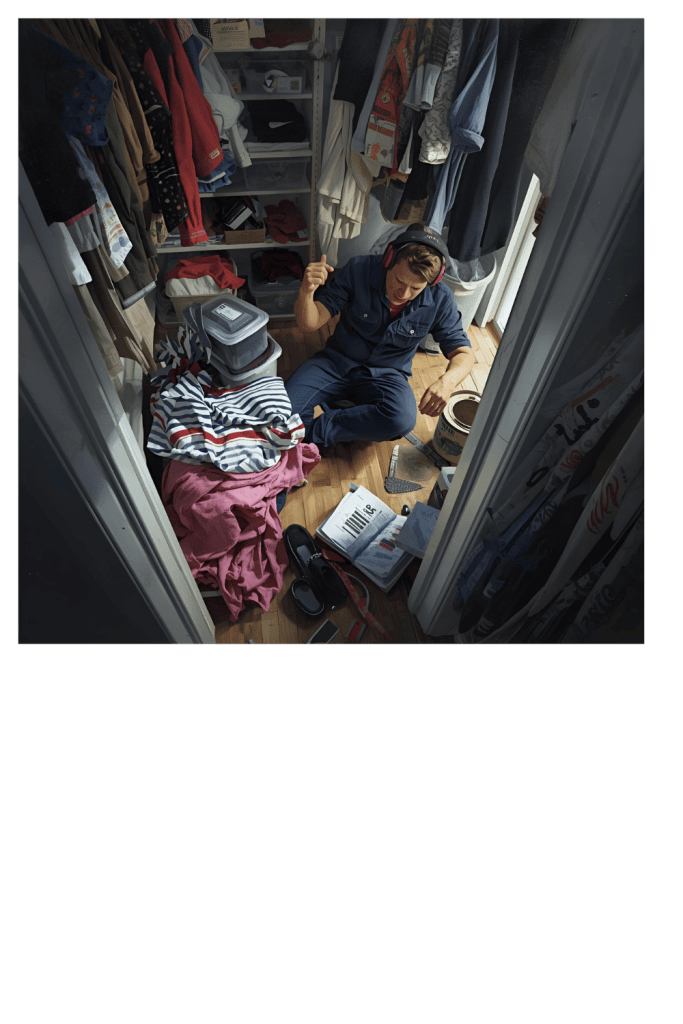
    ADHD: “GUYS I just had the BEST idea! Let’s reorganize the closet at 2 a.m. while blasting music!”

    Fibromyalgia: “Cool, but you’re going to need a heating pad, three naps, and a chiropractor after.”

    Bipolar: “YES. Let’s do it! Let’s paint the closet rainbow colors and start a whole new side hustle around it!!”

    Anxiety: “Wait. What if the paint is toxic? What if you mess it up? What if everyone laughs at you? Also, did you lock the door?”

    Depression: “lol. what’s the point of even having a closet.”

    PTSD: [randomly sends 17 fire emojis]

    After Lunch:


    ADHD: “Oops, forgot the drawers. Now I’m starting a craft project.”

    Fibromyalgia: “Oh, awesome. Guess who’s going to need three days in bed because of hot glue injuries?”

    Bipolar: “WE CAN SELL IT ON ETSY! MILLIONS!!”

    Anxiety: “What if nobody buys it? What if they all leave one-star reviews? What if we end up bankrupt??”

    Depression: “same.”

    PTSD: [sends an old photo no one wanted to see]

    Mid – Afternoon

    ADHD: “Oops! Forgot the craft, but I DID deep clean the fridge!”


    Fibromyalgia: “Congrats. I’ll just be over here, inflamed like a balloon.”

    Motivation (rare cameo): “Guys… maybe we… clean the kitchen?”

    ADHD: Ignore Motivation, he’s on vacation most days


    Bipolar: “OMG let’s turn this into a cleaning business! Million-dollar idea!!”


    Anxiety: “What if someone hires us and we miss a spot and they never forgive us?”


    Depression: “We wouldn’t go anyway.”


    PTSD: [sends a soft focus picture of nothing in particular]

    2 A.M. Chaos 🌙

    ADHD: “GUYS! Big idea! We should make a podcast!”

    Fibromyalgia: “We can’t even make it through a shower without a recovery period.”


    Bipolar: “No, no — THIS is the idea that’ll change everything!!”

    Anxiety: “What if no one listens? What if EVERYONE listens?!”

    Depression: “lol. either way, pointless.”

    PTSD: [sends a GIF of an explosion]

    And that’s just one day in the group chat. Tomorrow they’ll be arguing about whether to try a new hobby, cry about laundry, or plan an entire business venture at 3 a.m. Living with ADHD, bipolar disorder, fibromyalgia (and the rest of the crew) isn’t neat or predictable—it’s messy, noisy, and sometimes ridiculous. But at least if I can laugh at the chaos, I get to feel like the one running the chat instead of just stuck in it Till next time gang, take care of yourselves, and each other!

    Uncategorized

    Medication Management When You Have More Than One Diagnosis

    Navigating medication when you live with multiple diagnoses—like ADHD, bipolar disorder, and fibromyalgia—feels less like healthcare and more like trying to solve a Rubik’s cube in the dark. Upside down. While juggling. There’s always a new prescription, a dosage change, or a side effect surprise. Add in the fact that I’m a mom, recently had hip surgery, and sometimes just plain forget things (hello, ADHD brain), and it’s a wonder I manage at all.


    1. Keeping Track Is Basically a Full-Time Job

    I’ve tried everything: pill organizers, phone alarms, sticky notes, calendar reminders. Some weeks, I’m a medication goddess. Other weeks, I realize at 3 p.m. that my morning meds are still sitting on the counter untouched. According to the CDC, about 50% of people with chronic illnesses don’t take their meds exactly as prescribed—so apparently I’m in good (if frustrated) company. I employ a triple check system, because I have a problem with short term memory, so I had a few times gotten confused and taken morning pills twice. Now I have an organizer, take them at designated time, and old school write it down on the really bad days.

    And ADHD doesn’t help. Sometimes I forget to refill my prescription entirely, which means pharmacy texts have become my unofficial accountability partner.


    2. Doctors Don’t Always See the Whole Picture

    Every specialist has their own tunnel vision. My psychiatrist cares about mood stability, my rheumatologist about pain, and my primary care about blood pressure and labs. Rarely do they connect the dots between all of them. That’s on me.

    I keep an updated list of every med, dose, and timing on my phone ON TOP OF the primary care doc who is supposed to monitor my meds. It’s not foolproof, but it’s saved me more than once when someone said, “Wait, you’re taking that too?” I sometimes wish my doctors had a group chat—but since that’s not happening, I play coordinator.


    3. Side Effects and Interactions: The Uninvited Guests

    Adding a new med always feels like a game of roulette. Will this one help? Will it mess up something else? Once, I started a pain medication that made my bipolar symptoms spiral. (Fun surprise. 0/10, do not recommend.) Recently I was talking to a new psych doc and SHE told me that I shouldnt take a med that I guess has an affect on people with CKD and my numbers put me right at the beginning of that. And yet neither the doc that prescribed the med nor any doc I have talked to ever said anything about it and I’ve been on it well over a year.

    Fact check: studies show up to 30% of adults on multiple medications experience interactions or side effects significant enough to affect daily life. No wonder I sometimes feel like I’m trading one problem for another.


    4. Forgiving Myself for the Fumbles


    (I am SO excited football is back on, my Sundays have purpose now so excuse my metaphors lol)

    Missed doses happen. Taking the night meds in the morning happens. Once I even double-dosed my muscle relaxer and took the best nap of my life (not ideal, but at least memorable).

    I used to beat myself up for every mistake. Now I remind myself: this is hard, and I’m doing the best I can. Systems help, but expecting perfection is just setting myself up for failure. Its important to be dilligent and well informed and trying your best where meds are concerned but you will make mistakes, we all make mistakes so just be gentle with yourself.


    5. Advocacy and Asking for Help

    I’ve learned to speak up more at appointments, to say, “This isn’t working” without guilt. Being able to leave a message in the portal helps the minor hiccups I’ve had, but be honest with yourself and your doctor, because if you can’t take a med they might be able to give you another med that works just as good. I’ve asked my pharmacist about interactions that my doctors overlooked. And yes, sometimes I ask my teen to double-check if I actually swallowed my pills. Around here, med management is a team sport.


    Final Thoughts

    Managing meds with multiple diagnoses isn’t simple—it’s messy, frustrating, and often overwhelming. But with humor, alarms, sticky notes, family backup, and a good dose of self-compassion, I somehow keep moving forward. If you’re in the same boat, you’re not alone. We’re all just out here trying to make the chaos work. Til next time gang, take care of yourselves, and each other.