Uncategorized

Brain Fog: Why Your Brain Suddenly Feels Like Dial-Up Internet

Let’s cut the polite medical fluff and get to the truth:
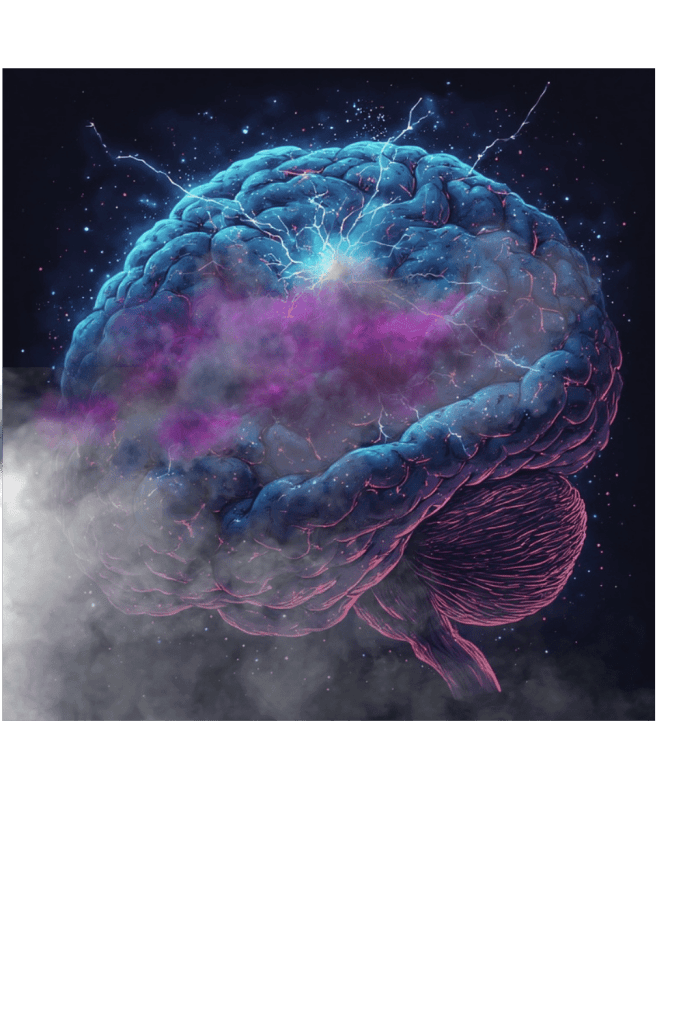
Brain fog is real, it’s intrusive, and it can make you feel like you’re slowly losing your mind… even though you’re not. We not only deal with it within our illnesses but alot of us have Menopause or Perimenopause right along with these other intrusive issues

And the worst part?
Everything is affected.
Memory, focus, emotional regulation, sleep, language, motivation — pick a brain function, and menopause and Bipolar, ADHD, and Fibro toss a snow globe at it.

You’re not imagining this. And you’re definitely not “lazy” or “slacking” or “not trying hard enough.” What you’re feeling is neurological turbulence, courtesy of hormones that suddenly decided to jump ship without leaving a forwarding address.

Let’s break down what’s actually going on, in normal-human language.


🌡️ What Menopause Brain Fog Actually Is

Imagine your brain has a hype squad.
The leader of that hype squad? Estrogen.

Estrogen talks to your neurotransmitters — the little brain chemicals that run your mood, your focus, and your memory — and keeps them energized and coordinated.

Here are her three favorite teammates:

  • Serotonin → mood, emotional stability
  • Dopamine → motivation, attention, reward
  • Acetylcholine → memory, learning, focus

When estrogen starts dropping during perimenopause and menopause?
The hype squad gets tired. The music cuts out. Everybody forgets the dance.

Suddenly the whole system is like:

It’s not subtle. It hits like a grocery cart to the ankles.


🧠 So What Does This Look Like in Real Life?

You may notice:

  • Forgetting basic words you’ve used for 40 years
  • Losing your train of thought mid-sentence
  • Walking into a room and immediately forgetting why
  • Misplacing everything — phone, keys, glasses, sanity
  • Feeling mentally “slower” or foggier than usual
  • Struggling to switch between tasks
  • Needing instructions repeated
  • Finding it harder to learn new things
  • Getting overwhelmed faster than you used to

And then there’s the emotional layer:
You start wondering if you’re declining, losing your edge, or secretly broken.
(You’re not. You’re literally chemically glitching.)


😫 Why It Feels So Big and So Personal

Because menopause doesn’t just change estrogen — it changes sleep, stress hormones, and mood systems too.

Sleep becomes trash.
Night sweats and hot flashes interrupt the hours you do manage to get.
And sleep loss alone slows memory consolidation and attention — for anyone, not just hormonal women.

Add in drops in serotonin and dopamine, and suddenly:

  • You can’t regulate stress as well
  • Motivation takes a hit
  • Focus becomes slippery
  • Everything feels “harder” than it used to

So the fog isn’t coming from one place — it’s coming from everywhere at once.

That’s why it feels overwhelming. That’s why you feel unlike yourself.
That’s why it feels like your brain betrayed you.


🧬 The Science Behind It (In Actual Plain English)

Two big findings from research you can quote, cite, tattoo, whatever you need:

1. Menopause measurably affects memory and cognitive performance.

Large studies show that during the menopause transition, women experience real, trackable dips in memory, attention, and verbal fluency — especially when hormones fluctuate the most.
(SWAN Study – Greendale et al., 2010)

2. Estrogen plays a major role in protecting attention and memory systems.

Estrogen directly affects acetylcholine and dopamine — the same systems involved in memory, focus, and mental clarity.
When estrogen falls, those systems weaken, and cognitive symptoms follow.
(Sherwin, 2012)

This isn’t a personality flaw.
It’s biology.


❤️ You’re Not Failing — Your Brain Is Rewriting Its Operating System

Seriously — if your computer said “installing major update… do not shut down,” you’d expect things to be weird for a while.

That’s menopause.

Your brain is recalibrating.
Your hormones are rebalancing.
Your neurotransmitters are trying to remember their choreography.

You’re not broken.
You’re not incompetent.
You’re not “losing it.”

You’re adapting to a massive physiological shift that affects everyone going through it — but nobody talks about enough. Til next time gang, take care of yourselves, and each other.

Greendale GA, et al. The menopause transition and cognitive performance: the Study of Women’s Health Across the Nation (SWAN). Menopause. 2010;17(4):910–917.

Sherwin BB. Estrogen and cognitive functioning in women: lessons we have learned. Psychoneuroendocrinology. 2012;37(8):1287–1295.
Uncategorized

Pain Flare Types, Ranked From “Mild Nuisance” to “Summon the Ancestors”

Let’s be honest: pain flares deserve their own tier list.
Not all suffering is created equal. Some flares are just a polite tap on the shoulder and others feel like they’ve traveled across lifetimes to personally drag you into the void.

So in the spirit of scientific accuracy (and by scientific accuracy, I mean vibes), here’s the ultimate ranking:


1️⃣ The Tiny Gremlin Twinge — A Mild Nuisance

This one pops up like, “Hey girl, just checking in!”
It’s annoying, but you can still function… mostly. You limp a little, grab a heating pad just in case, and pretend it’s fine.
It’s never fine — but we lie to ourselves anyway.


2️⃣ The Low-Battery Huff — You’ll Feel This Tomorrow

Your body starts sending strongly worded emails.
It’s not enough to stop you, but everything feels… heavier. Slow. Foggy.
You start rationing spoons like you’re preparing for a winter on the Oregon Trail.


3️⃣ The Surprise Stab — The “Who Threw That?” Pain

Sudden. Sharp. Personal.
Like your muscles decided to reenact a crime scene with no warning.
You freeze, gasp, and immediately question every life decision that led you here.


4️⃣ The Weather Channel Special — Barometric Betrayal

You wake up and instantly know a storm is coming.
Your joints creak like a haunted staircase. Your spine predicts humidity better than any meteorologist.
Honestly, you deserve a salary for this accuracy.


5️⃣ The Sensory Riot — Everything Hurts and Also Everything Is Loud

Pain spike + fibro fog + sensory overload = a cursed smoothie.
Clothes? Too much. Lights? Too bright. Air molecules? Too aggressive.
You consider relocating to a dark, soft cave forever.


6️⃣ The “Cancel All Plans” Episode — Nope. Absolutely Not.

The flare that turns your day into a hostage situation.
Suddenly every joint is negotiating its own peace treaty.
Even sitting still is exhausting. Being alive? Optional.


7️⃣ The Full-Body Betrayal — Your Skeleton Has Filed for Divorce

It spreads. It radiates. It’s everywhere at once.
Nothing helps. No position is comfortable. You do that weird slow shuffle walk that looks like your bones are taped in.
Heating pads, meds, and prayers to whoever will listen.


8️⃣ The “Summon the Ancestors” Flare — You Have Exited This Plane

Oh, this one?
You can feel your DNA screaming.
Pain so intense it becomes almost spiritual. You’re like, “I see the veil… it’s thin… tell MawMaw I’m coming…”
You contemplate your will, your life choices, and whether reincarnation offers better warranty coverage.


Final Thought

Pain flares are rude, unpredictable, and truly lack professionalism.
But calling them out? Naming them? Ranking them like Pokémon?
Sometimes that’s how we cope — with humor, honesty, and a little dramatic flair. Til next time gang, take care of yourselves, and each other.

Uncategorized

Brain Fog vs. Cognitive Fatigue: Understanding the Science Behind “I Can’t Think Today”

Some days, my brain feels like it’s buffering. I’ll stand in the kitchen with zero clue why I’m there, reread the same sentence five times, or forget my own train of thought mid-sentence. And then there are the days when my brain feels tired. Not fuzzy—just done. Like someone unplugged the power source and said, “Nope. We’re closed.”

People often lump brain fog and cognitive fatigue together, but they’re not the same beast. Brain fog is that hazy, disconnected, “can’t access the file” feeling. It’s common in chronic illness, ADHD, and even post-viral recovery because it’s tied to inflammation and disrupted neurotransmitter signaling—especially in areas like the prefrontal cortex, which handles planning and focus. (See research: Defining brain fog across medical conditions.) ScienceDirect+1

Cognitive fatigue, on the other hand, is your brain’s version of muscle fatigue. It happens when your mental resources are overused or depleted—like when you’ve been masking all day, juggling a thousand tasks, or fighting through sensory overload. Studies show that prolonged cognitive load triggers measurable changes in brain activity consistent with fatigue. BioMed Central+1

Cloudy with a chance of fog

The cruel joke? Many of us with chronic pain, ADHD, or trauma live in a state where both are happening at once. Inflammation clouds the signals (fog) while constant effort to function burns through what little energy reserves remain (fatigue). Add medication effects, sleep disruption, or stress hormones—and your poor nervous system is basically trying to run Windows 98 on low battery.

The next time you say “I can’t think today,” remember—it’s not laziness or lack of willpower. It’s biology doing its best under impossible conditions. Be kind to your brain. It’s been through a lot, and honestly, it deserves a nap and maybe a snack. Til next time gang, take care of yourselves, and each other.

Uncategorized

💊 When Your Body Stages a Coup: Surviving Withdrawal from Your Legally Prescribed Meds

So picture this: you’re minding your business, taking your meds like a responsible adult, when suddenly—boom.
Pharmacy delay. Doctor out of town. Prior authorization “pending.” Ah the setback of psych meds.
And your nervous system? It’s like, “Cool cool cool… let’s panic about everything now.”

Let’s be clear right out of the gate:
This isn’t addiction.
This is what happens when your body gets used to something your doctor prescribed, and then it disappears faster than your motivation on a Monday.

For people managing chronic pain, ADHD, bipolar disorder, fibromyalgia, anxiety—basically anything that makes life feel like juggling flaming swords—missing meds can wreck your whole week. Sometimes your whole month. It used to be pain meds were controlled, well I got off all them and then I find out one of my meds for my mental state is controlled too.

So here’s the practical, not-patronizing guide to surviving it.


🧠 1. Know What’s Happening — It’s Not “Just in Your Head”

Your body doesn’t care that you’re being responsible. It just knows chemistry changed.
Withdrawal from meds like antidepressants, or mood stabilizers can cause:

  • Flu-like symptoms (the fever, chills, and “oh God, why” kind)
  • Dizziness or brain zaps
  • Stomach chaos (you know what I mean)
  • Anxiety that feels like being trapped in your own skin
  • Crying at car insurance commercials

You’re not crazy, dramatic, or weak. You’re literally detoxing from a medication your body depended on.


🩺 2. Call the Pharmacy and Doctor — Every. Single. Day.

Yes, it’s annoying. Yes, they hate it. Do it anyway.
Sometimes the squeaky wheel really does get the refill.

Ask for:

  • A partial fill (even a few days’ worth helps)
  • Generic or alternative options
  • If your doctor can bridge it with samples or a similar med

If you can’t get through to your doctor, ask to speak to the nurse or pharmacist directly—they can often light a fire under the process faster than anyone else.


🧘‍♀️ 3. Temporary Coping Tools (That Actually Help)

You can’t cure withdrawal, but you can soften the edges.
Try:

  • Hydration like it’s your job. Electrolytes help your body flush junk out faster.
  • Protein and complex carbs. Blood sugar swings make symptoms worse.
  • Body temp tricks: cool showers for feverish restlessness, warm baths for muscle tension.
  • Magnesium and vitamin B supplements (if cleared by your doc).
  • Ginger tea or mints for nausea.
  • Noise + comfort TV. Distract your brain from itself. (“SVU’ or ‘Chicago’ shows is a favorite here.)

And yes, sleep whenever you can. Withdrawal can feel like a bad breakup between your brain and your body, and you’ll need rest to survive the drama.


🚨 4. Know When It’s Too Much

If your symptoms go beyond “ugh” and start looking like “dangerous,” it’s time to get help.
Go to urgent care or call your doctor if you experience:

  • Suicidal thoughts
  • Chest pain
  • Severe confusion or disorientation
  • Tremors, seizures, or blood pressure spikes

No guilt, no hesitation. This isn’t weakness—it’s biology in meltdown mode.


💬 5. You’re Not a “Druggie.” You’re a Human Being.

Let’s kill that stigma right now.
There’s a difference between dependency and addiction—one means your body adapted to a med, the other means there’s misuse or compulsion.

If you’re following your prescription and life implodes when you miss it, that’s not moral failure. That’s chemistry. And it deserves compassion, not judgment.


🌿 Bonus: What to Do Once You’re Back on Track

  • Ask about tapering. Even a few days’ gap can make restarting rough.
  • Set up refill reminders. Calendar, app, sticky note, carrier pigeon—whatever works.
  • Request overlap fills (some pharmacies will fill a few days early if you ask).
  • Stock an emergency buffer once you can, even if it’s just a few days’ worth.

And most importantly: forgive yourself for the mess that isn’t your fault.
Medication management in modern healthcare is like playing whack-a-mole blindfolded. You’re doing great just by surviving it. Dependency is’nt addiction. Til next time gang, take care of yourselves, and each other!


Uncategorized

7 Weird Life Skills Chronic Illness Gave Me

Chronic illness is the world’s most aggressive “skills training program.” Except instead of a certificate and a raise, you get brain fog, pain, and an ongoing relationship with your heating pad. Still, I’ve picked up some unique skills along the way—stuff I never knew I’d need but now couldn’t live without.

1. Mastering the Art of Fake Smiling

I could win Olympic gold for pretending I’m fine while my joints are staging a coup. Do I want to collapse in a heap? Yes. Am I going to grin like I just won a cruise? Also yes.

2. Human Calculator for Spoonie Math

“Can I shower and cook dinner today, or is that too ambitious?” I can do the math faster than you can open your planner. Spoiler: the answer is usually “nope.”

3. Expert in Improvised Heat Therapy

Rice sock? Check. Heating pad? Check. Sitting on my kid’s warm laundry fresh out of the dryer because I can’t wait for relief? Double check. Pro tip, heat rises, I sleep ON not UNDER an electric blanket it has made a world of difference.

4. Planning for Chaos Like a Pro

You know how event planners can handle weddings with 200 guests? Try managing your day when you don’t know if you’ll wake up with a migraine, a hip flare, or zero energy. I don’t plan weddings. I plan for chaos.

5. Napping Anywhere, Anytime

Airports, doctor’s waiting rooms, my car in the school pickup line—I have the gift of nap. If there was a frequent napper punch card, I’d have earned a free mattress by now.

6. Doctor Jargon Translator

I can translate “mild discomfort” into “you won’t walk tomorrow” and “we’ll keep an eye on it” into “we have no idea what’s wrong.” Basically, I’m bilingual.

7. Black-Belt Level Boundary Setting

When you’ve got limited spoons, you learn real quick how to say, “No, I can’t go to your cousin’s friend’s birthday barbecue three towns over.” Honestly, it’s a superpower.


✨ Chronic illness may have wrecked my body, but hey—it gave me some weird little life skills along the way. Your turn: what weird skill has chronic illness forced you to master? Til next time gang, take care of yourselves, and each other.

Uncategorized

Why Sleep Is So Complicated When You’re Living With ADHD, Bipolar Disorder, and Fibromyalgia

Sleep isn’t just about closing your eyes and drifting off. For some of us, it’s like trying to land a plane in a thunderstorm with three different copilots all fighting over the controls. ADHD, bipolar disorder, and fibromyalgia each mess with sleep in their own ways—and when they show up together, it’s no wonder rest feels more like a negotiation than a guarantee.


ADHD: A Brain That Won’t Clock Out

With ADHD, the brain doesn’t exactly come with an off-switch. Racing thoughts, late-night hyperfocus, or the dreaded “second wind” make it easy to miss sleep windows. Research shows people with ADHD often experience delayed sleep phase syndrome—meaning their internal clock is naturally shifted later.

What helps:

  • Keep a consistent bedtime routine (same order, every night, like brushing teeth → skincare → reading).
  • Use a “wind-down timer” alarm to remind you when to step away from screens.
  • Try body-doubling for bedtime (texting a friend “logging off now” helps hold you accountable).

Bipolar Disorder: Sleep as a Mood Swing Marker

Sleep disruption isn’t just a symptom of bipolar disorder—it’s also a warning sign. During manic episodes, people may need little to no sleep and still feel wired. In depressive episodes, hypersomnia (sleeping too much) or insomnia are both common. Clinicians even track sleep patterns as a way to gauge where someone is on the bipolar spectrum, because sleep disturbance is that central to the condition.

What helps:

  • Stick to a strict sleep/wake schedule—even on weekends.
  • Limit caffeine, alcohol, and late-night stimulation, since they can trigger swings.
  • Track sleep with an app or journal to catch changes early (your future self and your doctor will thank you).

Fibromyalgia: The Non-Restorative Sleep Thief

Fibro brings its own brand of sleep sabotage. Studies point to “alpha wave intrusion,” where the brain doesn’t stay in deep, restorative stages of sleep. Combine that with pain flare-ups and restless legs, and even if you technically sleep for eight hours, you wake up feeling like you pulled an all-nighter.

What helps:

  • Prioritize pain management before bed—stretching, warm baths, or heat pads can calm flare-ups.
  • Create a cozy sleep space: blackout curtains, white noise, supportive mattress.
  • Try gentle sleep hygiene aids, like calming teas or magnesium (if your doctor approves).

The Triple-Whammy Effect

Now imagine all three at once: ADHD pushing bedtime later, bipolar flipping the switch between insomnia and oversleeping, and fibromyalgia making whatever sleep you do get feel useless. No wonder mornings feel brutal and exhaustion never really leaves.


Why It Matters

Poor sleep isn’t just a nuisance—it worsens mood swings, flares up pain, and makes executive function even harder. But knowing the “why” behind your exhaustion is powerful. It means you can stop blaming yourself and start stacking small, realistic strategies that give you a fighting chance at rest. Til next time gang, take care of yourselves and each other.

Research Toolbox:
Sources

The National Fibromyalgia Association — Sleep Disturbances & Fibromyalgia
(information on fibro and sleep disturbances)

International Journal of Bipolar Disorders – Sleep and Circadian Rhythms in Bipolar Disorder
(research on bipolar disorder and sleep)

PubMed — ADHD and Circadian Rhythm Sleep-Wake Disorders
(research on ADHD and circadian rhythm)

Uncategorized

5 Ridiculously Small Things That Actually Make Life Easier

Life is overwhelming enough without adding big, complicated “fixes” to the mix. That’s why sometimes the smallest shifts—things you can do in a minute or less—end up making the biggest difference. None of these will change your entire world, but they will help smooth the edges of a rough day.


1. Drink Water Out of a Fancy Cup

Hydration is one of those “simple but annoying” tasks. But pour that same water into a glass you love—a stemless wine glass, a mason jar with a straw, or even a mug that makes you smile—and suddenly it feels less like a chore and more like a treat. Little brain tricks for the win.


2. Keep a Blanket in Arm’s Reach

There’s something grounding about having a blanket nearby. Whether it’s the middle of the day or late at night, grabbing it is an instant way to give yourself comfort without any effort. Bonus: it doubles as a nap invitation if you need it.


3. Use the “Two-Minute Rule”

Procrastination thrives on tasks that feel bigger than they are. The two-minute rule says: if it takes less than two minutes, do it now. Throw away that receipt, reply to the text, wipe the counter. You’ll be surprised how much mental clutter disappears when you knock out those quick wins. I’ve noticed this alot cleaning, it feels good to see the problem disappear.


4. Make a “Done List”

To-do lists can be overwhelming, especially when they never seem to shrink. A “done list” flips the script—you jot down everything you’ve already managed, even the small stuff. It shifts your focus from “never enough” to “look what I actually did.” And honestly? That’s the energy boost most of us need. I don’t do this enough, often I’m like, what did I even do all day? show yourself all the hard work you put into your day.


5. Change Your Socks

It sounds silly, but fresh socks are an underrated reset button. They’re small, clean, and cozy, and they send your body the message that something has shifted. On a day when everything feels stagnant, that tiny reset can make you feel just a little more human. Mind the seam placement, that was always a concern with my oldest, she’d refuse to go if she felt the seam in the wrong place.


Closing

Will these tips solve all of life’s chaos? Absolutely not. But they’re proof that you don’t always need massive changes to feel a little better. Sometimes the easiest way forward is simply stacking up these micro-comforts until the day feels lighter. Til next time gang, take car of yourselves, and each other.

Uncategorized

7 Unexpected Ways to Make Life a Little Easier When You’re Overwhelmed

Life is messy, exhausting, and sometimes downright unfair—but there are clever little hacks that can help you catch your breath, keep your sanity, and even sneak in some joy. None of these tips will magically erase your stress (I wish), but they will make the load lighter.


1. Automate the Little Things

Decision fatigue is real—our brains get worn down by endless small choices. Automating the basics can free up precious energy.

  • Schedule grocery delivery or subscriptions for your must-haves.
  • Set bills to auto-pay.
  • Use reminders for meds, appointments, or chores.

It may feel tiny, but the mental relief adds up.


2. Reserve-Based Meal Planning

Instead of starting from scratch every day, build meals off “reserves” you’ve already cooked. Think big-batch taco meat, roast chicken, or skillet sausage that can be reimagined into multiple meals. Less chopping, less cooking, more living. I do this biweekly and feature a menu plan and shopping list every other Sunday, but its not rocket science so if you don’t stick 100% to it no big deal, I just keep the featured ingredients on hand and offer a multitude of uses for it. As stated above, decision fatigue is real and its so helpful to have that choice already made.


3. Build a “Bad Day Box”

Keep a stash of small comforts for the days when everything feels impossible. Fill it with:

  • A favorite snack or tea
  • Cozy socks or a heating pad
  • A playlist that makes you laugh or sing along

It doesn’t solve the hard stuff, but it gives you a lifeline when you’re sinking. If you want one already made I might know someone….


4. Quick Mental Resets

A five-minute pause can do more than you think. Whether it’s a short guided meditation, deep breathing, or blasting your favorite song, those tiny resets can shift your brain out of panic mode and back toward calm. Make it something easy that you have access to, it can be comedy or a podcast that makes you laugh, anything that shifts the focus of your thoughts is the idea.


5. Make Your Space Work for You

Clutter equals stress. Even little changes—like keeping meds, remotes, or supplies in a caddy by your chair—cut down on the low-grade chaos. Lighting, airflow, and comfort matter more than we admit.


6. Outsource Where You Can

If you can swing it, pay for help. Order takeout, hire a cleaner, or swap chores with a friend. Energy is a resource, and saving yours is not laziness—it’s smart strategy.


7. Celebrate Tiny Wins

You got out of bed? That counts. Finished a task? Write it down and cross it off just for the satisfaction. Momentum grows when you notice the little victories instead of waiting for the big ones.


Life isn’t perfect, and neither are we—but small hacks like these add up. They create breathing room, lighten the load, and make survival a little more manageable. Try one or two this week. You deserve the ease. Til next time gang, take care of yourselves, and each other!

Uncategorized

Body Function Bingo

A totally real medical game where everyone’s a winner and no one feels good.

🎯 1. The Surprise Soundtrack

Symptom: Your joints crack like bubble wrap every time you move.
Fun fact: The average human knee wasn’t designed to sound like a haunted rocking chair — yet here we are.
Personal take: I’m TERRIFIED of moving like swaying because I’ve been warned repeatedly if my hip pops out I wont enjoy it. I keep remembering how EASY my hip used to pop out, I gotta be mindful of yet another ailment; *Dramatic fall upon our ‘fainting couch’ only to pop right back up*


🧠 2. Brain Fog Blackout

Symptom: You walk into a room and instantly forget why.
Science says: Fibro and ADHD can both affect working memory. That means your brain’s “clipboard” is full of glitter and expired coupons.
Pro tip: Keep a notebook, or just live in the room you walked into. It’s yours now. Your life exists there.


🔥 3. Is It a Hot Flash or Anxiety?

Symptom: Sudden wave of heat. Chest tight. Soul leaving body?
Reality: Could be hormones, could be panic, could be both. Whee!
Personal take: Am I the only one who walks around with sweats on *mostly* but when a hot flash hits, I’m in a tank and shorts, that I also set out to wear today because I did this so often that now I pick out a 4 piece outfit every day? Its like my anemia and my hormones have a time share in the place that controls my temp.


🎭 4. Mood Swing Square Dance

Symptom: Feeling fine → rage → tears → existential dread → cookie?
FYI: Bipolar mood shifts are no joke. Hormones and chronic pain don’t help.
Fun twist: Sometimes the mood changes faster than your outfit.


🧃 5. “Ow” Before It Happens

Symptom: You say “ow” before doing the thing.
Science says: Anticipatory pain is real in chronic illness brains. It’s like your nervous system’s version of spoilers.
Bonus round: Saying “ow” also applies to thoughts and feelings now.


🧬 6. Random Pain That Leaves as Mysteriously as It Came

Symptom: Stabbed in the ribs by an invisible elf. Gone five seconds later.
No explanation. No follow-up. No peace.
Personal take: (That sharp twinge in your back today? Yep.) I’m honestly not sure about back pain there are far too many terrible things it could be (thanks Dr Google) but its me so of COURSE we escalate to the worst case scenario, but its just as likely these days to be muscle strain. It was stabby and dull and seemed to move while radiating from the same region. Magic.


📺 7. Micro-Naps & Blinking Time Warps

Symptom: You swear it was just 2:30pm. Now it’s 4:17 and you’re holding a half-eaten piece of toast.
What’s happening: Could be fatigue, could be disassociation, could be alien abduction.
Helpful? No. Hilarious? Sometimes.


How many squares did you hit today? Bingo or just big ‘nope’? Either way — you’re still here, and that’s a win. Til next time gang, take care of yourselves, and each other.

Uncategorized

The Real Truth About Living With Multiple Medical Conditions (From Someone Who Gets It)

You’d think having one chronic health condition would be enough to earn you a loyalty card for the doctor’s office (every tenth copay is free?), but apparently, nature loves a “Buy One, Get One” deal just as much as supermarkets do.

In fact, as of 2023, over half (51.4%) of American adults are dealing with at least two chronic conditions simultaneously. Not to brag, but some of us are collecting diagnoses like they’re Pokemon cards. (Its me, I’m some of us.)

1. Your Pill Organizer Qualifies as a Carry-On

You know you’re living with multiple medical conditions when your pill organizer is bigger than your snack box… and requires its own spreadsheet for refills. You could host a bingo night called “Guess Which Pill is for What?” (Winner gets a nap.)

2. Doctor’s Appointments: The New Social Calendar

If social status were measured by how many specialists you know by their first name, you’d be downright popular. Dermatologist on Tuesday? Endocrinologist on Wednesday? Neurologist at the end of the month? You’ve got a calendar busier than a pop star’s tour schedule.

3. Symptoms: Pick ‘n’ Mix Edition

Fatigue, brain fog, joint pain, strange rashes—sometimes it’s hard to know whether a new symptom is a plot twist from an old diagnosis or just a friendly sequel from a new one. You ask your doctor, “Is this Normal™?” and they say, “Well, for you, maybe!”

4. Health Is a Team Sport Now

Turns out, it takes a village… to manage your prescriptions, go over lab results, and remind you again which foods will actually disagree with Condition #3 (but not #2).

5.You’re Not Alone in This Wild Ride

Here’s the kicker: 76.4% of US adults had at least one chronic condition in 2023—and over one in four young adults aged 18–34 now have two or more. If you sometimes feel like a medical outlier, you’re actually part of the majority (how’s that for a plot twist?).

6. Bonus Round: Confusing Your Fitbit

You tell your fitness tracker you have “bad days” and “good days.” Fitbit just quietly registers your nap as a “restorative yoga” session. (Thanks, buddy, I needed that win.)

Quick Facts to Drop at Parties for Street Cred:

Multiple chronic conditions (aka “multimorbidity”) are on the rise, especially among young adults—up from 21.8% to 27.1% in a decade. Most common tag team combos include high cholesterol, arthritis, hypertension, depression, and—everybody’s favorite—obesity.

Living with multiple medical conditions isn’t for the faint of heart…except, actually, sometimes it literally is when your next diagnosis is “mild tachycardia.” But you do it with humor, strength, and the world’s most impressive pill stash. And that, fellow warriors, is the real truth.

Author’s tip: If in doubt, just tell people you’re “collecting chronic conditions” like rare action figures. Laughter might not be the best medicine, but it’s definitely covered by emotional insurance.

Factual data for your reading pleasure: The CDC and other reputable sources confirm everything above, except maybe the part about winning a nap at diagnosis bingo. Til next time gang, take care of yourselves, and each other!