Uncategorized

Weather or Not, Fibro Hurts: Barometric Whiplash and Summer Survival Tips

Fibro Doesn’t Care About the Season

You’d think pain would be more predictable. Cold = bad, right? Well yes… and no. Because in summer, when the air pressure plays trampoline, humidity tries to choke you out, and thunderstorms sneak up like mood-swing ninjas, your fibromyalgia goes, “Yay! A chance to be more dramatic!”

Your body doesn’t just hurt — it panics, it protests, and it often completely forgets how to function like a semi-sentient adult human.

Why Weather Screws Us Up (Even in Summer)

  1. Barometric Pressure is a Jerk.
    When pressure drops fast (hello, pre-storm), tissues expand. Nerves already oversensitive in fibro-land get even more irritable. It’s like your whole body got a weather alert and decided to throw a tantrum. The research is mixed—effects vary, and for some folks may be subtle. But that doesn’t make your flare-up any less real.
  2. Humidity and Heat Mess with Everything.
    • Heat dilates blood vessels → more fatigue, dizziness, swelling.
    • Humidity slows evaporation of sweat → overheating faster.
    • Add in pain? You’re basically a melted candle with opinions.
  3. Storms Make the Air Feel Heavy.
    Your head hurts, your joints ache, and standing up feels like moving through soup. The pressure swings during storms are sneaky saboteurs.
  4. Your Nervous System is Already Confused.
    Fibromyalgia is a central sensitization disorder. Your brain and nerves are like over-caffeinated chihuahuas — already jumpy, now add atmospheric chaos? It’s not great, Bob.

What Can You Actually Do About It?

💧1. Hydrate Like It’s Your Job.

Barometric shifts and heat can mess with circulation and fluid retention. Water helps regulate your internal temp and reduces dizziness and fatigue.

❄️2. Cooling Tools Are Your Friends.

  • Cooling towels
  • Ice packs on pulse points
  • Fans in every room
  • Spray bottle with peppermint water (YES, seriously)

🧘‍♀️3. Stretch and Move, Gently.

Movement keeps things from stiffening up worse, but go slow. A few light yoga poses, shoulder rolls, or just pacing your hallway counts. You’re not prepping for the Olympics — you’re surviving a weather system.

🛋️4. Pace Like a Pro.

Your energy is a budget. Don’t overspend it just because the sun’s out. Schedule breaks. Cancel plans. Use that “no” like SPF for your soul.

🌀5. Watch the Weather. Plan Ahead.

There are apps just for barometric pressure (like Migraine Buddy or WeatherX). When you see a dip coming, prep your nest: meds ready, chores done ahead, comfy clothes out.

You Are Not Broken — You Are Barometrically Betrayed

So no, it’s not “just in your head.” The weather does affect your fibro. You are not imagining it. And just because you don’t see storm clouds doesn’t mean your body isn’t screaming “WE’RE UNDER ATTACK!”

But you’re learning, adjusting, and finding ways to soften the crash. That’s strength — not weakness. Til next time guys, take care of yourselves, and each other.

Uncategorized

The ADHD Energy Crash: Why It Happens and How to Navigate It

If you live with ADHD, you’re likely familiar with the phenomenon of feeling mentally and physically drained by mid-afternoon. This isn’t just about being tired; it’s a distinct experience tied to the unique ways ADHD affects energy regulation.

🔍 Understanding the ADHD Energy Crash

ADHD is characterized by challenges in executive functioning, which means tasks that require planning, focus, and organization demand more cognitive effort. This heightened effort can lead to quicker depletion of mental energy. Additionally, individuals with ADHD often struggle with interoception—the ability to recognize internal bodily cues—making it harder to notice signs of fatigue until they’re overwhelming.

✅ Practical Strategies to Combat the Crash

Here are several evidence-based strategies to help manage and mitigate the afternoon energy slump:

  1. Incorporate Regular Physical Activity: Engaging in physical exercise can boost energy levels and improve focus. Even short walks or light stretching during breaks can make a significant difference. If you have a fitbit, the get up once an hour and do 250 steps setting, turn it on and stick to it.
  2. Prioritize a Protein-Rich Breakfast: Starting your day with a meal high in protein can stabilize blood sugar levels and provide sustained energy, reducing the likelihood of an early crash. Breakfast isnt a great meal on the go but if nothing else have a protein shake.
  3. Utilize Power Naps Wisely: Short naps, ideally between 10–20 minutes, taken in the early afternoon, can rejuvenate your mind without affecting nighttime sleep. This is a rule of thumb but not one I follow. I found my best nap is between 30 minutes to an hour, it gives me the perfect alertness when I get up. Experiment on your own and listen to your body.
  4. Practice Energy Pacing: Monitor your energy levels throughout the day and plan tasks accordingly. Scheduling demanding activities during peak energy times and allowing for rest during low-energy periods can enhance productivity. I tell people after dinner don’t ask me shit because once the last dish is done I am off the clock lol
  5. Engage in Body Doubling: Working alongside someone else, either in person or virtually, can increase accountability and focus, making tasks feel less daunting. This is seriously magic I don’t get why it works but it does.
  6. Stay Hydrated and Eat Balanced Meals: Dehydration and poor nutrition can exacerbate fatigue. Ensure you’re drinking enough water and consuming meals that balance carbohydrates, proteins, and healthy fats. Water water water. I hate it but it affects more than you’d think.
  7. Maintain Consistent Sleep Patterns: Establishing a regular sleep schedule helps regulate your body’s internal clock, leading to improved energy levels during the day. I’m up at 3. It was upsetting as I tried to change and mold it to conform with the usual hours, when I accepted that my body wanted to set its own schedule and started planning my days around that I was a great deal happier.
  8. Limit Caffeine Intake: While caffeine can provide a temporary boost, excessive consumption may lead to energy crashes later in the day. Moderation is key. HAHAHA! I can hear everyone who knows me heads whipping around. I’m a coca-cola girl, and maybe you arent overly sensitive to caffeine but thats where I’d make adjustments first.
  9. Create a Stimulating Work Environment: Incorporate elements that keep you engaged, such as background music or varying your workspace, to maintain interest and energy. They sell fidget mats that have all these things but your better off getting a fidget spinner, those are portable.
  10. Seek Professional Support: If energy crashes are significantly impacting your daily life, consider consulting a healthcare professional for personalized strategies and potential treatment options. Theres no shame in asking for help.

By understanding the underlying factors contributing to the ADHD energy crash and implementing these strategies, you can better manage your energy levels and maintain productivity throughout the day. Remember, it’s about finding what works best for you and being compassionate with yourself in the process. Til next time gang, take care of yourselves and each other.

Uncategorized

5 Weirdly Effective Ways to Feel Better Fast (Backed by Science, Not Just TikTok)

Ever feel like your brain’s stuck in dial-up mode while the rest of the world’s running on fiber optic? Been there, ordered the T-shirt, wore it for three days straight. When you’re fried, frazzled, or just feeling emotionally soggy, you don’t always have the bandwidth for a full mental health makeover. The good news? Science has your back—and it doesn’t require a prescription or a bank loan. Here are five surprisingly effective, science-backed ways to feel better fast—without leaving your couch (probably).


1. Deep Breathing: A Free Spa Day for Your Nervous System

Let’s be real: when someone tells you to “just breathe,” it’s usually right before you snap like a glow stick. But hear me out—breathwork is basically a nervous system cheat code.

🔬 Science says: Deep, controlled breathing activates your parasympathetic nervous system (aka the “rest and digest” mode), reducing cortisol and lowering heart rate. One study in Frontiers in Psychology (Zaccaro et al., 2018) found that slow breathing significantly improves mood and lowers anxiety.

🌀 Try this: Inhale for 4 counts, hold for 4, exhale for 4 (aka box breathing). Bonus points if you close your eyes and pretend you’re somewhere tropical and not just hiding from your responsibilities.

I don’t like to recommend anything I don’t do, so rest assured I do this, though I switch up the rhythms, and I would recommend you do the same because so long as you’re breathing, it works doesnt matter how pretty it is.


2. Laughter Therapy: Better Than an Espresso Shot

Who knew memes could double as mental health tools? Turns out, watching something funny isn’t just procrastination—it’s therapy with a punchline.

🔬 Science says: Laughter triggers the release of endorphins and lowers stress hormones. A study in The Journal of Neuroscience (Dunbar et al., 2012) shows that laughter increases pain tolerance and boosts social bonding.

📺 Try this: Watch a short stand-up set, blooper reel, or the 7,000th rerun of your favorite sitcom. Whatever tickles your funny bone.

👉 Real-life moment: You know what I’ve heard? I laugh too much. I’m too loud. I shouldn’t make everything a joke. You know what? I’m beyond caring. You know that whole near death thing? It showed me life was FAR TOO SHORT to waste time on the vast amount of unpleasantness one generally has to put up with. If you can’t laugh did you even enjoy it? I listen to last nights late night monologues or stand up while I’m doing my duolingo in the mornings (take care of your brain folks, no joke, you’ll miss it when it starts to go LMAO) and on mornings that I can’t I find the rest of the day I can be kind of an asshole. I mean, I’m always sorry, but I’m going to be honest with you guys about it LOL


3. Gardening or Nature Exposure: Green = Good Vibes

No yard? No problem. Even a houseplant counts as emotional support foliage. Nature doesn’t judge your outfit or ask how many hours of sleep you got.

🔬 Science says: Time in nature reduces stress and improves mood. The Japanese practice of shinrin-yoku (forest bathing) has been studied extensively; one study in Environmental Health and Preventive Medicine (Park et al., 2010) showed it significantly lowers cortisol.

🌱 Try this: Step outside and touch a tree (yes, really), water your plants, or sit near a window. Even watching nature videos has calming effects.

I am plant killer number one around here. I wouldnt be surprised if my mug shot is hanging in the break room for plants like shoplifters mugshots are at Walmart LOL. That being said, the WORST thing the hip replacement has stolen is my weekly or biweekly mowing the yard. I love it, we have an electric mower so I get a good one hour out of it, bopping alone to some music, its just mindless outdoor sun time. Then stick it on the charger and hit it the next day. I have a hard time sitting in the sun even when I know its good for me and outside I wouldnt last long before getting bored.


4. Listening to Classical Music: Your Brain’s Chill Pill

Before you roll your eyes, no, it doesn’t have to be Mozart. But slower, instrumental music can work some serious emotional sorcery.

🔬 Science says: A study in PLOS ONE (Thoma et al., 2013) found that listening to classical music after a stressor reduced cortisol levels more effectively than silence or other genres.

🎵 Try this: Play something instrumental (piano, strings, lo-fi beats) for 5-10 minutes. Even better? Lie down and do nothing while it plays. Yes, doing nothing is productive sometimes.

I love all music. Classical is not a fave but I will put on some really low volume piano pieces when I need it. Generally its just pop from the 80s though. But try Chopin first lol who knows, it could be your new favorite.


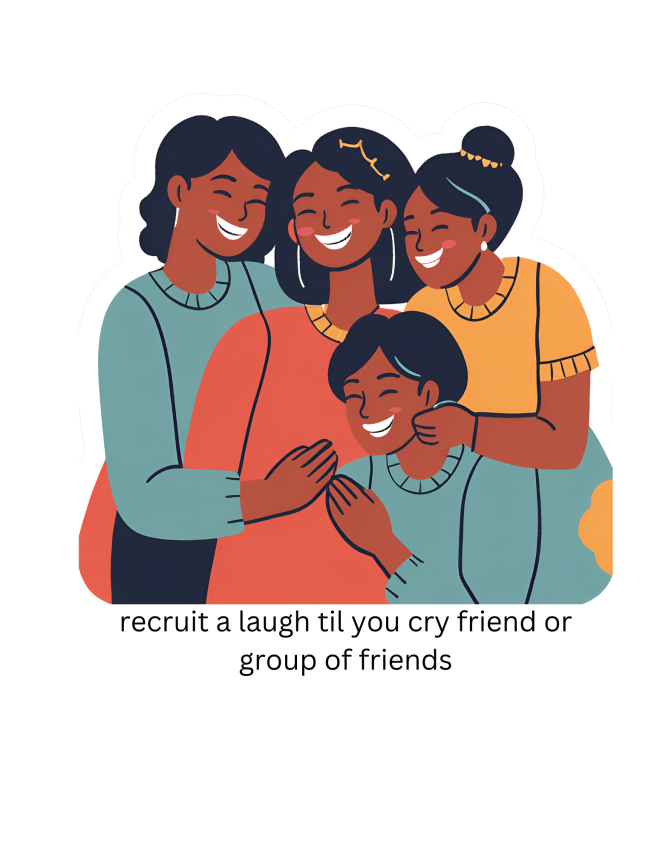
5. Social Connection: Text That One Person (Yes, Them)

When you’re down, your brain might tell you to retreat like a wounded raccoon. But reaching out—even just a little—can flip the script fast.

🔬 Science says: Human connection boosts oxytocin, lowers anxiety, and increases resilience. A study from American Journal of Psychiatry (Ozbay et al., 2007) highlights social support as one of the most powerful buffers against stress.

📱 Try this: Send a funny meme to a friend, voice note someone who “gets it,” or even comment on someone’s post meaningfully.

👉 Its so hard guys. The phone is like there…. And like, sometimes, sometimes it even *gulping loudly*…. RINGS!!! TERRIFYING! I know guys, see, I get it, but how about a text? A text connects you like a ‘sup’ nod between bros, but without the whole sense of the ‘sup’ reply. I bake that shit right into my texts too, I say ‘hey, let me know how you are when you get a minute’. No rush. I’m chill man. Or even ‘just sayin hey and wanted you to know I’m thinking of you’ totally not giving them ANY obligation, because like why would I bum anyone I love out like that?


Closing: Feeling better doesn’t always need to be a full-blown self-care summit. Sometimes, it’s in the little things: a breath, a laugh, a leaf, a lyric, a message. Try one. Try them all. You deserve moments of ease—even when life’s handing out chaos like Halloween candy. Til next time gang. Take care of yourselves, and each other!


Uncategorized

Creative Outlets for Coping with Stress: Finding Fun in the Chaos

Stress management, we ALL at some point undergo stress, its an essential yet shitty byproduct of a joyful human experience. While your brain feels like it’s running a marathon while simultaneously trying to solve a Rubik’s cube, sometimes you need something more than deep breathing to keep from losing your mind. Maybe its because I grew up in the era of Saturday morning cartoons and reruns of Tom and Jerry, but I very much picture and visualize stress as making me red and steam coming out of my ears, so I look at stress relief as a valve that releases AAAALLLLLL the bad (I used to teach yoga, exhale the bad to give you room to inhale the good.). From work pressures to personal challenges, it can feel like the weight of the world is on your shoulders. But did you know that one of the best ways to manage stress might just be to create, express, and explore? Engaging in creative activities like art, writing, and music not only offers a fun escape, but can also provide therapeutic benefits to calm the mind and rejuvenate the spirit. Here are some creative outlets that can help alleviate stress, all while having a blast.

Art: When Words Fail, Colors Speak

Forget being the next Picasso. This isn’t about creating museum-worthy masterpieces. It’s about splashing color around and telling your brain to shut up for a minute. Mixing colors and mediums have been proven to raise cortisol levels in repeated studies. Pro tip: Those adult coloring books? Total game-changers. Especially the ones with the naughty words, those help and who didnt color in bubble letters on stuff in school. I love those or the really pretty Mandalas! Last year I even got hubby one, the Mandalas were all boobs lol he loved it.

Writing: Your Brain’s Emotional Dumpster

Journaling isn’t just for angsty teenagers. It’s like having a conversation with yourself where you don’t have to apologize for your wild thoughts. Often offering both clarity and release, fiction, poetry, stream of consciousness – whatever helps you dump those mental gremlins onto paper. Stream of consciousness writings are my favorite. When something is bothering me I like to sit down and just start writing and just see where it takes me. Whether you’re writing a letter to yourself, crafting poetry, or telling a short story, the act of writing helps organize your thoughts and reduce emotional overload. Sometimes its funny sometimes its revealing in that sometimes I will be writing about whatever is bothering me and whatever the answer is it jumps onto the paper after I’ve worked it out in my head and put it to paper. Other times I will write about a problem and put it away for a set amount of time NOT thinking about it and go back to it after a day or so and when I look at it again it doesnt matter as much or I immediately come up with a solution I couldnt think of when I was laser focused on it. Any way you look at it, getting the words out (to your own eyes anyway) can’t make it worse.

Music: Turning Emotional Chaos into Sound

You don’t need to be a rock star. Singing in the shower, drumming on kitchen counters, or creating the world’s most chaotic Spotify playlist counts as therapy. Music has the incredible ability to transport you to another place. Research has shown that playing music, or even just singing along to your favorite tunes, can reduce cortisol levels (the stress hormone) and boost your mood. My personal recommendation? Find that one song that makes you forget everything else exists. Put on kitchen concerts for the animals. Blast the music while you are cooking and embarrass your teenager by singing along to all the songs at full volume with the confidence that said teenager used to sing the wrong lyrics with. LOL I hate saying ‘kids these days’ but its true, they didnt have radio before lyrics were freely available, remember when you were young singing along to songs with your friends only to realize you’ve been singing the wrong words so you missed the meaning in the song entirely lol. Music has hit me HARD in the last few years, and I have such eclectic taste, I love songs with that emotional breath catch, not like the fake movie ones but like just pure angst they just can’t contain the little noise that goes with it. Thats my favorite. I dont drive anymore but that used to be my go to, getting in the car and driving, windows down (well usually smoking back then too) and blasting the music loudly singing along. I do miss that, being a passenger doesnt work, it just hits different I dont know why.

Crafting: Hands Busy, Brain Quiet

Whether it’s knitting, building model trains, or creating the world’s most elaborate paperclip sculpture, sometimes keeping your hands busy is the best way to quiet your mind. Its for the same reason some people have to do lists, crossing those little things off the list give you a sense of accomplishment and a craft project, especially something tangible you can see and feel. Repetitive motions can be calming too. I generally read a book but when I’m going through things in my head I can’t sit still so I make things. Not good things, I made a coat hanger Christmas tree for my room because I love the lights. I’m tempted to become like a teenager and line my room with LED light strips I love the soft glow. I did a number of crafty gifts this year too. My little monkey (well not so little but my youngest will always be my little monkey) likes four different NFL teams and wanted merch for each for Christmas. We all know how expensive that would have been so I made her ornaments for each team. Little things like that.

Dance Like Nobody’s Watching (Seriously, Nobody’s Watching)

No choreography required. Just you, some music, and zero judgment. Moving your body releases endorphins and reduces stress. Dance also helps to reconnect with your body in a positive way, making it an excellent tool for both physical and mental wellness Pro move: Close the curtains and go absolutely wild. Ever since I was a teenager when I got upset I’d be in my room singing and dancing to the music I was blaring. It warns my family I’m going through some shit in my head and now might not be the best time to ask me for more since I’m already super overwhelmed. And in the kitchen while I am fixing dinner, it used to be a routine, me and monkey dancing around in the kitchen lol.

Cooking and Baking: Whisk Your Worries Away

Now we should also be talking about turning your kitchen into a stress-free zone. Cooking isn’t just about not starving – it’s like therapy, but with tastier results. Chopping veggies can be weirdly zen, and don’t even get me started on the magic of kneading dough. It’s like punching your problems, but in a socially acceptable way.Here’s the deal: whipping up a meal gives you control when everything else feels chaotic. Plus, experimenting with flavors is way more fun than spiraling into anxiety. And let’s be real, comfort food is called that for a reason. Bonus points if you share your creations – nothing beats the warm fuzzies of feeding your people.

Photography: Capturing Calm in the Chaos

Ever notice how looking through a camera lens can make the world seem less… overwhelming? It’s like putting on anxiety-canceling glasses. Suddenly, you’re not worrying about your to-do list; you’re hunting for that perfect shot of a flower or your friend’s goofy smile. Photography is sneaky mindfulness. You have to slow down, breathe, and really look at what’s around you. It doesn’t matter if you’re using a fancy camera or just your phone – the point is to capture those little moments of “oh, hey, the world isn’t so bad after all.”

Gardening: Nature’s Therapy

Let’s get our hands dirty, folks. Gardening isn’t just for retirees with too much time on their hands. It’s like playing in the dirt, but as an adult, and with purpose. There’s something stupidly satisfying about watching a seed you planted turn into an actual plant. It’s like, “Look, I made life happen!” – which is pretty cool when you’re feeling powerless. Even if you don’t have a green thumb (hello, plant murderers anonymous), just being around plants can chill you out. It’s nature’s way of saying, “Relax, dude. If I can grow through concrete, you can handle your day.”

Embrace Your Inner Weirdo Creator

Here’s the thing about all these stress-busting activities: there’s no right way to do them. Can’t cook without burning water? Who cares! Your photos all blurry? Big deal! Plants keep dying? Join the club! (seriously I swear they see me coming and unalive themselves LOL) The point isn’t to be good at these things. It’s about finding something that makes your brain shut up for a bit. Whether you’re painting stick figures, writing terrible poetry, or growing the world’s saddest basil plant, you’re giving your stress the middle finger. You can combine a lot of these creative pursuits, take a picture of the food you made all pretty, hell take pics of your ugly creations too, all the abominations, so if you decide to stick with whatever the creative pursuit you can keep track of how far you’ve made it. So next time you’re feeling like the world’s out to get you, try picking up a spatula, a camera, or a watering can. Your stressed-out brain will thank you – and hey, you might even have some fun along the way.Remember, gang: creativity isn’t about being perfect. It’s about telling stress to fuck all the way off. Til next time gang, take care of yourselves, and each other!